Inspiration
Healthcare in the U.S. is largely reactive, and Covid-19 has exacerbated this issue. Practitioners prescribe fixes to problems as they see them where preventative action could have alleviated ailments in preliminary stages. Health-related behaviors such as adherence to recommended treatment and partaking in self-care depend highly on a person’s own understanding of their underlying conditions and knowledge of how to address them. What if we put patients in charge of their own health?
What it does
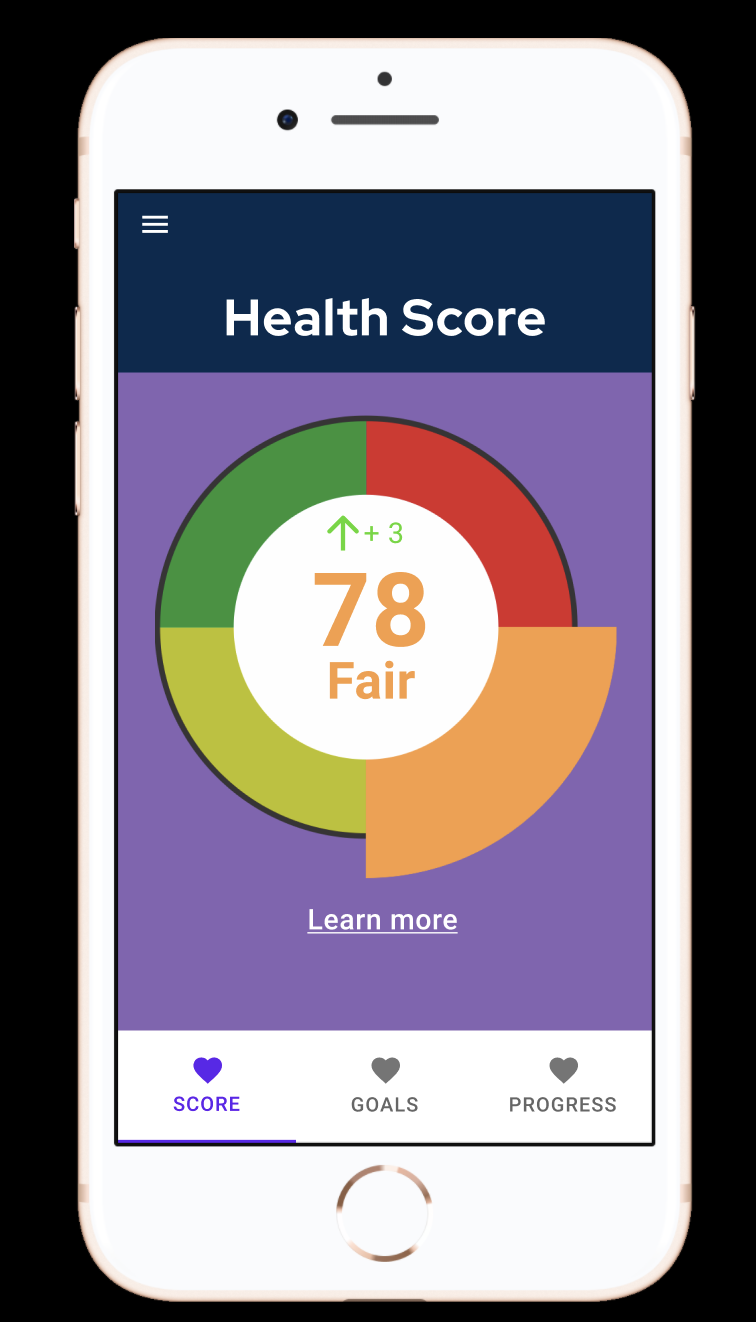
We designed an app to leverage patient data to empower people to take actionable steps to improve their health based on their personal health history and current goals.
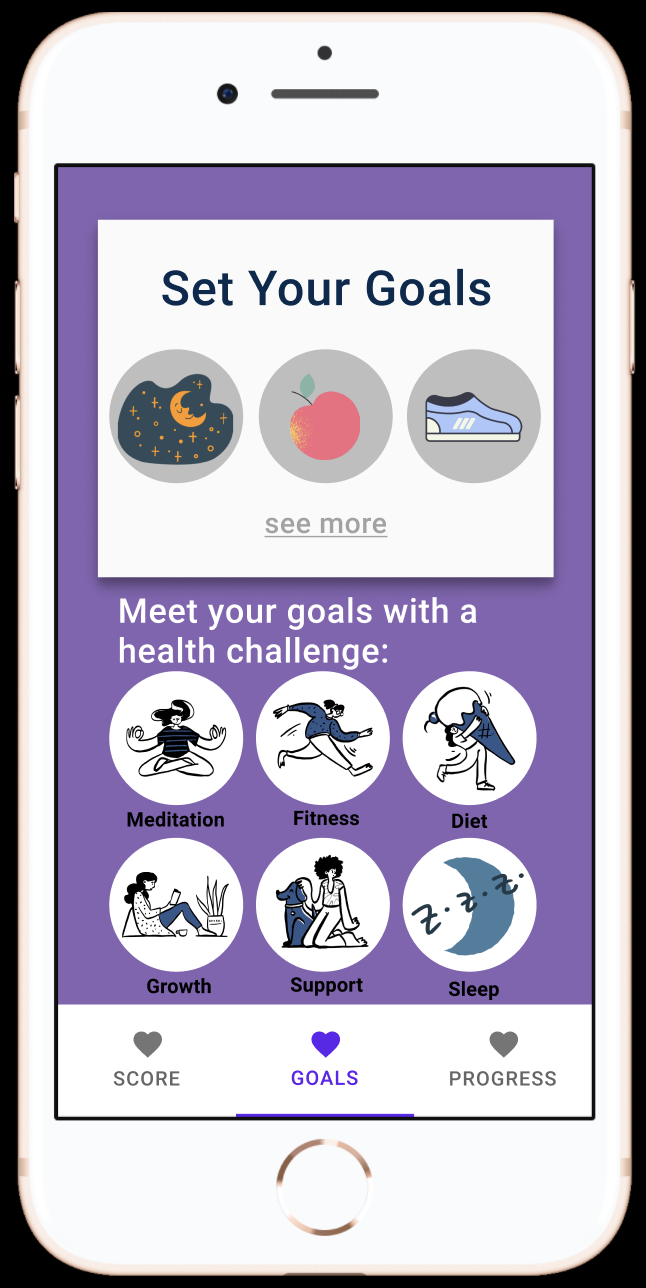
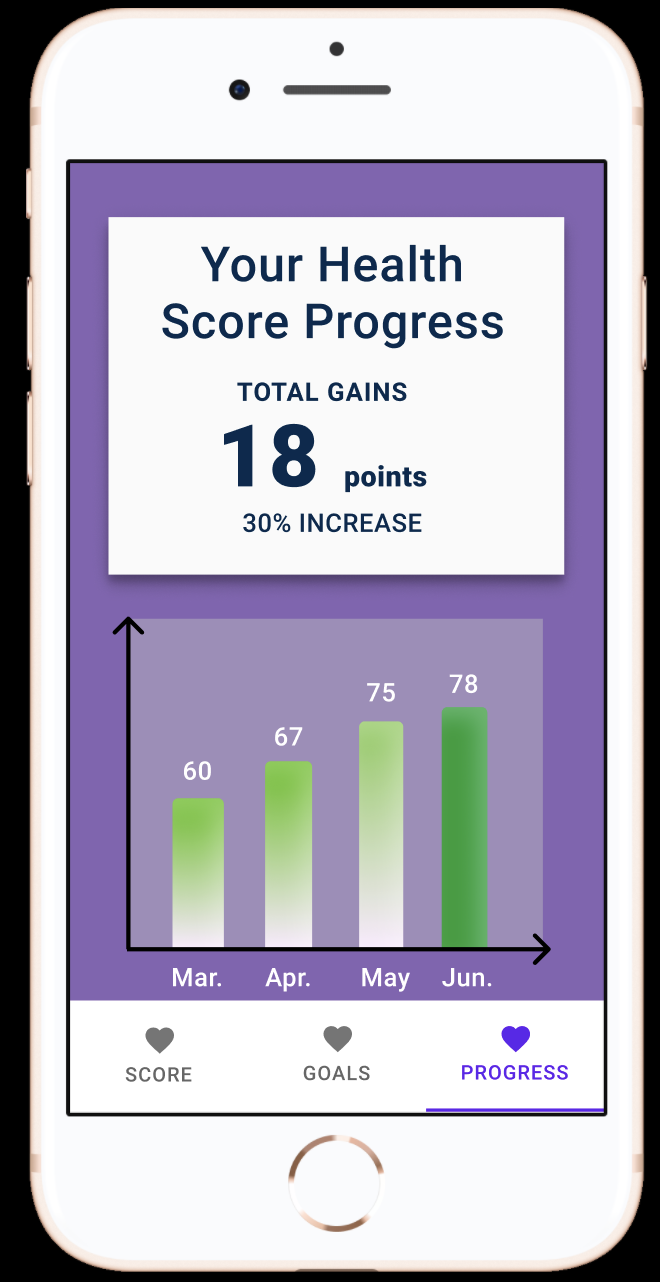
Users enter basic health information, like a brief medical history, social factors, and lifestyle choices to receive a baseline health score. Users are then motivated to improve that health score through action steps, defined goals, and visible progress statistics. The user’s score will update every time they complete a challenge, and will go back to the baseline score at the beginning of every month. The user also has the opportunity to edit their basic health information.
How we built it
We first narrowed in on the problem of helping users better understand their health in relationship to others of their demographic group. Many complex factors contribute to a person’s overall health. We asked - how might we help people have a better understanding of their own health condition. To simplify a person’s health history in relation to others, we developed an easy to interpret health score. We hypothesized that this would empower people to advocate for themselves in a healthcare context.
We next discussed how we would motivate users to improve their health via the health score. To make the app engaging for both high and low scorers, we developed a goals section for users to personalize their journey. To help people take actionable steps, we developed a task section to give users manageable things to do to improve their health. We designed these tasks in a way to motivate users to return to the app, level up their accomplishments, and visualize their results.
We tested this concept and a wireframe of a prototype with a few potential users. We made improvements by doing user interviews and market research of other platforms, and comparing it to our app. We incorporate unique solutions to our prototype that other apps do not currently have (e.g. social risk factors).
Challenges we ran into
Health data that is currently available. Access to a diverse set of users. Lack of time to do more user interviews. Consensus in refining our solutions during brainstorming sessions.
Accomplishments that we’re proud of
Prototyping a meaningful, impactful and scalable app. Collaborating with our team virtually. Creating solutions using a user-centric design thinking approach.
What we learned
User-centric design thinking and prototyping.
What's next for Health Score
Empower patients to advocate for themselves. Do more user interviews and testing to understand consumer’s needs/pain points. Will continue to reiterate our prototype once we have collected more data. Build more features/capabilities in our app for continuous engagement and participation of our users.
Built With
- figma
- powerpoint


Log in or sign up for Devpost to join the conversation.