-
-

logo
-
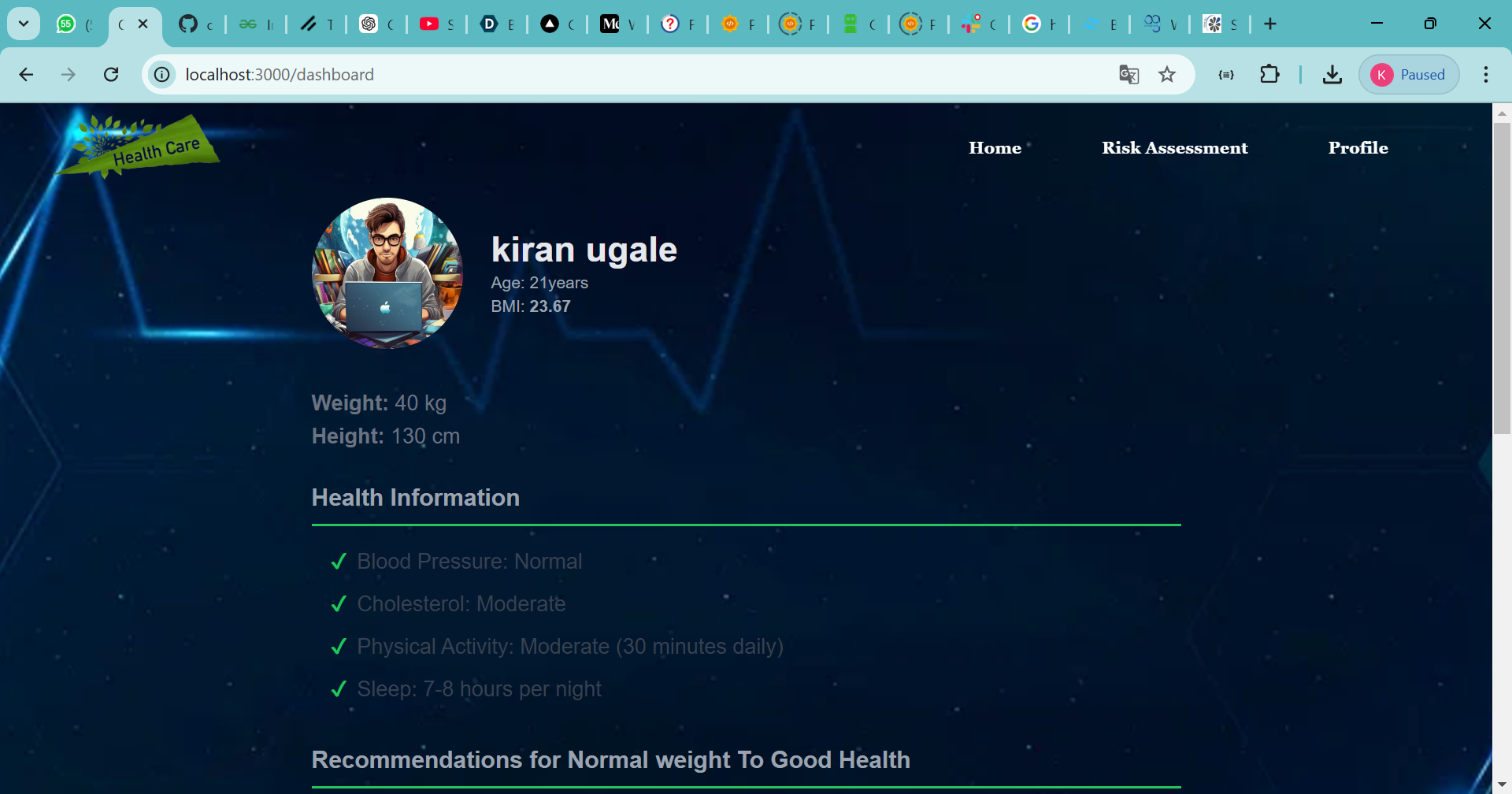
profile
-
profile
-
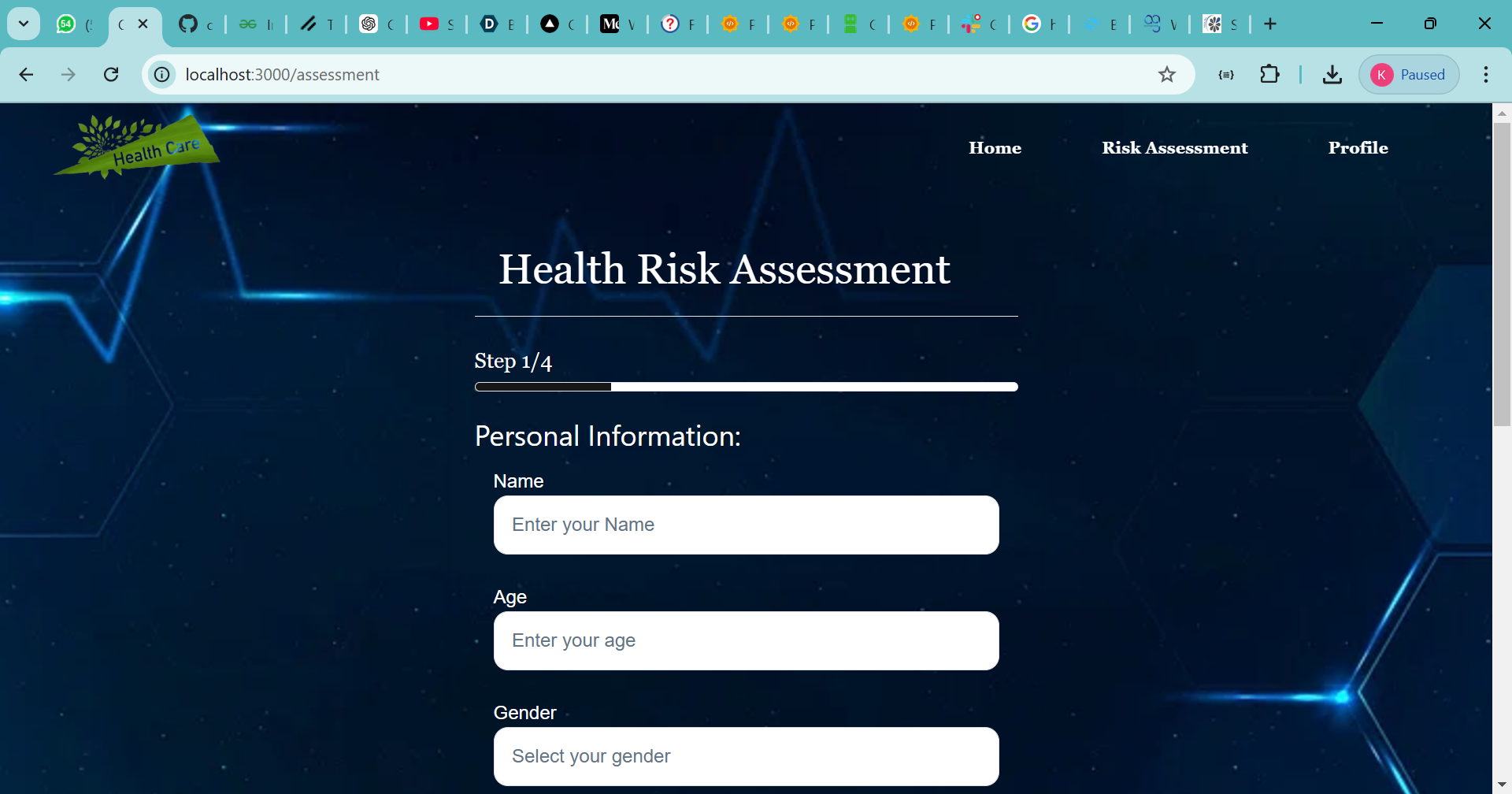
health risk assessment
-
profile
-
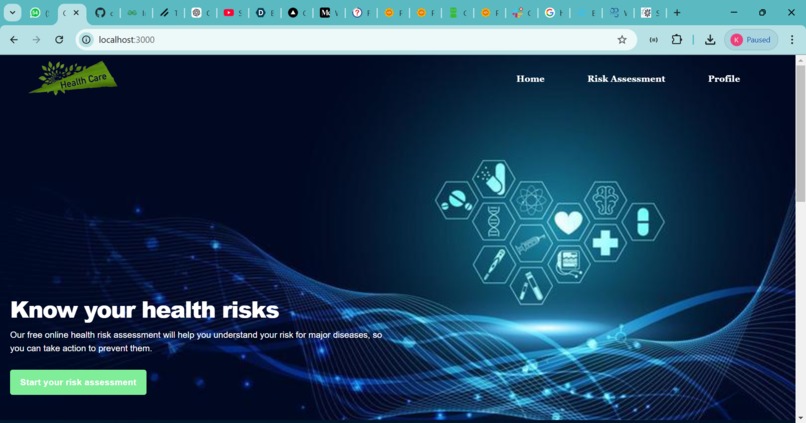
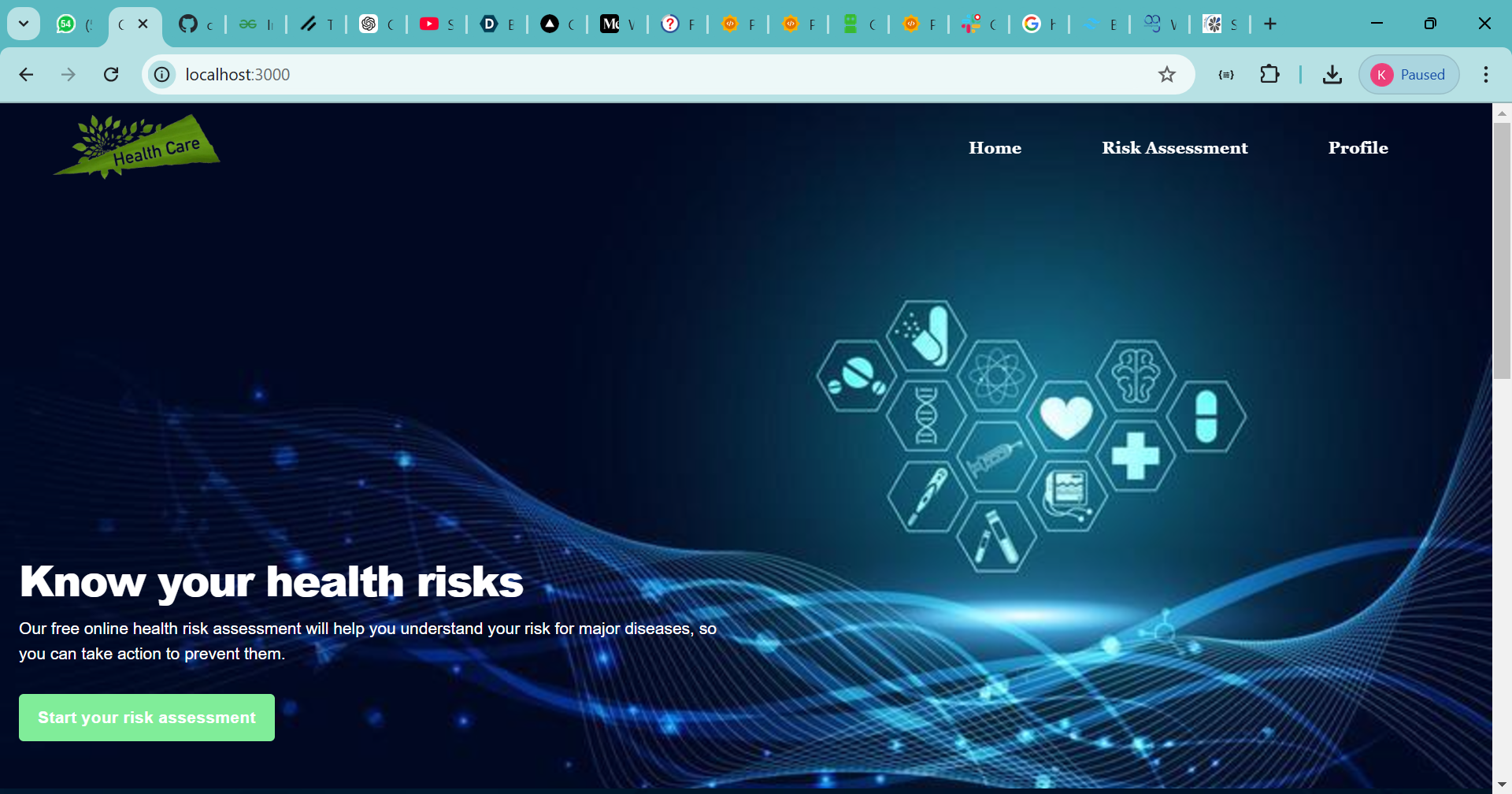
landing page



Inspiration
The inspiration behind the Health Risk Assessment Tool comes from the growing need for personalized health insights in today’s world. With increasing healthcare challenges, many individuals struggle to assess their health risks early on. Our goal was to create a tool that empowers people to make informed decisions about their health based on real data, lifestyle habits, and symptoms. By identifying health risks early, we hope to foster a proactive approach to health management, ultimately helping prevent chronic diseases like heart disease, diabetes, and more.
What it does
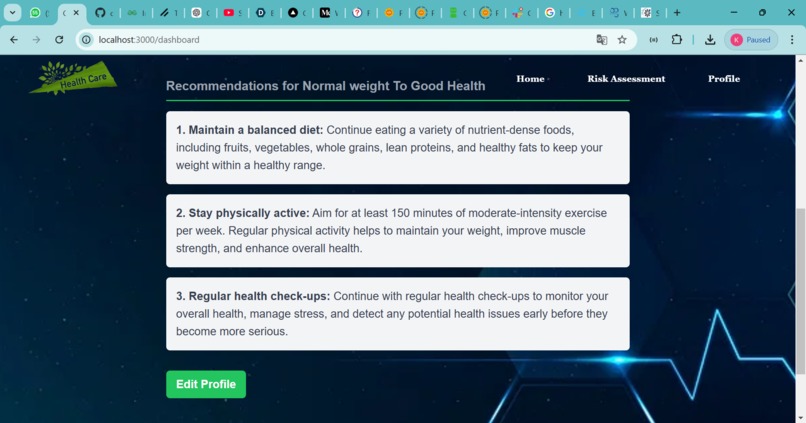
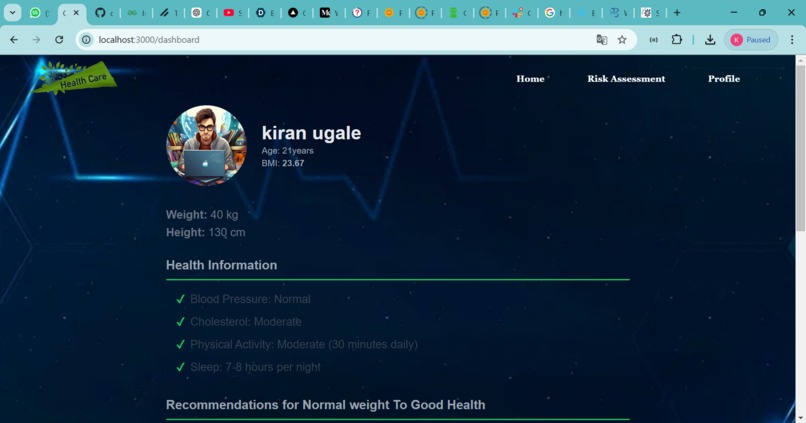
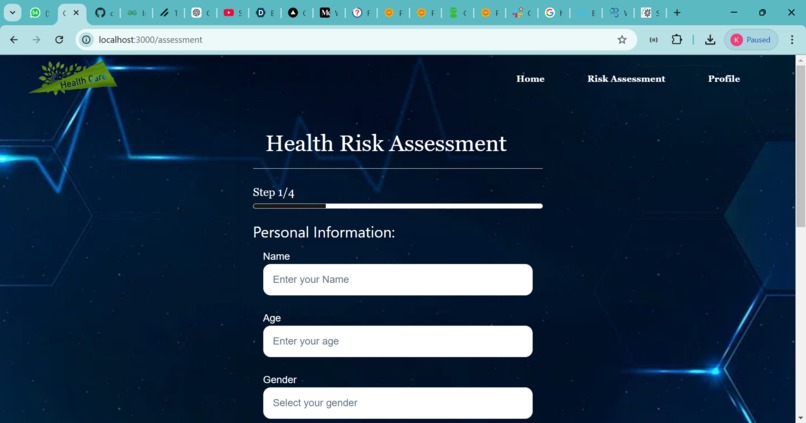
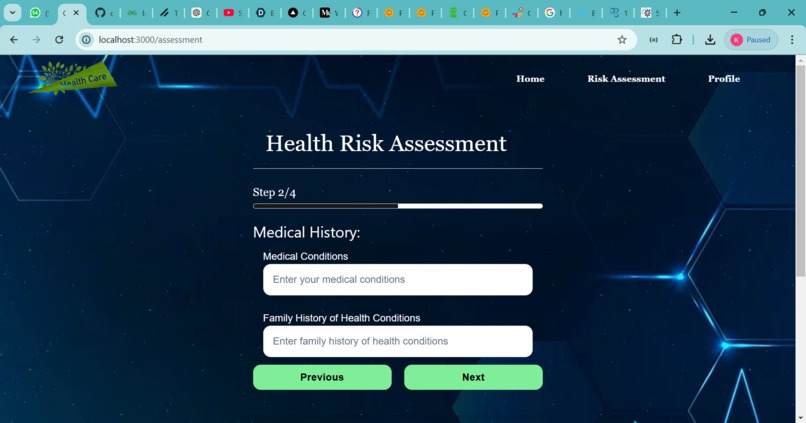
The Health Risk Assessment Tool allows users to assess their health risks based on personal data, such as age, gender, diet, lifestyle, and symptoms. Users input this information through a user-friendly interface, and the tool calculates risk scores for various health conditions. Afterward, the tool provides personalized recommendations for healthier habits, diet adjustments, and potential medical consultations based on the assessed risk. This tool is designed to raise awareness about potential health issues and encourage users to take action before problems escalate.
How we built it
We built the Health Risk Assessment Tool using a combination of modern technologies:
- Frontend: The user interface was developed using Next.js ,tailwindcss, to ensure a responsive and engaging experience.
- Backend: Node.js to handle requests and data flows efficiently.
- Database: We used MongoDB to securely store user inputs and the corresponding health risk data.
- Risk Assessment Algorithm: The algorithm processes input data and applies a set of predefined rules, based on health guidelines, to generate personalized health risk scores.
Challenges we ran into
During the development process, we encountered several challenges:
- Data Accuracy: Ensuring that the input data was reliable and reflective of real-world health risks was crucial. We had to carefully select relevant data points and establish clear guidelines for risk assessment.
- Privacy Concerns: Handling sensitive health data in a secure and compliant manner (e.g., HIPAA or GDPR) was a priority. We had to design robust security features and ensure data encryption at every level.
- Algorithm Complexity: Designing a risk assessment algorithm that could accurately calculate health risks while being simple enough for users to understand was difficult. Striking the right balance between simplicity and accuracy took time.
Accomplishments that we're proud of
We are proud of several achievements from this project:
- Personalized Health Insights: We successfully created a system that generates personalized health risk scores based on real user data, giving each user specific, actionable advice.
- User-Friendly Interface: The tool is easy to navigate, and we’re happy with how accessible it is for people without technical expertise.
- Data Security: We ensured that user data is handled securely and follows best practices for data protection.
- Real-World Impact: The tool provides tangible value by helping people understand their health risks and take proactive steps toward improving their well-being.
What we learned
Throughout the project, we learned a great deal about the intersection of technology and healthcare:
- Data Sensitivity: Handling health data requires special attention to security and privacy, and we’ve gained experience in implementing industry-standard practices.
- User-Centered Design: Designing a product that is both functional and easy to use was challenging but rewarding. We learned that keeping the user experience simple is key to wider adoption.
- Health Risk Modeling: We gained insights into how health risks are assessed and how algorithms can be used to predict these risks based on various factors.
What's next for Health Risk Assessment
Moving forward, we plan to enhance the Health Risk Assessment Tool with the following features:
- AI & Machine Learning: We will integrate AI models to improve the accuracy of risk predictions and make the tool even more personalized based on user data.
- Mobile App: Expanding the tool to a mobile app for easier access and real-time health tracking.
- Wearable Integration: Integrating with wearables (e.g., fitness trackers) to provide real-time data and even more accurate health assessments.
- Broader Health Conditions: Expanding the scope of the tool to include more health conditions and allow for a wider range of assessments.
This format gives a clear and structured overview of your Health Risk Assessment Tool, highlighting the key aspects and future goals.
Built With
- express.js
- google-gemini
- jsonwebtoken
- next.js
- node.js
- nodemailer
- tailwindcss


Log in or sign up for Devpost to join the conversation.