Inspiration
Every year, millions of people suffer from preventable health complications simply because they lack access to affordable and timely health screening. Traditional diagnostic methods often require expensive medical equipment, physical contact, trained healthcare professionals, and visits to hospitals or clinics, making routine screening difficult for people living in rural or underserved communities. We were inspired by the emerging field of Remote Photoplethysmography (rPPG), which enables physiological signal extraction using nothing more than a standard RGB camera. Recognizing its potential, we envisioned Health Lens—an AI-powered, contactless health screening platform that transforms everyday devices such as smartphones, laptops, and webcams into intelligent health assessment tools. Our goal is to democratize preventive healthcare by making early health screening accessible, affordable, and convenient for everyone.
What it does
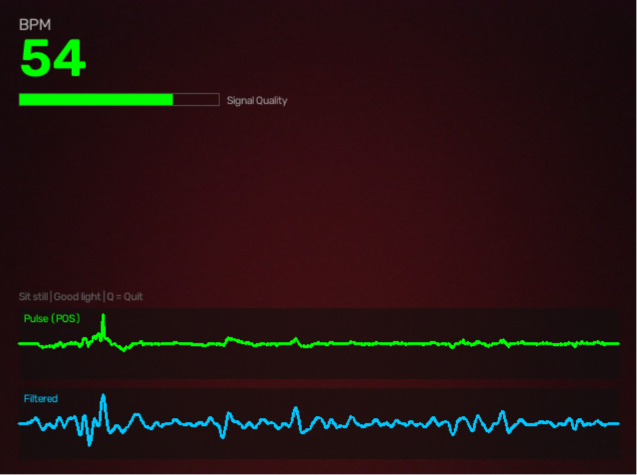
Health Lens is an AI-powered, contactless health screening platform that performs preliminary health assessments using Remote Photoplethysmography (rPPG). The system captures a short facial video through a standard RGB camera and analyzes subtle color variations in the skin caused by blood circulation. These tiny physiological signals, invisible to the human eye, are processed using advanced computer vision and signal processing techniques. Artificial intelligence then estimates vital parameters such as heart rate and analyzes physiological patterns that may indicate potential health risks. Within seconds, users receive an easy-to-understand health assessment and recommendations to seek professional medical evaluation if abnormal patterns are detected. Health Lens is designed as an early screening and decision-support tool, complementing healthcare professionals rather than replacing medical diagnosis.
How we built it
Health Lens was developed using Python as the primary programming language. We utilized OpenCV and MediaPipe to detect facial landmarks, identify stable regions of interest, and continuously track facial movements. The extracted video frames are processed using Remote Photoplethysmography (rPPG) algorithms to isolate subtle blood volume pulse signals. These signals undergo multiple Digital Signal Processing (DSP) stages, including filtering, normalization, motion compensation, and noise reduction, to improve signal quality and accuracy. We then employ Machine Learning and Artificial Intelligence models developed using TensorFlow and Scikit-learn to analyze the processed physiological data and identify abnormal patterns. Libraries such as NumPy, SciPy, and Pandas are used for numerical computation and data analysis, while an interactive interface allows users to perform health screening easily on consumer devices.
Challenges we ran into
Developing a contactless healthcare system presented several technical challenges. The biggest challenge was accurately extracting weak physiological signals from standard RGB video while minimizing interference caused by head movement, facial expressions, lighting variations, skin tone diversity, and camera noise. Maintaining stable facial tracking under different real-world conditions required extensive optimization. Another challenge was designing AI models capable of distinguishing meaningful physiological patterns while avoiding false positives. Since the system is intended for healthcare applications, ensuring reliability, interpretability, and ethical use of AI was equally important. Balancing computational efficiency with real-time performance on ordinary smartphones and laptops also required careful optimization.
Accomplishments that we're proud of
We are proud of successfully integrating Artificial Intelligence, Computer Vision, Digital Signal Processing, and Remote Photoplethysmography into a single, low-cost health screening platform that requires only a standard camera. Health Lens demonstrates that advanced physiological monitoring can be performed without specialized hardware or wearable sensors, making preventive healthcare significantly more accessible. The platform has the potential to benefit schools, telemedicine services, community health programs, workplaces, and rural healthcare centers. Most importantly, the project directly contributes to United Nations Sustainable Development Goal 3 – Good Health and Well-being by promoting affordable, accessible, and technology-driven preventive healthcare.
What we learned
Developing Health Lens significantly expanded our knowledge of biomedical engineering, artificial intelligence, computer vision, physiological signal processing, and machine learning. We learned how subtle optical signals can be transformed into meaningful health information through Remote Photoplethysmography and how crucial preprocessing techniques such as filtering, motion compensation, and noise reduction are for obtaining reliable results. Beyond the technical aspects, we also gained a deeper understanding of ethical AI, responsible healthcare innovation, and the importance of designing solutions that are inclusive, scalable, and beneficial to communities with limited healthcare resources.
What's next for Health Lens
Our future vision is to transform Health Lens into a comprehensive AI-powered digital health platform. We plan to improve the robustness and accuracy of our AI models using larger and more diverse clinical datasets while expanding the platform to estimate additional physiological parameters. Future versions will include cloud-based analytics, continuous remote patient monitoring, integration with electronic health records and telemedicine platforms, multilingual accessibility, and a dedicated mobile application for Android and iOS. We also aim to collaborate with hospitals, healthcare institutions, and research organizations to clinically validate the technology and deploy Health Lens in schools, community health centers, rural clinics, and public health initiatives, helping bring affordable preventive healthcare to millions of people worldwide.

Log in or sign up for Devpost to join the conversation.