HealthLens
Tagline: Your prescription, in plain words, in your own language.
SDGs addressed
SDG 3 (Good Health and Well-being), SDG 10 (Reduced Inequalities), SDG 4 (Quality Education)
Inspiration
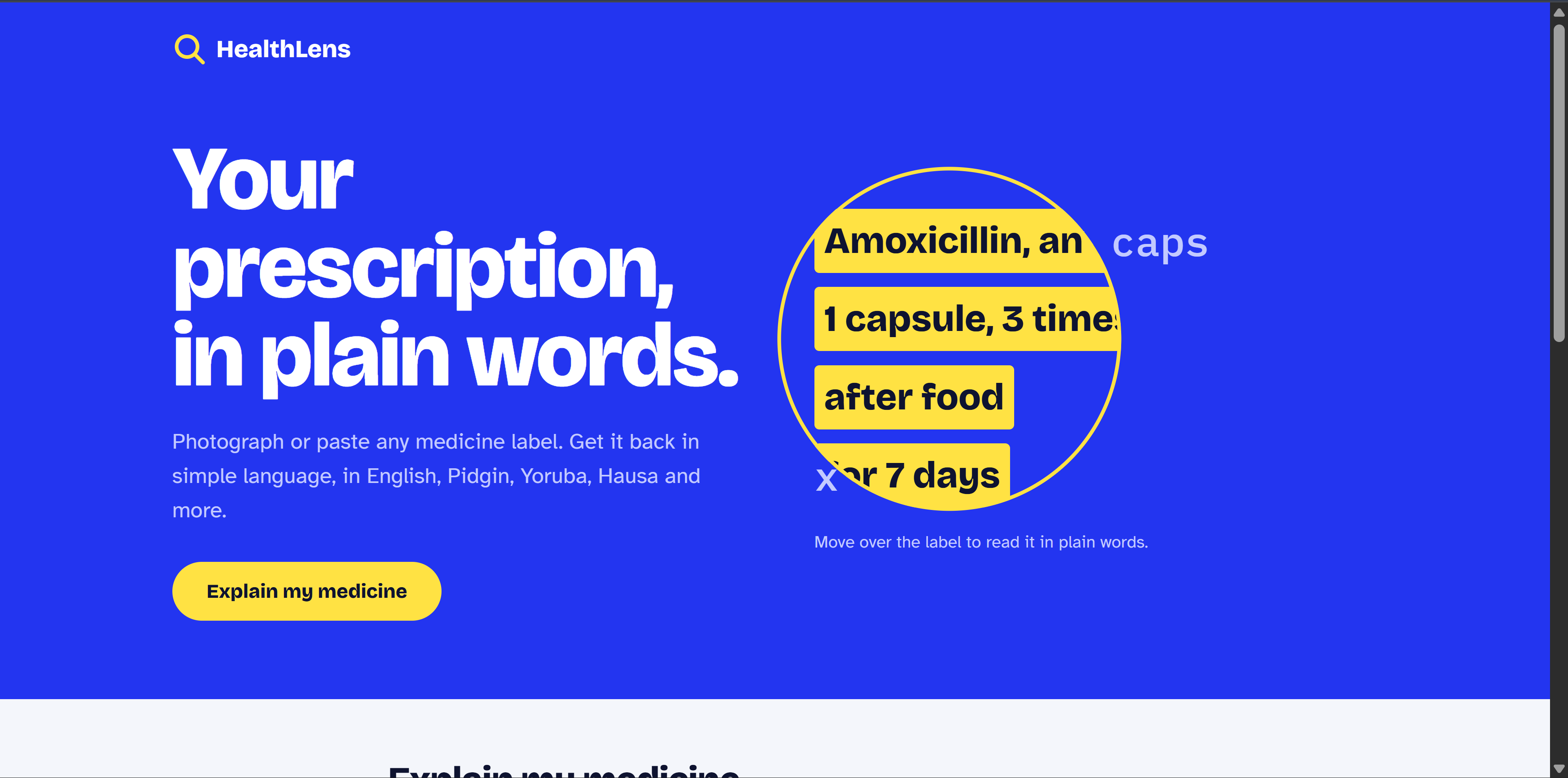
Medicine labels are written for professionals. A line like "1 cap t.i.d. p.c. x 7/7" is clear to a pharmacist and meaningless to many of the people who have to follow it. When people can't read their own instructions, they skip doses, stop early, or miss the warning signs that mean they should go back to a clinic. That problem is worst for people with limited health literacy, people who don't speak the language the document is written in, and people who live far from a pharmacist they can ask. I wanted to build something that closes that gap on a phone, without an account or a download.
What it does
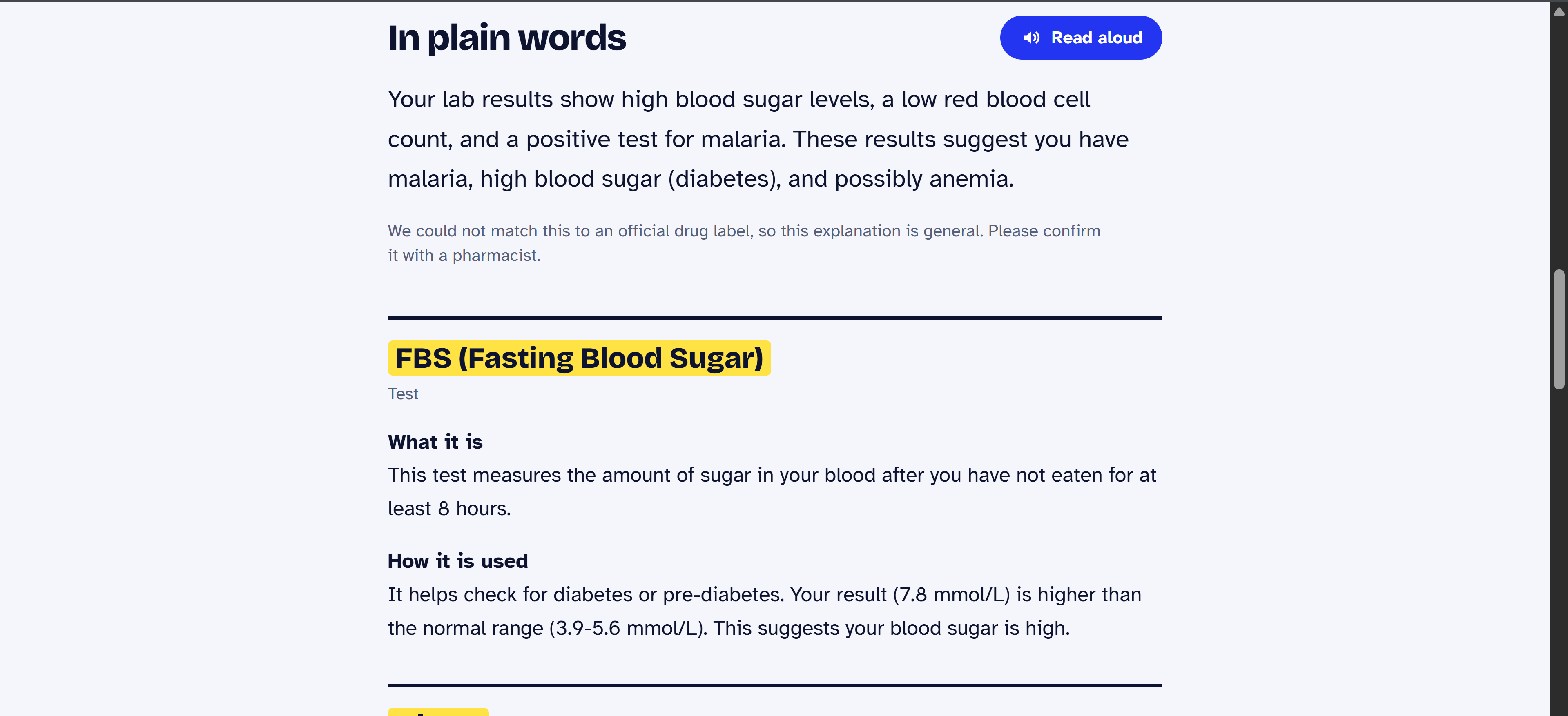
HealthLens takes a prescription, medicine leaflet or lab result, either pasted as text or photographed, and explains it in plain language in the user's chosen language. It supports English, Nigerian Pidgin, Yoruba, Hausa, Igbo, French, Swahili, Arabic, Spanish and Portuguese.
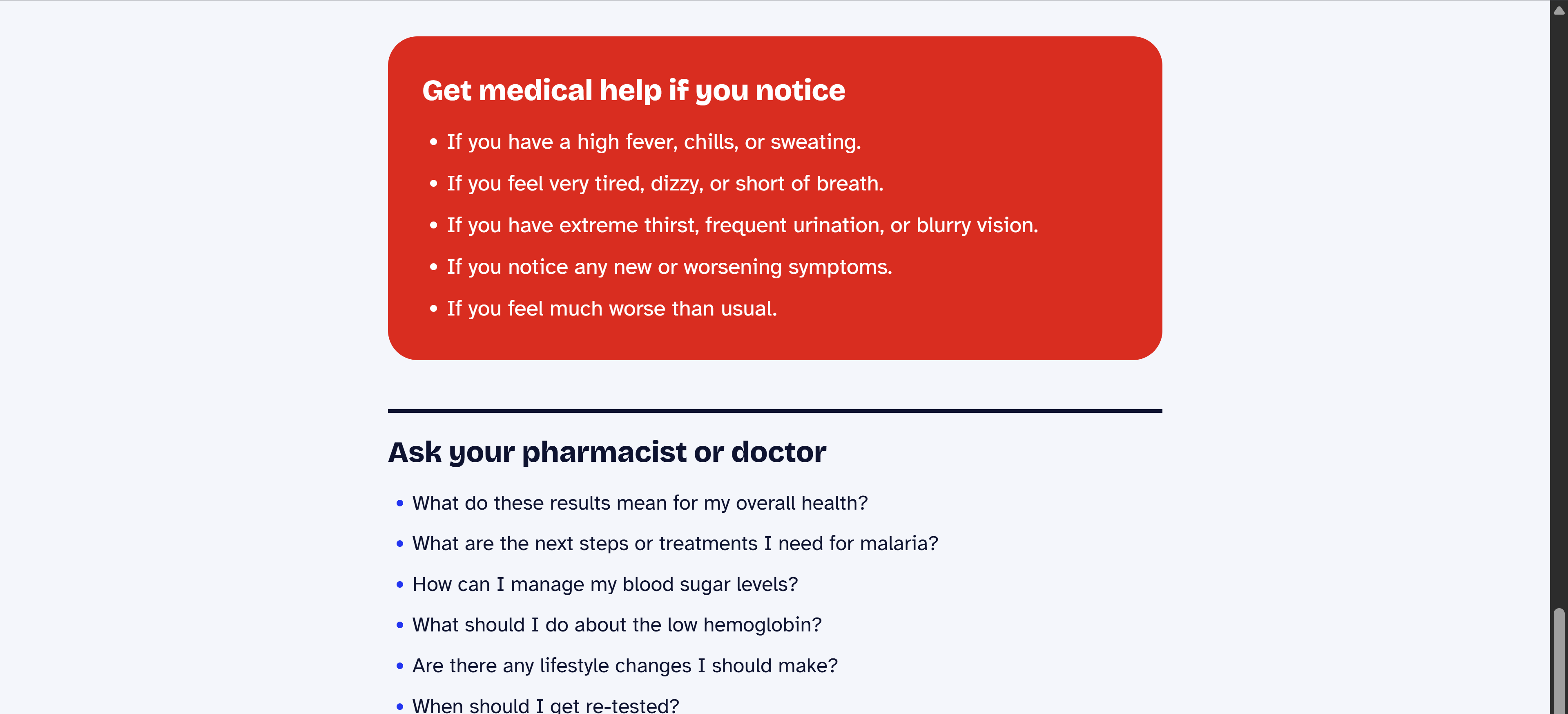
For each medicine it explains what it is and how it is used, and it lists things worth knowing. It also shows a clear "Get medical help if you notice" block and suggests questions to ask a pharmacist or doctor. A read-aloud button speaks the explanation for people who find reading difficult.
Medicines are checked against official sources (RxNorm and FDA drug labels), and the app shows a "checked against official FDA drug labels" badge when that check succeeds. When it can't verify a medicine, it says so and tells the user to confirm with a pharmacist.
HealthLens only explains. It never diagnoses, prescribes, or tells anyone to start, stop or change a medicine.
How I built it
- Frontend: React, Vite and Tailwind CSS. The home page opens with an interactive magnifier that reveals the plain meaning of a line of prescription shorthand, which shows what the app does in a couple of seconds.
- Backend: Node.js and Express. A single endpoint accepts text or an image plus a language.
- AI: Google Gemini reads the text or photo and extracts the medicine names, then writes the final explanation as structured JSON.
- Grounding: each medicine name goes to RxNorm to find its generic ingredient, then to openFDA for the official label sections. Those verified facts are passed to the AI, so the explanation is based on real label data and not only on the model's memory.
- Privacy: no accounts and no database. Text and photos are processed in memory and never stored.
Design decisions
- Explain, never advise. The system prompt forbids diagnosis and dosing changes, and every result includes warning signs and questions for a professional.
- Accessibility first. The body typeface is Atkinson Hyperlegible, which was designed for readers with low vision. Language choices are large tappable chips, the magnifier works with the keyboard, and motion respects reduced-motion settings.
- Graceful fallback. If a lookup fails or a medicine can't be matched, the app still gives an explanation and is honest about what was not verified.
Challenges
- Keeping AI explanations useful without drifting into medical advice
- Grounding answers in official data when brand names, misspellings and regional products rarely match a US database exactly
- Making a very small screen work well for people reading in a second language
- Supporting read-aloud across languages, since voice availability depends on the device
Accomplishments
- A complete, working path from a photo of a prescription to a verified plain-language explanation
- A design that explains the product's purpose before the user reads a word
- A privacy-first architecture with no stored data
What I learned
- Grounding an AI in an official source changes how much a user can trust the result
- Health tools need honest limits as much as they need features
What's next
- Local drug databases such as NAFDAC for better coverage of regional brands
- An offline-friendly app for low-connectivity areas
- Review of translations by native-speaking health workers
- Dose reminders and caregiver sharing
Built with
React, Vite, Tailwind CSS, Node.js, Express, Google Gemini API, RxNorm API, openFDA API, Web Speech API, Vercel, Render

