Health Guardian: A Smart Health Monitoring System for SDG 3
Inspiration
Good health and well-being are essential for improving the quality of life, yet many people do not have access to simple digital tools that help them monitor their daily health habits. Inspired by United Nations Sustainable Development Goal 3 (Good Health and Well-being), I wanted to build an easy-to-use web application that encourages users to become more aware of their physical and mental health through simple daily monitoring.
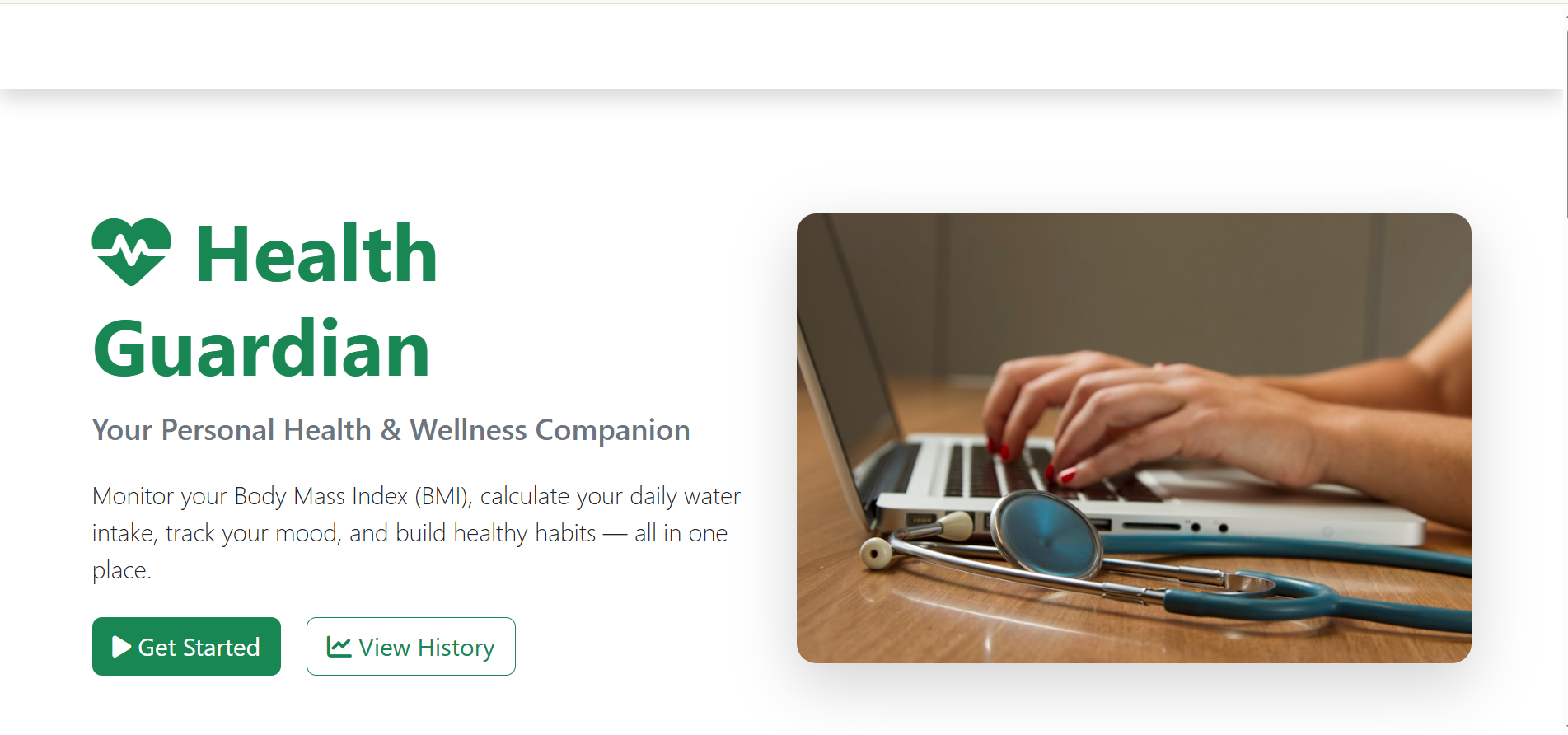
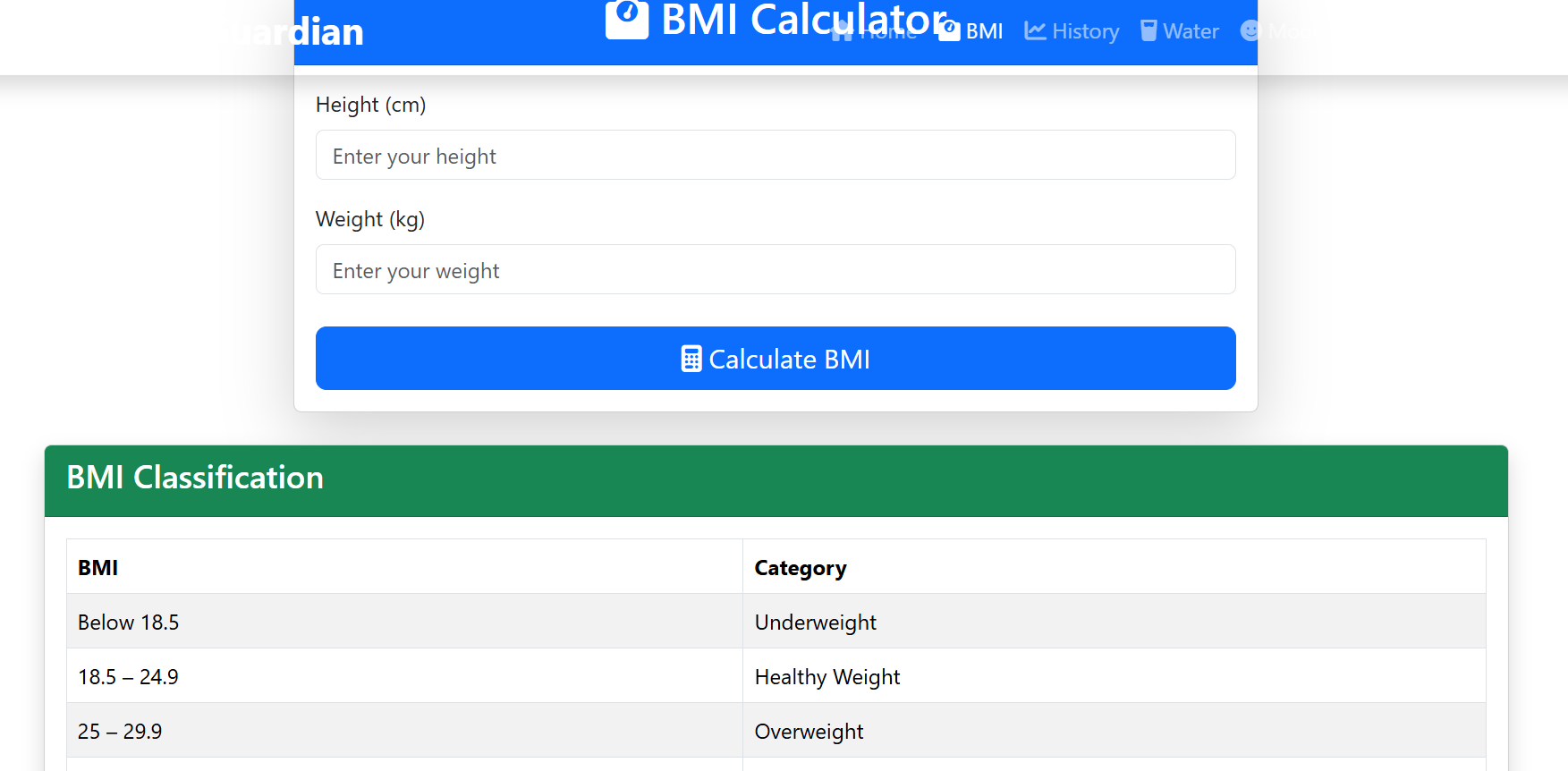
The idea behind Health Guardian was to create a lightweight platform where users can calculate their Body Mass Index (BMI), estimate their daily water intake, track their mood, receive healthy lifestyle tips, and monitor their BMI progress over time. Rather than focusing on medical diagnosis, the project promotes preventive healthcare by encouraging healthy habits and self-awareness.
What it does
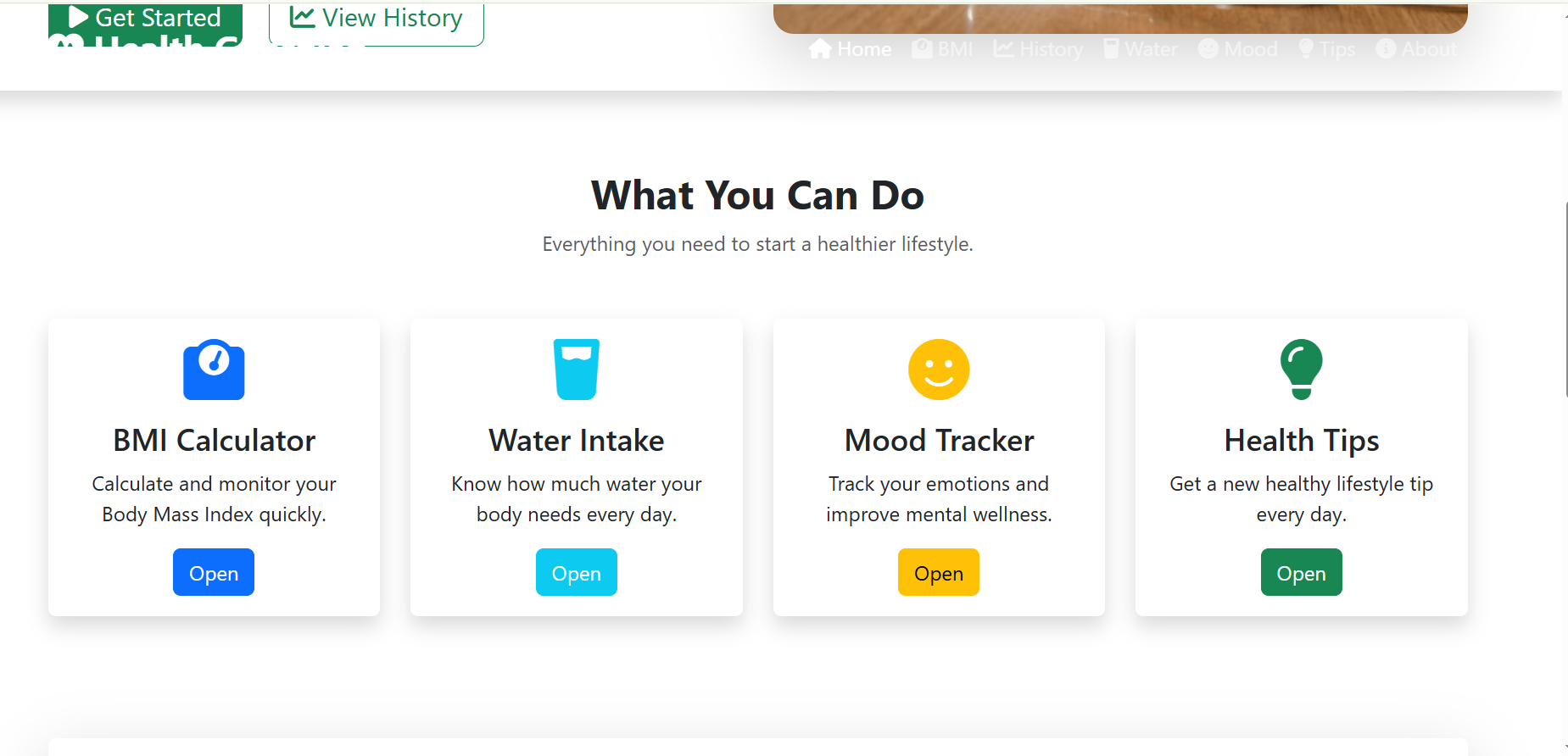
Health Guardian is a web-based health monitoring application that provides several tools to support healthier lifestyles:
- BMI Calculator that calculates Body Mass Index and categorizes health status.
- BMI History that stores previous BMI records using SQLite.
- Interactive BMI Charts that visualize progress over time using Chart.js.
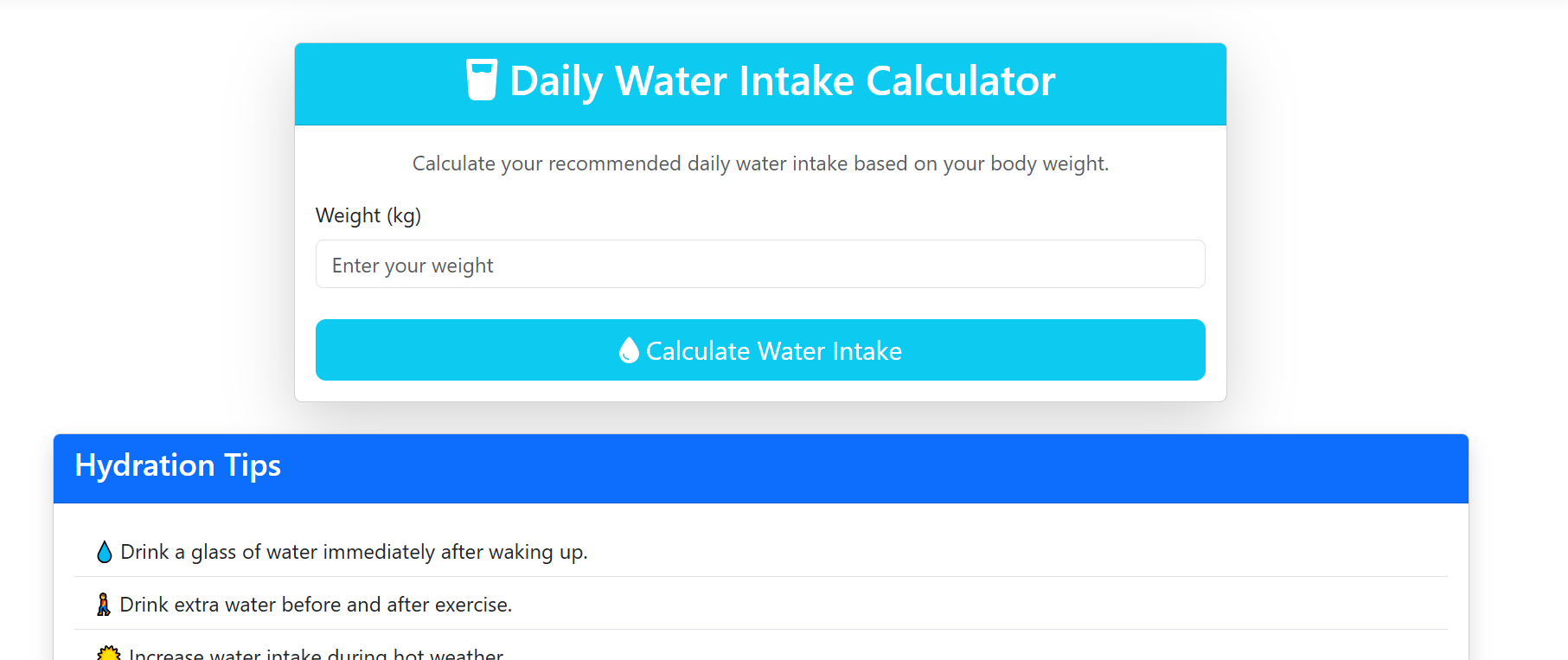
- Water Intake Calculator that estimates recommended daily water consumption based on body weight.
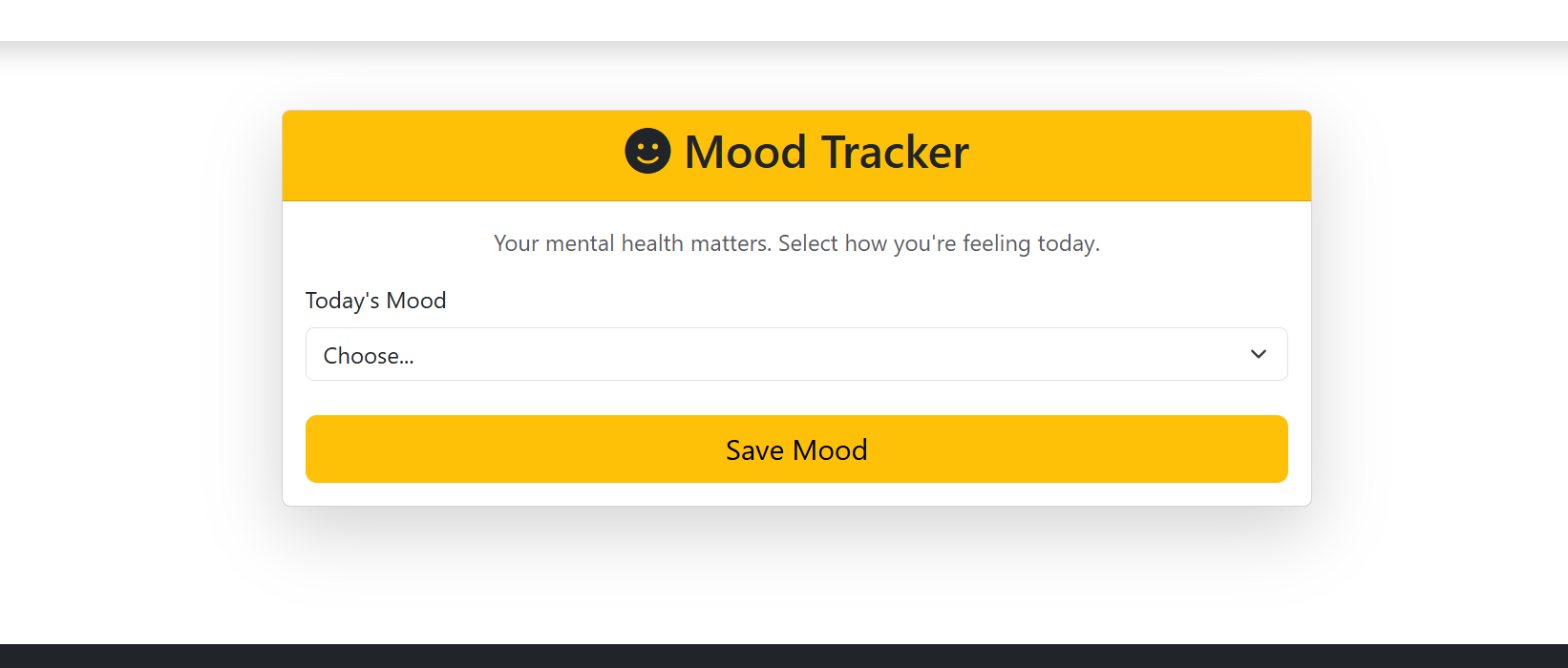
- Mood Tracker that allows users to record their current mood and receive encouraging messages.
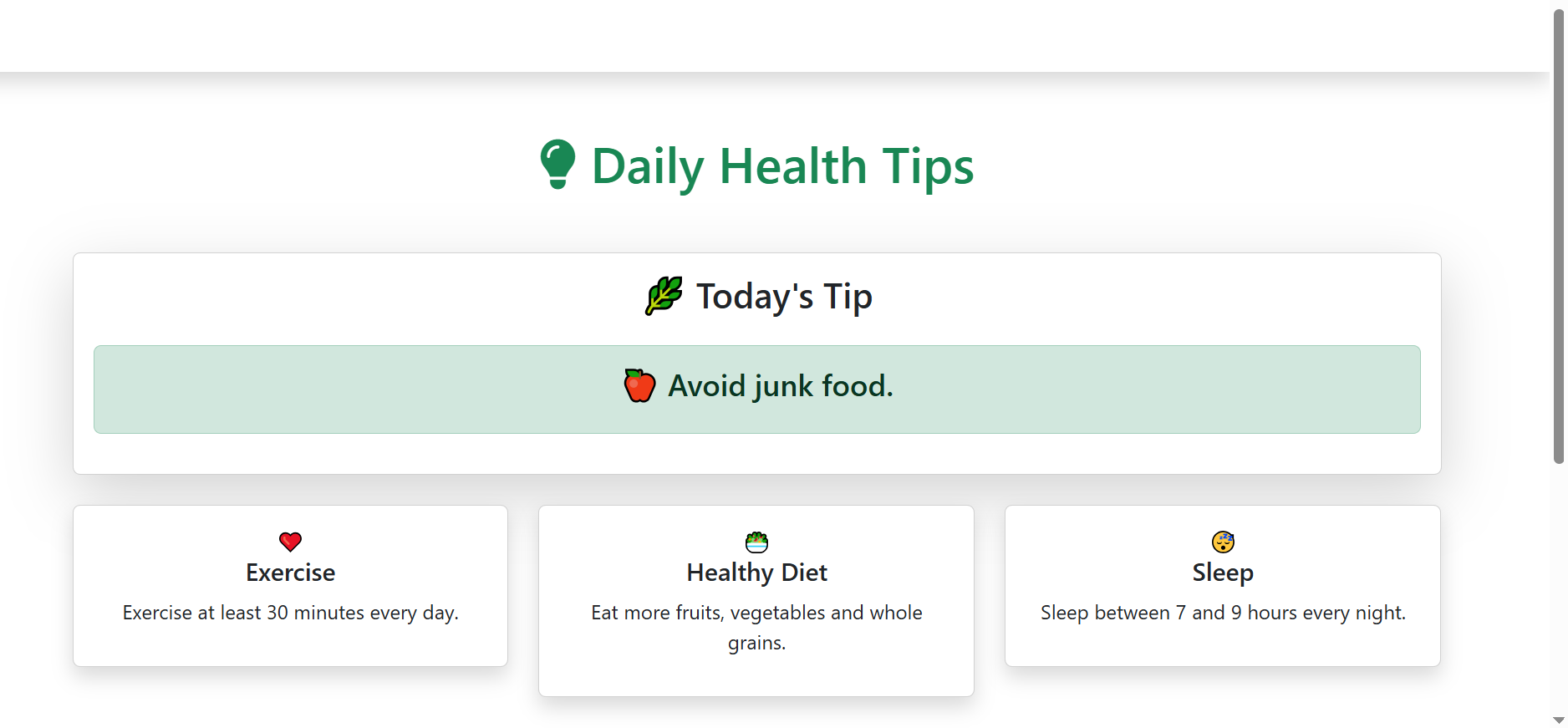
- Daily Health Tips that promote healthy habits aligned with SDG 3.
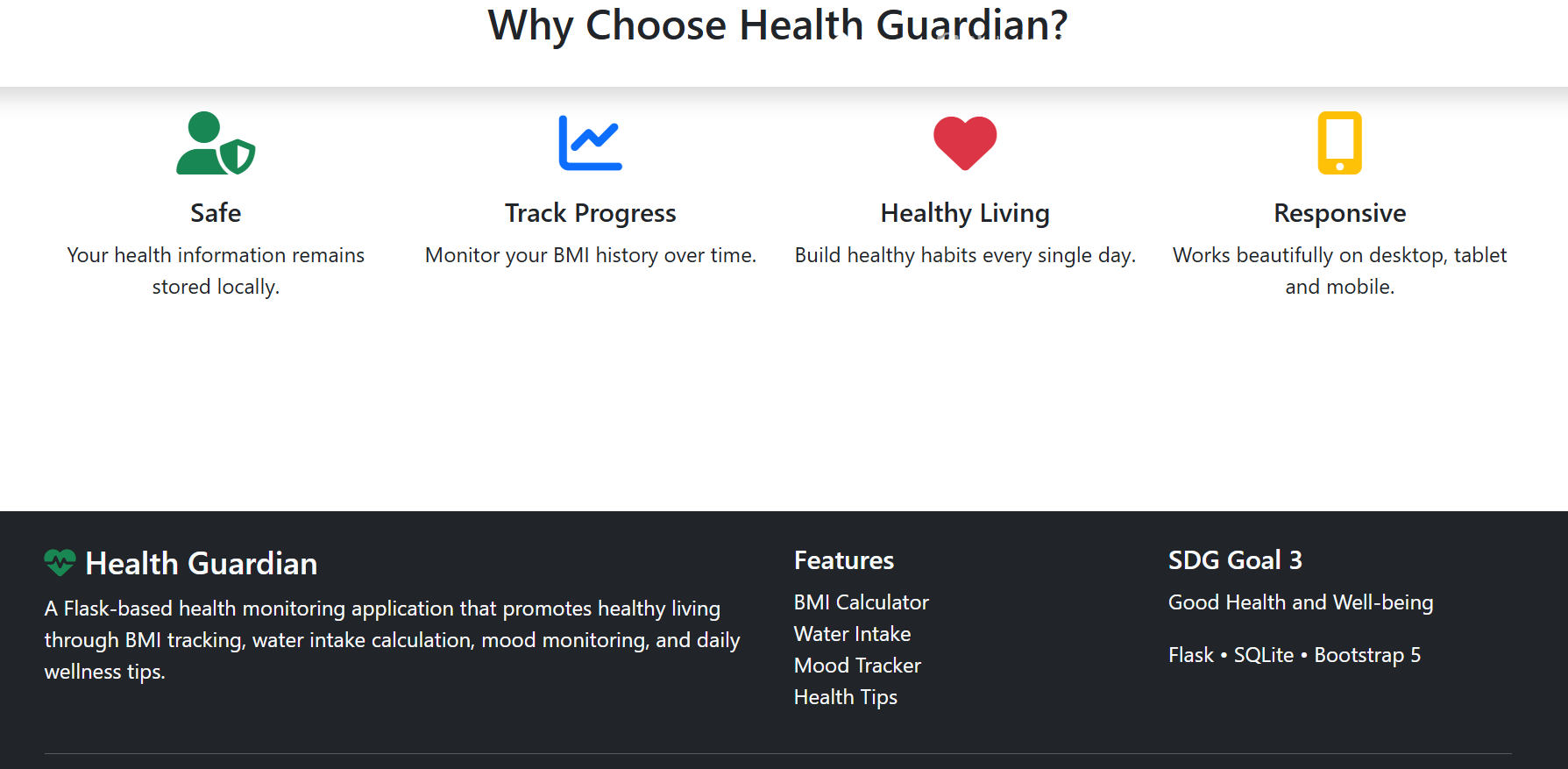
- Responsive Dashboard built with Bootstrap 5 for a clean and user-friendly experience.
Together, these features provide users with a centralized platform for monitoring important aspects of their daily health.
How I built it
The project was developed using a combination of modern web technologies:
- Python for the application logic.
- Flask as the backend web framework.
- SQLite for lightweight local data storage.
- HTML5 and Jinja2 templates for dynamic web pages.
- Bootstrap 5 for responsive user interface design.
- CSS3 for custom styling and improved user experience.
- Chart.js to visualize BMI history through interactive graphs.
- GitHub for source code hosting and version management.
The application follows a modular structure by separating templates, static assets, backend logic, and database operations, making the project easier to maintain and extend.
Challenges I ran into
One of the biggest challenges was integrating persistent data storage using SQLite while keeping the application structure simple and organized. Managing database connections, creating reusable database functions, and ensuring BMI records were stored correctly required careful planning.
Another challenge involved displaying historical BMI data as an interactive chart. Connecting Flask with Chart.js required converting database records into a format that JavaScript could interpret correctly.
Throughout development, I also improved the application's navigation, dashboard layout, and overall user experience by reorganizing pages and creating a dedicated history section.
Accomplishments that I'm proud of
Some of the achievements I'm most proud of include:
- Successfully developing a complete Flask web application from scratch.
- Implementing persistent BMI history using SQLite.
- Creating interactive BMI visualizations with Chart.js.
- Designing a responsive interface using Bootstrap 5.
- Integrating multiple health-related tools into a single application.
- Building a project that directly supports UN Sustainable Development Goal 3 (Good Health and Well-being).
What I learned
Developing Health Guardian helped me strengthen my understanding of full-stack web development using Flask. I gained practical experience in routing, template rendering, database management with SQLite, responsive frontend design, and integrating JavaScript libraries for data visualization.
Beyond the technical skills, I also learned how thoughtful software design can contribute to public health awareness by providing users with accessible tools for preventive healthcare.
What's next for Health Guardian
Future versions of Health Guardian could include:
- User authentication and personal accounts.
- Cloud database integration for secure online access.
- Personalized health recommendations powered by Artificial Intelligence.
- Medication and appointment reminders.
- Exercise and nutrition tracking.
- Integration with wearable health devices and fitness trackers.
- Support for additional health indicators such as blood pressure, blood sugar, and heart rate.
The long-term vision is to transform Health Guardian into a comprehensive digital wellness platform that empowers individuals to make healthier lifestyle choices while contributing to the objectives of SDG 3: Good Health and Well-being.


Log in or sign up for Devpost to join the conversation.