-
-
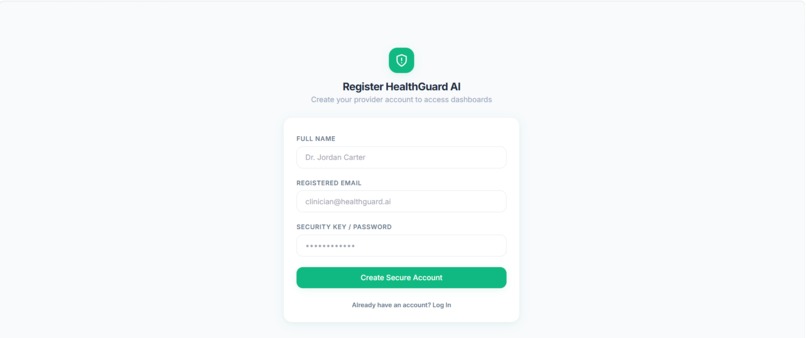
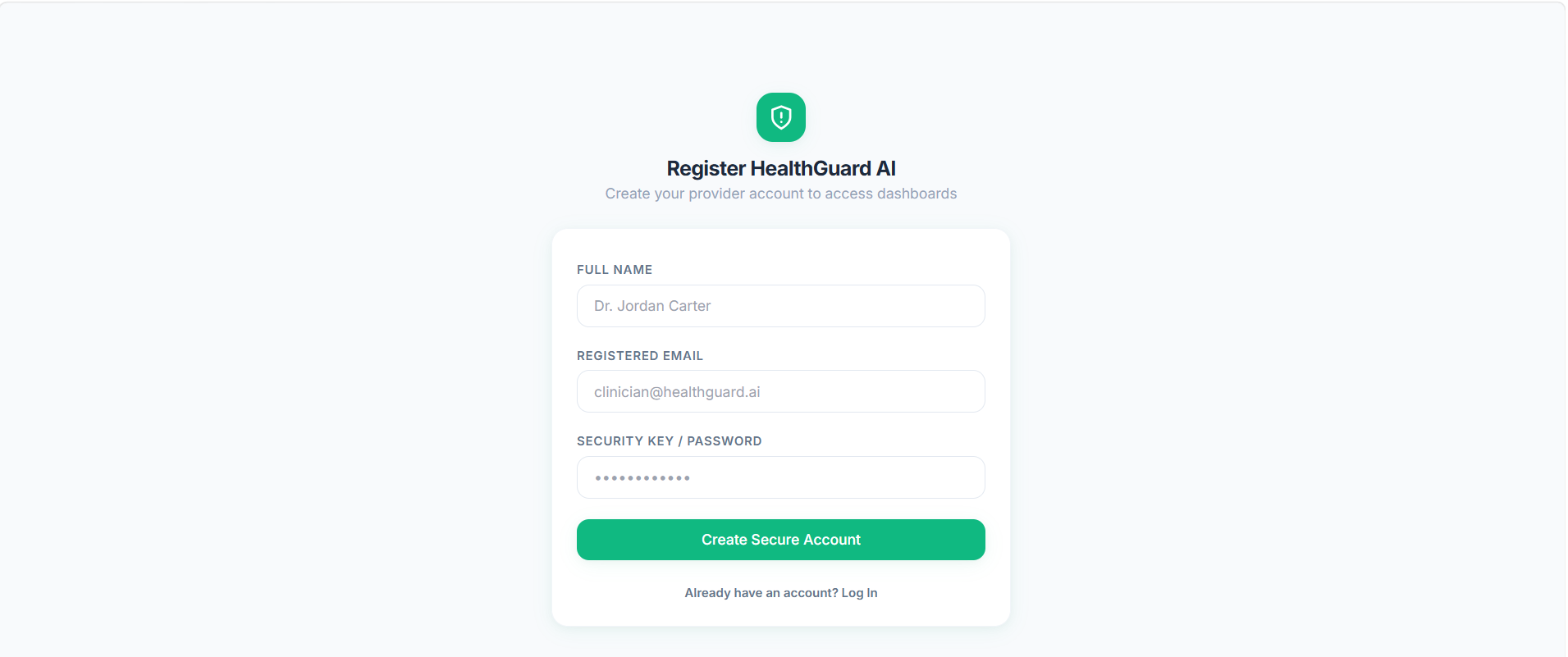
Create a secure Health Guard AI account using your name, email, and password to access personalized healthcare services.
-
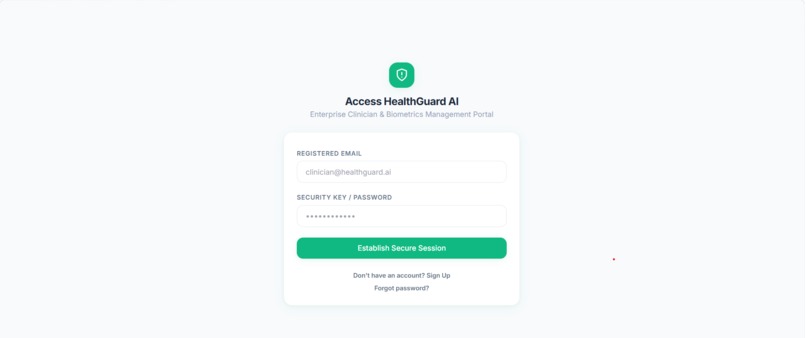
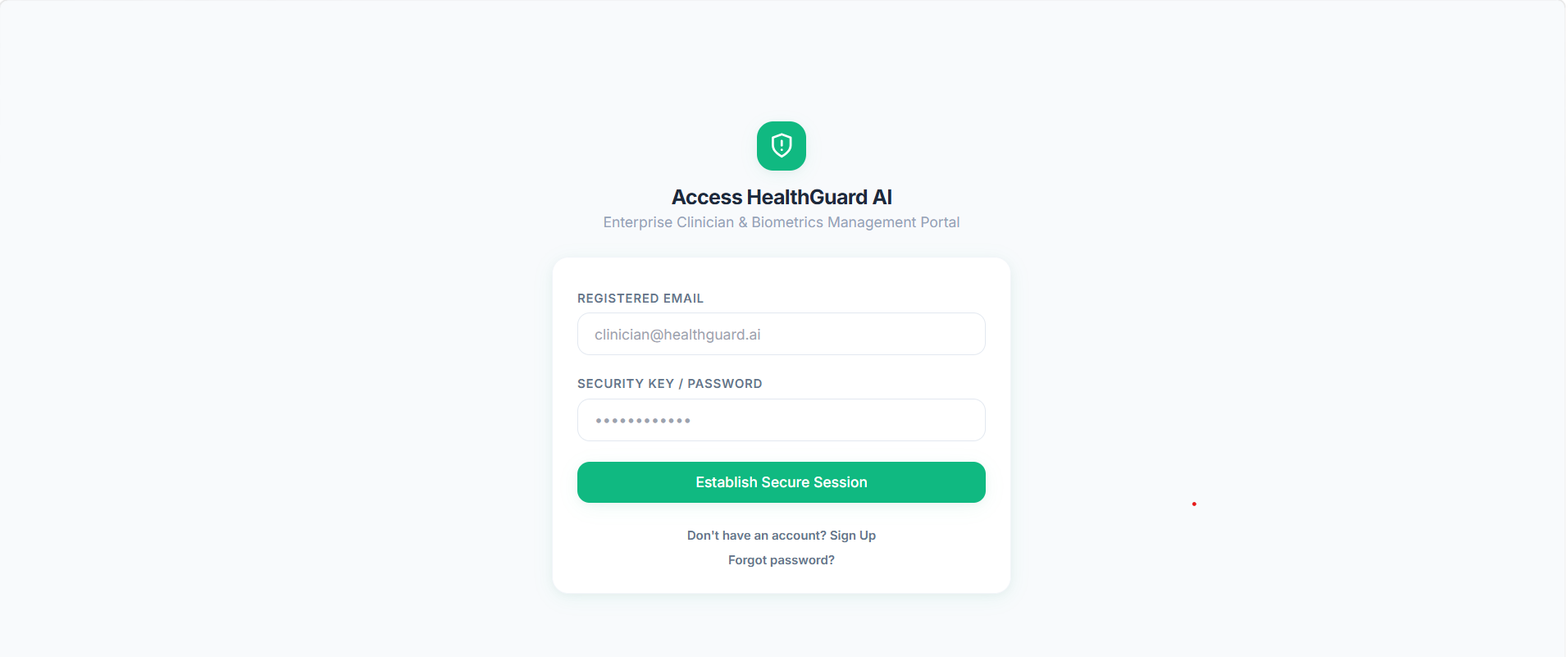
Securely sign in with your email and password to access your dashboard, health records, and AI-powered insights.
-
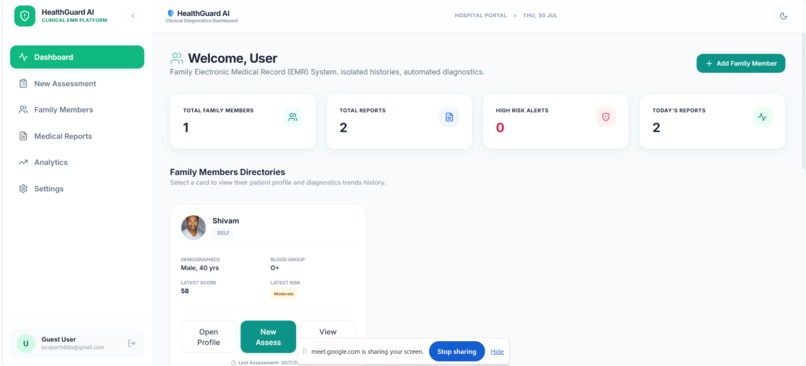
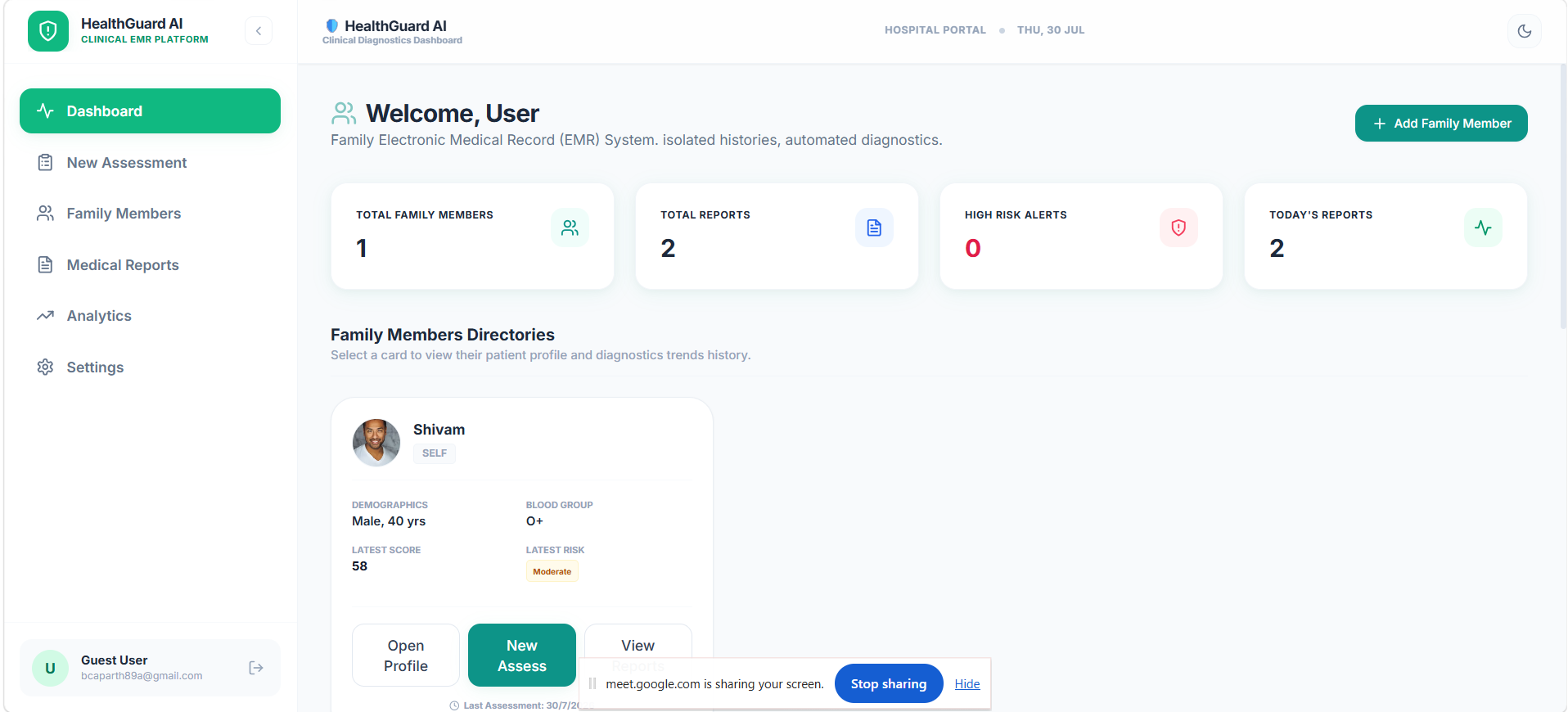
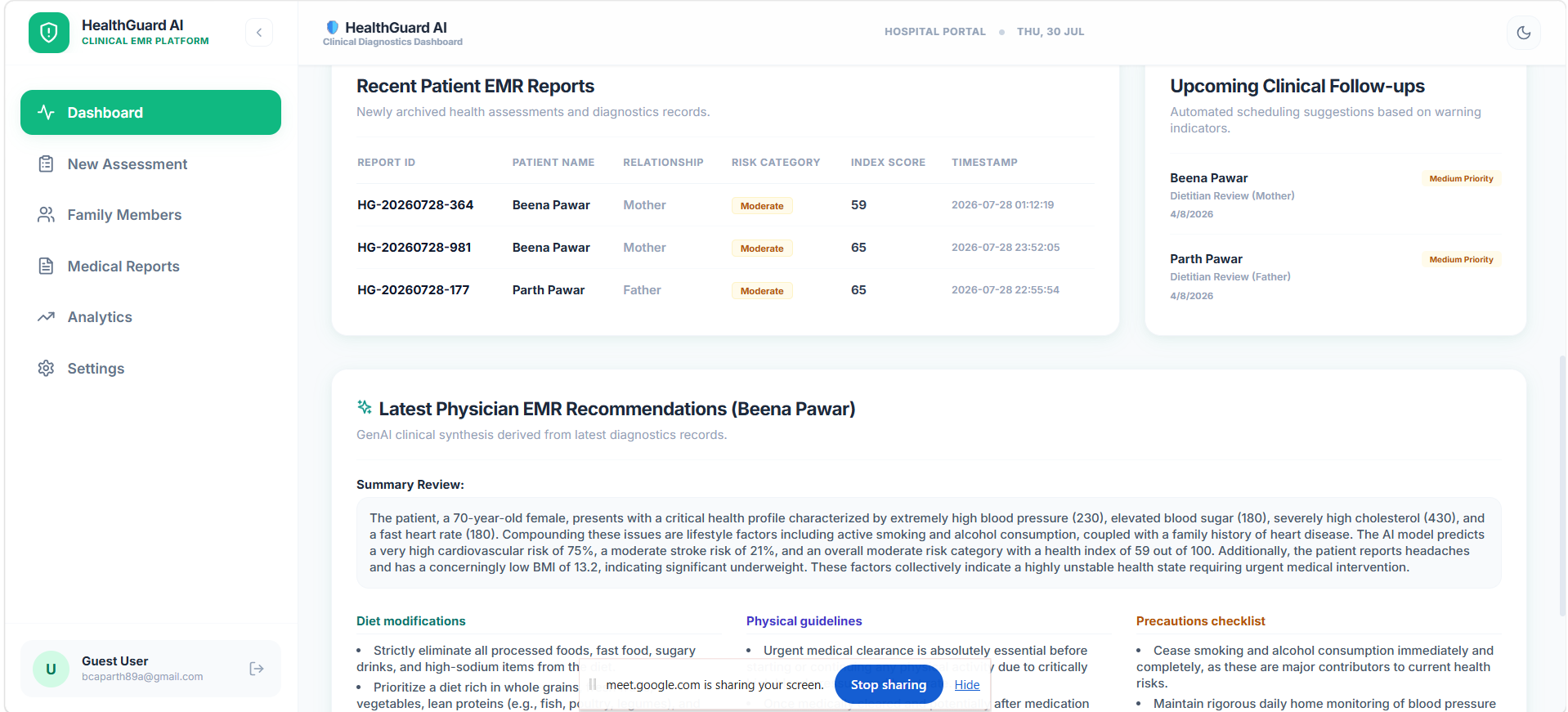
Monitor family health records, AI insights, reports, and risk alerts through a secure and interactive healthcare dashboard.
-
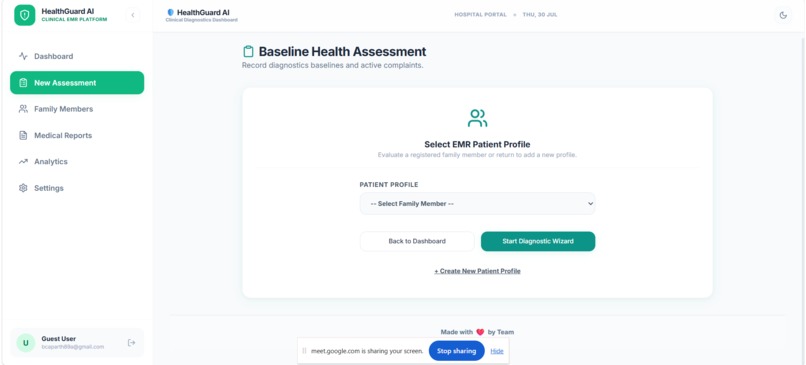
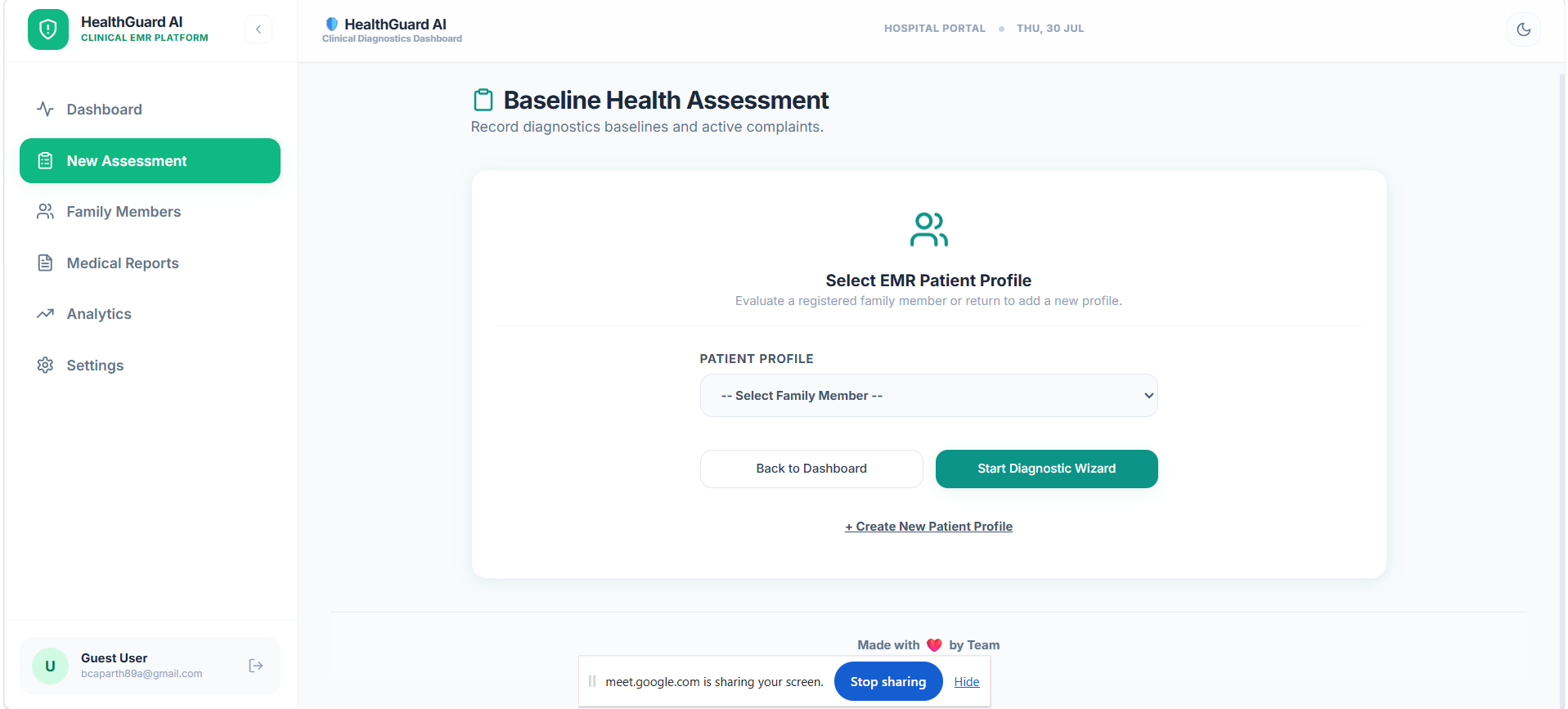
Select an EMR patient profile to begin an AI-powered health assessment with personalized diagnostic insights.
-
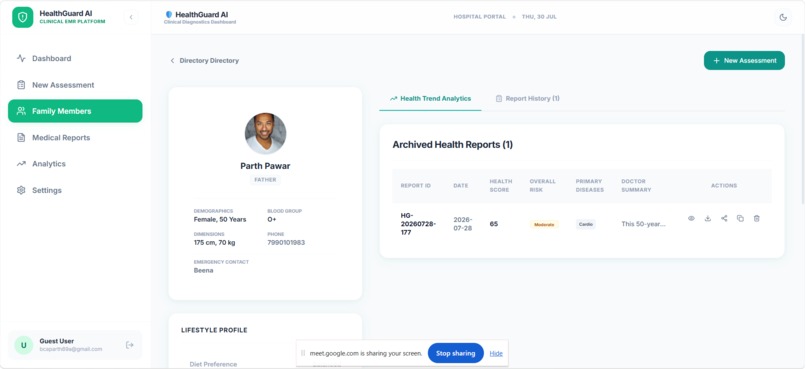
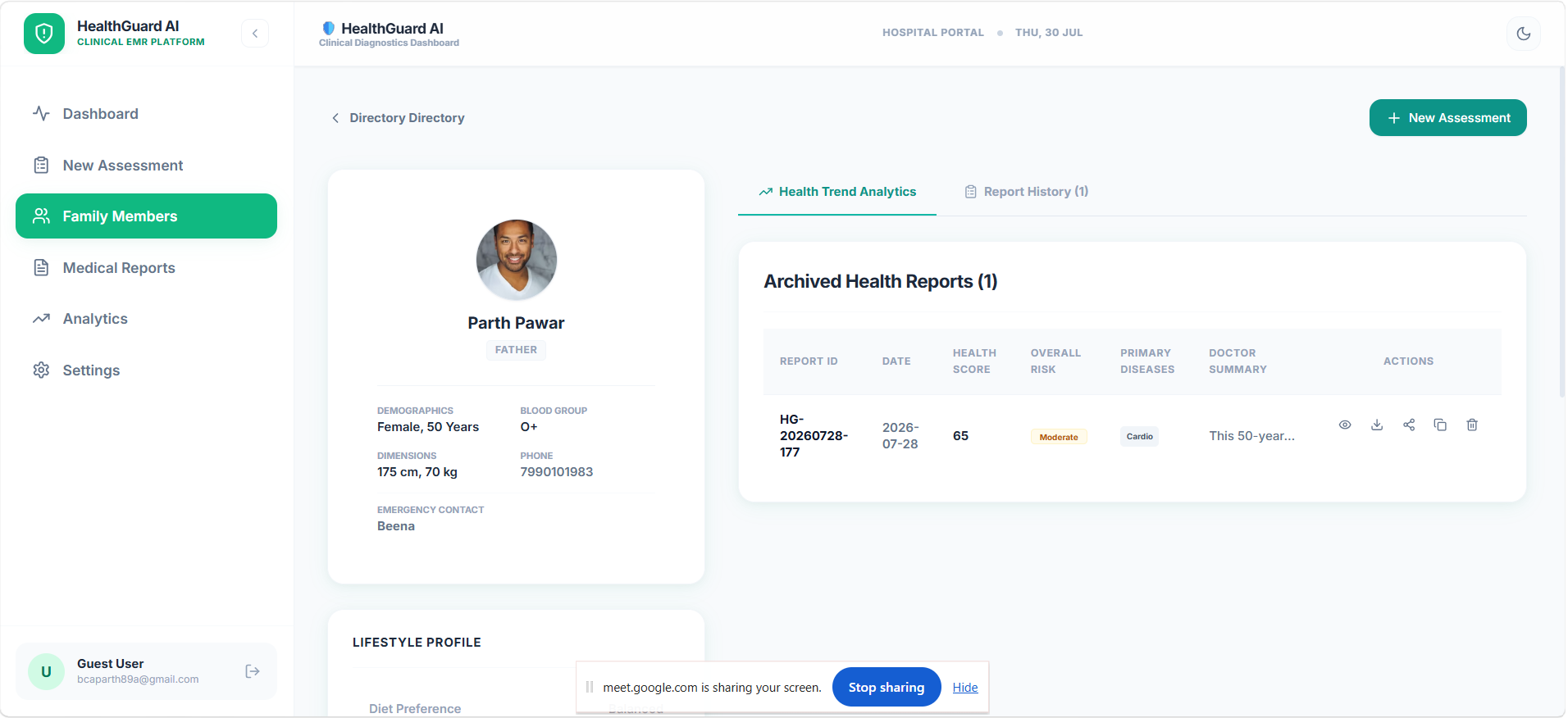
Access patient details, archived reports, health trends, and AI insights for effective family health management.
-
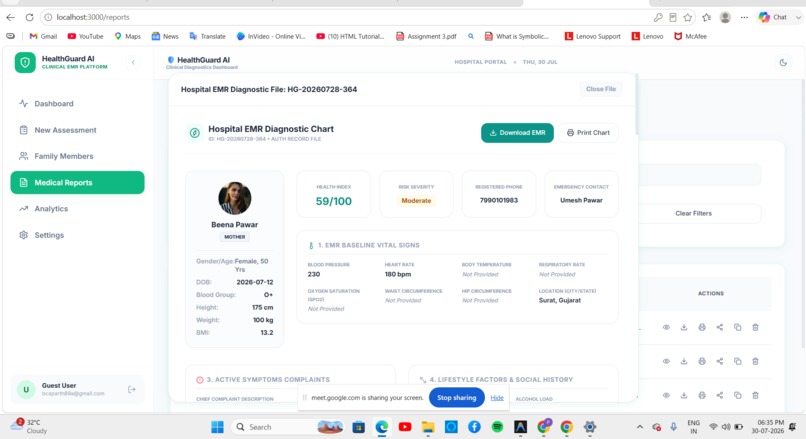
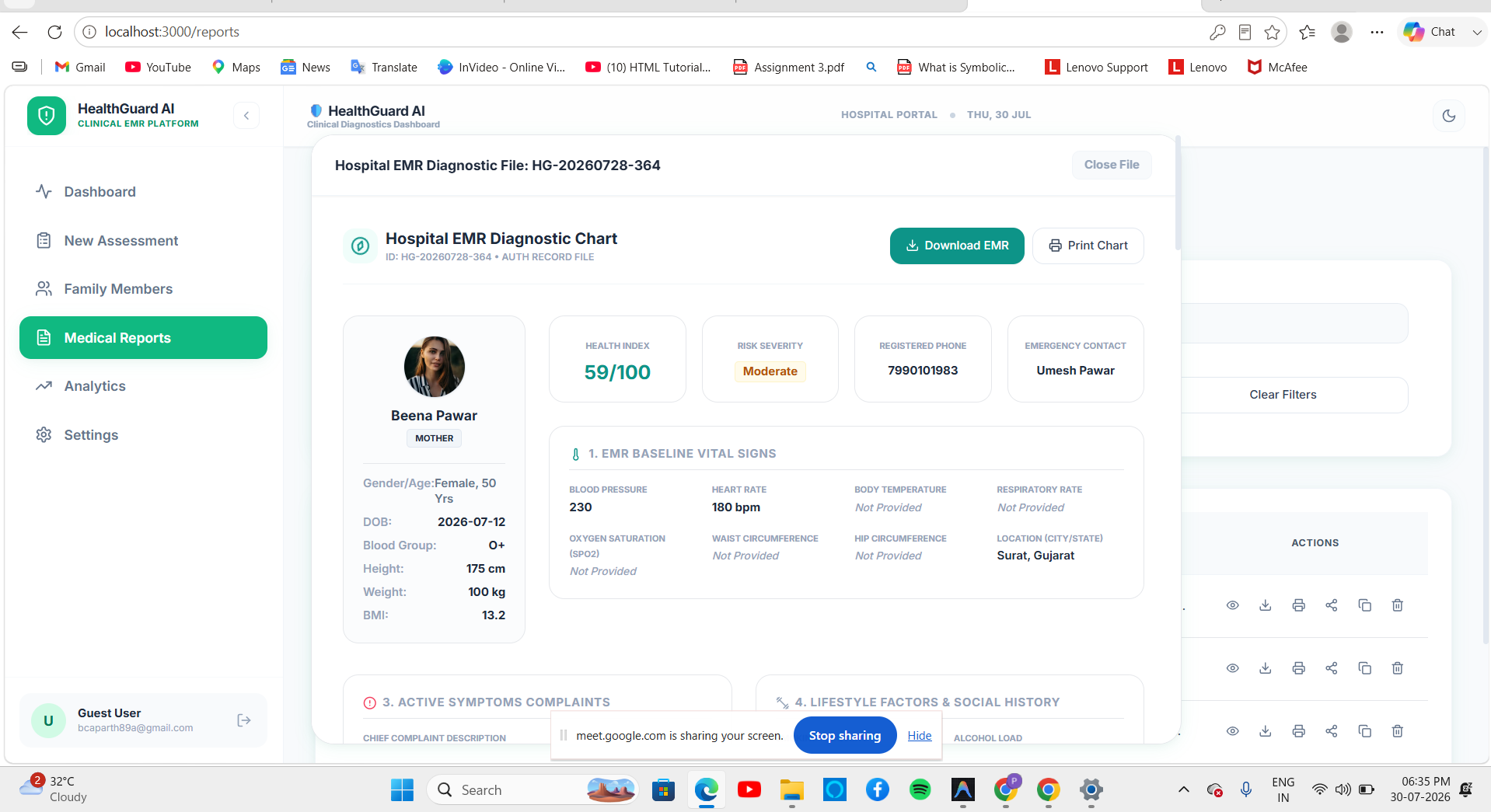
View detailed EMR reports with patient information, health scores, vital signs, AI analysis, and download options.
-
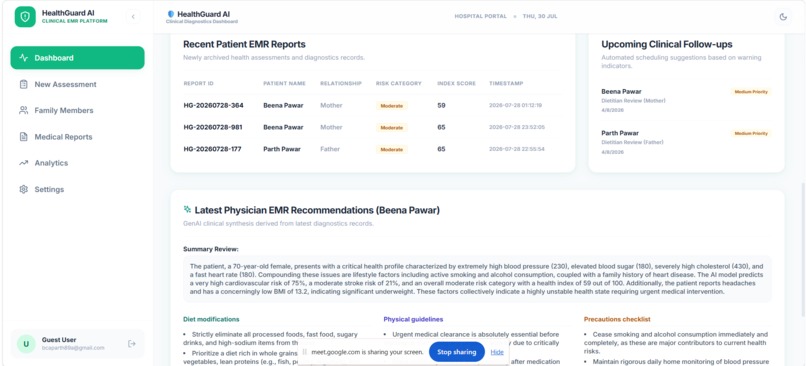
Access a detailed EMR with patient data, vital signs, AI health analysis, and download or print medical reports.
-
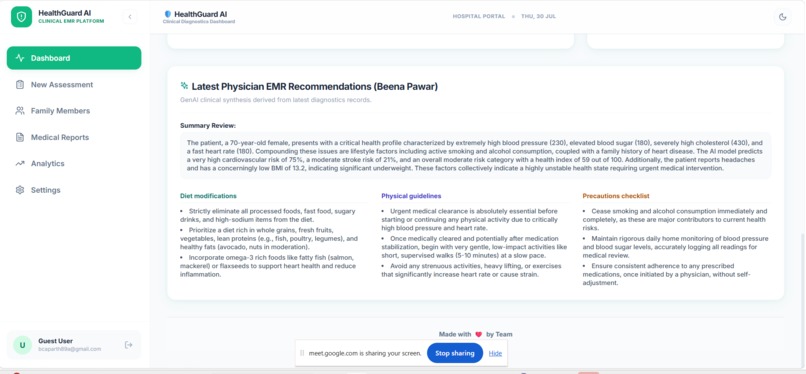
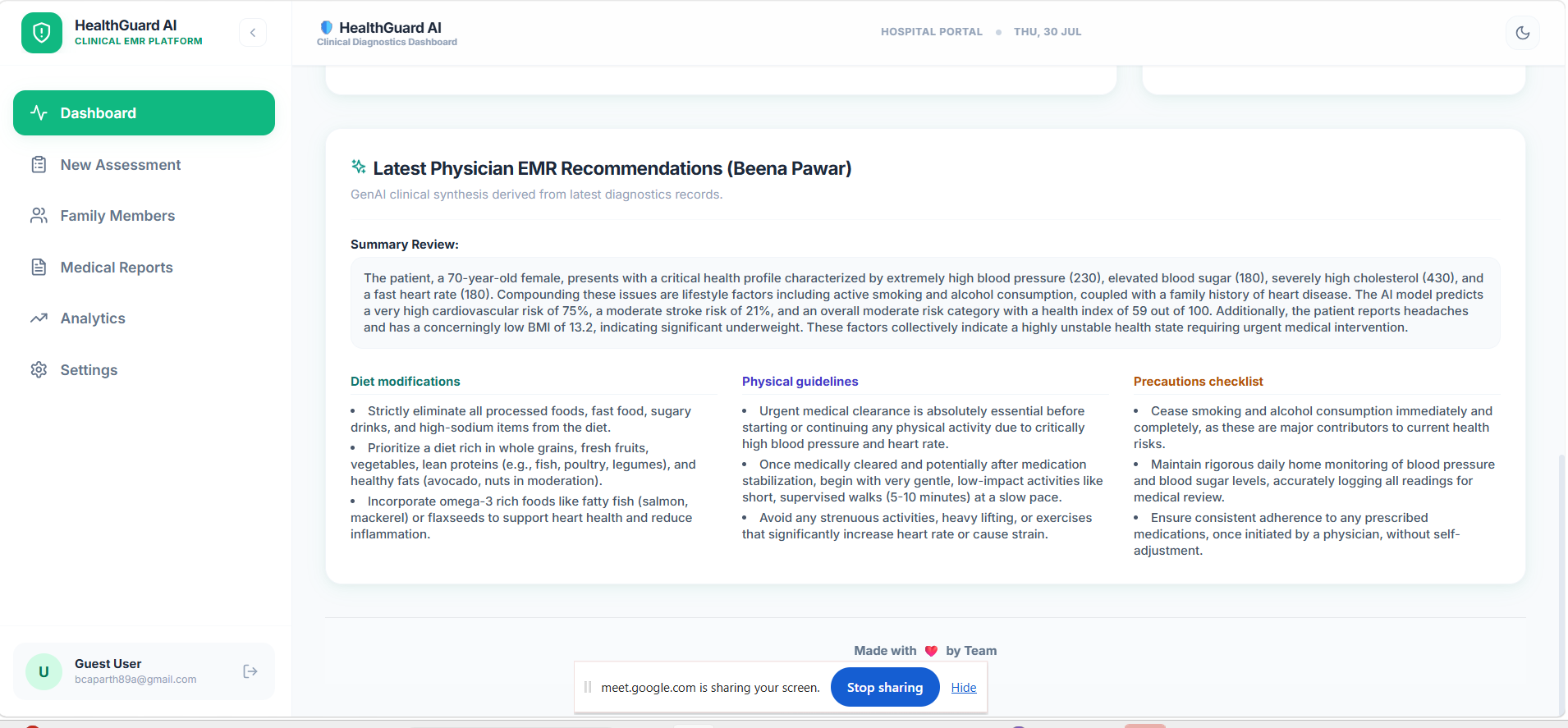
Receive AI-powered health recommendations, diet plans, lifestyle guidance, and precautions from EMR analysis.
Inspiration
The idea for Health Guard AI came from a simple observation: many people receive medical reports but don't fully understand what they mean. They often have to search online for explanations, which can be confusing and sometimes misleading. At the same time, managing health records for yourself and your family can be difficult because everything is scattered across different files and hospitals.
We wanted to build something that makes healthcare information easier to understand and more organized. By combining AI with digital health records, we aimed to create a platform that not only stores medical data but also helps users make sense of it through personalized insights and recommendations.
What it does
Health Guard AI is an AI-powered healthcare assistant that helps users securely manage their medical records while providing intelligent health insights.
Users can create an account, add family members, upload their medical reports, and receive AI-generated explanations in simple language. Instead of looking at complex medical terms, users get an easy-to-understand summary along with personalized health recommendations and risk analysis.
The platform also provides a dashboard where users can keep track of their health records, monitor trends, download reports as PDFs, and manage all their healthcare information in one place. Every user's data is stored securely and remains completely private.
How we built it
We built Health Guard AI using a modern full-stack technology stack.
The frontend was developed with React, Vite, Tailwind CSS, and Framer Motion to create a fast, responsive, and visually appealing user interface.
For the backend, we used Node.js and Express.js, while Supabase handled authentication and database management. We integrated Google Gemini AI to analyze uploaded health reports and generate personalized health insights and recommendations.
We also implemented PDF report generation, responsive layouts for different screen sizes, and a clean dashboard to make the overall experience smooth and user-friendly.
Challenges we ran into
One of the biggest challenges was integrating AI in a way that produced meaningful and easy-to-understand health insights. We had to carefully design the prompts and response structure so that the information was useful without overwhelming the user.
Another challenge was managing user-specific data securely. Since health information is sensitive, we needed to ensure that every user could only access their own records and family members.
Making the entire application responsive across mobile, tablet, and desktop devices also required significant effort. We spent a lot of time refining the interface so that it looked consistent and professional on every screen size.
Accomplishments that we're proud of
We're proud that we were able to build a complete healthcare platform that combines modern web development with AI in a meaningful way.
One of our biggest achievements is creating a system where users can upload medical reports and instantly receive AI-generated explanations and health recommendations. We also successfully implemented secure authentication, family member management, PDF report generation, and a responsive dashboard without compromising the user experience.
Most importantly, we built something that has the potential to make healthcare information more accessible and understandable for everyday users.
What we learned
This project taught us much more than just working with new technologies.
We learned how important it is to build applications with the user in mind, especially in a field like healthcare where clarity and trust are essential. We also gained valuable experience integrating AI into a real-world application, designing secure authentication systems, managing databases, and building scalable full-stack applications.
Working on Health Guard AI also improved our teamwork, problem-solving, and system design skills. Every challenge pushed us to think more carefully about both the technical implementation and the overall user experience.
What's next for Health Guard AI
This project is just the beginning. We have several ideas to make Health Guard AI even more useful in the future.
We plan to add features such as OCR-based medical report scanning, medicine reminders, wearable device integration, appointment scheduling, multilingual support, and a voice-enabled AI health assistant. We also want to improve our AI model so it can provide even more personalized health insights based on a user's medical history and lifestyle.
Our long-term vision is to make Health Guard AI a trusted digital healthcare companion that helps people understand, manage, and take better care of their health in a simple and accessible way.
Built With
- artificial
- css3
- express.js
- fastapi
- framer-motion
- git
- github
- google-gemini-ai
- html5
- javascript
- jwt-authentication
- lucide-react
- node.js
- pdf-generation
- postgresql
- python
- react-router
- react.js
- render
- responsive-design
- rest-api
- supabase
- tailwind-css
- vercel
- vite

Log in or sign up for Devpost to join the conversation.