-
-
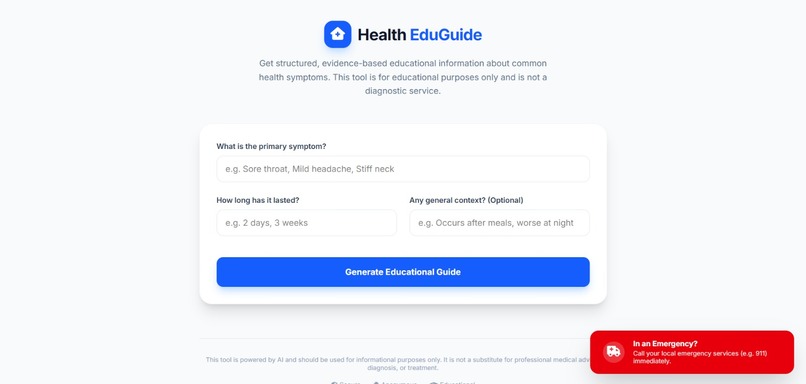
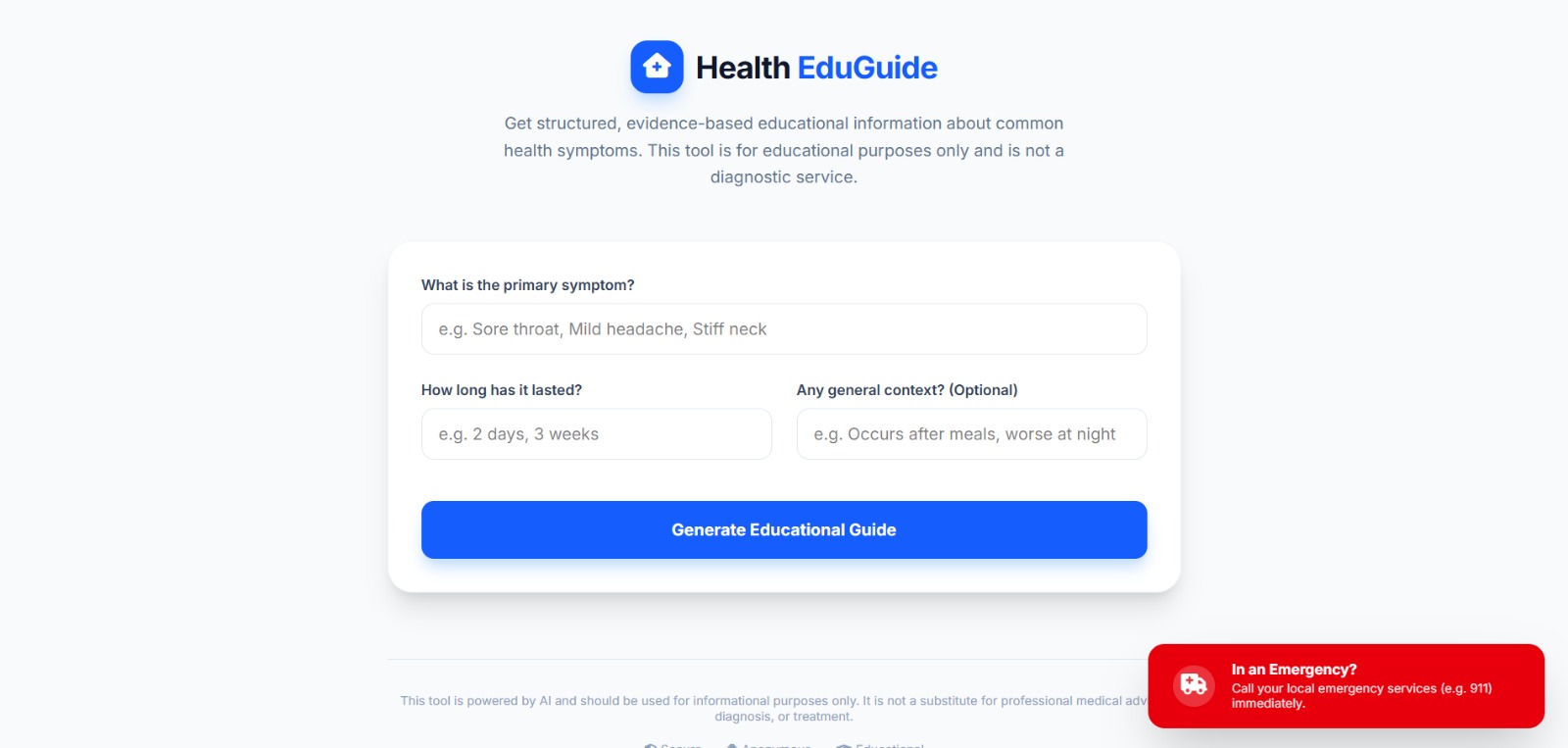
Home Page
-
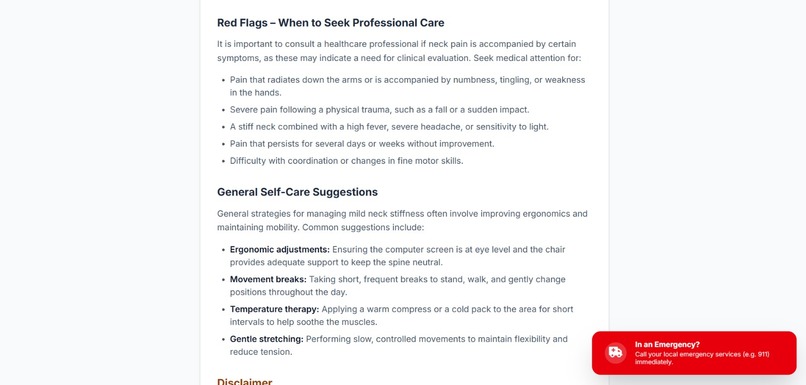
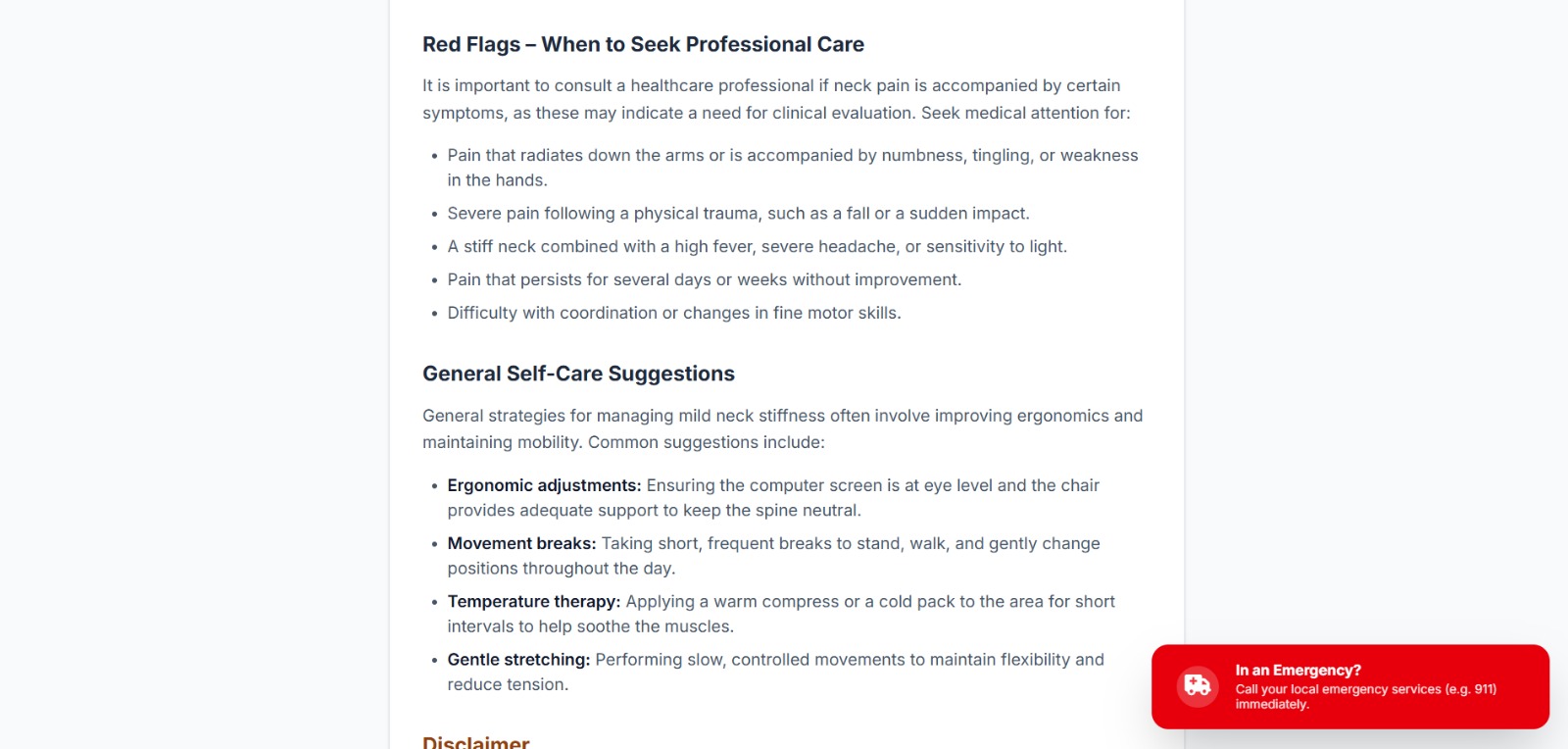
Red Flags and self-care description
-
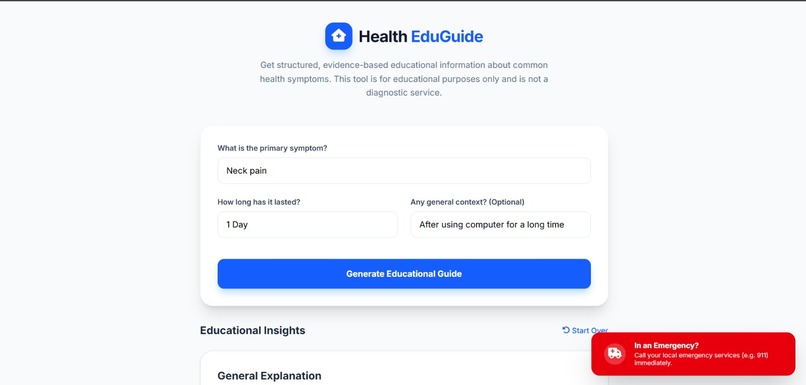
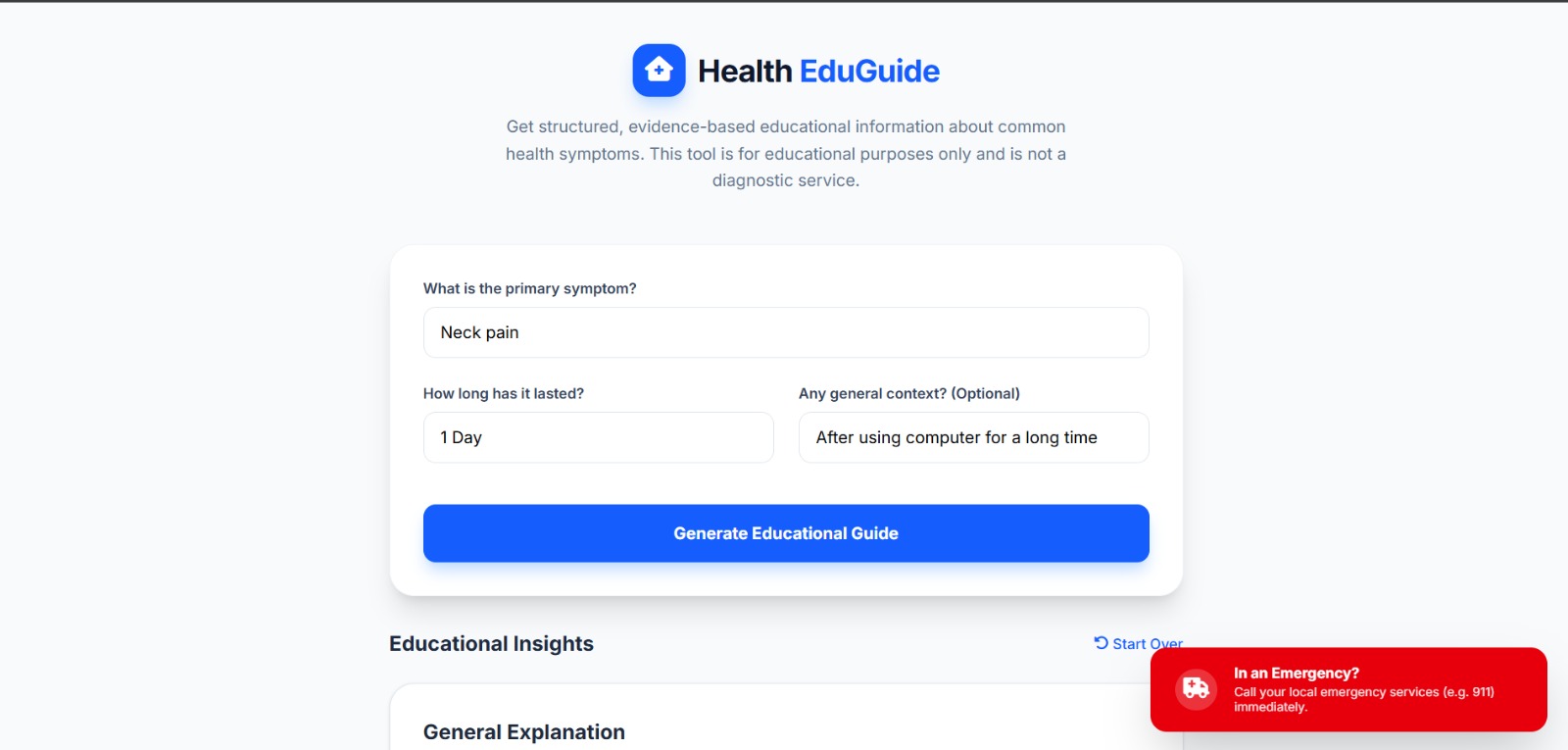
Page to tell the AI about user's symptoms
-
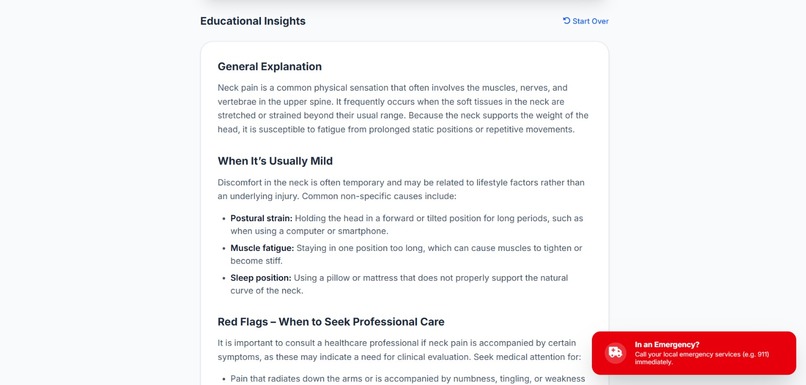
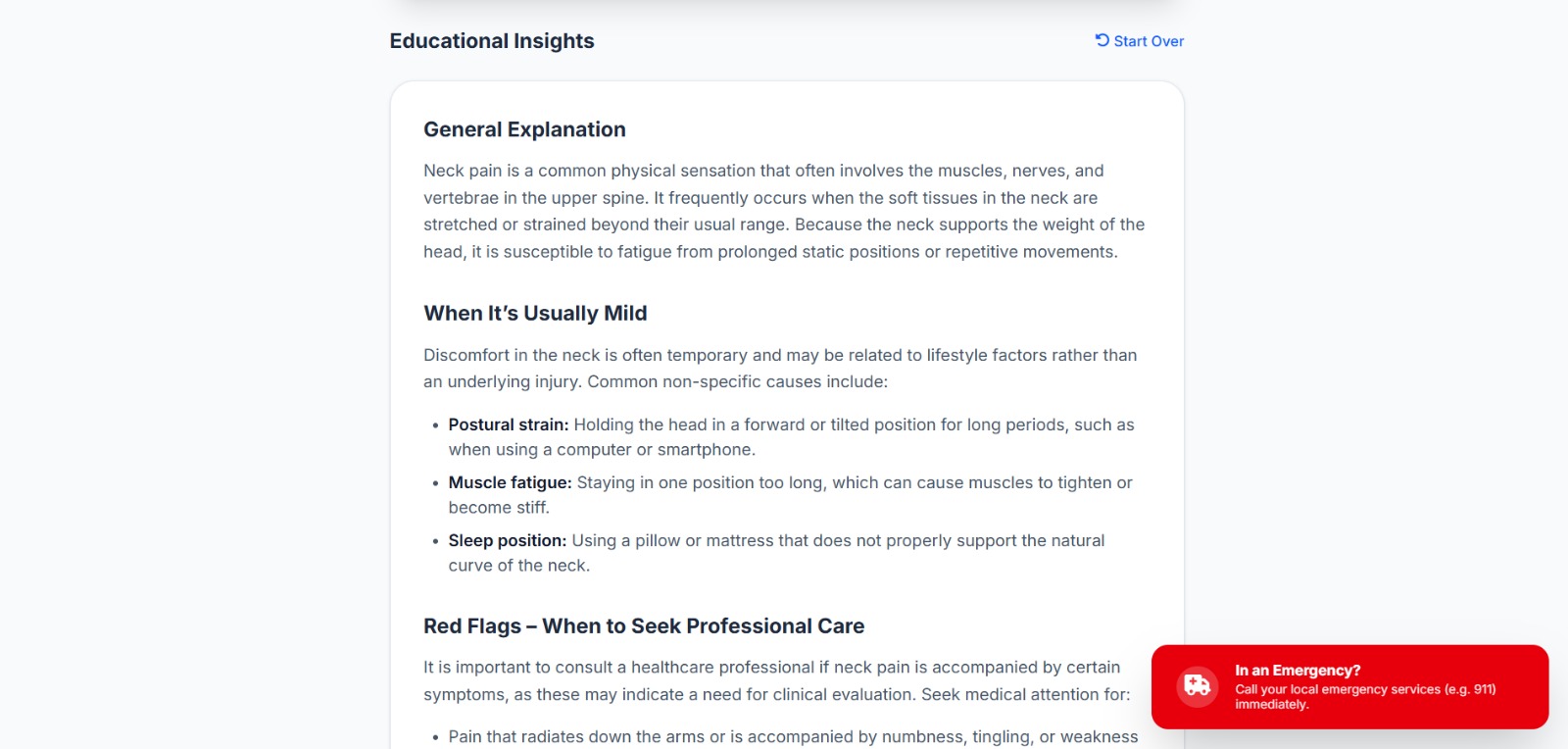
General explanation of symptoms
Inspiration
Many people turn to the internet when they experience symptoms, but what they often find is misinformation, alarming worst-case scenarios, or unclear advice. This creates unnecessary anxiety and sometimes delays appropriate care.
The inspiration for Health EduGuide came from recognizing a gap between health education and medical diagnosis. There are very few tools that clearly stay within safe boundaries while still helping users understand what their symptoms might generally indicate and when they should seek professional care.
I wanted to build something that educates without diagnosing, reduces fear, and encourages responsible care-seeking behavior.
What It Does
Health EduGuide is an AI-powered web tool that provides general, non-diagnostic symptom education.
Users enter:
- A symptom
- Duration
- Optional general context
The system then generates:
- A clear, plain-language explanation of common, non-diagnostic causes
- Situations where the symptom is usually mild
- Red-flag warning signs that require medical attention
- General self-care guidance (non-medical)
- Explicit disclaimers and scope limitations
The tool does not diagnose, predict conditions, or provide treatment advice.
How I Built It
The project was built as a web-based prototype using:
- A simple frontend for structured symptom input
- An AI language model for natural-language understanding and generation
- Rule-based prompt constraints to enforce safety and scope control
- Structured output formatting for clarity and usability
The AI logic was carefully designed to avoid medical overreach and to prioritize responsible, educational responses.
Responsible AI Approach
From the start, this project was intentionally scoped to follow responsible AI principles:
- No diagnosis or probability estimates
- No personal data storage
- No emergency handling claims
- Clear disclaimers and limitations
- Encouragement to consult healthcare professionals when appropriate
This ensures the tool remains ethical, safe, and realistic for real-world use.
Challenges
One of the biggest challenges was balancing usefulness with safety. It required careful prompt design to ensure the AI remained informative without crossing into medical advice.
This project taught me:
- How to apply AI responsibly in sensitive domains like healthcare
- The importance of clear scope definition
- How usability and ethics are just as important as technical capability
What We Learned
Building Health EduGuide highlighted how important scope control is in healthcare AI. We learned that usefulness does not come from prediction or diagnosis, but from clarity, safety, and trust.
Key learnings include:
- How to design AI prompts that educate without diagnosing
- The importance of clear disclaimers and ethical boundaries
- How small UX decisions can significantly affect user trust and comprehension
- Why responsible AI design is as critical as technical accuracy in healthcare
Accomplishments We’re Proud Of
- Built a working AI-powered prototype within strict healthcare safety boundaries
- Successfully avoided medical overreach while still delivering meaningful value
- Created a clean, judge-friendly, and user-friendly web experience
- Implemented a responsible AI approach aligned with real-world healthcare expectations
- Delivered a solution that reduces misinformation instead of adding to it
What’s Next for Health EduGuide
Future improvements for Health EduGuide could include:
- Multi-language support to improve accessibility
- Better UI personalization while still avoiding personal data storage
- Curated, clinician-reviewed educational content integration
- Accessibility enhancements for low-literacy users
- Deployment as a public health education tool or community awareness platform
Health EduGuide is intentionally designed to grow without crossing into diagnosis or treatment, keeping safety and responsibility at its core.
Conclusion
Health EduGuide demonstrates how AI can be used thoughtfully and responsibly to improve health literacy, reduce misinformation, and support better care-seeking decisions — without replacing healthcare professionals.
Built With
- css3
- express.js
- google-ai-studio
- html5
- javascript
- node.js
- railway
- react
- tailwind-css
- visual-studio

Log in or sign up for Devpost to join the conversation.