Inspiration
We noticed that many people struggle to keep track of their health—whether it’s remembering when they took their last medicine, what the doctor said during a visit, or how their sleep and diet affect their symptoms. Most health apps only track one thing, but real health is a combination of sleep, diet, vitals, symptoms, and medication. So we wanted to build something that actually helps people understand their health story in a simple way. With AI becoming so powerful, we thought: Why not create a personal health assistant that can analyze records and give meaningful insights?
What it does
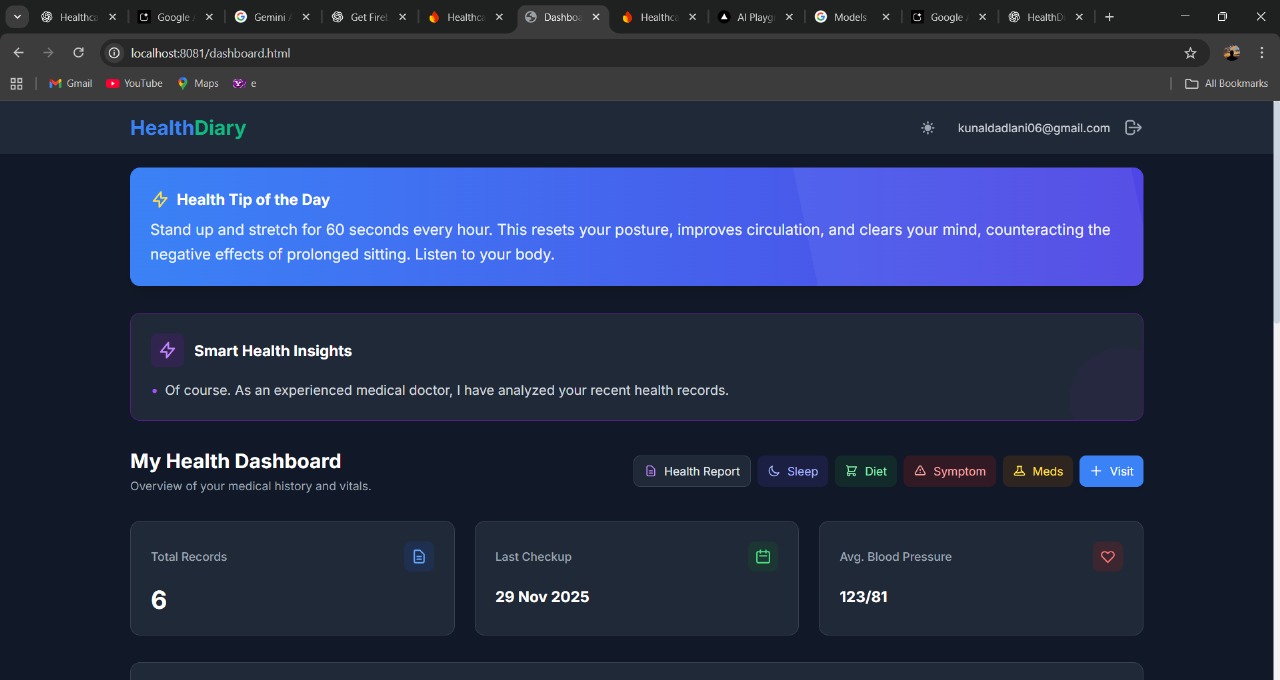
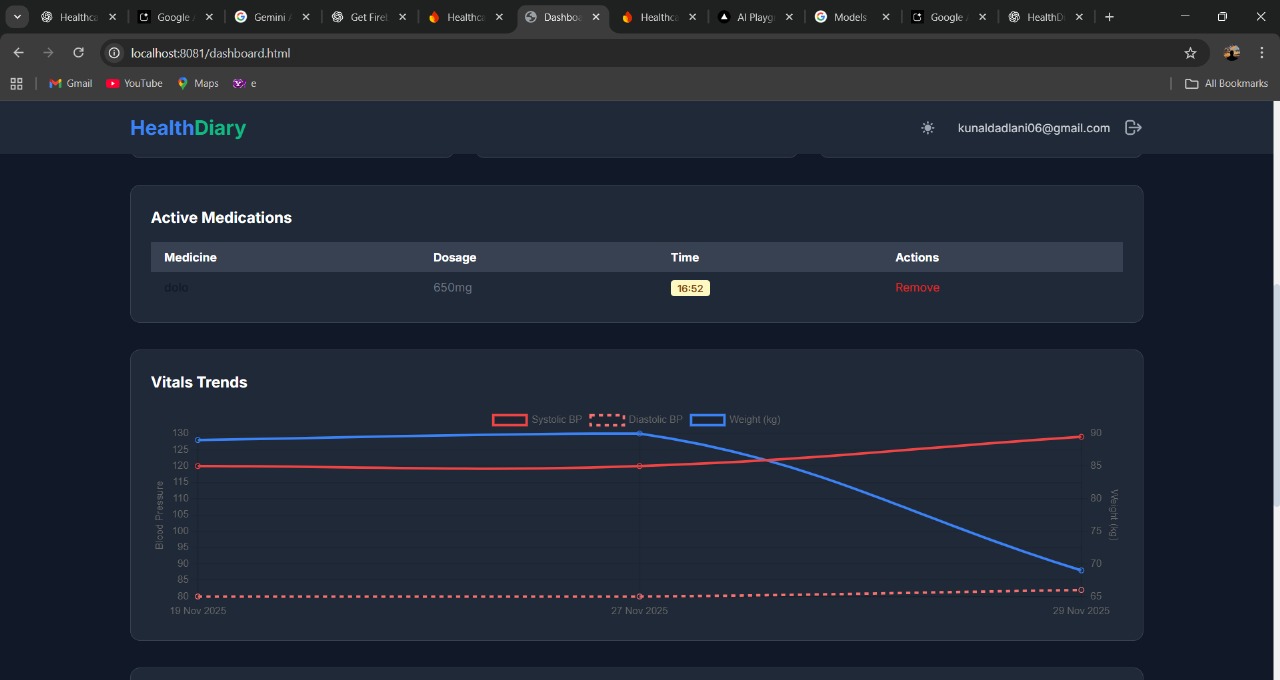
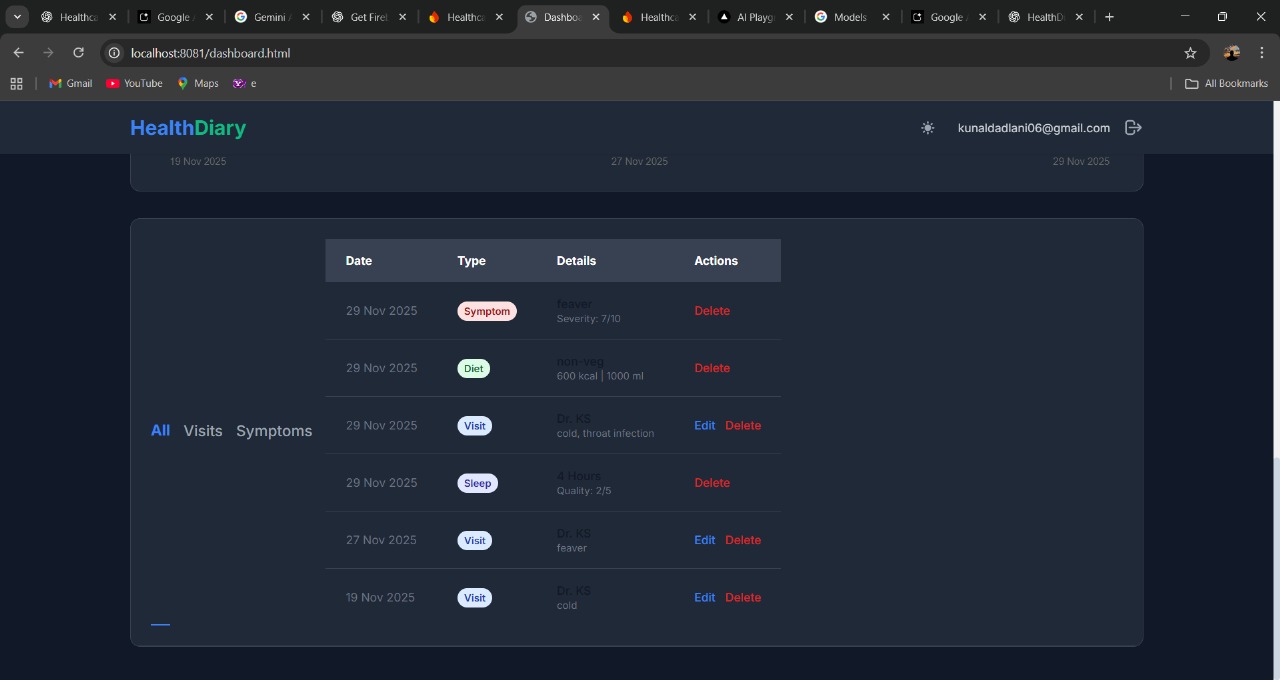
Health Diary is a personal health management platform where users can record: Sleep Diet Symptoms Medications Doctor visits Vitals like BP and weight But the real power comes from our AI system, which: Suggests alternative medicines Recommends personalized diet plans Gives precautionary measures based on symptoms Generates smart insights from the user’s history Helps users understand trends in their vitals
In simple words: It’s your all-in-one digital health companion.
How we built it
We built Health Diary using: Frontend: HTML, CSS, JavaScript (with a modern UI design inspired by dashboards) Backend: Local server + JS for data handling Database: Structured storage for user records (sleep, diet, visits etc.) AI: Integrated LLM-based suggestions to analyze health data and generate reports We focused heavily on UI/UX to make the platform feel clean, modern, and easy to use. The charts, cards, and analytics were crafted to help users understand their health at a glance.
Challenges we ran into
Designing a clean dashboard that could display a lot of data without overwhelming users Making the AI give relevant and medically safe suggestions Handling multiple categories of data and keeping it organized Linking all sections (sleep, diet, meds, symptoms, vitals) so they work together smoothly Ensuring that the insights feel human and understandable, not robotic Each challenge pushed us to think deeper about real-world usability.
Accomplishments that we're proud of
Creating a fully functional, visually polished dashboard Successfully implementing AI-generated health insights Managing multiple types of health records in one unified system Building a tool that actually feels helpful and not just “another health tracker” Completing a project that looks professional and solves a real problem
We’re proud that Health Diary feels like something people could genuinely use.
What we learned
How to design intuitive dashboards for complex data How to integrate AI in a way that feels natural and useful The importance of user experience in health applications That health data is sensitive—and must be handled responsibly How different parts of a system (UI, backend, AI) connect to create one smooth experience
This project taught us both technical skills and real-world design thinking.
What's next for Health Diary
We want to take Health Diary even further Mobile app version Smart notifications (med reminders, symptom alerts, hydration reminders) Integration with wearables (Fitbit, smartwatches) More advanced AI features like: Predictive health warnings Long-term trend analysis Doctor-friendly report generation A secure cloud backend so users can access their data anywhere Multi-user support for families or caregivers
Our goal is to make Health Diary a complete personal health ecosystem.


Log in or sign up for Devpost to join the conversation.