-
-
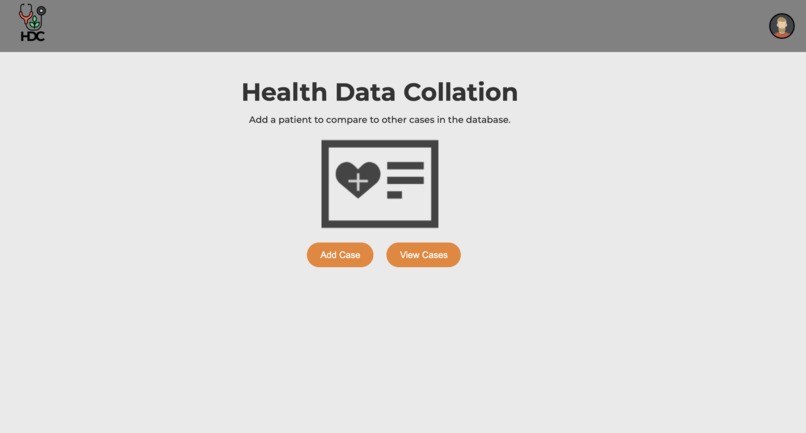
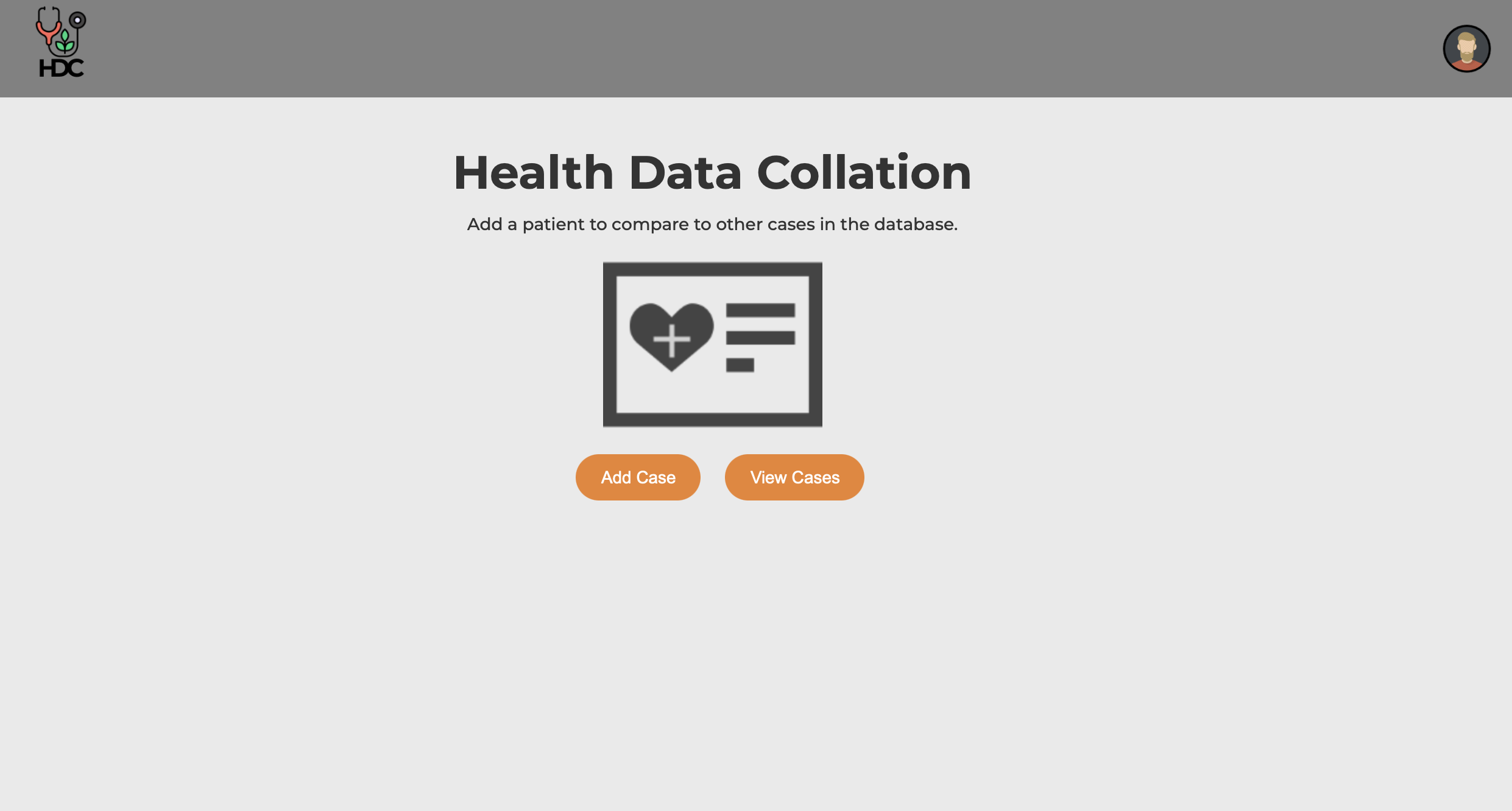
a sneak peak of the web app
-
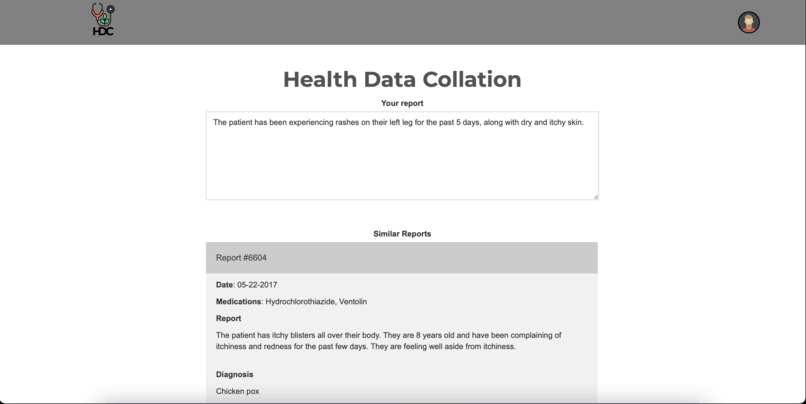
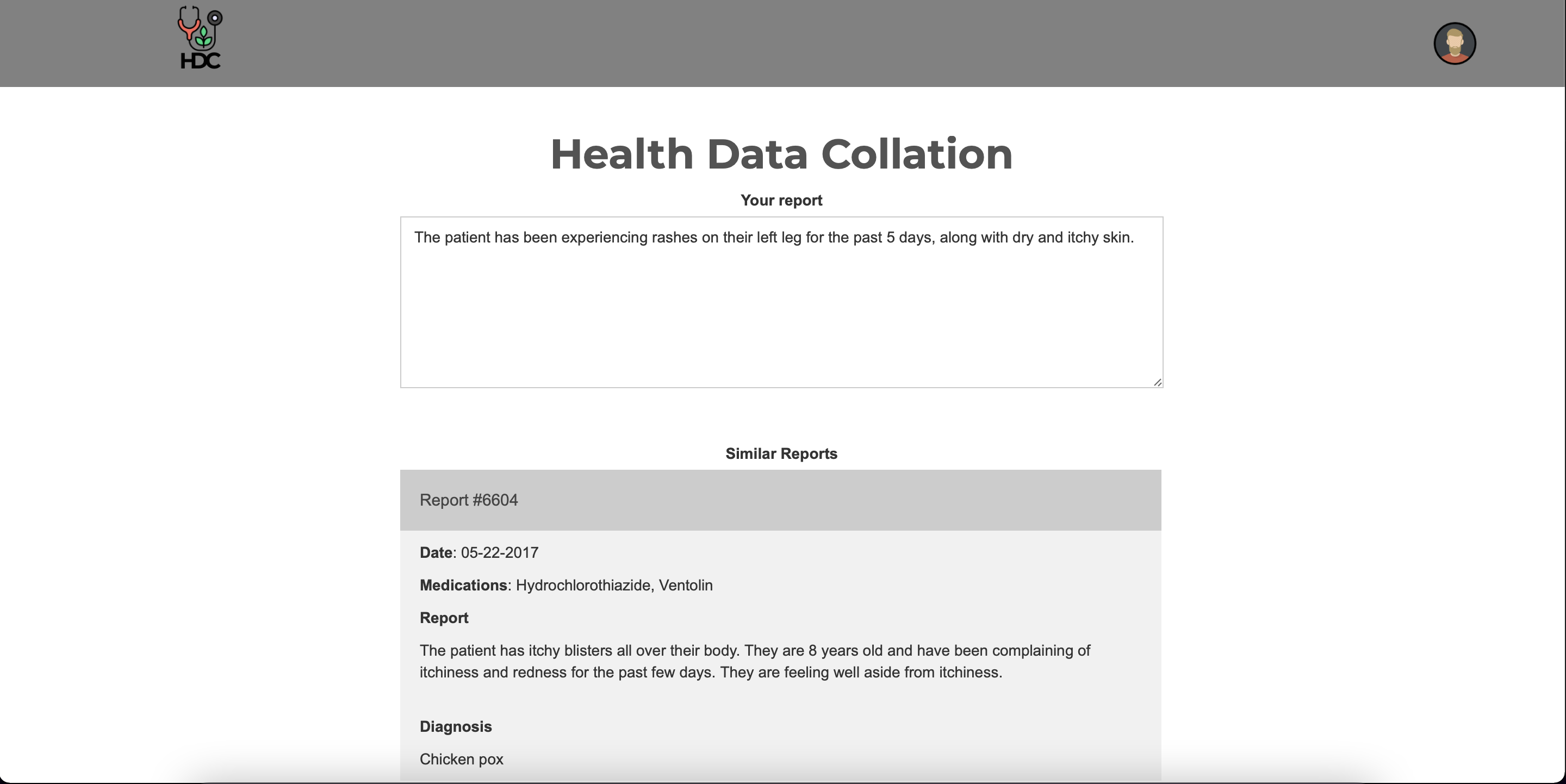
Our app aggregates reports with the most similar descriptions along with a diagnosis using Cohere's novel NLP solutions.
-
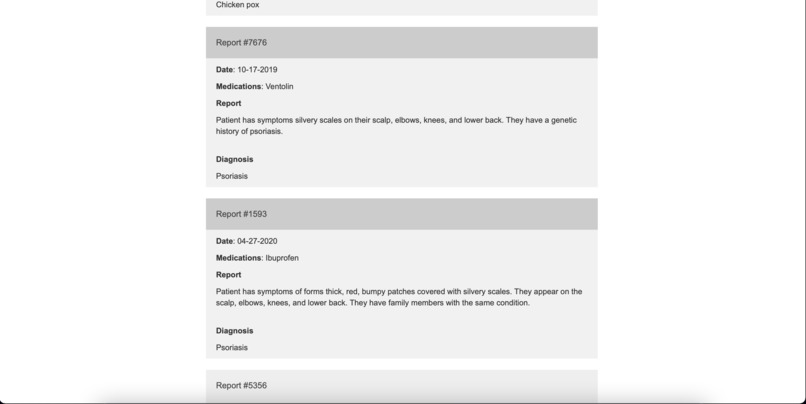
Another look at the aggregated reports.


Inspiration
Our inspiration came from our brainstorming session when we were trying to settle on a theme. We took to the prize list to see if we could come up with something from that list. We were all pretty interested in Cohere so that was clear from the get-go that Cohere would be an element in our hack. The back end team got to looking into what we could accomplish with Cohere and we landed on the embed function. We also were interested in the Sunlife health hack as well, so we knew we wanted to use the embed to solve a problem in the health sector. Then our designated researcher looked for some prevalent issues in the health care system, and we found one across all boards. Data and patient information sharing. We found this link The article is about a man named "Greg Price died of complications after testicular cancer surgery, but a review of his case found missed faxes, follow-ups and botched data-sharing ultimately cost the vibrant 31-year-old Alberta man his life." The fact that people were dying because of our lack of data sharing in the healthcare system propelled us to decided that health data sharing would be our main topic.
What it does
Our hack creates a space where doctors can upload their patients cases, with only information that is medically important - leaving out sensitive information like patient names and birthdates. This is where Cohere come in - we used the cohere embed function to search through all cases (stored in a MongoDB database), and find the most similar and relevant cases which can help with the diagnosis and allows for a more streamlined and stable treatment between different healthcare facilities.
How we built it
We built it by first creating a wireframe for the front-end in Adobe XD, and then coding it in HTML, CSS and JavaScript. from there it went to the backend team. On the backend, we used Cohere's Embed API to generate an archive of vector embeddings for hundreds of medical reports with diagnoses and symptoms. We then create an nearest neighbours index to index the archive, allowing us to compare new medical reports with the archive. This allowed us to pull up the most relevant reports using state of the art NLP and machine learning. We used MongoDB to store and access our dataset of medical reports.
Challenges we ran into
Syncing some of the endpoints to work with the front end and passing parameters in the proper data formats was a little tricky at first and definitely took up a bit of our time. On the cohere side of things we spent a lot of time trying to really understand each of the functions and parameters to try and decide the best way to approach the problem, and spent some time figuring out how to create an index for the archive of the embeddings.
Accomplishments that we're proud of
Some things we are proud of is keeping up moral, especially when certain code wouldn't work the way we wanted it to. To not give up and keep trying to debug the code until we got it to work. Our team is also proud of our use of Cohere, its and amazing program and we were so lucky to have been able to use it for our project. It was completely new to all of us so it was definitely something we want to showcase.
What we learned
We definitely learned a lot about the potential uses of Cohere. Through trial and error we were able to learn a bit more about how to apply Cohere. Some of the members of our group learned how to use MongoDB Atlas as well. Over all our team learned and successfully worked as a team. Each person had their own strengths and each were imperative for the creation of our hack. We definitely quickly picked up how to work as a team, and to be open to others ideas and thoughts.
What's next for Health Data Collation
If we were to develop this further we would hope to add a feature that could use cohere to help monitor how different medications interact with one another and warn the doctor of potential overlaps


Log in or sign up for Devpost to join the conversation.