-
-
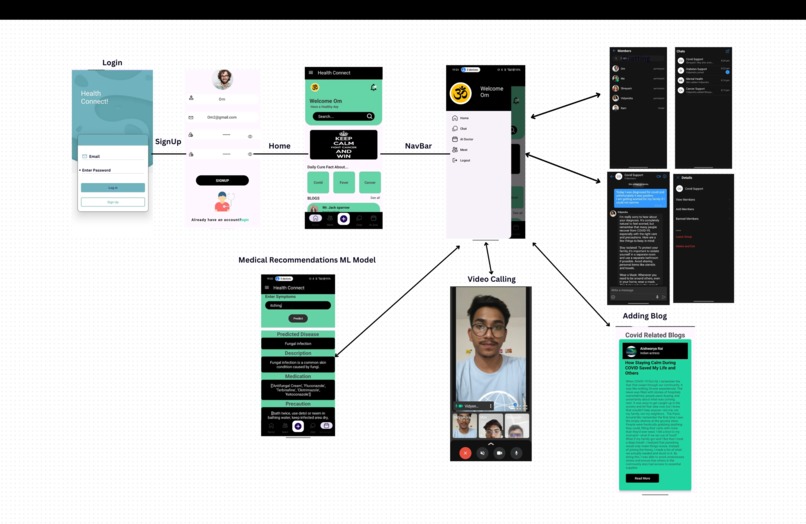
UI Workflow
-
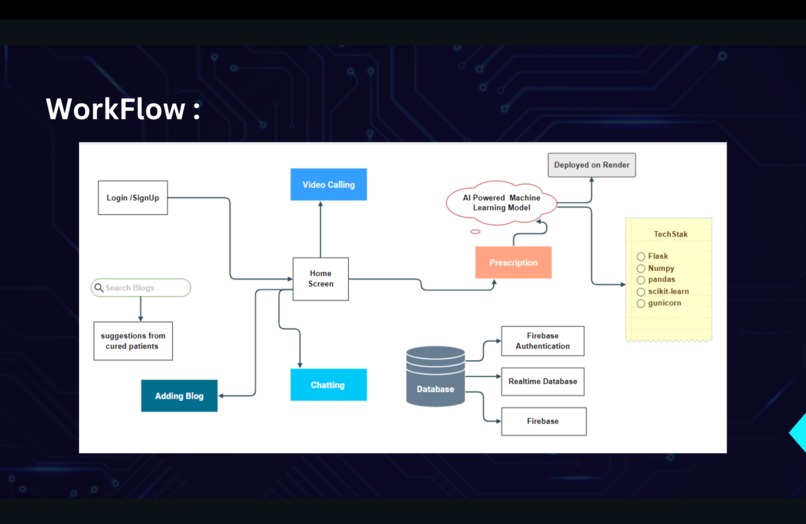
Flow Chart
-
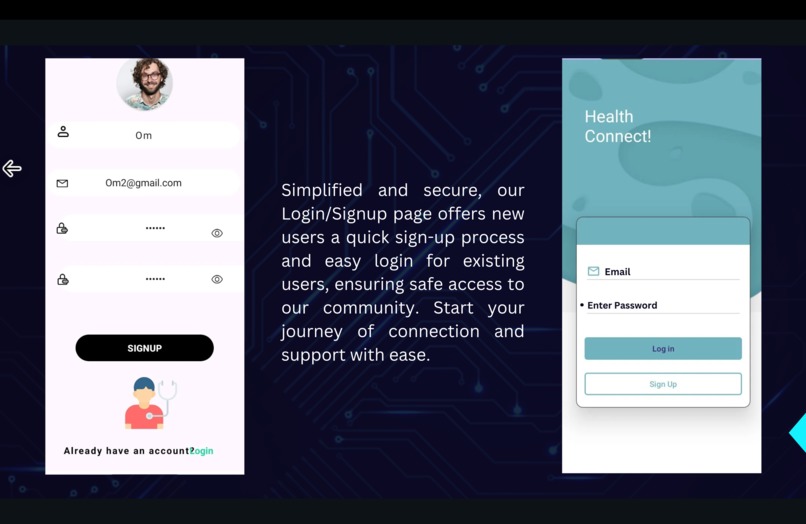
Login/Sign Up
-
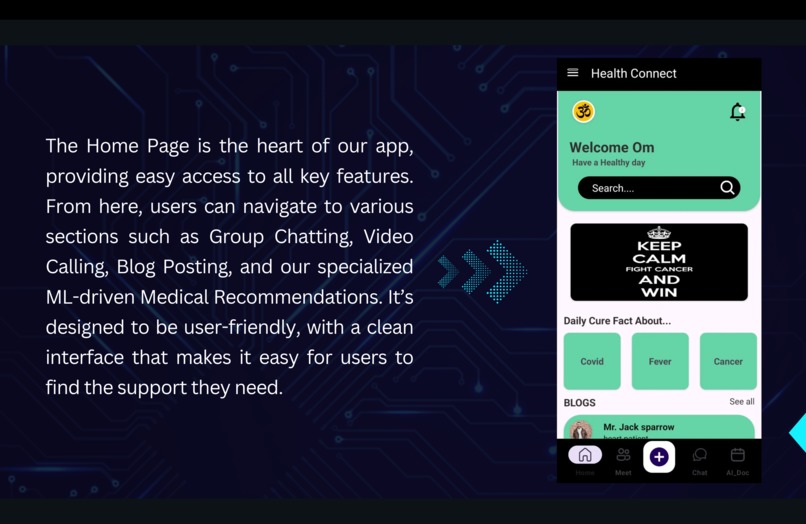
Home Page
-
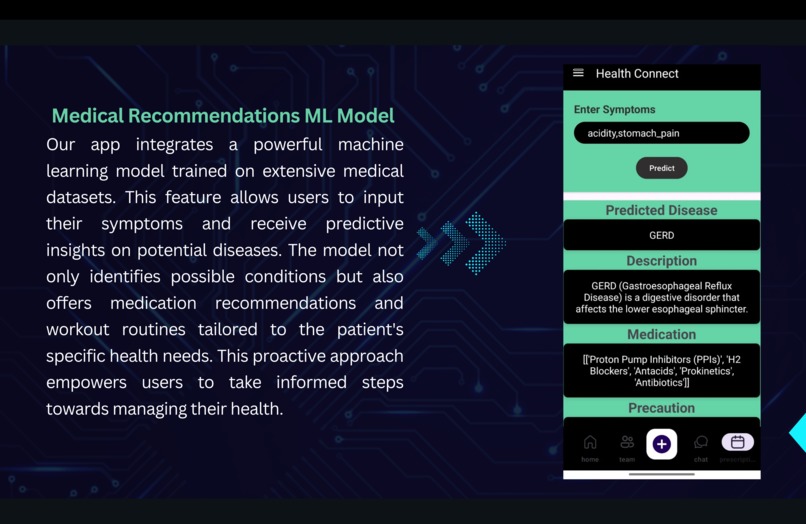
AI Doctor (Medical Recommendation Model)
-
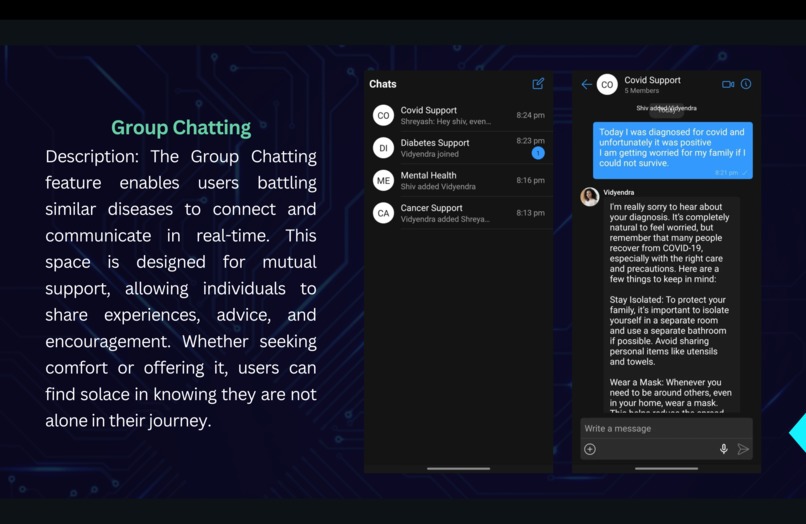
Chatting Communities
-
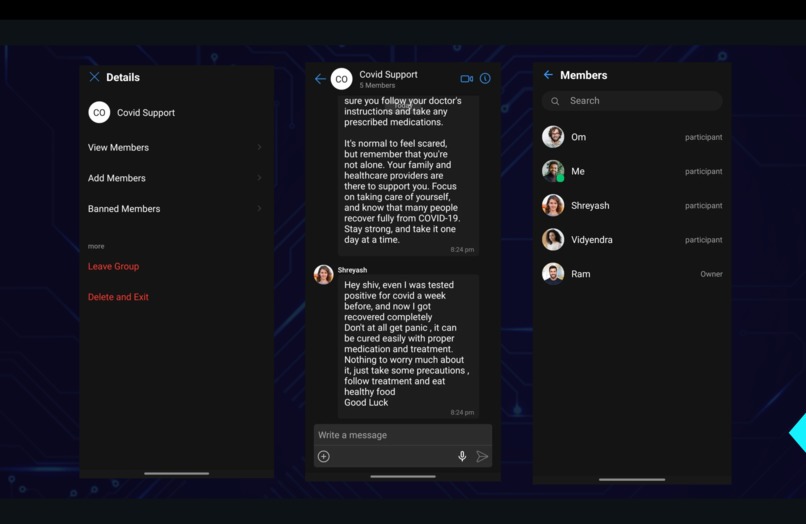
Chatting Interface
-
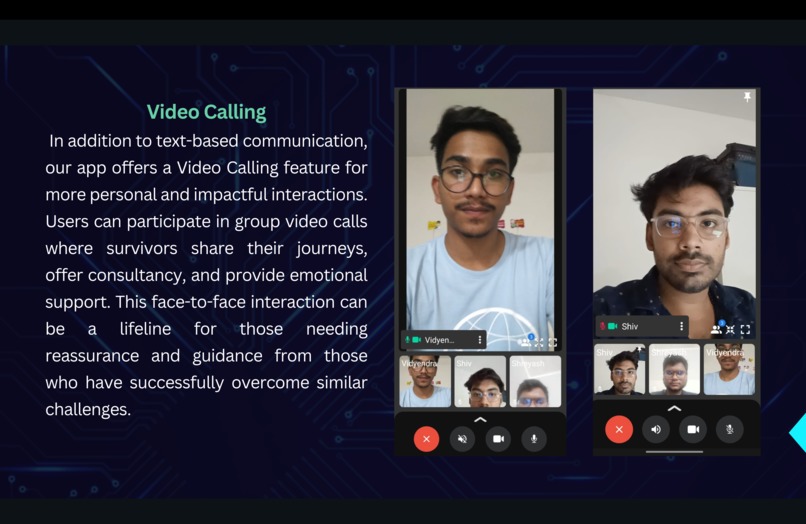
Video Calling
-
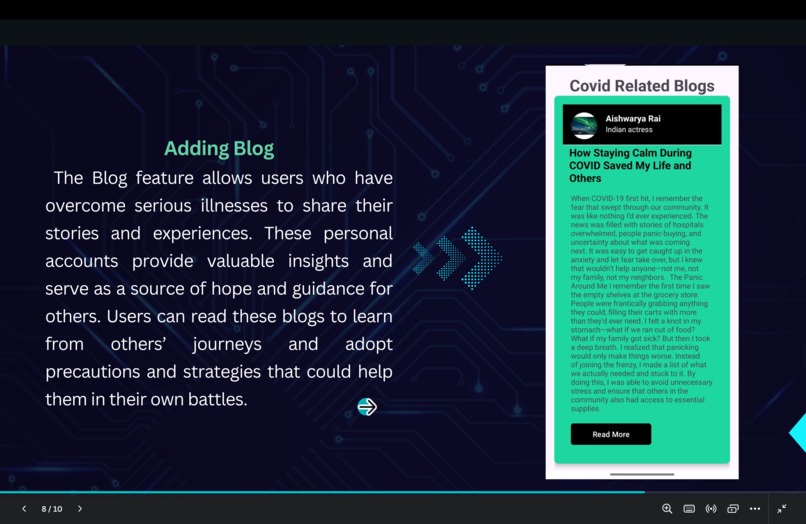
Blog Viewing


Inspiration
During the COVID-19 pandemic, many lives were lost not just to the virus but to the panic and fear that accompanied it. The psychological toll was immense, and for many, the lack of emotional support made the situation even more unbearable. What if there had been a community where people could reach out, share their experiences, and offer comfort to those in distress? We believe this could have saved countless lives.
What it does
Our hackathon project aims to create just such a community. We're developing an app that connects people who have battled serious illnesses, like COVID-19 or cancer, with those currently facing similar challenges. Through this platform, survivors can share their journeys, offer advice, and provide the emotional support that can make all the difference.
This community will serve as a beacon of hope, helping to alleviate fear and anxiety by fostering connections between those who have lived through the experience and those who need reassurance. By sharing stories, offering encouragement, and simply being there for one another, we can create a network of support that empowers people to face their battles with courage and resilience.
How we built it
Medical Recommendations ML Model
We developed a ML model and deployed it on Render. It was trained on a comprehensive dataset of medical records. The model was optimized for mobile to provide quick and accurate predictions. Kotlin was used to manage the input of symptoms and display predicted disease, medication, diet, and workout recommendations.
Chatting Feature
To implement the chatting application, we leveraged Firebase Authentication for secure user sign-ins, Firebase Realtime Database to manage and sync chat data in real-time, and Firebase Storage for handling image and file uploads. The app also features disease-specific groups and communities, enabling users with similar health conditions to connect, share experiences, and support each other.
Video Calling Feature
To implement video calls and group video calls in the Android Kotlin application, we utilized WebRTC for real-time communication, integrated with Firebase for signaling and managing peer connections. The app allows users to initiate one-on-one or group video calls within disease-specific communities, enhancing the ability to connect and support each other through live interaction.
Blogging Feature
To implement the blog feature in the Android Kotlin application, we used Firebase Realtime Database to store and retrieve blog posts, Firebase Authentication for secure user contributions, and Firebase Storage for managing media uploads within blog entries. This feature allows users who have overcome serious illnesses to share their stories and experiences, providing valuable insights and serving as a source of hope and guidance for others. Users can read these blogs to learn from others' journeys and adopt precautions and strategies that could help them in their own battles.
Challenges we ran into
- Model Accuracy: Training the ML model to provide accurate and reliable predictions was a significant challenge. We had to work with a large and diverse dataset and fine-tune the model to reduce false positives and negatives.
- Integration with Mobile: Optimizing the model for mobile use was complex, as we needed to ensure that the app remained responsive while processing predictions by deploying it on Render.
- Navigation: Creating a smooth and intuitive navigation system was challenging, especially with multiple features needing to be easily accessible from the Home Page.
- Real-Time Performance: Ensuring that messages were delivered instantly and consistently in real-time required careful management of Firebase Realtime Database.
- Content Management: Creating a user-friendly content management system that allowed users to format text, add images, and publish posts was complex, especially in maintaining a clean and responsive UI.
Accomplishments that we're proud of
We are proud to have developed a platform that effectively connects people facing serious illnesses with those who have overcome similar challenges, fostering a supportive community. Our integration of real-time chat, video calls, and a blog feature has empowered users to share their experiences, offer advice, and connect deeply. Most importantly, we’ve created a network of hope and resilience, providing valuable emotional support and guidance to those who need it most.
What we learned
Working on "Health Connect - Survivors to Saviors" taught us some invaluable lessons. We learned how to design a platform that truly connects people battling similar illnesses, combining empathy with technology. By integrating advanced machine learning models, we developed a system that offers accurate medical recommendations, ensuring it was both secure and user-friendly.
We also learned how to build real-time communication features, like group chats and video calls, which help create a strong, supportive community. Finally, creating a space for survivors to share their stories showed us the power of personal experiences in providing hope and guidance to others. Overall, this project has been a meaningful journey in using tech to make a real difference in people's lives.
What's next for Health Connect
Next for Health Connect, we plan to enhance user experience by integrating AI-driven content recommendations, telehealth services, and multilingual support. We aim to expand globally, fostering region-specific communities, and forming partnerships with NGOs and healthcare professionals to provide verified medical resources and expert guidance. Continuous improvement through user feedback and innovation will ensure Health Connect remains a vital tool for support, connection, and well-being for those battling serious illnesses.
Built With
- android-studio
- firebase
- firestore
- flask
- gunicorn
- kotlin
- ngrok
- numpy
- pandas
- python
- realtime
- render
- scikit-learn
- webrtc
- xml


Log in or sign up for Devpost to join the conversation.