-
-
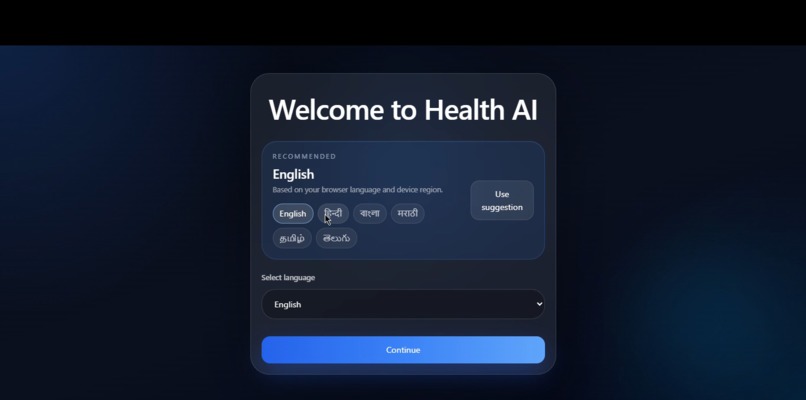
Select Language
-
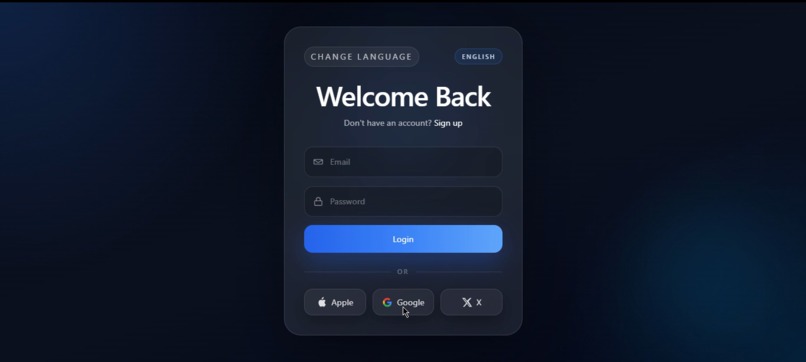
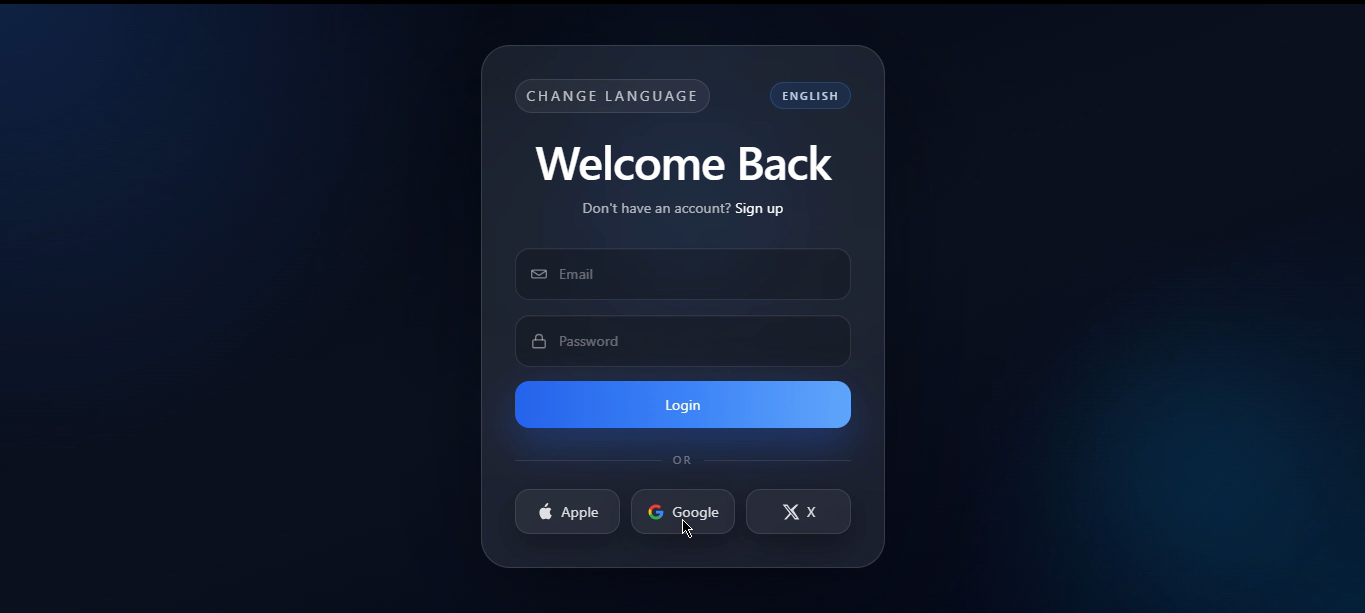
Login page
-
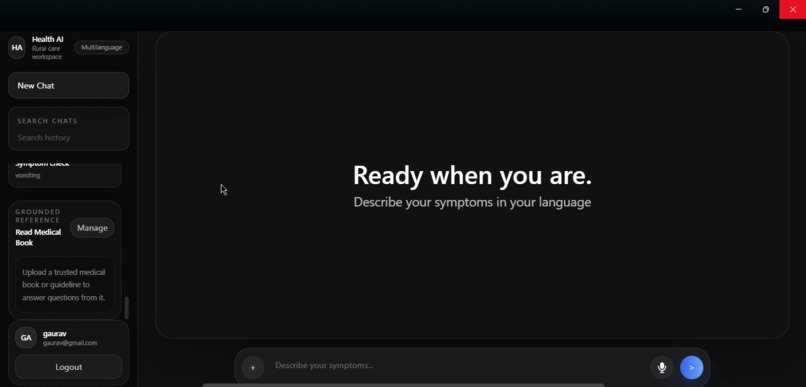
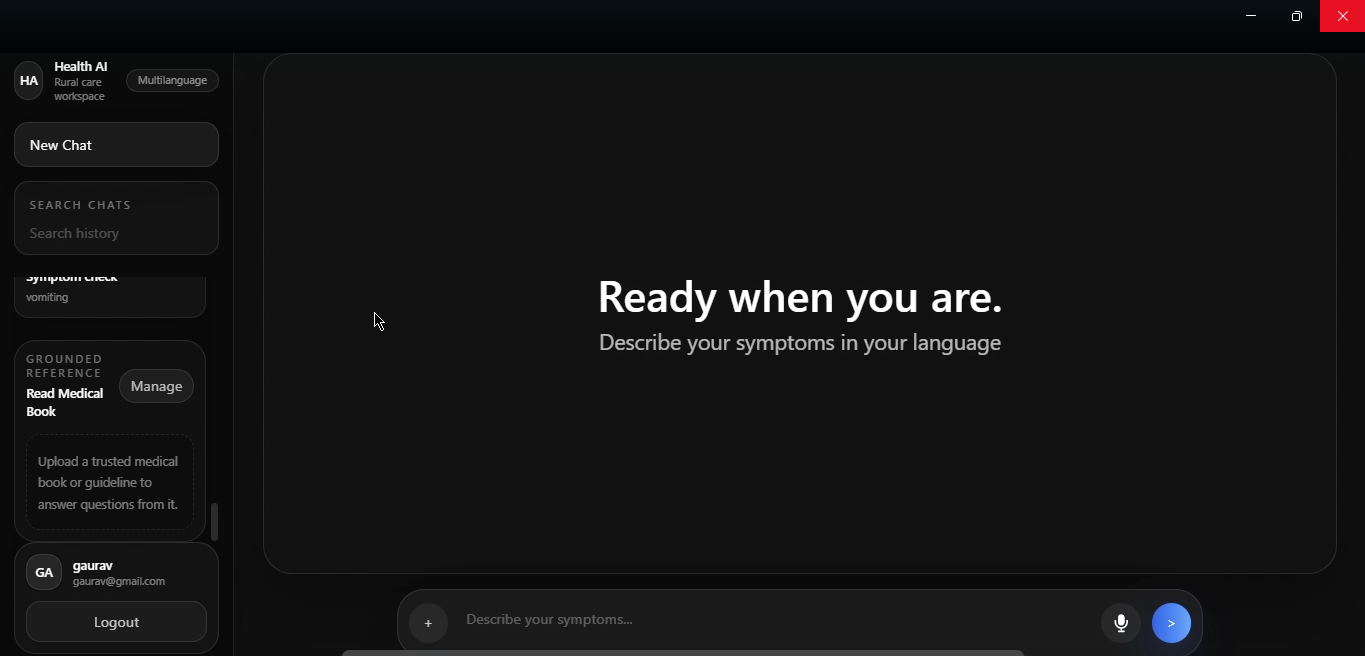
Home page
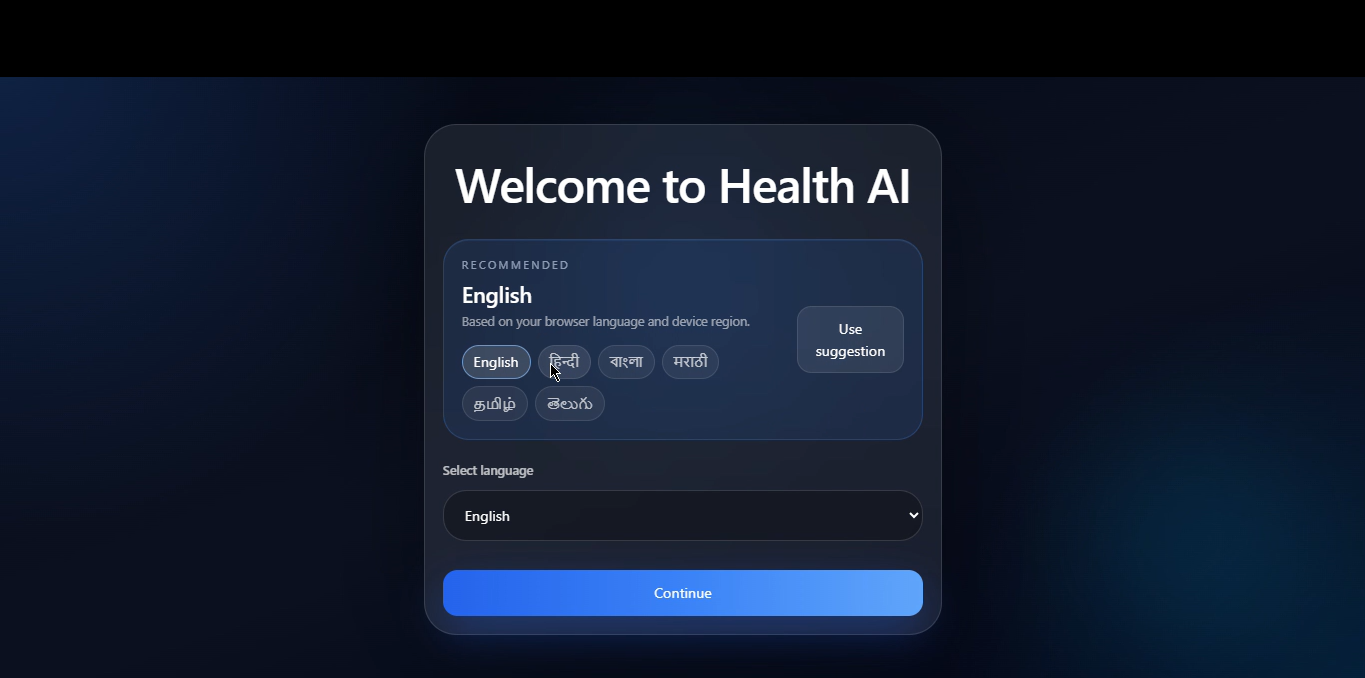
Inspiration
Access to reliable healthcare information is often difficult, especially when people need quick guidance about symptoms, medications, or health concerns. We wanted to build an AI-powered Healthcare Chatbot that provides instant, accessible, and user-friendly health assistance while encouraging users to seek professional medical advice when necessary.
What it does
The Healthcare Chatbot helps users by:
Analyzing symptoms provided by users. Offering basic health-related guidance and recommendations. Answering common healthcare questions. Providing information about diseases, medications, and preventive care. Suggesting when users should consult a healthcare professional based on symptom severity. Delivering 24/7 support through a conversational interface. How we built it Frontend: React.js, CSS, Backend: python Database: MySQL AI/NLP: Large Language Model APIs and Natural Language Processing techniques Version Control: Git and GitHub
The frontend captures user queries and sends them to the backend APIs. The backend processes requests, interacts with the AI model, and returns relevant healthcare information to the user in real time.
Challenges we ran into Ensuring accurate and safe healthcare responses. Handling a wide variety of symptom descriptions from users. Designing a user-friendly conversational experience. Managing API integration and response latency. Preventing misinformation and encouraging professional medical consultation when necessary. Accomplishments that we're proud of Successfully built an end-to-end AI-powered healthcare assistant. Developed a responsive and intuitive user interface. Implemented symptom analysis and health information retrieval. Created a scalable backend architecture using Spring Boot. Improved accessibility to healthcare information through AI. What we learned Building AI-driven healthcare applications requires a strong focus on safety and reliability. Effective API integration and backend design are crucial for real-time chatbot performance. User experience plays a significant role in healthcare applications. Team collaboration and iterative testing greatly improve product quality. Responsible AI practices are essential when dealing with health-related information. What's next for Healthcare Chatbot Integrate voice-based interactions for hands-free accessibility. Add multilingual support for wider reach. Incorporate medical image analysis capabilities. Connect with wearable devices for real-time health monitoring. Implement appointment booking with healthcare providers. Develop personalized health recommendations based on user history. Enhance AI models for more accurate symptom assessment and risk prediction.

Log in or sign up for Devpost to join the conversation.