Inspiration
One of our team members is an emergency medical technician (EMT) and he pointed out that while he's on the job, he has difficulty monitoring the patient's conditions while also noting the patient's account of what happened. Other times, the EMT is too busy tending to an unconscious patient to be able to ask bystanders for details on what happened. EMTs are responsible for providing a narrative of what happened to the nurses and doctors at the hospital, so the information they provide must be as accurate and detailed as possible in order to ensure the patient receives the most appropriate treatment.
What it does
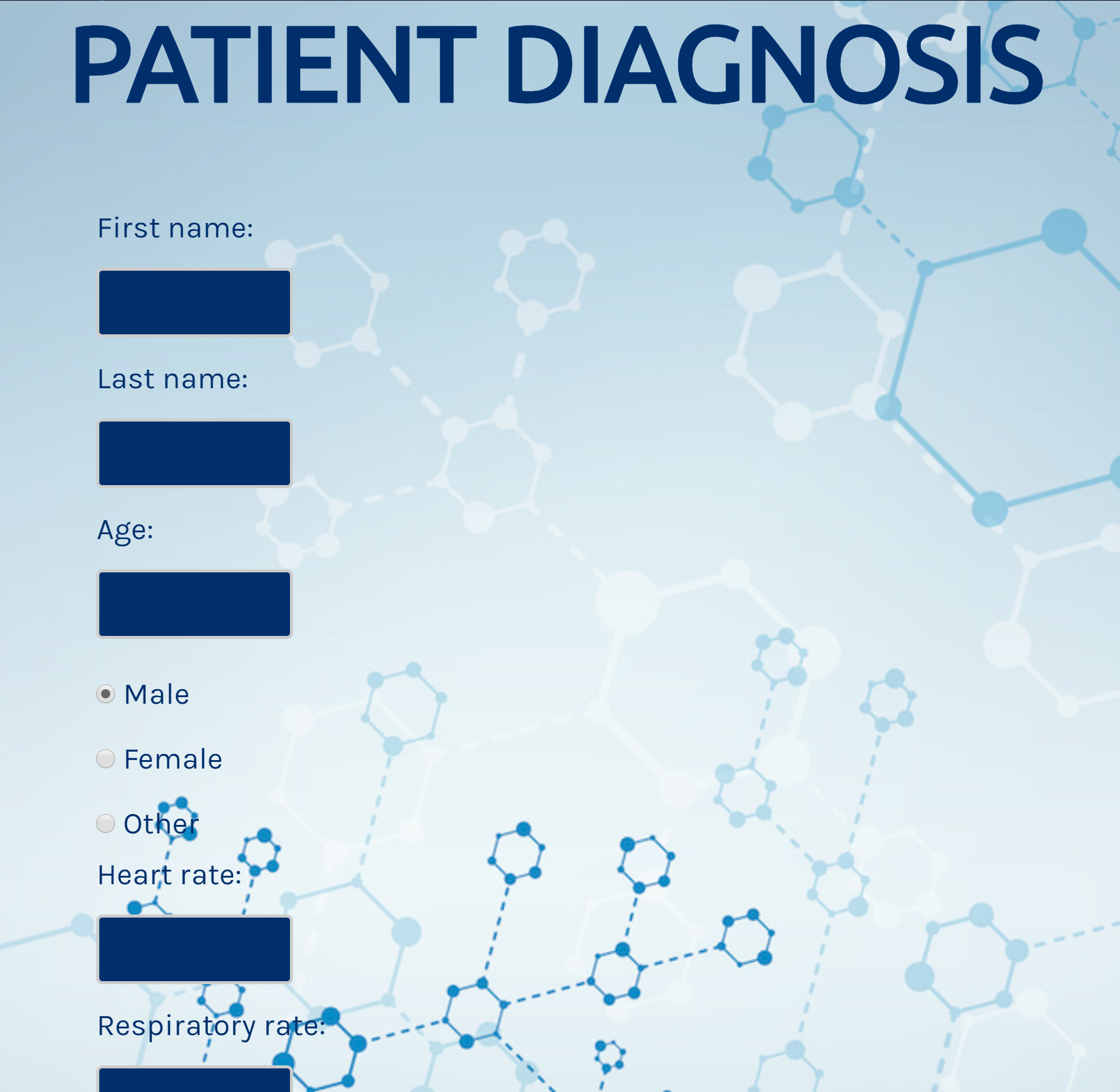
Our product takes audio files of bystander reports and the self-report from the patient and compares these descriptions with what the EMT has written down based on his/her own observations and questioning. If the EMT's written account is missing critical information, such as how an injury happened or a family history of alcoholism, these extra reports can help fill in the blanks. Upon running the service, it will alert the EMT of missing information and present a list of the information that could be added to the report.
How we built it
Java and Python were used as the foundation of the product, however, HTML, CSS, and PHP were also used in smaller aspects. We also used Google Cloud API's (Natural-language, speech-to-text, Firestore)
Challenges we ran into
The team had no starting experience with Google Cloud API's or deploying an app to host our program. Setting up our workspaces to be able to run the API's proved to be a challenge in itself that consumed many more hours than expected. Learning to use Google's Cloud services also required background knowledge that no team members possessed, so everyone had to learn about Cloud computing from scratch through the provided tutorials and numerous Google searches.
Accomplishments that we're proud of
Making it through all the tutorials and set up required to deploy the app and to use the API's was a strenuous journey, but a rewarding one. The team had initially cast doubts about its ability to produce a novel idea that was plausible and within our limited skill range. Initial brainstorming foreshadowed that we would have nothing to present or even to code. Then one member had an idea to solve a problem affecting him personally and although none of us had every attempted anything similar, we decided upon that idea. We started without knowing at all how to implement our idea, but after attending multiple, we began to understand what our future entailed. Following several explorations through Stack Overflow and the Google API's, following lengthy periods of frustration and errors, we produced a product that, given a little more time and development, can be implemented in the real world to have a real impact on helping others.
What we learned
Through this hackathon, we were able to see how teamwork plays a crucial role in software development. We experienced the frustration of using programs and services we've never encountered before, the challenge in researching how to fix all our errors, but also the satisfaction when the program finally follows through and runs.
What's next for Health Assurance
Work was put into creating a Firestore database to link to the service in order to more accurately detect words pertinent to an EMT, but that has proven to be more difficult than anticipated, so that would be the next step in our development. Once that is complete, the goal is integration into EMT services and offices.


Log in or sign up for Devpost to join the conversation.