-
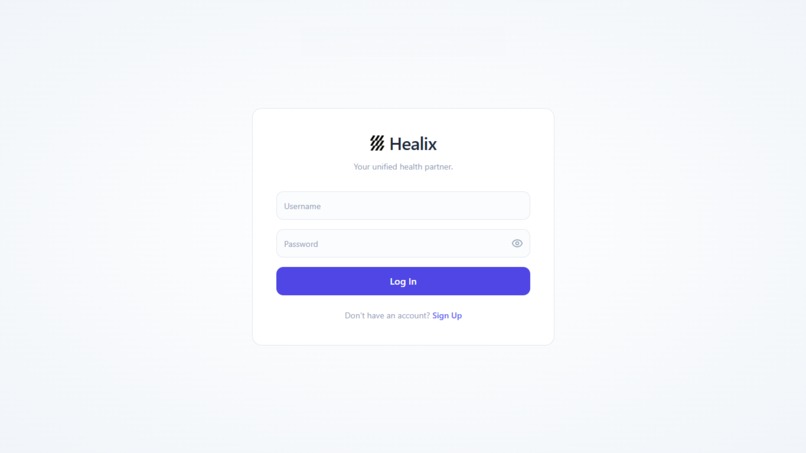
Healix Website
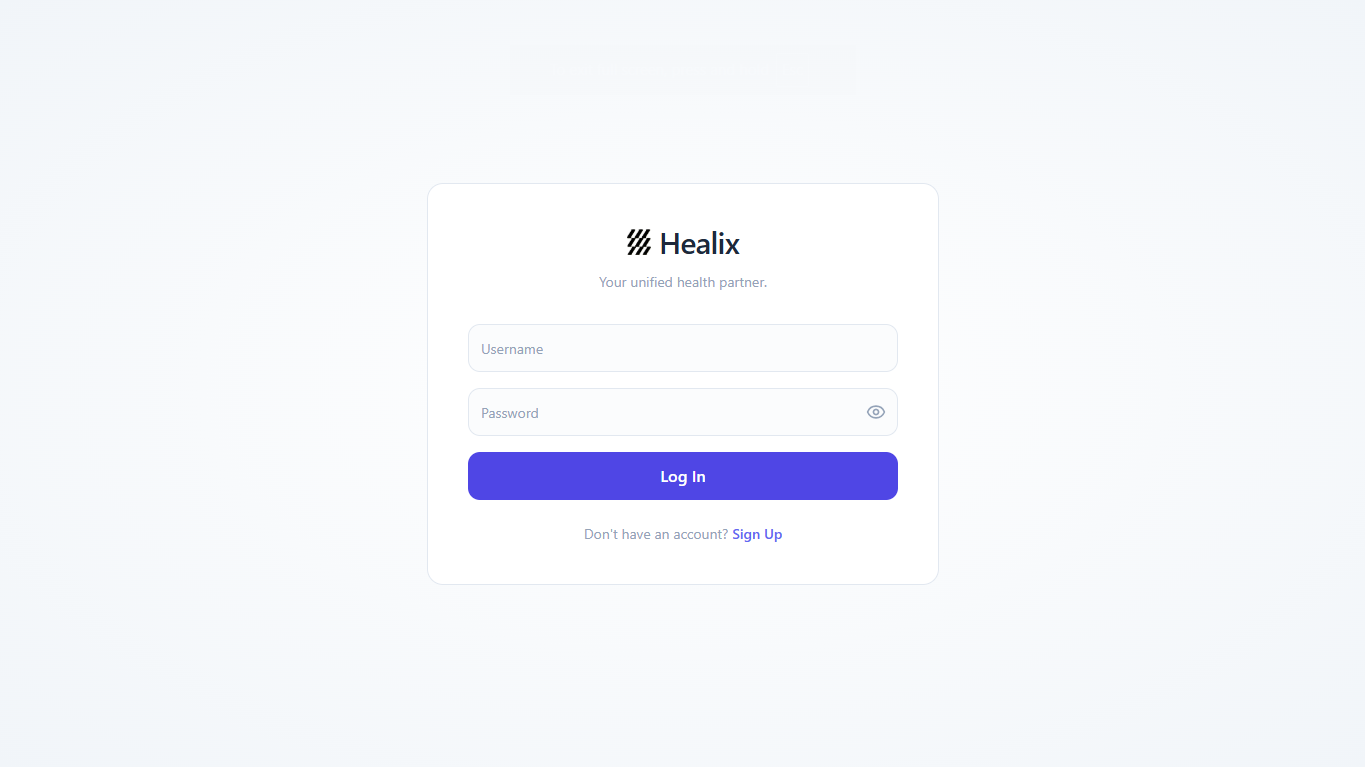
Inspiration
We are living in the golden age of health tracking, but we have a massive problem: Data Fatigue. Millions of people wear smartwatches that tell them they have a resting heart rate of 95 BPM or that their deep sleep dropped by 20%. But raw numbers aren't healthcare. When a user sees a bad metric, they usually just feel anxious and ask, "Okay, but what do I actually DO about this?"
For this hackathon's theme "From data to prevention" we realized that an AI shouldn't just be a chatbot you talk to. It should be a proactive partner. We built Healix to bridge the gap between raw hardware telemetry and actionable, clinical-grade prevention.
What it does
Healix is an AI-first, centralized digital health hub built on a design philosophy we call Consumer Medical Minimalism. It doesn't just show you charts; it actively manages your health:
Live Hardware Telemetry: Healix ingests real-time vitals (Heart Rate, SpO2, Respiratory Rate, Blood Pressure) simulating data pulled from hardware like Oraimo smartwatches.
The AI Clinical Dietitian: Instead of generic meal plans, Healix's AI analyzes your overnight recovery and cardiovascular strain to generate dynamic, JSON-structured daily nutrition protocols (e.g., prescribing a high-magnesium diet if it detects elevated cortisol/HR).
Auto-Dispatch Emergency Protocol: If the system detects critical cardiovascular anomalies (e.g., HR > 120 while resting), it instantly triggers a customized emergency alert to the patient's registered care team and emergency contacts.
How we built it
We built Healix to feel as smooth as a modern fintech app but as secure as a hospital EMR.
Frontend: Built with React 18, Vite, and TypeScript. We utilized Tailwind CSS and shadcn/ui to achieve a strict, airy medical aesthetic (off-white backgrounds, deep slate typography). Every transition and state change is liquid-smooth thanks to Framer Motion. Data visualization is handled by Recharts.
Backend: Powered by Django and the Django REST Framework (DRF). We built a robust API to handle secure, token-based authentication and process hardware telemetry payloads.
AI Integration: We integrated the Gemini AI API directly into our Django Python backend, using precise prompt engineering to force the LLM to output strict JSON schemas so our React frontend could render the data beautifully.
Deployment: The backend is hosted live on PythonAnywhere, allowing the web app to be tested over a live network during the hackathon.
Challenges we ran into
Building a full-stack, AI-integrated app in a high-pressure hackathon environment came with heavy roadblocks:
Strict AI Schemas: Initially, the LLM kept returning massive blocks of text instead of the exact JSON needed to render our UI components. We had to heavily refine our backend prompts to enforce strict data structures.
Network Architecture & CORS: We battled through classic ERR_CONNECTION_TIMED_OUT, 401 Unauthorized, and 500 Internal Server Error roadblocks while attempting to bridge our React frontend with the live PythonAnywhere Django environment.
UI/UX Graceful Degradation: Designing the UI to not crash when the database was temporarily empty, ensuring we had beautiful loading states (e.g., "Healix is analyzing your vitals...") while waiting for the AI's API response.
Accomplishments that we're proud of
We are incredibly proud of the UI/UX execution. Healthcare apps are notoriously clunky and anxiety-inducing. We successfully built an interface that feels calm, trustworthy, and premium. Furthermore, successfully tying our frontend state directly to dynamic AI outputs, where a high heart rate instantly turns the UI a soft alert-red and changes the AI's medical insight, feels like magic.
What we learned
How to effectively force Large Language Models to act as structured data engines rather than just conversational chatbots.
Advanced React state management, specifically mapping deeply nested API payloads to complex UI components like SVG progress rings and interactive modals.
The critical importance of robust error handling and loading states in frontend applications that rely on unpredictable external APIs.
What's next for Healix: Unified Intelligent Health Care Platform
Healix is just the beginning. Our next steps involve:
- Making a proper versatile app that can use bluetooth to pair with different brands of smart watches. The app will then perfom the function of our pythonn watch service.


Log in or sign up for Devpost to join the conversation.