Inspiration
Watching friends and loved ones battle eating disorders and toxic body comparison in a culture obsessed with unrealistic beauty standards sparked this project. I wanted to create a space that centers self-acceptance, not transformation—one that meets people where they are in their healing journey, free from diet culture and judgment.
What it does
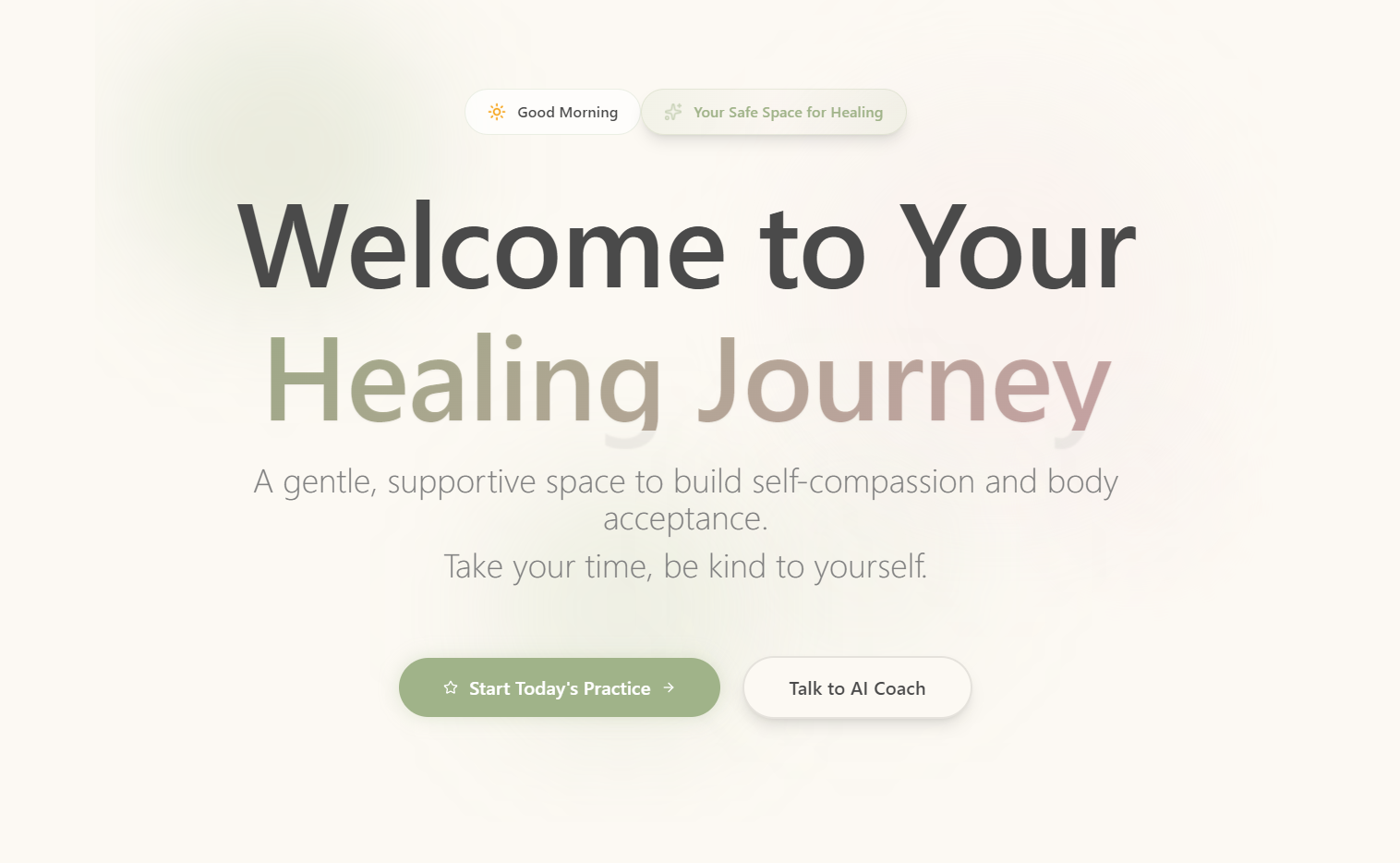
BodyImage Coach is an AI-powered wellness app for body image recovery. It offers daily self-compassion practices (mirror exercises, gratitude journals), a judgment-free AI chat, tools to reframe social media comparison, gentle movement guidance (focused on joy, not metrics), clinical eating disorder screenings, and progress tracking centered on emotional wellbeing—no weight/physical metrics ever.
How we built it
We started with user interviews with eating disorder recovery advocates to ground the design in real needs. Frontend built with React/TypeScript for a soft, calming UI; backend on Node.js/Express for secure data handling. OpenAI API was fine-tuned to follow strict empathetic, non-directive guidelines (no appearance/weight talk). Firebase/AWS ensured encrypted, confidential storage of user data (journals, chats, screenings).
Challenges we ran into
The biggest hurdle was training the AI to avoid even subtle diet-culture language—we iterated dozens of times to ensure responses prioritized validation over advice, and flagged crisis language to direct users to professional resources. We also fought to keep the UI free of any physical metrics (calories, intensity) while still making movement guidance useful.
Accomplishments that we're proud of
Creating a tool that centers body neutrality without feeling clinical—users report the daily practices make tangible shifts in their self-talk. We also built a screening tool that’s both evidence-based and compassionate, avoiding fear-mongering while guiding at-risk users to help.
What we learned
Healing-focused tech requires centering empathy over functionality—every feature needed to be tested against "does this prioritize the user’s emotional safety?". We also learned how critical data privacy is for mental health tools; users need to trust their data stays confidential to engage fully.
What's next for this project
We’re expanding the movement library to include culturally inclusive options, adding guided audio for daily practices (a top user request), and partnering with eating disorder treatment centers to refine our resource directory. We also plan to add mild, optional journal prompts in Spanish (pending user feedback) to broaden access.
