-
-
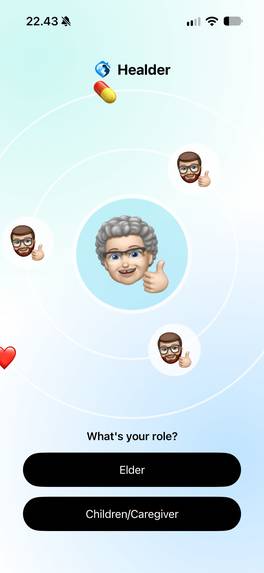
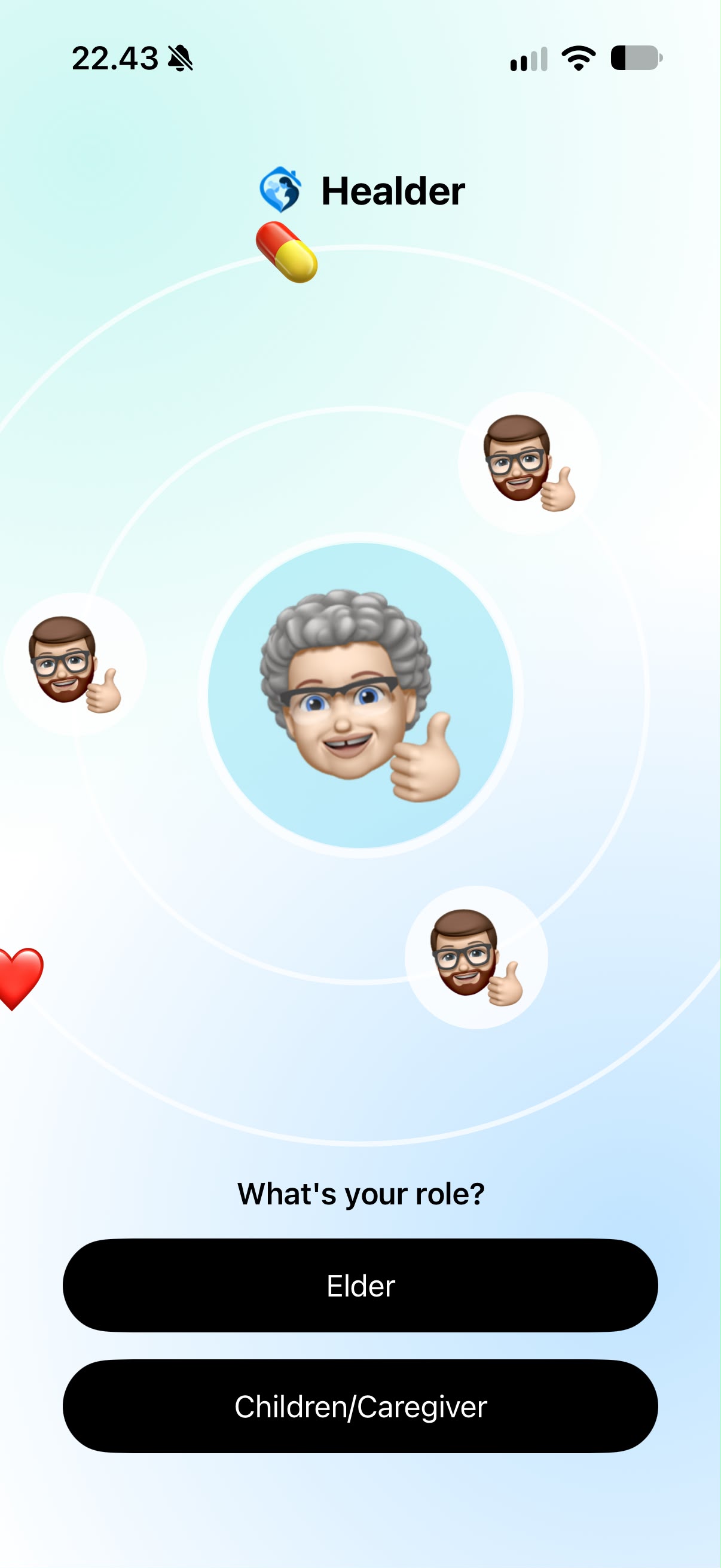
App Onboarding
-
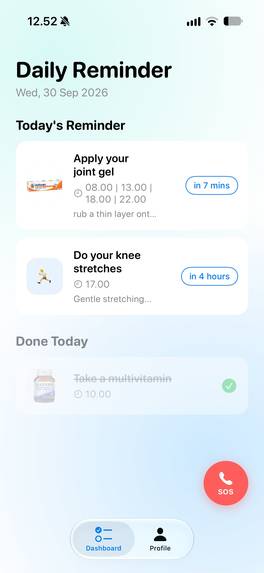
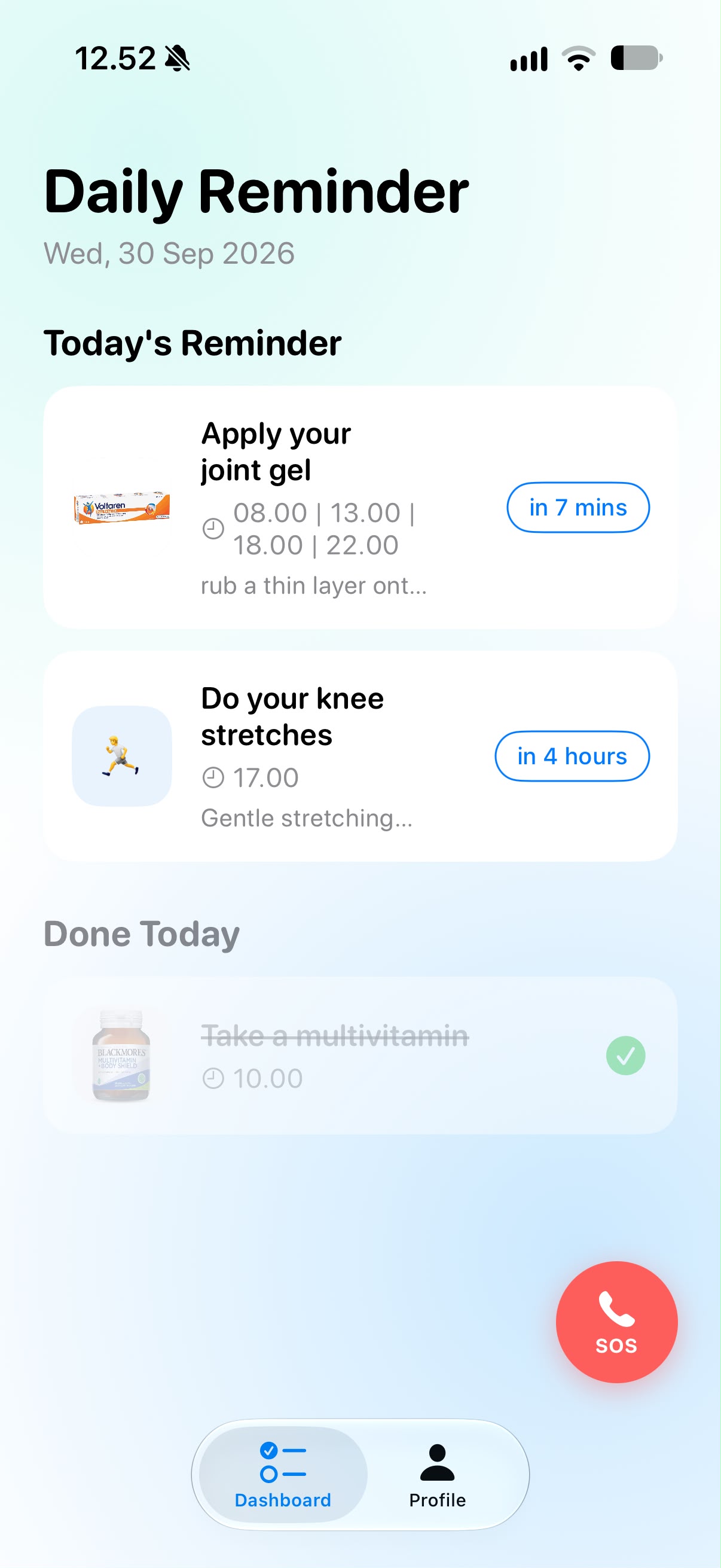
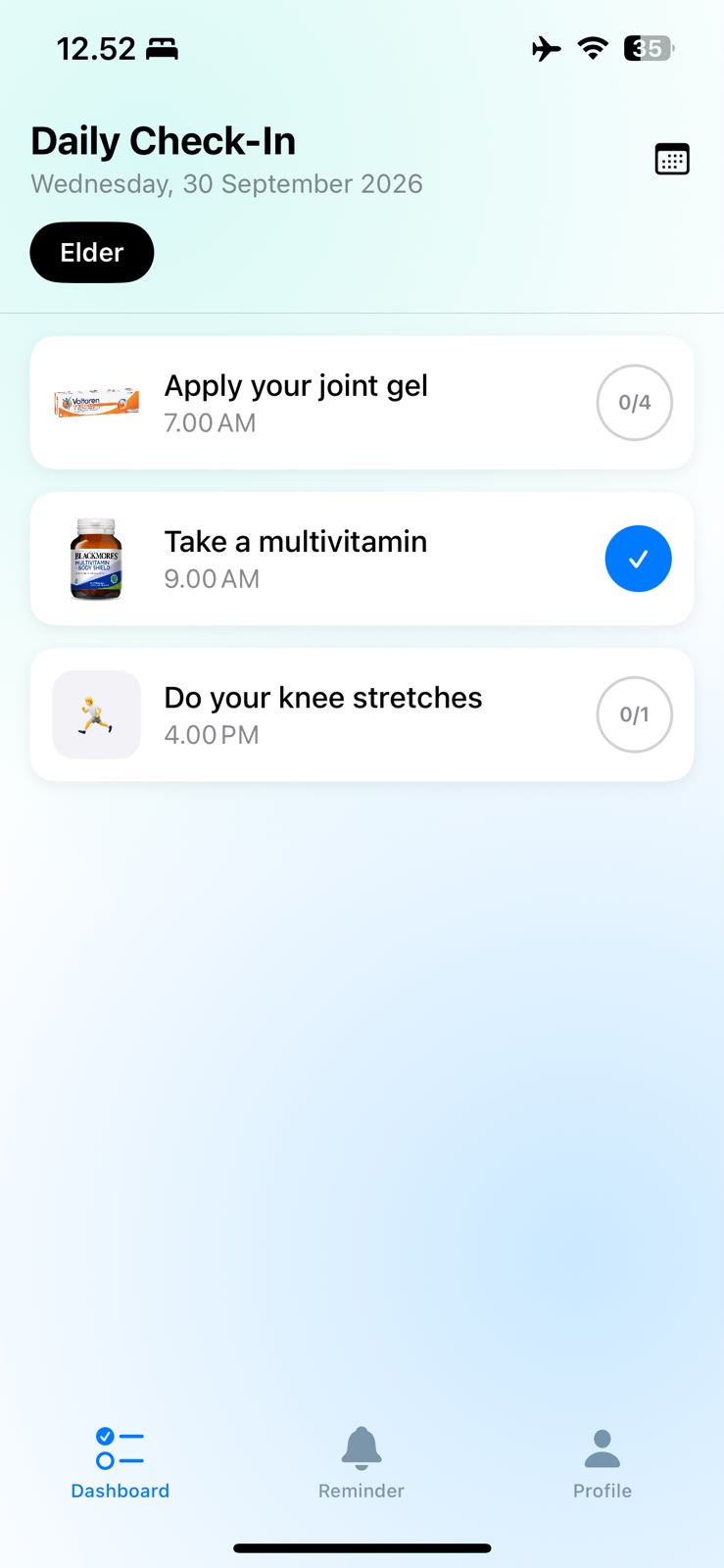
Elder Dashboard Page
-
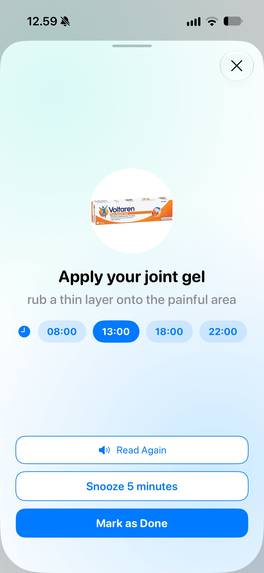
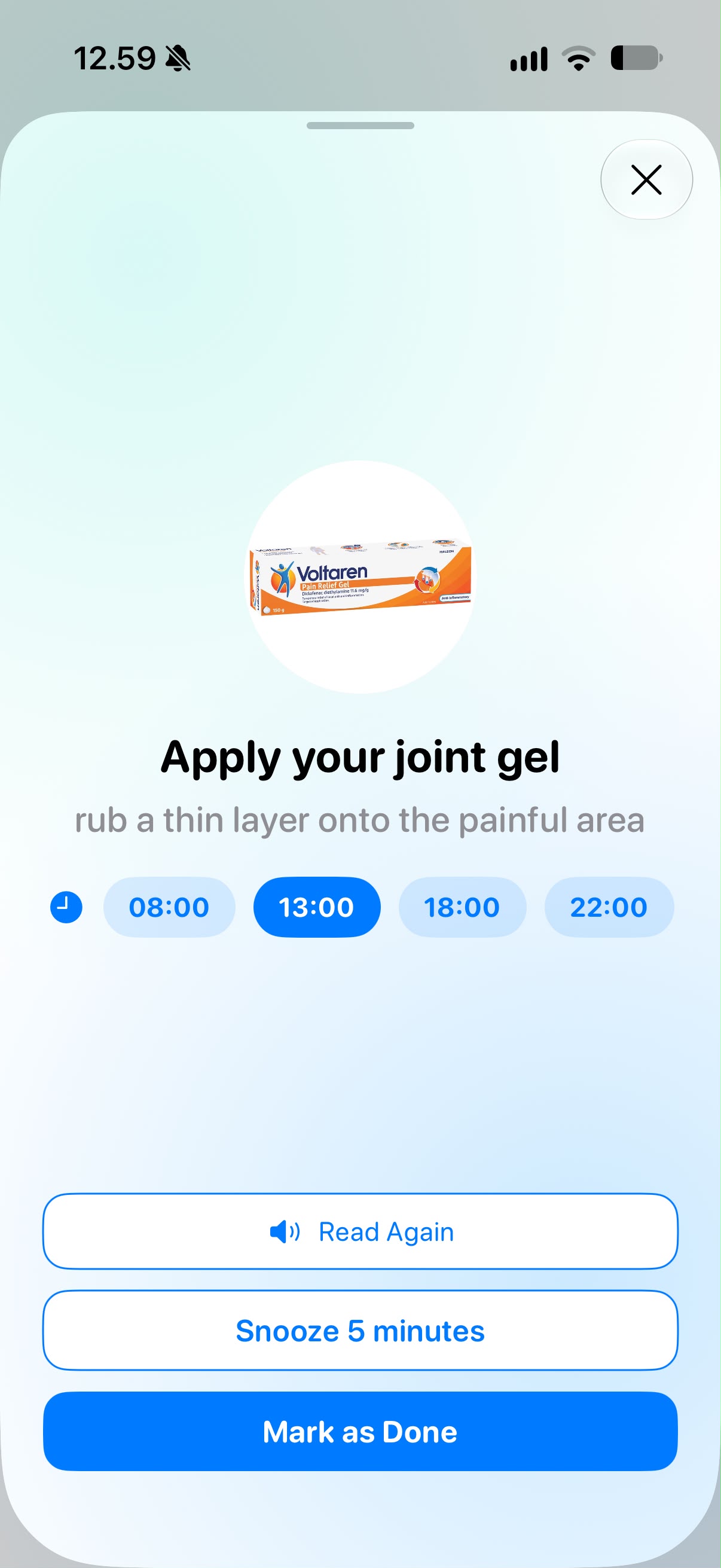
Reminder Pop-Up Modal in Elder Page
-
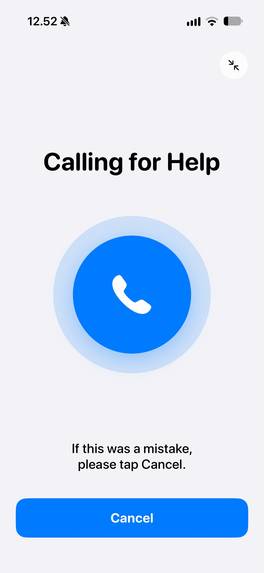
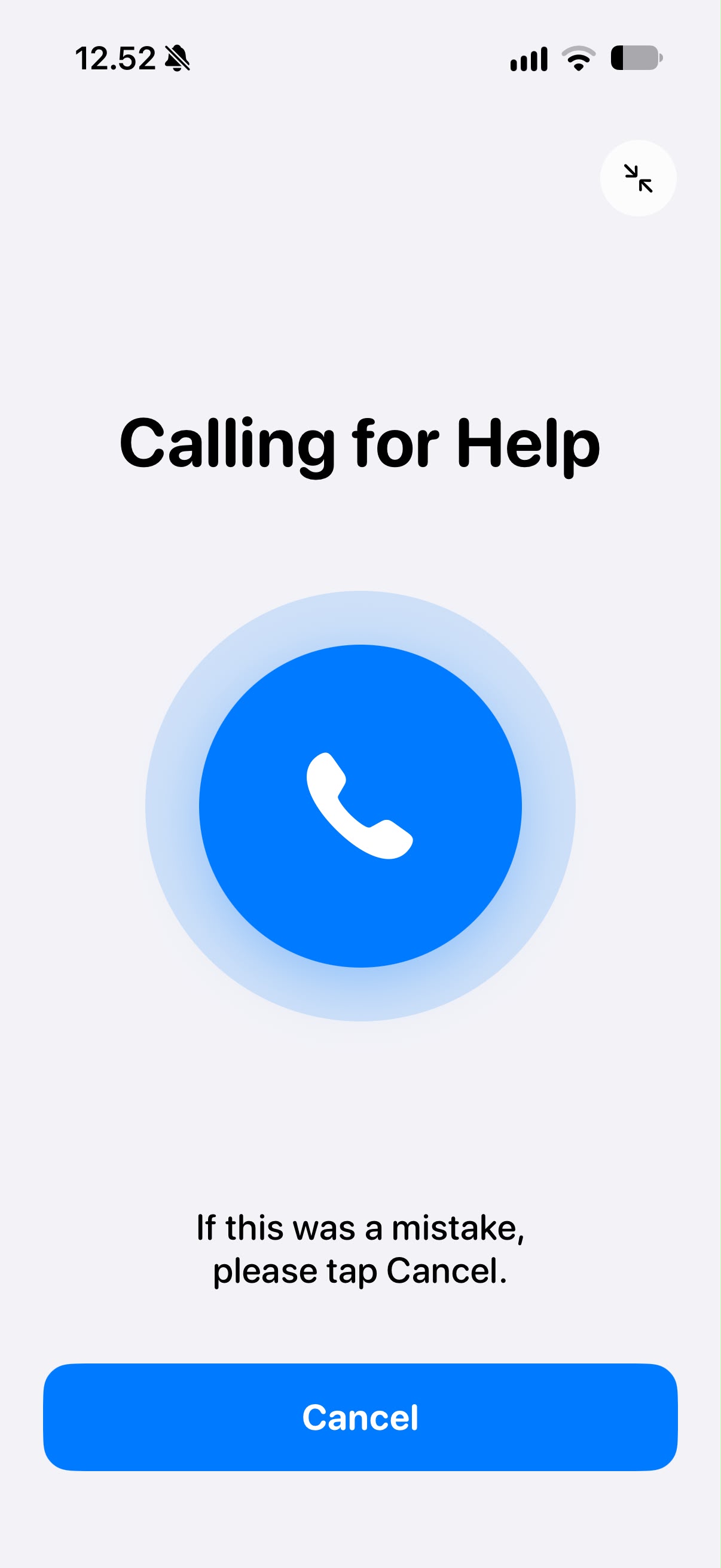
One-Tap emergency call Page
-
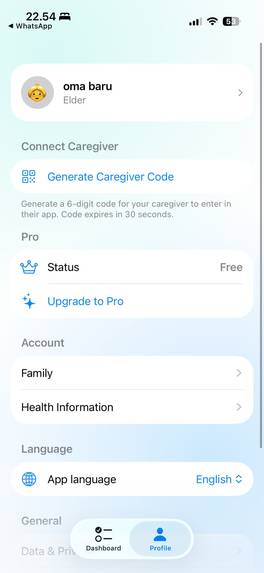
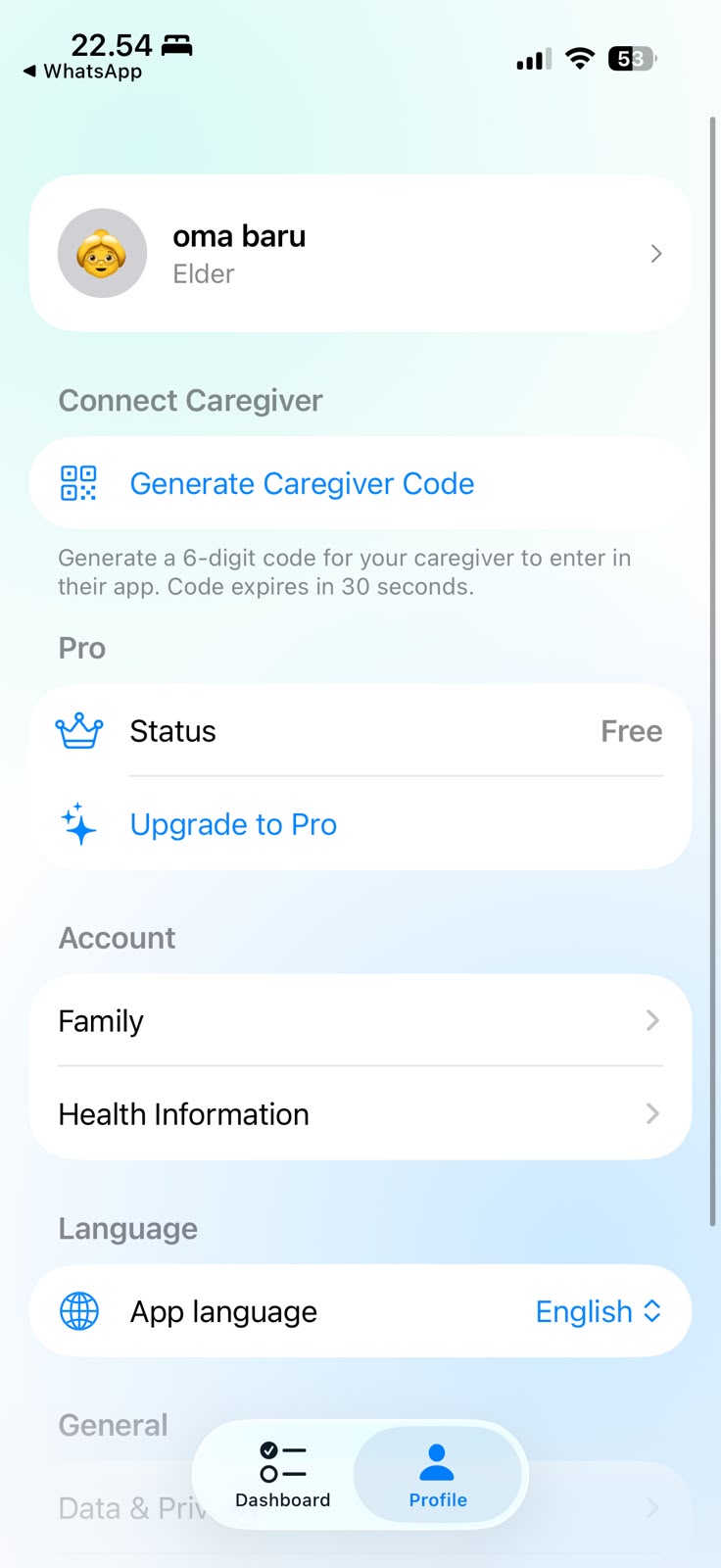
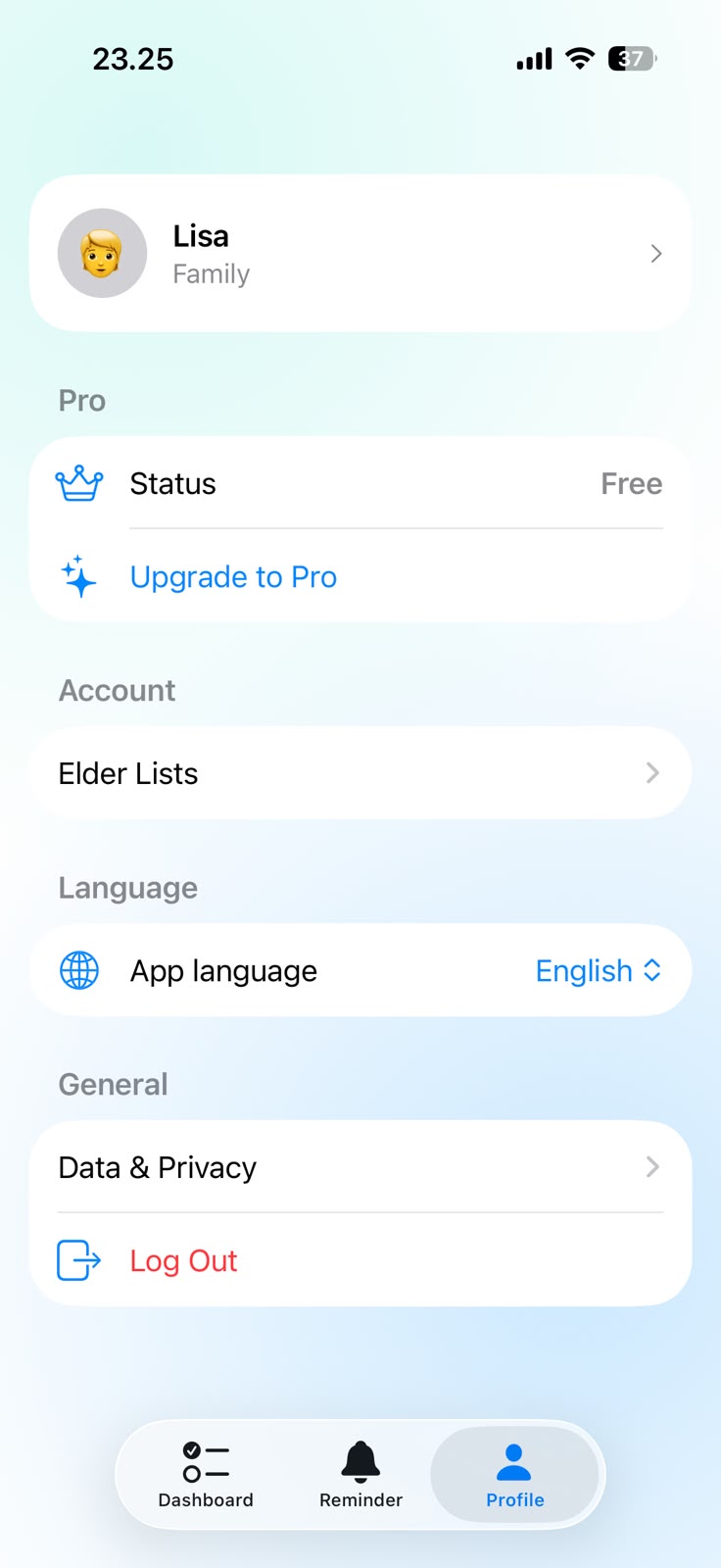
Elder Profile Page
-
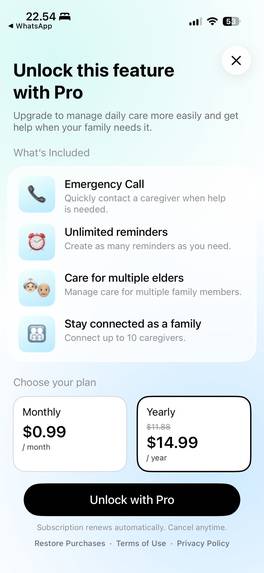
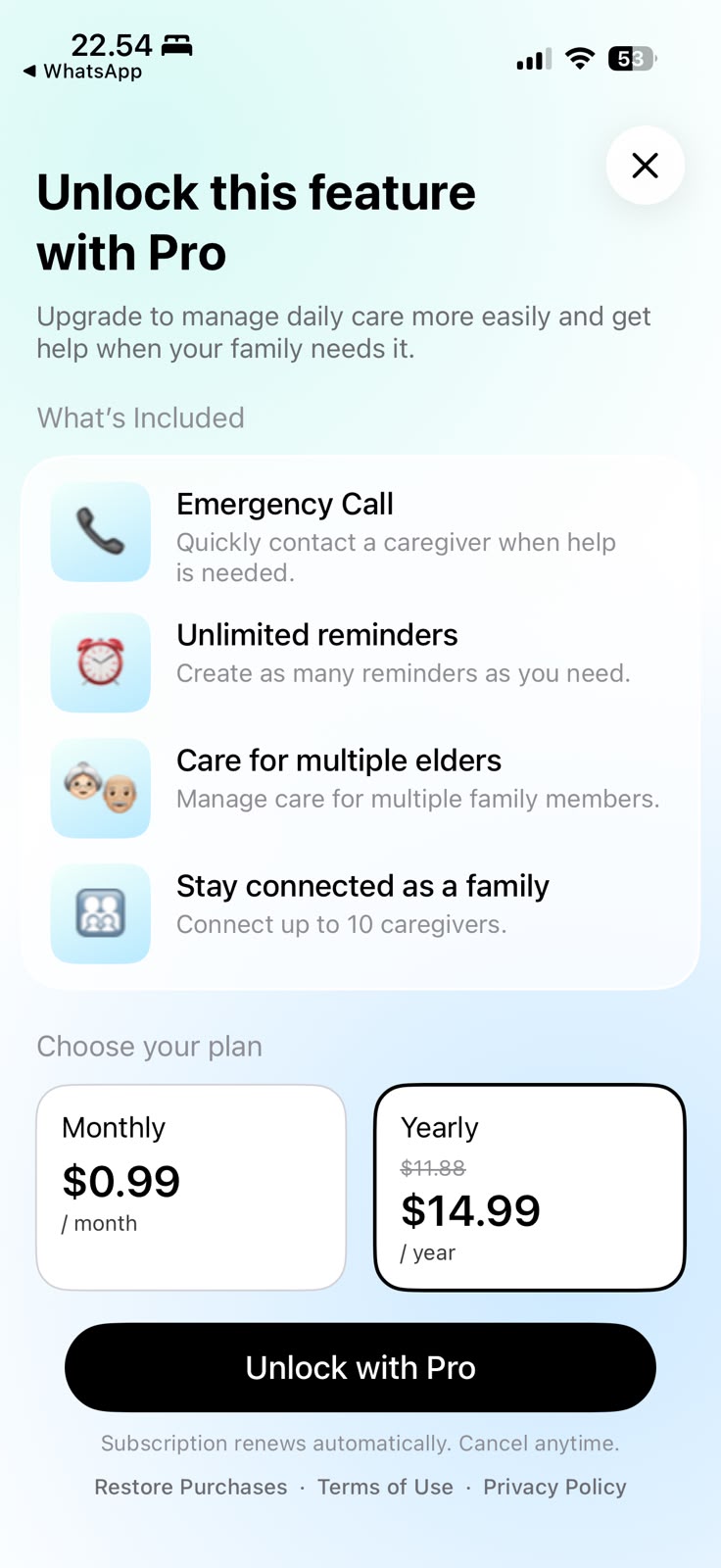
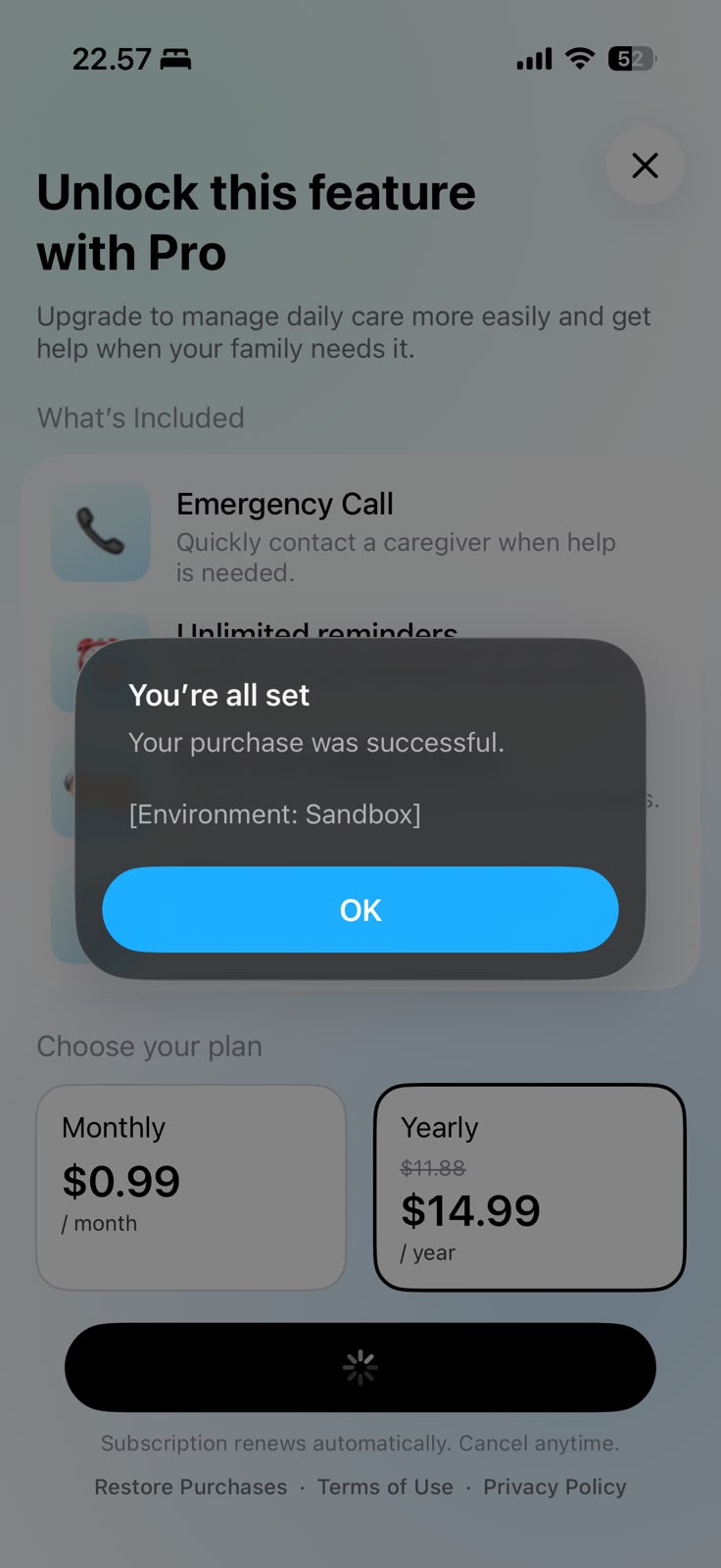
Subscription Page
-
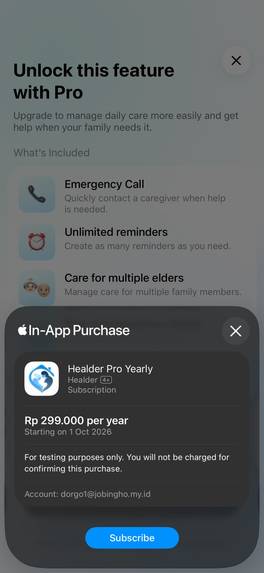
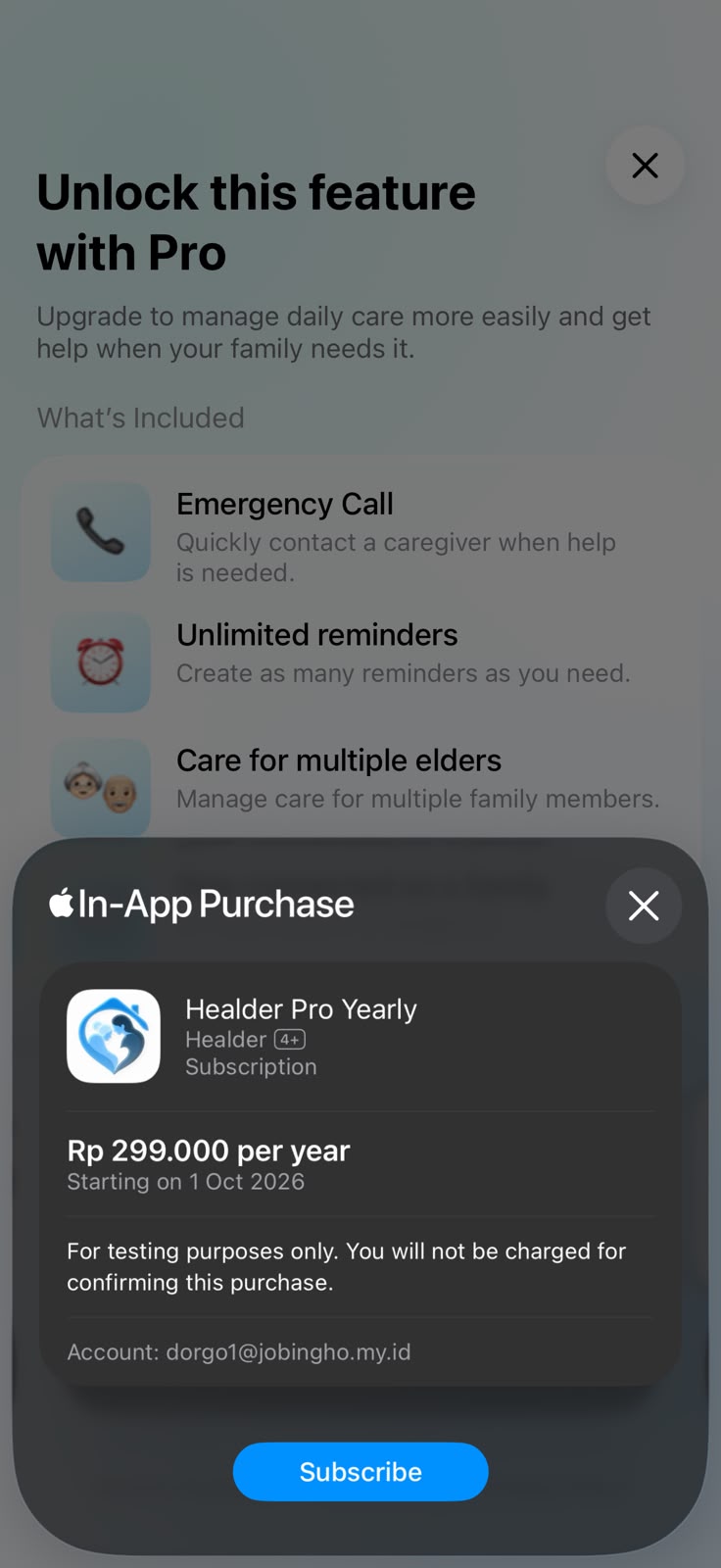
Processing Payment View
-
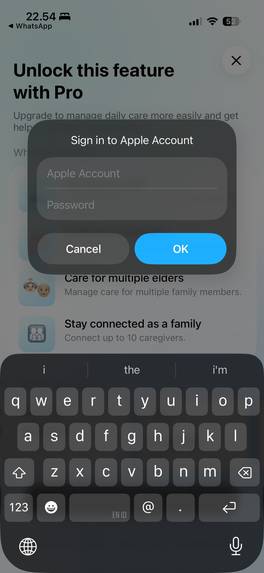
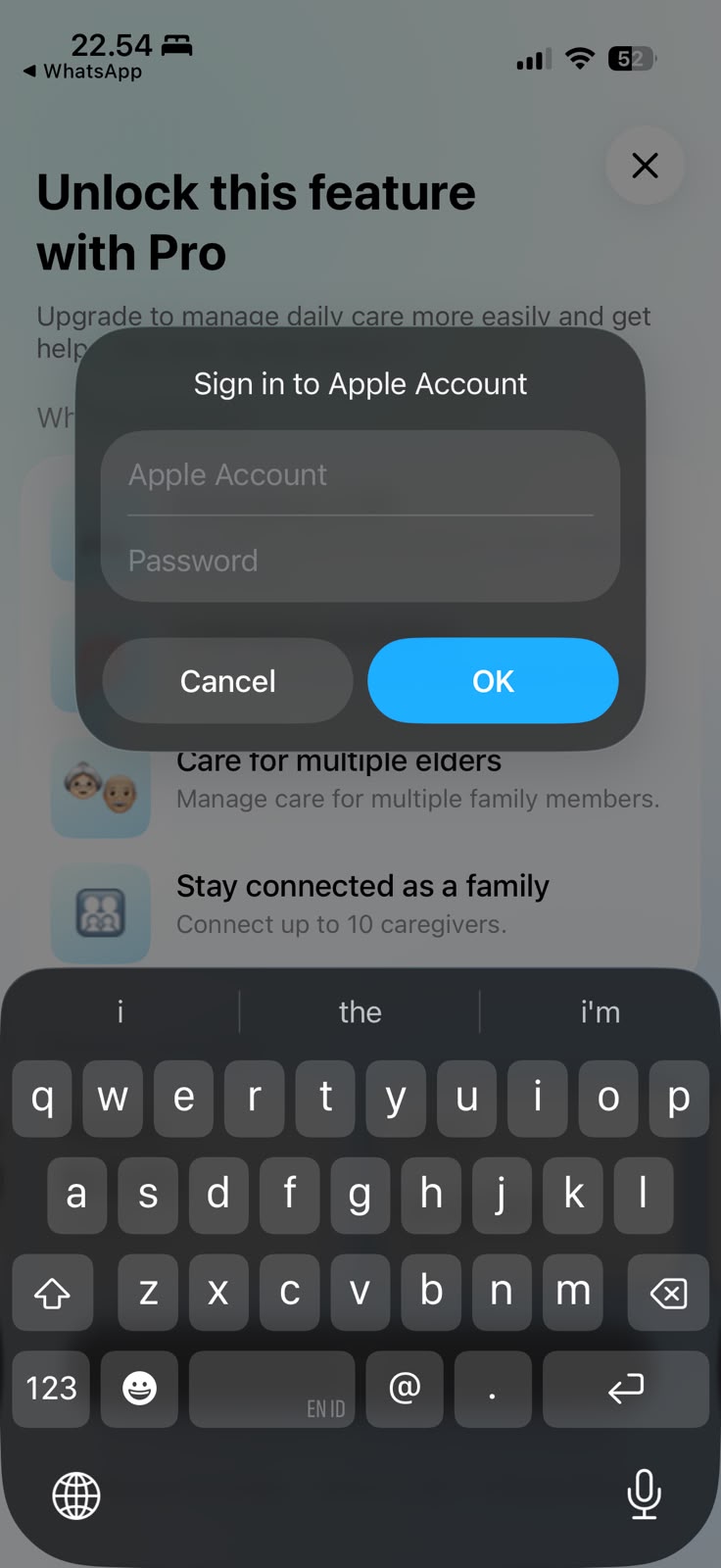
Input Apple ID for authentication purchase
-
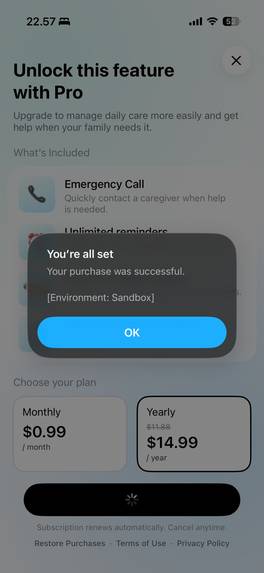
Success Purchase View
-
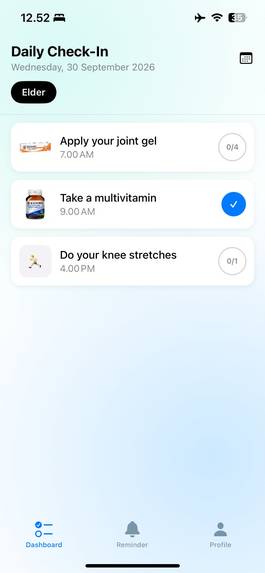
Children/Caregiver Dashboard Page
-
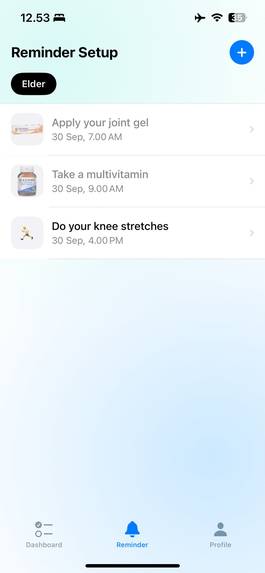
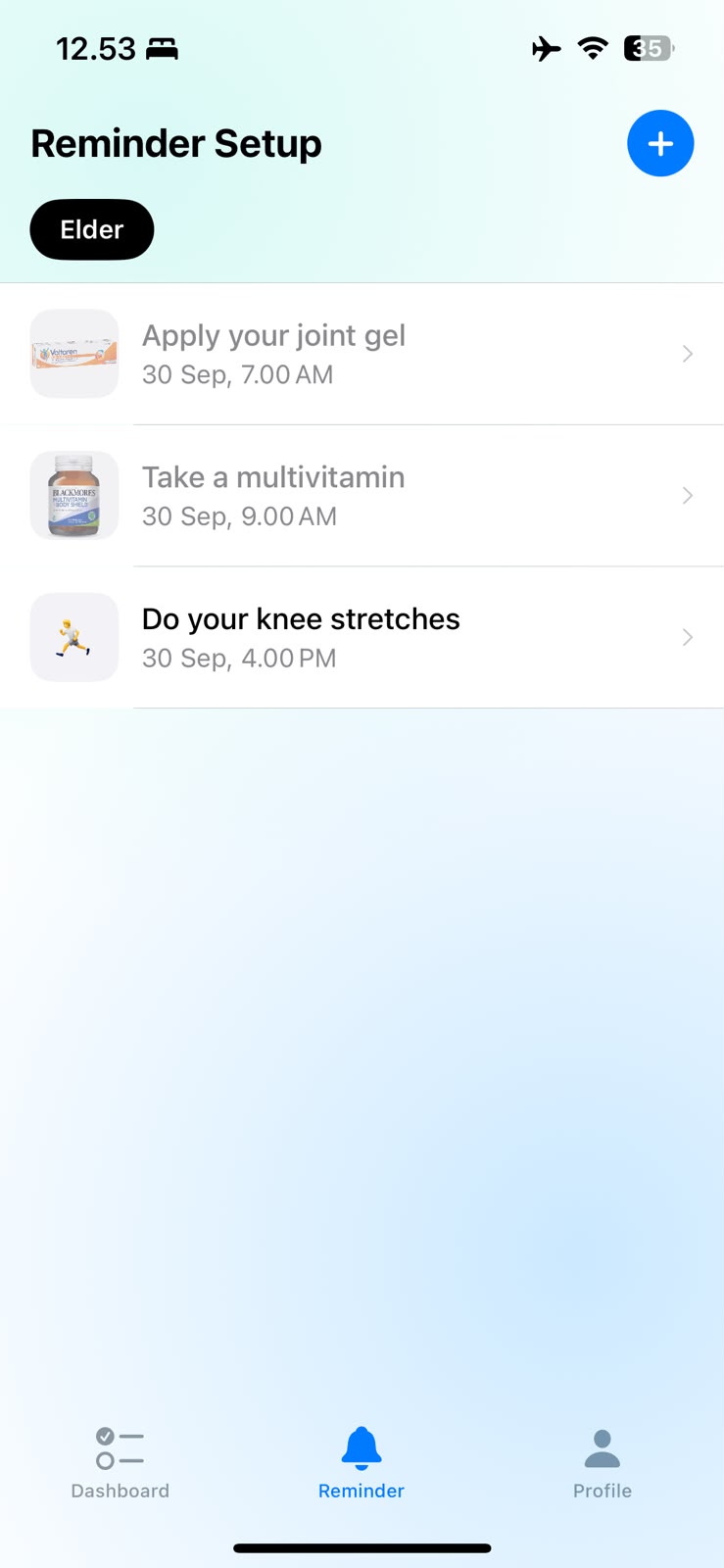
Manage Reminder for Elder in Children/Caregiver Page
-
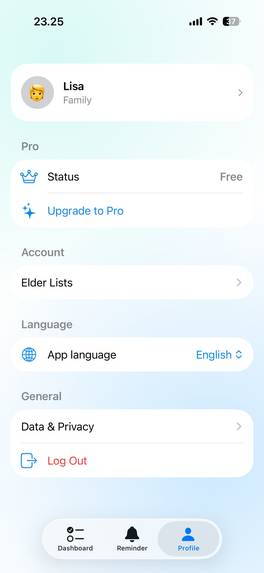
Children/Caregiver Profile Page
Inspiration
Many of us live far from our parents, whether for work, school, or a new city. Distance makes it hard to ask the small questions that matter, for example "Did you take your medicine?", "Have you eaten?", "Are you okay?"
We realized we weren't alone. Families are stretched across cities, islands, and countries. Parents grow older, health becomes more fragile, and the people who love them most are often too far away to notice when something is wrong.
Love wasn't the problem. Distance and complexity were. Most health apps are built for the person who is comfortable with technology, not for the mother who still asks her child to help her open a message.
So we asked ourselves: what if staying close to your parents took just one tap? We wanted something simple enough for a parent to use without a tutorial, and useful enough for a child to feel close again. That became Healder: stay closer to your parents, every day.
What it does
Healder is an iOS app that connects parents and children around health and daily routines.
- Parent and child connection: Link two profiles in seconds with a simple OTP code. No complicated setup.
- Health reminders: The child creates and organizes reminders (medicine, checkups, daily routines), and the parent receives them as notifications.
- Video calls: From a reminder, a parent can start a video call with their child, including emergency video calls when it matters most.
- Emergency contacts and alerts: Add trusted contacts and receive alerts and reminders in one place. Healder is available in English and Indonesian, and it's free on the App Store.
How we built it
We're a team of six people, Aulia, Cio, Eldia, Frans, Ivan, and Jason. We built Healder as a native iOS app for iPhone.
- Front end: SwiftUI, targeting iOS 18+
- Backend and authentication: Supabase handles profile linking through OTP codes.
- Reminders and alerts: push notifications from the app
- Video calling by one-tap
- Landing page: We built and launched healder.my.id alongside the app. We designed everything around one rule, which is if a parent can't figure it out in seconds, it's too complicated.
Challenges we ran into
- Designing for parents: Simple is harder than it sounds. We cut features and screens repeatedly to keep the experience clear for less tech-savvy users.
- Secure, frictionless pairing: We needed a way to connect two family members safely without accounts, emails, or long forms. OTP linking was our answer, and getting it reliable took iteration. One of the reason we use this method is that we want to make sure both two family members have their consent when they want to connect their account.
- Reliable notifications and calls: Reminders for the parents and video calls only matter if they work at the right moment. Sometimes the call is not working because we are using Agora and since Agora that we use is a free plan and has limited quote for calling.
- Shipping on a deadline: Building, testing, passing App Store review, and launching a landing page within hackathon time meant tough prioritization. So in this past few weeks, we have another project to work on beside this Shipaton assignment. The biggest challenge is to manage to have a meeting with our team and discuss about Shipaton, and we are so happy that we can manage this Shipaton.
Accomplishments that we're proud of
- Shipping a live app on the App Store, not just a prototype.
- A pairing flow that takes three steps and needs no tutorial.
- Bringing reminders, family connection, and video calls together in one focused app.
- Supporting English and Indonesian from day one.
- Building it as a team of six with a launched landing page, privacy policy, and support page.
- Get some various feedback from the user during the exhibition, which most of them are good feedbacks and impression as well. Some of them are parents and they said it was easier to use it.
What we learned
- Simplicity is a feature. Sometimes the best UX decision was often removing something.
- Build for real people and watching how parents actually use their phones changed our design more than any assumption did.
- Health-adjacent apps carry responsibility. We were deliberate about privacy and clear that Healder is not a replacement for emergency services or professional medical advice.
What's next for Healder
- Smarter reminders for recurring schedules, medication tracking, and confirmation when a parent completes a task, especially integrate it with AI.
- More languages to reach families across Southeast Asia and beyond.
- Android support so more families can connect.
- Scaling our infrastructure so video calls stay reliable for every family who needs them.
We're not building Healder only for a competition. We're building it because we know the feeling of being far from someone we love, and we believe technology can close that gap with care, not complexity. Winning the Health category would give us the recognition and support us to keep improving, scale our video calling, add AI-powered care, and bring Healder to more families and communities. We're a small team with a big reason, and we're ready to keep building.
Built With
- agora
- supabase
- swift


Log in or sign up for Devpost to join the conversation.