-
-
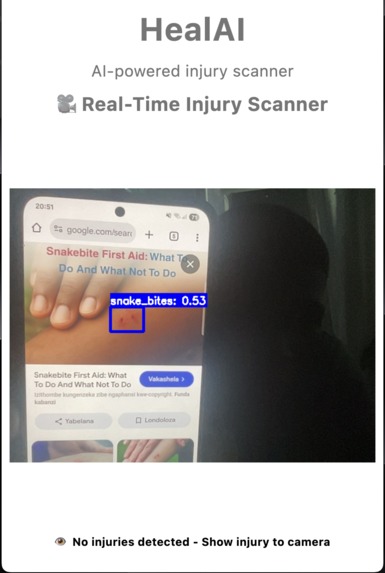
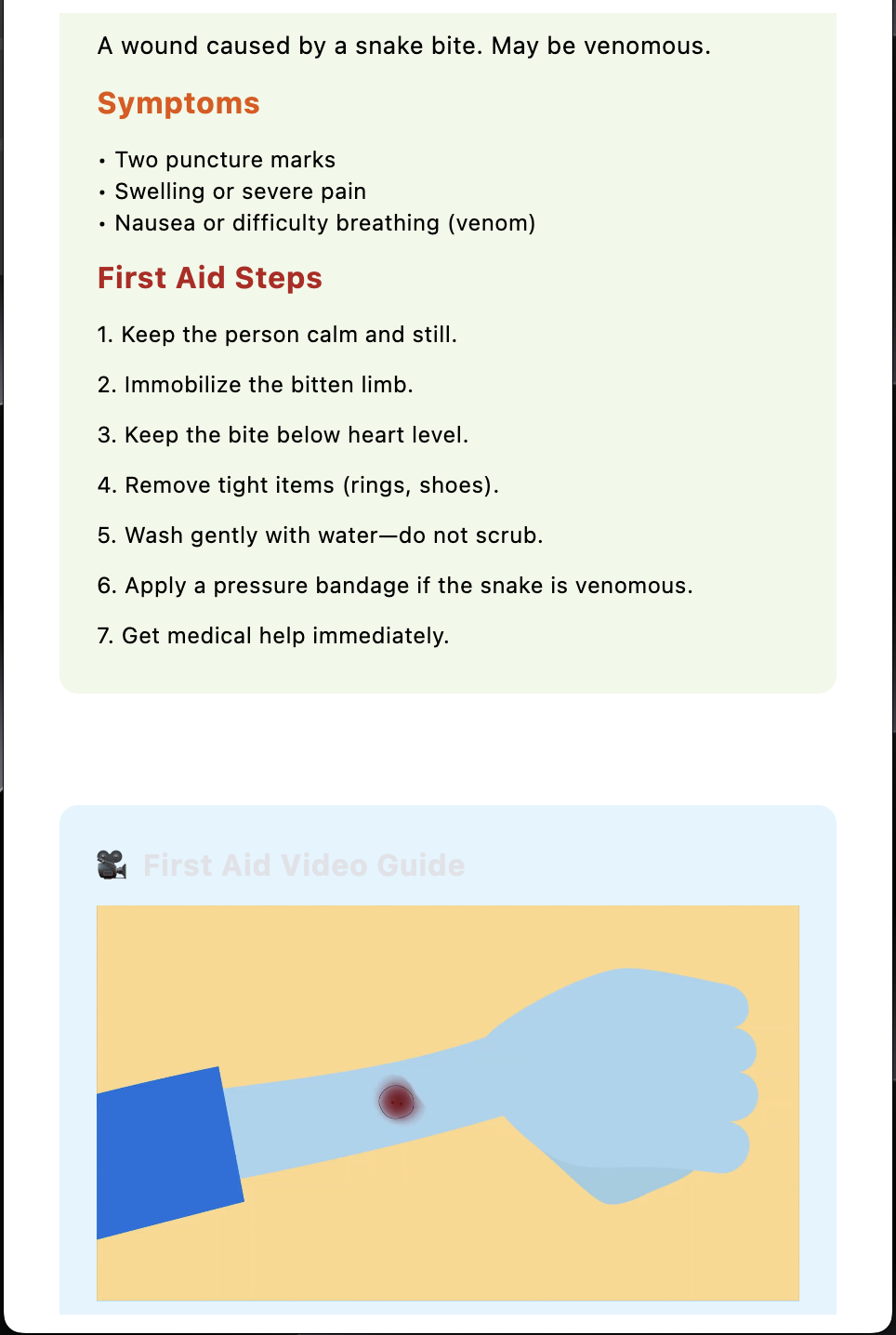
detection_screen
-
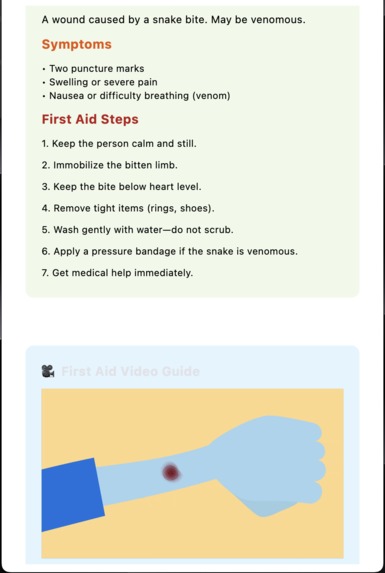
description_screen
-
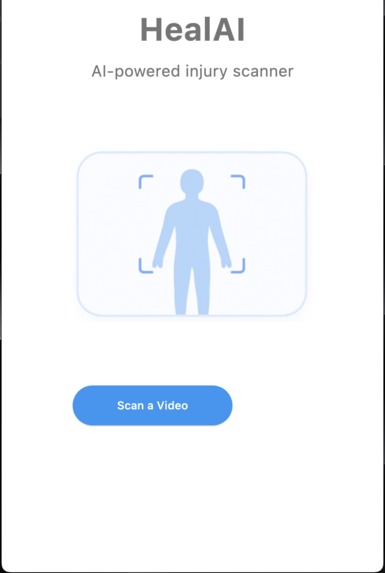
home_screen
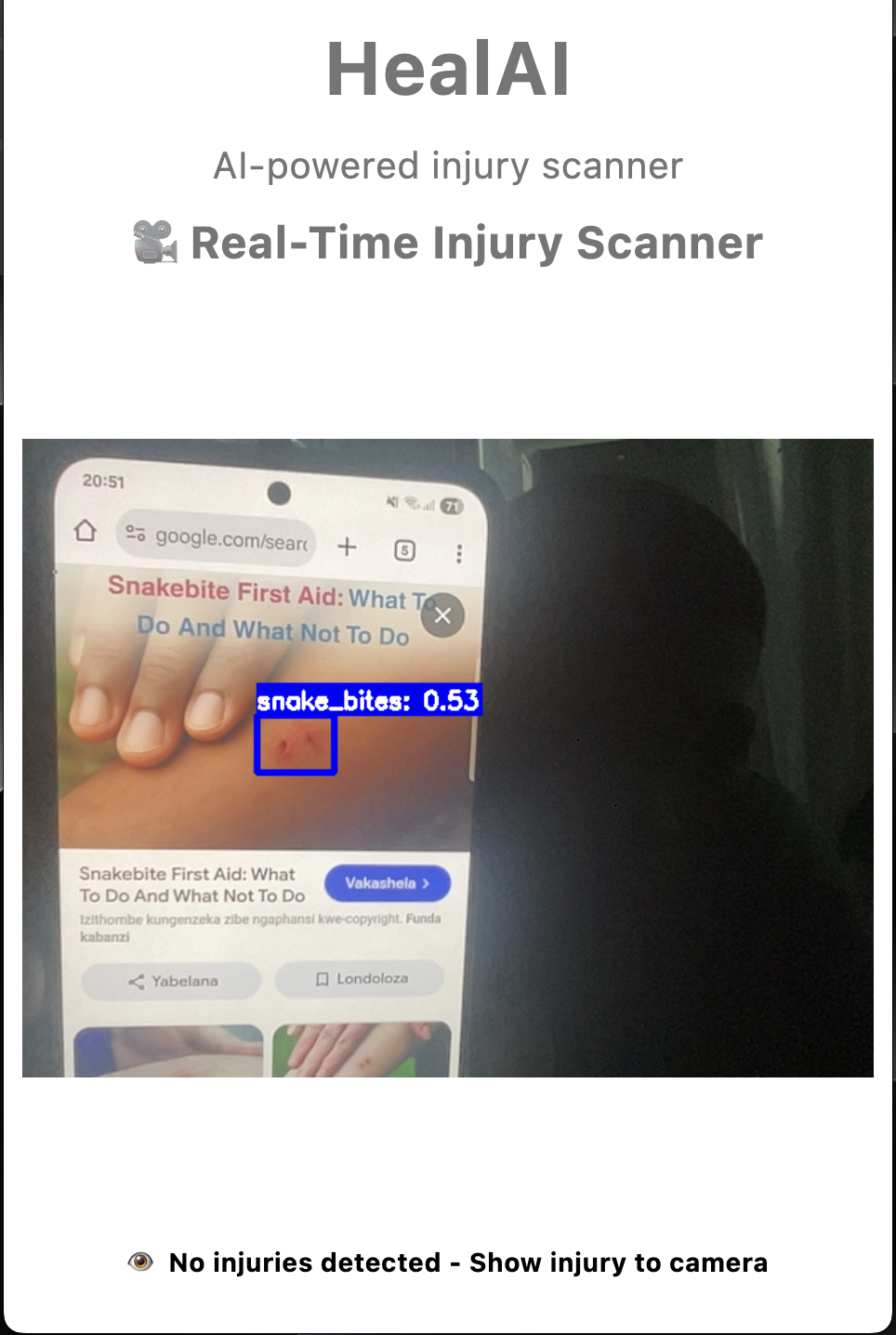
Inspiration
Inspiration
Growing up in communities where medical help can often be far away, I have seen moments where a simple injury becomes dangerous because people do not know the correct first-aid steps. One day, I imagined a world where you could simply point your phone at a wound, and instantly receive safe, medically verified guidance, even offline. No searching Google. No panic. Just quick help powered by AI. That idea became HealAI. My inspiration came from three core thoughts: 1.Time matters in injuries: A few minutes of correct first aid can prevent infection, reduce pain, or even save a life.
- Everyone carries a phone: But not everyone carries medical knowledge. This challenge from Arm motivated me to build something that shows the future of mobile edge AI — intelligent, offline, accessible health support right in your pocket. ## What it does HealAI is a real-time, on-device injury detection assistant that runs entirely on Arm-powered mobile devices. Using your phone’s camera, HealAI can instantly identify injuries such as: -abrasions -bruises -burns -cuts -lacerations -snake bites -ingrown nails -tick bites Once detected, the app provides step-by-step first-aid instructions, safety notes, and recommended actions, even without internet access. HealAI also offers educational videos,, and an offline injury knowledge base so that people can respond quickly and correctly in emergencies. HealAI turns a smartphone into a portable first-aid advisor that empowers users to act confidently when medical help is not immediately available. ## How we built it HealAI combines computer vision, edge AI optimization, and a lightweight multi-screen mobile UI.
- Injury Detection Engine -Collected and labeled injury images -Trained a YOLOv10 model to detect 8 injury classes
- Mobile Application (Flet) -Built a multi-screen mobile interface using the Flet framework -Integrated the camera feed with real-time YOLO inference -Implemented a threaded detection pipeline to avoid UI freezing -Added overlays, bounding boxes, detection confidence, and prompts
- First-Aid Knowledge Engine -Created a structured JSON library of medical instructions -Used guidelines from WHO, Red Cross, and St John Ambulance -Developed a rule-based engine that maps detected injuries → correct first-aid workflow
- Mobile Optimization -Used performance profiling tools to maximize FPS -Ensured the entire system runs fully offline ## Challenges we ran into
- Real-Time Inference Speed on Mobile The initial model ran slowly, so we optimized the input pipeline, reduced memory copies,
- Lighting & Skin-Tone Variability Injury colors differ across skin tones and environments. We solved this using heavy augmentation: brightness, contrast, hue, and Gaussian blur.
- Maintaining UI Responsiveness Running inference on the main thread froze the app. We redesigned the pipeline with background threads to keep the UI smooth.
- Medical Accuracy We needed reliable instructions. This required manual validation against trusted global first-aid sources. ## Accomplishments that we're proud of ✔ An AI model that performs real-time detection fully offline This proves the strength of Arm devices for mobile health assistance. ✔ A full mobile app built from scratch With interactive UI, real-time camera, detection overlays, and educational content. ✔ A meaningful solution for real-world safety HealAI can help communities that lack immediate medical knowledge or connectivity. ✔ Successfully deploying AI outside the cloud Achieving <200ms inference time on mobile after optimization was a major milestone. ✔ Building a polished, thoughtful user experience Not just AI, but a tool that’s simple, calming, and helpful in stressful moments.
What we learned
Building HealAI taught us skills across multiple domains: -Deep Learning & Optimization -Mobile App Engineering -threading -memory management -real-time camera pipelines -building a smooth UI for emergency contexts -Human-Centered Design -clarity is crucial -medical information must be accurate We learned how powerful and practical on-device AI can be—no server, no internet, just intelligence running directly on Arm devices.
What's next for HealAI
- Voice-Based Injury Description Users will be able to say: “My hand is swollen and bleeding, what should I do?” The AI will respond with recommendations.
- Severity Scoring A risk estimation system that uses: -injury area -color analysis -confidence -swelling indicators
- Medical Text Summaries AI-generated summaries of what might have caused the injury and red flags to watch.
- Wearable / Smartwatch Integration Future versions will connect with sensors and cameras from wearables for hands-free first aid guidance.
- Multilingual Support Including isiZulu, isiXhosa, Sesotho, Hindi, Portuguese, and Arabic.


Log in or sign up for Devpost to join the conversation.