Inspiration
In India—and globally—many elderly or unwell individuals are left unattended during critical medical appointments simply because their loved ones live away for work or studies. We realized that healthcare is not just about medicine, but about presence and support. Inspired by real-life challenges faced by our own families, Heal Together was born—to ensure that no patient ever feels alone, whether in rural villages or crowded metros.
What it does
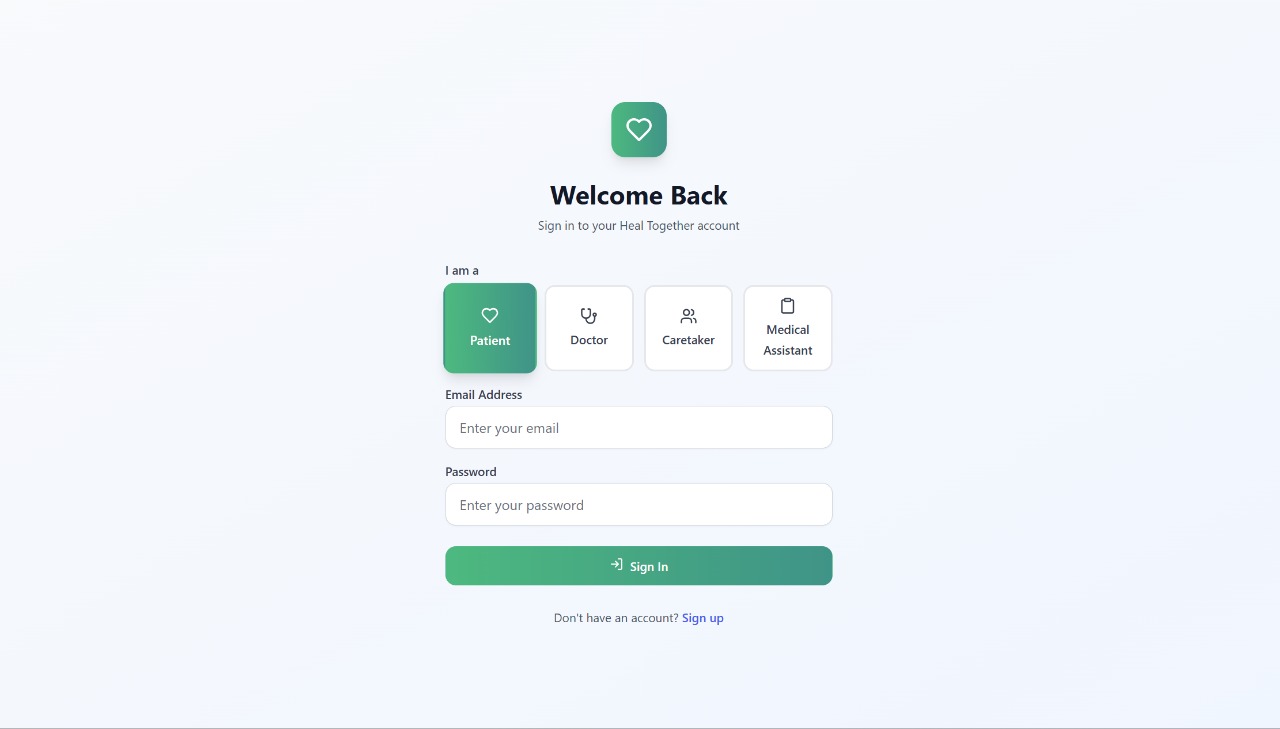
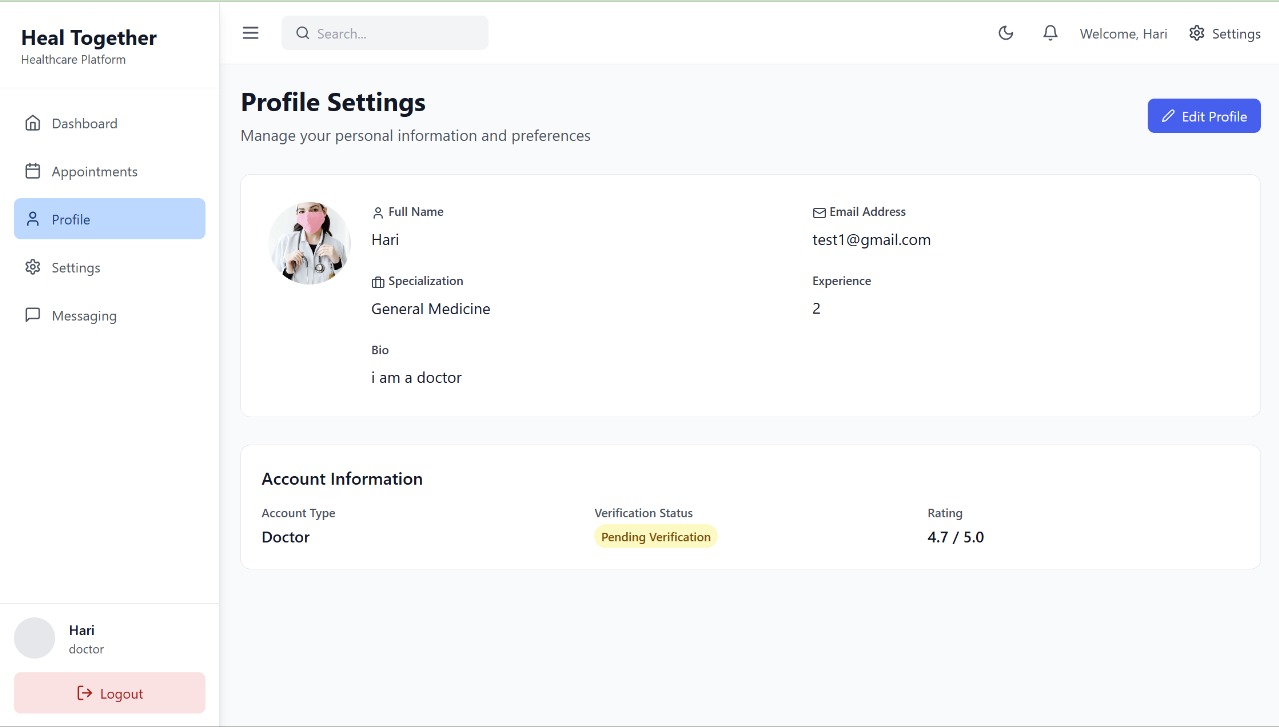
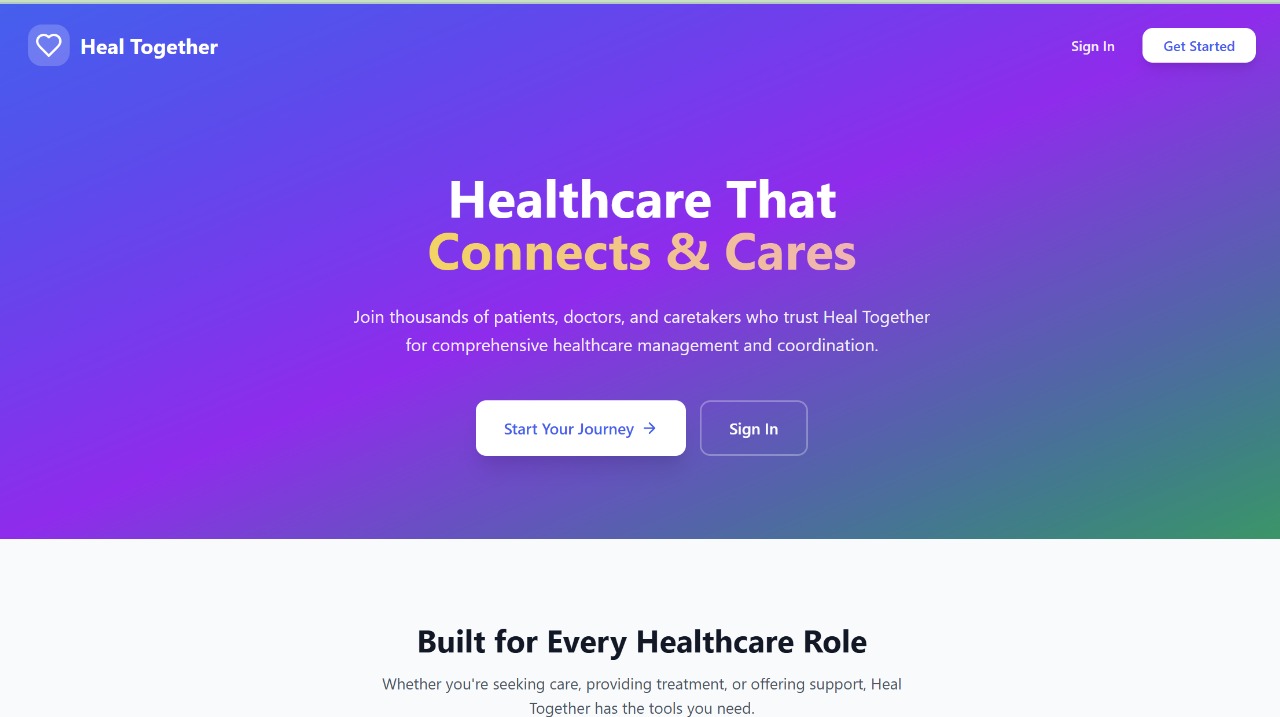
Heal Together is a mobile-first healthcare assistant platform that connects: Patients with verified Caretakers (trained helpers) for medical visits. Doctors with the community via a discovery and booking interface. Elderly & non-tech users with a toll-free helpline to book appointments or request support via voice.
Key Features: Role-based login (Patient, Caretaker, Doctor) Book a caretaker to assist during checkups or emergencies AI-powered symptom checker chatbot Location-based doctor discovery via Google Maps Toll-free number for voice-based appointment booking Caretaker verification (via DigiLocker, background check) Emergency mode & live tracking
How we built it
Frontend: The frontend is built with React and TypeScript, utilizing a component-based approach for reusable and maintainable UI elements. Vite serves as the build tool, offering fast development and hot module replacement. Zustand is used for state management, providing a lightweight and efficient way to handle global state across the application. For styling, Tailwind CSS enables rapid development of a modern, responsive interface. Integration with the Google Maps JavaScript API allows for real-time location tracking and map displays, which are essential for caretaker and medical assistant workflows. Backend: The backend is powered by Node.js and Express.js, which together provide a robust RESTful API for handling authentication, user management, request processing, and more. MongoDB is used as the primary database, offering a flexible, document-oriented data model that is well-suited for storing healthcare-related information. The backend is responsible for managing user roles, processing requests, and supporting real-time updates.
Challenges we ran into
Designing for non-tech-savvy users while keeping features modern Ensuring smooth multi-role logic within a single app Managing real-time updates and tracking between roles Creating a voice-call-based flow that feels personal yet automatable Navigating third-party verification API integration (DigiLocker restrictions)
Accomplishments that we're proud of
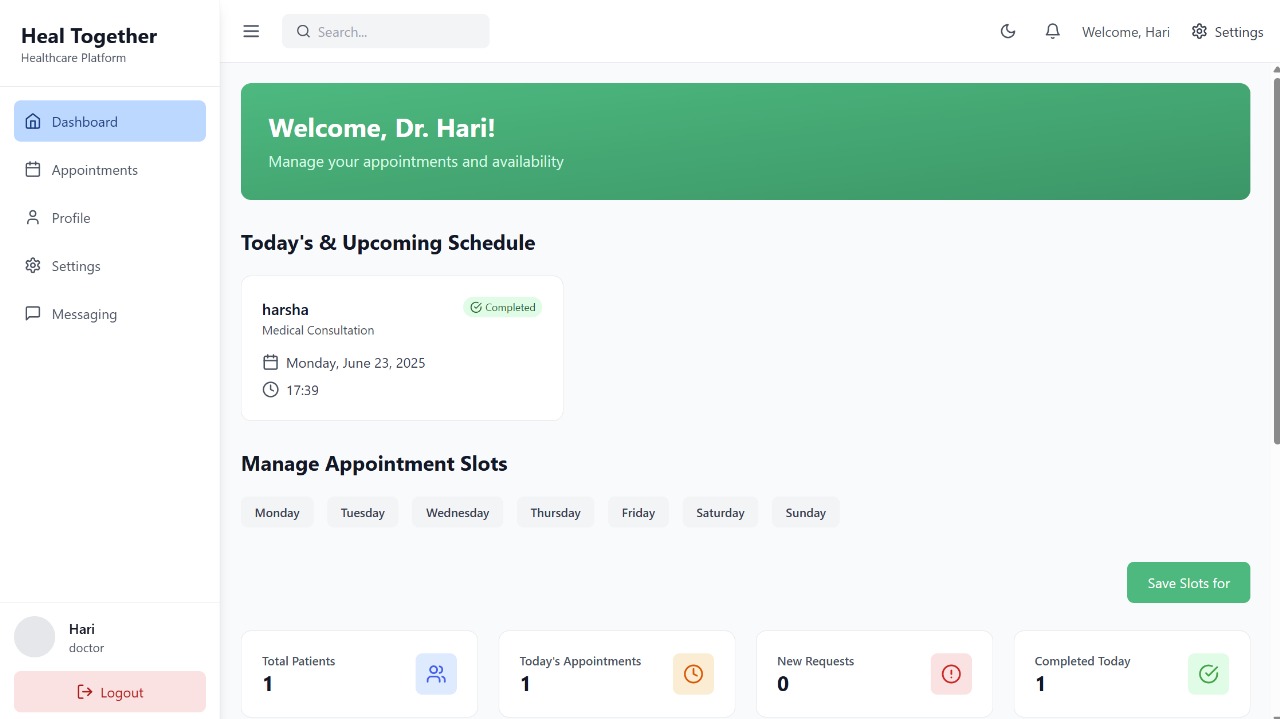
Built a fully working multi-role mobile interface Integrated Google Maps and AI-based chatbot Set up toll-free calling logic for booking without apps Created a scalable, secure structure for user verification and feedback Designed a minimalist UI that works for both elders and professionals.
What we learned
How to structure role-based apps in a scalable way Importance of designing with empathy for end users (especially elders) Working with third-party APIs (like Maps, AI, Telephony) Planning for both urban tech users and rural offline users in one ecosystem Building for trust and safety in healthcare settings
What's next for Heal-Together
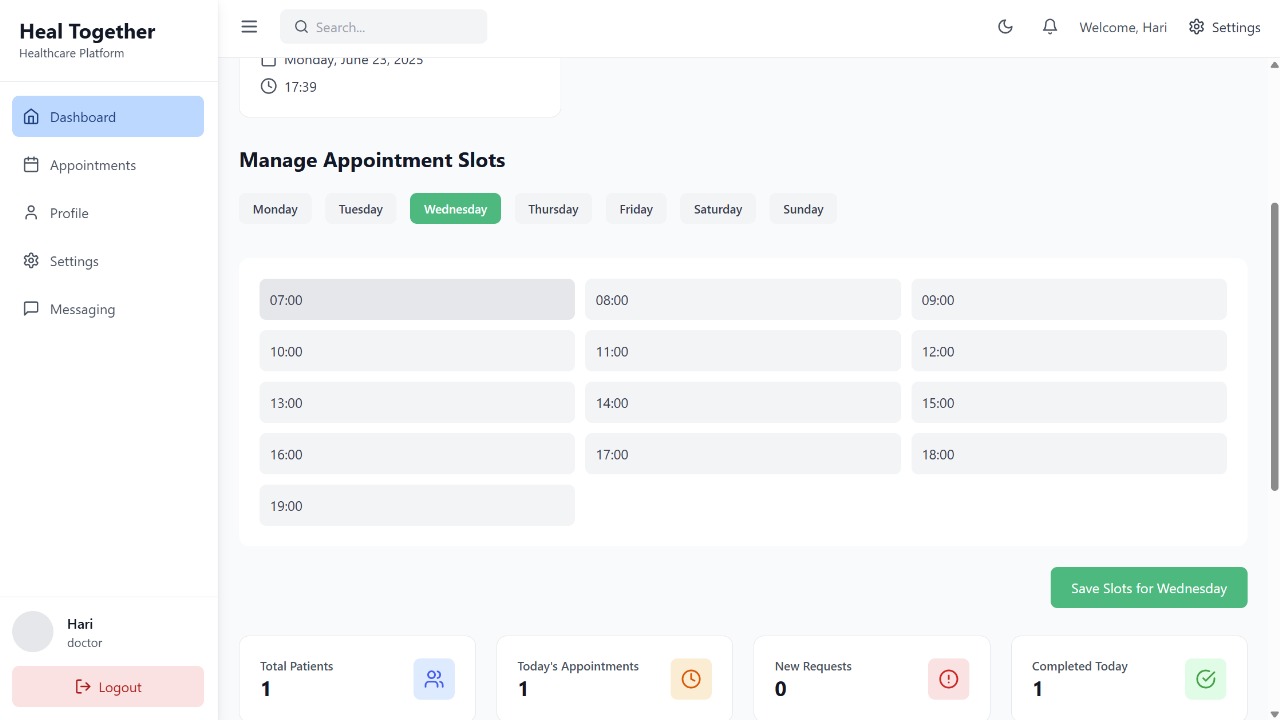
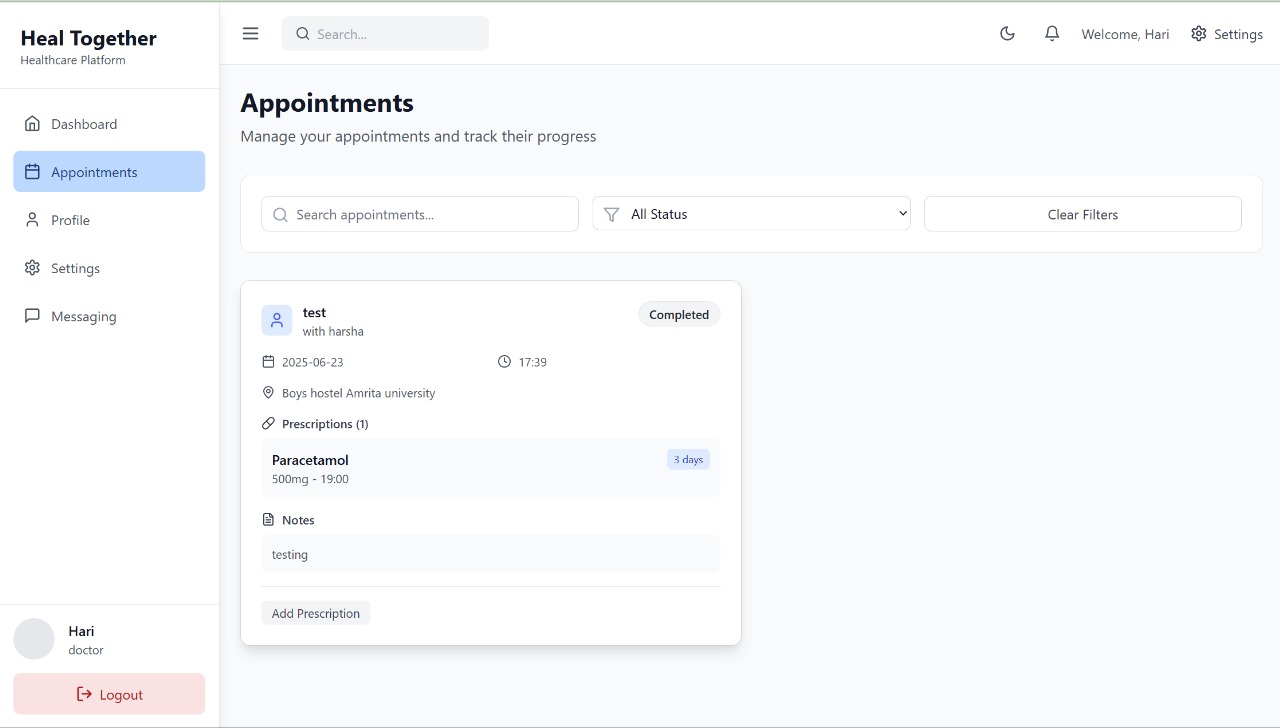
Full DigiLocker & background verification onboarding for caretakers Launching in pilot cities with local clinic partnerships Adding voice-bot automation for the toll-free number Building a web-based dashboard for doctors to manage patients Collaborating with government health programs for offline patient outreach Publishing the app to Play Store & App Store after MVP testing
Built With
- css
- express.js
- for
- frontend:-react
- google-maps-api-backend:-node.js
- mongodb-(with-mongoose-or-native-driver)-other-tools:-eslint-for-code-quality
- postcss
- tailwind-css
- vite
- zustand


Log in or sign up for Devpost to join the conversation.