Modern systems fail all the time—servers crash, memory leaks grow silently, and APIs stop responding. Tools like Netdata or Prometheus can detect issues, but they still rely on humans to fix them.
The idea behind HealNode came from a simple question: Why can’t infrastructure fix itself the moment something goes wrong?
We wanted to eliminate the gap between detection and resolution and move toward truly autonomous systems.
What We Learned
While building HealNode, we gained deep insights into:
How real-world monitoring systems track CPU, memory, and service health The importance of combining threshold-based and pattern-based anomaly detection Designing decision engines (playbooks) instead of hardcoded reactions Handling failure escalation logically instead of blindly restarting services Building real-time dashboards that actually reflect system behavior
We also learned how small delays or poor decisions in recovery systems can lead to cascading failures.
How We Built It
HealNode is designed as a modular system with four core components:
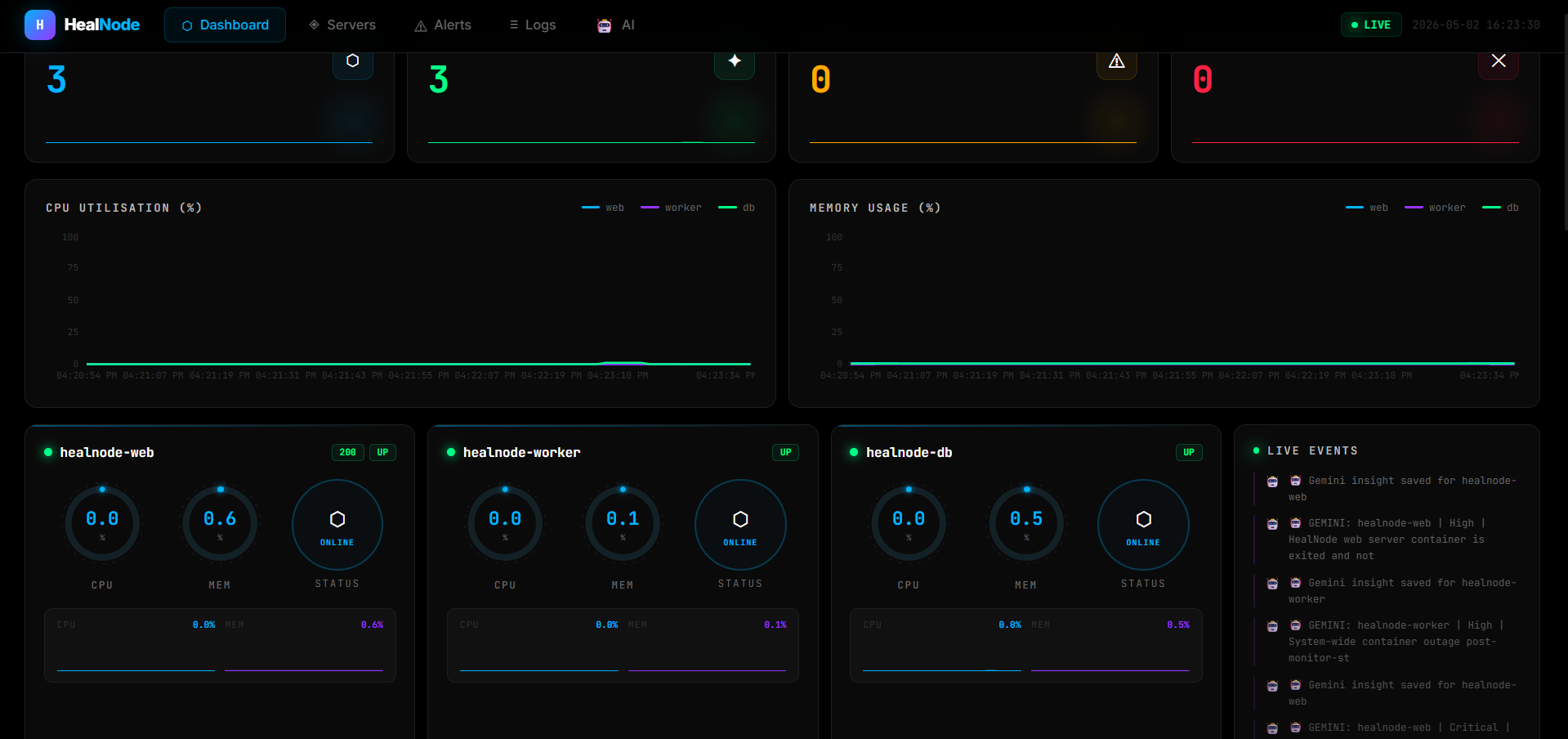
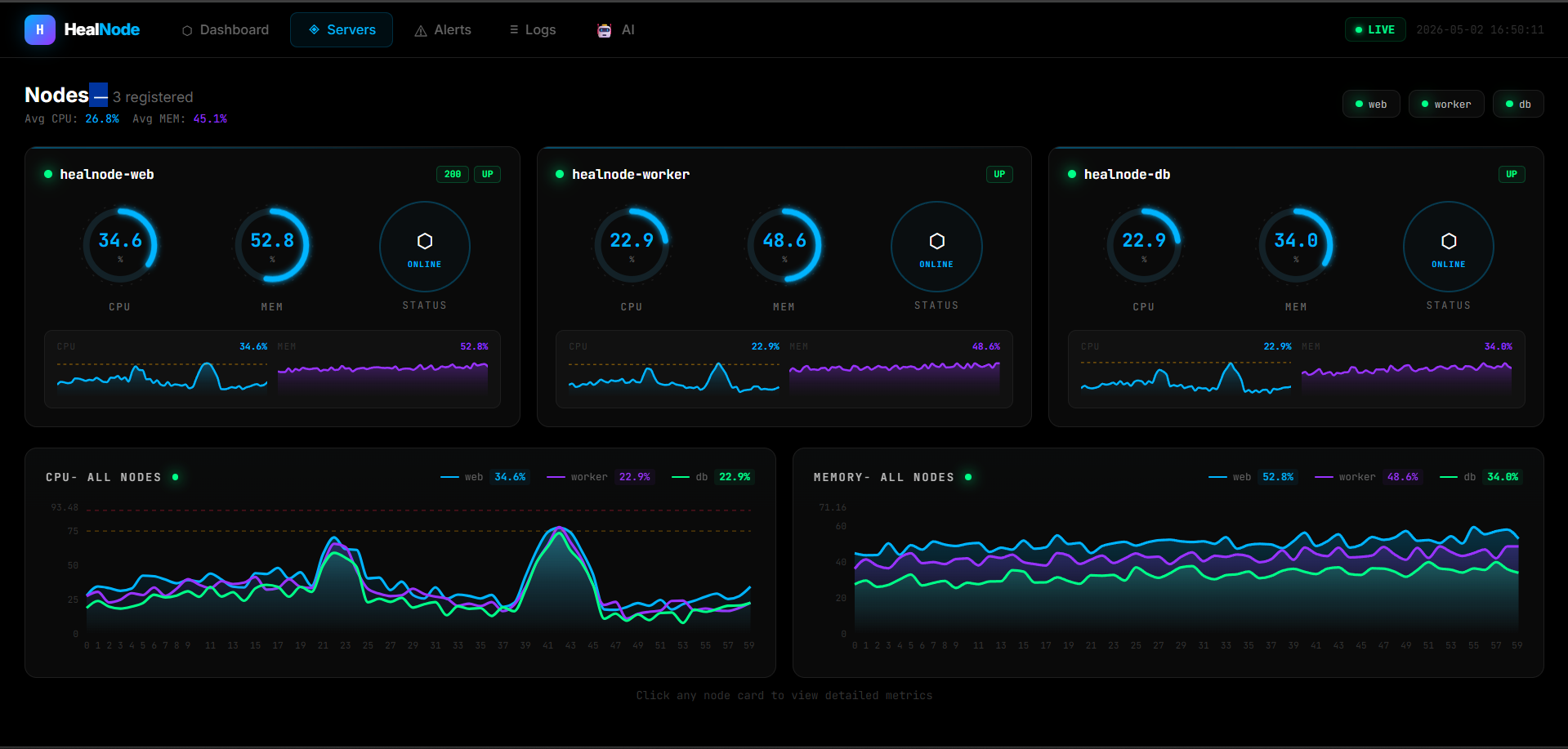
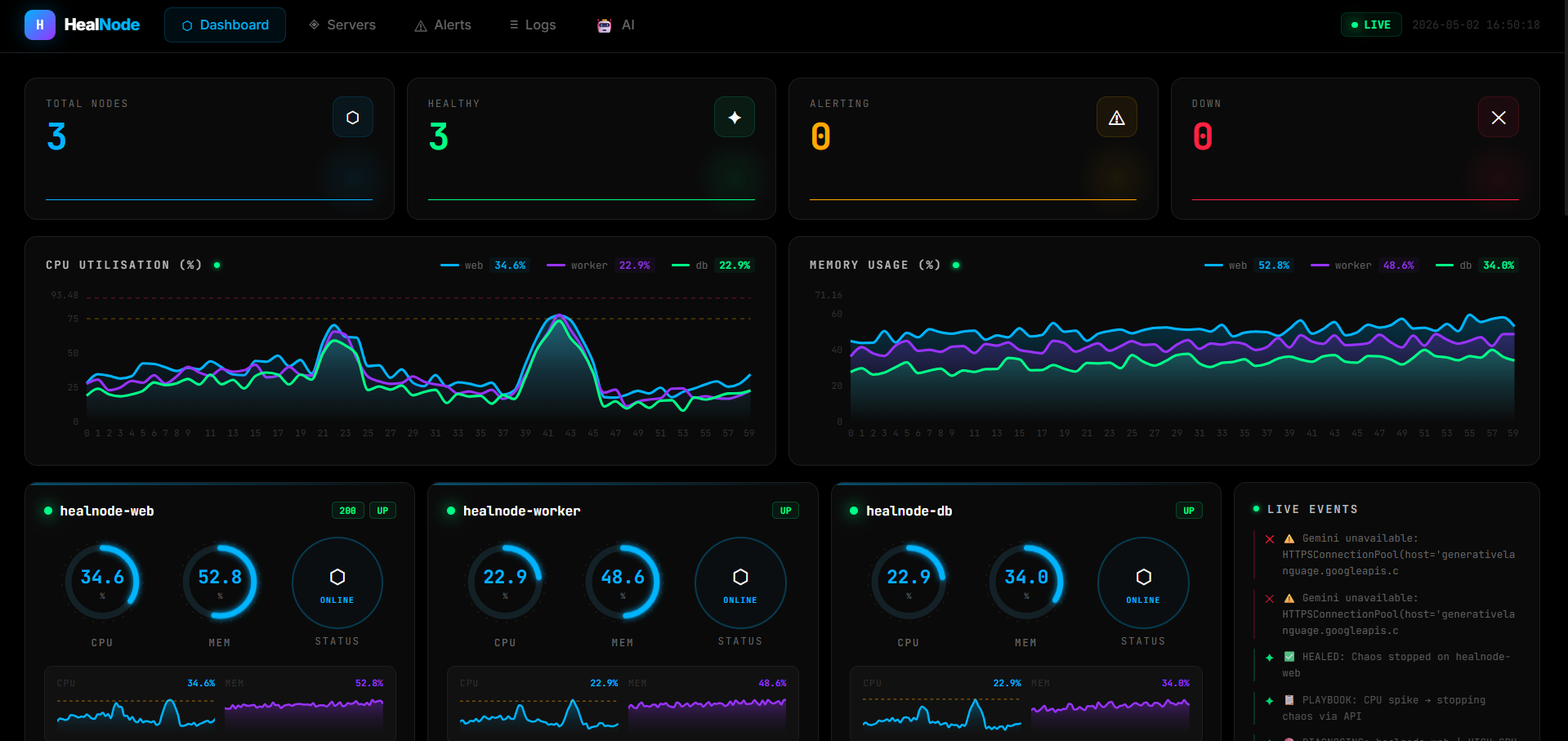
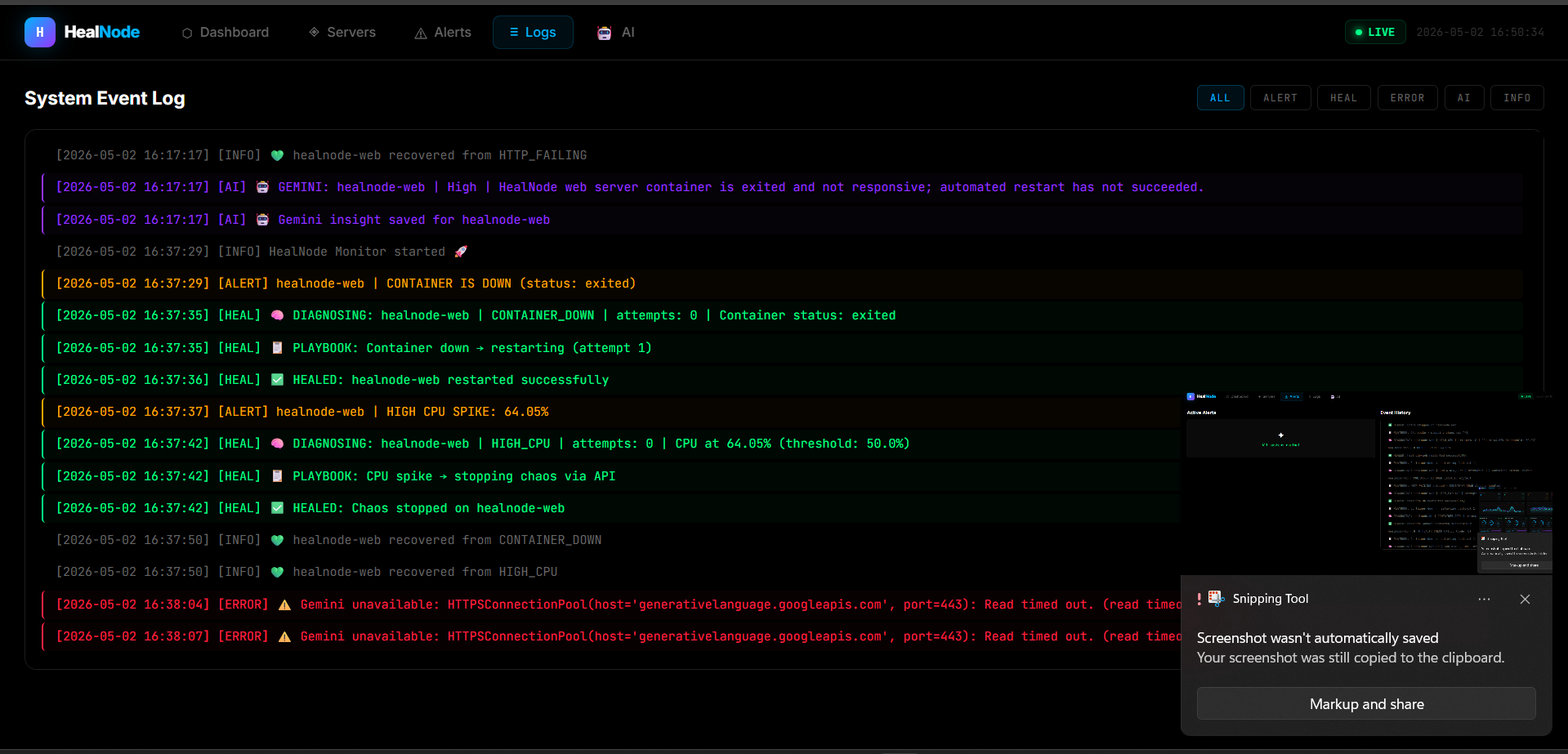
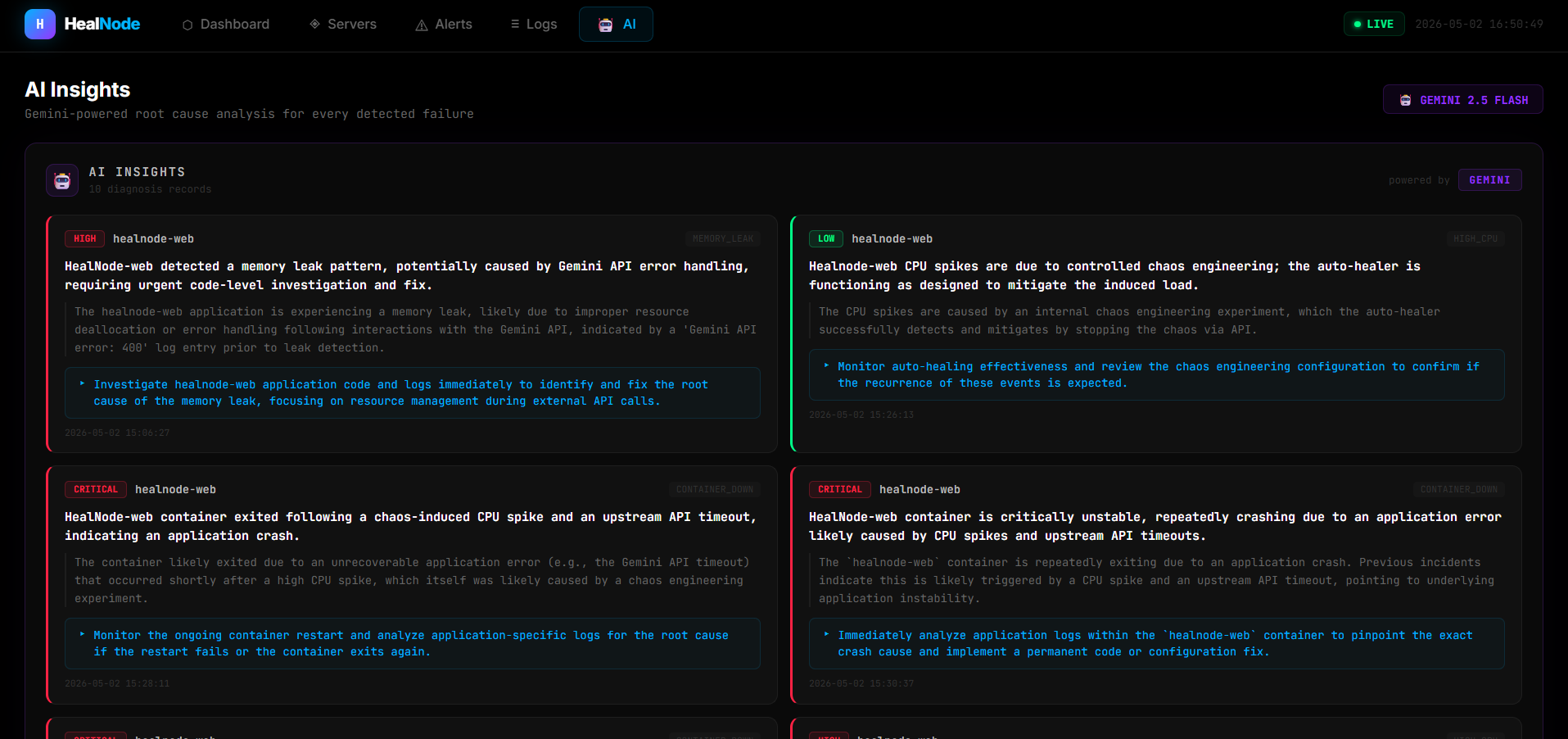
Monitoring Layer Continuously polls Docker containers every 2 seconds for CPU, memory, status, and HTTP health Anomaly Detection Uses: Threshold rules (e.g., CPU > 50%) Pattern detection (e.g., gradual memory growth for leak detection) Auto-Healer (Playbook Engine) Maps each failure type to a recovery action and escalates responses based on repeated failures Dashboard (React + Recharts) Displays real-time system state with live charts, alerts, and logs
We also built a Chaos Engine to simulate real-world failures like CPU spikes, memory leaks, and crashes to test the system end-to-end.
Challenges We Faced Detecting memory leaks early Simple thresholds weren’t enough—we had to track trends over time Avoiding over-healing Restarting everything blindly caused instability, so we added escalation logic Keeping the system real-time Synchronizing monitor, healer, and dashboard every 2 seconds without lag was tricky Making the dashboard feel alive Static graphs didn’t reflect real system behavior—we had to rethink visualization for better feedback

Log in or sign up for Devpost to join the conversation.