-
-
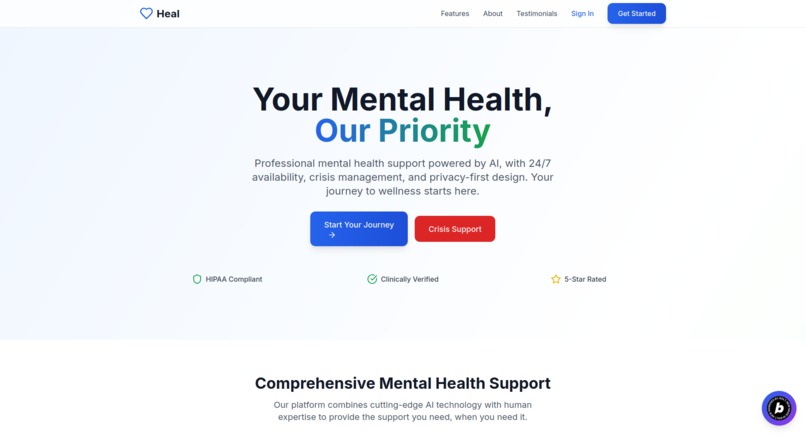
The Home/Landing Page
-
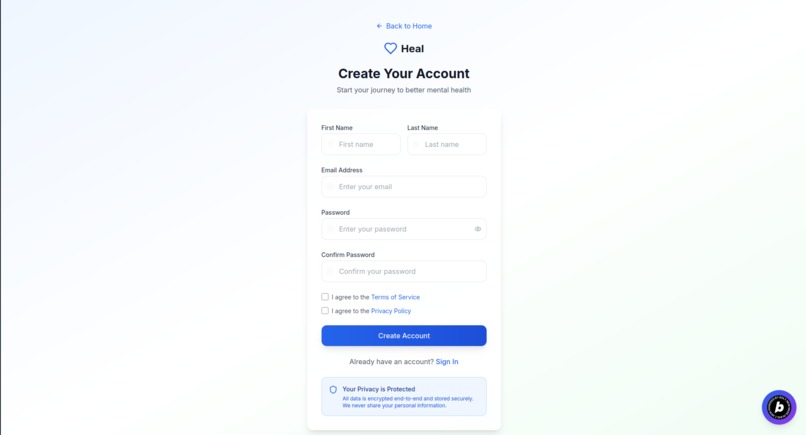
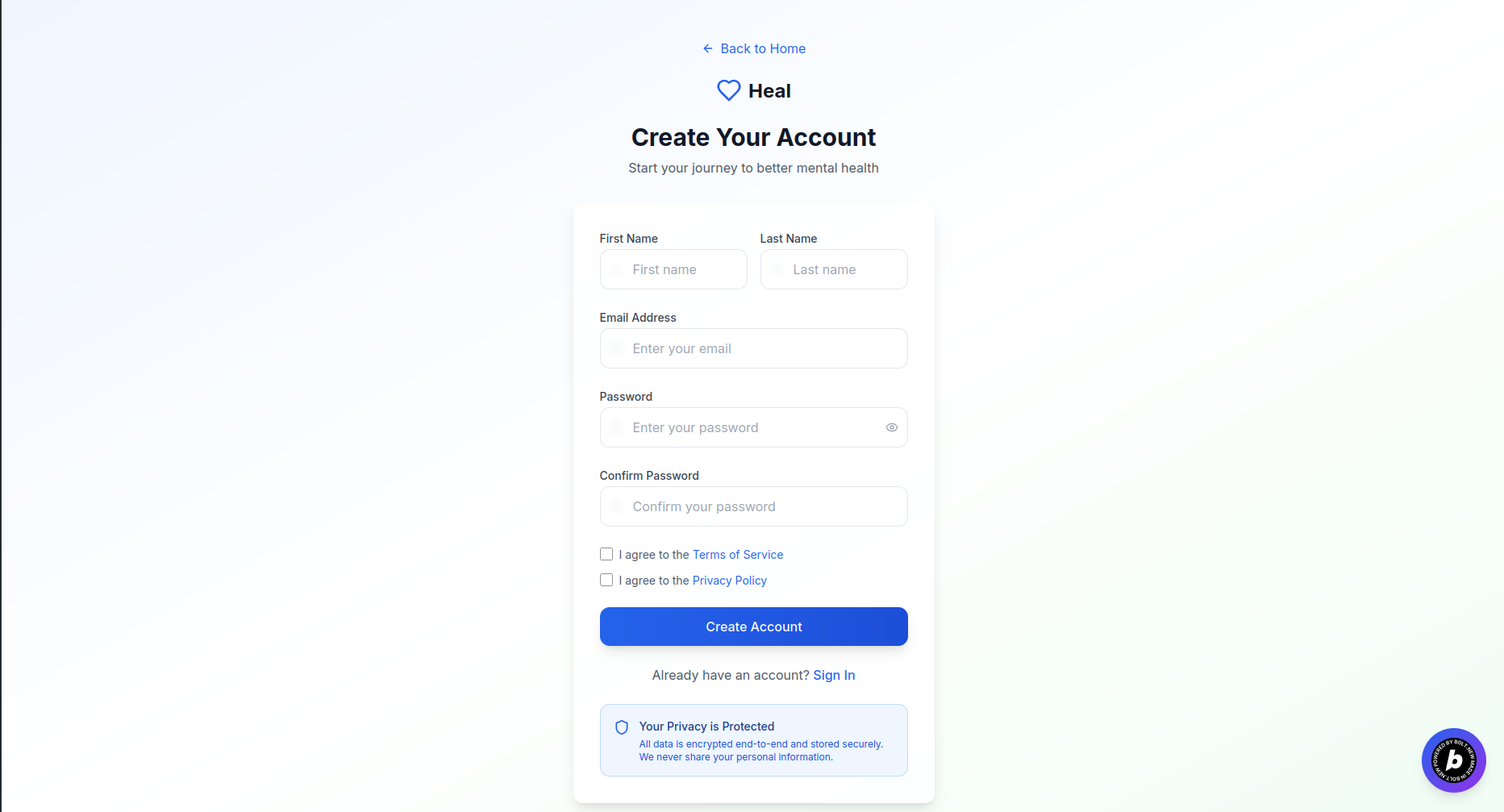
Authorization/SignUP page
-
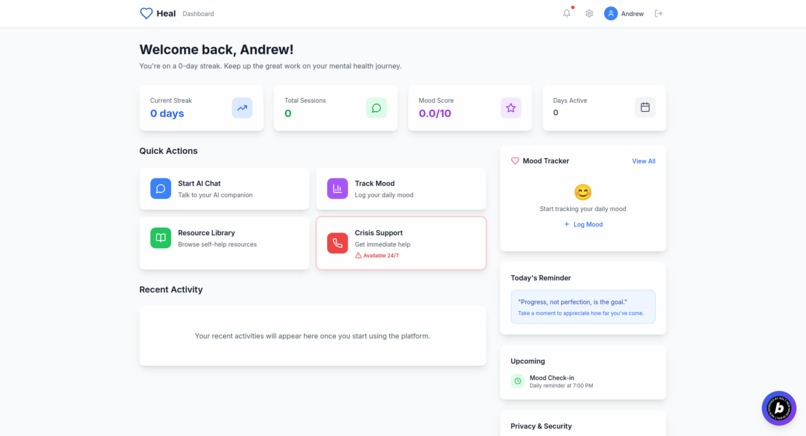
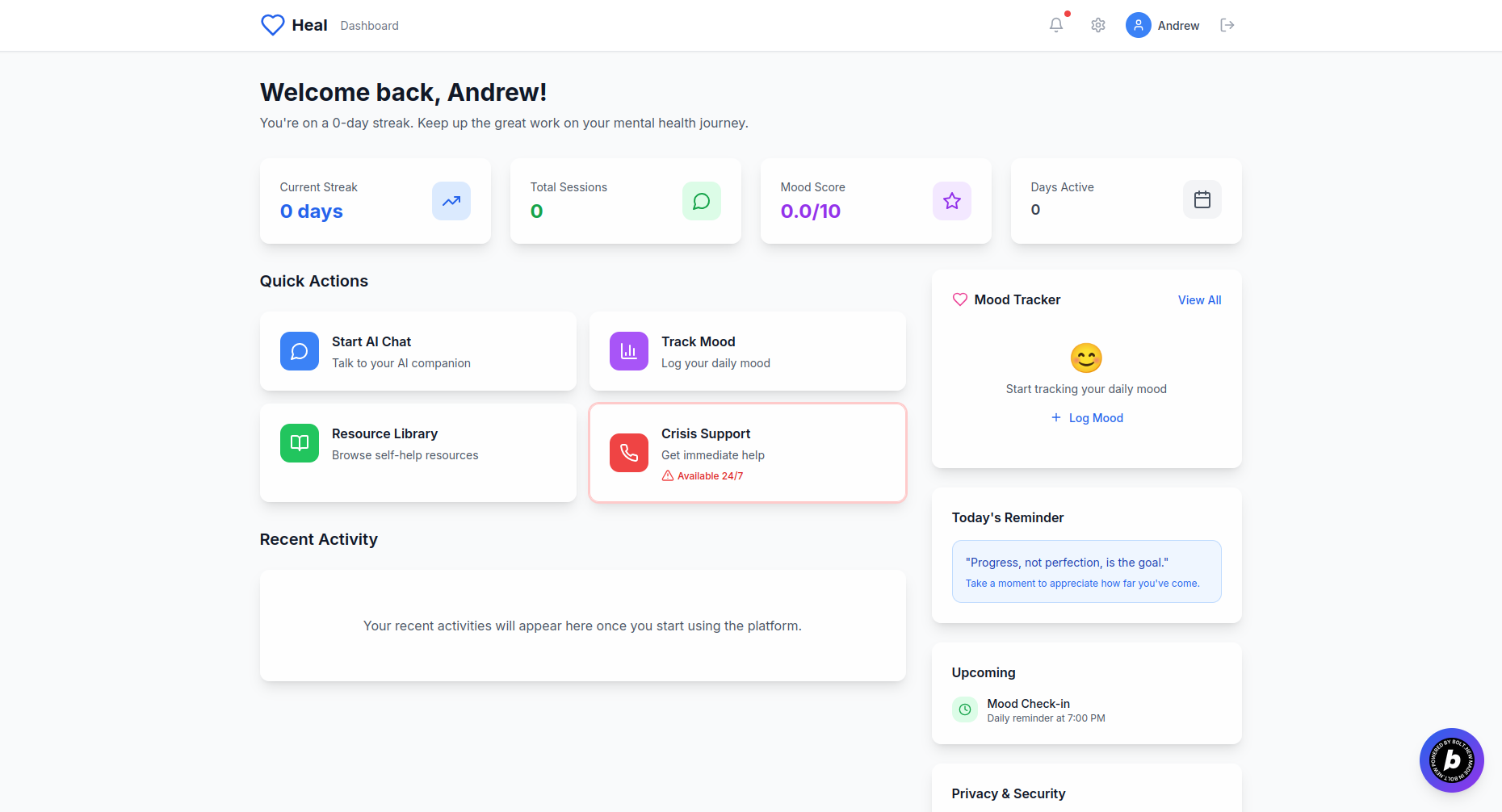
The Dashboard After Authorization
-
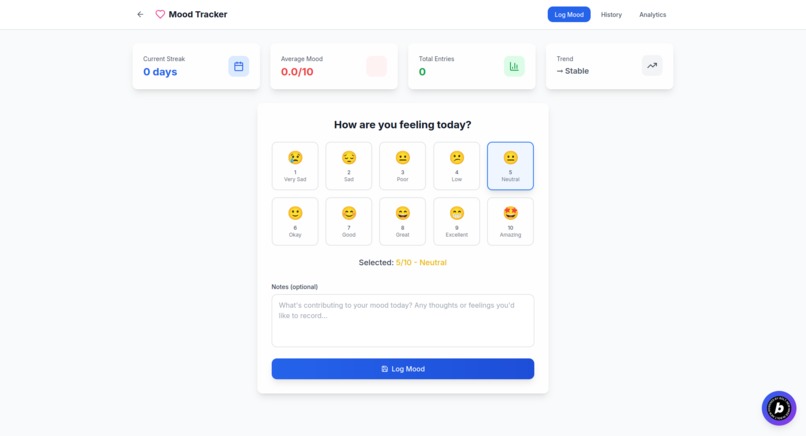
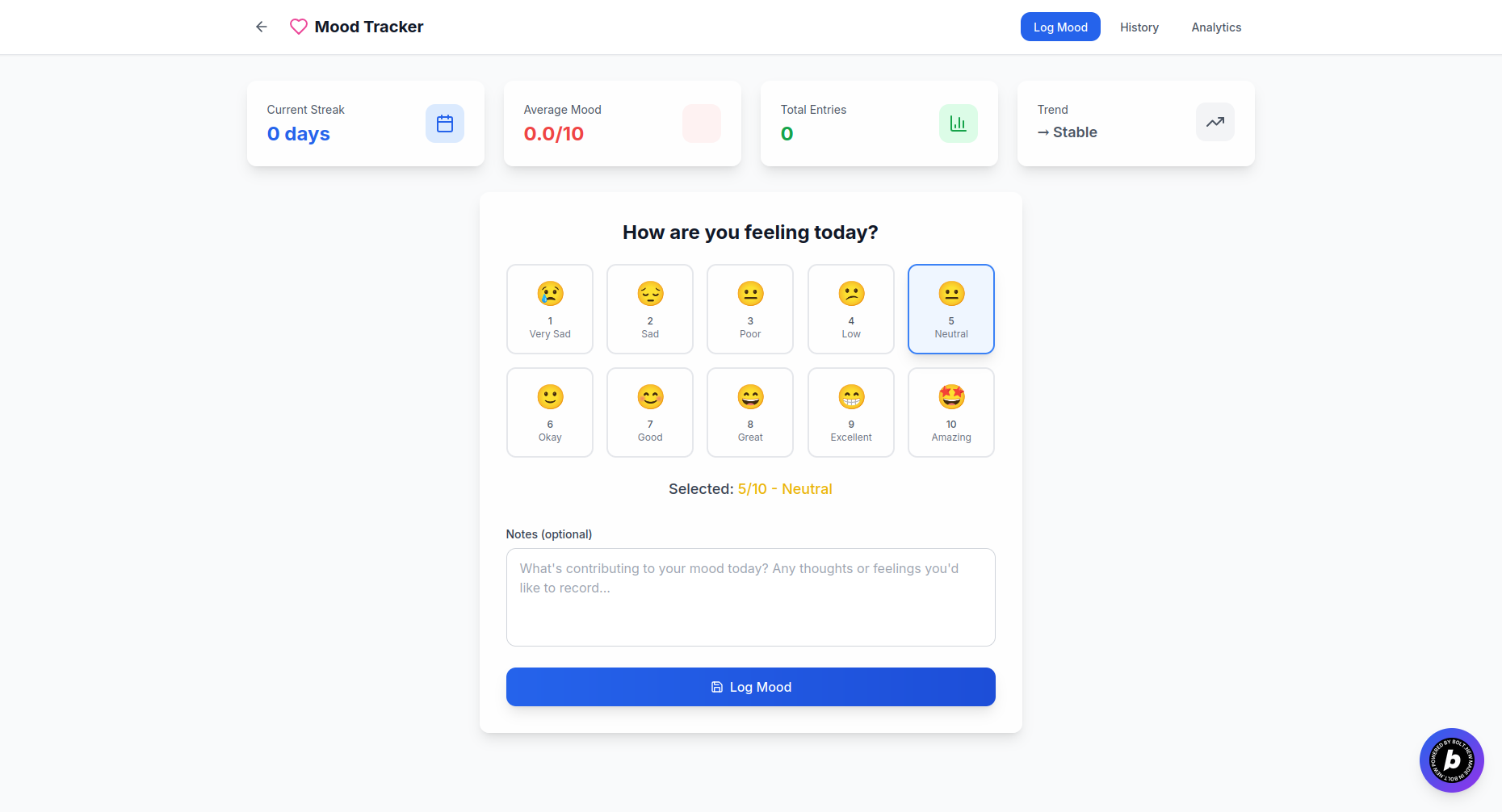
Mood Tracker Page
-
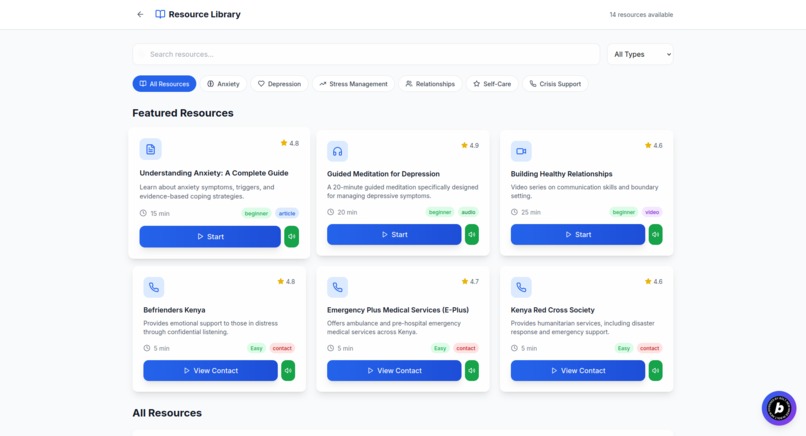
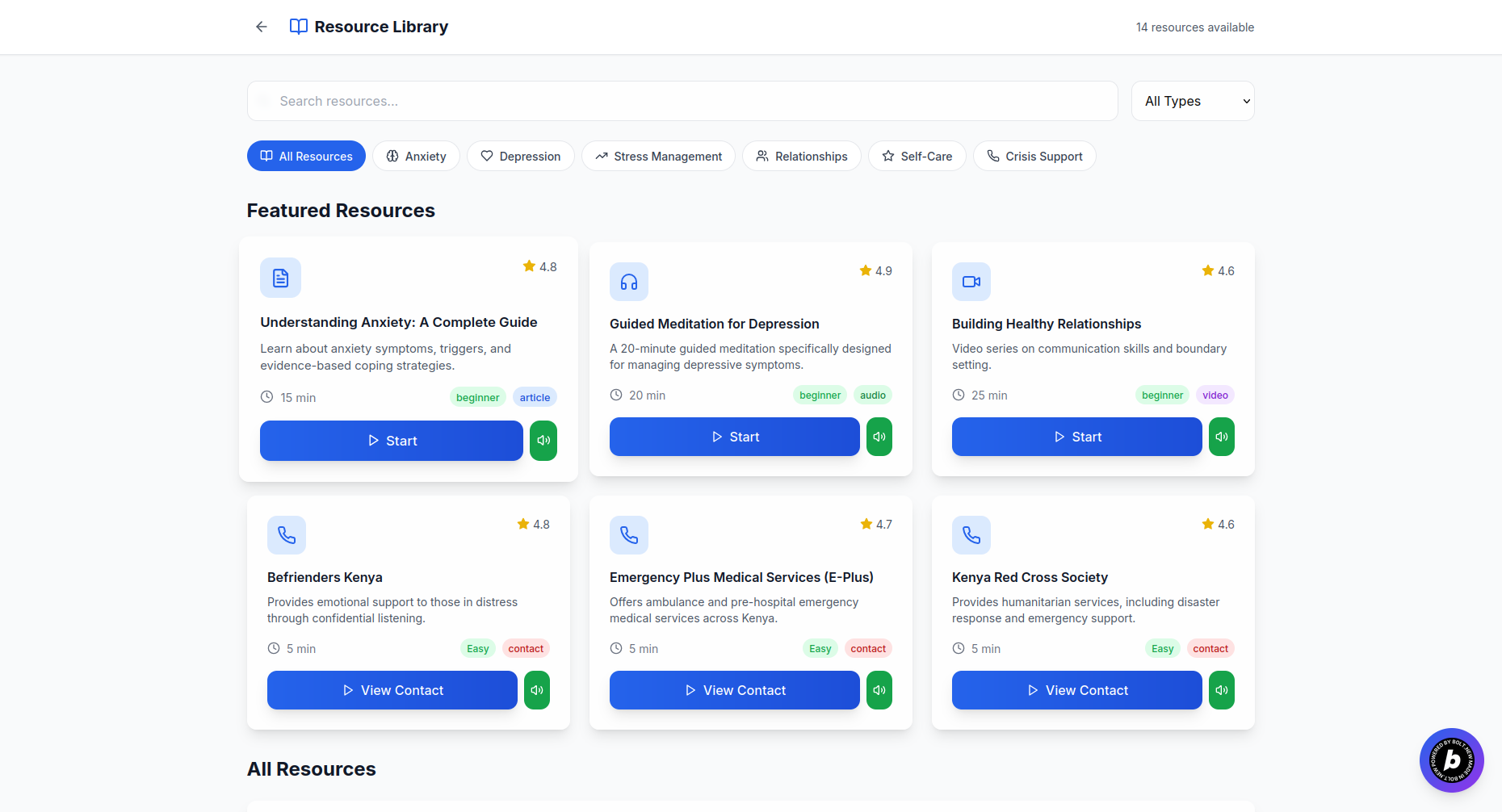
Resources Page
-
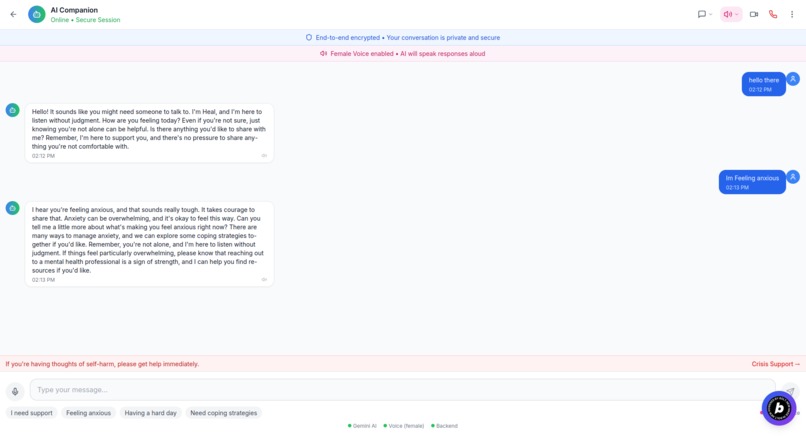
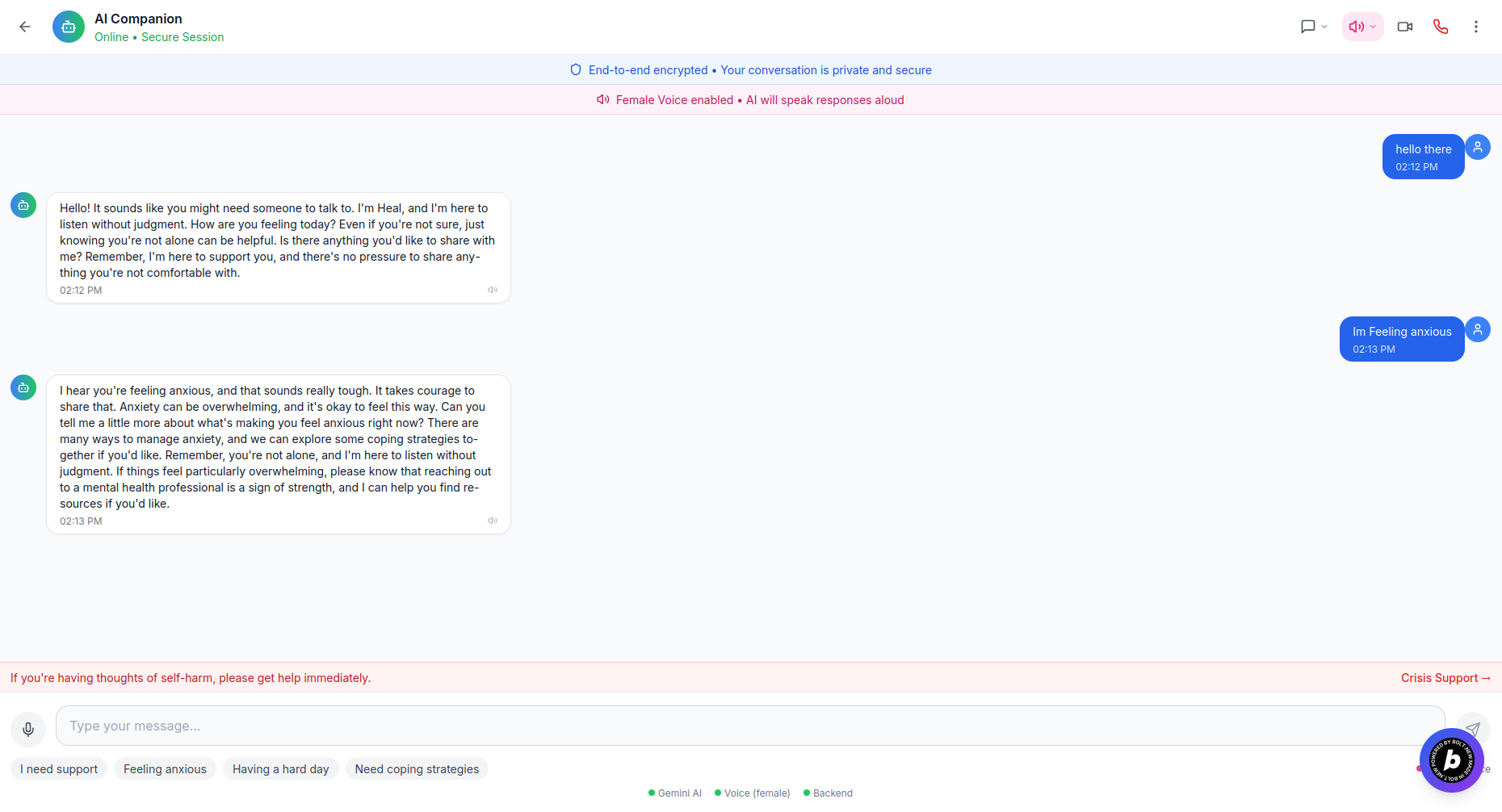
Chat Page
-
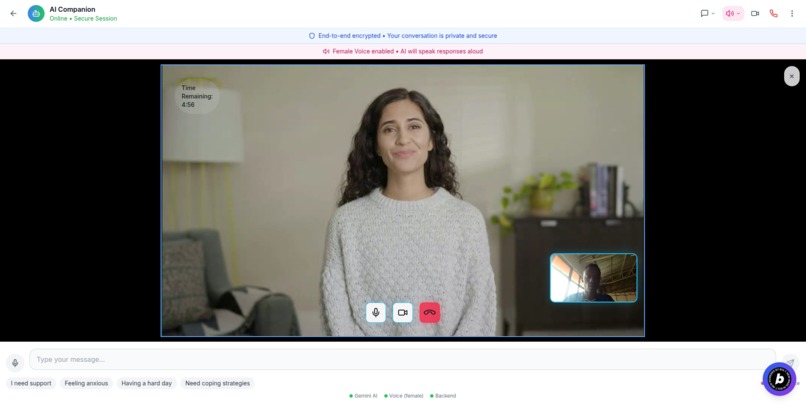
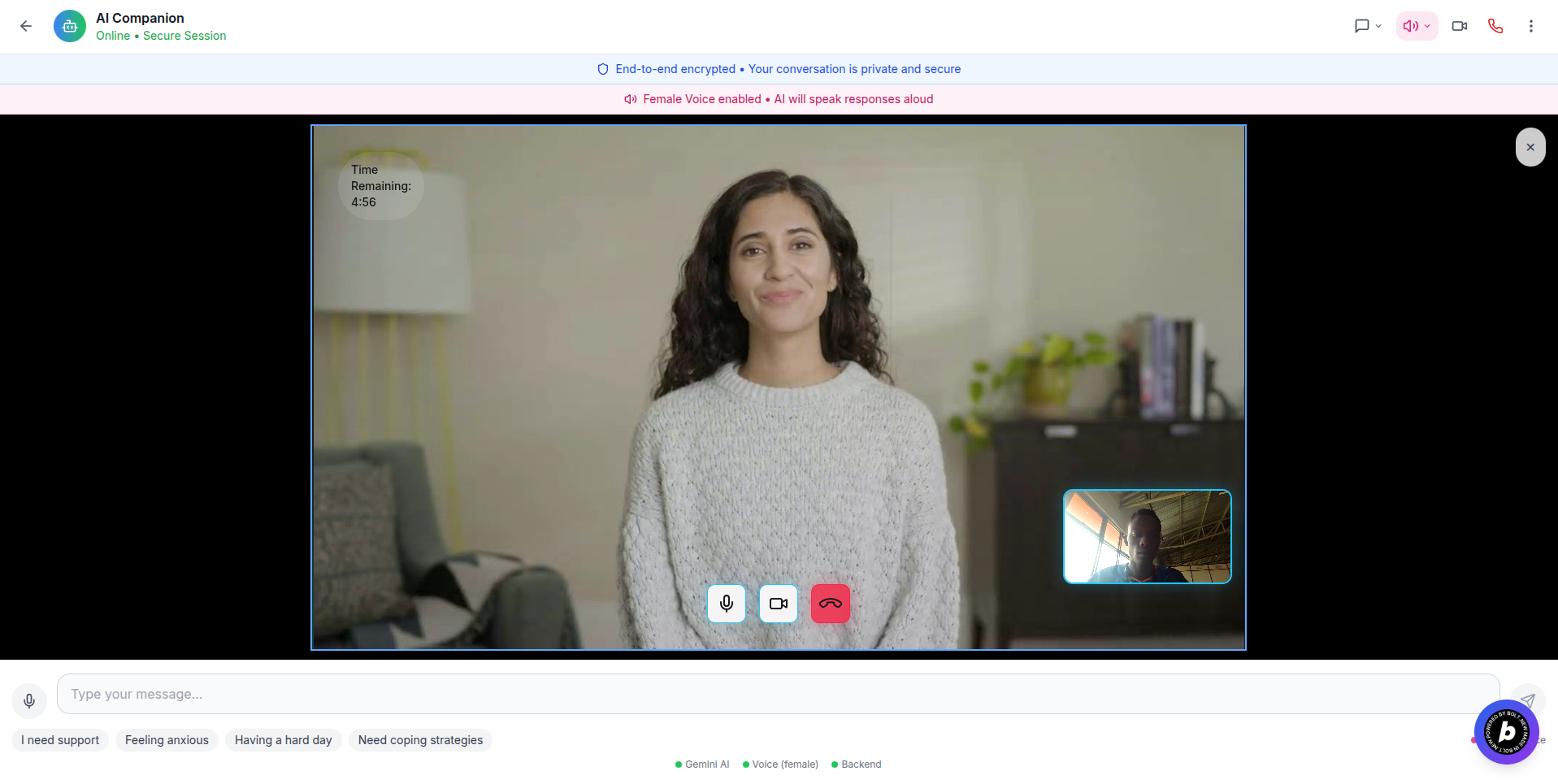
Video Conversation Page
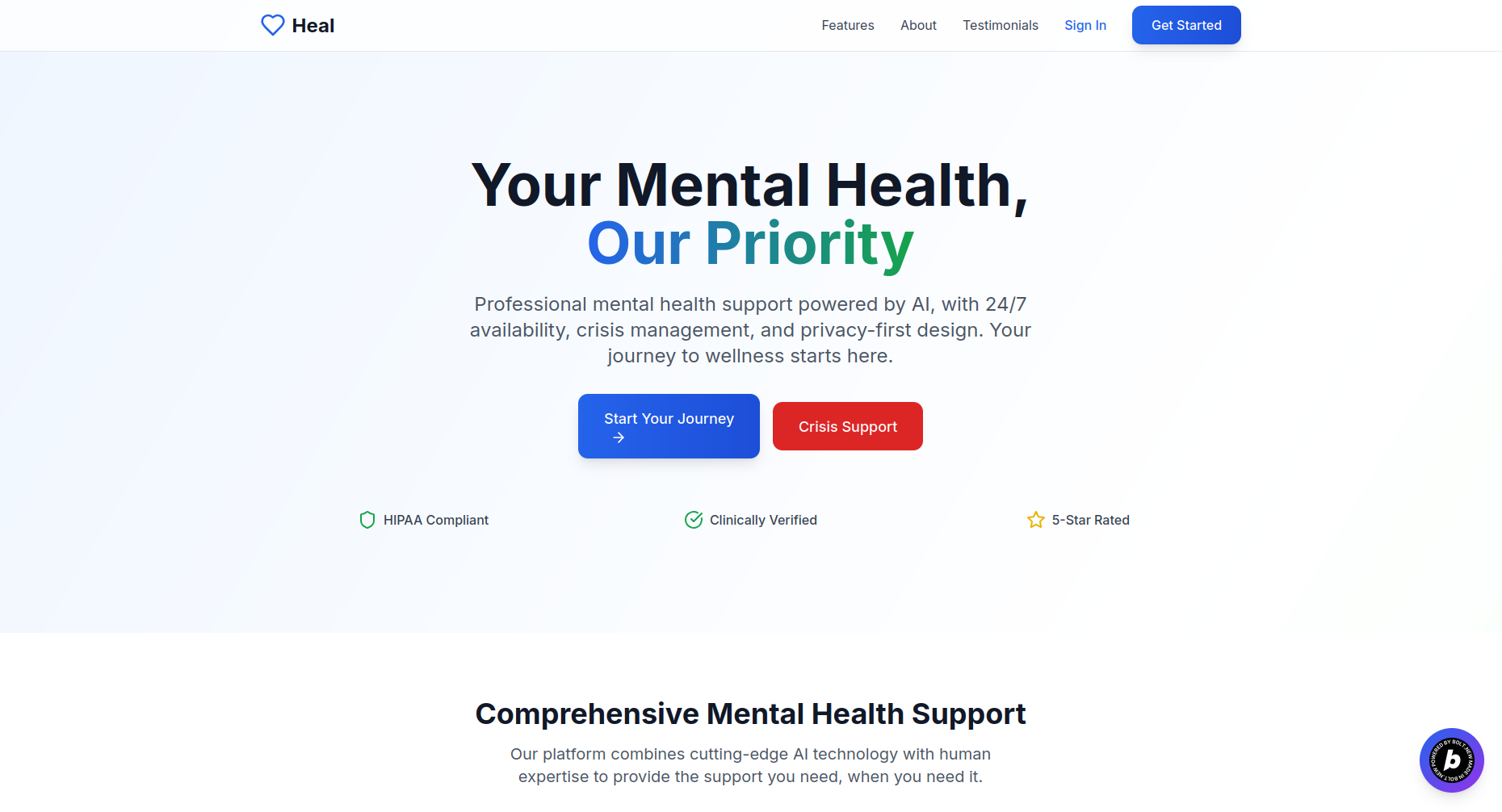
HEAL: Healing Every Afflicted Life
Imagine a 19-year-old Atieno, walking home one evening, from school, she is violated by someone she knows, someone so dear to her, someone trusted by the community. Terrified, ashamed, and silenced by the weight of stigma, she never speaks of it. She fears being blamed, judged, or even forced to marry the perpetrator. Atieno's silence isn't a choice, it's the only way she knows to survive.
Sadly, Atieno’s story is the lived reality for many survivors of Sexual and Gender-Based Violence (SGBV) across Africa. Many suffer in silence, denied not only justice but access to emotional support, therapy, and safe spaces to begin healing.
What Inspired Us
We were inspired by survivors, brave individuals we encountered during field visits to support organizations in Kisumu, Kenya. Many shared their pain, frustration, and the emotional isolation they endure. We realized technology could bridge this gap, providing safe, secure, and compassionate mental health support where traditional systems fails.
The absence of safe reporting channels and the deep-rooted stigma attached to SGBV motivated us to create HEAL(Healing Every Afflicted Life), a digital platform that provides mental healthcare support and therapy to SGBV survivors through anonymous reporting, mental health care therapy access, and community support to survivors.
How We Built It
We built HEAL as a web-based platform with the following features:
- AI-powered mental health chatbot: 24/7 emotional support using trauma-informed responses powered by Google Gemini 1.5 Flash.
- Persistent chat history and session management: All messages and sessions are stored securely in the backend.
- Multi-voice text-to-speech: High-quality voices (Bella & Adam) via ElevenLabs, with playback controls and smart switching.
- Resource library with audio narration: Educational content on trauma healing, legal rights, and community services, all with AI-generated narration and audio previews.
- User dashboard: Personalized analytics, mood tracking, and progress monitoring with visual charts.
- JWT-based authentication: Secure login, registration, and password hashing.
- Crisis detection and intervention: AI and backend protocols for immediate support and escalation.
- Video conversations: Face-to-face AI conversations using Tavus and Daily.co integration.
- Mobile responsive design: Built with Next.js and Tailwind CSS for all devices.
- Full-stack deployment: Supports Netlify Functions (Node.js), Go backend, or NestJS backend.
- Debug and health endpoints: For system monitoring and troubleshooting.
- CORS, input validation, and security best practices: End-to-end encryption, prepared statements, and privacy-first design.
- Used Bolt.new: For faster and easier development
Technology Stack Used
- Frontend:
- Next.js 13+ (React, App Router)
- TypeScript
- Tailwind CSS (custom design system)
- shadcn/ui component library
- Jotai (state management)
- Framer Motion (animations)
- Lucide React (icons)
- AI & Audio/Video Services:
- Google Gemini 1.5 Flash (conversational AI)
- ElevenLabs (multi-voice text-to-speech)
- Tavus API (video AI conversations)
- Daily.co (real-time video infrastructure)
- Backend Options:
- Netlify Functions (Node.js, serverless, in-memory SQLite)
- Go backend (Gin, SQLite for dev, PostgreSQL for prod)
- NestJS backend (TypeScript, monorepo, SQLite/PostgreSQL)
- Database:
- SQLite (development, serverless)
- PostgreSQL (production, Go/NestJS)
- Deployment:
- Netlify (full-stack, serverless)
What We Learned
- Survivor-centric design is non-negotiable. Listening to SGBV survivors radically shaped our design choices.
- Privacy and safety features must be built from the ground up, not added later.
- Technology is not the solution by itself; collaboration with therapists, social workers, and community organizations is key.
Challenges We Faced
- Balancing anonymity with actionable reporting: We had to ensure survivors could report incidents without compromising their identity, while still generating sable data for support organizations.
- Designing trauma-informed UX: Everything, from colors to language, had to be calming, non-triggering, and intuitive.
- Limited access to mental health APIs in our region required us to build custom models and form local therapist partnerships.
Why This Matters
HEAL isn’t just a tech project, it’s a lifeline. A chance for the Atieno’s of this world to reclaim their voice. To begin healing. To find community. By blending empathy, technology, and real-world partnerships, we’re building more than a platform, we’re building hope.
Next Steps / Not Yet Implemented
- [ ] Mobile app (React Native)
- [ ] Advanced AI therapy modules (specialized models)
- [ ] Anonymous SGBV reporting system
- [ ] Integration with wearable devices for health monitoring
- [ ] Group therapy sessions with video conferencing
- [ ] Telehealth provider network integration
- [ ] Voice-to-text for voice messages
- [ ] Multi-language support with localized voices
- [ ] Offline mode capabilities
- [ ] Custom voice training for personalized experiences
- [ ] Voice emotion detection and response adaptation
- [ ] Advanced chat analytics and insights
- [ ] Message search and filtering capabilities
- [ ] Chat export functionality for therapy records
- [ ] Live therapist booking back-end (calendar sync, notifications)
- [ ] Real-time geolocation for emergency locator
- [ ] AI-powered resource recommendations
- [ ] Goal setting and progress tracking modules
Built With
- elevenlabs
- gemini
- gin
- go
- javascript
- netlify
- next.js
- node.js
- sqlite
- tailwindcss
- tavusai
- typescript


Log in or sign up for Devpost to join the conversation.