-
-
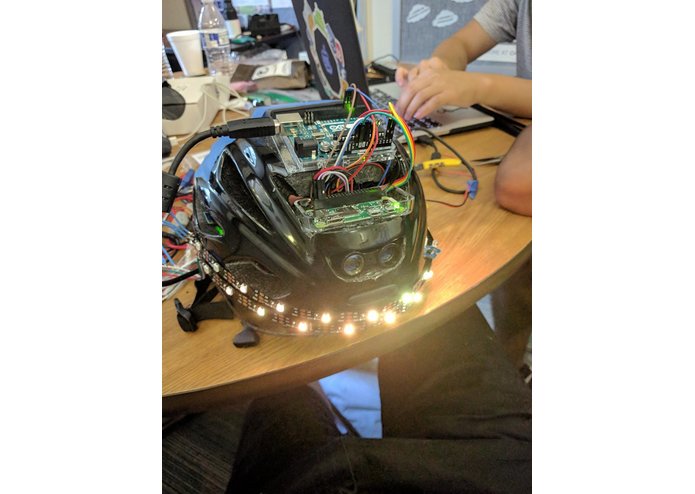
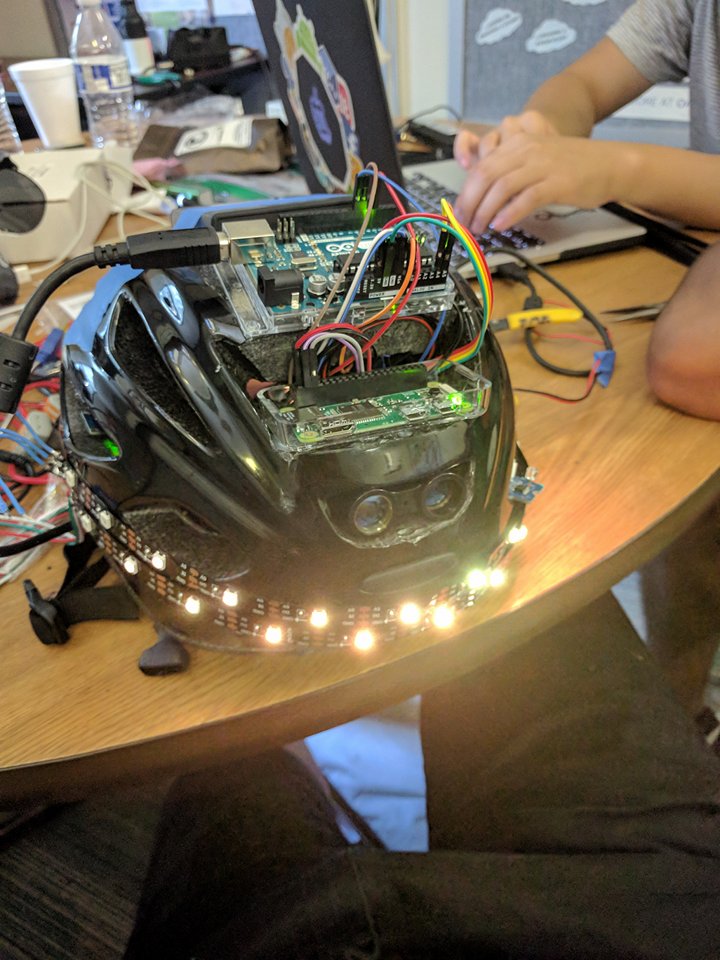
Helmet's warning-lights showing
Inspiration
Our teammate, Blake, fell off his bicycle and broke his foot. We wanted to build something that would make bicyclists, like Blake, safer.
What it does
Flashes at the car when cars get too close for comfort (activated by Lidar)
Alerts the rider (via the visor) when objects approach
Turn-signal (activated by head-gestures)
Brake-lights (activated by decelerations)
Headlight (activated by darkness)
Background lighting for increased visibility
How we built it
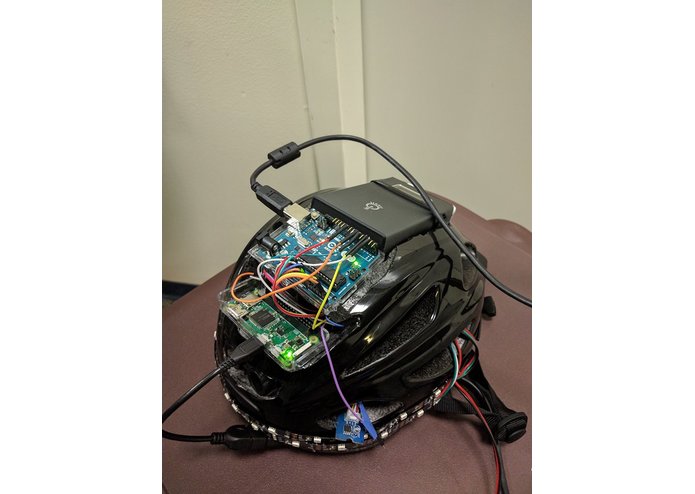
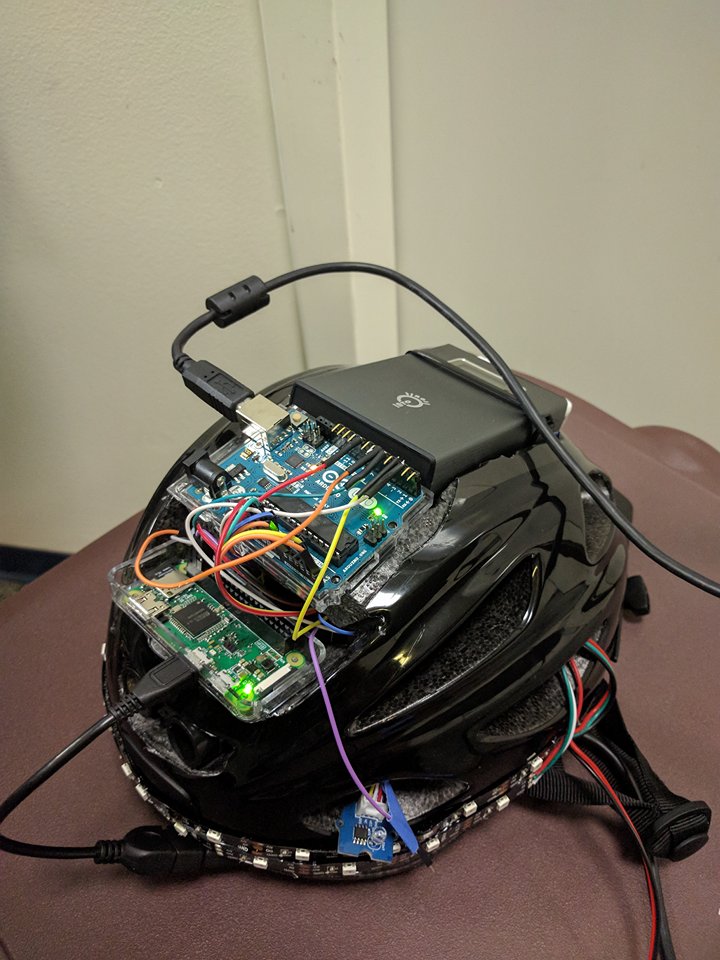
We dremeled out the helmet to make a place for the circuitry, the battery bank, and the sensors. Then we attached everything, wired it, and programmed it.
Challenges we ran into
We wrote multithreaded software to continuously poll from multiple sensors. We had to work around deadlocks and race-conditions in shared memory with concurrent asynchronous programming techniques.
Getting the components wired was difficult to debug, especially with the wiring on the helmet.
Extracting meaningful data from the noisy gyro was difficult.
Accomplishments that we're proud of
Getting all of the sensors and LEDs to work, which required multiple protocols (I2C, PWM, analog)
Getting all of the components and cables to fit in the helmet comfortably.
What we learned
Multithreaded, asynchronous, concurrent programming
Bus protocols like I2C
Cable management
What's next for aHead up
Use accelerometer to detect a crash and optionally text emergency services or a loved one.
Connect with GPS
- Show the route you travelled.
- Identify traffic spots from peers.


Log in or sign up for Devpost to join the conversation.