-
-
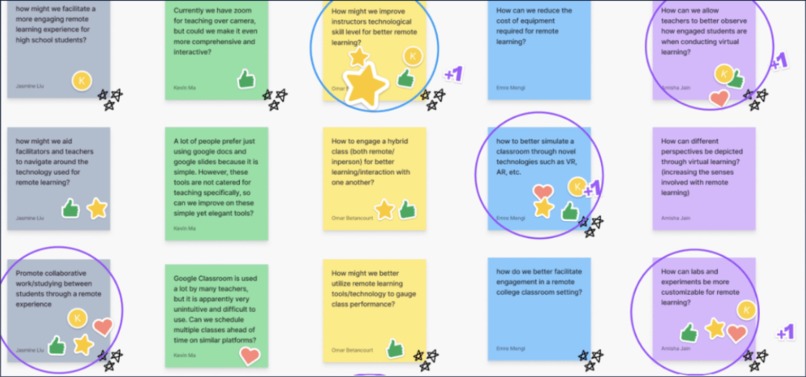
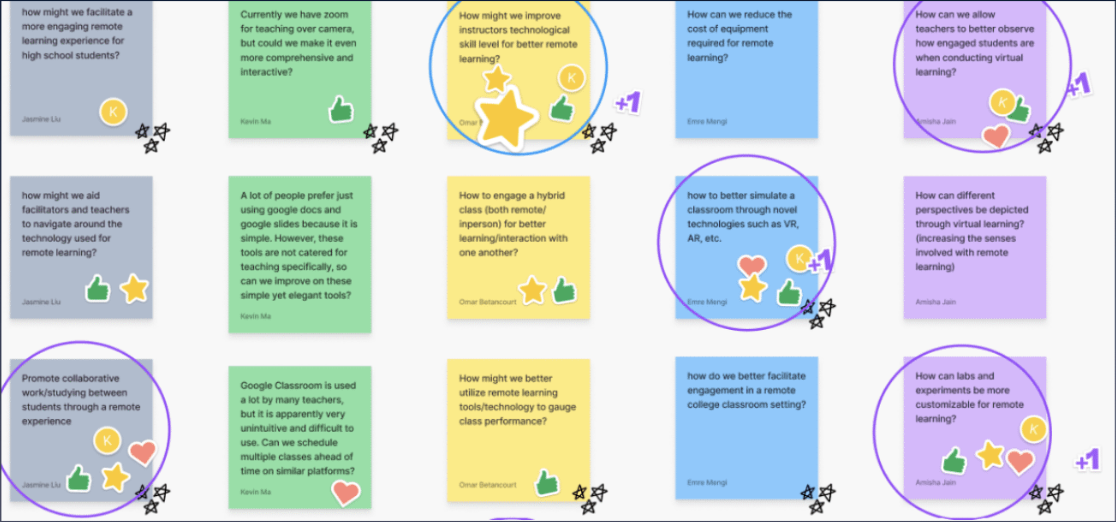
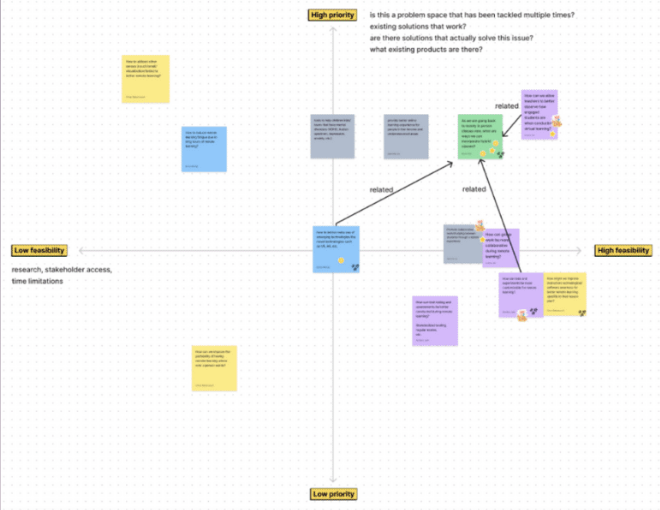
POG Generation and Dot Voting
-
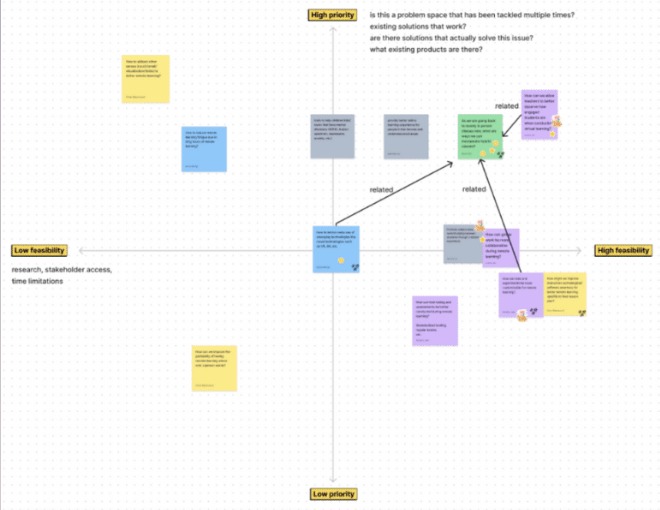
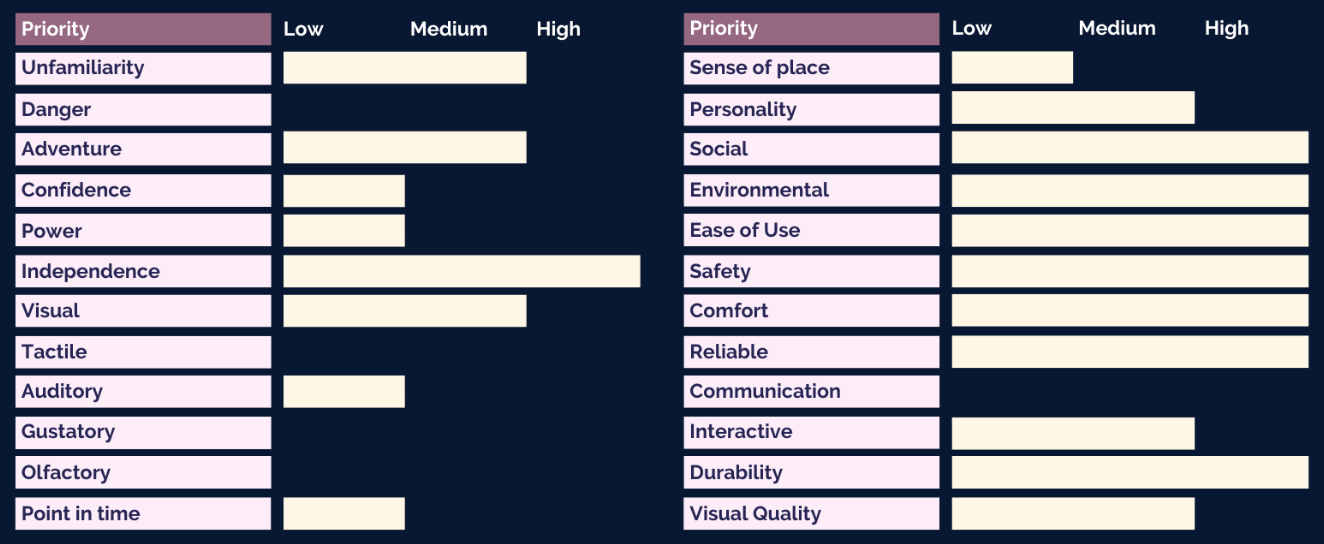
2x2 Weighted Matrix for our POGs
-
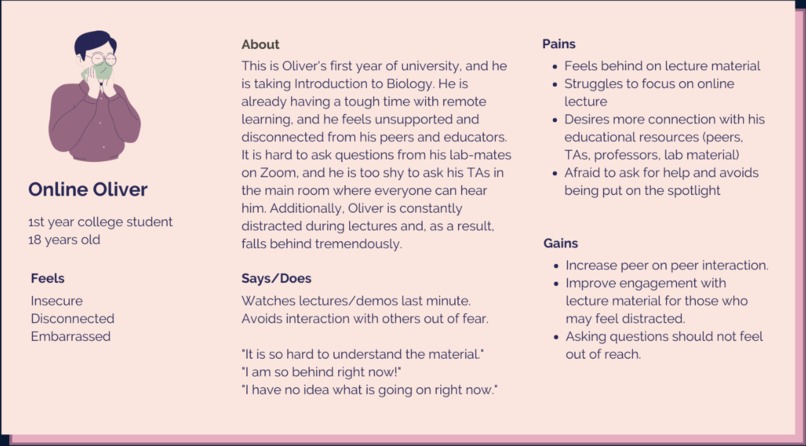
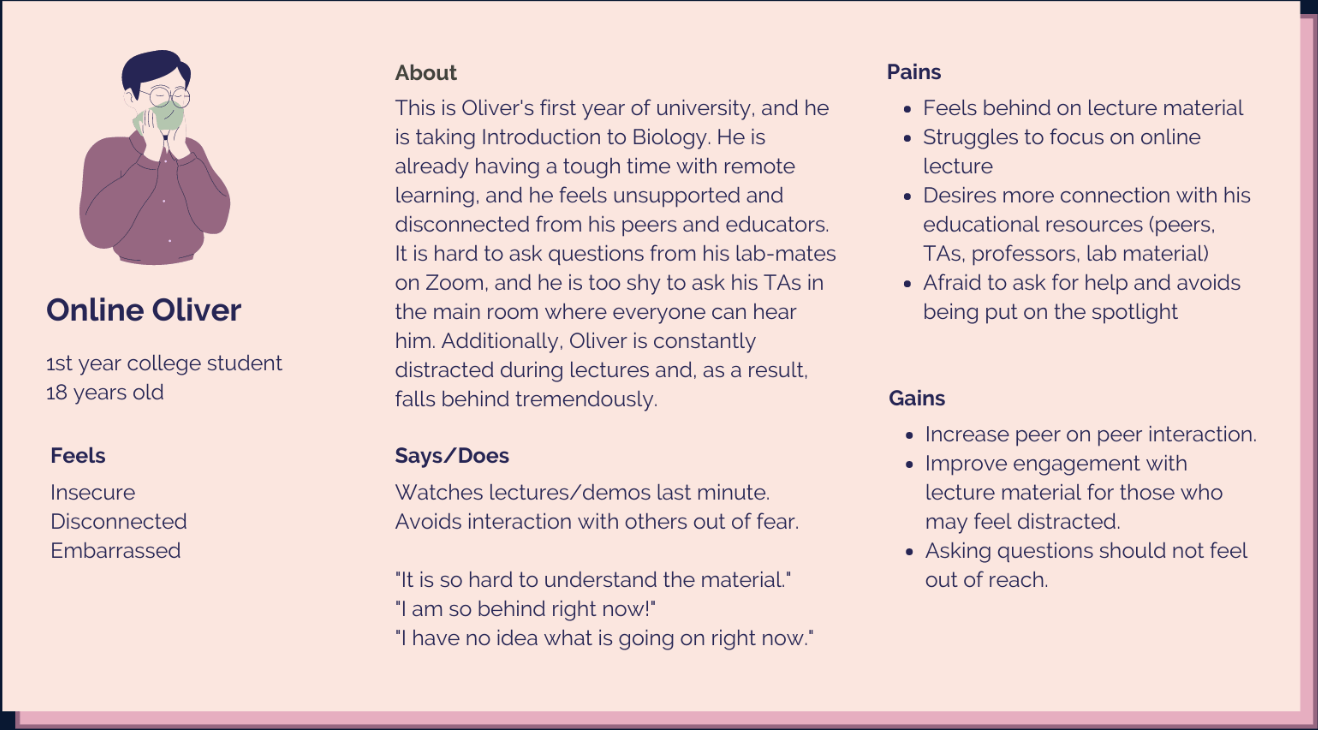
An example of the User Personas we created
-
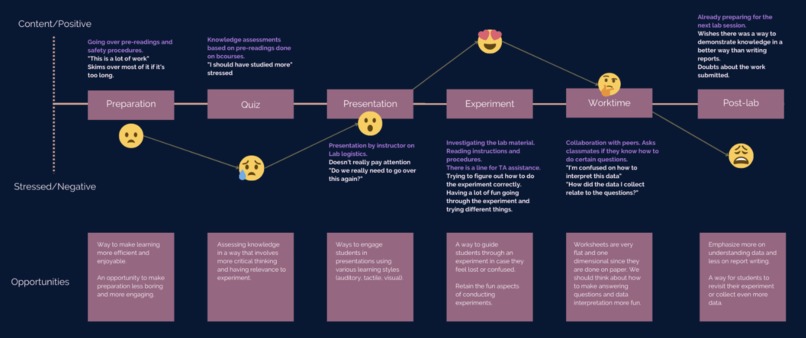
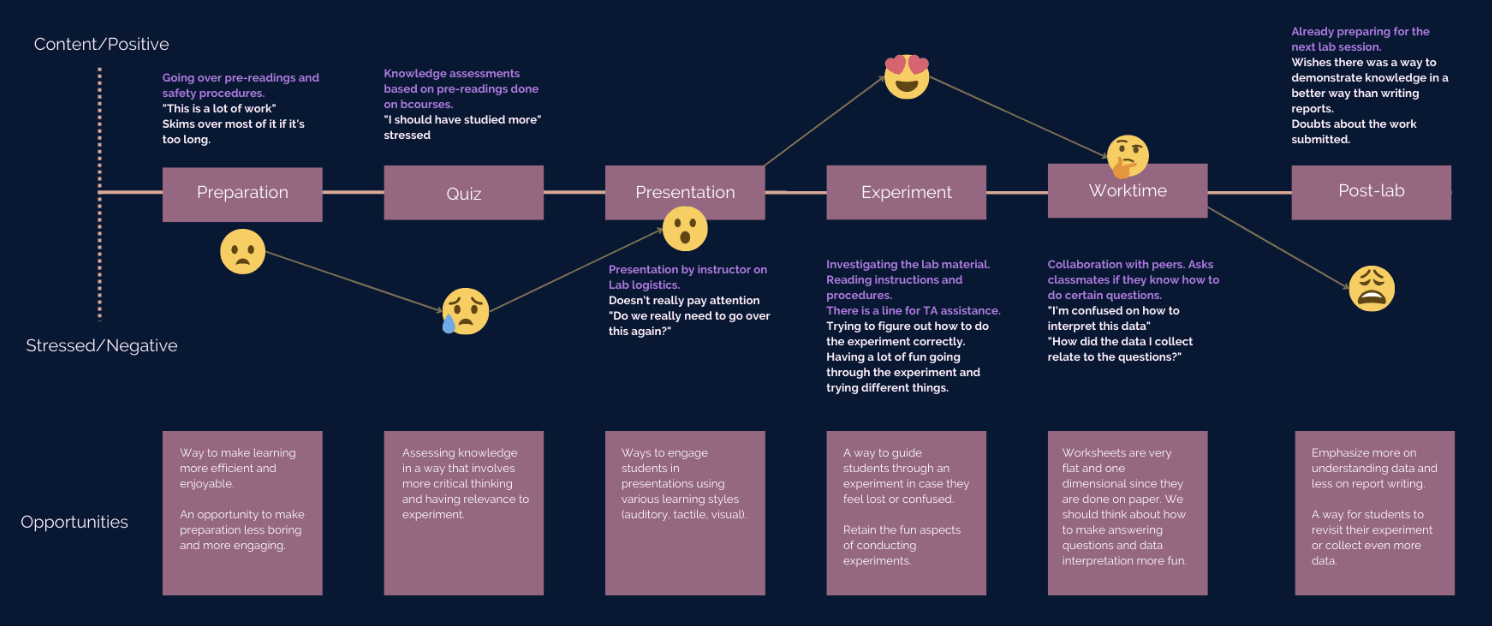
An example of a User Journey Map we created
-
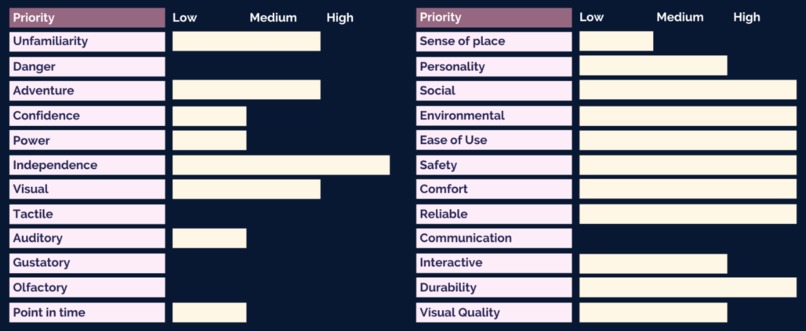
VOA – PhET
-
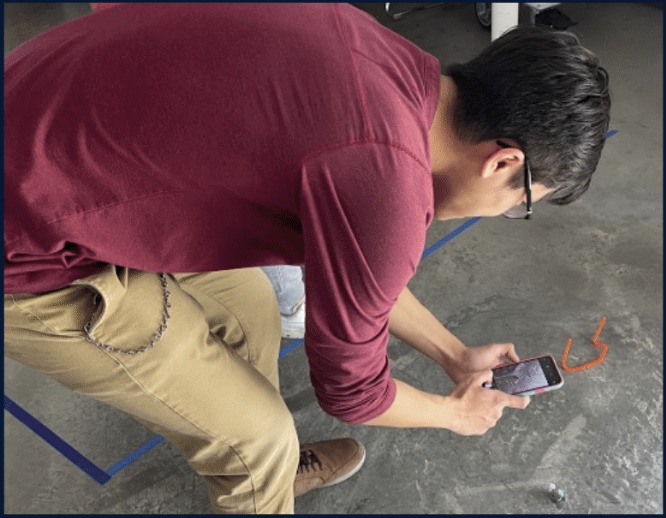
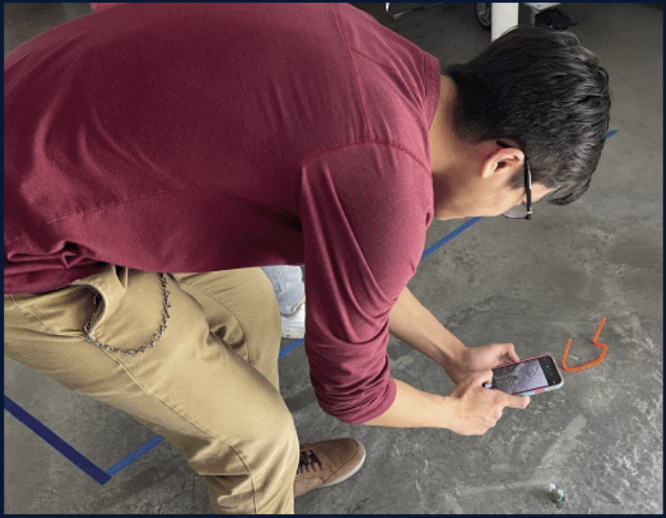
Scanning a "species" for our low fidelity prototype
-
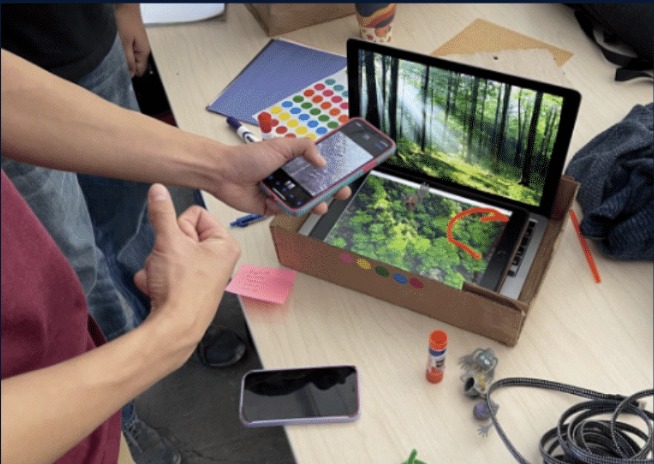
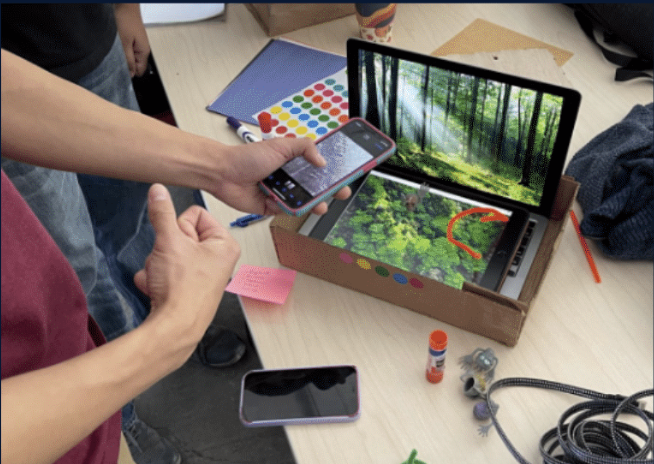
"Dropping" the scan into our low fidelity prototpye
-
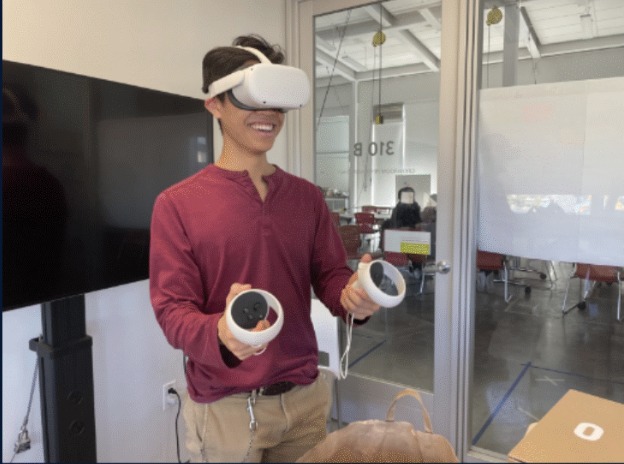
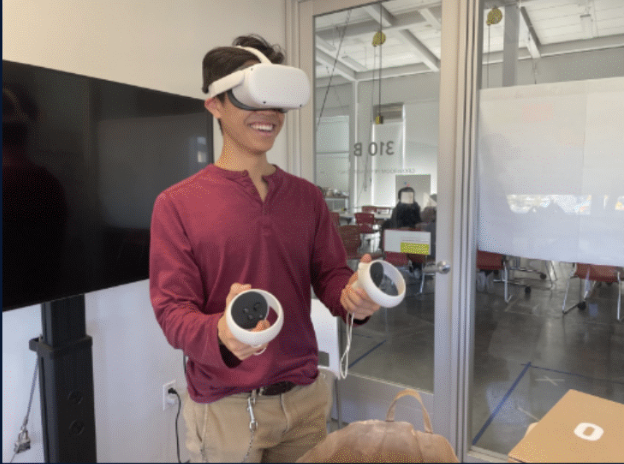
A photo of my team member, Kevin, testing out an Oculus VR Headset that I provided
-
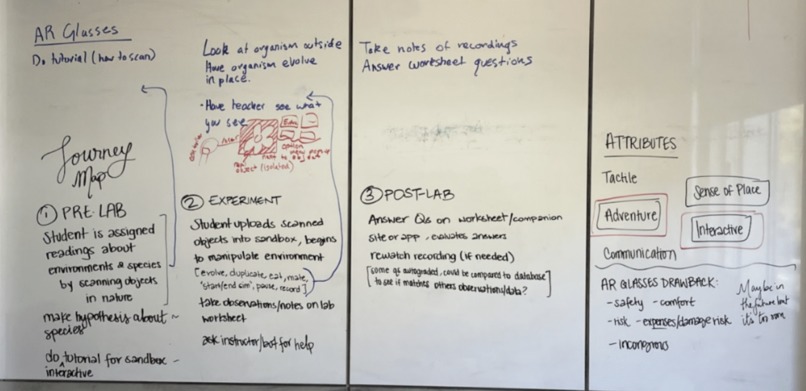
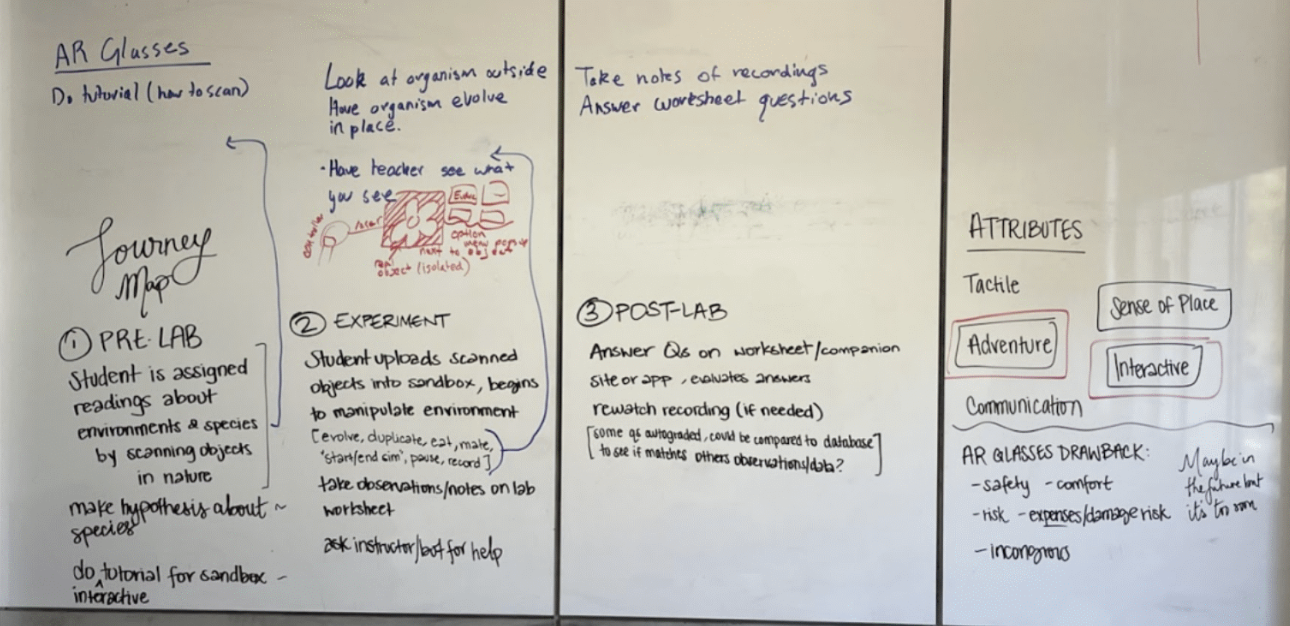
Using journey mapping to determine the effectiveness of our chosen solution
-
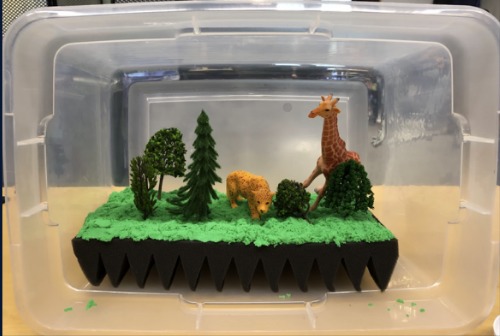
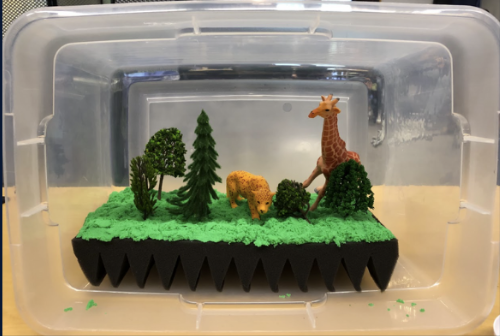
A view of our final prototype
-
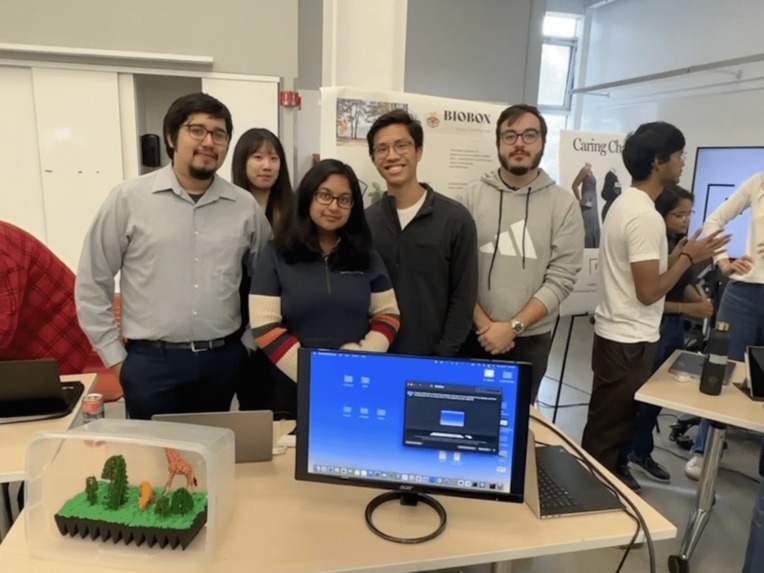
Our team at the Jacobs Design Showcase

Overview
This past semester (Fall 2022), I worked in a team of PhD students to design a human-centered product that addressed an ongoing issue. We had the amazing opportunity to be mentored by James Hicks, a Creative Director for Hewlett-Packard throughout the four phases.
Through a series of phases, our team was expected to submit deliverables in the forms of technical memos and presentations to our peers. At the end of the semester, we designed a medium fidelity prototype that was presented at the Jacobs Winter showcase, as well as to some of the individuals whom we reached out to during the user research process. Although we were unable to create a fully functional product, the immense amounts of research and time put into our product has resulted in a skillset that I intend to employ and sharpen during the rest of time at Berkeley as well as in my career.
Our team utilized several design methods and tools, including but not limited to: journey maps, user personas, frameworks, stakeholder diagrams, 5-3-5 idea generations, clustering, and more. Although I have experience in creating projects in a team setting, this class was my first experience with many of these skills, and the efficiency and perspective we received from them was, in my opinion, critical to the success of our solution.
Phase One : Identify
During this phase, our team's goal was to completely and thoroughly understand our issue. At the very beginning of the semester, some topics had been tested out in small groups; however, because our topic was not amongst them, we started the entire process from scratch.
Our team started by meeting to discuss our topic and to determine what we personally believed were the primary regions that needed improvement. Remote learning is an experience that we all shared, but due to our varying ages, I had personally experienced it from the perspective of a college freshman, while some of my teammates had experienced it as GSIs leading discussion sections virtually. This led to a very fruitful discussion, as well as a detailed list of stakeholders and the tiers that they belonged to.
Immediately following this discussion, I offered to design a stakeholder map that we would eventually use in our showcase presentation and final website. It was from this point on that I began to take on a creative role in the team, designing graphics and focusing on the user experience side of the product.
After this, our team conducted some preliminary research into the social, economic, and technological factors that influenced our topic, and used these to guide our POG generation. As a cognitive science major, I personally looked into the social impact, using my previous studies to understand the impact that zoom burnout and a lack of social interaction has on the mind, especially for K-12 students who have associated learning with the physical classroom.
Phase Two : Understand
If I had to describe this phase in two words it would be following : user research.
Our team reached out to every source we had : undergrads, PhD students, high school students and teachers, professors, and more. After collectively interviewing over a dozen individuals, we gathered our transcripts into a folder and began to annotate them, noting the most eye-opening pieces of information within them.
One of the most significant interviews that I personally conducted was with a high school physics teacher at El Cerrito High School. He described how due to having no budget whatsoever, he relied on PhET simulations to simulate experiments for his students. After looking into the product, we realized that this would be our direct competitor, and immediately began to work on designing a VOA for it.
The user research phase was lengthy but quite possibly the most important part of the class. Focusing specifically on human needs and perspectives ensured that we did not get carried away with technological trends or stereotypical issues, and allowed us to see the bigger picture when working on the specifics.
Phase Three : Conceptualize
During this phase, I began to find myself being pulled towards my technical roots. We began by individually designing 10 concepts with included sketches, and then doing 5-3-5 idea generations in class.
One of my favorite ideas of mine was a pair of gloves that had haptic feedback, which I hoped would simulate the feeling of lifting an object. This, paired with a VR headset, could provide the visual and physical experience of conducting an experiment that could be fully customizable. I got the idea from a research paper that I read on the technology behind haptic feedback, and although it was an extremely complex idea, I was very very eager to bring it up to my team.
Unfortunately, my team wasn't as excited about it as I was. This was probably my biggest moment of compromise – as disappointing as it was to hear that the others weren't as excited about my idea, I had to accept that the concept that we decide on has to be one that everyone is on board with.
Since everyone seemed to have strong opinions on what was the best idea, we decided to dive deep into the process of cumulatively creating as many ideas as we could think of (72), clustering them, and then narrowing them down using redundancy identification to end up with 15 concepts. We then used dot voting to go down to 4 ideas: Bio-mon, an augmented reality device, BioBox, and an instructor helper.
We presented these four concepts to our peers, who provided us with extremely valuable feedback which helped us narrow down to two concepts.
Phase Four : Realize
We began this last face head on, creating a low fidelity prototype for our BioBox idea, and using my Oculus VR Headset to determine the potential of an augmented reality device.
The Oculus headset, as exciting as it was, had several issues. Firstly, it was not a comfortable experience – the headset was straining after a couple minutes of use, and there were slight marks that were left around the eyes after extensive use. There was also an issue of not really being completely spatially aware and the dangers that could ensue if an individual were to attempt to use it outdoors.
We then examined our low fidelity model of BioBox and saw much better results. Although the concept definitely didn't have the actual features, we could imagine how adventurous and creative the product would be. The idea of providing students with the ability to create a virtual ecosystem that they could use to understand ecology, botany, and so much more was invigorating, and we immediately began to work on storyboarding the video and acquiring materials for a higher fidelity prototype.
I personally worked on the storyboarding, and we created a scene-by-scene plan for how we would demonstrate the features of the product. We drew inspiration from popular advertisements, Apple ads, and favorite movies, and decided to begin filming later that week.
Thus began a six hour workday consisting of assembling our final prototype and filming our video. The prototype came together relatively quickly – it certainly wasn't an actual working product, but we hoped that it would helped viewers imagine the idea that we had in mind. We shot a multitude of scenes, improvising along the way for the materials we were lacking, and ended up with a final video that (in my unbiased opinion) strikes the perfect balance between professional and corny. In a last minute addition, we even decided to reference the famous end scene from Predator, as two of our team members walk towards each other and perform the iconic handshake.
Jacobs Design Showcase and Behance
On December 8th, we presented our prototype, video, and poster at the Jacobs Design Showcase alongside our fellow teams. We got to take a look at the work that everyone had done over the semester and share our ideas with our peers and the judges. The entire event was incredible, and it was amazing to display our efforts in a professional, fun setting. It was also a great experience getting to deliver mini presentations about our process and experience!
I also was the lead designer for the the Behance website where we displayed all of our work from the semester, which was a highly creative project – you can view it at https://www.behance.net/gallery/158401707/HP1-Remote-Learning-BioBox!
Reflection
Honestly, this class is quite possibly one of the most interesting, professionally relevant experiences that I've had during my time at Cal. As someone who wants to go into UI/UX and product management, I got to learn skills that were directly applicable to the career I wanted, and work with a reputable member of the field who had the most fascinating stories from his time at HP, Bose, Lenovo, and more. I've grown and learned over the team, and felt the ups and down of working with a team of talented, intelligent individuals. I look forward to taking more classes in human centered design and pursuing a career dedicated to creating mindful, disruptive technology.
Built With
- behance
- figjam
- oculus-gear-vr

Log in or sign up for Devpost to join the conversation.