-
-
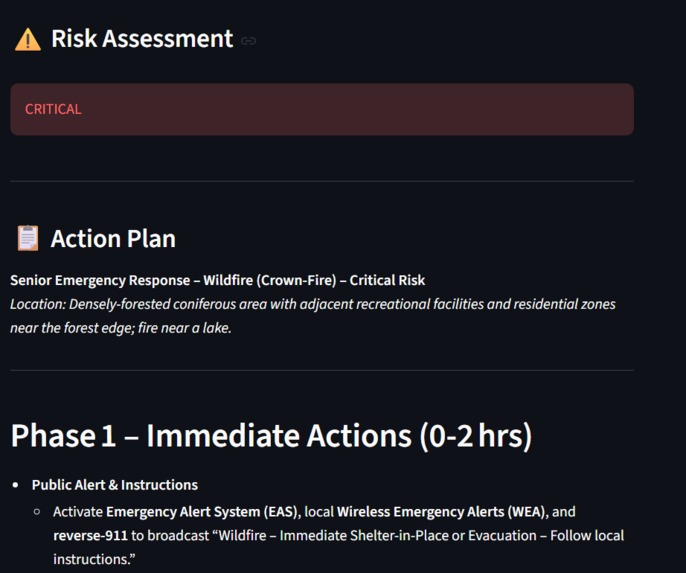
Severity and Action Plan
-
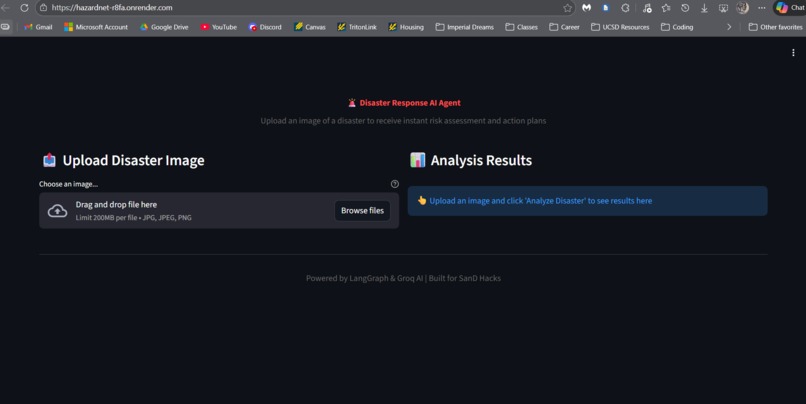
HazardNet
-
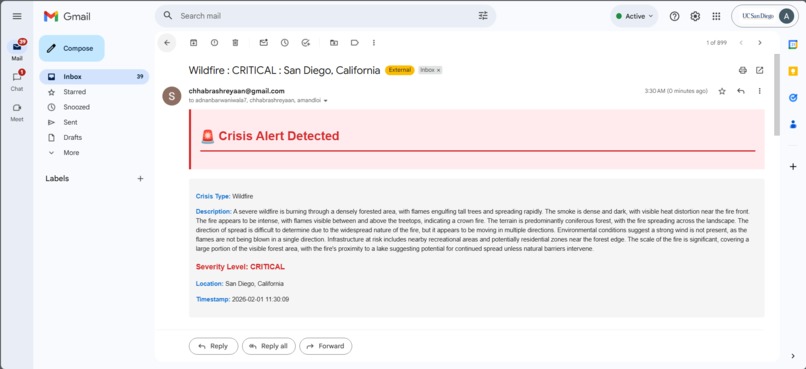
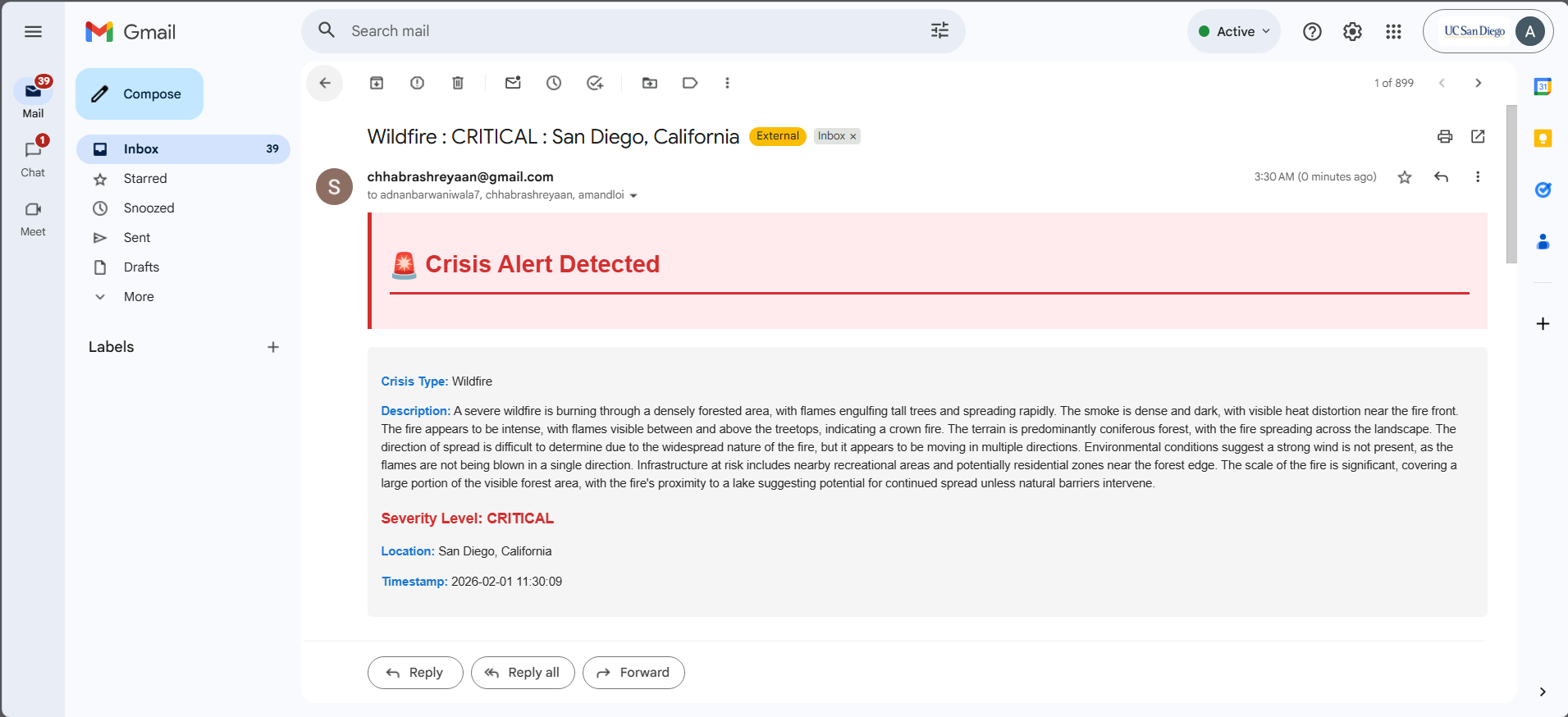
The email generated by the example test
-
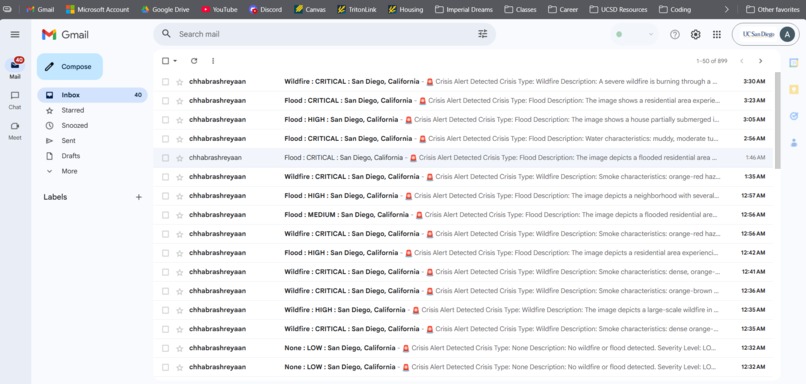
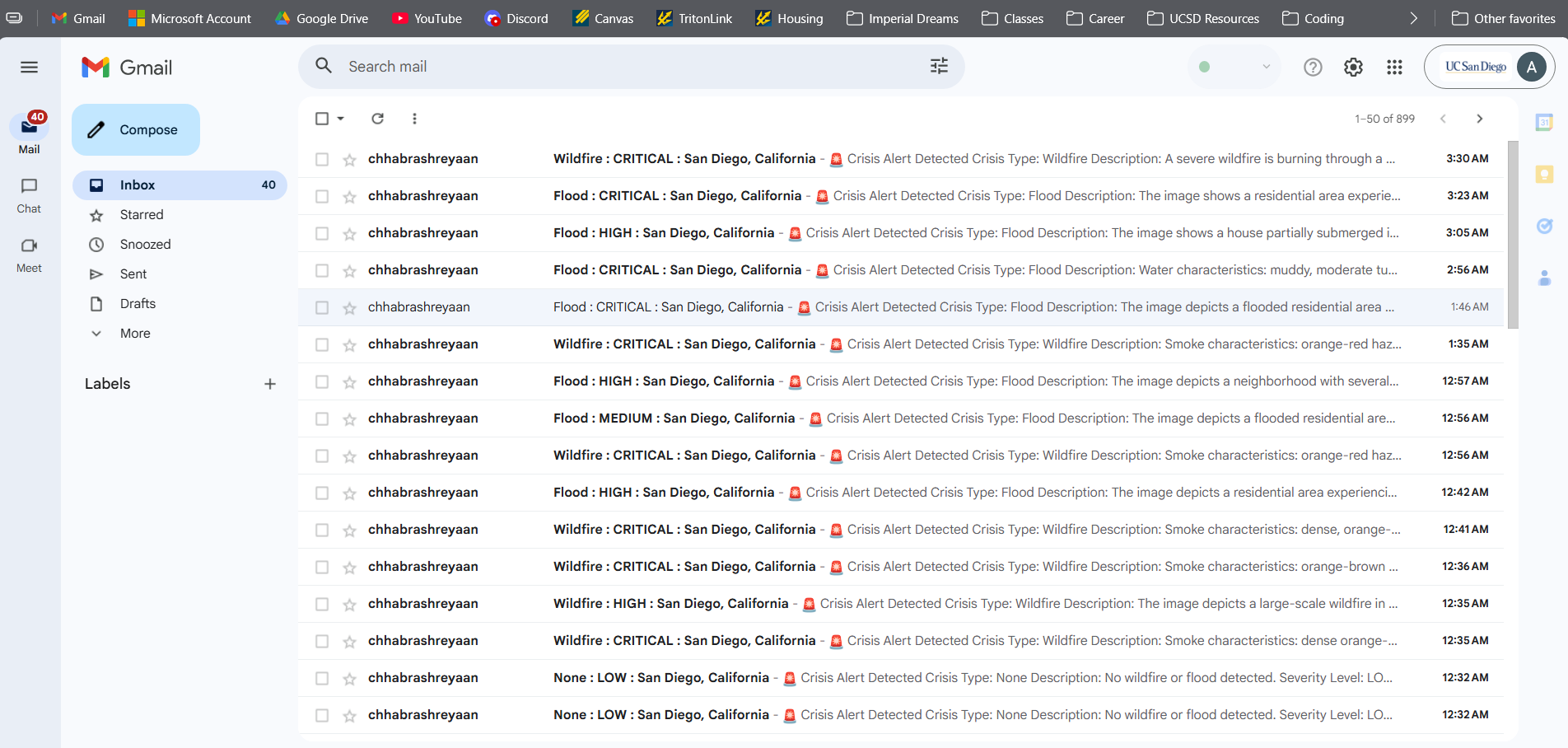
HazardNet emails from many tests
-
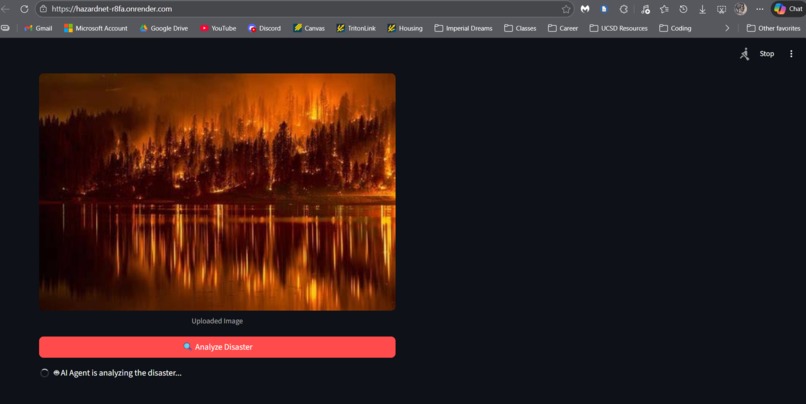
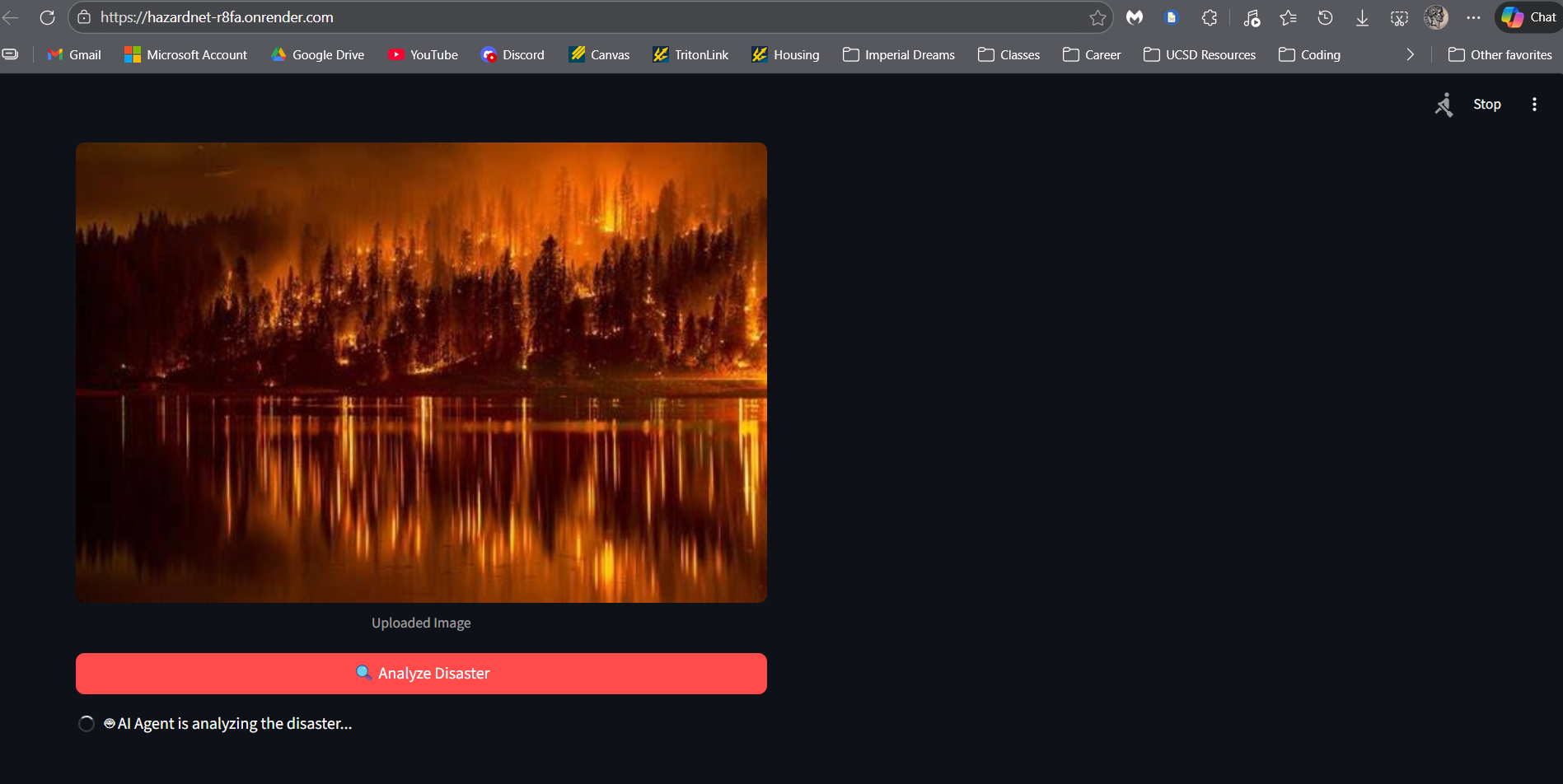
HazardNet analyzing a capture image of a potential hazard
-
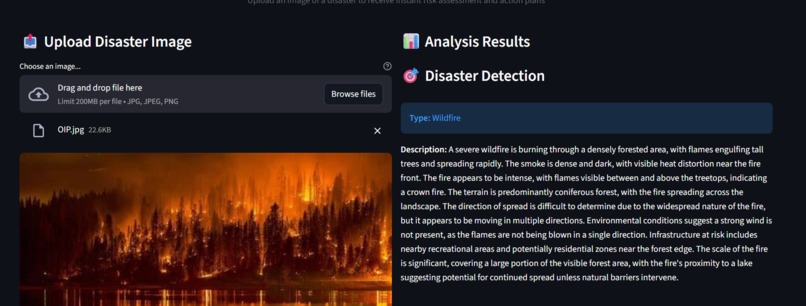
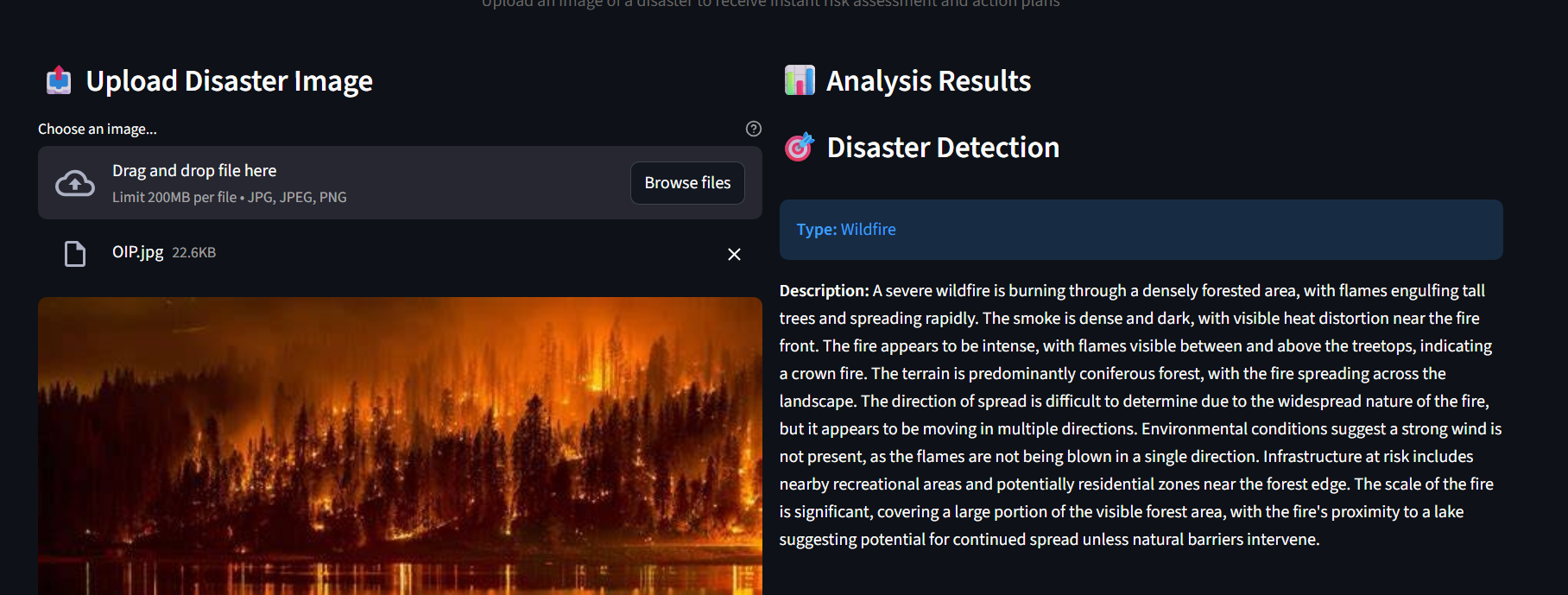
HazardNet's assessment of the image
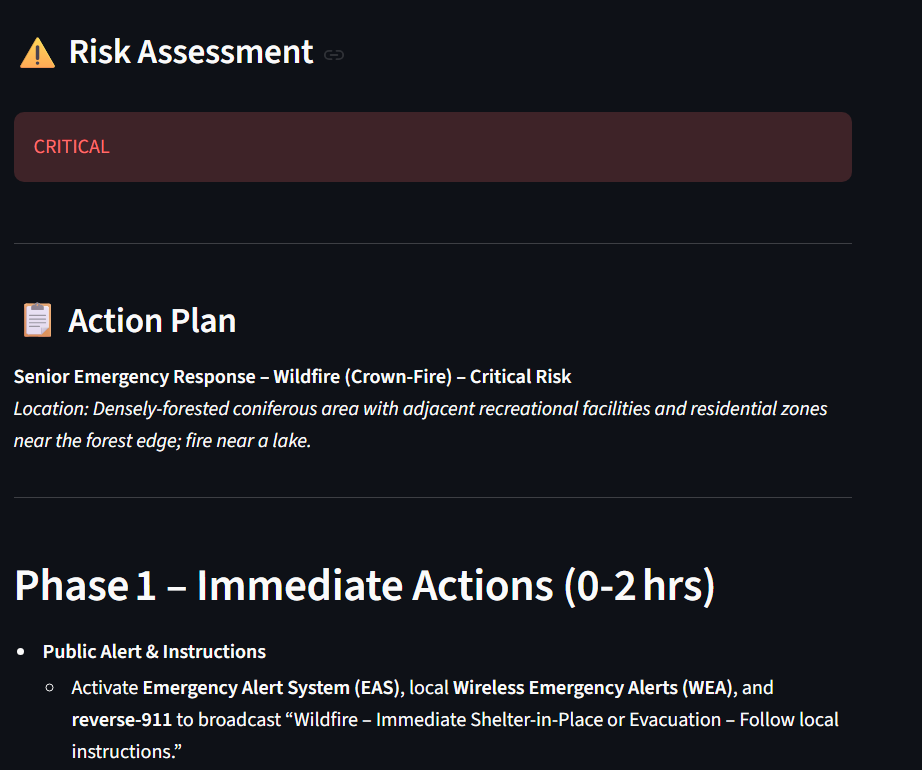
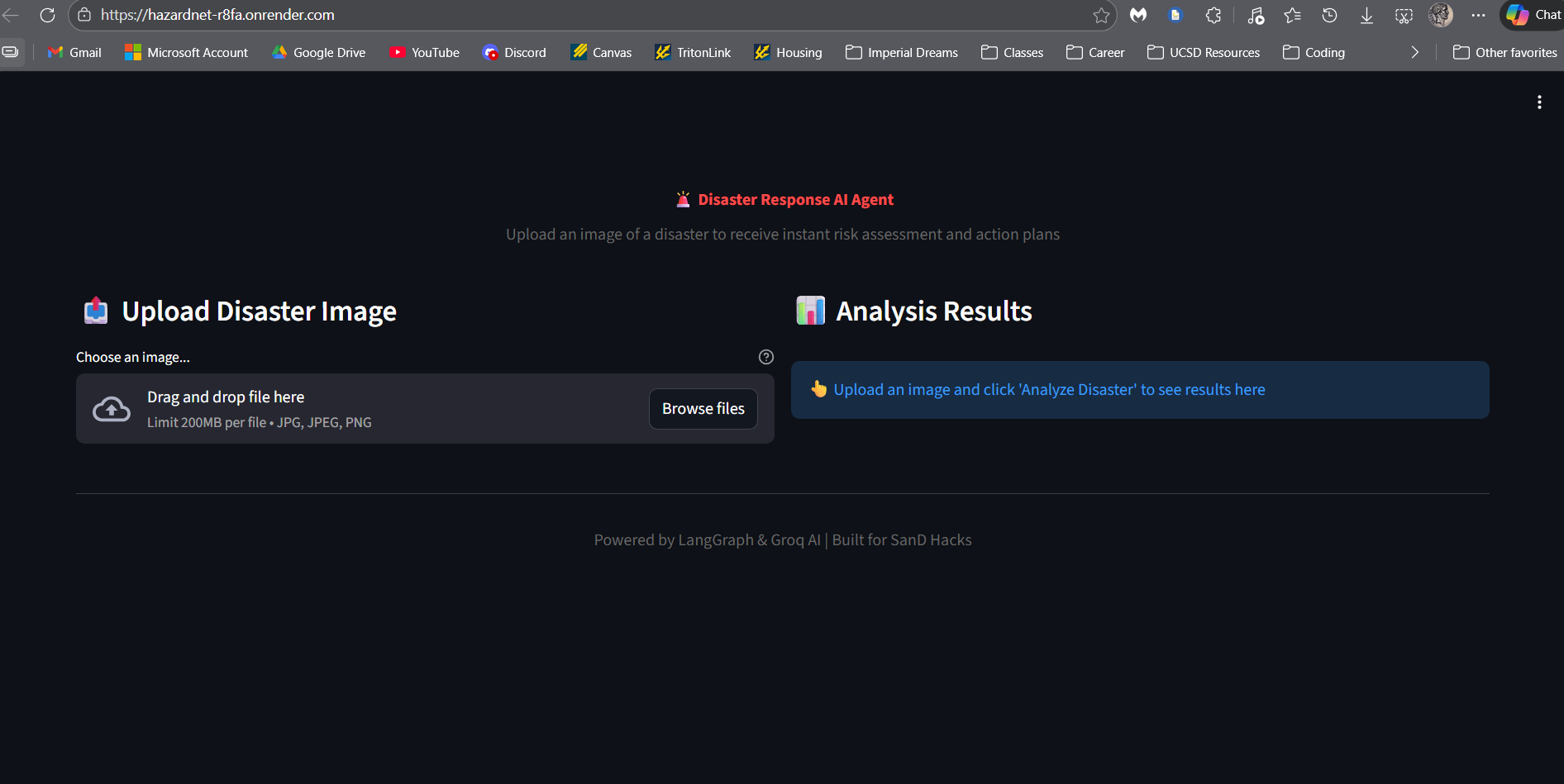
HazardNet
Problem
Wildfires and floods can escalate to destructive severity before clear, verified information reaches the general public. In the modern day, many people receive current news on social media, but this is scattered, unverified, and easy to misinterpret. Particularly in areas which have outdated or absent weather reporting infrastructure, a lack of weather hazard detection leads to delayed response, misinformation, and potential panic.
Solution
We built a multi-agent system that detects signs of wildfires and floods, assesses their severity, suggests realistic response actions and shares the findings with local authorities. The system is a LangGraph made of linked agents, implementing Groq AI and image-detection agents powered by the Llama 4 vision LLM.
This system of agents allows for LLM AI to be leveraged as effectively as possible in determining the existence of weather hazards. Each agent uses a prompt which is specific to its purpose - allowing not only for autonomous detection, but also division of labor in reviewing and responding to an impending wildfire or flood.
The first agent identifies visual signs like smoke, fire, or flooding from image captures of a potential weather hazard, classifying it accordingly. A second agent assesses the severity of the weather hazard by analyzing how prominent the signs are in the image capture. A response-planning agent suggests practical actions while considering cost, policy limits, and human resources. After the planning stage, the system generates clear and accurate messages which are emailed to authorities.
These agents run in a chain, one after another, and only run if a hazard has been detected initially. The goal of HazardNet is not only to detect disasters early, but to catch warning signs and encourage responsible communication.
Detailed workflow
A total of 4 agents work together in HazardNet:
Detector Agent: This agent will detect signs of a wildfire or a flood using images of weather phenomena from valid sources like CCTV footage and drone footage etc. As soon as it sees conditions like reduced visibility or severe haze, unusual smoke in the air, a high waterline or other visible characteristics, the model will detect a weather hazard and classify it.
Severity Agent: The disaster is sent to this agent to assess its severity based on visual intensity, spread, and persistence.
Solution Agent: Based on the classified hazard and its severity, this agent proposes practical response actions for relevant authorities. All suggestions are constrained by economic feasibility, policy compliance, and realistic availability of human and material resources.
Email Agent: After detection, classification, and response planning are complete, this agent generates an email to local authorities which contain the proposed solution. This is designed to raise awareness without causing panic, encouraging people to follow official guidance and verified information channels by ensuring authorities are as informed as possible.
At the end of this process, we return a JSON object which contains the crisis type, severity, action plan, and confidence, which is used for testing purposes in order to judge the accuracy of HazardNet.
Key Features
- Uses multiple AI agents instead of a single model to reduce false alarms and streamline hazard assessment.
- Handles uncertainty instead of forcing confident answers.
- Suggests practical, policy-safe responses
- Separates detection, decision-making, and communication
Tools & Technologies Used
- Groq AI (openai/gpt-oss-120b) for handling prompts, response formulation and email generation.
- Llama Vision (meta-llama/llama-4-maverick) for hazard detection and risk assessment using visual analysis.
- LangGraph to create a node for each agent and an edge which connects them together into a workflow.
- Python / JavaScript for object-oriented programming and encapsulation.
- n8n to receive POST requests containing disaster responses, which automate sending emails.
- Streamlit.io for frontend management of the HazardNet website.
- Render for website deployment.
Impact
HazardNet is highly useful as a tool for monitoring weather phenomena, with the purpose of reducing human, resource, economic, and infrastructure loss due to poor weather hazard reporting. It deals with types of weather hazards which are visually detectable, like wildfires and floods, using image captures.
By automating the process of image analysis using AI, weather hazards can be detected sooner, so that risk management plans and responses can be put into action before a weather hazard grows too great. This is especially valuable in areas which do not already have robust weather monitoring systems in place - such as less developed countries, or areas which do not have the funding for more modernized reporting systems.
Built With
- groq
- javascript
- langgraph
- llama
- n8n
- python
- render
- streamlit

Log in or sign up for Devpost to join the conversation.