-
-
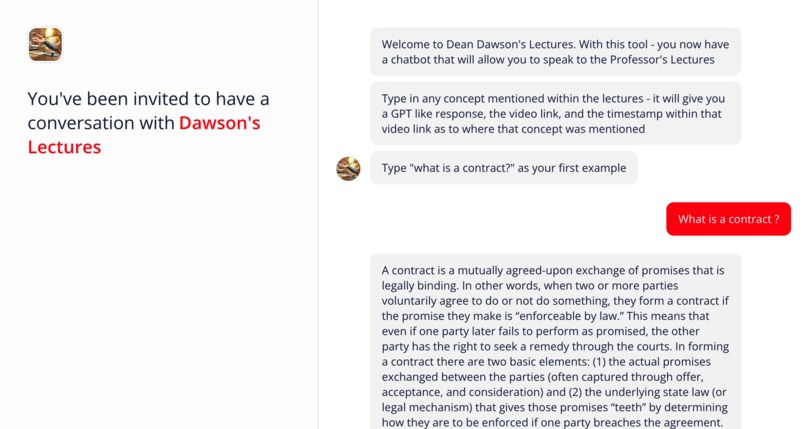
how it works and how to use it
-
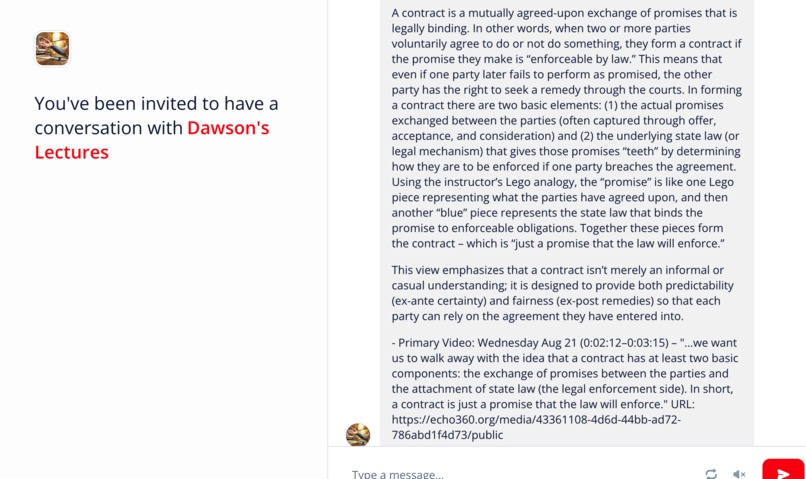
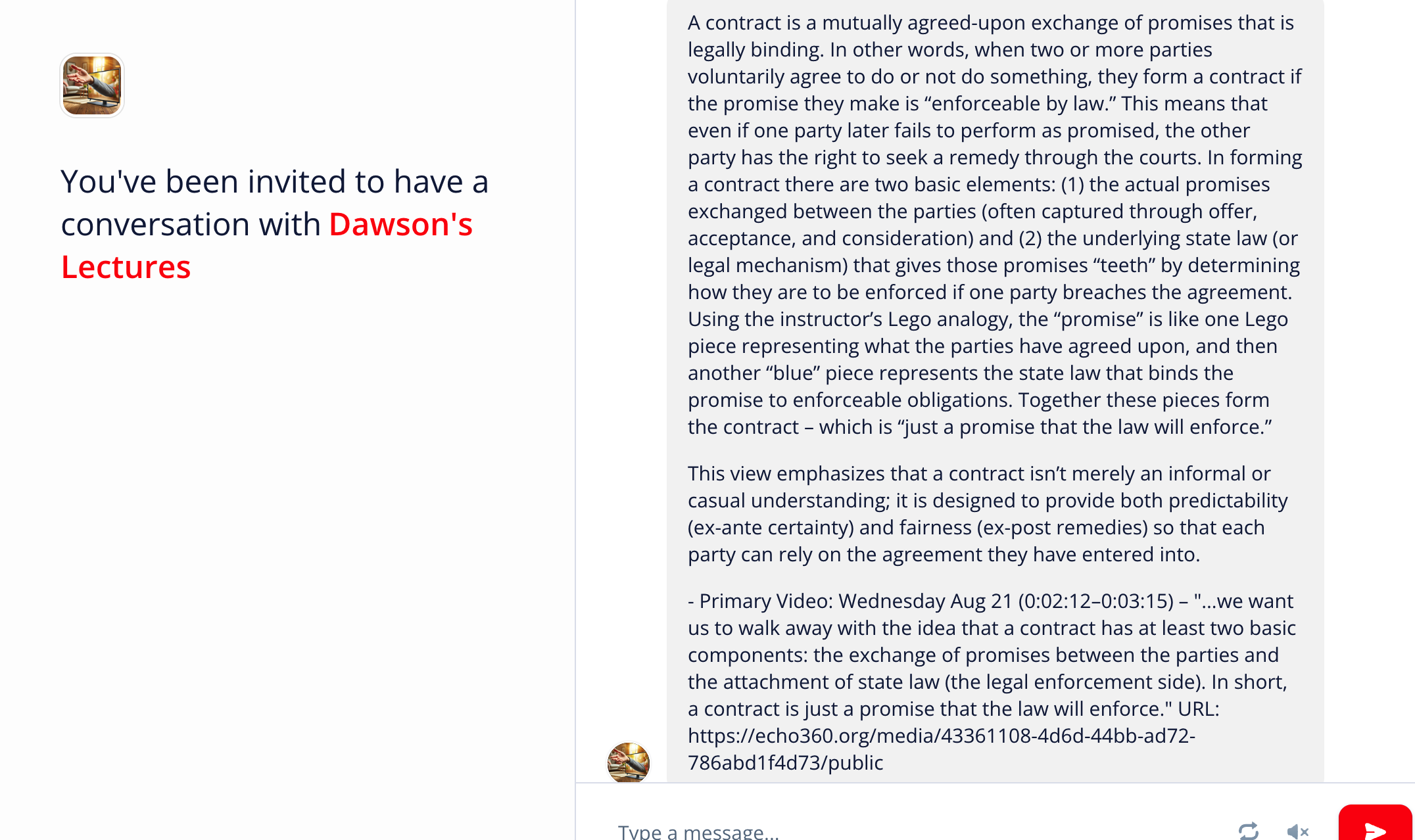
the response
-
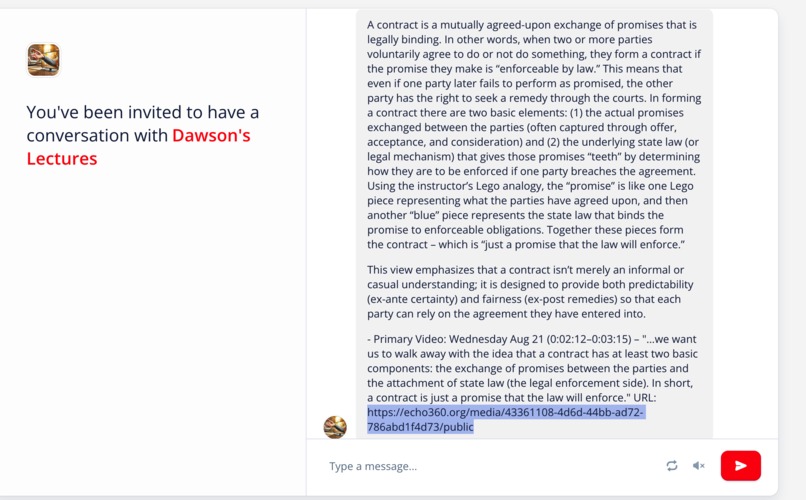
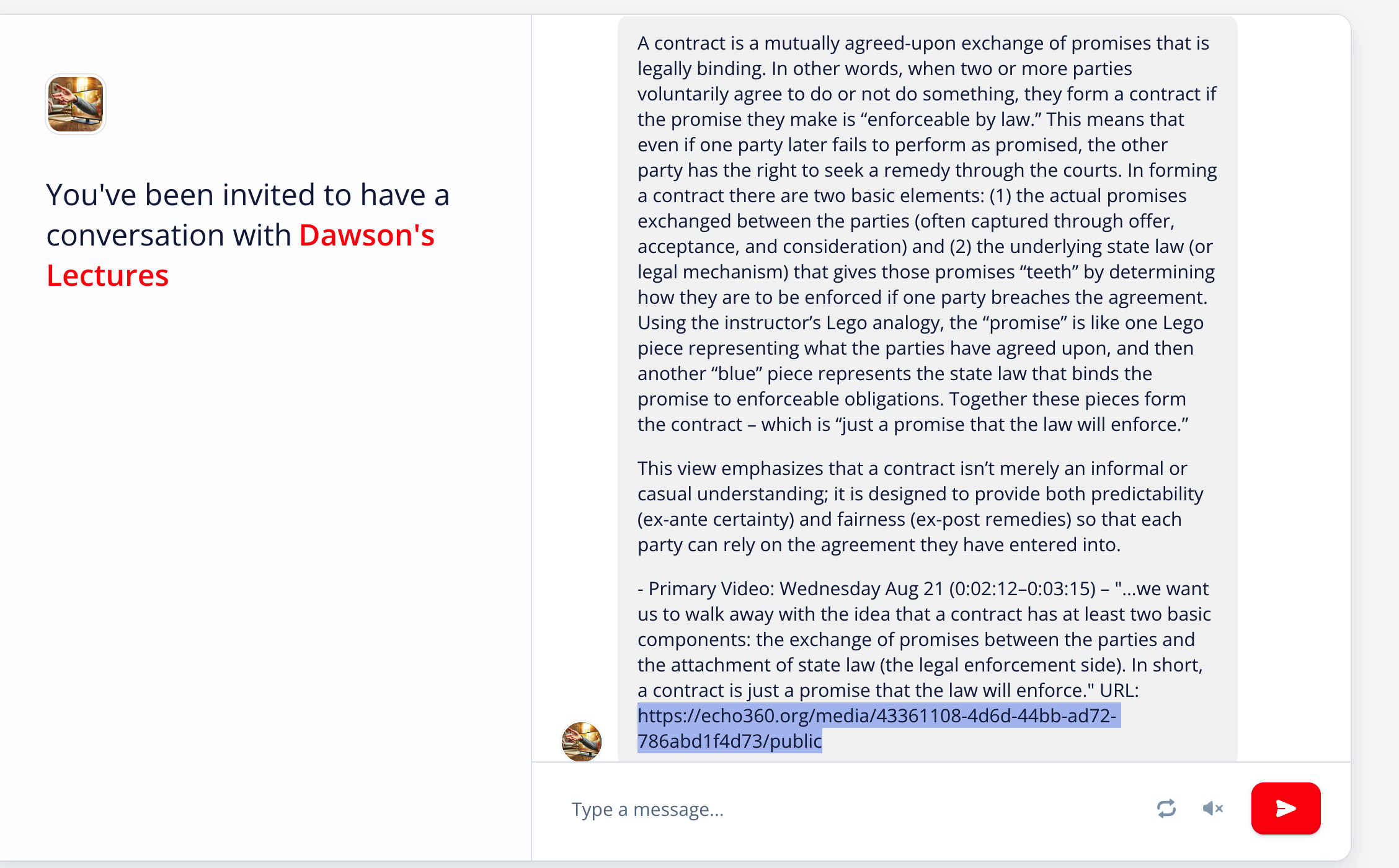
the video link it gives you
-
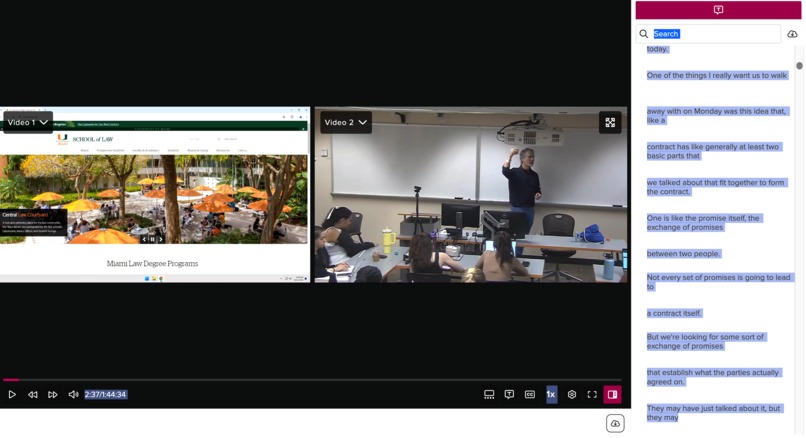
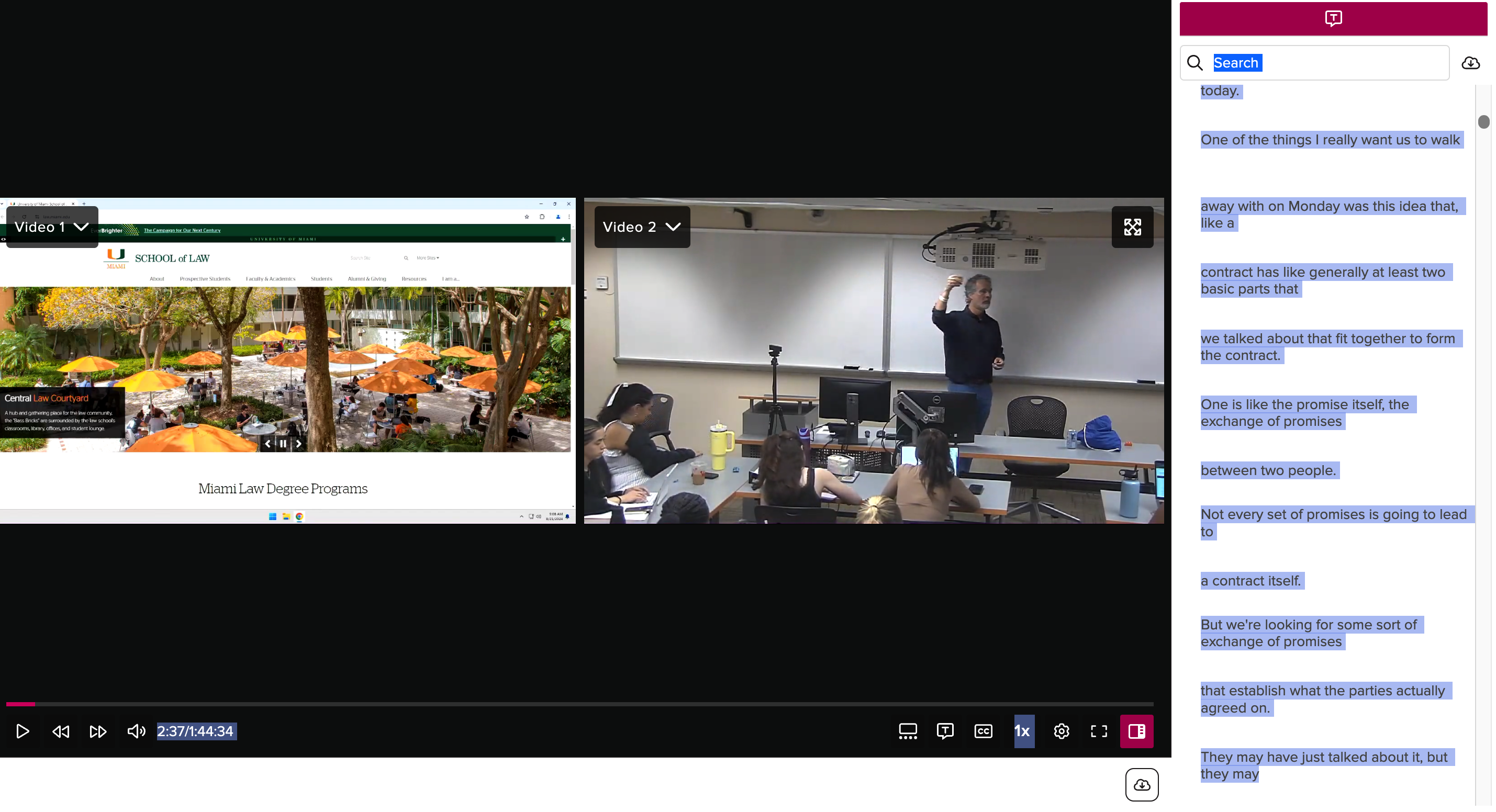
and it takes you exactly where you need to go to find what you are looking for
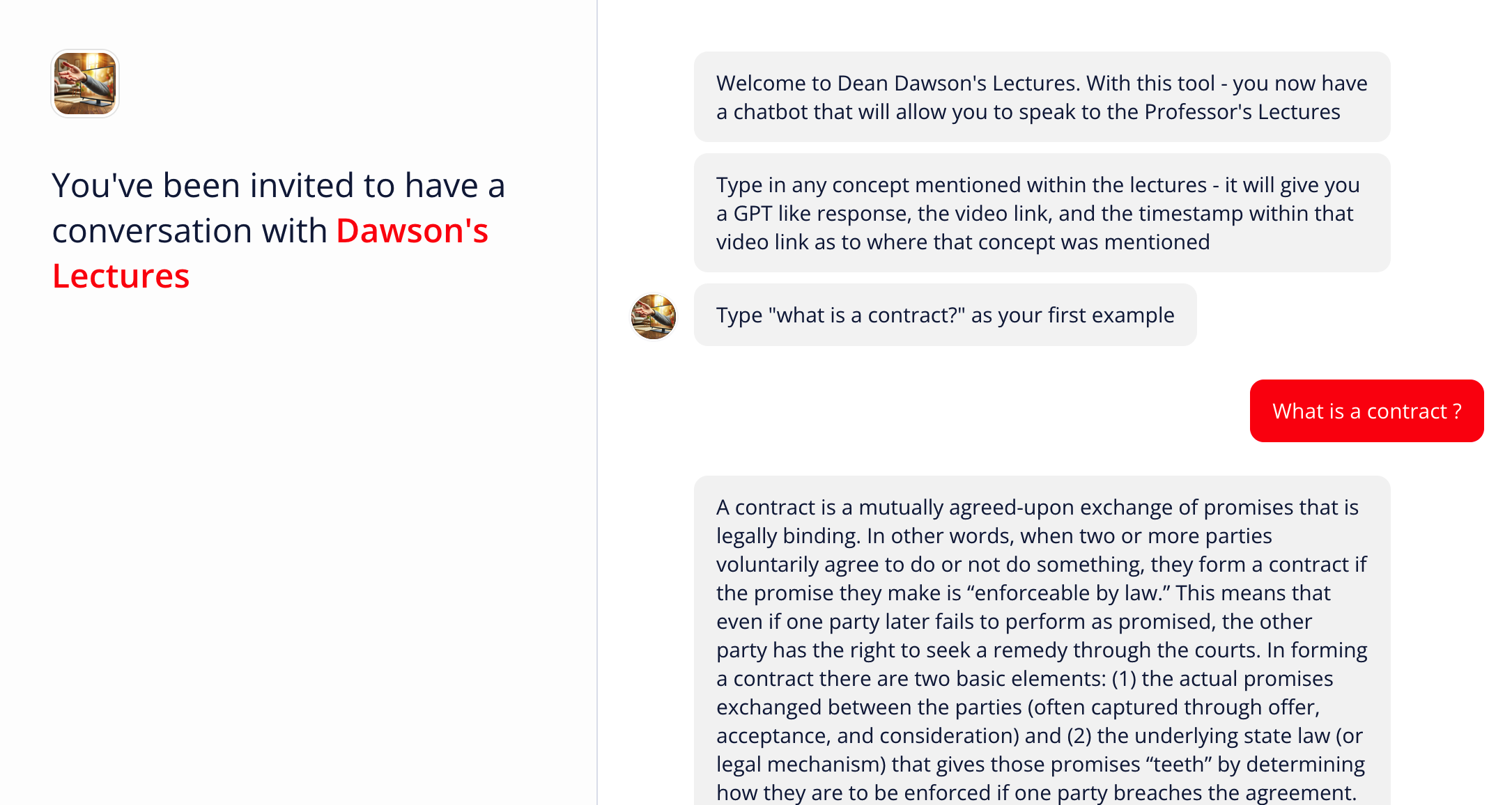
The inspiration for Haystack stemmed from the challenge many students face when trying to remember and recall everything discussed during class. Professors often share essential insights that are difficult to capture through traditional note-taking, making it easy to miss crucial information. To address this, the goal of Haystack was to create a system that allows students to quickly search through class recordings and find specific information with precision and ease.
The system works by allowing students to search their class video recordings using natural language queries. When a user asks a question, Haystack returns accurate responses, complete with direct video links and timestamps, making it easy to revisit key moments. The video transcripts are divided into 30-second intervals, ensuring that search results point to the exact segment where the relevant information was discussed. This granular approach helps students efficiently find the information they need without having to watch entire videos.
The development of Haystack involved several key steps. First, the YouTube Data API was used to retrieve URLs from recorded class videos. Transcripts were then extracted from Blackboard recordings and divided into 30-second intervals, with each video’s transcript saved as a separate file. Next, OpenAI embeddings were used to convert the transcript data into vector representations, which were stored in a vector database for fast and accurate semantic search. When a user submits a query, Haystack generates an embedding using OpenAI, performs a similarity search within the vector database, and retrieves the most relevant 30-second intervals. The system then returns these results with timestamps and video links, allowing students to verify the information quickly and easily.
Building Haystack was not without its challenges. One of the main difficulties was ensuring fast response times when searching through large amounts of video data. Since the system needed to deliver quick answers without sacrificing accuracy, optimizing the vector database for speed was essential. Extracting clear and accurate transcripts from Blackboard recordings was another challenge, as was structuring the video data into precise 30-second intervals to balance search accuracy and efficiency. Despite these challenges, several accomplishments stood out. The system now allows students to search through their class recordings and instantly find specific information, saving time and improving study efficiency. Additionally, integrating OpenAI embeddings with a vector database enabled highly accurate semantic search, and organizing the video transcripts into 30-second intervals ensured precise search results.
Throughout the development process, several valuable lessons were learned. Using vector databases and OpenAI embeddings proved to be highly effective for real-world projects, and optimizing data retrieval and search queries was crucial for maintaining fast response times. Additionally, the experience demonstrated that using a vector database with OpenAI embeddings can be more effective than relying on a custom GPT, particularly when dealing with structured data like video transcripts.
Looking ahead, there are several exciting possibilities for Haystack’s future development. One goal is to expand platform support, enabling the system to work with additional video platforms beyond YouTube and Blackboard. Real-time transcription is another potential feature, allowing students to search class recordings as they happen. Additionally, generating quick summaries for each 30-second interval using OpenAI could further enhance the system’s efficiency by helping students review key points more quickly. Collaborative features, such as allowing students to add custom tags and annotations to specific video segments, could also improve group study sessions. Finally, optimizing the system to handle larger datasets while maintaining fast response times will be essential as the system scales to accommodate more users and larger video libraries.
In conclusion, Haystack represents a powerful tool for students, making it easier than ever to search, find, and review information from class recordings. By leveraging OpenAI embeddings and vector databases, the system delivers fast, accurate search results, helping students study more efficiently and retain more information. With its potential for further development and expanded capabilities, Haystack is poised to become an indispensable resource for students everywhere.

Log in or sign up for Devpost to join the conversation.