-
-

login system
-
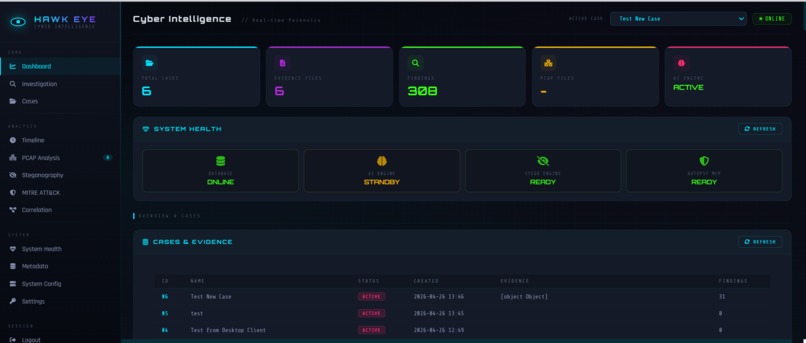
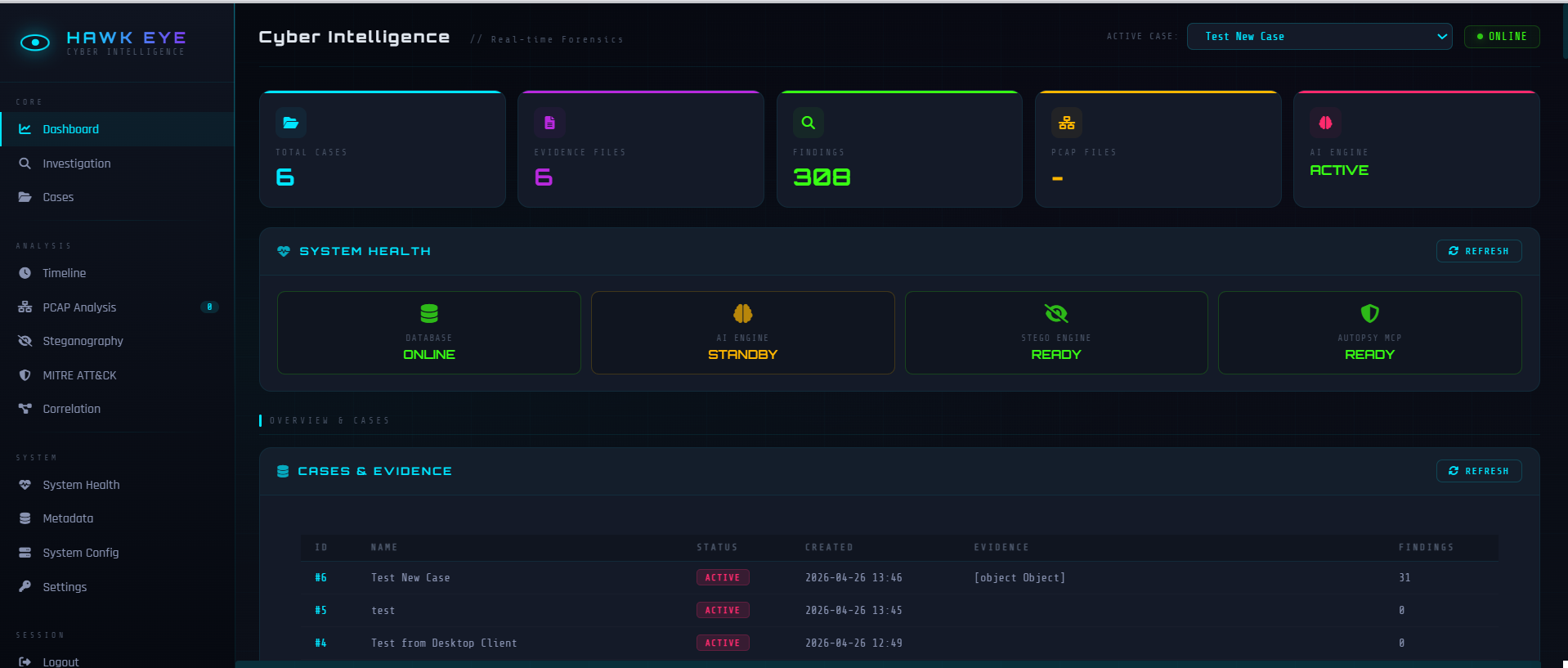
Dashboard of the system
-
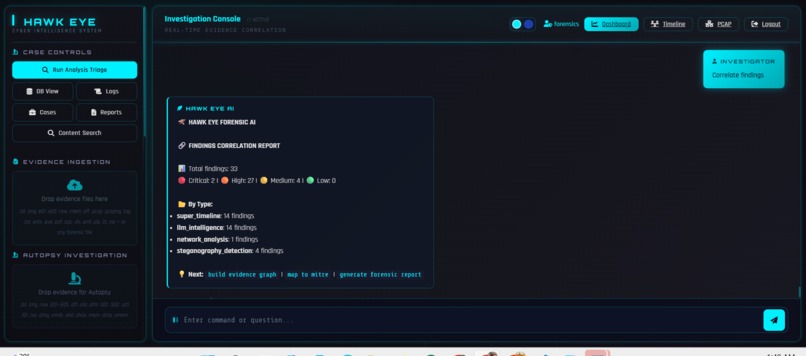
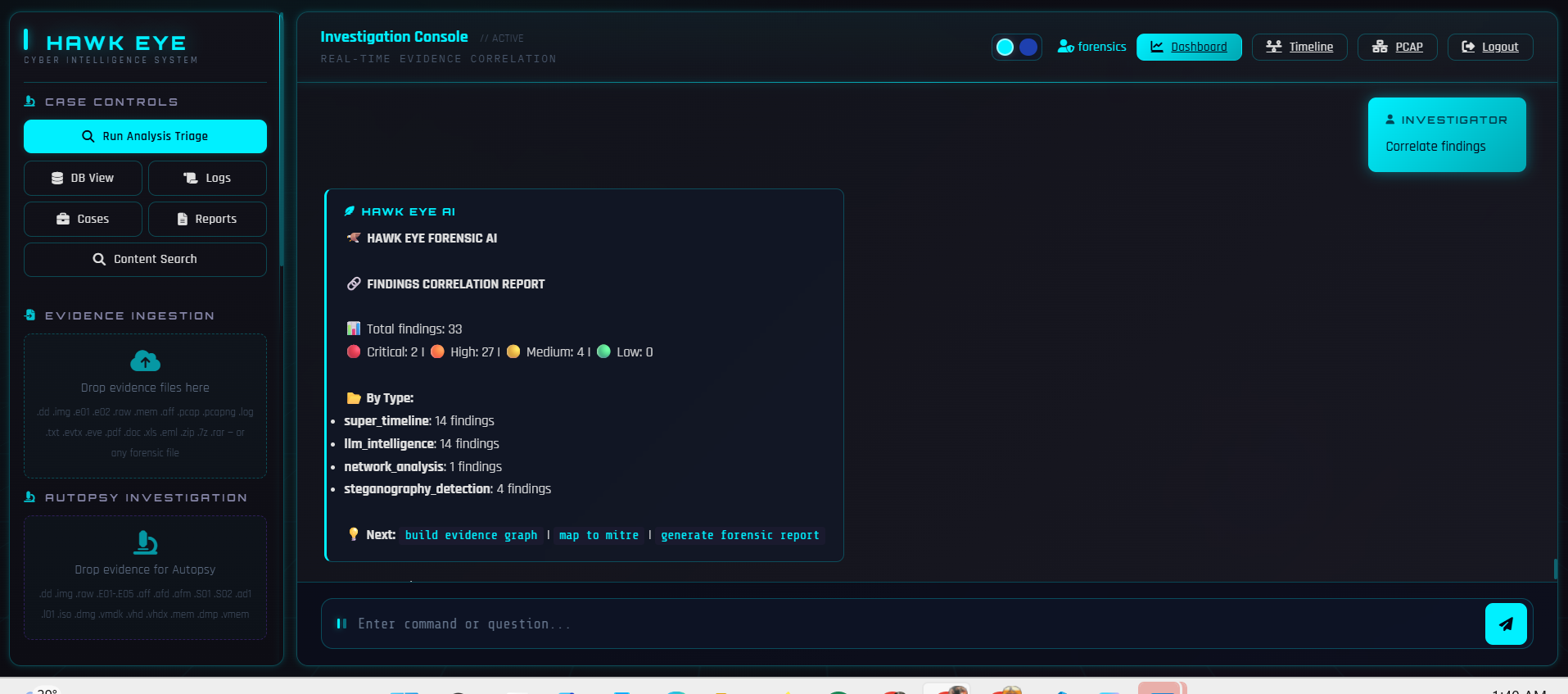
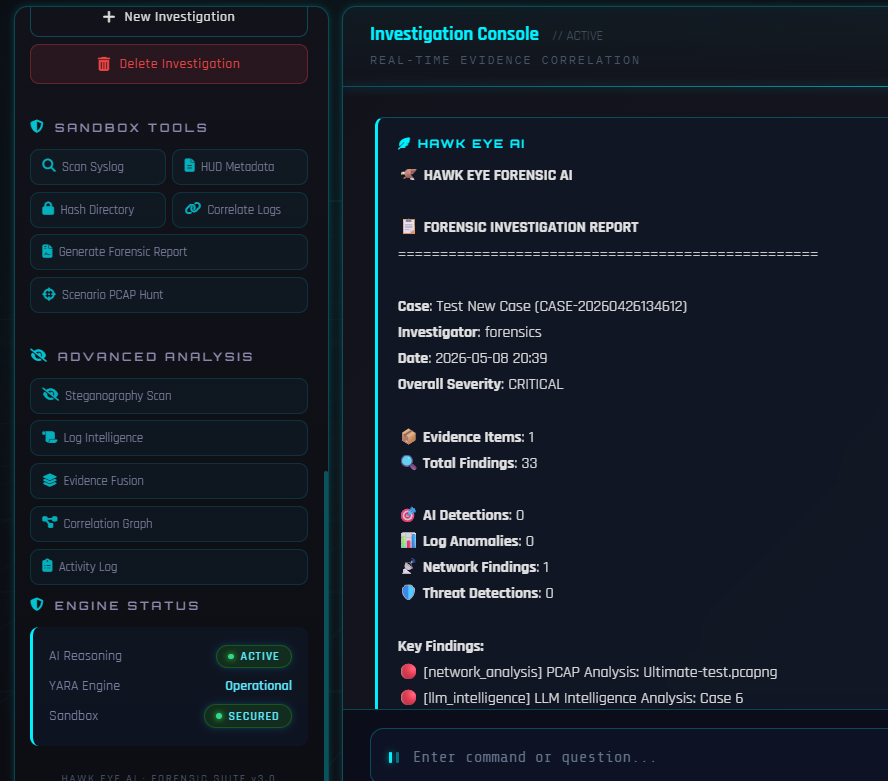
Chat type investigation(Not fully working Because of Api error)
-
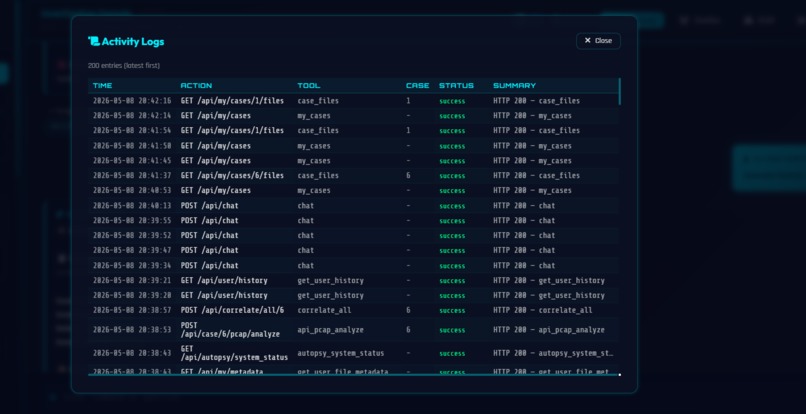
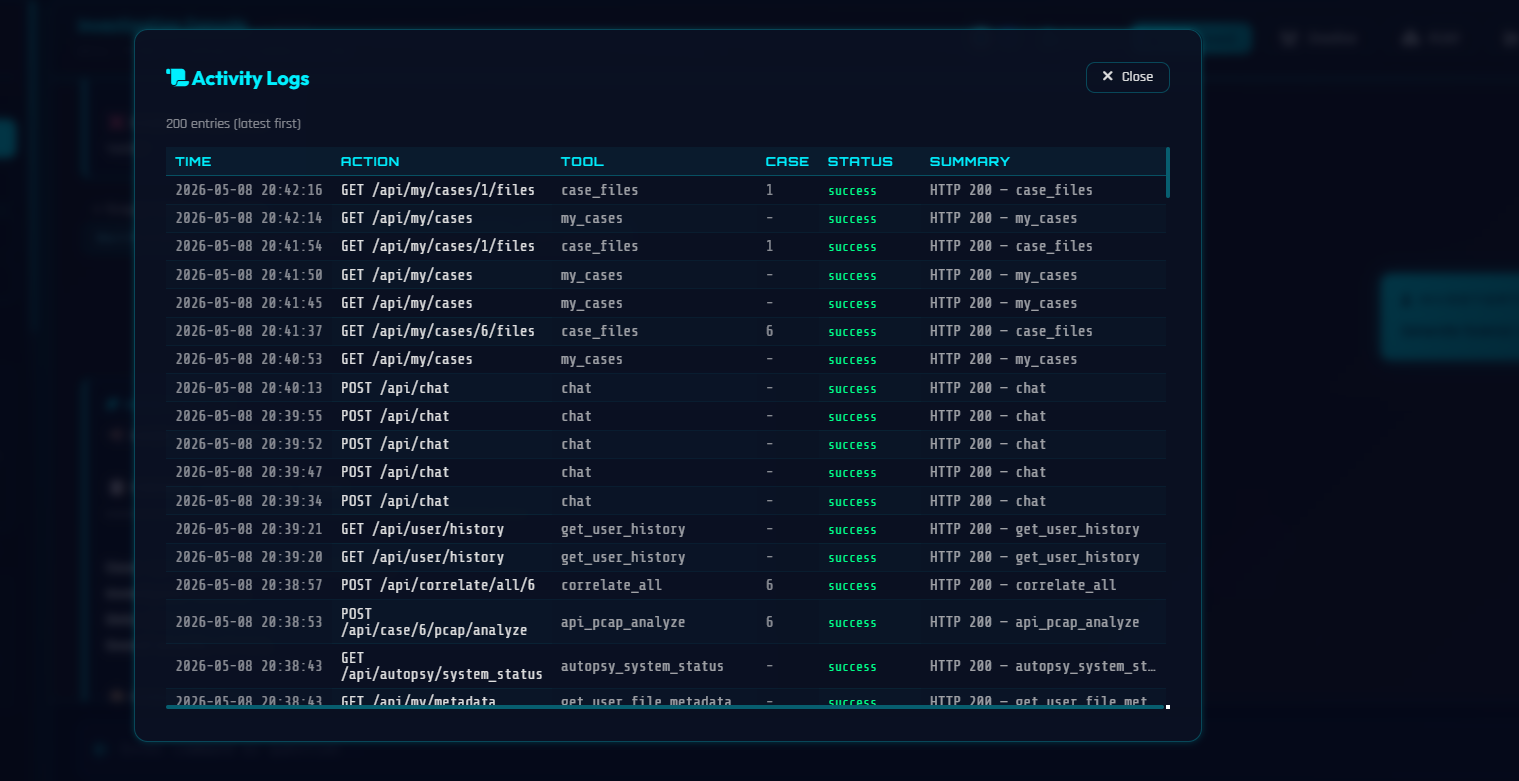
Proper activity logs of investigator which can't be deleted or modified
-
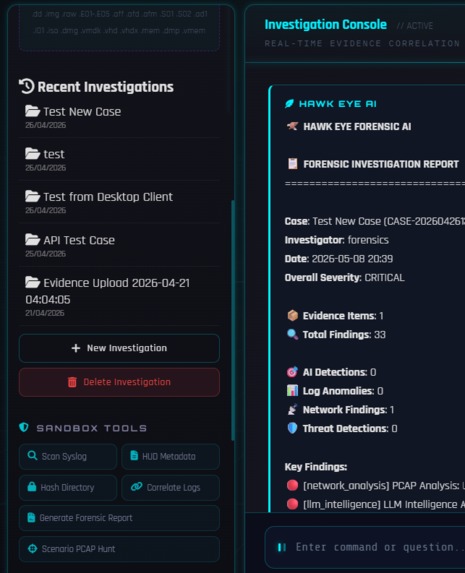
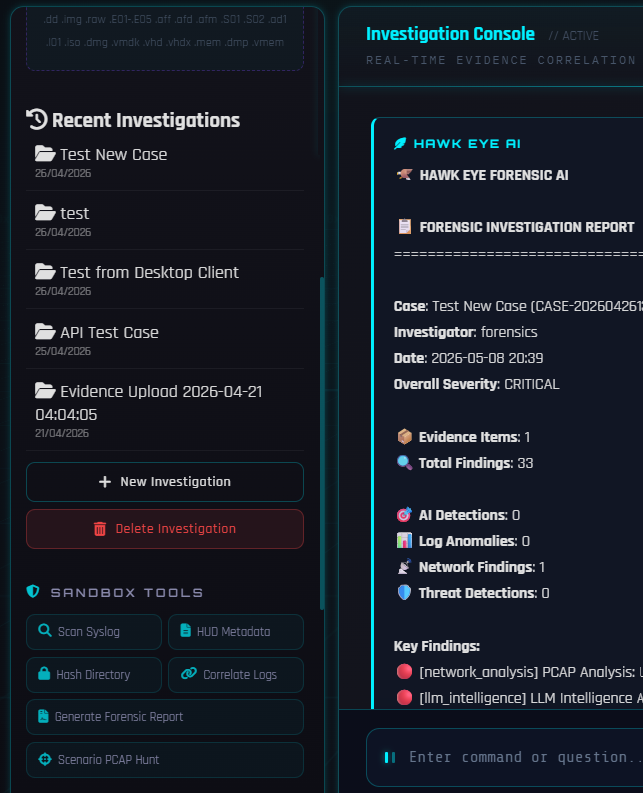
All the sand box tools which is in working
-
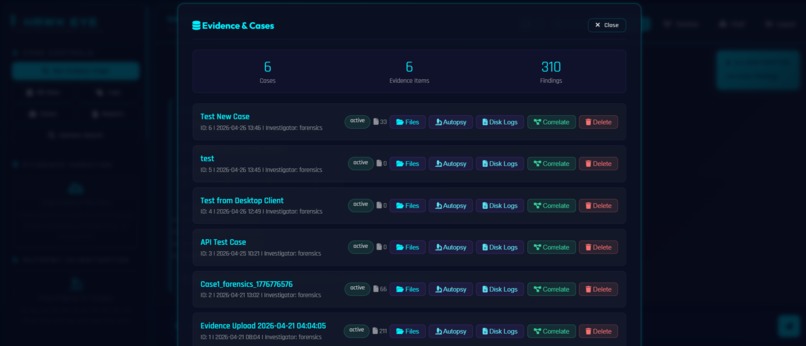
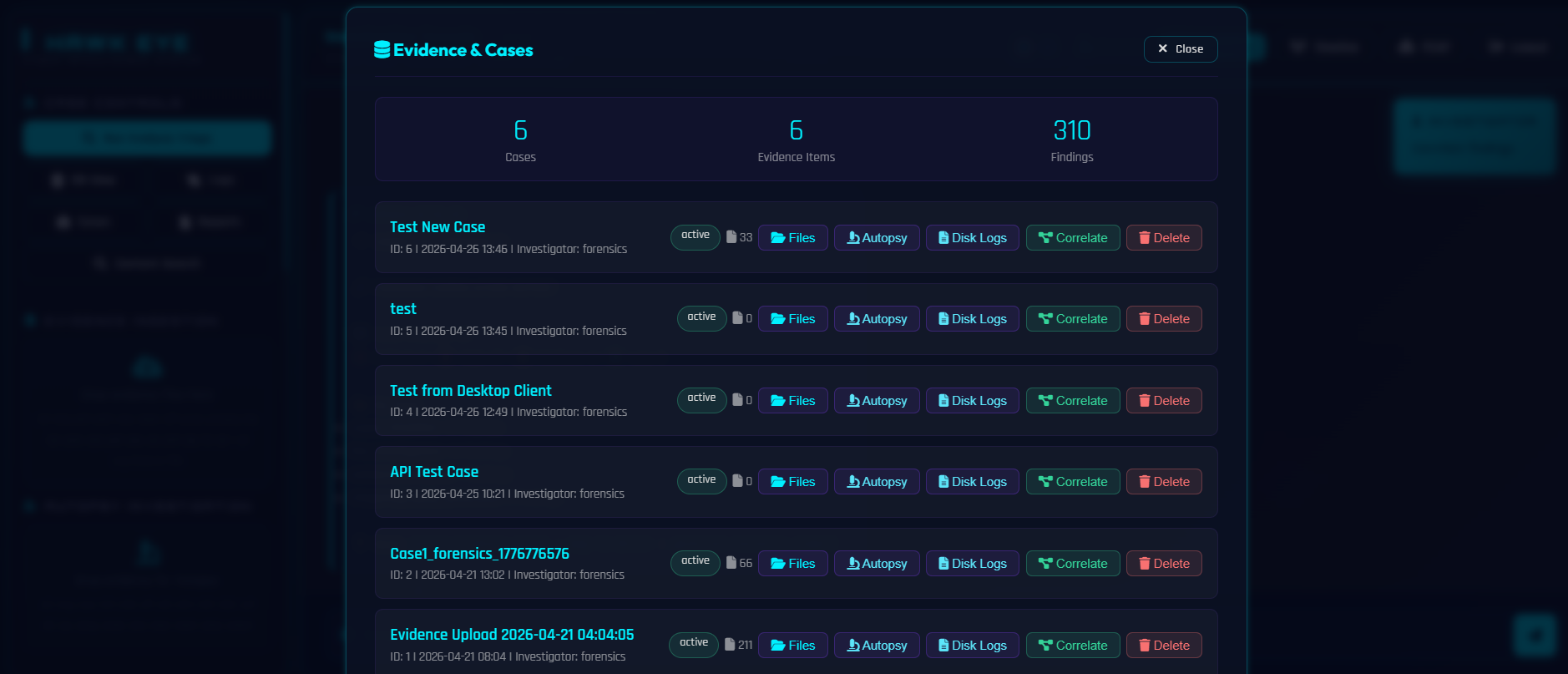
Proper database view (not only view can run investigation)
-
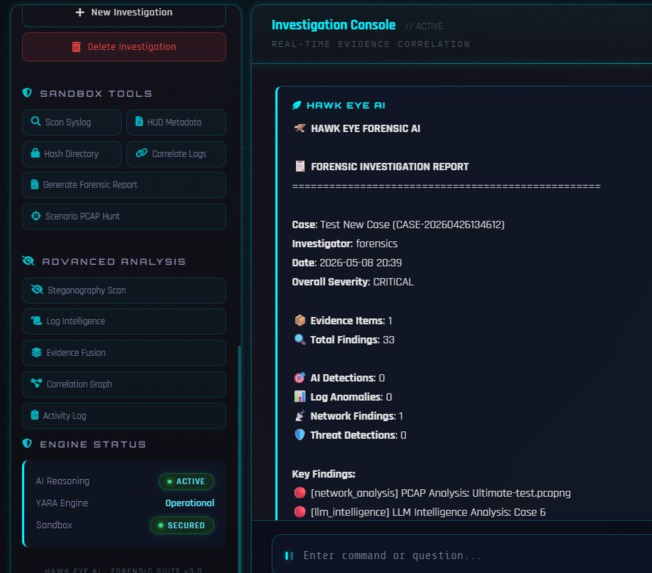
Also Advance analyis tools
-
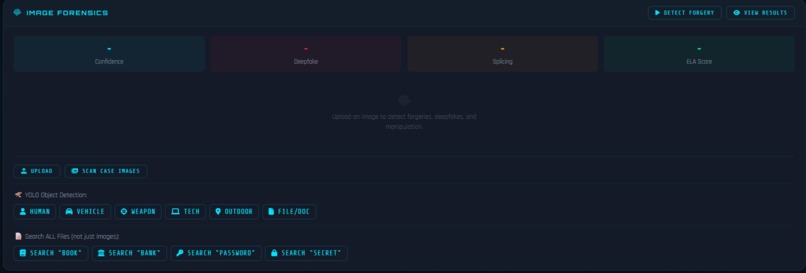
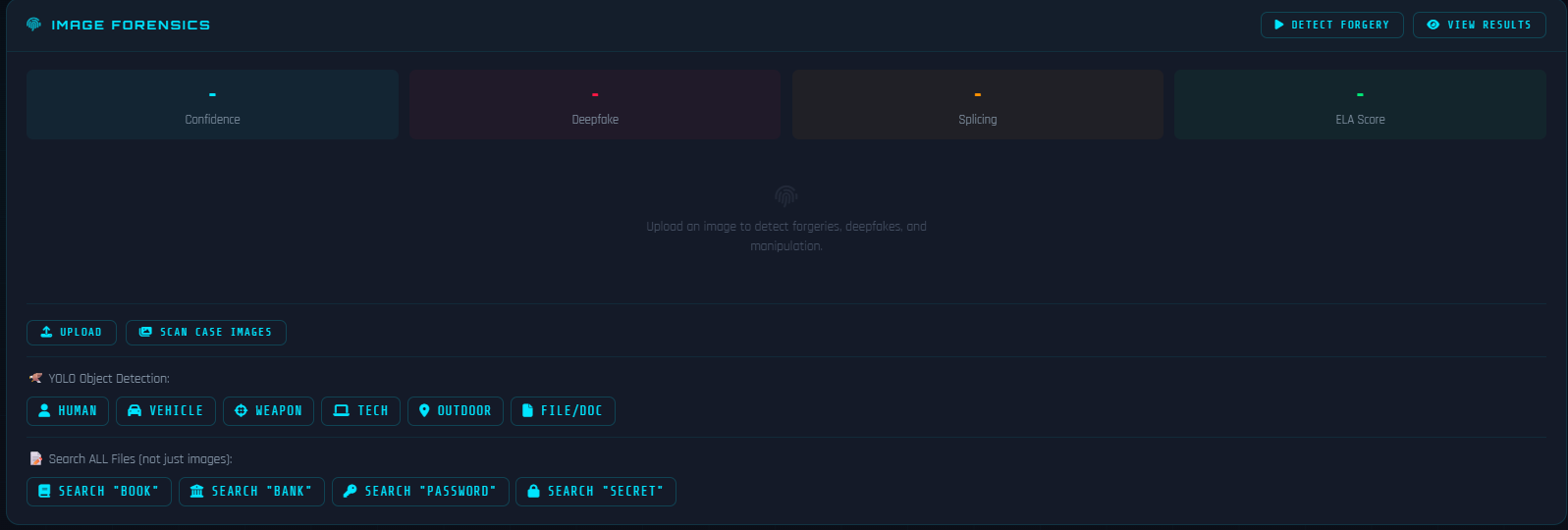
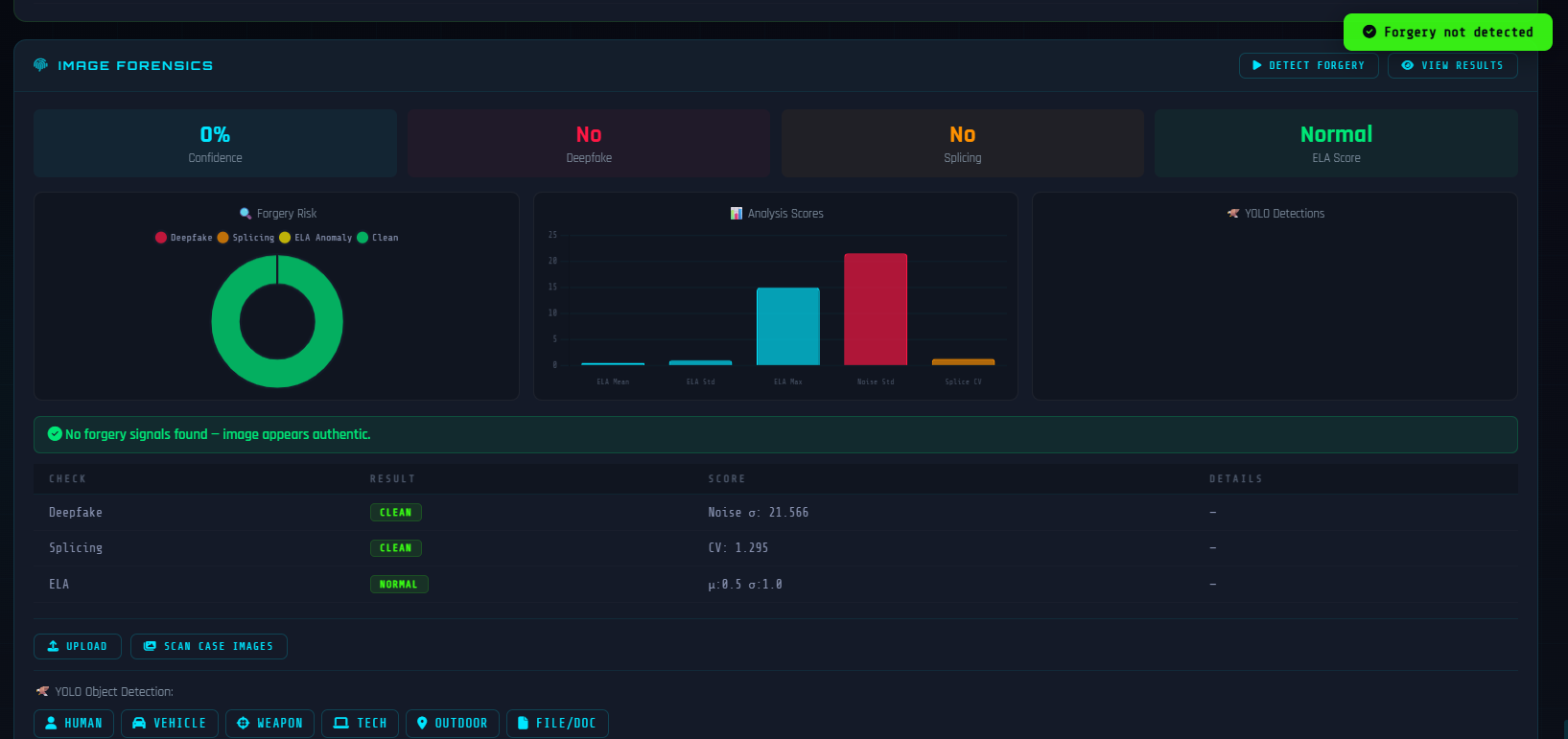
You can Check Image detection and can do do deep fake detection
-
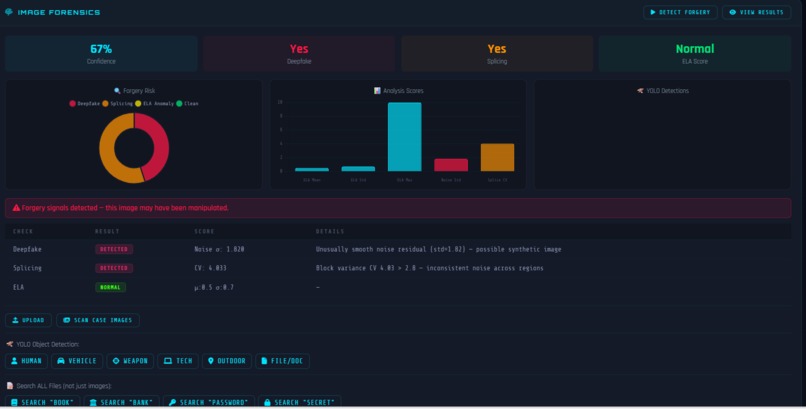
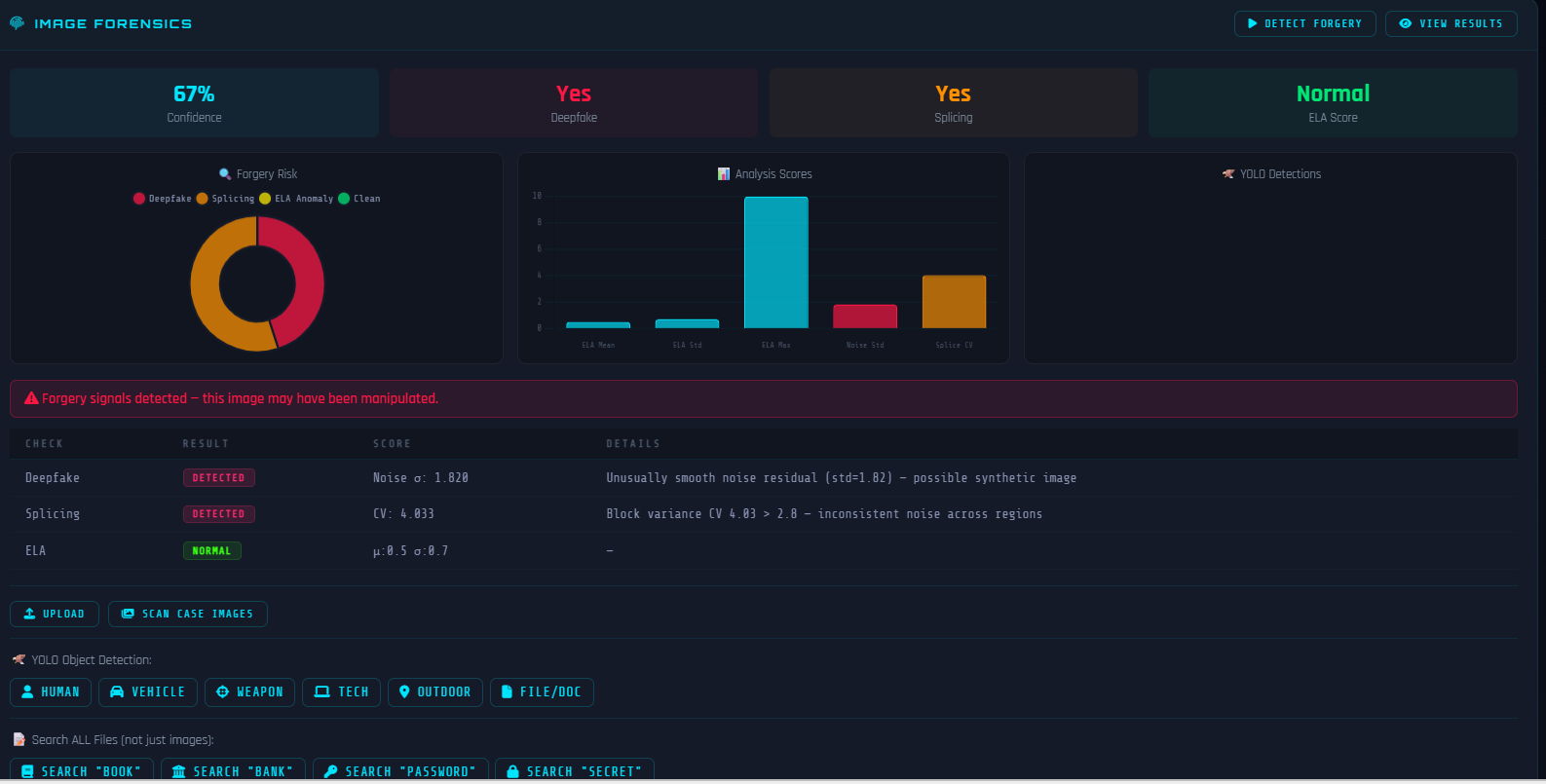
Deepfake detection of image
-
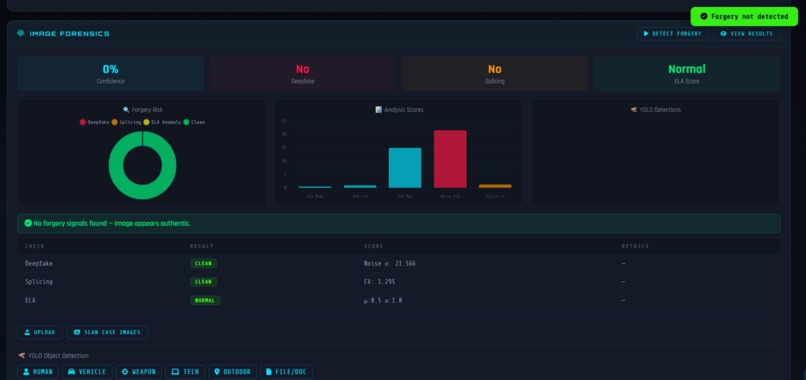
Proper result of deepfake detection(cleaned)
-
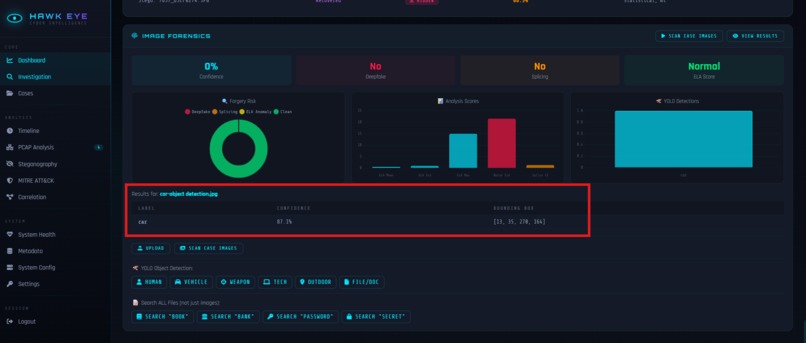
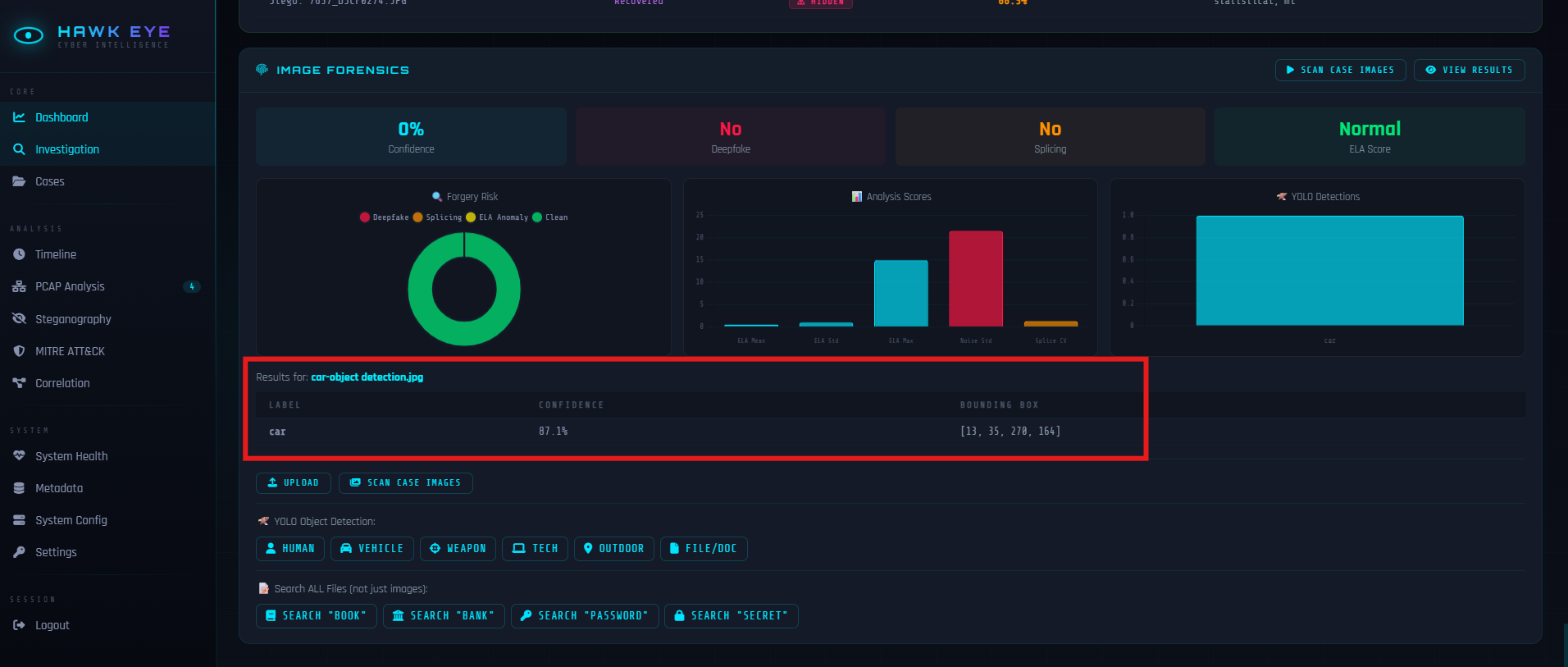
proper object detection
-
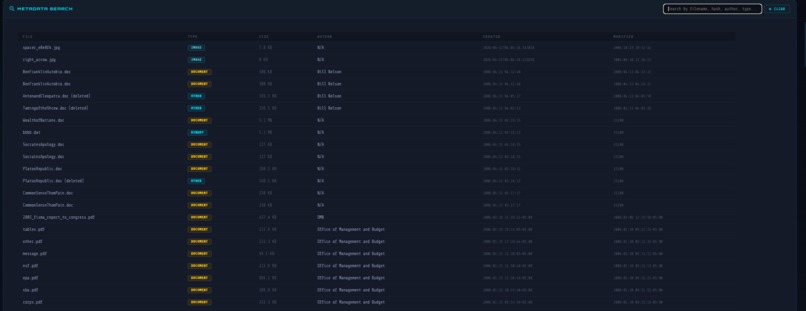
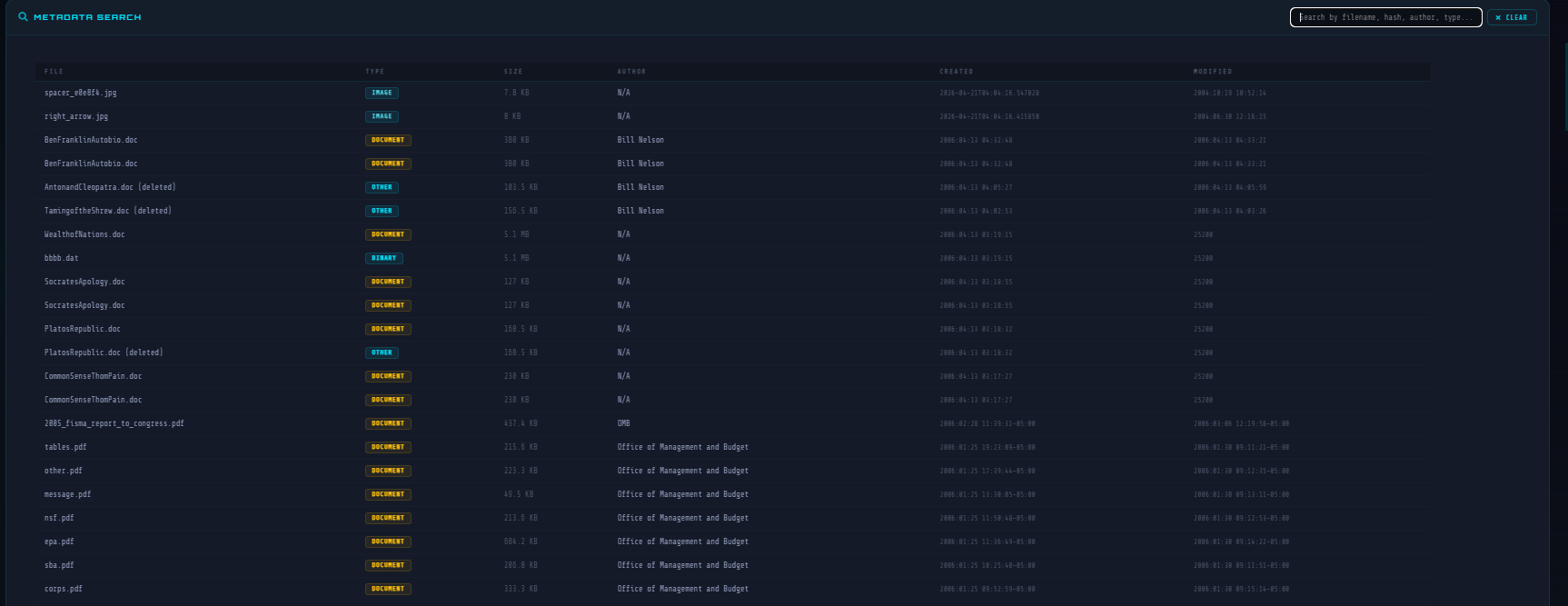
Proper metadata fetching and allowing searching key word
-
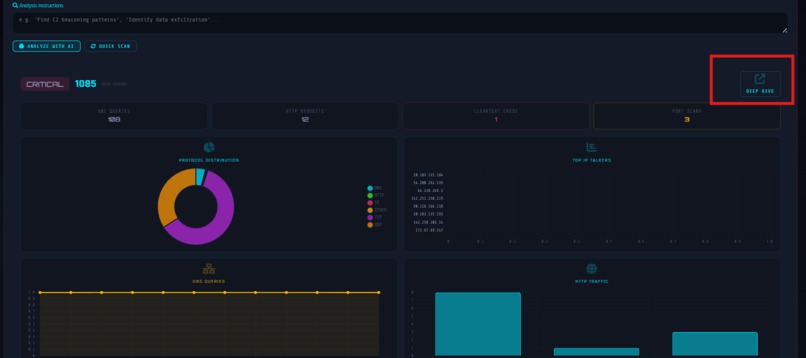
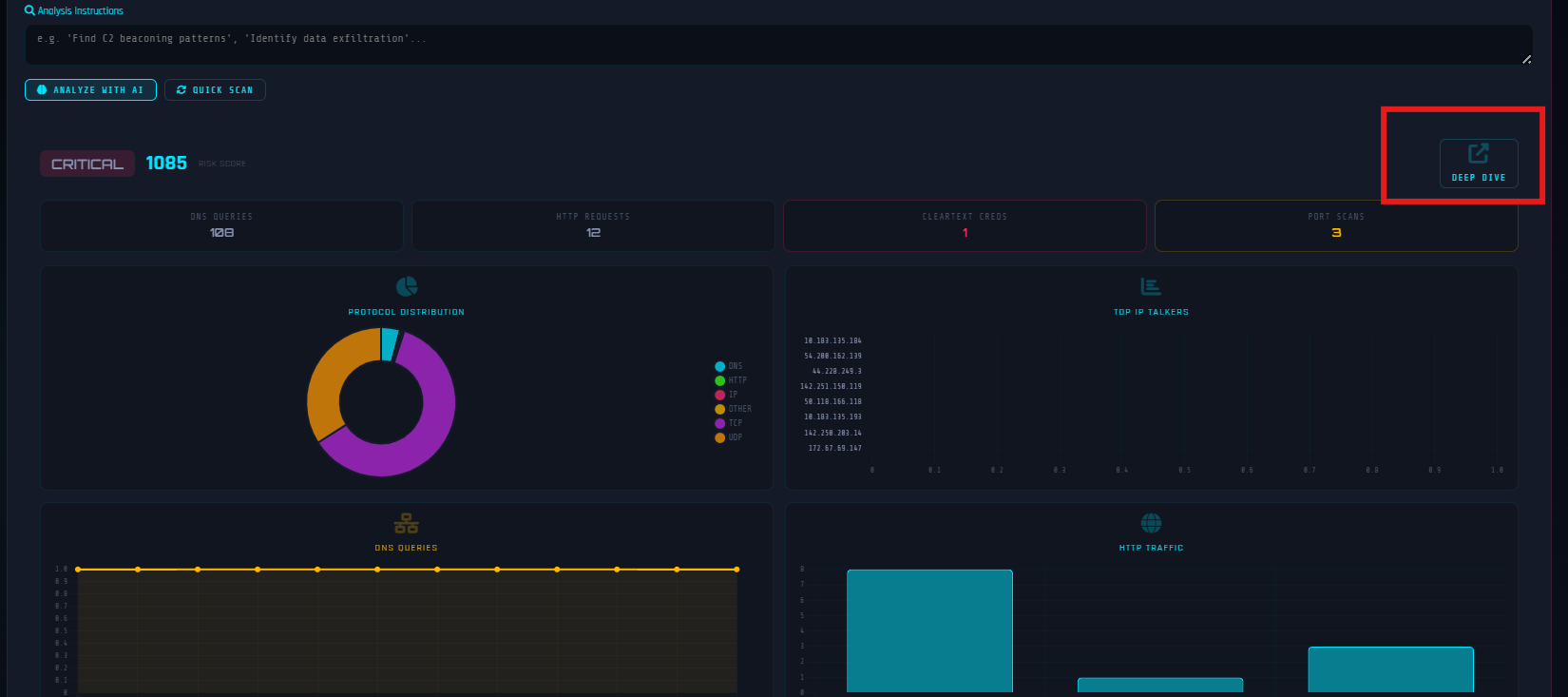
proper network analysis you can go deep dive for better analysis of file

Inspiration
The growing complexity of cybercrime investigations and the challenges investigators face when using various forensic techniques led to the development of HawkEye. Large volumes of digital data from many sources are frequently analysed in modern investigations, making the process time-consuming and challenging to handle. HawkEye was created to offer a single platform that supports more structured and effective digital forensic investigations by fusing conventional forensic methods with AI-assisted analysis.
What it does
HawkEye is a digital forensics investigation platform that helps investigators examine and analyze different types of digital evidence in one place.
The system allows users to upload evidence such as:
- disk images,
- memory dumps,
- network traffic captures (PCAP files),
- system logs,
- and images.
After the evidence is uploaded, HawkEye processes it using different forensic analysis modules. It can:
- recover files from disk images,
- analyze running processes from memory dumps,
- inspect suspicious network traffic,
- scan files for malware using YARA rules,
- detect hidden information in images,
- and identify suspicious patterns in logs.
The platform also helps investigators connect findings from multiple evidence sources. For example, it can relate suspicious files found in a disk image with malicious processes detected in memory analysis or suspicious IP addresses identified in network traffic.
In addition, HawkEye includes AI-assisted analysis features that help investigators by:
- identifying anomalies,
- highlighting suspicious activities,
- organizing findings,
- generating summaries,
- and assisting with investigation workflows.
The goal of the system is to reduce manual work, improve evidence organization, and provide a centralized environment for conducting digital forensic investigations more efficiently.
How we built it
HawkEye was created to be a modular digital forensics platform that would make cybercrime investigations easier and eliminate the problems of using multiple standalone forensic tools. The process started with identifying common problems that are encountered during digital forensic investigation, such as tool fragmentation, manual evidence correlation, and the growing amount of digital evidence created in cyber incidents.
The system was designed on a modular architecture approach that allows the different forensic analysis components to work within a centralized environment. The application logic, the evidence processing, the APIs, the authentication, and the communication between forensic modules were handled with the aid of a Flask-based backend. SQLite was chosen as the database system for organizing investigation cases, uploaded evidence, findings, logs, and analysis results.
The platform was imbued with various forensic tools and technologies for the multiple investigation domains. Analyzing disk images and recovering files was accomplished using the Sleuth Kit, memory forensics with Volatility, and network traffic analysis with TShark and Scapy. For malware detection, YARA rule-based scanning was implemented, and for the extraction of metadata from multimedia evidence, ExifTool was employed.
For efficiency in investigations, AI-powered modules were integrated to assist with anomaly detection, object detection, evidence classification, and intelligent analysis. Suspicious activities were identified using machine learning techniques, and computer vision models were used for the analysis of multimedia evidence. Forensic investigation support features also included the use of large language models for evidence summarization, investigation guidance, and analytical reasoning.
The platform was also enriched with evidence correlation and visualization capabilities to draw relationships between evidence from various sources and facilitate correlation. Interactive dashboards, timelines, graphs, and automated reporting modules were added to enhance organization and workflow management of evidence.
In general, HawkEye was designed using traditional forensic techniques and modern software engineering principles and AI-supported analysis methods to produce a digital forensic investigation platform that is centralized and structured.
Challenges we ran into
Challenges We Ran Into
One of the main challenges during the development of HawkEye was integrating multiple forensic tools into a single platform, as each tool uses different workflows and output formats. Handling different types of digital evidence such as disk images, memory dumps, network captures, and logs also increased system complexity.
Another challenge was the implementation of AI-assisted analysis modules. Many advanced AI services rely on paid APIs, which introduced cost and usage limitations. Training custom machine learning models locally also required high computational resources, large datasets, and GPU support, which were limited during development. Therefore, the project mainly relied on pre-trained models and external AI services.
In addition, processing large forensic evidence files and maintaining forensic integrity during automated analysis were important technical concerns throughout the project.
Accomplishments that we're proud of
We successfully developed a unified digital forensics platform capable of analyzing multiple types of digital evidence within a single environment. The integration of traditional forensic tools with AI-assisted analysis techniques was one of the major achievements of the project. We are also proud of implementing evidence correlation, automated reporting, and a centralized dashboard that helps investigators manage forensic investigations more efficiently.
What we learned
During this project, we learned how AI can help in digital forensic investigations by making evidence analysis faster and more organized. We understood how machine learning can be used to detect suspicious activities and support investigators during cybercrime investigations. We also learned how difficult it is to combine different forensic tools into one platform and how important proper evidence handling and system integration are in digital forensics.
What's next for HawkEye : AI-Powered Cyber Forensics Platform
In the future, HawkEye can be extended by adding support for mobile device forensics, cloud forensics, and real-time incident monitoring. The platform can also be improved with more advanced AI models for threat detection, malware analysis, and automated evidence correlation. Future versions may include support for distributed processing, larger forensic datasets, and integration with external threat intelligence platforms to improve investigation capabilities and system scalability.


Log in or sign up for Devpost to join the conversation.