-
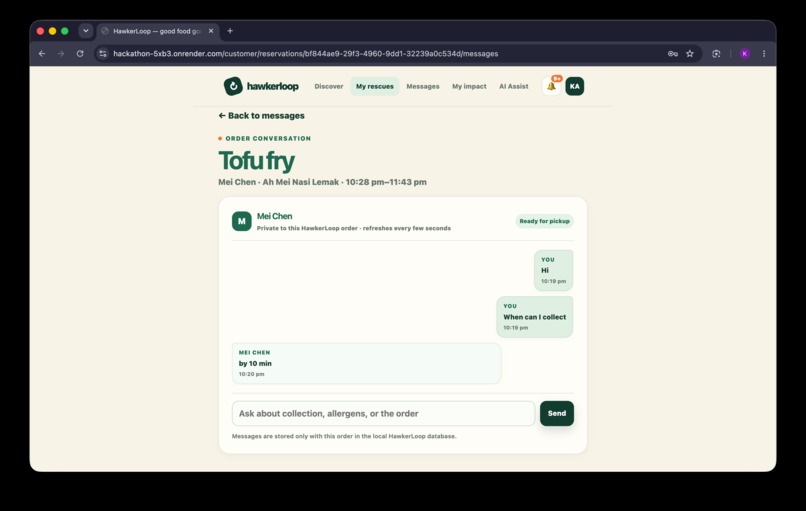
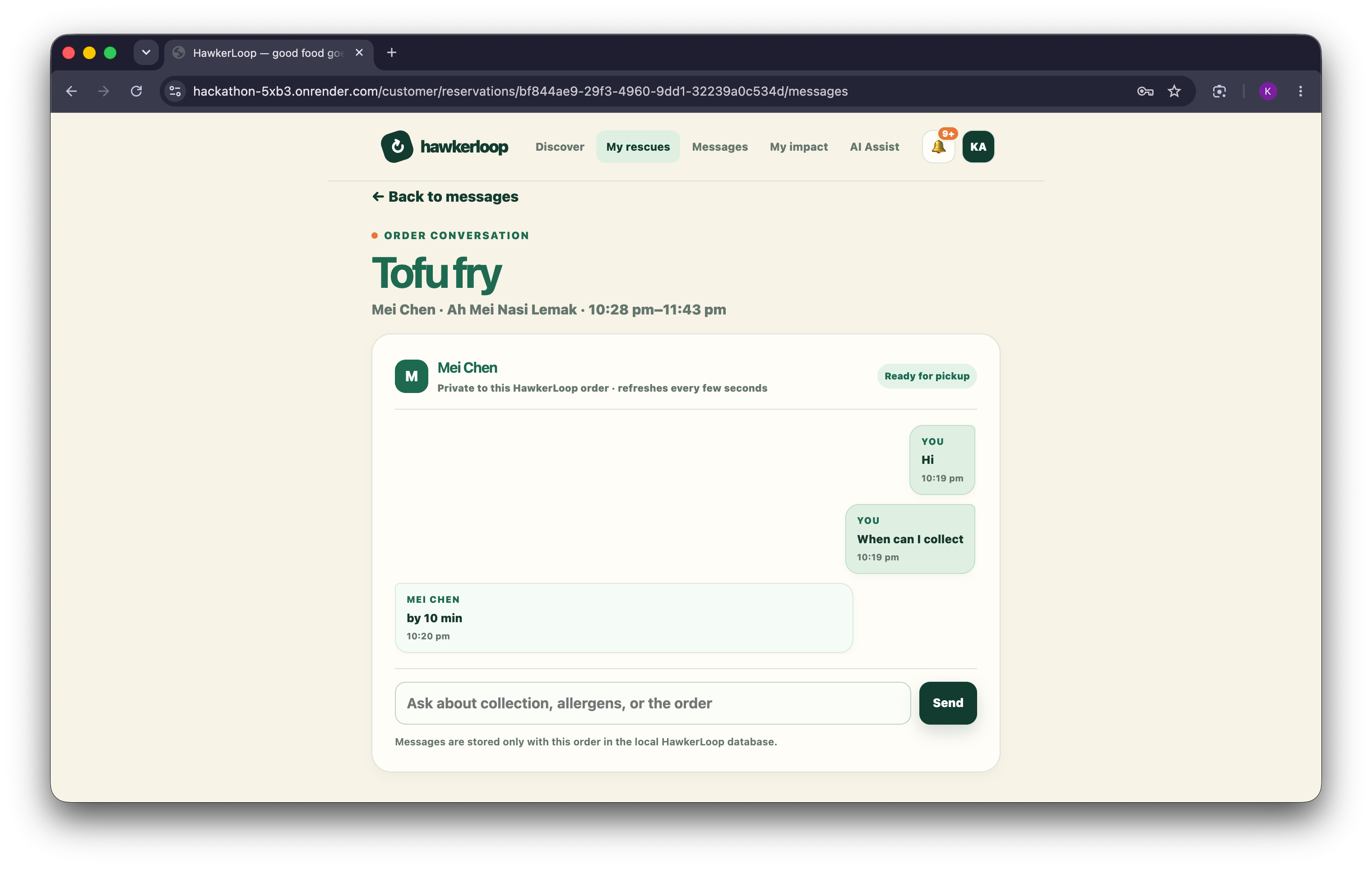
Buyer–hawker messaging for pickup coordination.
-
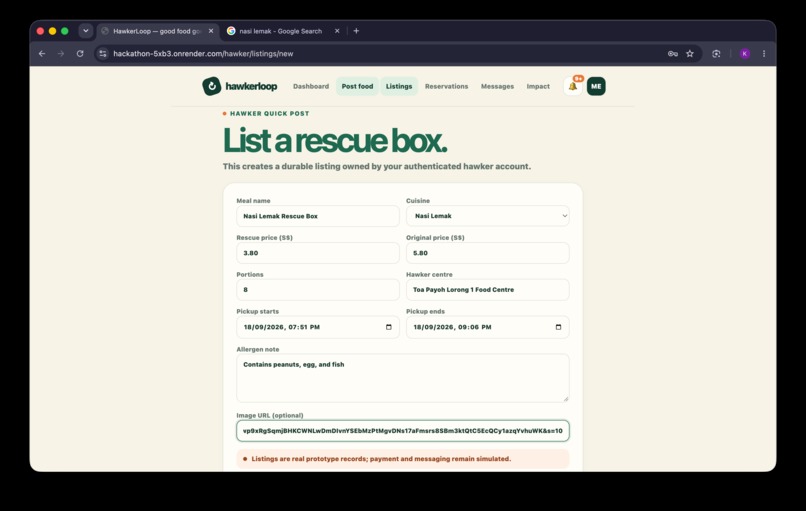
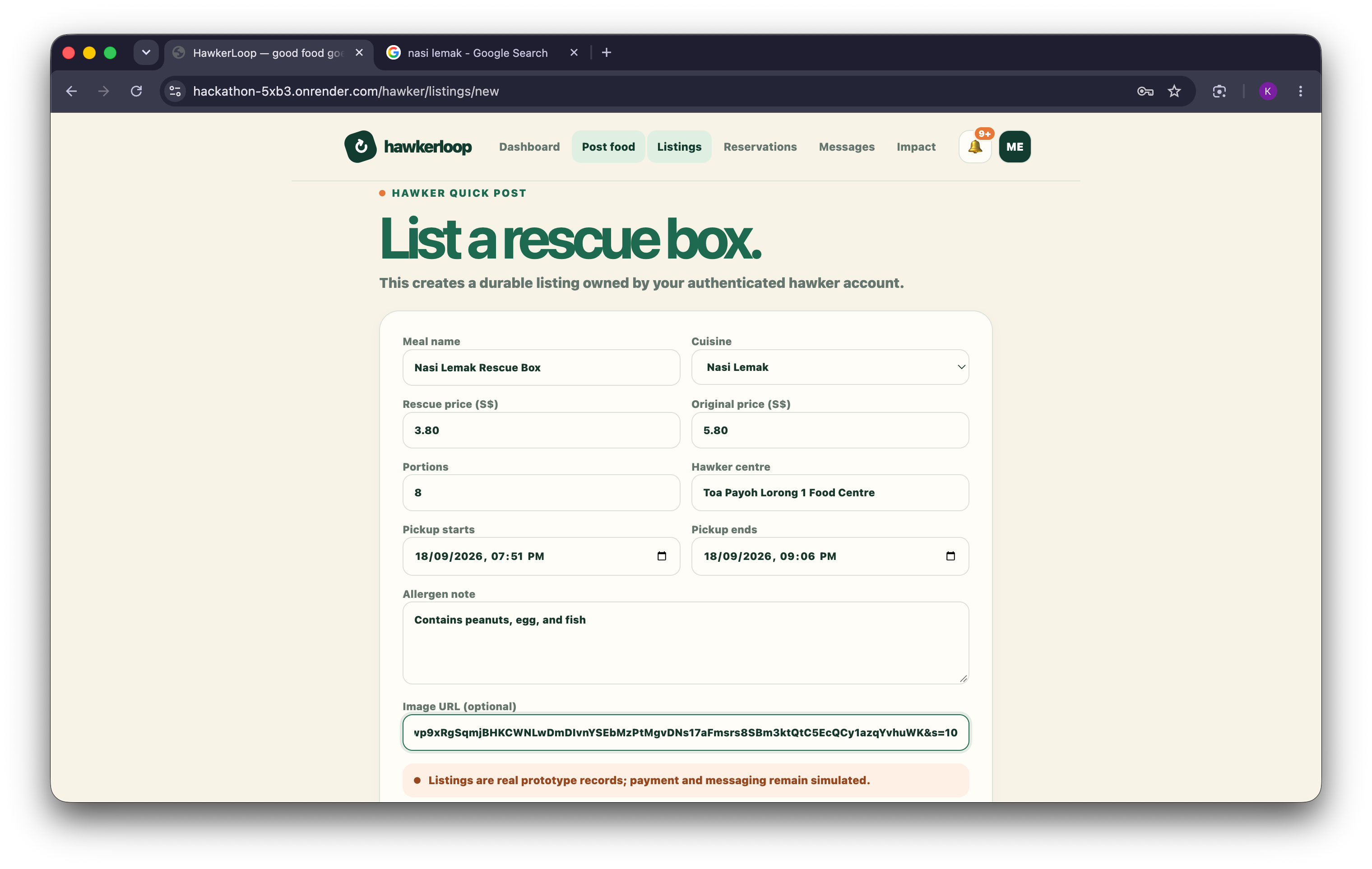
Hawker creates a rescue listing with price, quantity and a safe pickup window.
-
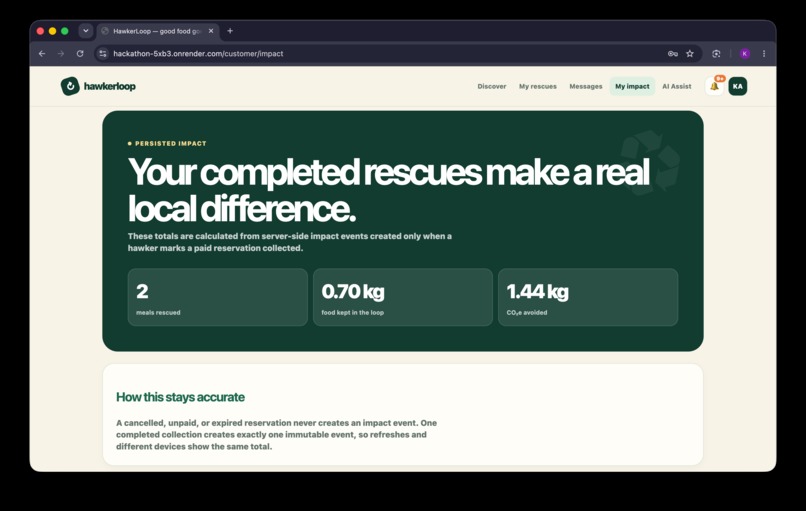
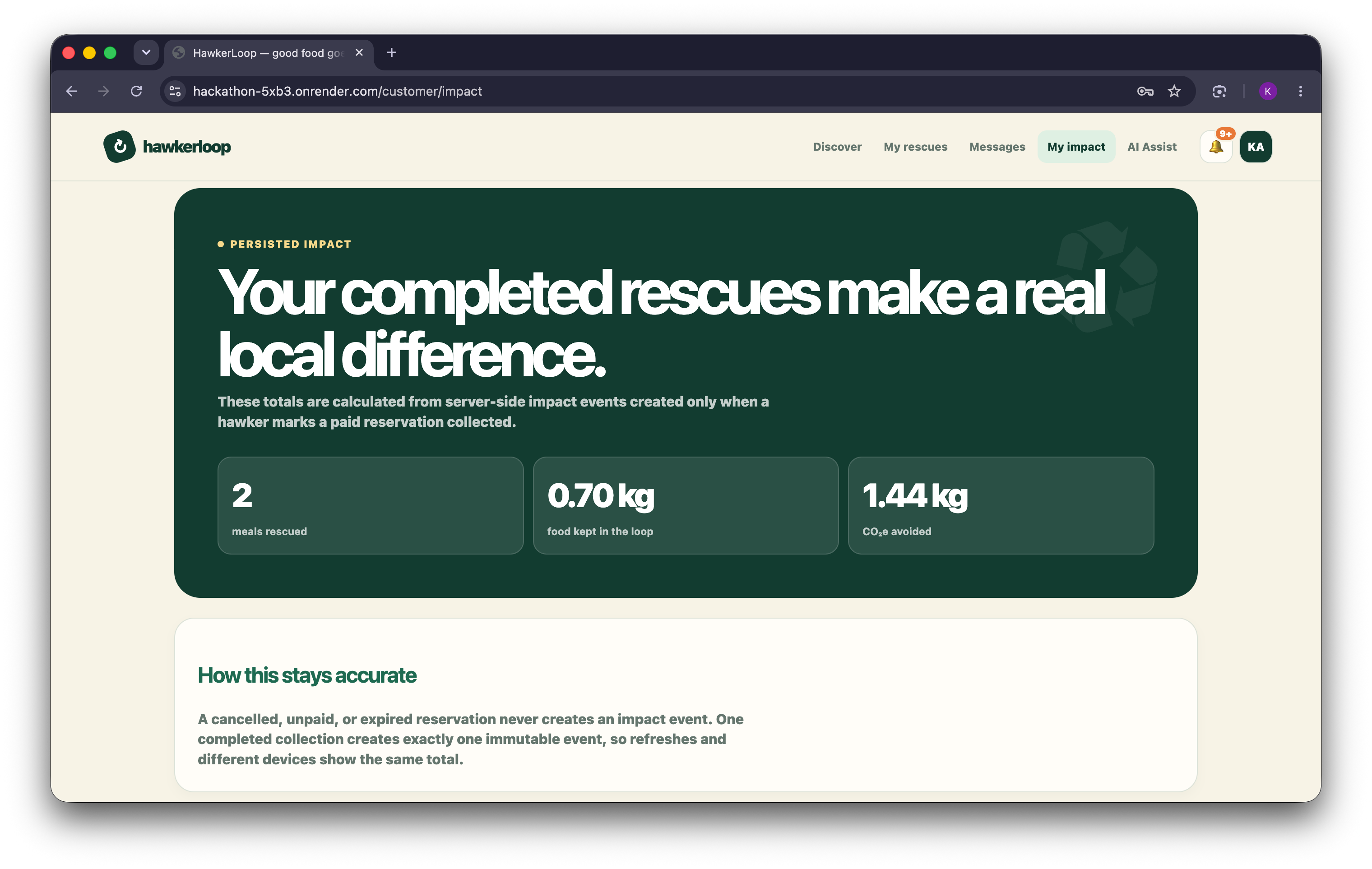
Verified customer impact after a completed rescue collection.
-
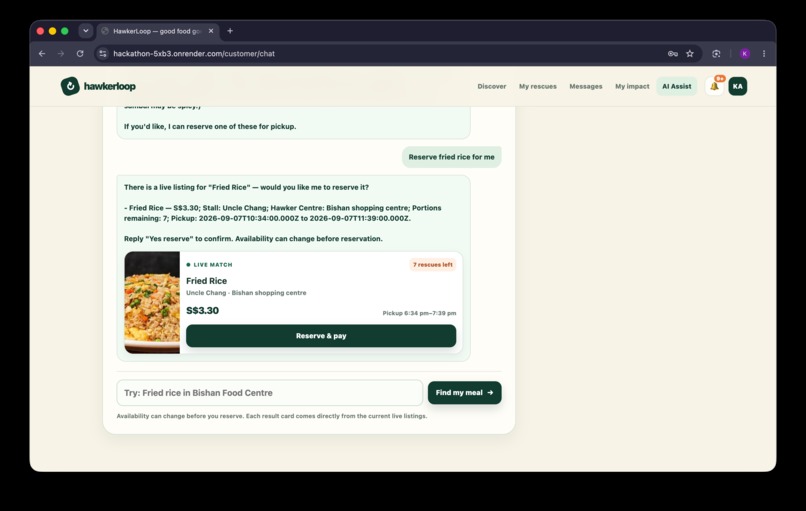
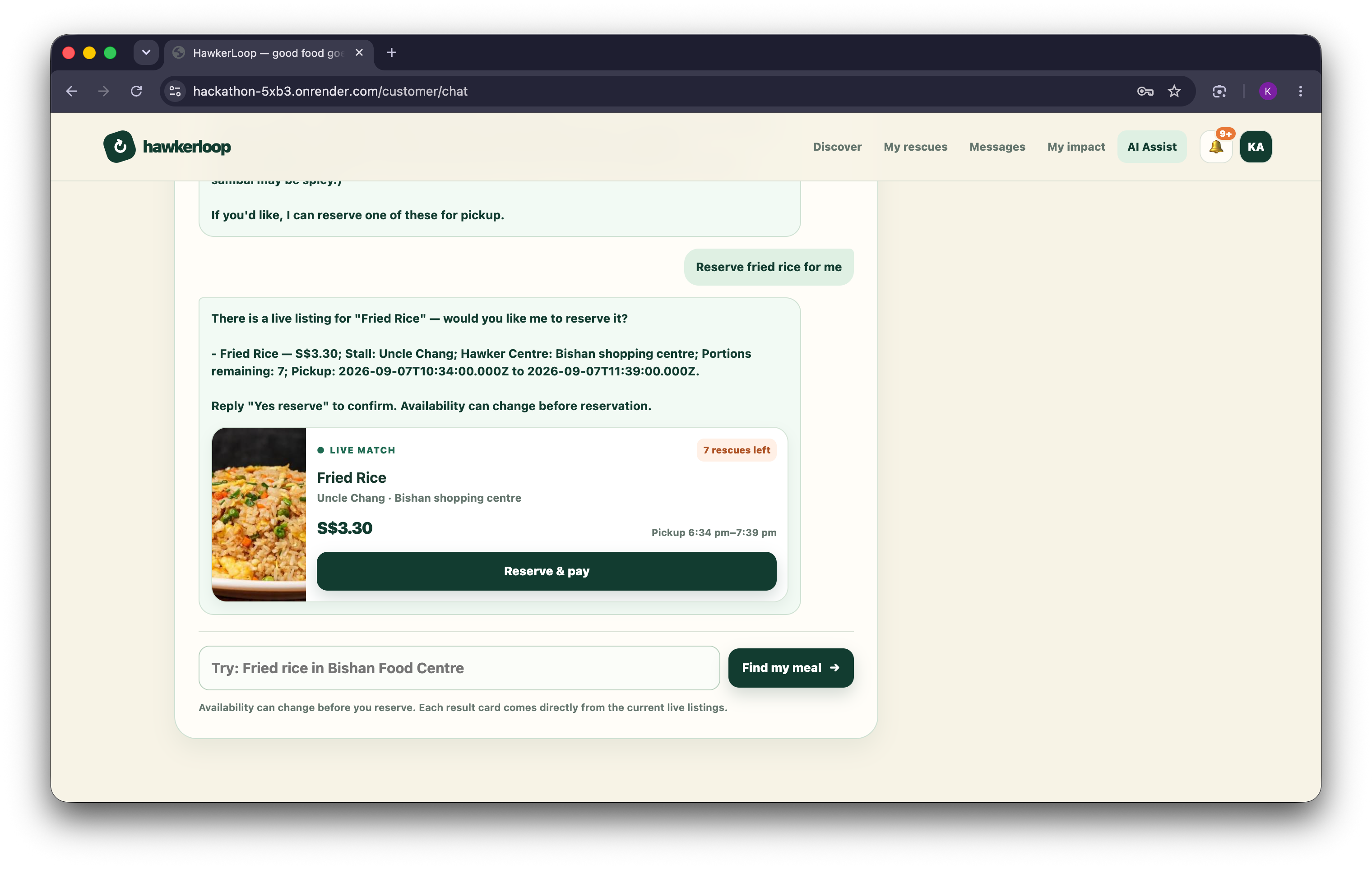
AI Assist matches customer requests to live rescue listings.
-
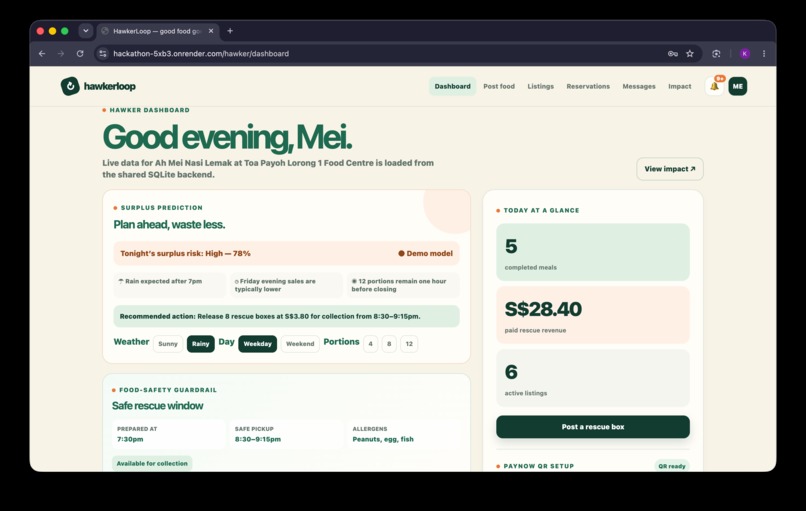
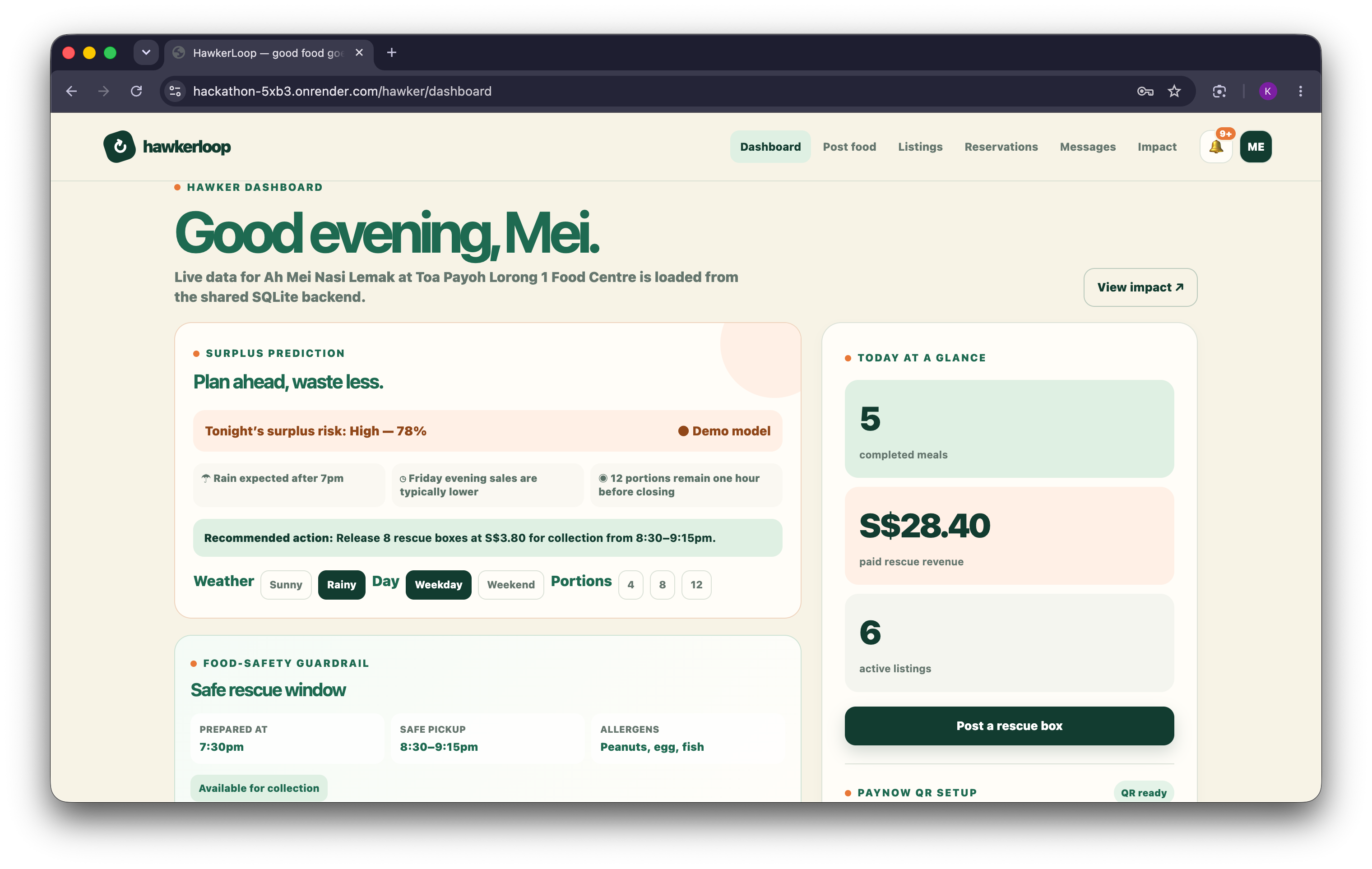
Surplus prediction and collection queue for hawker operations.
-
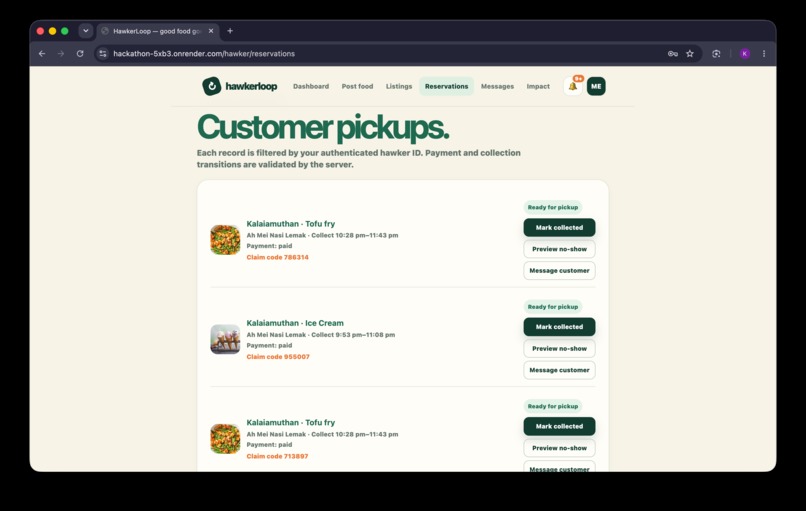
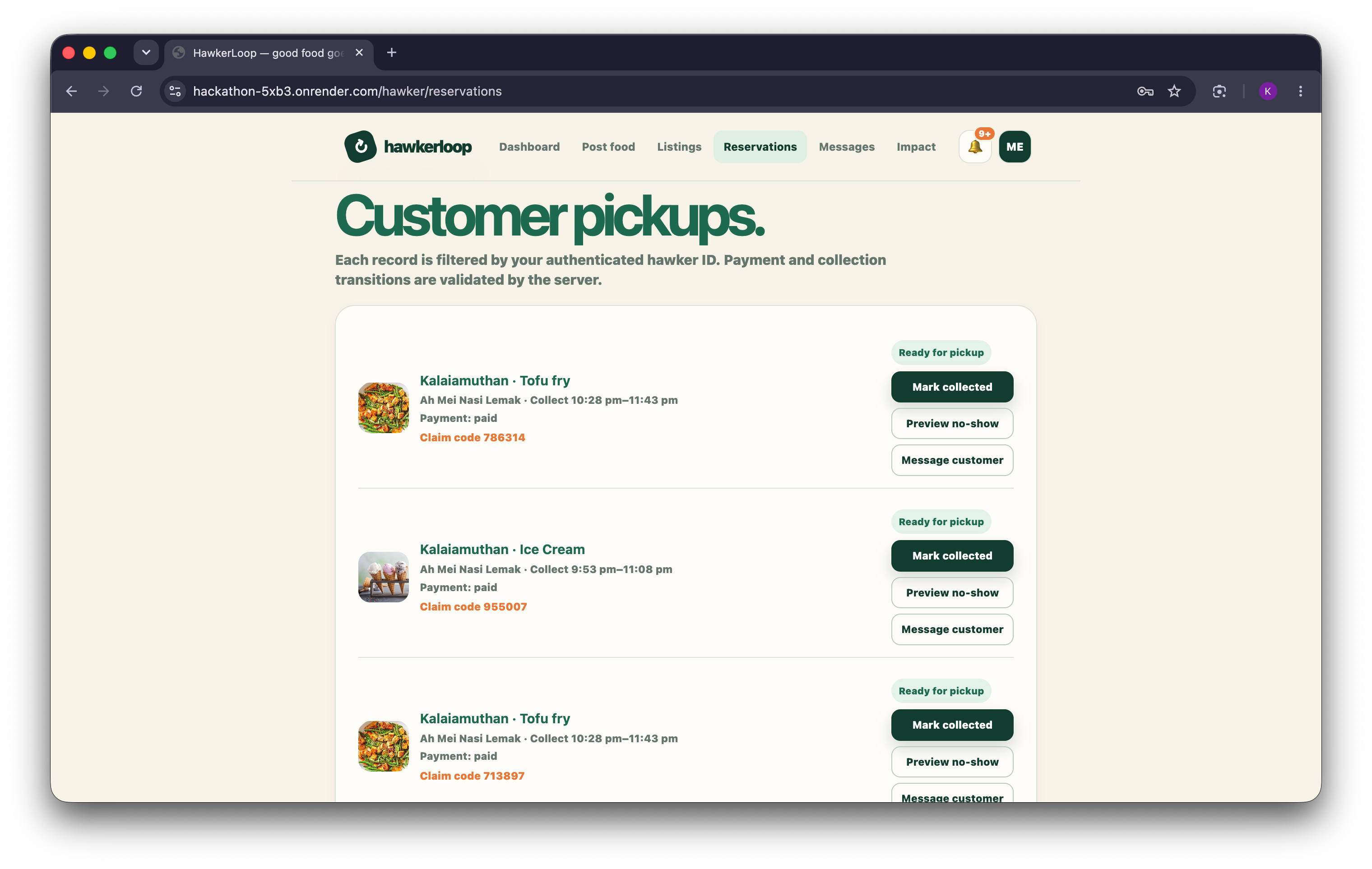
Hawker payment and collection queue with customer claim codes.
-
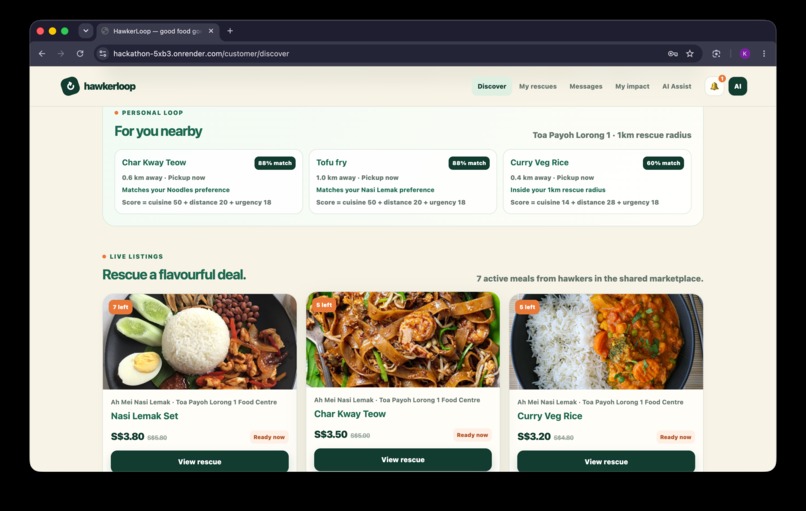
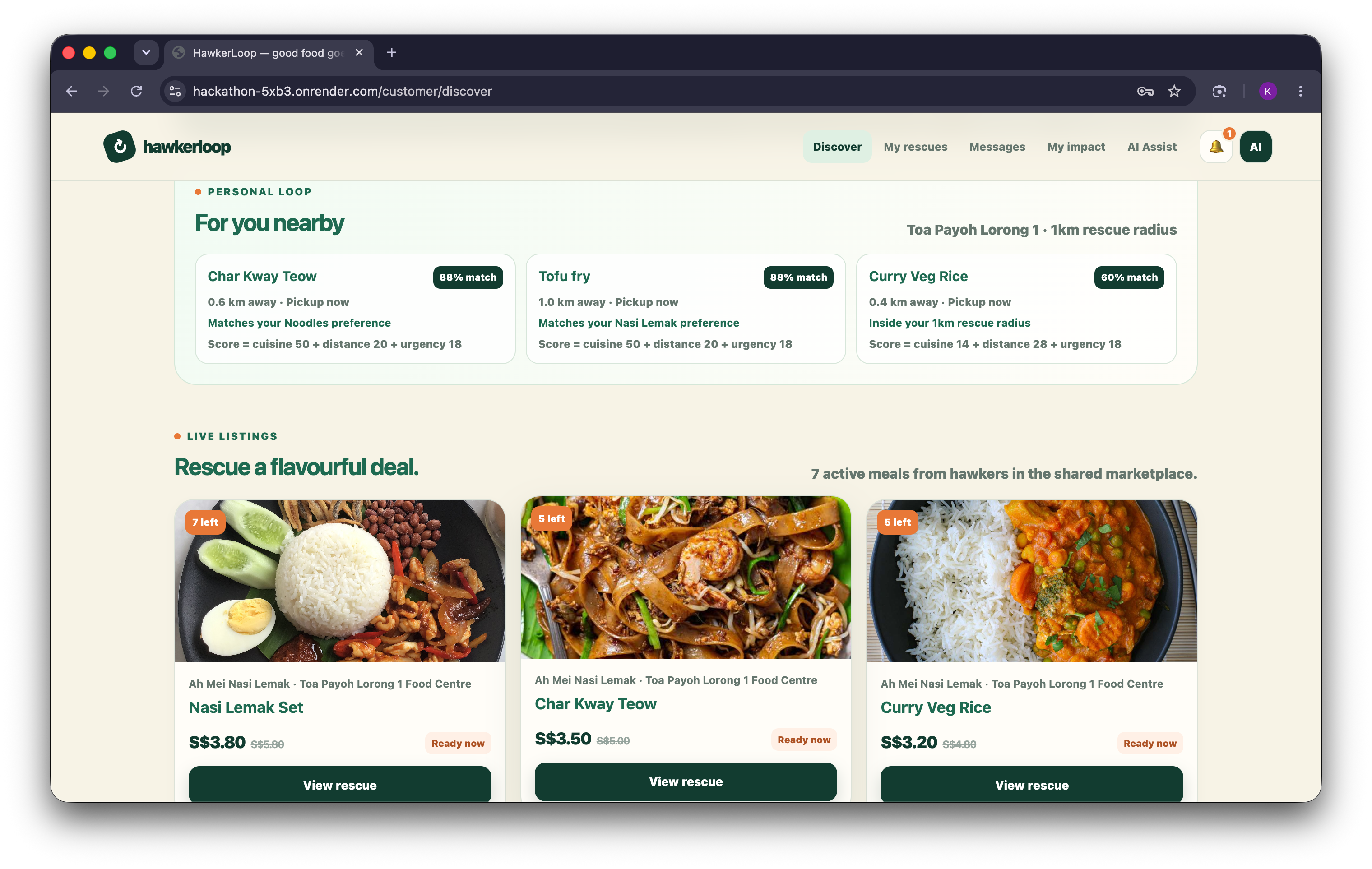
Customers browse nearby rescue meals by price, distance and urgency.
-
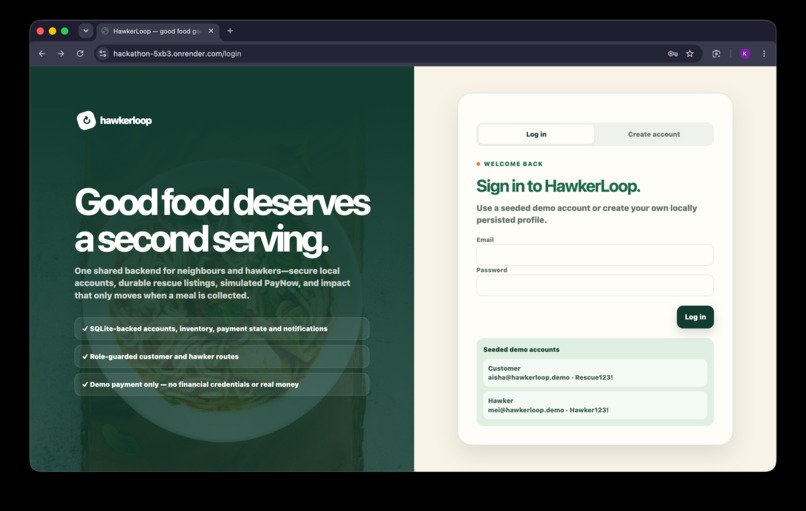
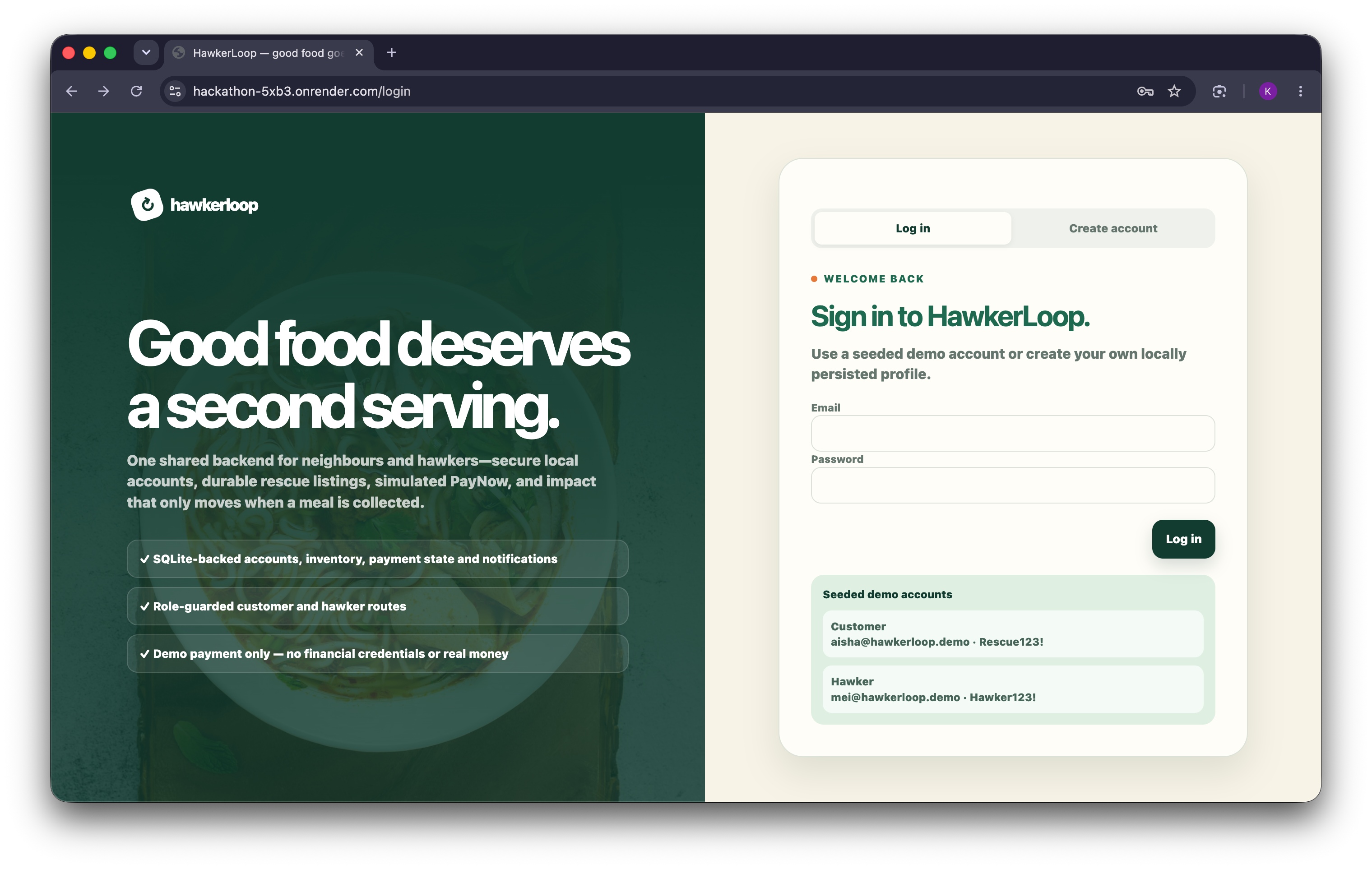
Role-based sign-in for customers and hawkers.
-
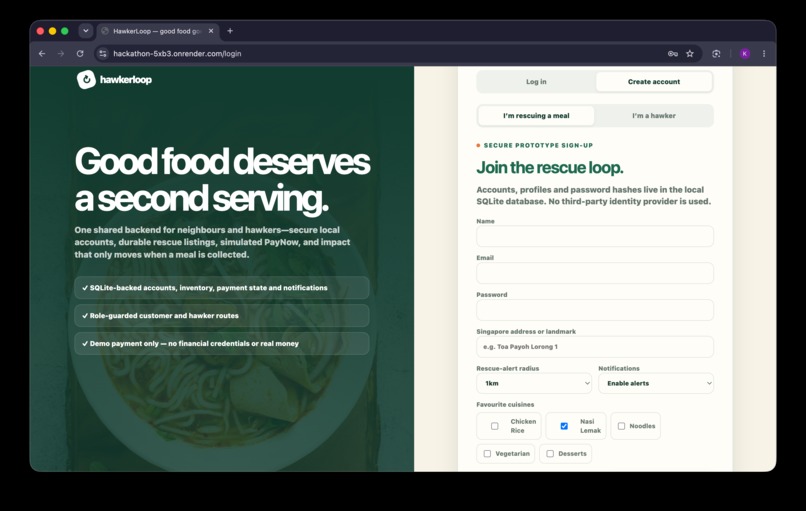
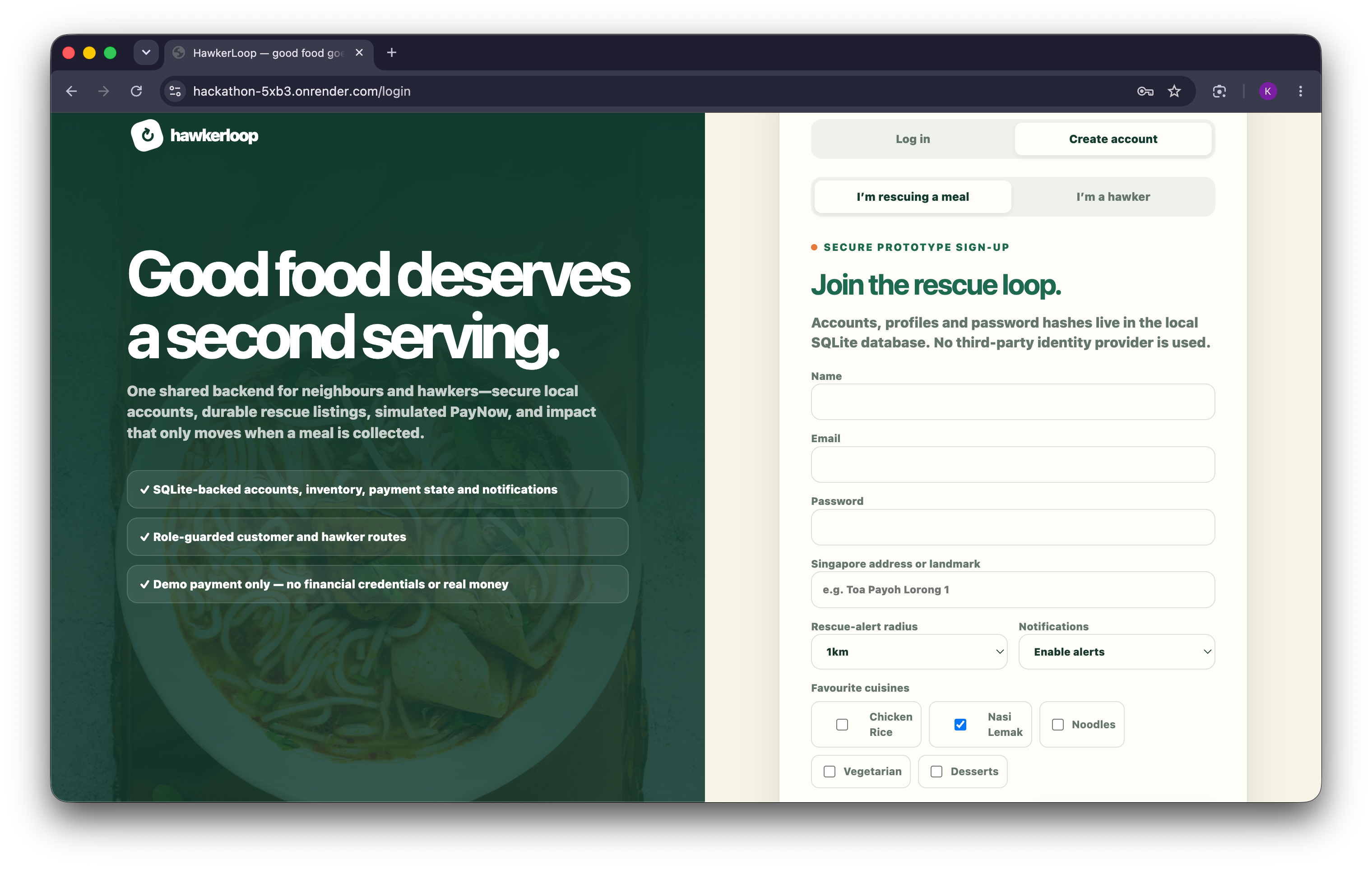
Customer signing up with cuisine preferences and nearby-location matching.
-
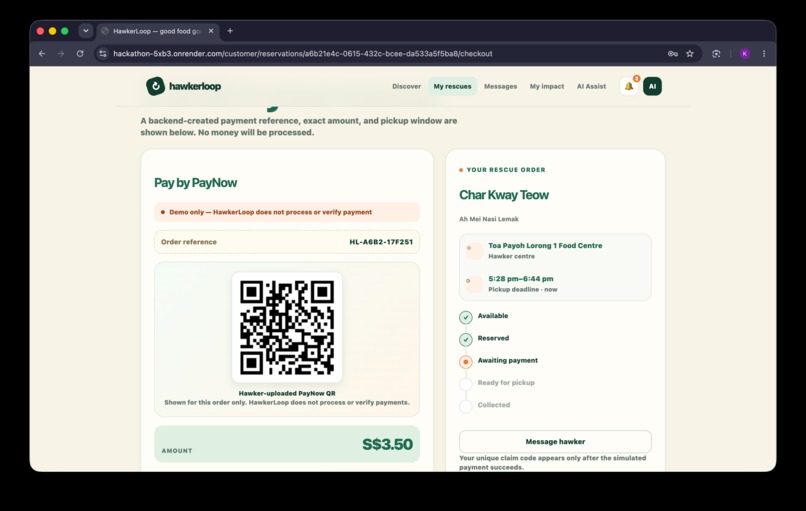
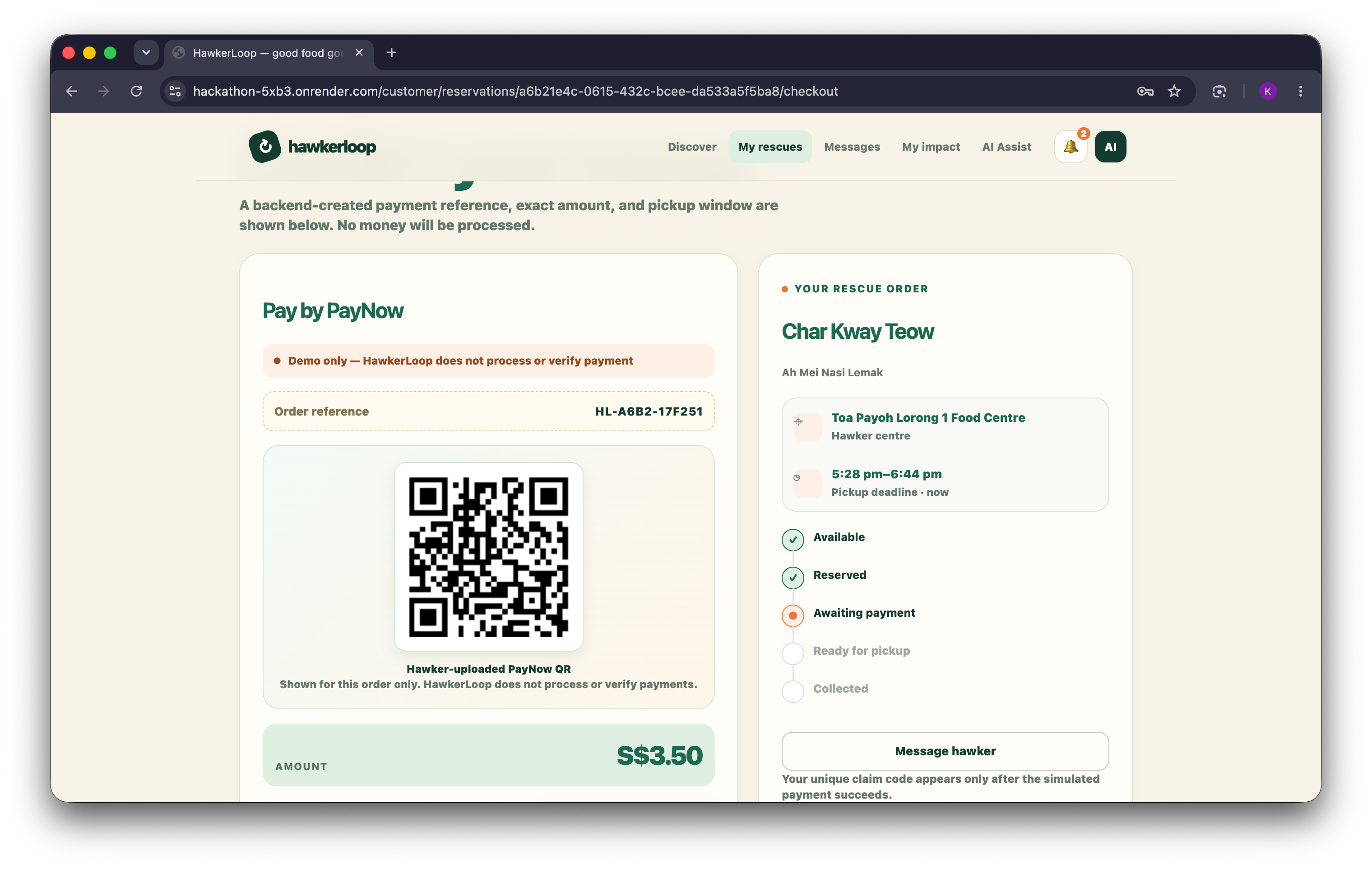
Seller PayNow QR checkout — simulated for this prototype.
Prior work disclosure
HawkerLoop Rescue is an original project created by our team. This submission presents our existing working prototype, its food-rescue workflow, AI Assist, surplus prediction, safety features, and future implementation plan.
Inspiration
Singapore’s hawker centres are part of everyday life, but many hawkers still have to throw away safe, unsold food near closing time.
Hotels and large food businesses often have systems to manage surplus food. Independent hawkers usually do not. They are busy, may not be confident with technology, and need a process that is fast, clear, and safe.
We built HawkerLoop to help hawkers turn suitable end-of-day surplus into affordable meals for nearby customers instead of waste.
What it does
HawkerLoop is a Singapore-focused food-rescue platform connecting hawkers with nearby customers.
A hawker can create a surplus-food listing with the meal name, quantity, price, pickup time, allergen information, and safe collection deadline. Customers can discover nearby rescue meals, use AI Assist to search for food such as “fried rice in Bishan”, reserve a meal, view the hawker’s PayNow QR code, and collect the order using a six-digit claim code.
The platform also includes:
- Customer and hawker accounts
- Nearby meal recommendations based on cuisine preferences and location
- AI Assist that matches customer requests with live HawkerLoop listings
- Surplus-risk prediction using weather, day type, and portions remaining
- Food-safety reminders, allergen notes, and pickup deadlines
- Buyer-hawker messaging
- Reservation, payment confirmation, collection, and no-show workflows
- A live impact dashboard that updates only after a meal is collected
PayNow is clearly marked as simulated in the prototype. No real payment is processed by HawkerLoop.
How we built it
We built HawkerLoop as a full-stack web application using HTML, CSS, JavaScript, Node.js, and SQLite.
The platform has separate customer and hawker experiences. The Node.js server handles authentication, listings, reservations, messages, notifications, payment-status updates, and impact records. SQLite stores the data locally, while the deployed prototype runs on Render.
We created a clear order journey:
Available → Reserved → Payment submitted → Payment confirmed → Ready for pickup → Collected
The impact dashboard only records rescued meals after collection is confirmed.
AI Assist uses the OpenAI API to understand natural-language food requests. It is grounded in the platform’s available listings, so it recommends real listings instead of inventing meals that do not exist.
Challenges we ran into
One major challenge was making the app feel realistic while keeping it safe as a prototype.
We had to design clear food-safety controls, including prepared times, collection windows, allergen notes, automatic expiry, and no-show handling. We also had to make sure impact is not counted when a customer only reserves a meal. It is counted only after the hawker confirms collection.
Another challenge was designing for hawkers who may not have time to use complicated technology. We focused on short forms, simple buttons, clear status labels, and a workflow that can be understood quickly.
We also learned how to deploy the app, manage environment variables, use a database in production, and connect an AI feature safely through a server-side API.
Accomplishments that we're proud of
We are proud that HawkerLoop is more than a mock-up. It is a deployed, working prototype with real user flows.
We built:
- A customer journey from discovery to reservation and collection
- A hawker dashboard for managing surplus food and reservations
- A simulated seller PayNow QR workflow
- Direct buyer-hawker messaging
- Notifications and order-status tracking
- AI-powered food discovery grounded in live listings
- Transparent surplus prediction and food-safety guardrails
- Verified impact tracking after collection
Most importantly, we designed HawkerLoop around a local Singapore problem and the needs of hawkers who may otherwise be left out of digital food-rescue systems.
What we learned
We learned that technology alone does not solve food waste. The solution must also be simple, trusted, safe, and practical for the people using it.
We learned to think about the complete journey: creating a listing, matching customers, payments, no-shows, collection, safety, and measuring real impact.
We also learned that AI should be useful and transparent. Our prediction feature explains why a risk score is high or low, and AI Assist only recommends listings that are actually available.
What's next for HawkerLoop
Our next step is to run a small, supervised pilot with a few hawkers or a school canteen.
We want to validate whether hawkers can create listings quickly, whether customers reliably collect meals, and how much food waste can be prevented in practice.
Future improvements include:
- A voice-to-listing AI copilot for hawkers
- Multi-language support
- Verified hawker profiles
- Improved prediction using real pilot data
- Better admin tools and data backups
- Partnerships with schools, community groups, and hawker-centre organisations
Our goal is simple: help safe food reach people, support hawkers, and make every rescued plate count.

Log in or sign up for Devpost to join the conversation.