
Inspiration
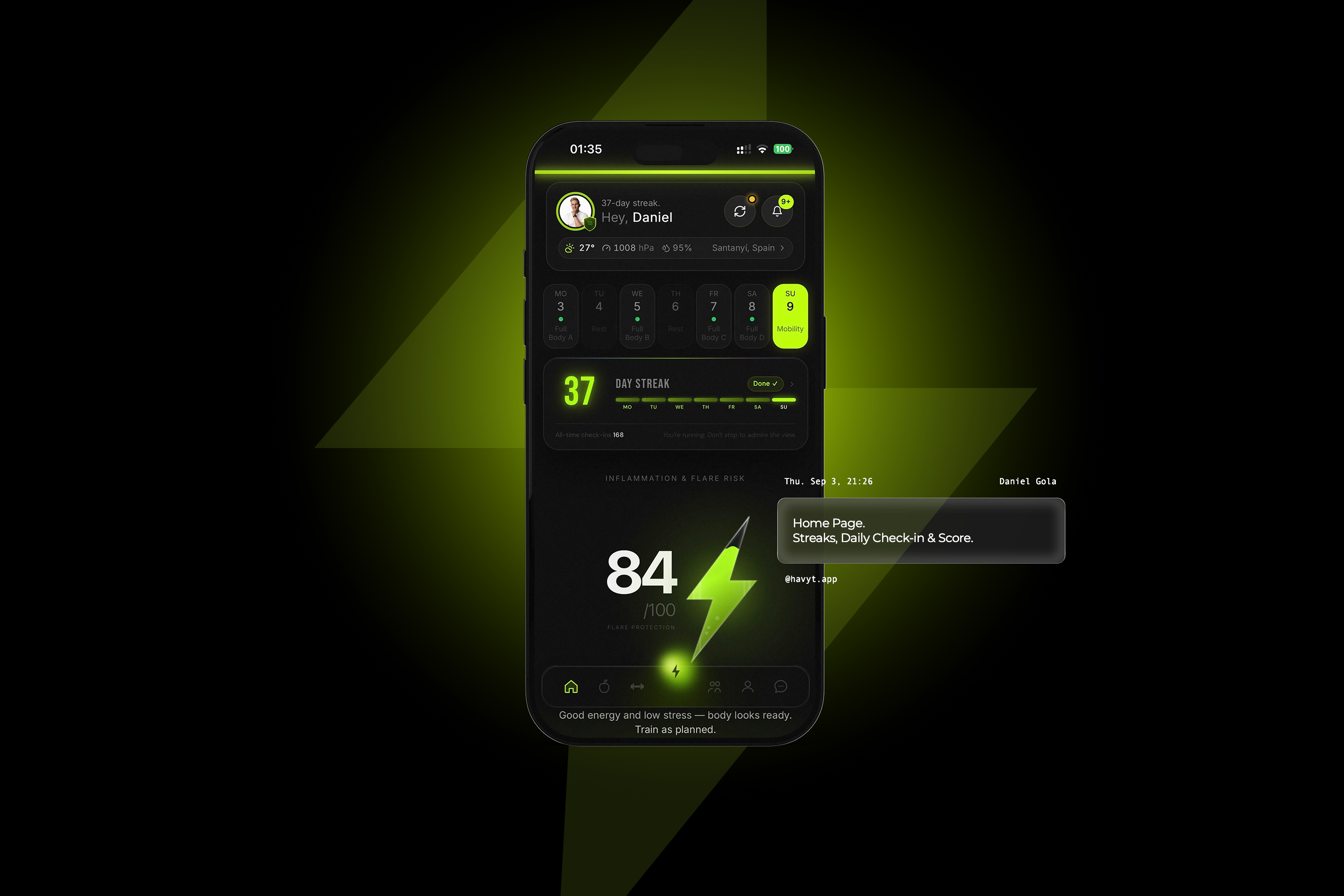
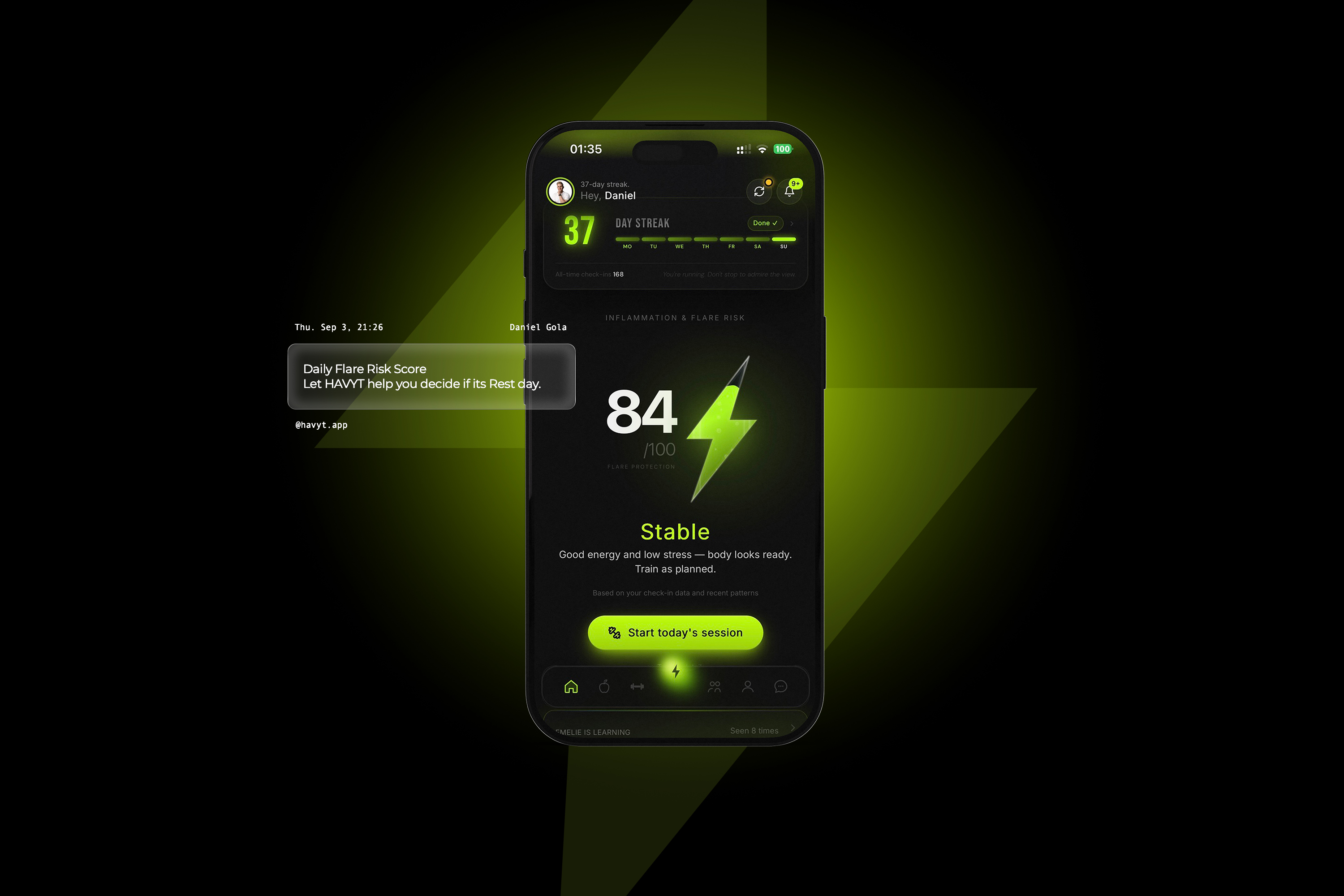
People often track health and fitness data in separate places: workouts in one app, sleep somewhere else, symptoms in notes, recovery on a wearable, and habits somewhere else again.
The problem is not necessarily a lack of data. It is understanding how those signals relate to each other.
HAVYT already existed before this hackathon as a health, fitness and self-tracking platform designed around real-life variability rather than perfect routines.
For the MunichTech EXPO Hackathon, we focused on a new layer on top of that foundation: HAVYT Intelligence.
The goal is to make HAVYT's AI assistant, Emelie, much more context-aware while reducing the amount of irrelevant health data that needs to be loaded for every interaction.
What it does
HAVYT Intelligence gives Emelie structured access to relevant HAVYT data such as:
- Daily check-ins
- Pain and stiffness
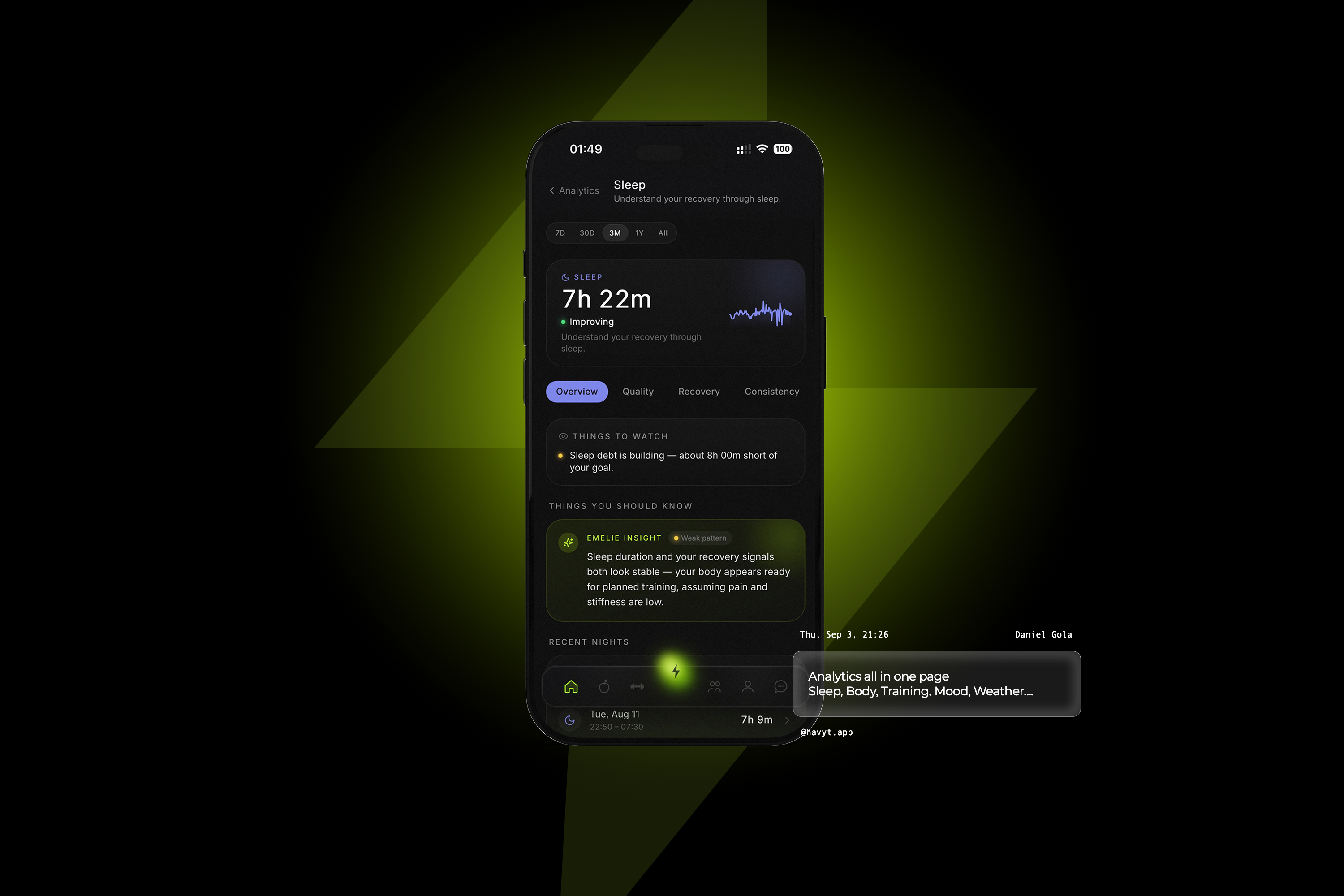
- Sleep and recovery
- Training and activity
- Energy and mood
- Hydration
- Alcohol
- Supplements
- Other tracked habits and health signals
Instead of treating each data point separately, the system can combine context across different areas of a user's life.
This enables questions such as:
"How has my pain changed this week?"
"Did I usually sleep badly before my difficult days?"
"How consistent have I been with my supplements?"
"What did my training look like before my symptoms increased?"
The aim is not to diagnose disease or claim causation.
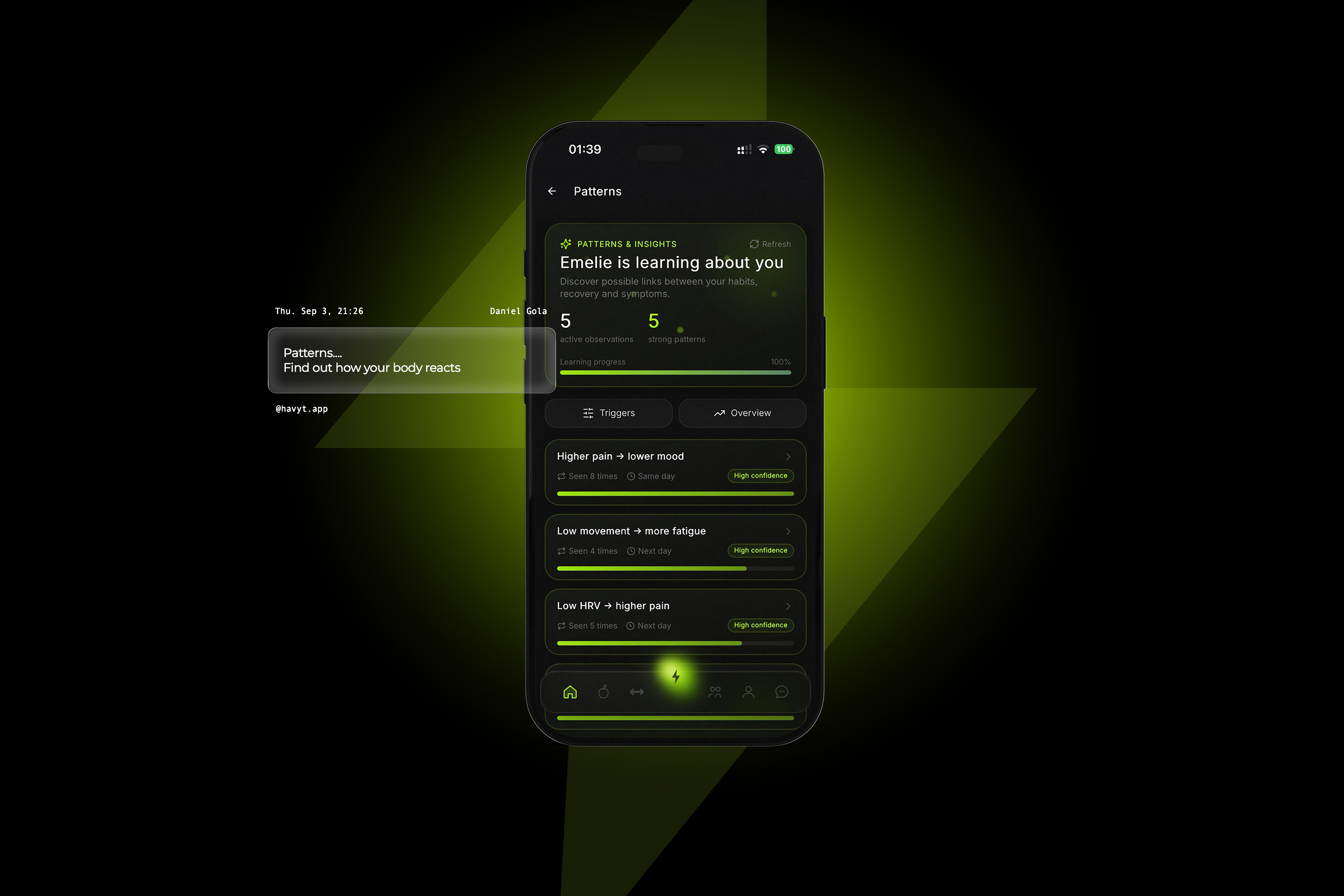
HAVYT presents possible relationships as signals worth investigating, helping users better understand their own patterns and make more informed day-to-day decisions.
How we built it
HAVYT Intelligence is built on top of the existing HAVYT platform.
During the hackathon period, we developed a more structured AI data-access architecture for Emelie using an MCP-based tool layer and dedicated health-data tools.
Instead of automatically loading a large amount of user context into every AI conversation, the new architecture allows the AI system to request the specific information that is relevant to the user's question.
For example, a question about recent sleep does not require loading unrelated training history, nutrition data or every previous check-in.
The architecture combines:
- Structured health and fitness data stored in Supabase
- Server-side Edge Functions
- OpenAI models for conversational reasoning
- A tool-based data-access layer
- Model Context Protocol (MCP) architecture
- Explicit schemas for the information available to the AI
- Permission-aware access to user data
The current implementation is a functional proof of concept integrated into HAVYT's AI architecture, with controlled rollout and testing before broader production use.
Why this matters
Health data is extremely personal.
Giving an AI assistant access to more data can make it more useful, but simply sending everything to an AI model is not a good long-term architecture.
HAVYT Intelligence is exploring a different approach:
Give the AI access to the right context when it needs it, rather than all context all the time.
This can improve relevance while creating a clearer separation between the AI reasoning layer and the underlying personal data.
That becomes increasingly important as health and wellness products become more intelligent and more connected.
Why it matters for Europe
Europe is simultaneously pushing AI adoption and setting a high standard for privacy, user control and responsible data processing.
Digital health sits directly at that intersection.
We believe useful health AI should not require users to surrender unnecessary amounts of personal context every time they ask a question.
HAVYT Intelligence is designed around selective data access, explicit user permissions and a modular architecture that can evolve alongside European privacy and AI requirements.
The larger vision is a European-built personal health intelligence layer that helps people understand their own data without turning a wellness application into a diagnostic system.
Challenges we ran into
One of the hardest problems was deciding how much context an AI assistant actually needs.
Loading everything is technically simple, but it creates unnecessary processing, higher cost and weaker separation between unrelated categories of personal information.
The more difficult solution is building individual tools, defining schemas, deciding what each tool should return and allowing the AI to choose the right information dynamically.
Another challenge is health-related language.
Correlation is not causation, and a wellness app should not present possible patterns as medical conclusions. We therefore designed HAVYT to describe patterns as observations or signals rather than diagnoses.
Accomplishments that we're proud of
We created an architecture where HAVYT's AI can selectively work across multiple categories of personal health and fitness information rather than relying on one giant context payload.
We also connected that architecture to an existing, real product instead of building an isolated hackathon demo.
HAVYT is already publicly available, which means this work can continue beyond the hackathon rather than ending as a prototype.
What we learned
The biggest lesson was that better AI does not always mean giving a model more information.
Often it means giving it better access to information.
Separating data retrieval from reasoning makes the architecture easier to understand, extend and control.
It also creates the foundation for more sophisticated personal pattern analysis in the future.
What's next
Next we want to expand HAVYT Intelligence with:
- More advanced longitudinal pattern detection
- Stronger explanations of why a pattern was surfaced
- User-controlled AI data permissions
- Better correlation analysis across sleep, symptoms, recovery and training
- Additional integrations with health and wearable platforms
- A broader intelligence layer that can support both HAVYT and future third-party integrations
The long-term goal is simple:
Help people understand what affects how they feel.
Built With
- ai
- edgefunctions
- llm
- mcp
- supabase
- typescript
- vercel

Log in or sign up for Devpost to join the conversation.