-
-
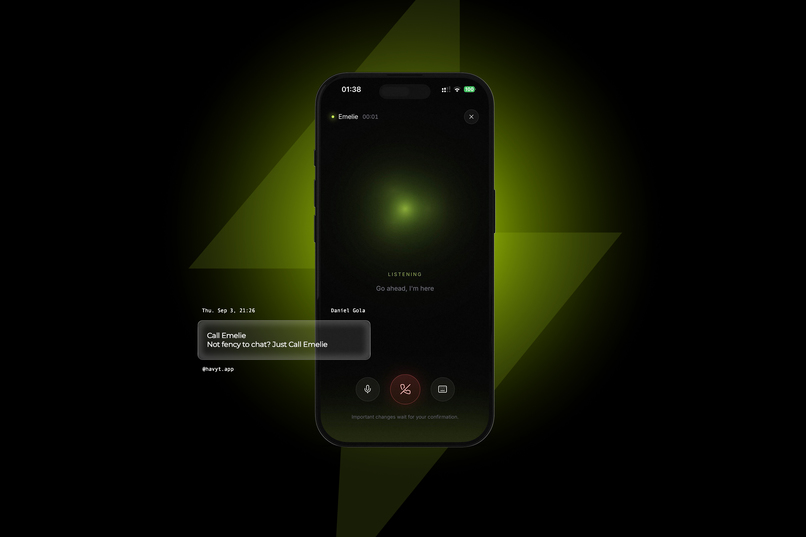
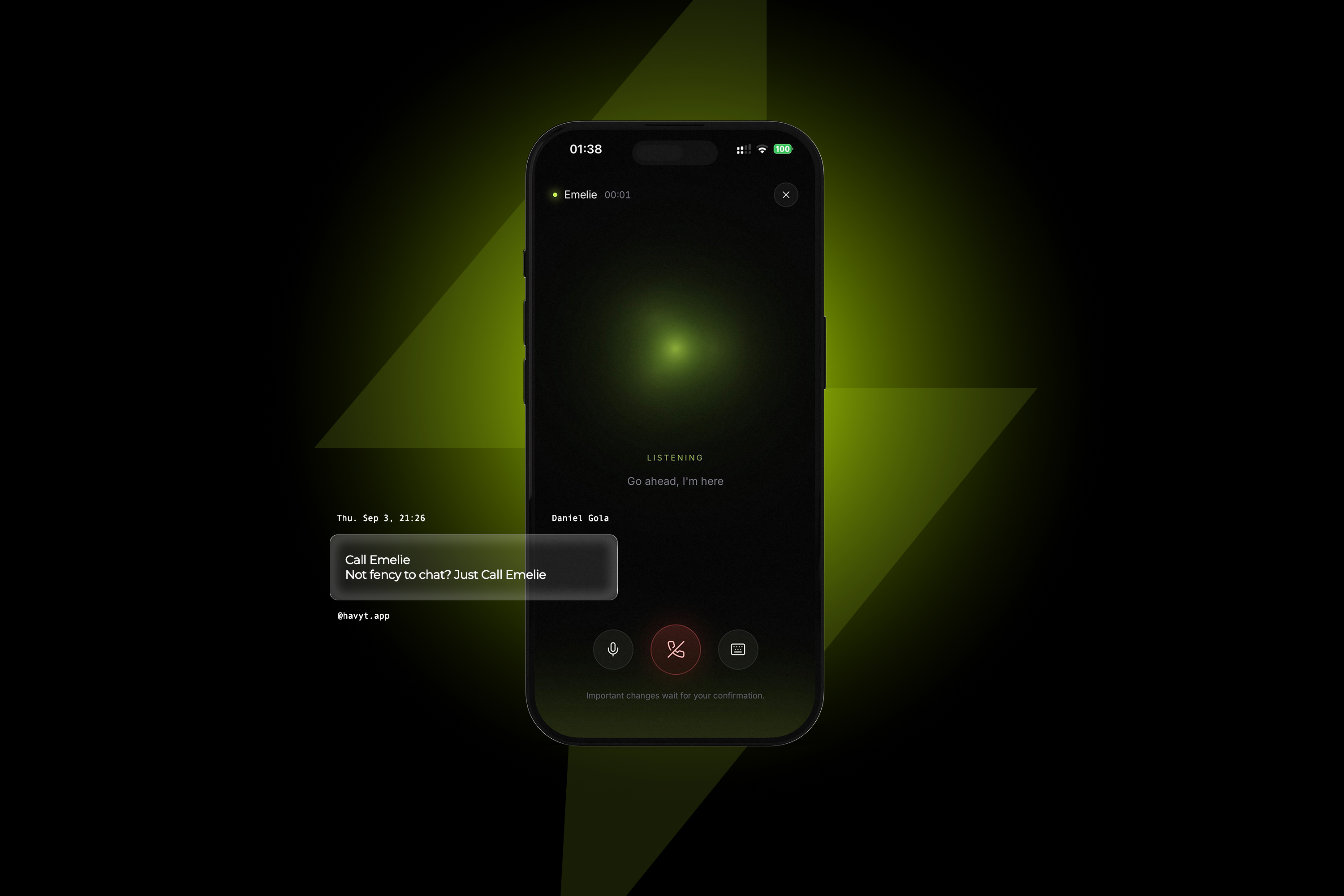
Talk to Emelie for hands-free, context-aware coaching, with important actions always waiting for your confirmation.
-
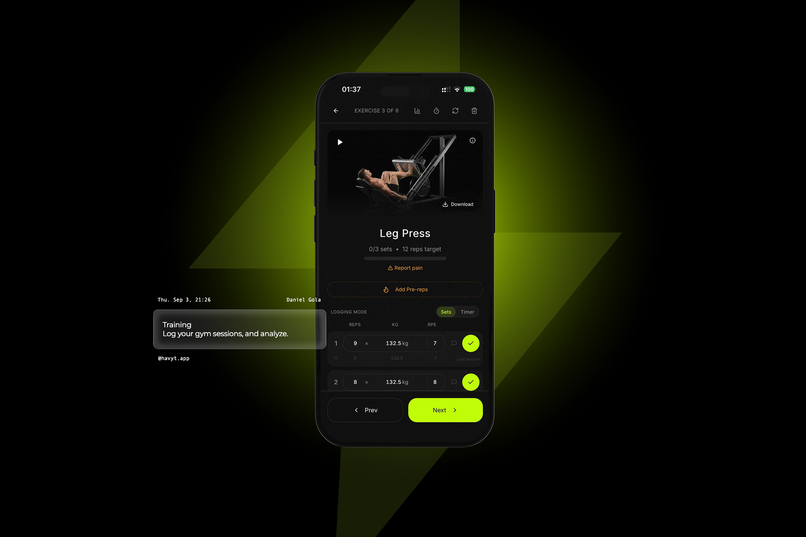
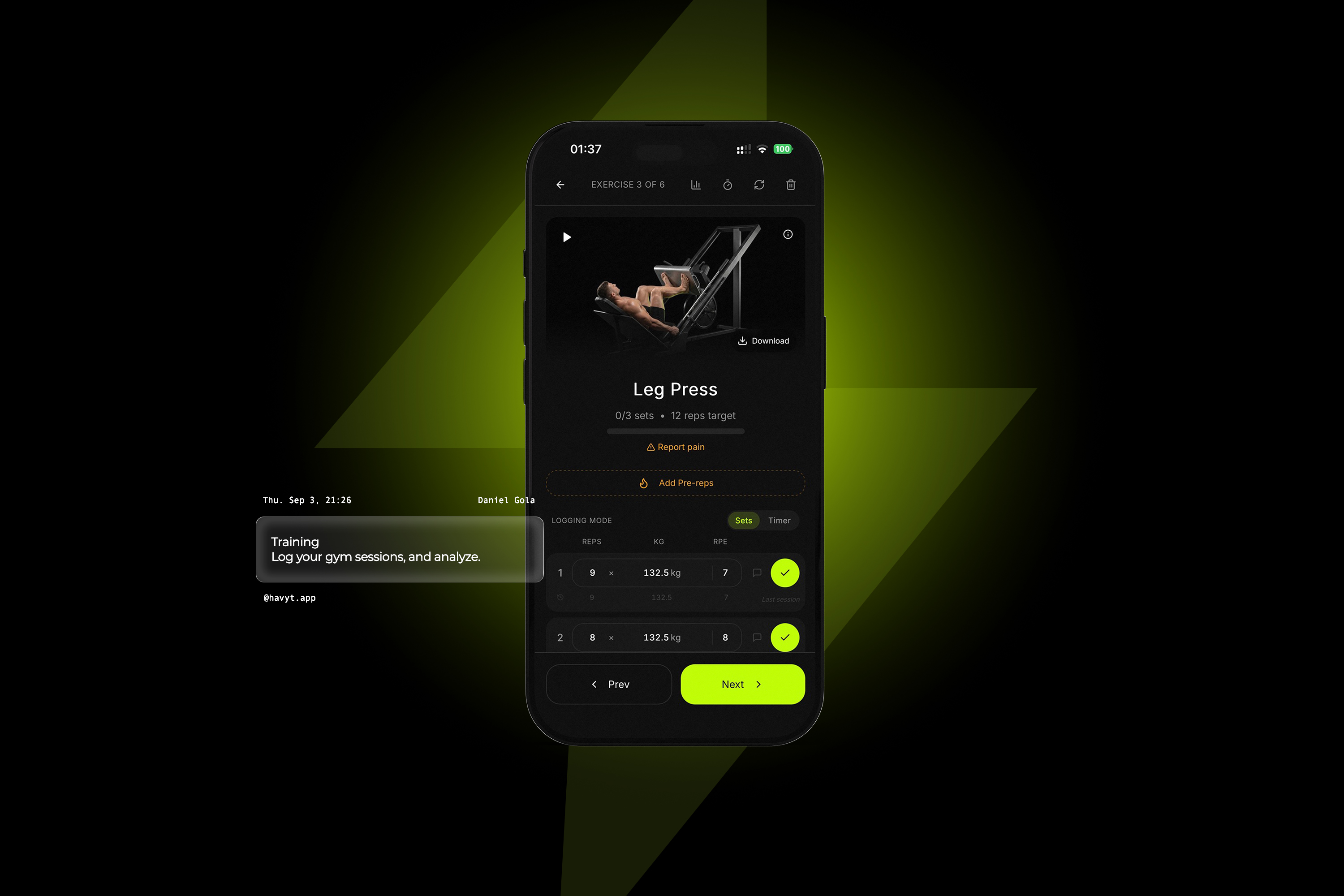
Log sets, repetitions, weight and effort while keeping pain reporting and exercise guidance close at hand.
-
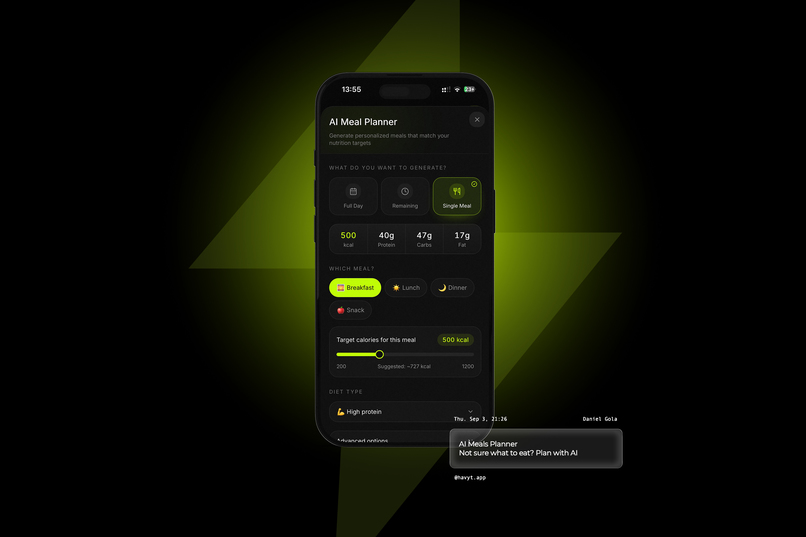
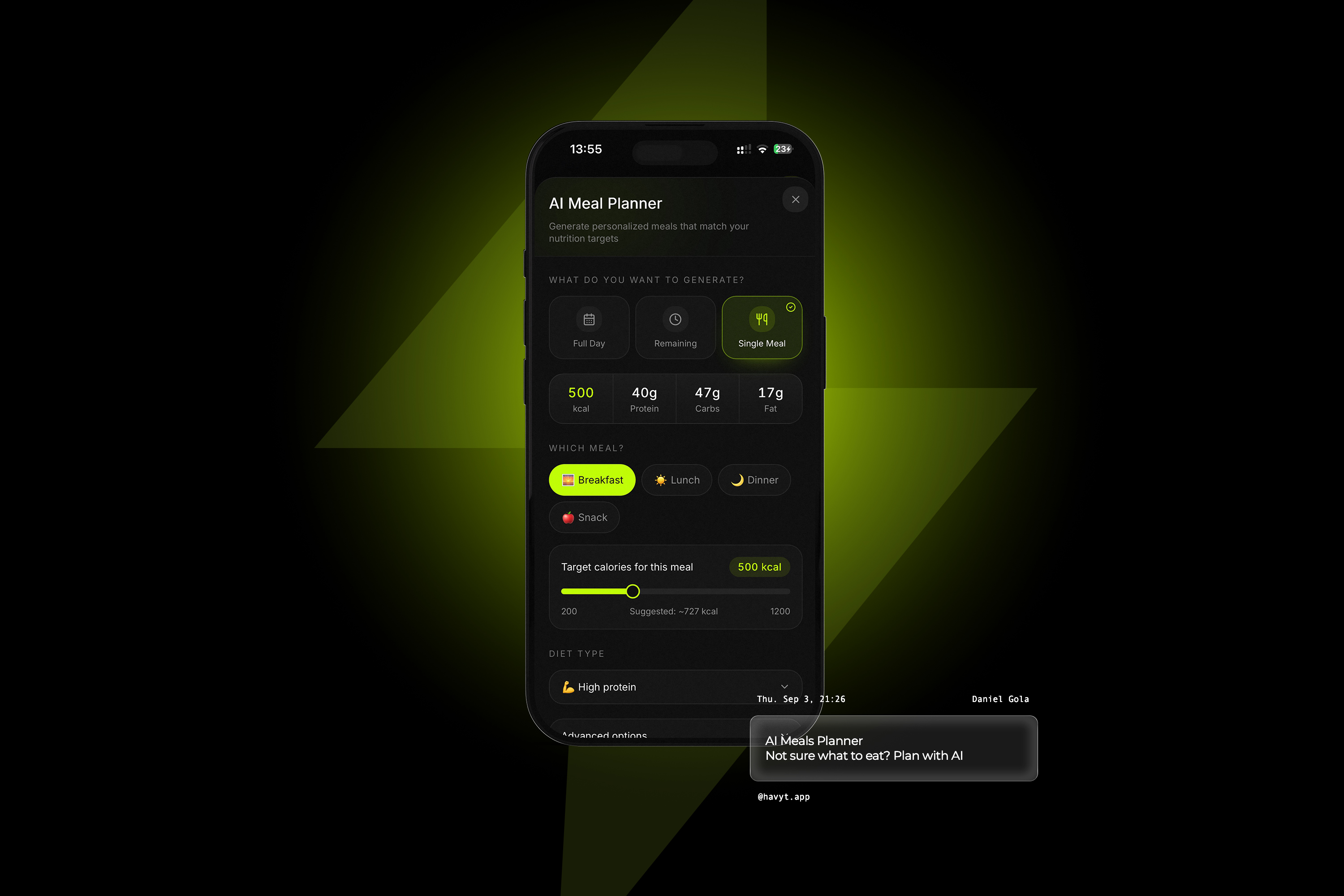
Create personalized meals around your calorie target, macros, dietary preferences and the part of the day still ahead.
-
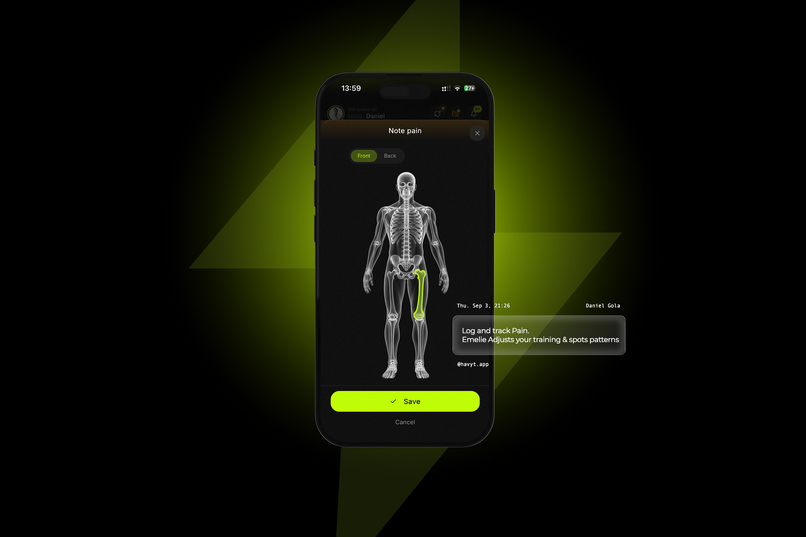
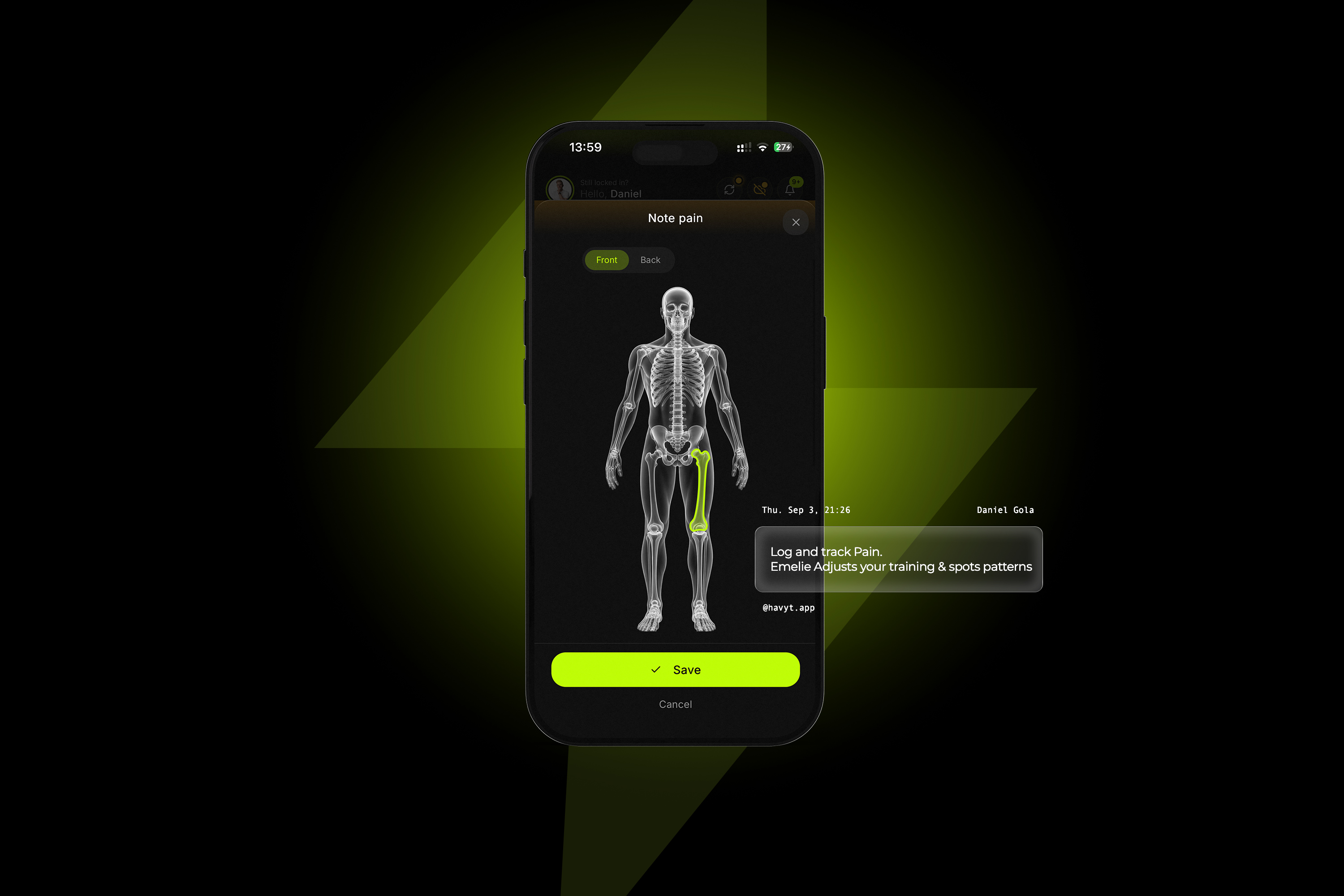
Mark where pain appears and use it as context when HAVYT adapts training and recovery suggestions.
-
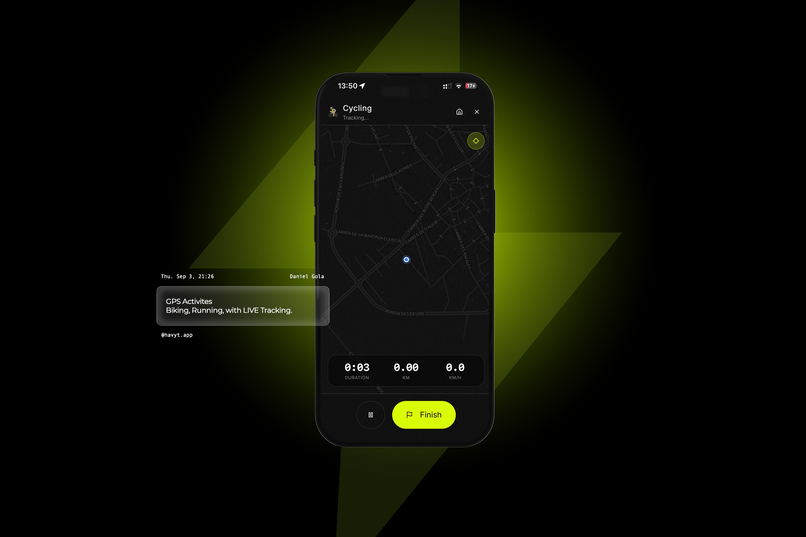
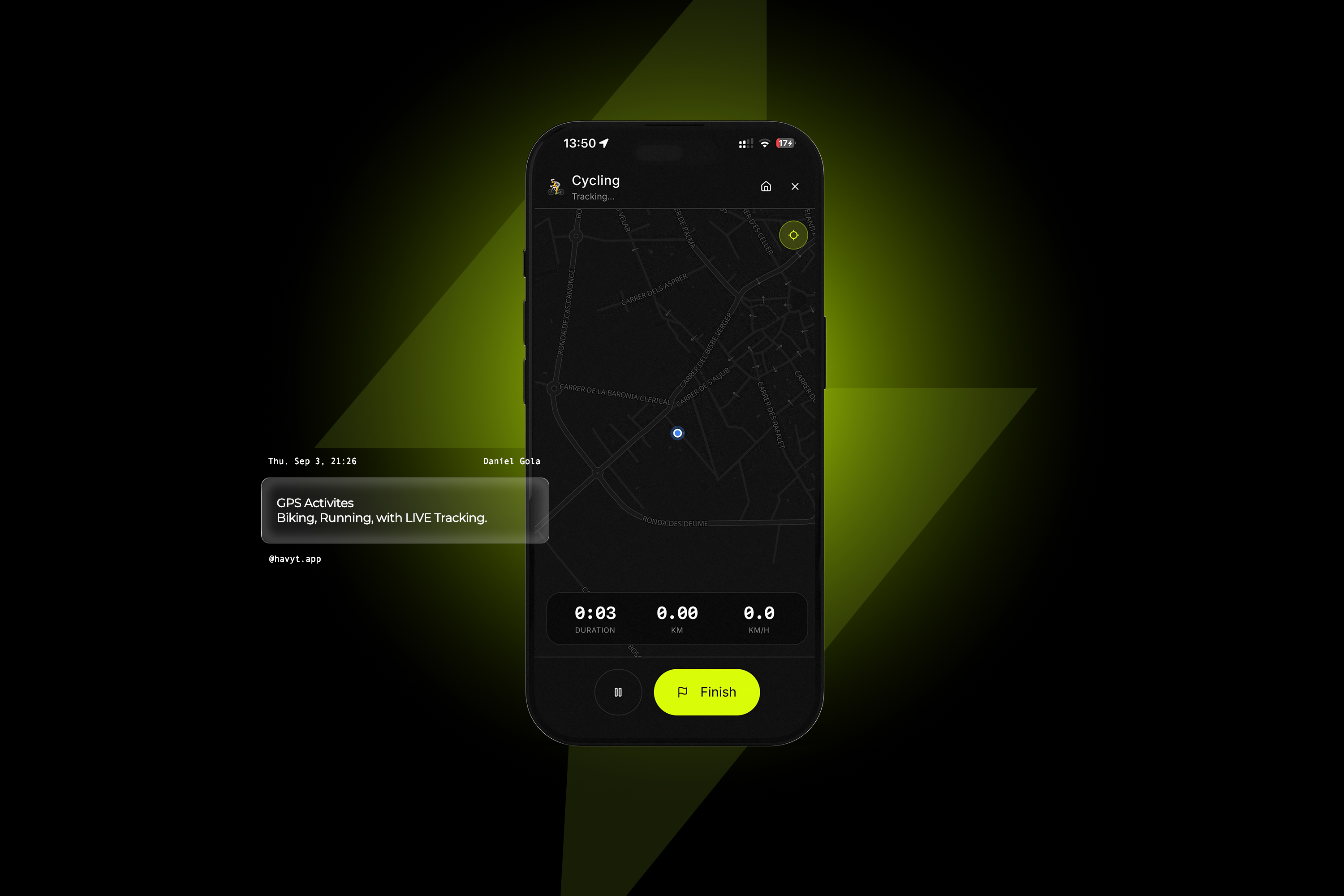
Track cycling, running and other outdoor activities live with GPS, distance, duration and speed.
-
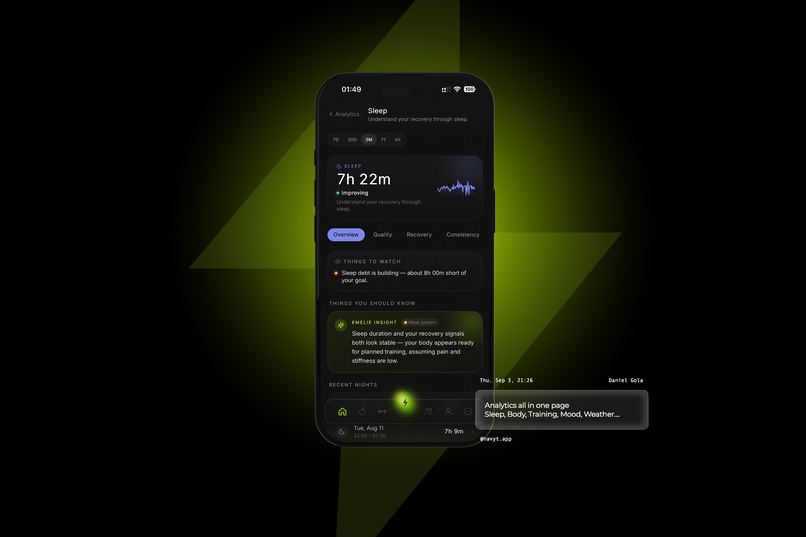
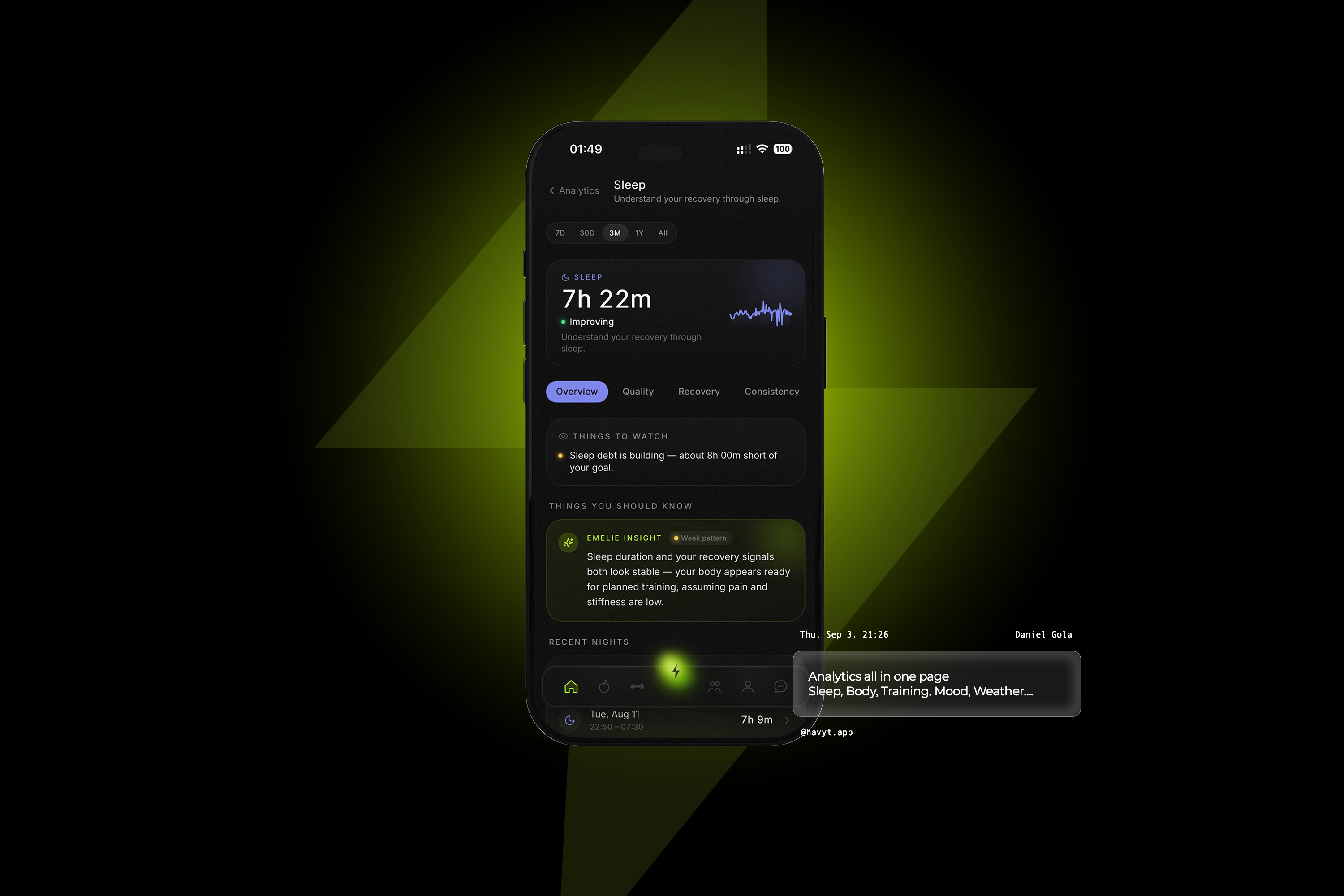
Explore sleep trends, recovery signals and practical insights in one clear analytics view.
-
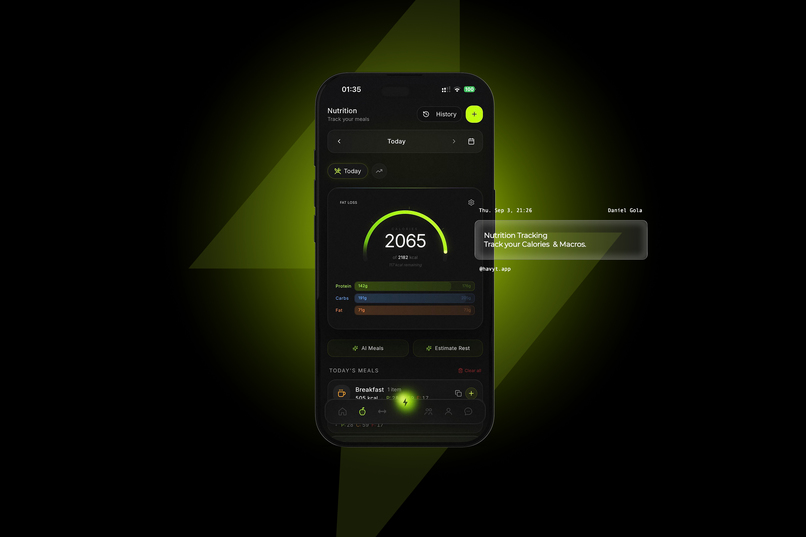
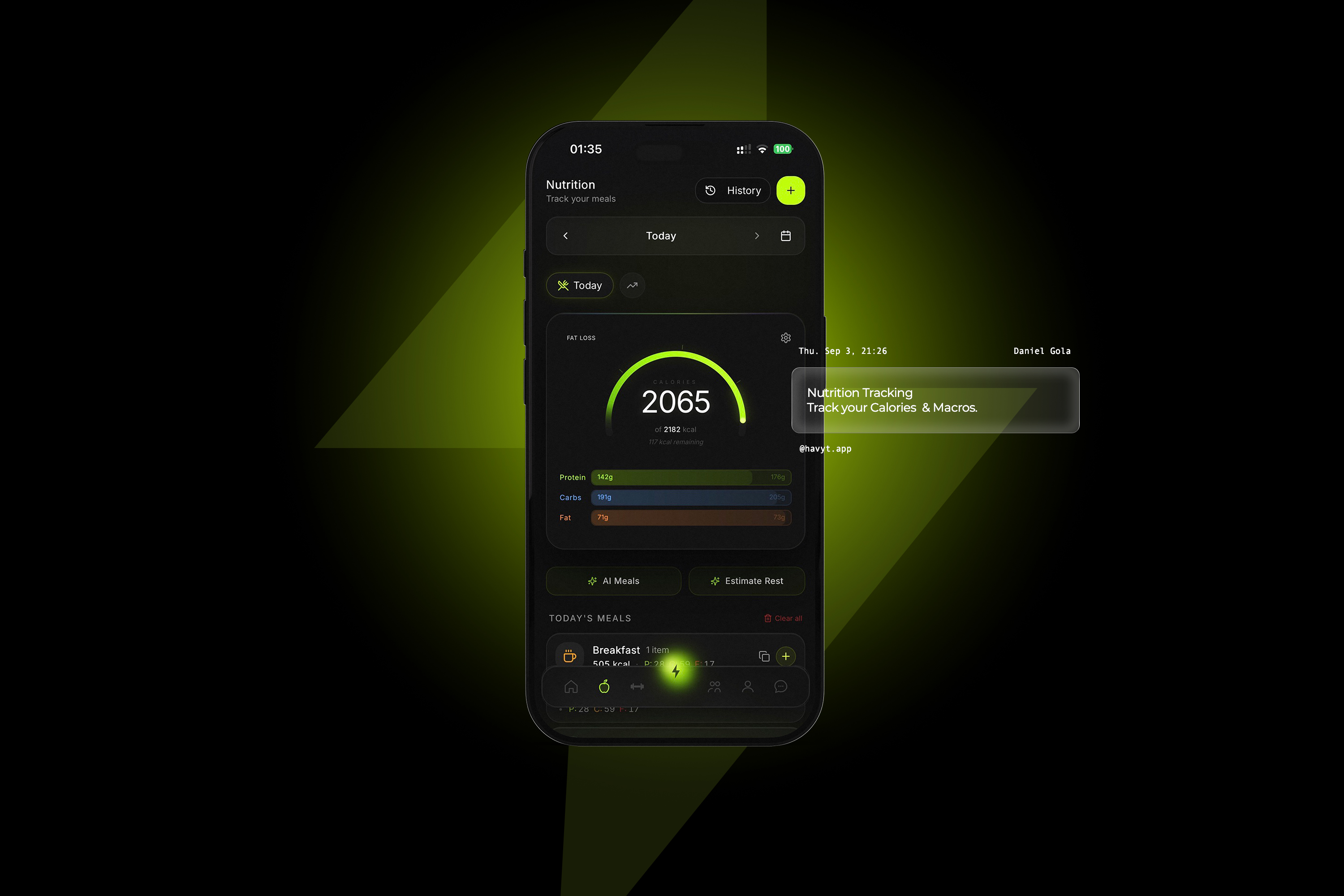
Track calories, protein, carbohydrates and fat while keeping every meal organized in one place.
-
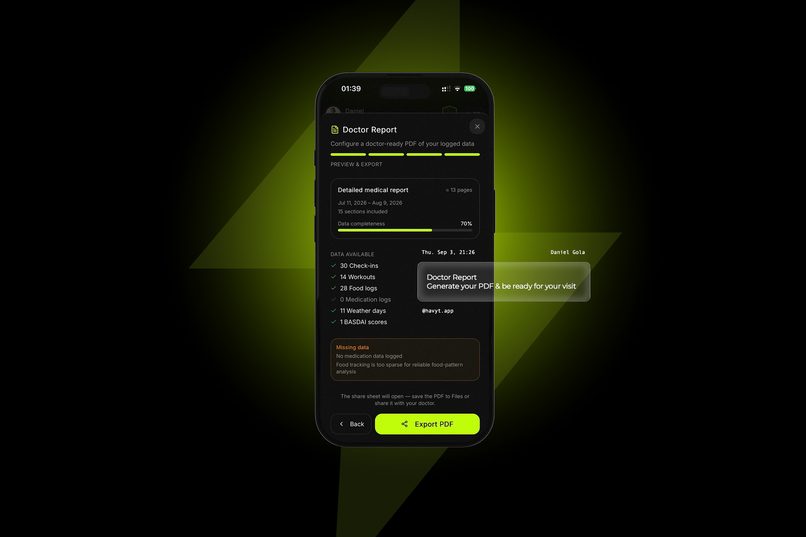
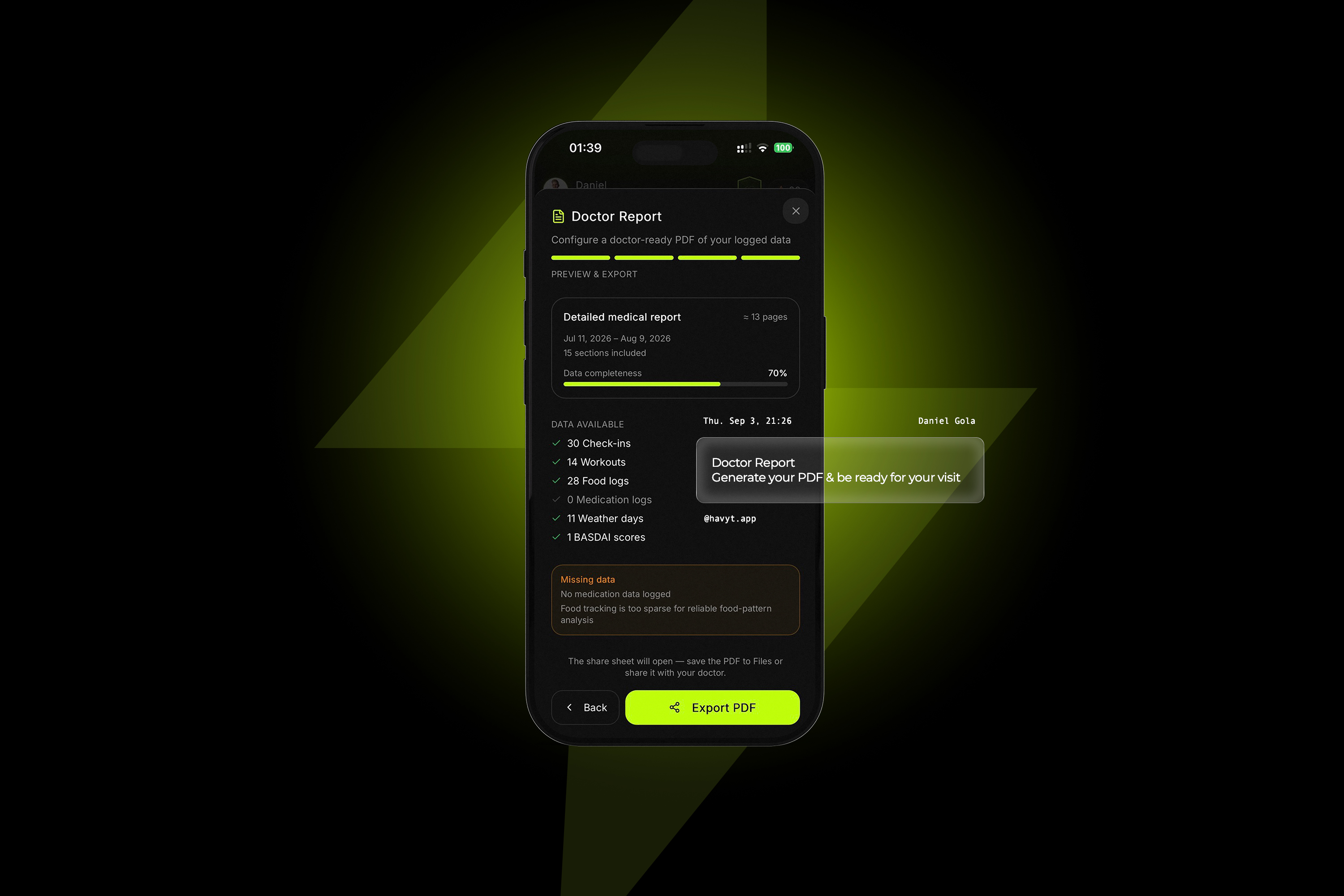
Export check-ins, workouts, symptoms and trends into a structured PDF for clearer conversations with your healthcare professional.
-
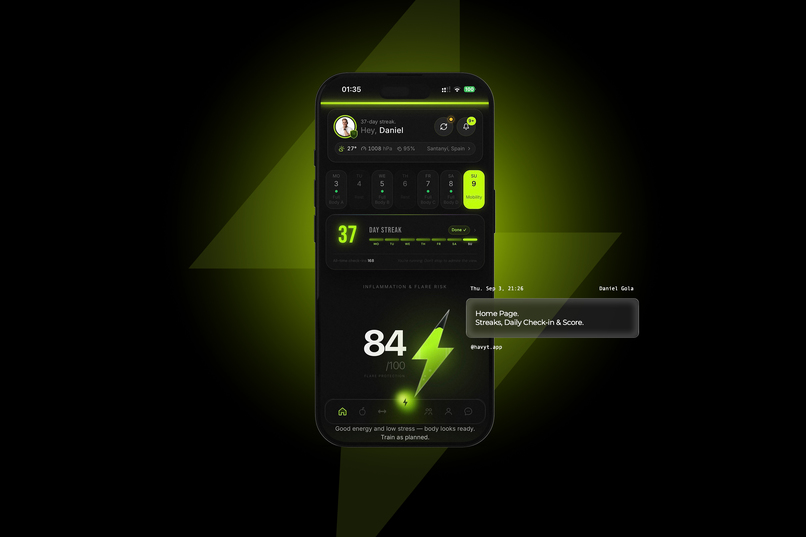
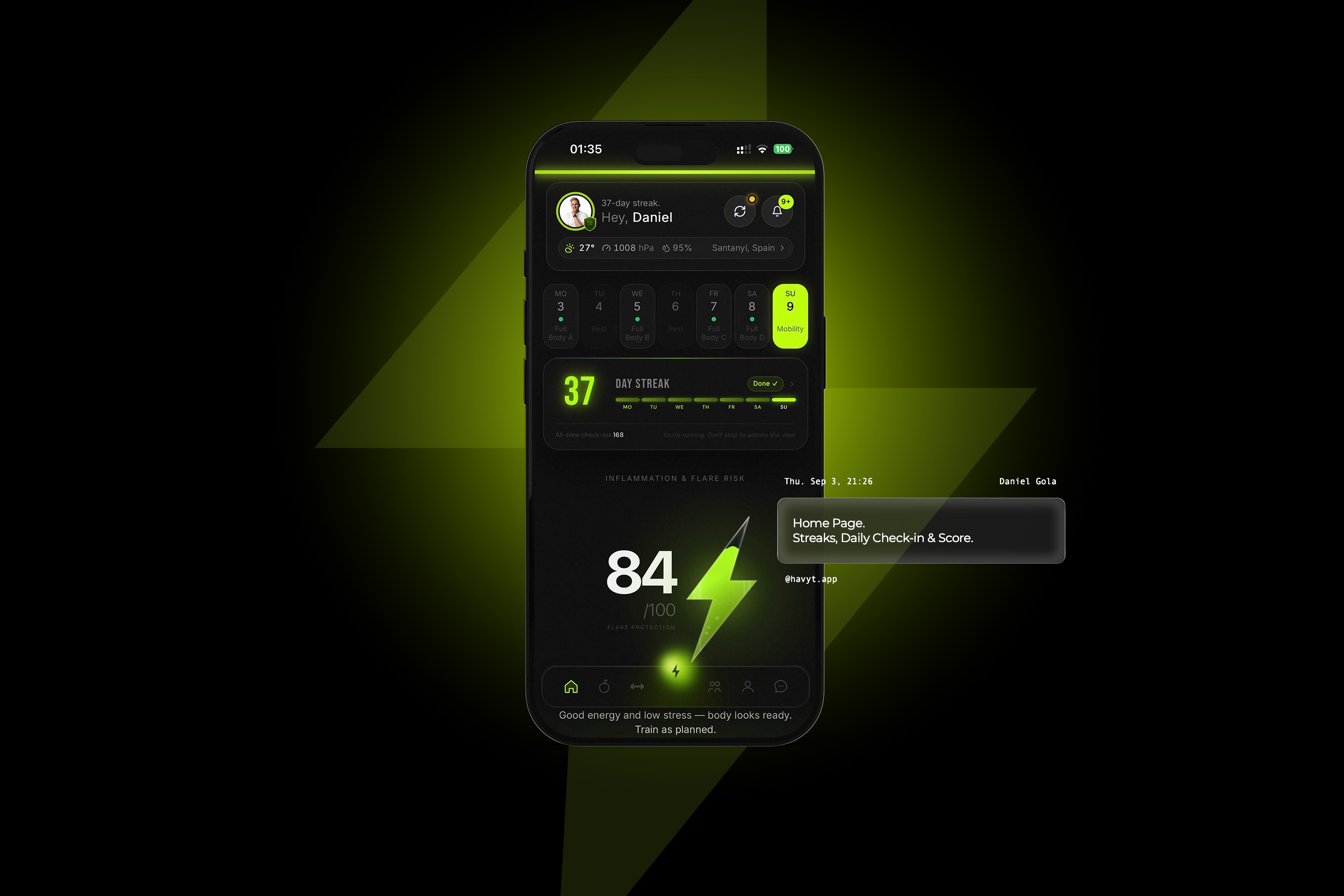
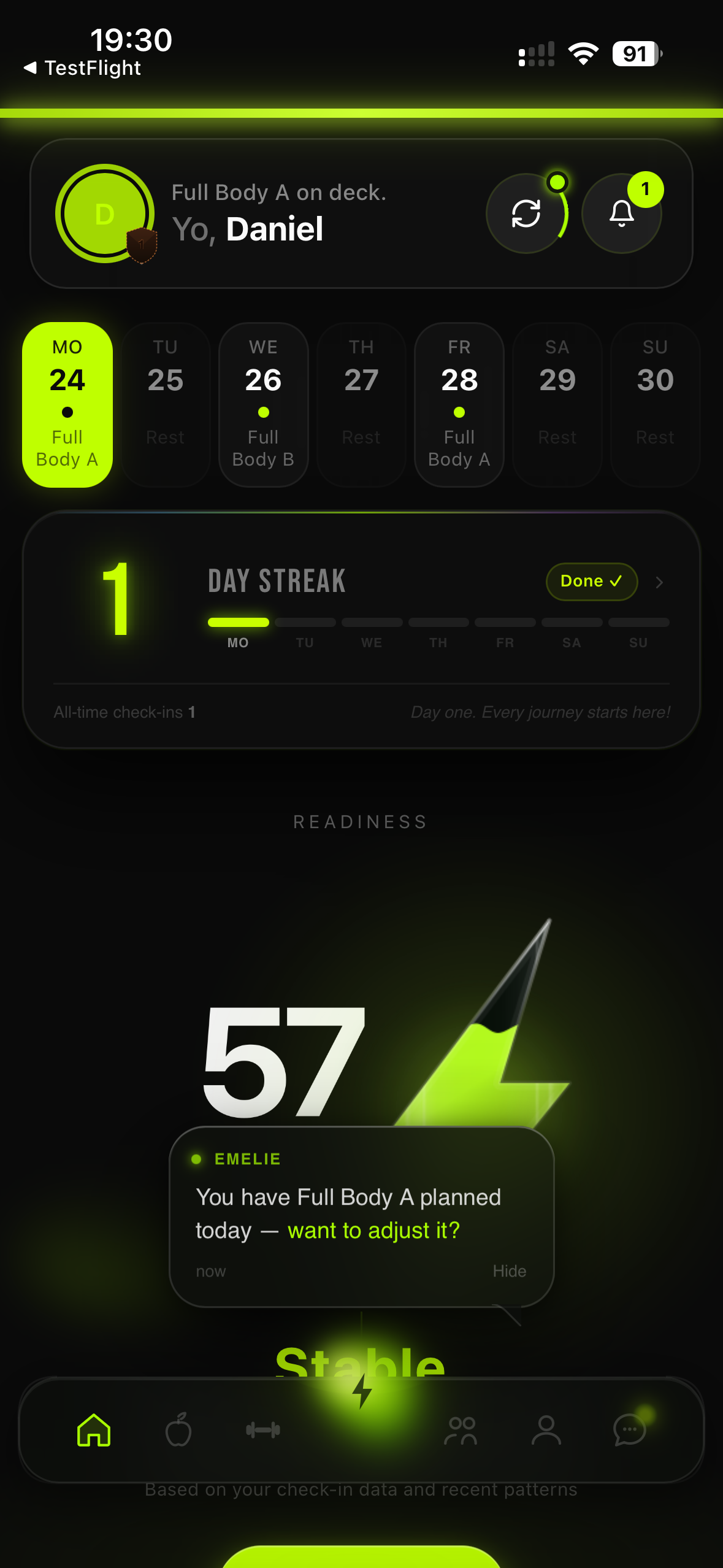
Your schedule, streak, check-in status and daily readiness come together in one calm home screen.
-
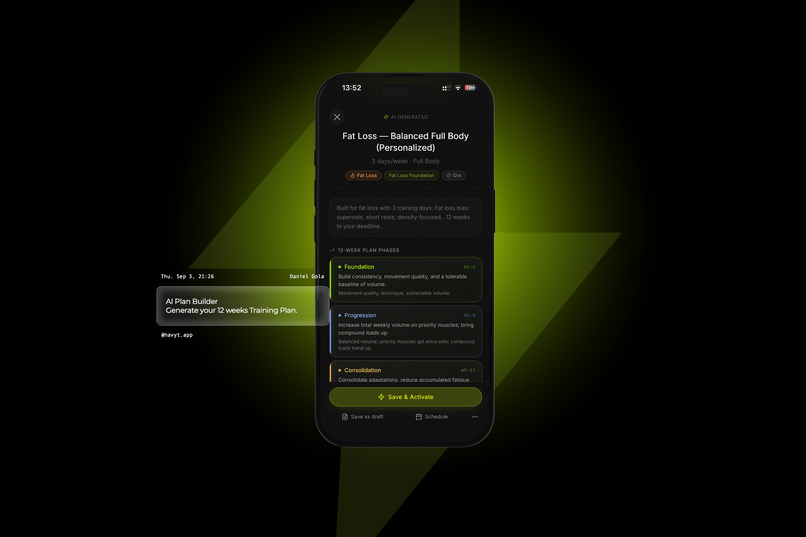
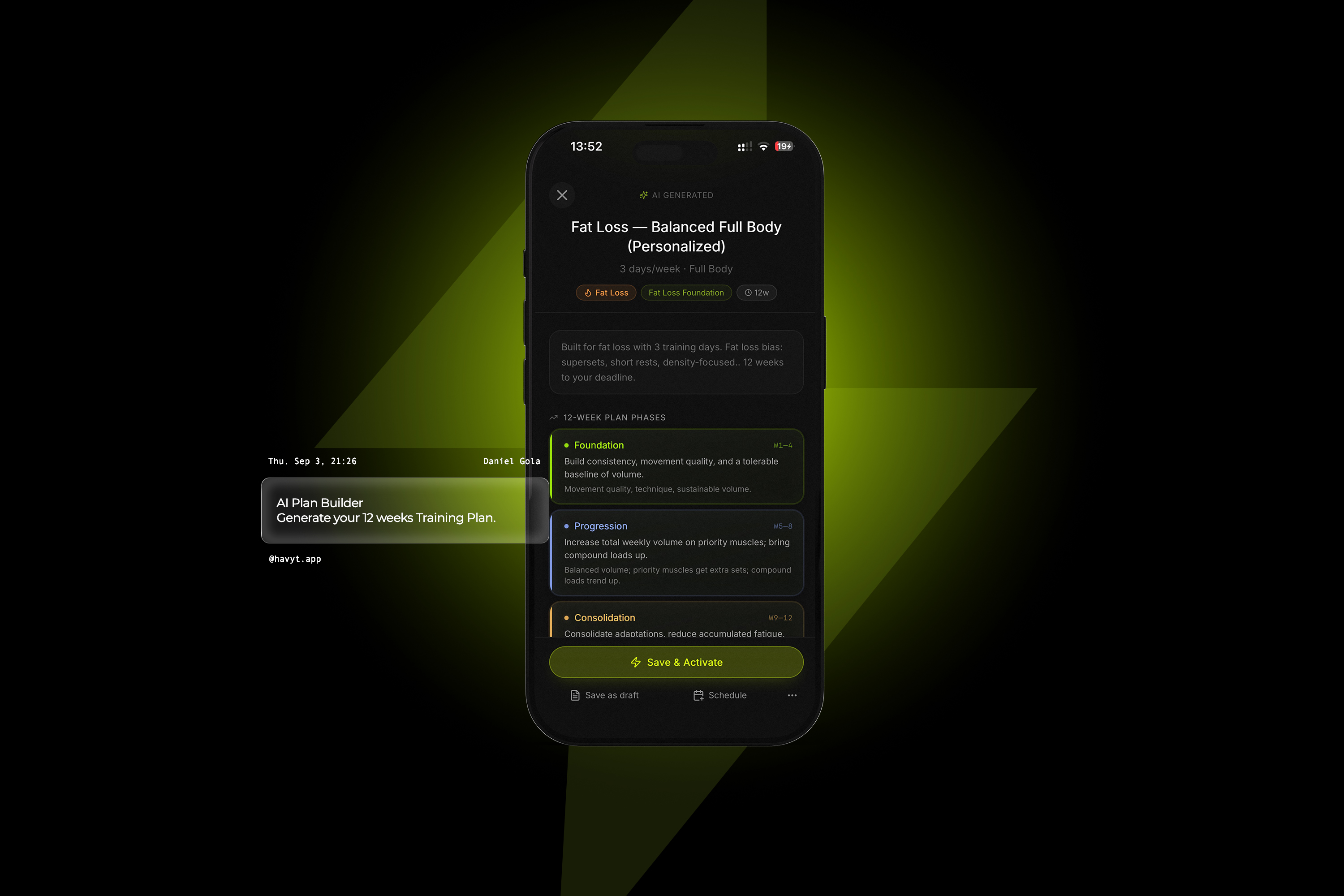
A personalized 12-week training plan with clear phases for building consistency, progressing safely and consolidating results.
-
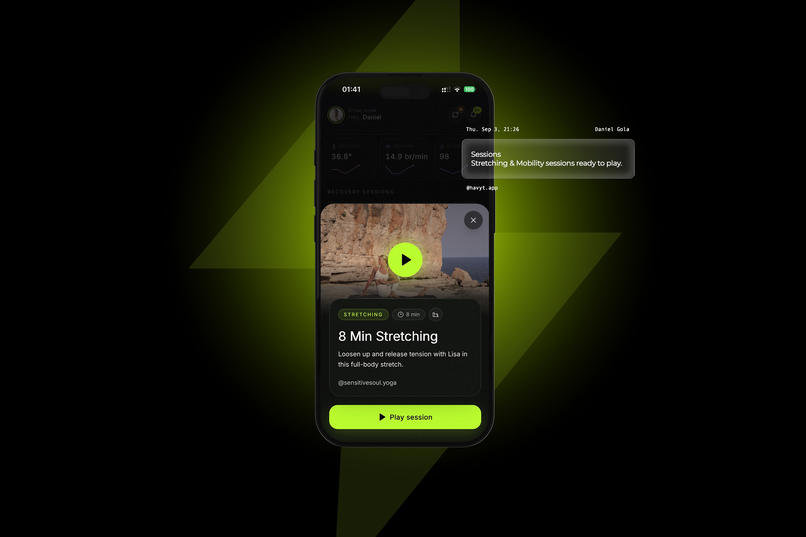
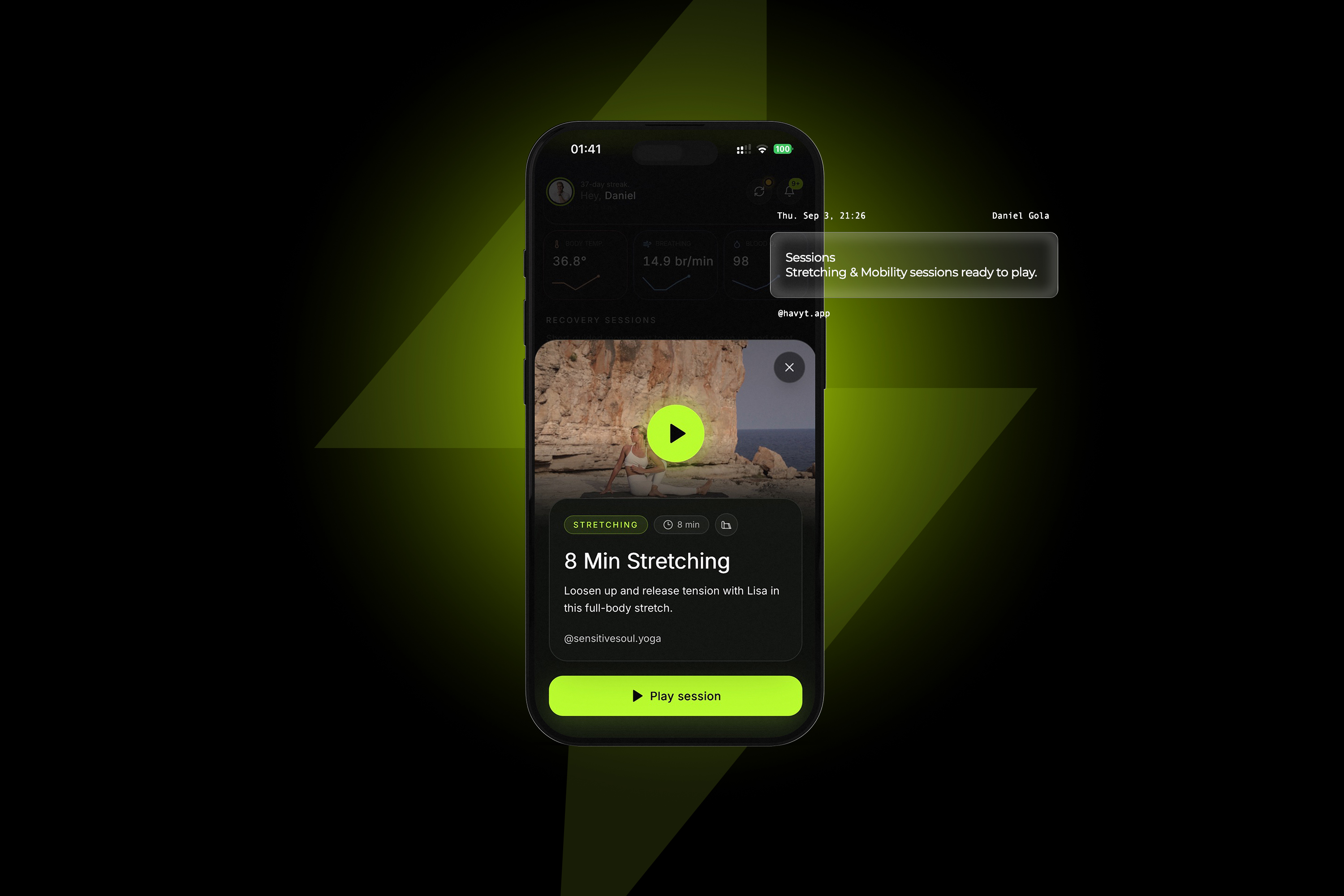
Follow guided mobility and stretching sessions when recovery or a gentler training day fits better.
-
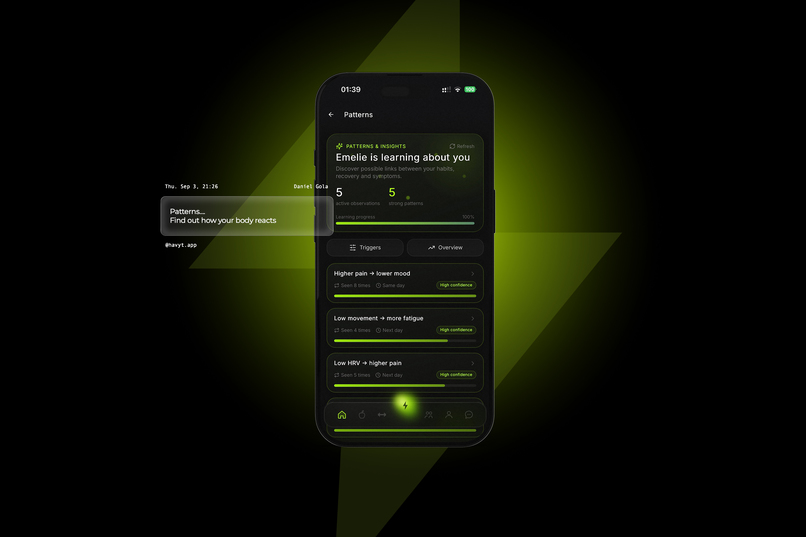
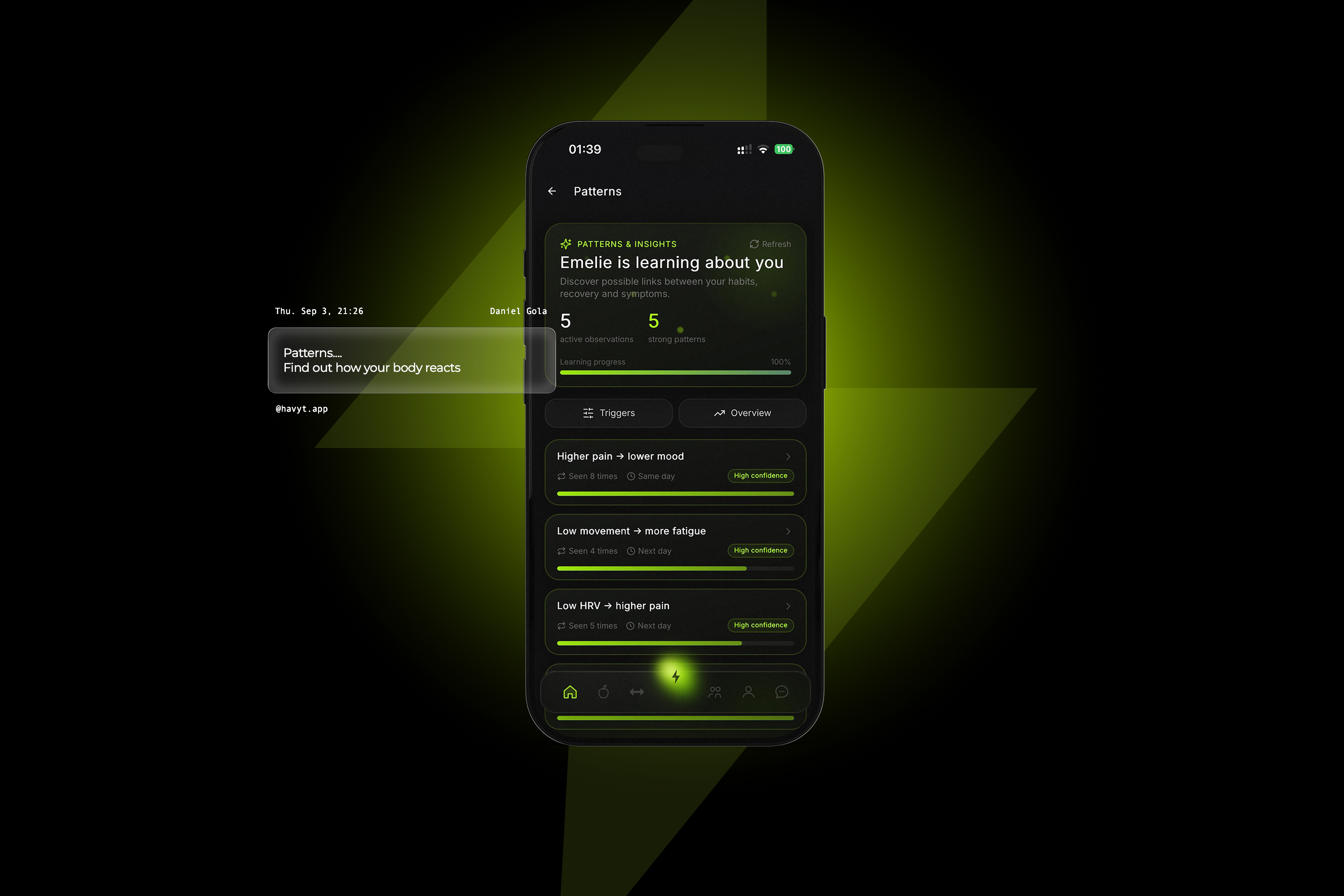
Discover possible links between habits, recovery and symptoms, with confidence and timing shown clearly.
-
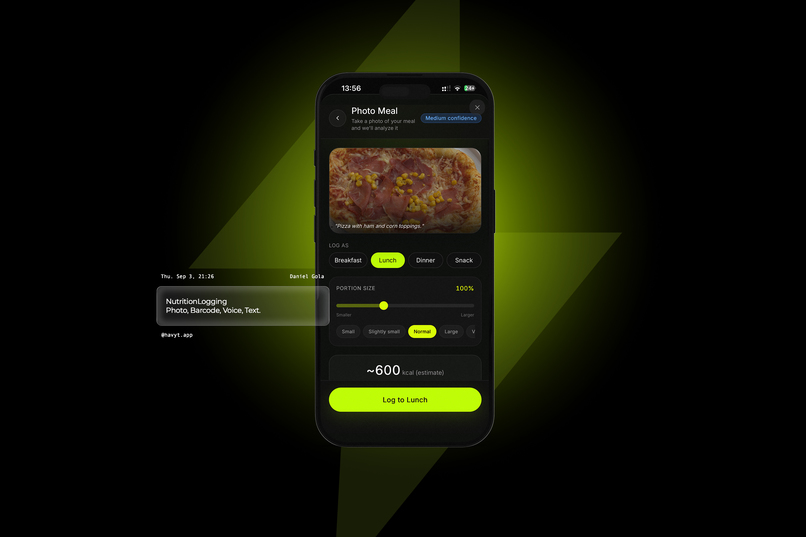
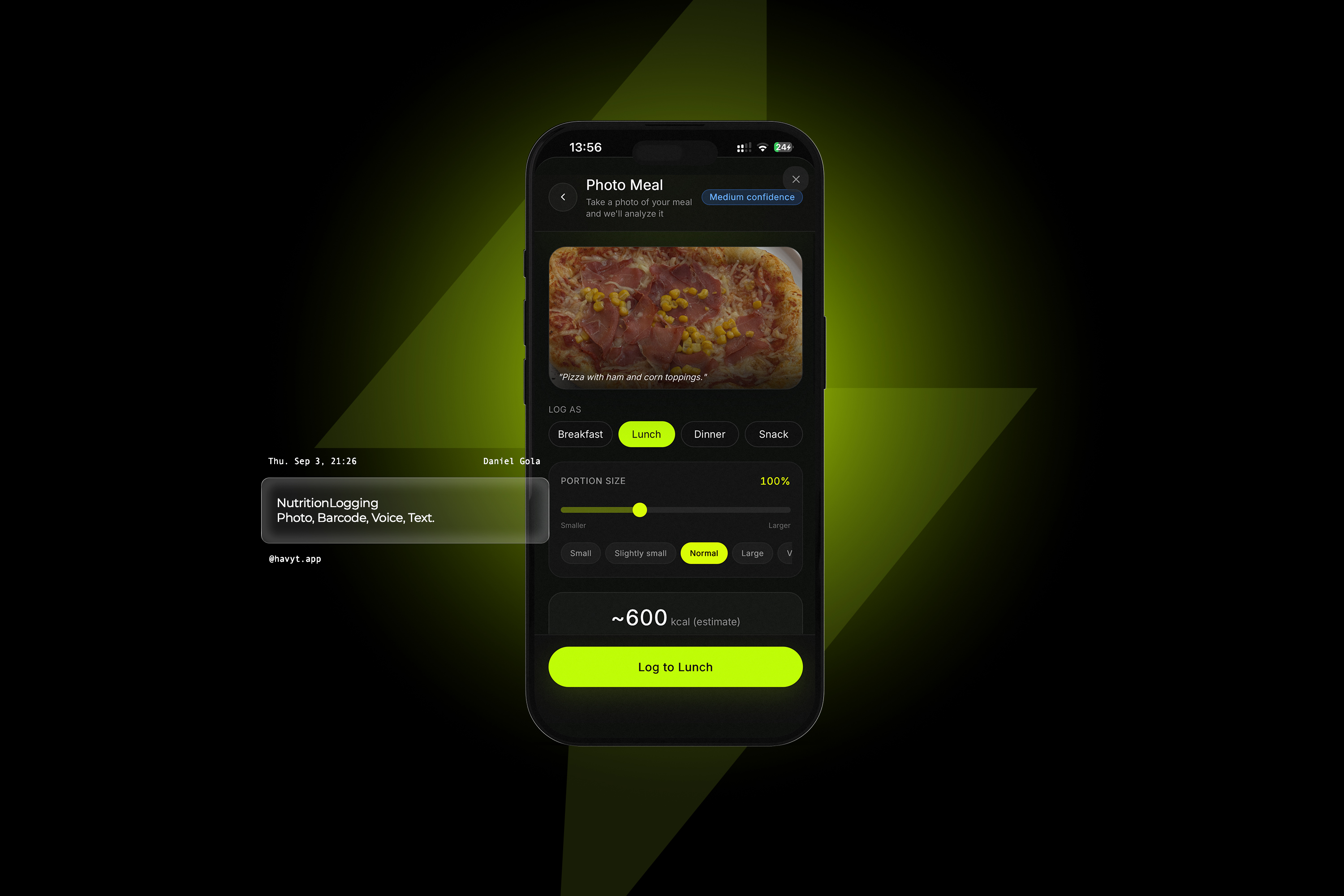
Log a meal from a photo, review estimated calories and portion size, then save it in seconds.
-
HAVYT app icon
-
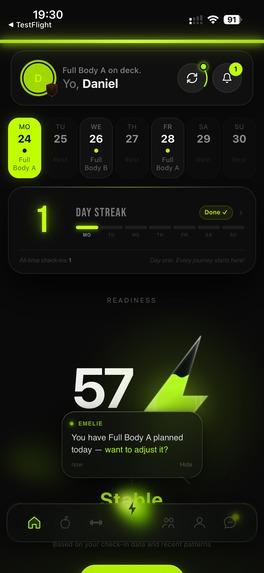
raw app screenshot
HAVYT
HAVYT is a health and fitness companion built for people whose body does not feel the same every day.
It started from a personal problem.
I live with ankylosing spondylitis. Before my symptoms started, I trained regularly, went to the gym, did judo and lived a very active life. Then pain slowly changed everything.
For around three years I repeatedly tried to get back into training. The usual fitness advice did not help. Most apps were built around one basic idea: do more, push harder, stay consistent.
But when you live with chronic pain, fatigue or changing symptoms, consistency does not always mean doing more.
Sometimes a full workout is a win.
Sometimes ten minutes of mobility is a win.
Sometimes recovery is exactly what your body needs.
I wanted an app that understood that difference.
That became HAVYT.
What HAVYT does
HAVYT brings the different parts of everyday health into one place.
Users can track things such as pain, stiffness, energy, mood, sleep, movement, training, nutrition and other daily signals.
The goal is not simply to collect more data.
The goal is to connect it.
Over time, HAVYT helps users understand how their days relate to each other and identify patterns between how they feel and what they do.
A difficult day should not exist as an isolated red number on a chart.
HAVYT is designed to help answer questions such as:
Why do I feel worse today?
Was my sleep different?
Did I train differently?
Has my pain been increasing over several days?
Does a certain type of activity seem to help?
Am I recovering properly?
What should I change today?
The core loop is simple:
Track your day. Understand your patterns. Adapt what comes next.
Built for real days
HAVYT includes training, nutrition, daily check ins, recovery tracking, analytics, outdoor activities, challenges, community features and an AI companion called Emelie.
But those features are not meant to exist independently.
They are designed to work together.
A workout can be understood in the context of pain, sleep and recovery.
Nutrition can be viewed alongside energy and symptoms.
Daily check ins can become patterns instead of isolated entries.
Training can adapt to what is actually happening in someone's life.
That connection between everyday health and everyday action is the foundation of HAVYT.
Chronic health without making the whole app feel clinical
HAVYT can be used by anyone, but a major part of its development has focused on people living with chronic conditions.
The first dedicated condition mode focuses on ankylosing spondylitis.
Users can track symptoms such as pain, stiffness and fatigue, complete regular BASDAI assessments, record eye symptoms, follow mobility routines and see their health data alongside their activity and lifestyle data.
I wanted this part of the app to be useful without turning HAVYT into something that constantly reminds people that they are ill.
The experience should still feel motivating, modern and human.
HAVYT does not diagnose conditions and it does not replace medical care.
It is designed to help people understand their own day to day patterns and have better context around the decisions they make.
Emelie
A major part of HAVYT is Emelie, the AI companion inside the app.
Emelie is not meant to be another generic chatbot.
She has access to the context users choose to track inside HAVYT and can help them make sense of that information.
Instead of having a conversation completely disconnected from the rest of the app, Emelie can understand the broader picture of the user's recent activity, check ins, training and habits.
The long term goal is to make HAVYT feel less like a collection of trackers and more like one connected health companion.
Training that adapts to the person
Training was especially important to me because it was one of the reasons HAVYT started.
Traditional workout apps usually assume that the goal is progression at almost any cost.
HAVYT takes a different approach.
Users can build structured training plans, schedule workouts, track sessions and monitor progress, but the app also considers that a person's readiness can change.
HAVYT supports full gym sessions, quick workouts, mobility and outdoor activities such as walking, running, cycling, hiking, swimming and padel.
For someone managing a chronic condition, this flexibility matters.
Progress does not always mean lifting more weight.
Sometimes progress means being able to train consistently without triggering a flare.
Personally, after years of failed attempts to return to regular training, I have now been training consistently for more than half a year while adapting my training around my symptoms.
That experience shaped a large part of how HAVYT was built.
Nutrition and daily health
HAVYT also includes nutrition tracking because food, energy, recovery and symptoms do not exist separately.
Users can log meals through text, photos or barcode scanning, track water and supplements and use an AI meal planner.
The purpose is not to create another calorie counter.
Nutrition becomes another part of the user's overall daily picture.
Patterns instead of isolated numbers
One of the most important areas of HAVYT is analytics.
Most health apps give users dashboards full of numbers.
HAVYT is being built around a different question:
What does this information actually mean for me?
The app looks across training, nutrition, body measurements, sleep, mood, activity, weather and daily health signals.
As more data is collected, HAVYT can surface relationships that may otherwise be difficult to notice.
The vision is for someone to eventually be able to open HAVYT and understand their body better than they did yesterday.
Community
Living with a chronic condition can also feel isolating.
HAVYT includes friends, messaging, challenges, shared plans, events and community features to make health feel less like something people have to manage alone.
During Shipaton we also introduced Community Voting.
Instead of deciding every future feature ourselves, users can vote on what they want HAVYT to build next.
Ideas have included better sleep tracking, offline training, Siri support, body fat tracking, additional cardio tools, new social features and many others.
This has turned product development into a conversation with the people actually using the app.
Building in public
HAVYT has been built very publicly.
I have shared the process from early development through App Store review, launch, bugs, design changes, user feedback and new releases.
And the feedback has directly changed the product.
Users told us that adding friends was unreliable.
We investigated and improved it.
Users gave feedback about the Daily Check In experience.
It was rebuilt.
We found notification issues after launch.
They were audited and fixed.
People asked for more control over what gets built next.
We created Community Voting.
People wanted a brighter visual option.
A complete light experience was developed alongside the original HAVYT design.
The product people are using today is already different from the product that launched because users have helped shape it.
That is one of the things I value most about HAVYT.
Launch
HAVYT launched publicly on iOS during Shipaton.
Before launch, around 150 people joined the waitlist.
During the first week, more than 100 people began using the app.
We also launched a limited Launch Week event where users could complete onboarding, daily check ins and workouts to unlock rewards inside HAVYT.
Since launch, development has continued rapidly.
Version 1.1 rebuilt major parts of the Daily Check In experience, expanded Emelie and introduced Community Voting.
HAVYT is still early.
There are bugs to fix, assumptions to challenge and a huge amount left to build.
But people are already using it to track their health, exercise, understand their days and send feedback about what should come next.
Why this matters to me
HAVYT is not a project I chose because I thought health apps were an interesting market.
I built it because I needed it.
When my symptoms started, I spent years trying to fit myself back into fitness systems designed for healthy people.
What eventually worked was learning to adapt.
Learning when to train.
Learning when not to.
Understanding what my body was telling me.
Recognising that progress can look different depending on the day.
HAVYT is an attempt to turn that experience into something useful for other people.
There are millions of people who want to be healthier, stronger and more active but cannot simply follow the traditional advice of pushing harder every day.
I want HAVYT to give those people better tools.
Not to tell them what their body should be able to do.
To help them understand what their body is actually telling them.
Where HAVYT is going
The long term vision is bigger than fitness tracking.
I want HAVYT to become a personal layer between everyday life and health.
A place where movement, nutrition, symptoms, recovery, sleep, mood and daily habits can finally be understood together.
Today, ankylosing spondylitis is the first condition HAVYT supports deeply.
It will not be the last.
The goal is to gradually build dedicated experiences for more people whose health changes how they move through everyday life.
HAVYT is still at the beginning.
But for the first time since my own health changed, I am building the tool I wish I had when it happened.
Built With
- apple
- capacitor
- framermotion
- healthkit
- ios
- pwa
- react
- revenuecat
- supabase
- typescript
- vercel
- vite



Log in or sign up for Devpost to join the conversation.