Inspiration
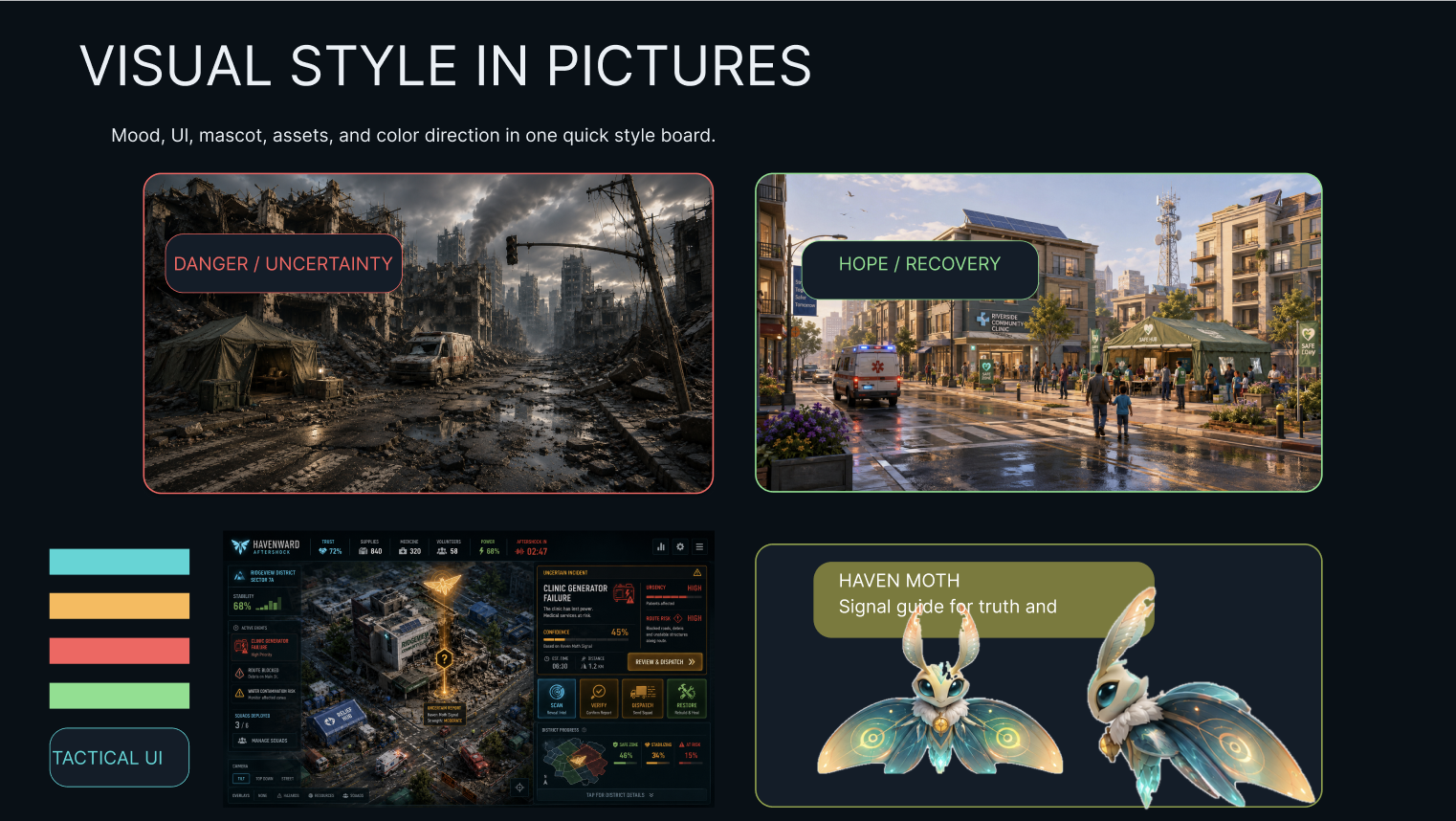
Havenward: Aftershock was inspired by the idea that after a disaster, the hardest problem is not only repairing buildings it is knowing what information to trust. Emergency reports can be incomplete, repeated, or wrong. I wanted to design a hopeful recovery game where the player makes careful decisions under pressure and turns dangerous places back into safe communities.
What it does
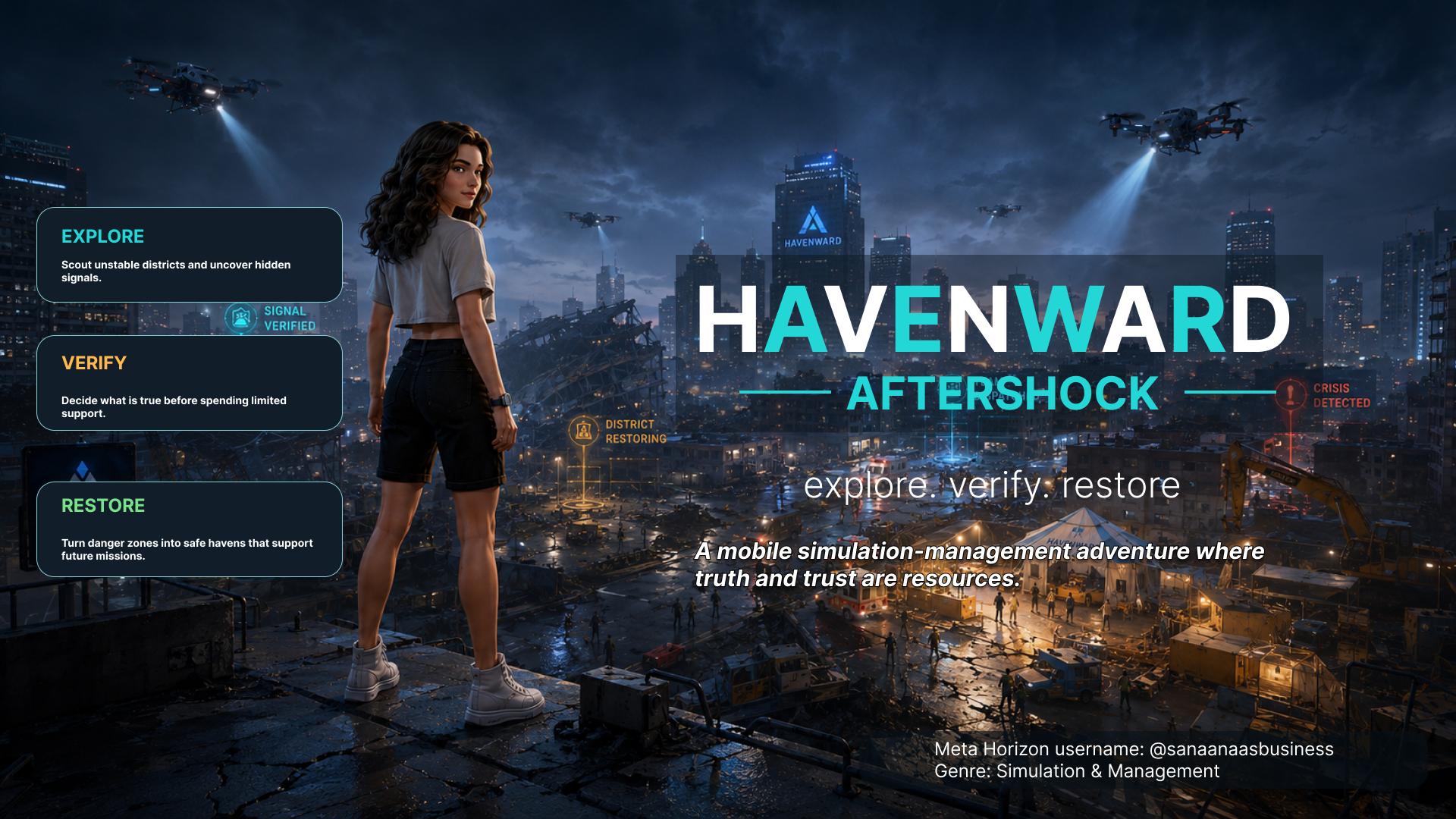
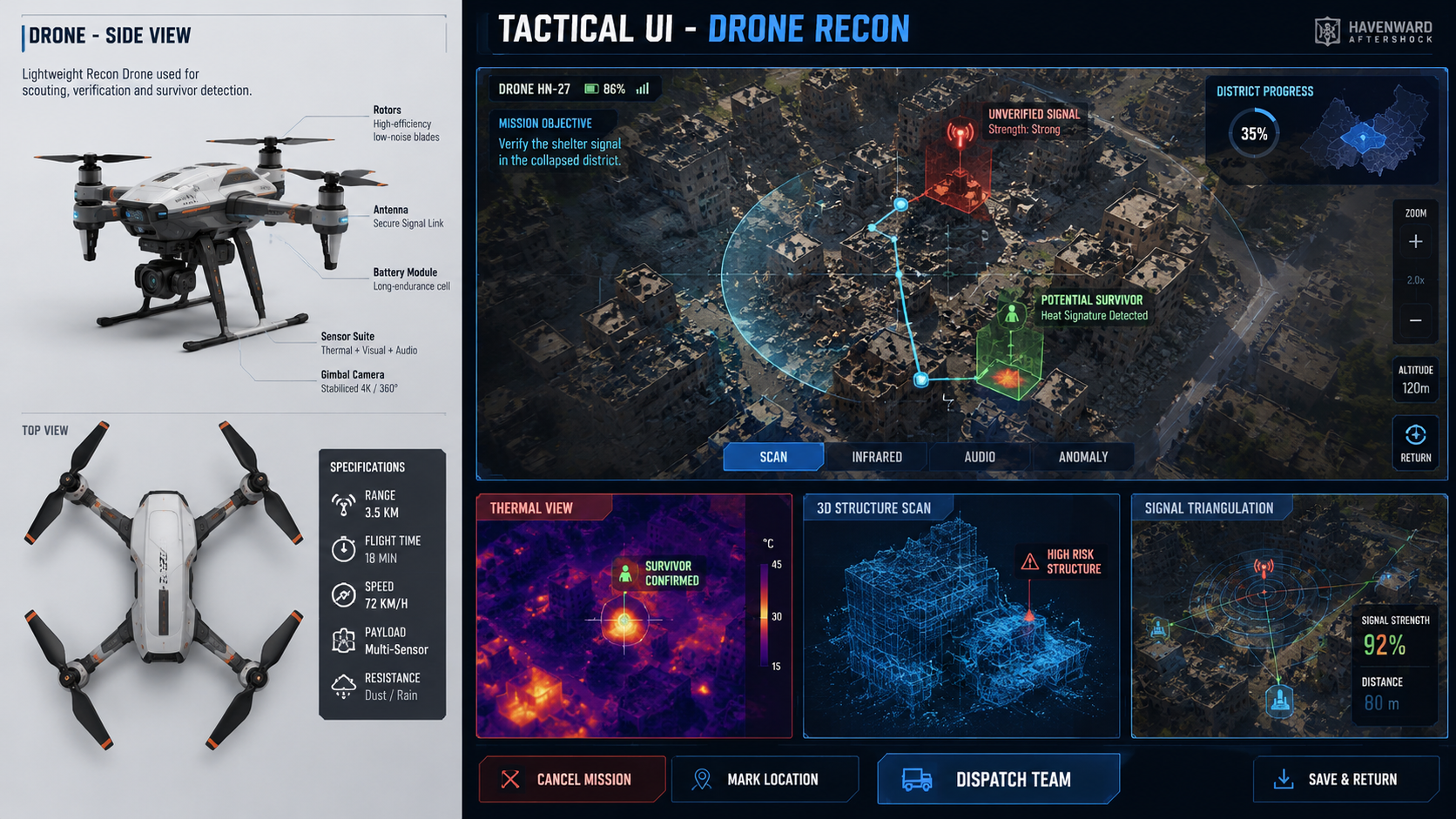
Havenward: Aftershock is a mobile simulation-management game where players enter earthquake-damaged districts, investigate uncertain reports, verify what is true, dispatch limited support teams, and restore danger zones into safe havens.
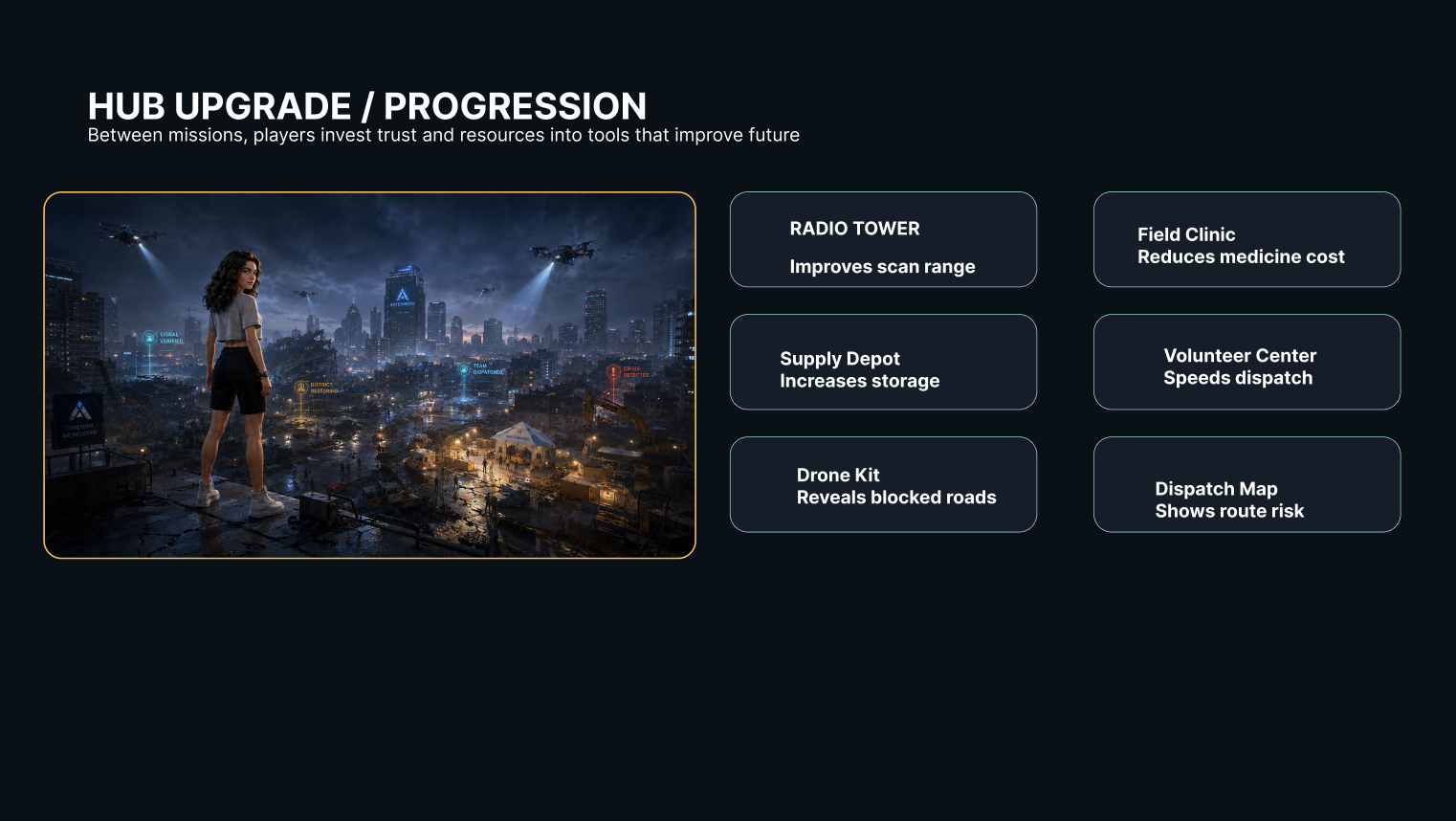
The core hook is simple: truth and trust are resources. Acting fast can save a district, but acting on false information can waste supplies and damage community trust. Players manage resources, upgrade their recovery hub, and rebuild the city one district at a time.
How we built it
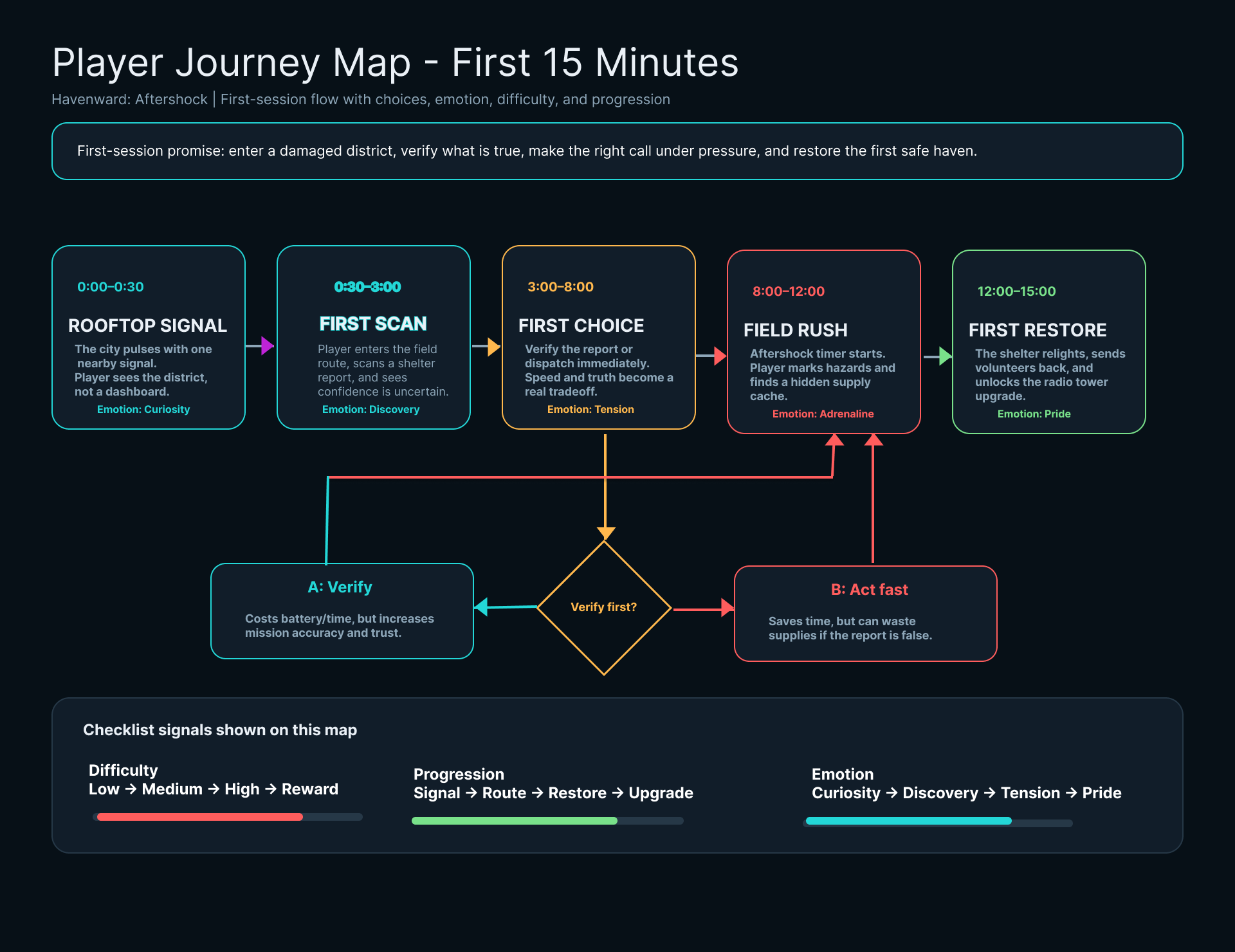
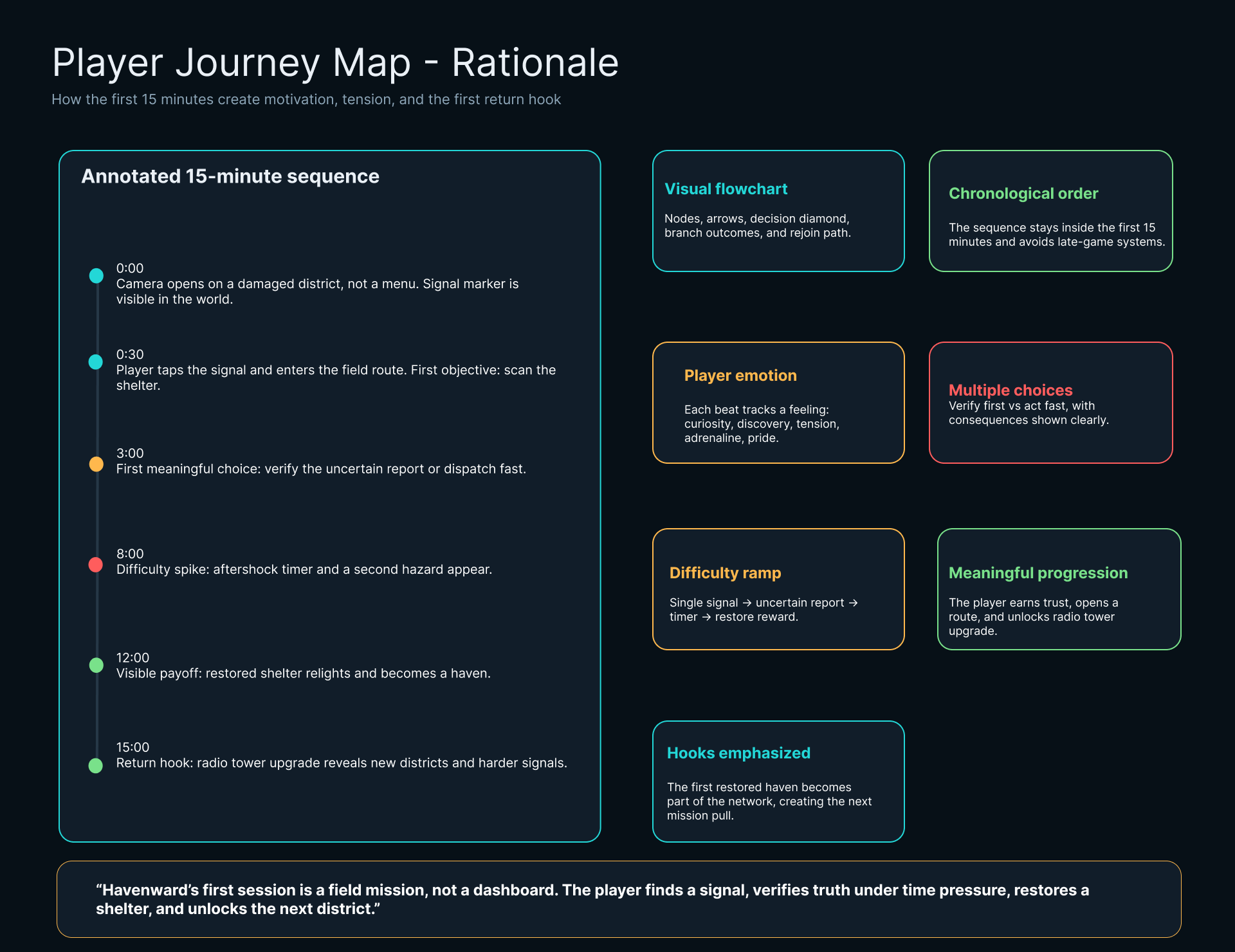
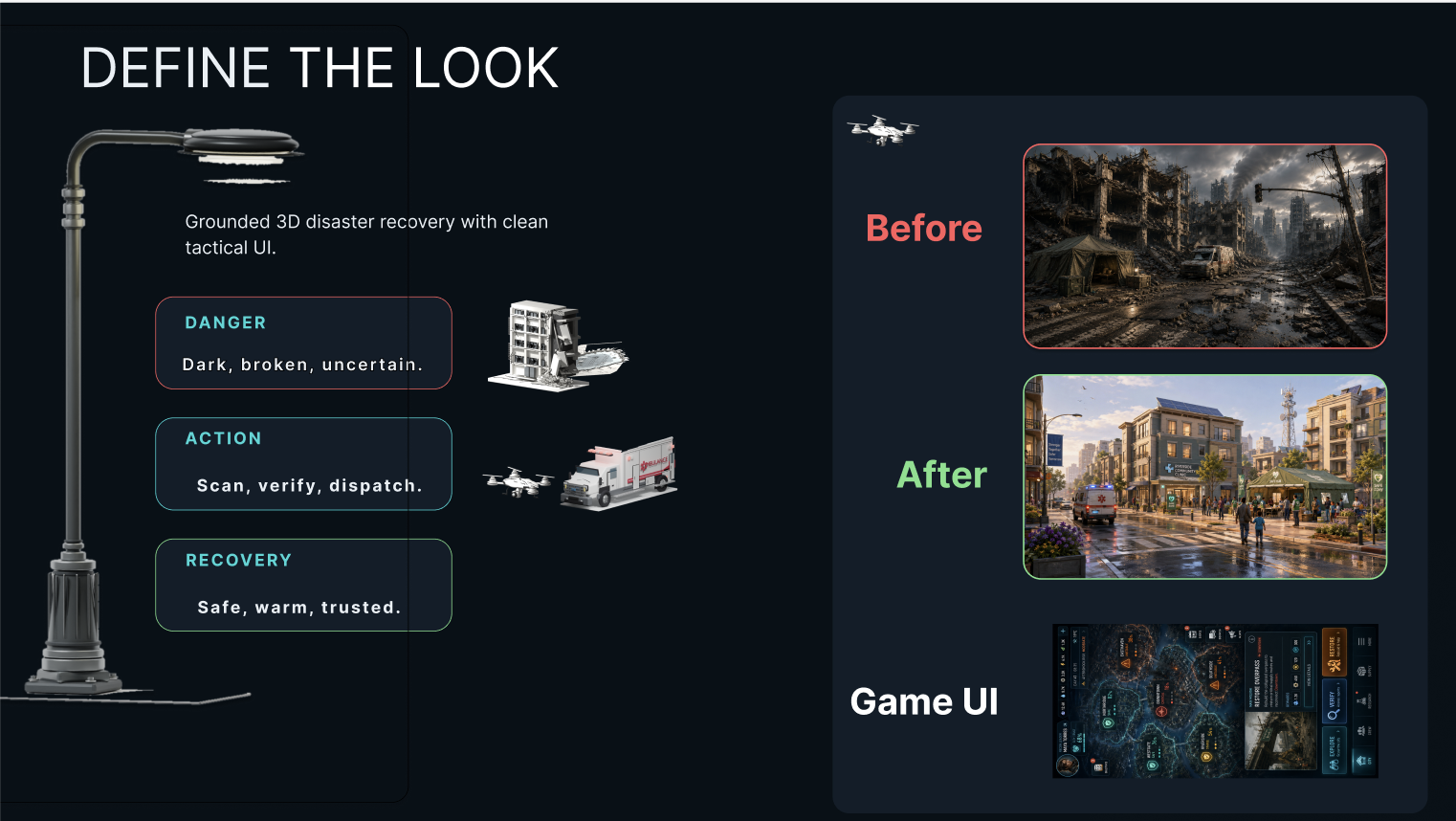
This submission was built as a complete pre-production package for Havenward: Aftershock. I created the Game Design Document, Player Journey Map, Visual Concept Package, and Production Plan to show the game’s concept, first-session flow, visual identity, and MVP scope.
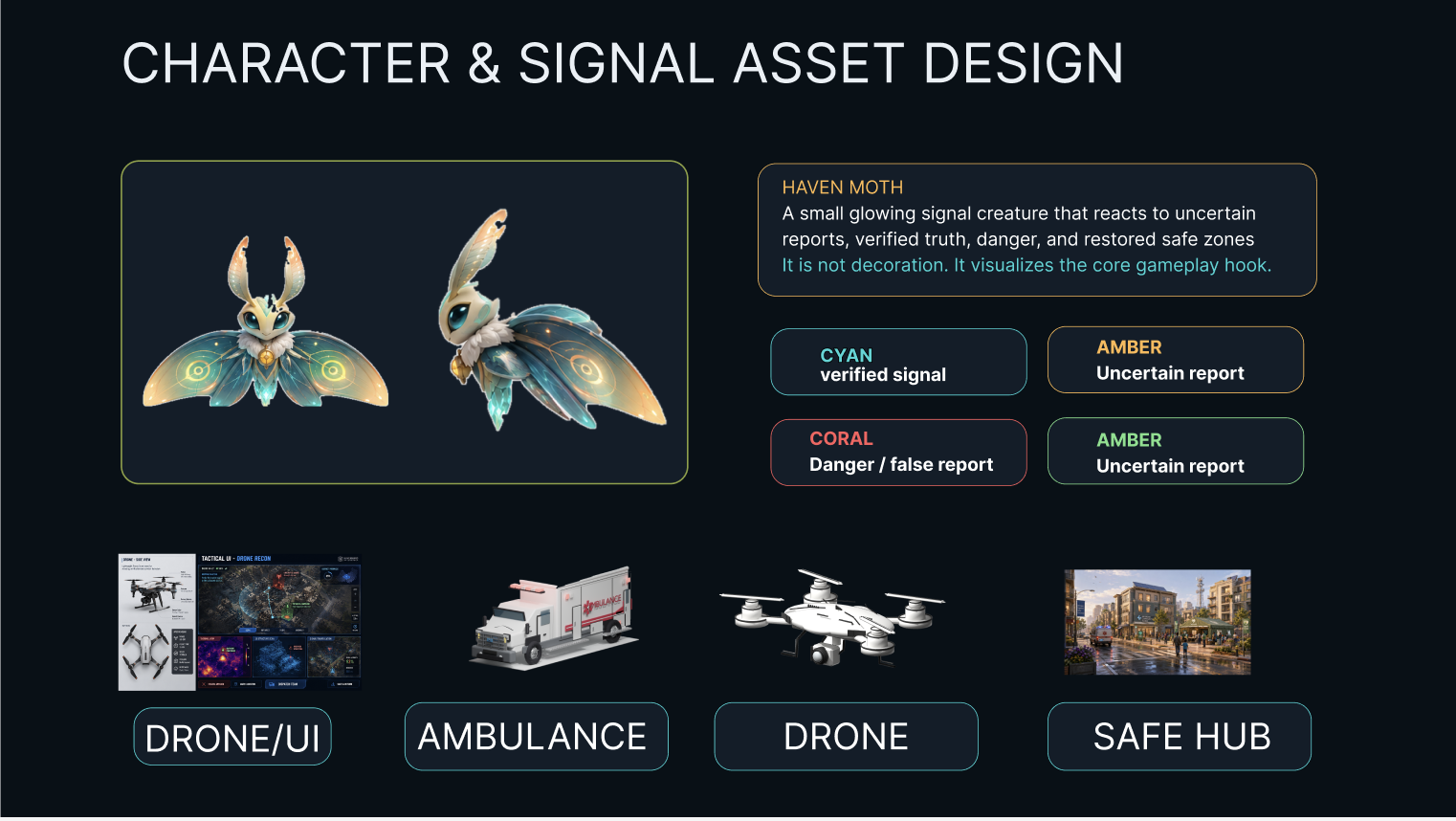
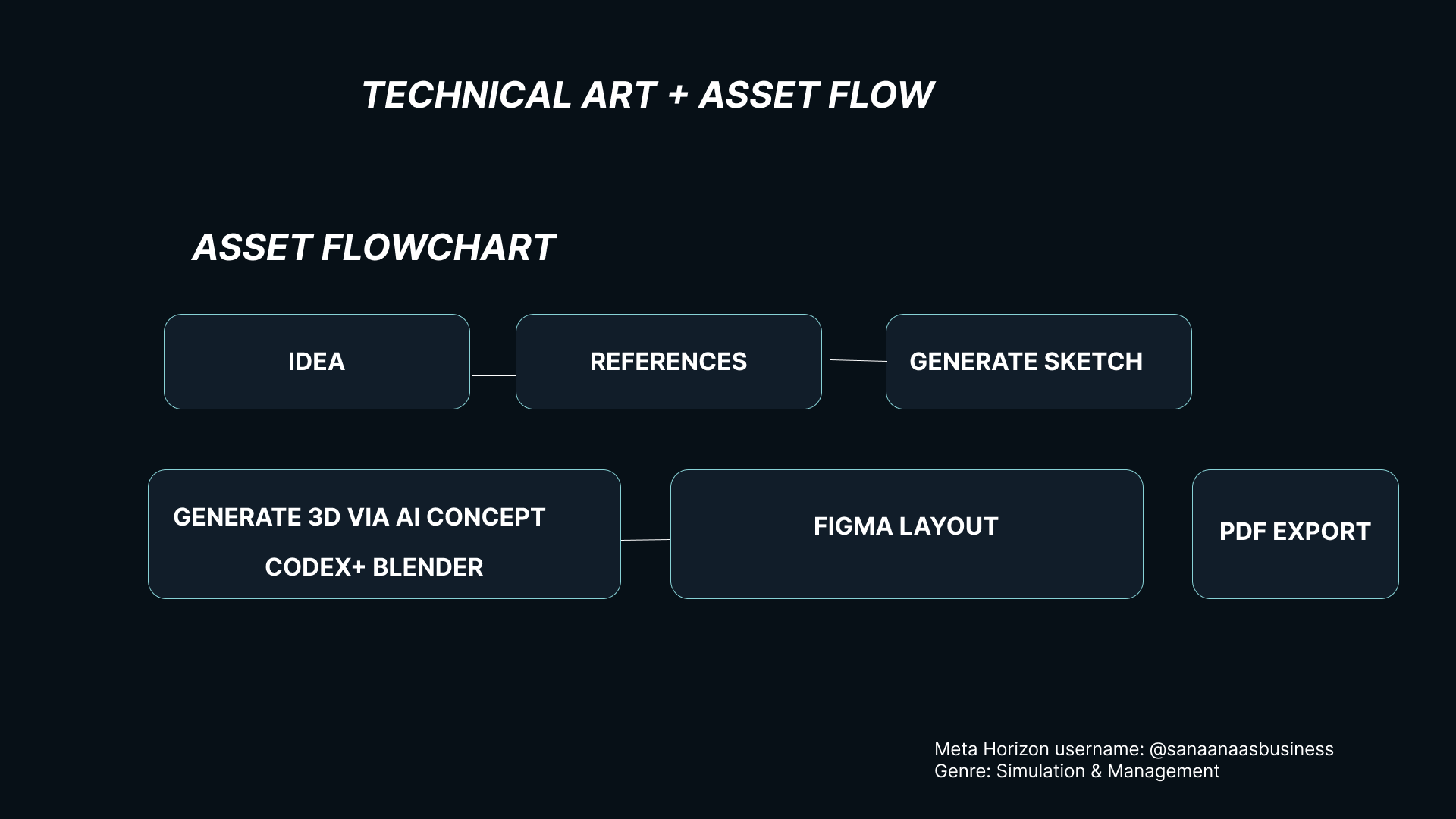
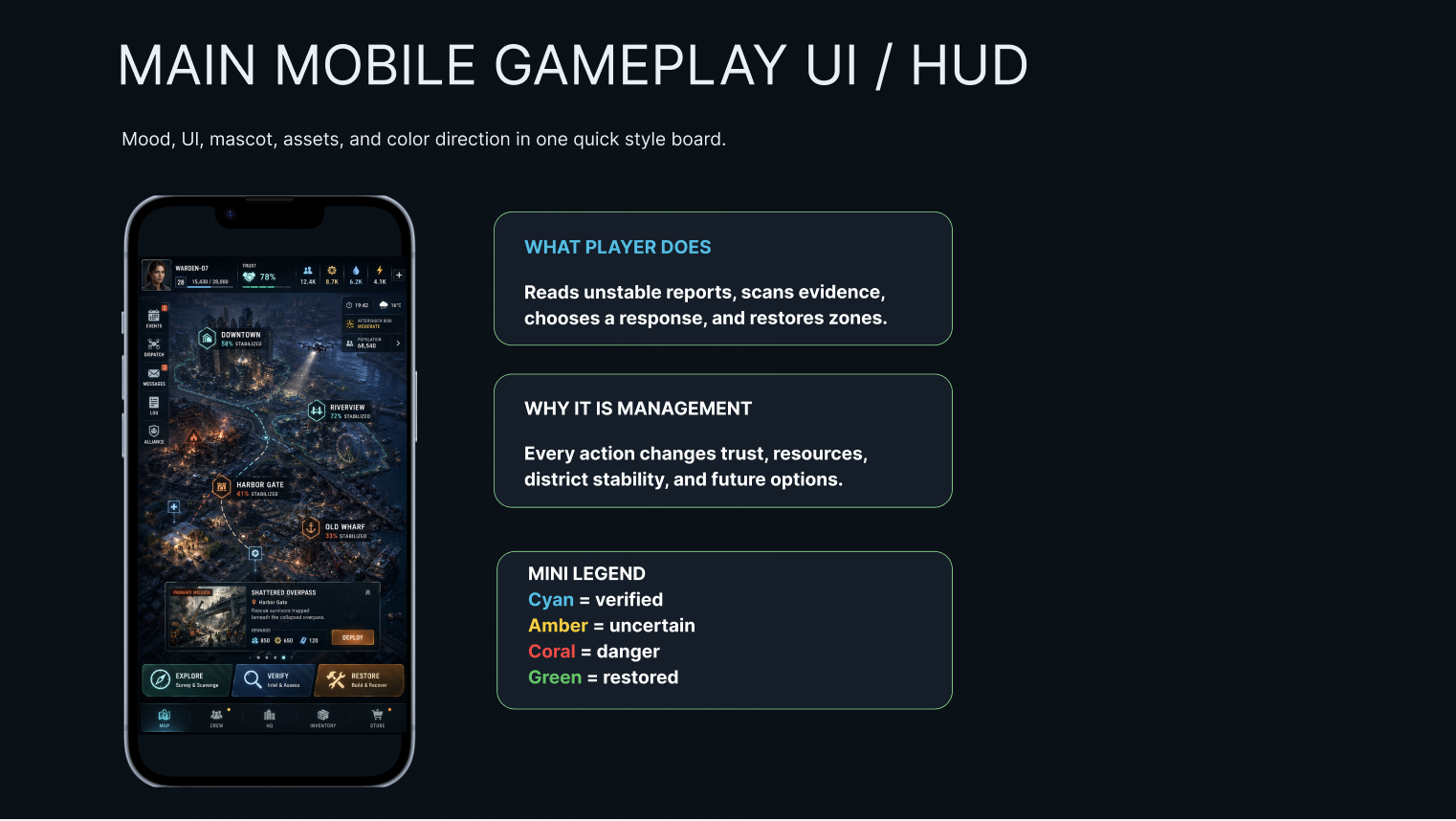
I used Figma to design and organize the final document layouts, mobile UI mockups, player journey diagrams, and visual presentation boards. I used Blender to explore 3D environment and object ideas for the damaged district, recovered safe hub, rescue props, and game-world mood. I also used Codex to help generate and iterate Blender scene scripts, structure production ideas, and speed up technical exploration.
The final package combines game design writing, visual direction, 3D concept exploration, and Figma-based presentation design to communicate the core loop: scan, verify, dispatch, restore, and upgrade.
Challenges we ran into
The biggest challenge was making the game feel exciting instead of becoming a simple “repair buildings for points” concept. To solve that, I focused the design around uncertainty, time pressure, and trust.
Another challenge was keeping the game inside the Simulation & Management genre while still making missions feel adventurous. The final direction uses field missions for tension, but the long-term game is about managing resources, trust, upgrades, and district recovery.
Accomplishments that we're proud of
I am proud of creating a game concept with a clear emotional and strategic hook: truth and trust are resources.
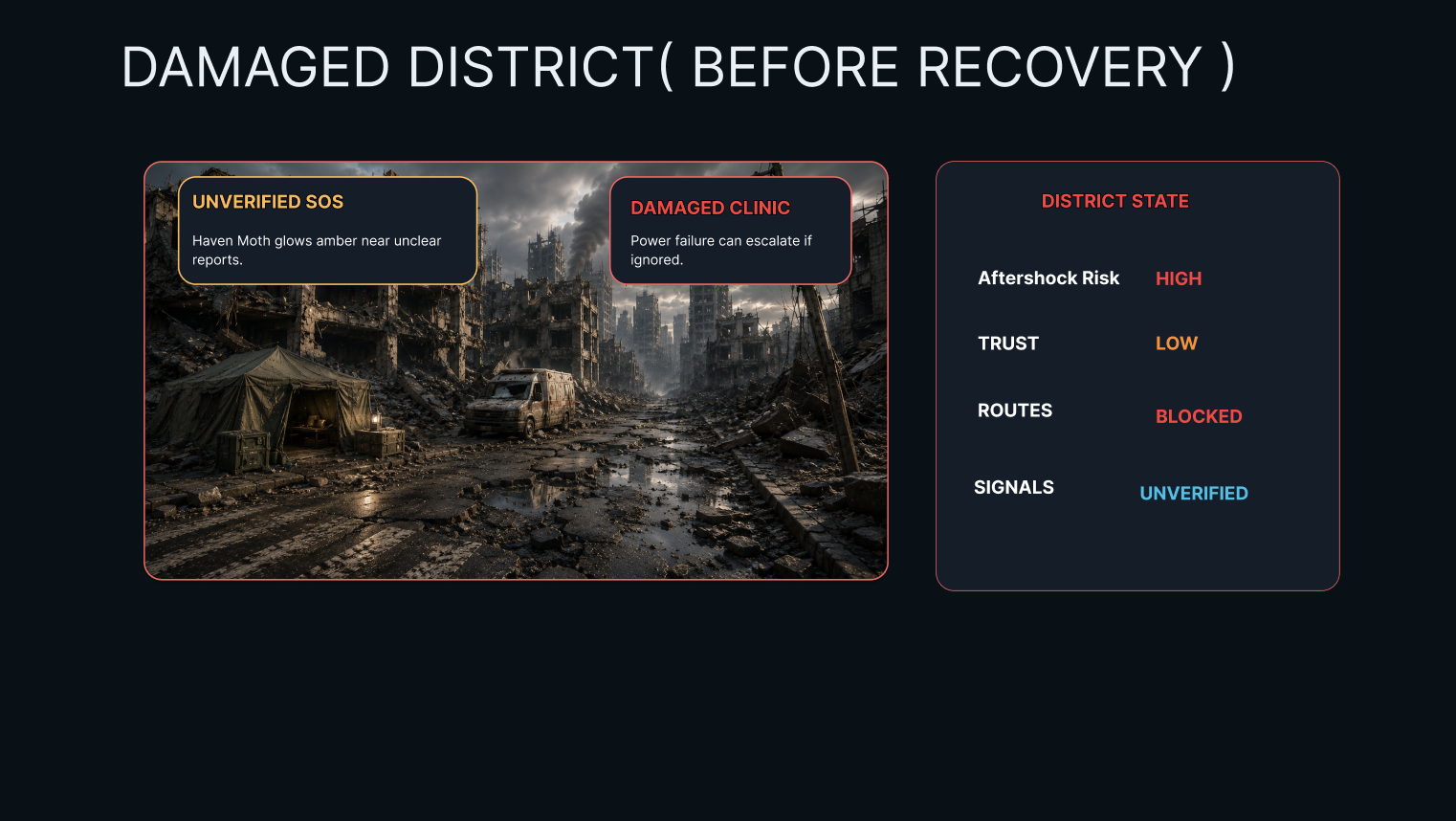
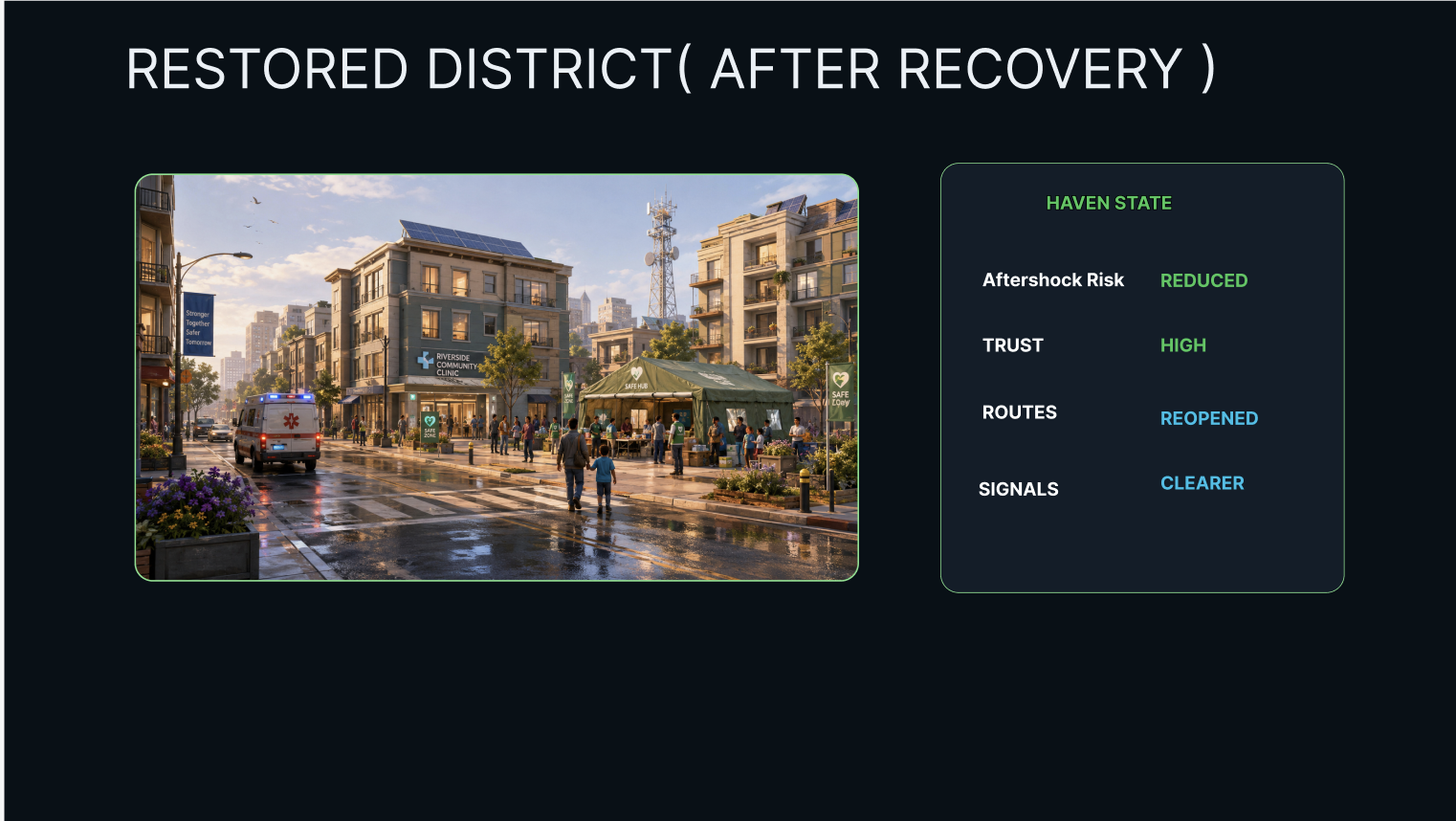
I am also proud of the before-and-after recovery fantasy. The player does not just complete tasks — they visibly transform damaged districts into safer, more trusted places. The Haven Moth signal guide also gives the game a more memorable visual identity while staying connected to the core system.
What we learned
I learned that a strong game design needs more than a good idea. It needs a clear loop, strong player motivation, readable visuals, buildable scope, and a reason for players to care.
I also learned how important it is to connect every visual element to gameplay. A character, UI color, or environment image should not just look nice — it should help explain what the player does and why it matters.
What's next for HAVENWARD: AFTERSHOCK
Next, I would build a small playable prototype of the first district, East Market. The MVP would focus on one field mission where the player scans a signal, verifies an uncertain report, dispatches support, and restores a clinic or shelter.
After validating the core loop, I would expand with more districts, more incident types, hub upgrades, Haven Moth animations, and async co-op recovery roles where players contribute to restoring the city together.
Built With
- blender
- codex
- figma
- gpt-5


Log in or sign up for Devpost to join the conversation.