-
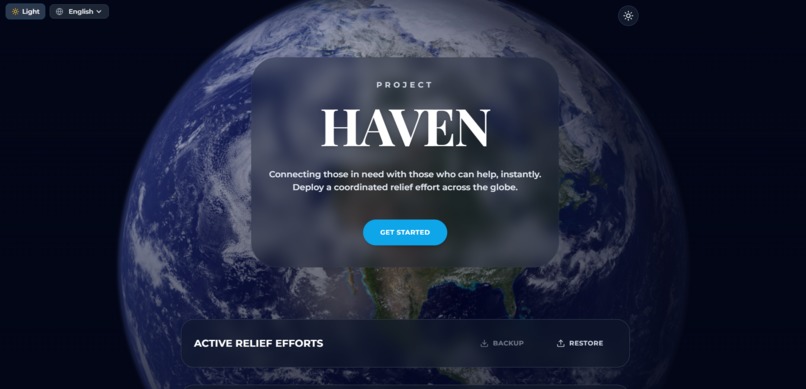
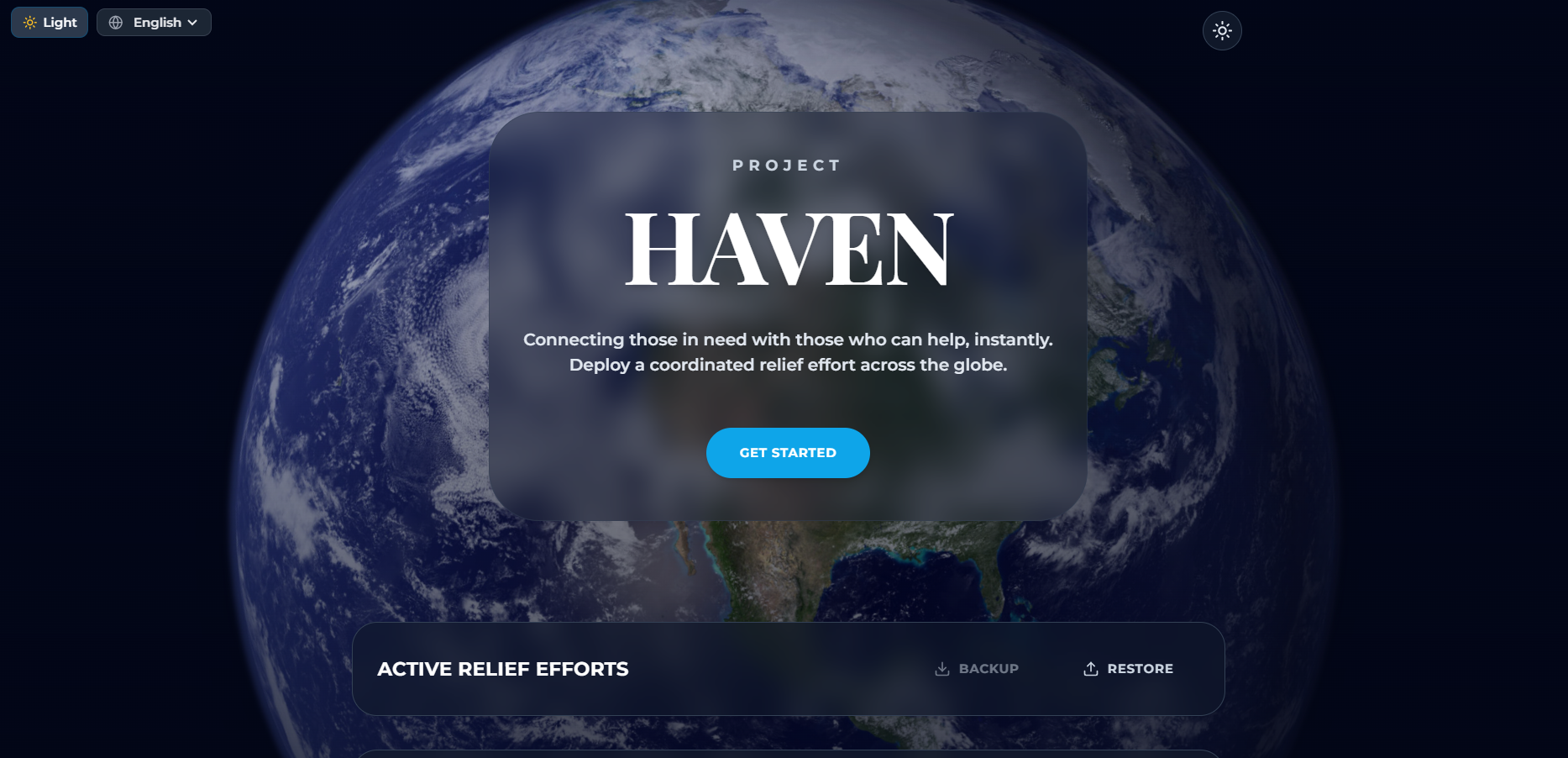
Login page
-
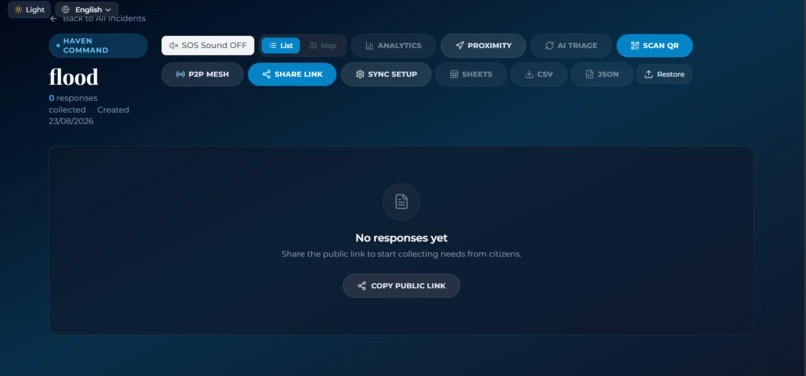
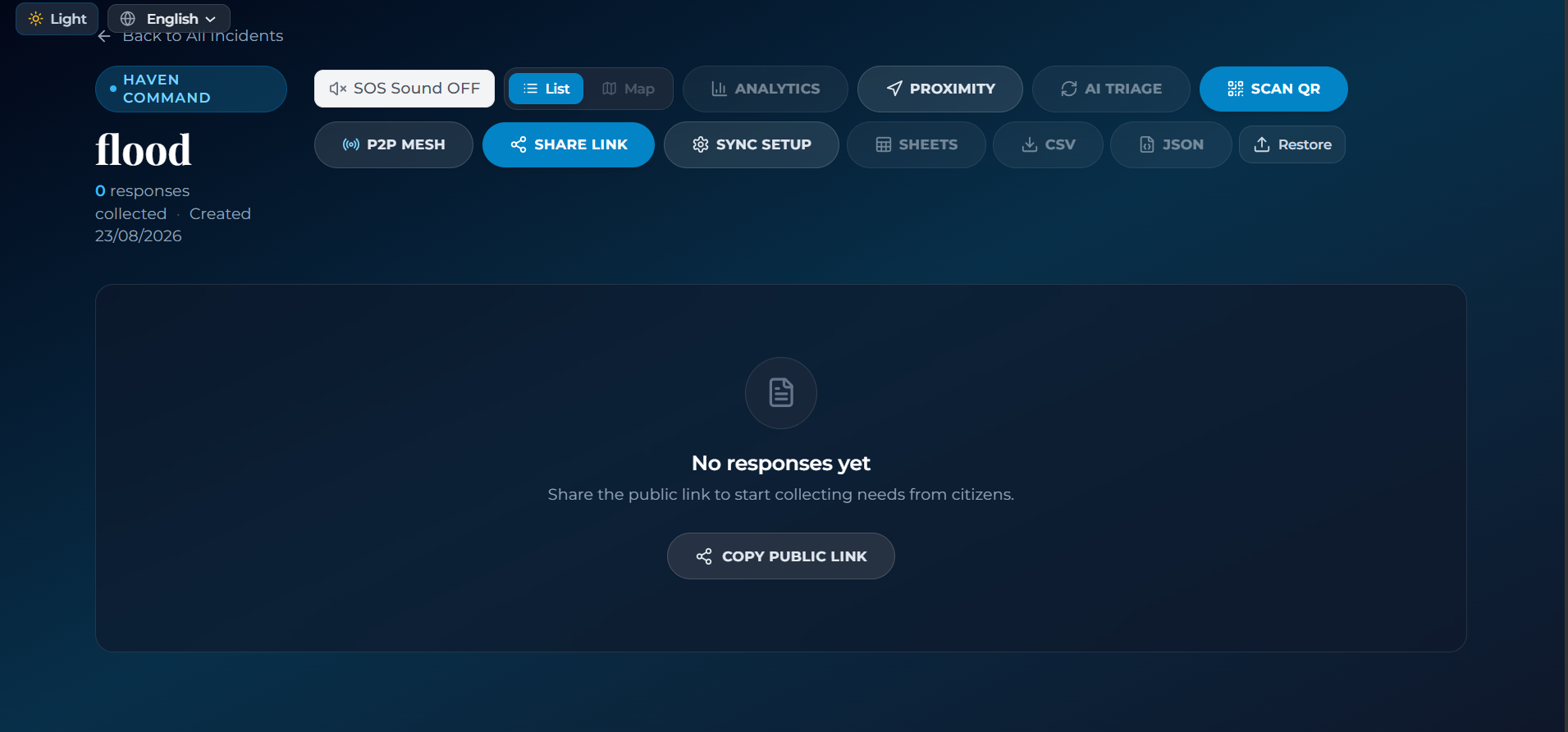
incident page
-
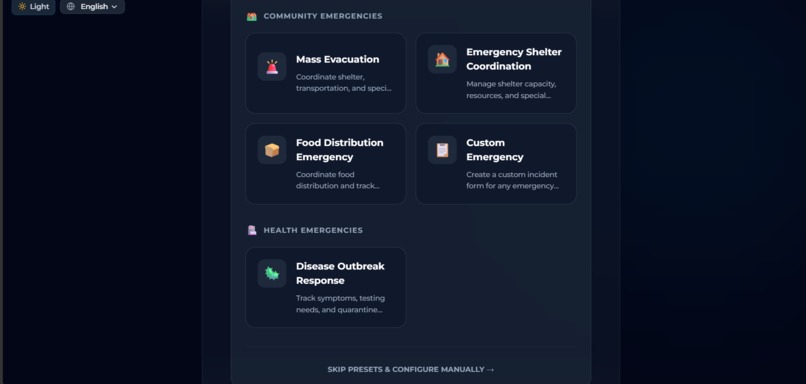
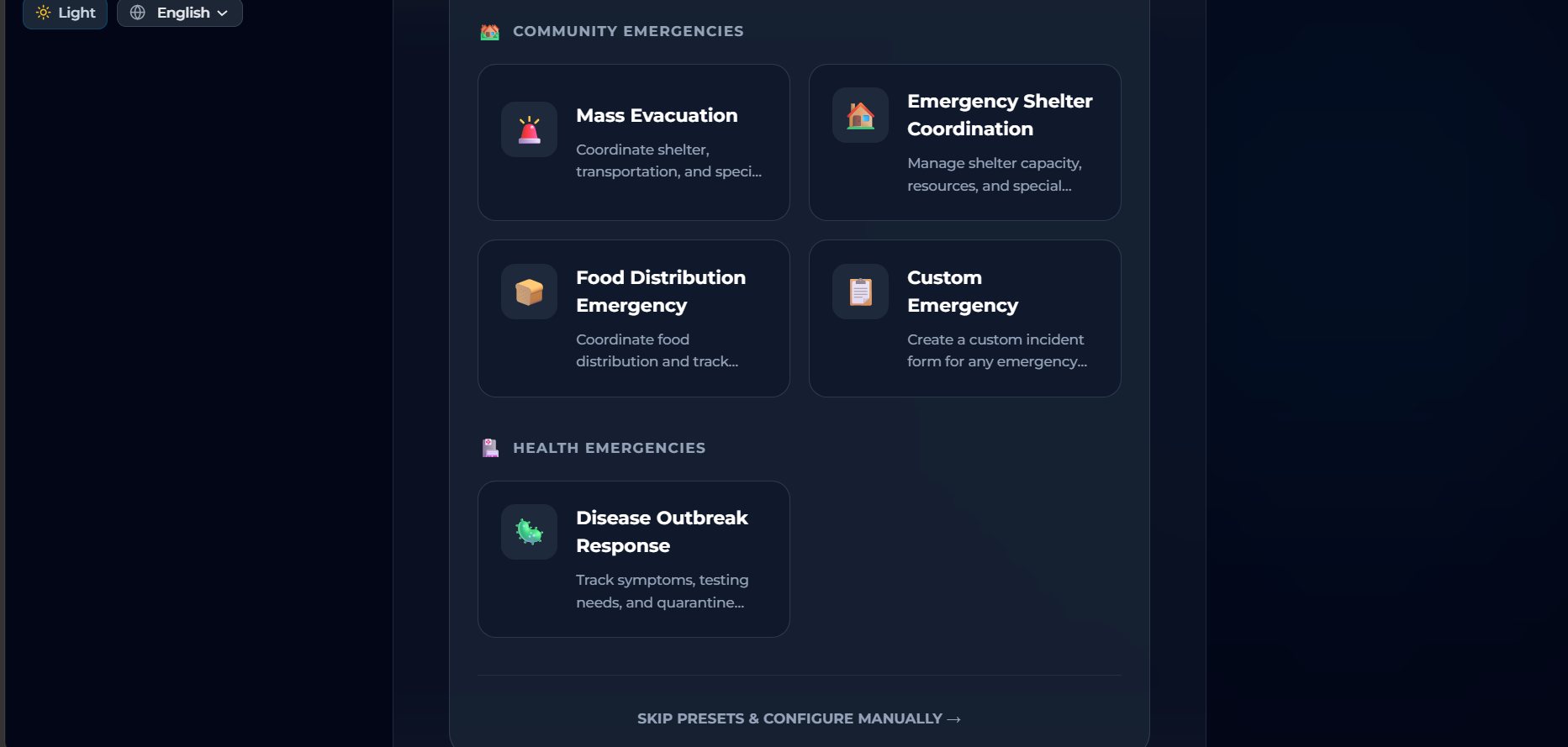
Create event page
-
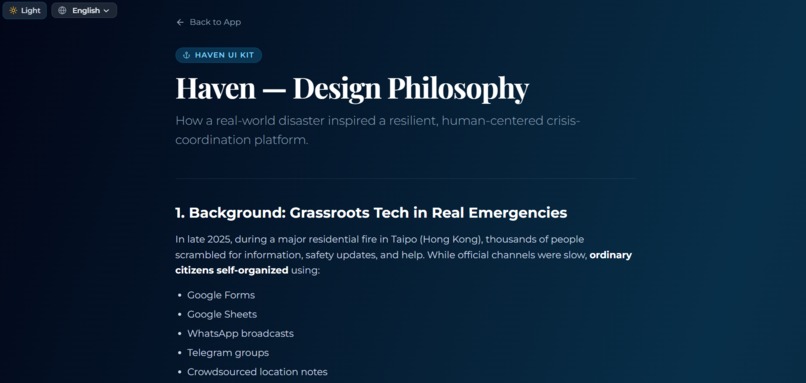
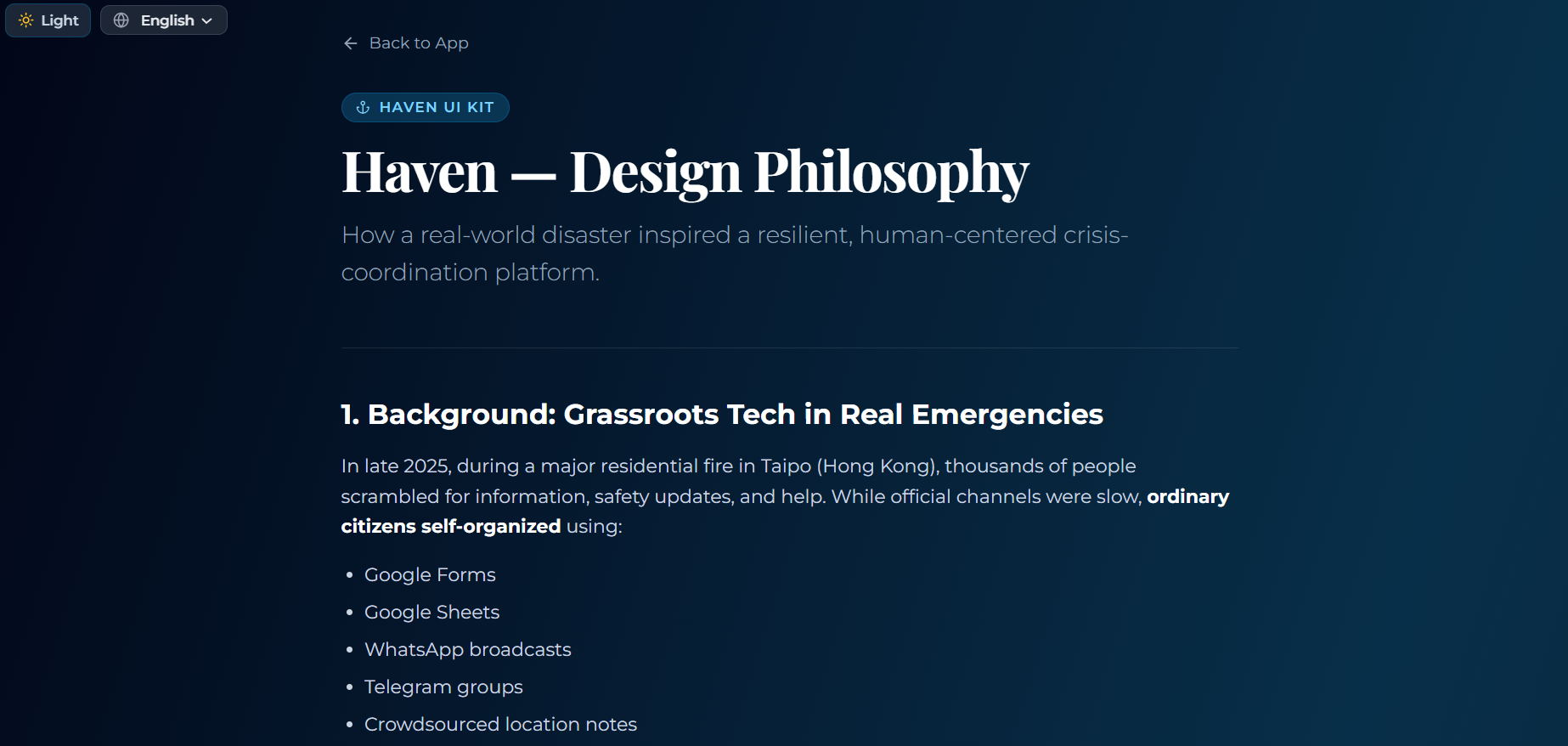
philosophy page
What inspired us
We started Haven after looking at how chaotic the first few hours of a disaster can become.
India has seen this repeatedly. During the 2018 Kerala floods, roads and entire villages were submerged, while thousands of people had to be evacuated. During Cyclone Fani in Odisha, more than 15 lakh people were evacuated before landfall. Behind those numbers were thousands of individual requests: someone needed medicine, someone was stranded, someone needed a boat, someone needed food.
What stood out to us was that disaster response isn't only about having resources. It's about knowing where those resources are needed most, right now.
That became the idea behind Haven.
What we built
Haven is a crisis coordination command center designed to turn incoming requests into actionable information.
A coordinator can create a public relief form in seconds and start collecting requests without forcing people through a complicated registration process. Those requests appear in the Operations Center, where AI helps classify their urgency, locations can be visualized on a map, and coordinators can filter and prioritize what needs attention.
We also wanted Haven to work beyond the perfect internet-connected scenario. That's why we built local storage and an offline-first approach, along with a peer-to-peer communication concept for situations where normal infrastructure becomes unreliable.
How we built it
The frontend is built with React, TypeScript and Vite, with Tailwind CSS powering the interface. We used React Leaflet for geographic visualization and integrated Gemini for AI-assisted triage.
We designed the interface around a simple idea: a disaster dashboard shouldn't create more stress than the disaster itself.
Instead of filling the screen with dozens of widgets, we focused on clear status indicators, maps, priority levels and information that a coordinator can understand quickly.
We also connected submissions with Google Sheets so that organizations that already rely on spreadsheets don't have to completely change their workflow.
What we learned
One of our biggest lessons was that disaster technology isn't really about adding more features.
It's about reducing the number of decisions a person has to make under pressure.
We also learned how important community-level response is. India's Aapda Mitra program is built around training local volunteers to respond to immediate needs after floods, cyclones, landslides and earthquakes. That reinforced our belief that technology should help connect people already willing to help, rather than trying to replace them.
The challenges
The hardest part was designing for a situation where the normal assumptions of software don't hold.
Internet connectivity can disappear. Information can arrive incomplete. Hundreds of requests can look equally urgent. A beautiful dashboard is useless if someone cannot understand it in a few seconds.
We also had to think carefully about AI. We didn't want an AI model making final decisions about someone's safety. Haven uses AI to assist with triage, while the coordinator remains responsible for deciding what actually happens.
Another challenge was building something that felt calm rather than like another generic emergency-management dashboard. A lot of iteration went into the interface, information hierarchy and interaction flow.
Why Haven
We don't think Haven can solve disaster response on its own.
But we believe there is value in giving responders one place where scattered requests become organized information, where urgent needs become visible, and where volunteers can act faster.
In a crisis, every minute matters.
Haven is built to make those minutes count.

Log in or sign up for Devpost to join the conversation.