-
-
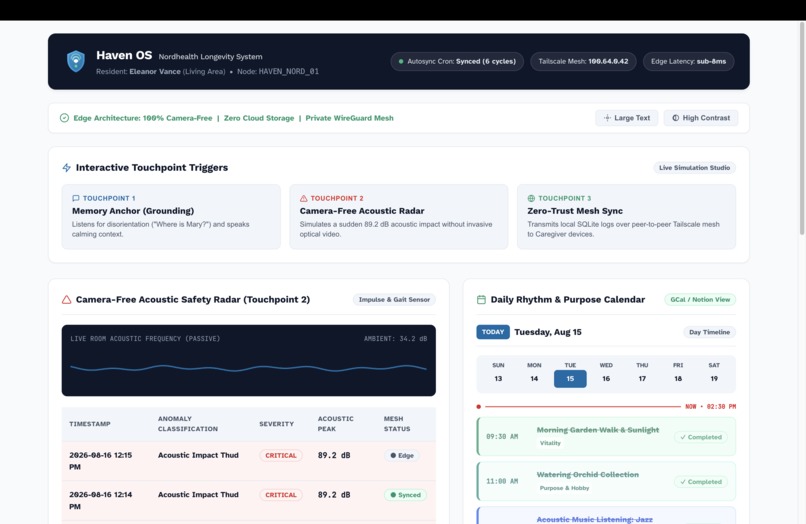
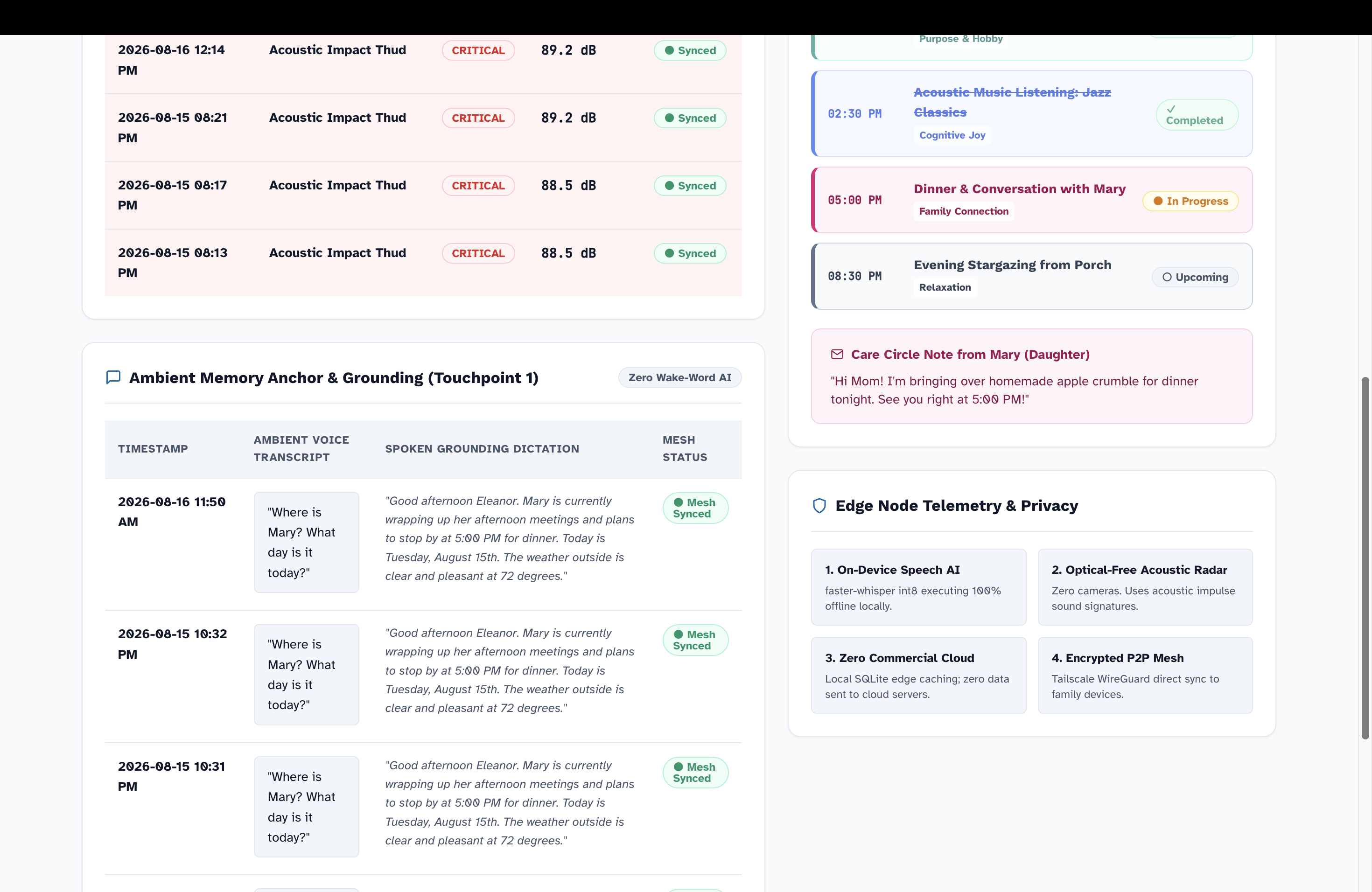
Caregiver portal with the waveform visualizer
-
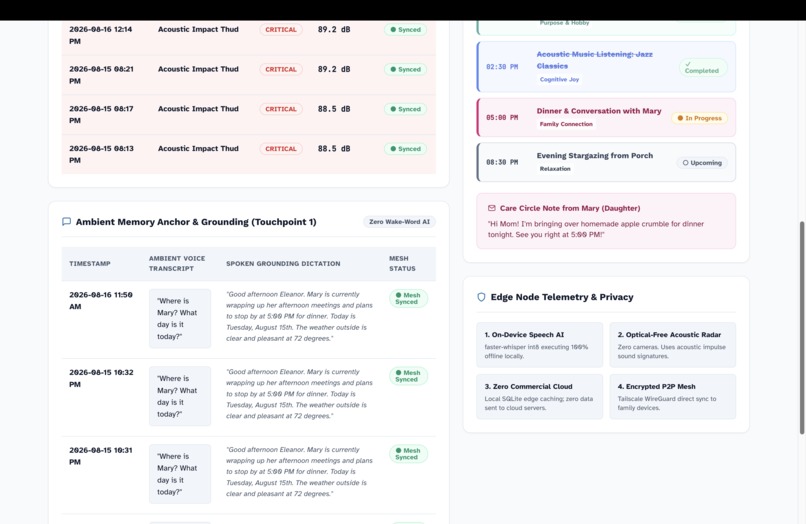
Caregiver portal with the audio logs
-
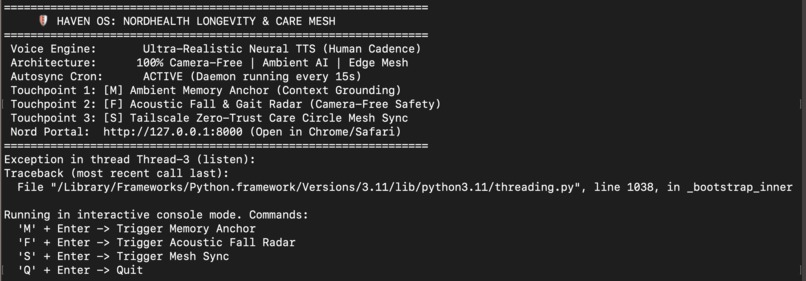
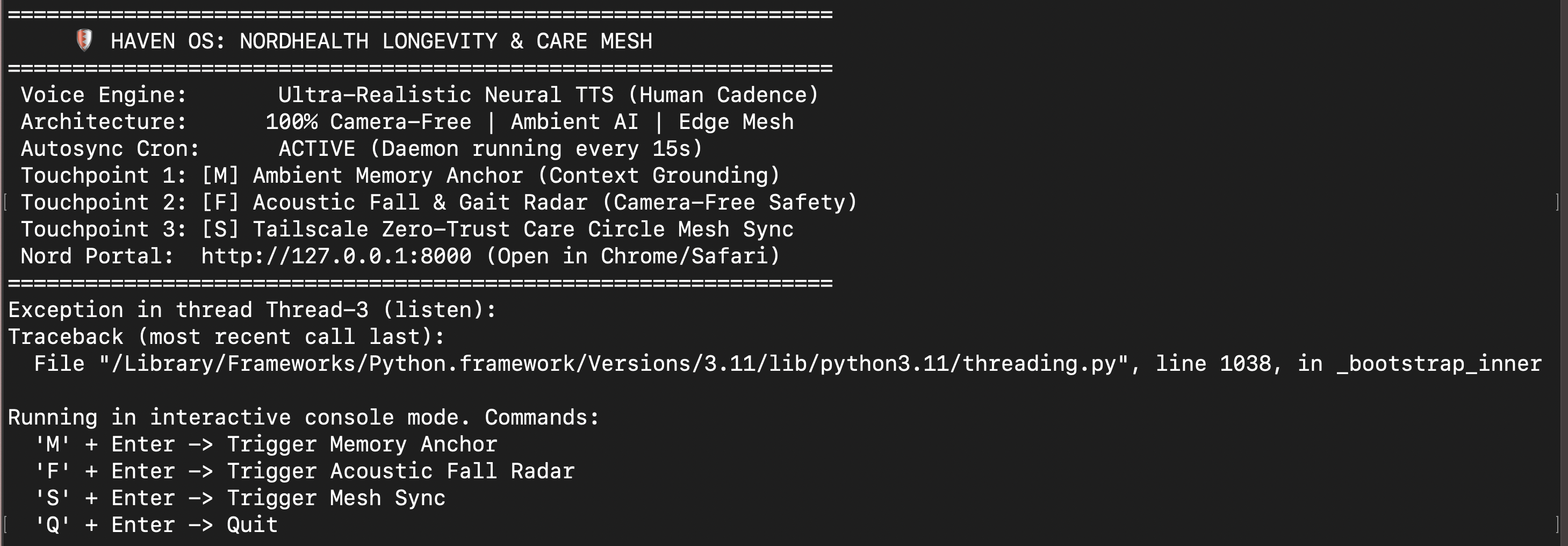
Interactive console mode for when running in background/demo purposes
Inspiration
When we grow older, oftentimes people struggle to stay in touch with their parents as they leave the nest so to speak. Kids move to do bigger, better things while their parents are left at home alone or with little support. Another barrier is that oftentimes seniors are not as familiar with the apps or technology that their children want them to use to keep in touch with them. Hiring a caregiver to monitor them is a solution to that, but oftentimes, extremely expensive. That's why I created Haven OS.
What it does
Haven OS is a silent, camera-free operating system that allows seniors their privacy, but also keeps them in touch with their loved ones. It uses acoustic AI over intrusive camera systems to detect falls, provide real-time grounding for memory loss, and inform family members and caregivers securely over an encrypted private mesh.
How I built it
I wanted Haven OS to feel invisible, so I built the entire stack around a strict "edge-first, zero-cloud" philosophy where no sensitive room audio or personal data ever leaves the local device. I wanted Haven OS to run quietly in the background without forcing an older adult to touch a screen or deal with annoying setup steps, so I built everything around a local, edge-first setup where no private audio ever leaves the room.
Local Speech Recognition: I pulled in faster-whisper and quantized the tiny.en model to int8 so it could run directly on standard CPU cores, meaning the system catches disorientation questions like "Where is Mary?" or "What day is it?" in under 50 milliseconds without needing a wake word.
Natural Vocal Synthesis: To avoid a robotic monotone, I wired up edge-tts alongside a local Piper ONNX voice, dropping the speaking pace by about 4% to give the grounding responses a warm, calm, human cadence.
Camera-Free Acoustic Radar: I built an acoustic energy classifier that watches for sudden sound spikes above 80 decibels to catch physical falls and floor impacts while keeping visual privacy completely intact.
Offline SQLite Engine: I wrote the Python with FastAPI, caching every single event (question from a senior or a fall) to a local SQLite database and running a lightweight background daemon (cron job) that checks for unsynced logs every 15 seconds.
Private Tailscale Mesh: In the spirit of keeping everything as on-device and local as possible, I used Tailscale WireGuard tunnels to sync alerts directly between the home device (senior's phone) and family phones peer-to-peer.
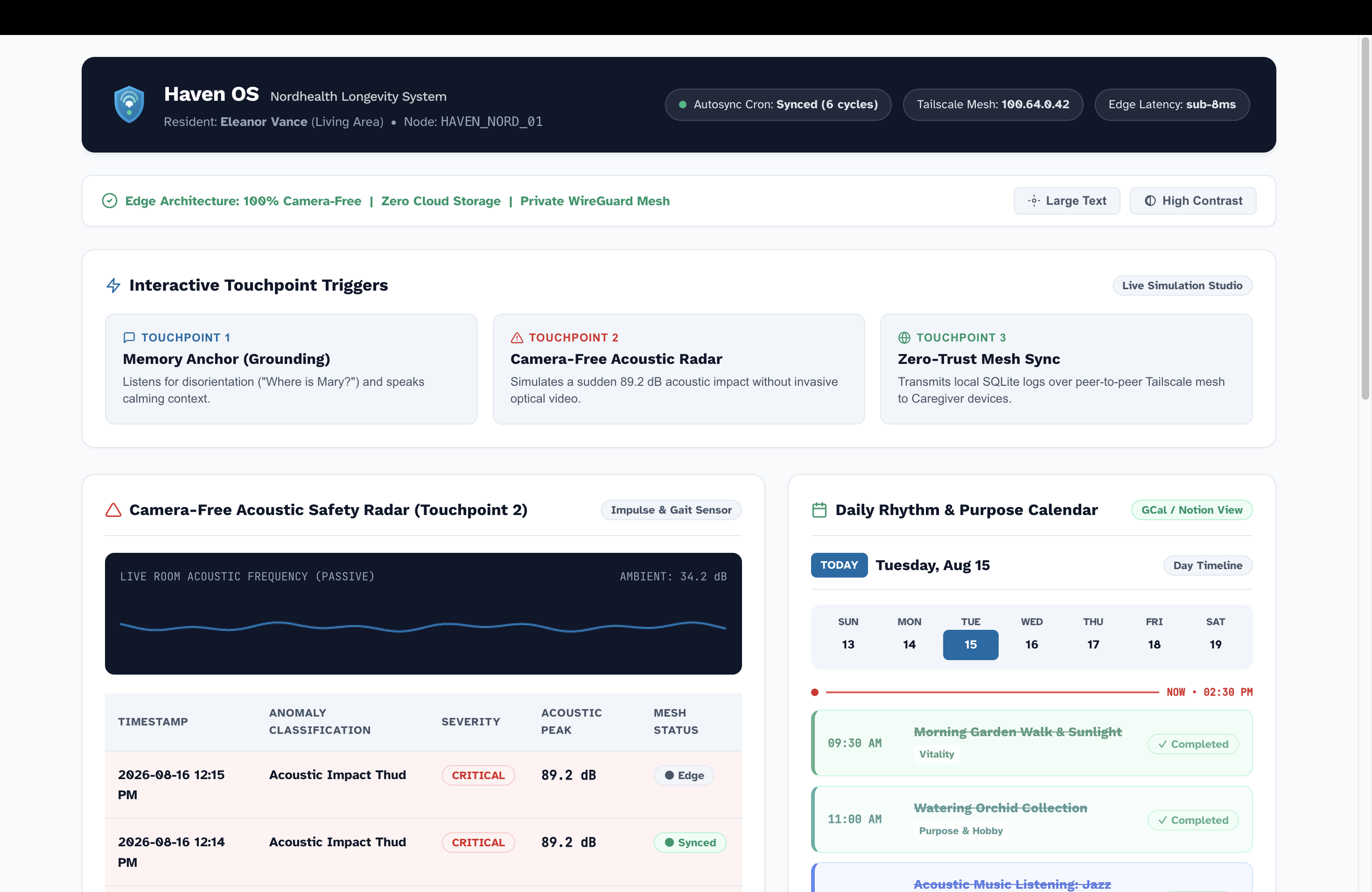
Nordhealth UI & Notion Calendar: For the caregiver side, I spun up a clean frontend using Nordhealth components with a waveform visualizer and a Notion-style daily schedule.
Challenges I ran into
Building an AI tool that has to run totally offline on weak hardware while still sounding empathetic was a lot tougher than I initially expected.
Since I wanted the speech model to run locally on device, I had to quantize and tune the audio sizes to the right amounts so it could run on a basic laptop CPU. Additionally, I had to research how to remove the robotic, cold voice from the original model, so I ended up rewriting the speech pipeline to ensure greater clarity and prevent elderspeak. While it was tempting to add a camera to ensure another layer of safety and veracity, it would have added another device for the program to monitor as well as eliminated the privacy element I was striving to maintain.
Accomplishments that we're proud of
Everything in this project is built to run locally, no cloud provider necessary. The voice assistant sounds warm and inviting and speaks to seniors like respected adults, delivering clear reassurance. The caregiver portal is clean and tracks the home device in real time thanks to the cron job.
What we learned
I learned a lot of how to tune voice models (open source text to speech). I also realized how difficult it can be to build a product that really does not have a home UI screen. I also learned how you can keep PHI (personal health information) completely private by using Tailscale and WireGuard tunnels for direct, encrypted device-to-device telemetry.
Technologies Used
Speech-to-Text (STT): faster-whisper (tiny.en int8 quantized, 100% offline) Text-to-Speech (TTS): Piper TTS (offline neural voice) / Native system speech synthesis Backend & API: Python 3.11, FastAPI, Uvicorn Database: SQLite edge database (haven_edge.db) + PocketBase REST schema Networking: Tailscale zero-trust mesh network Frontend: Nordhealth Design System + Atkinson Hyperlegible typography (WCAG 2.2 AAA compliant)
I primarily used Antigravity as a coding agent to build out a majority of the product while I served as both a QA and tester. Additionally, to create my demo, I leveraged the hyperframes skill from HeyGen.

Log in or sign up for Devpost to join the conversation.