-
-
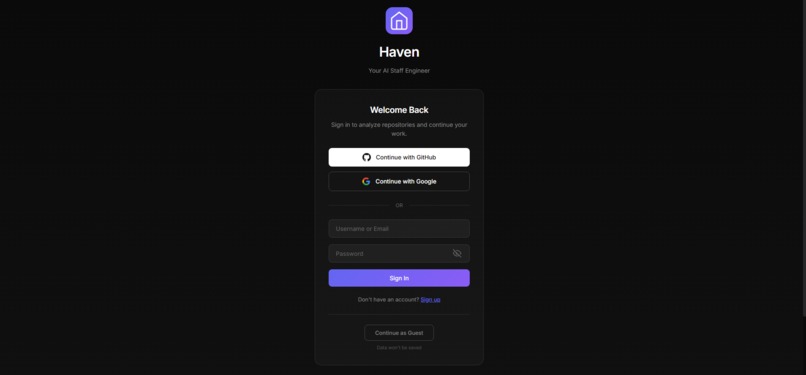
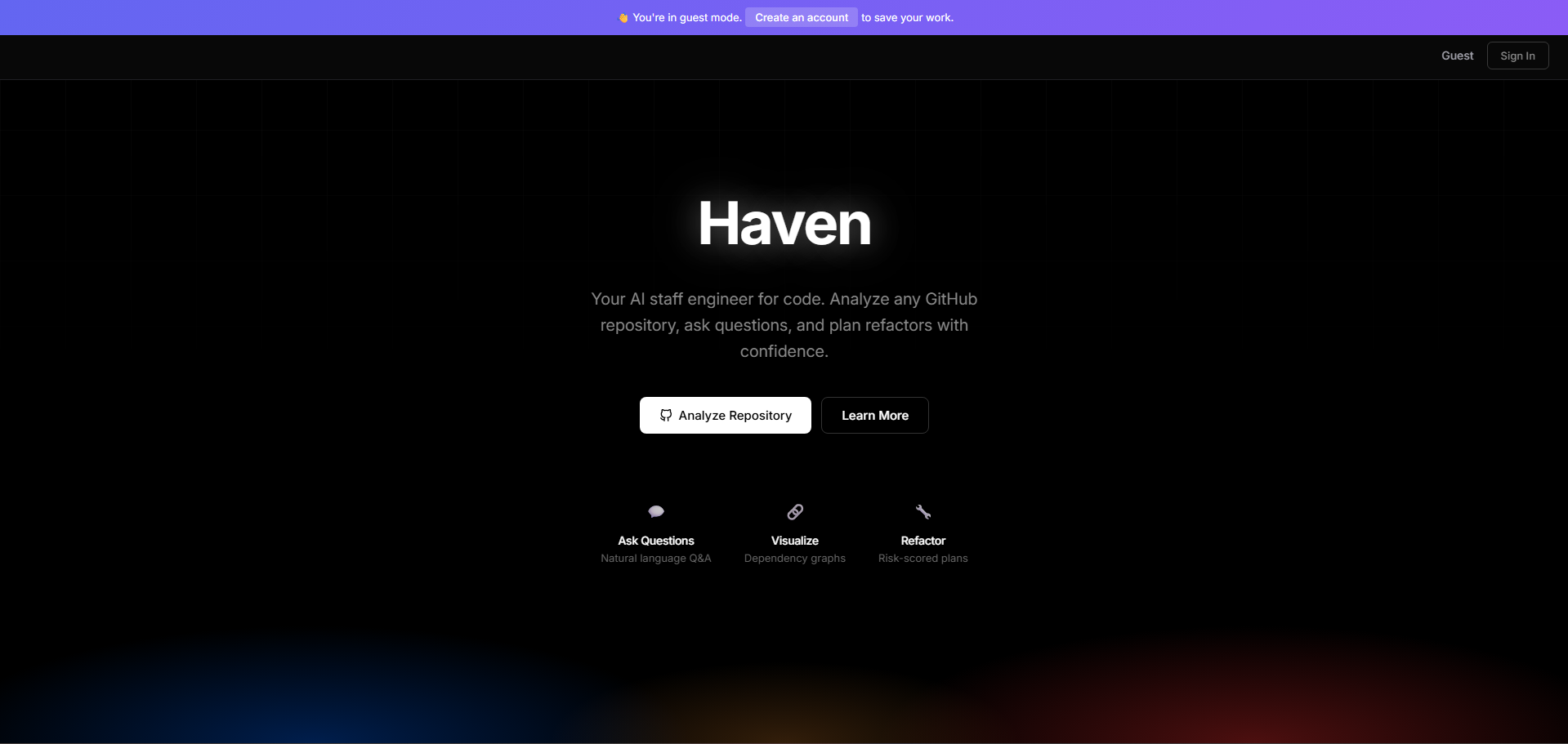
Landing Page
-

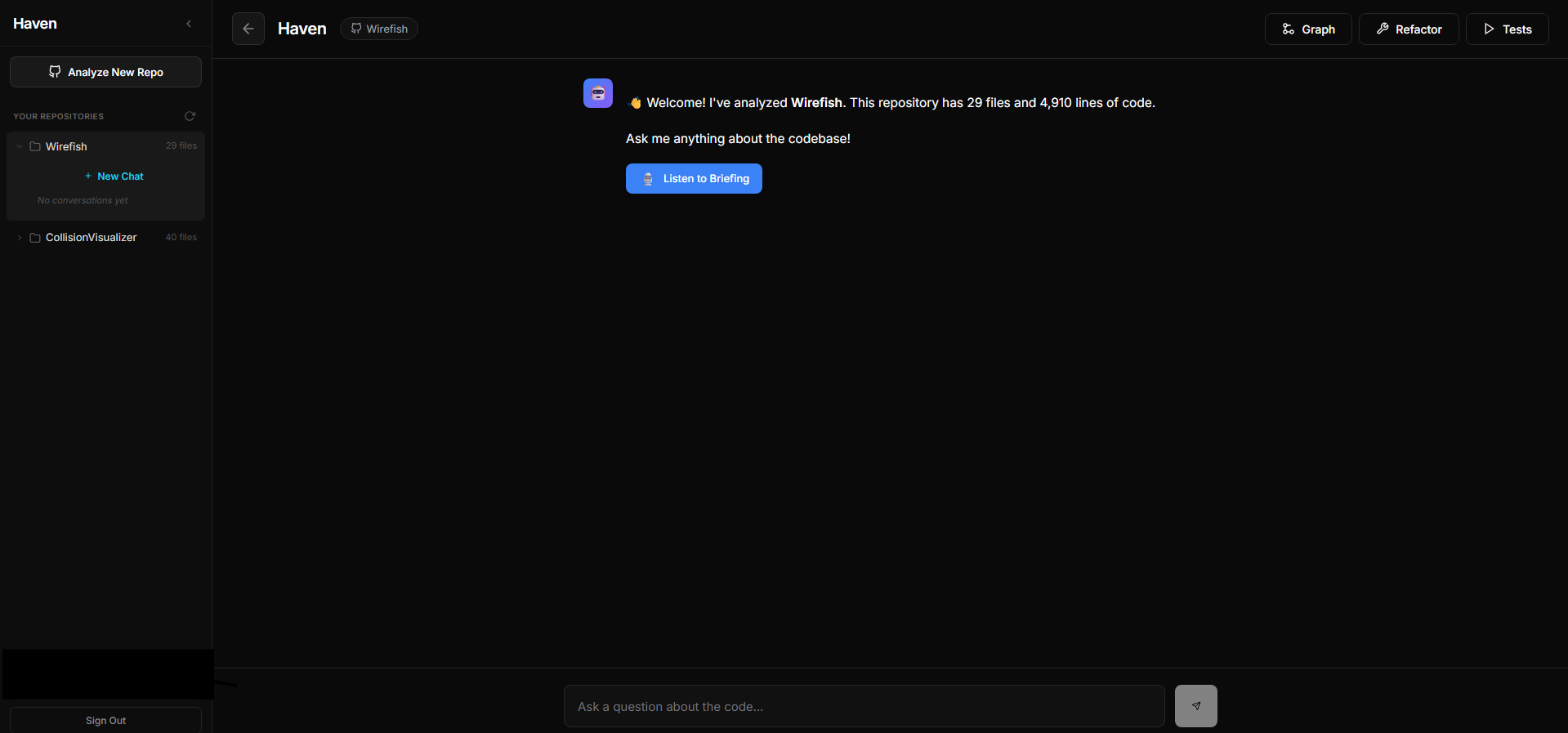
After Signing In
-
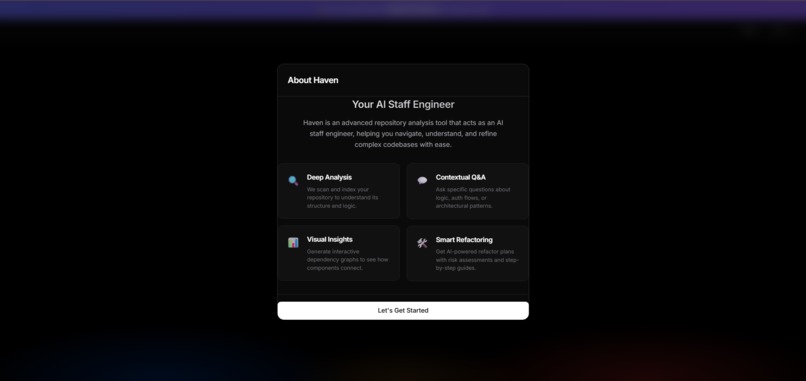
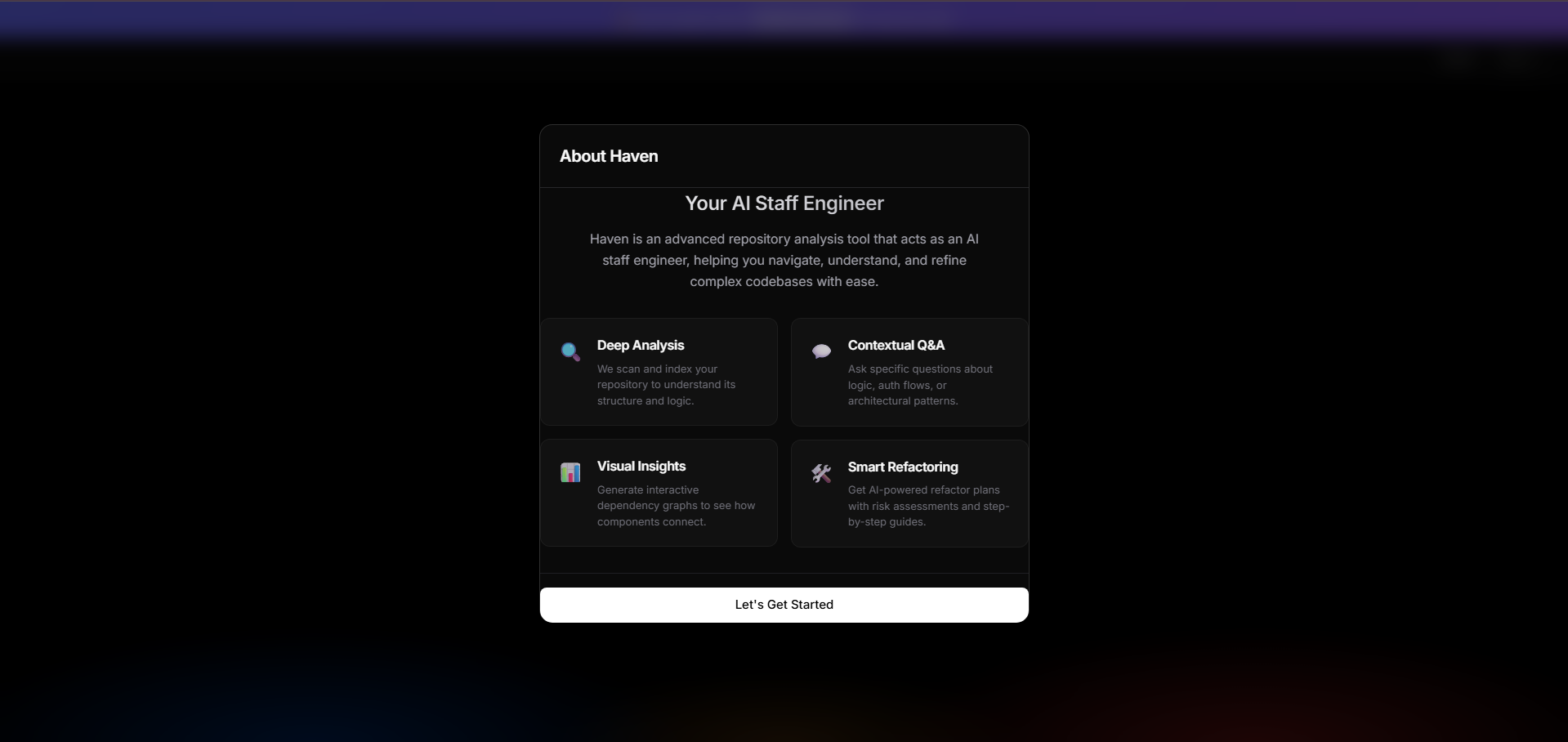
Learn More Button
-
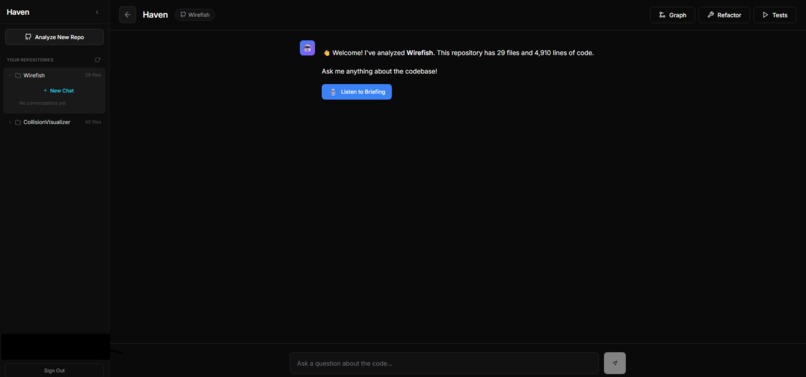
Analyzing Repository
-
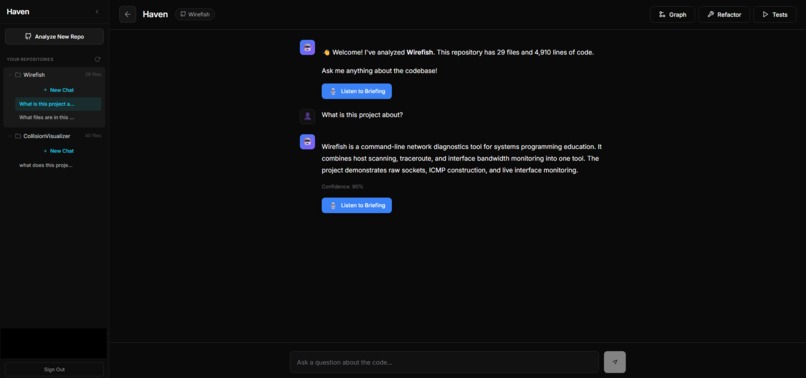
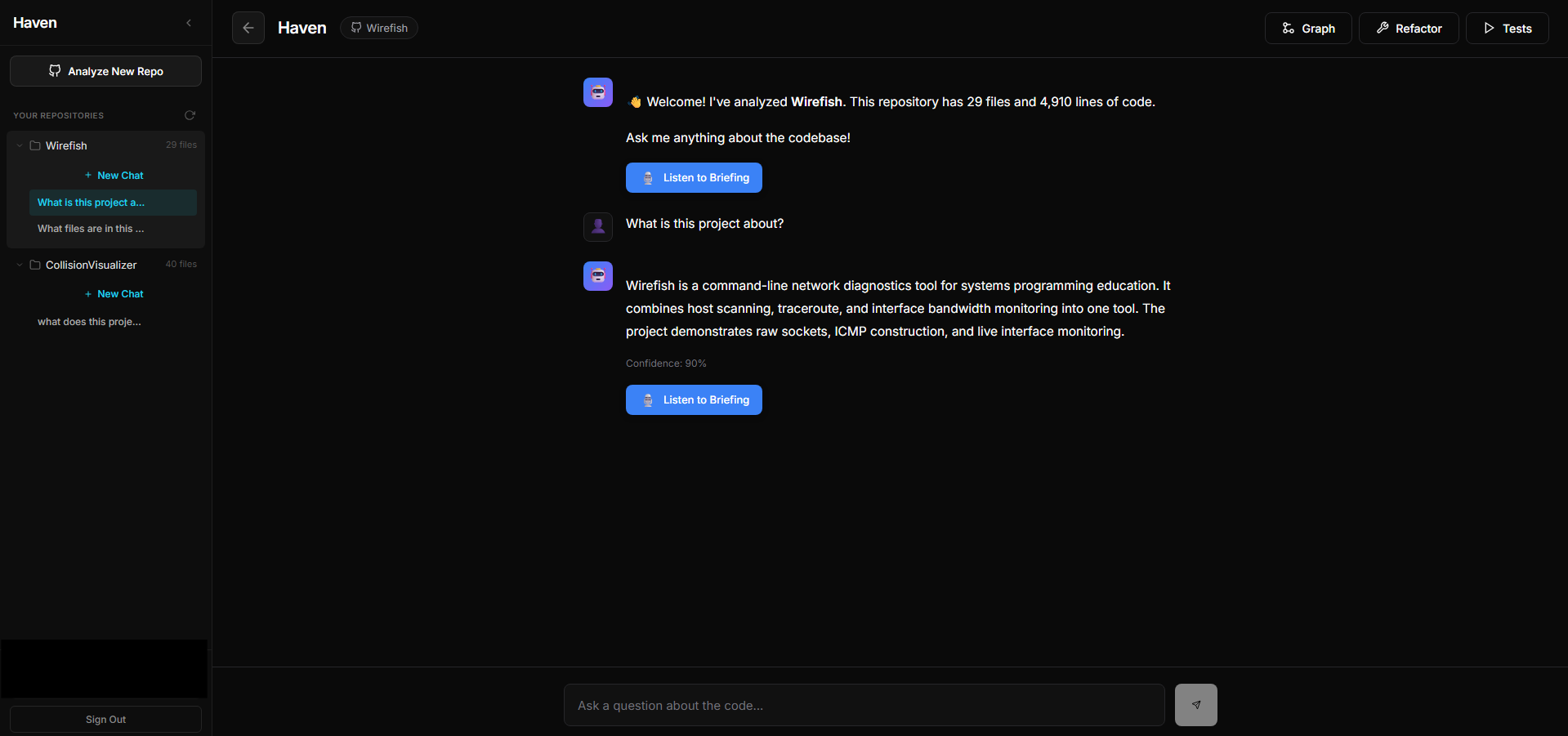
Asking Haven a Question About The Repo
-
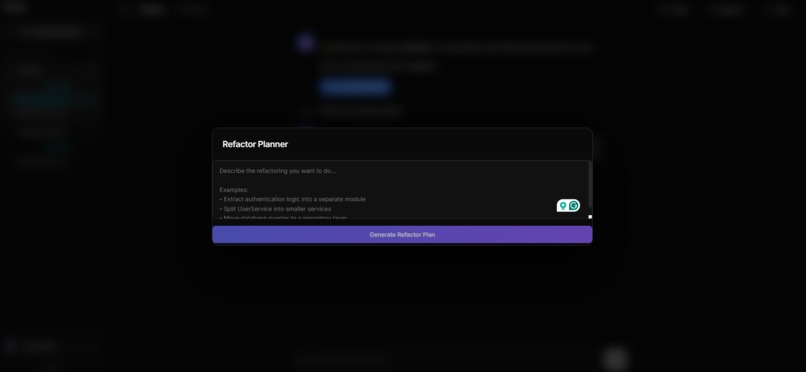
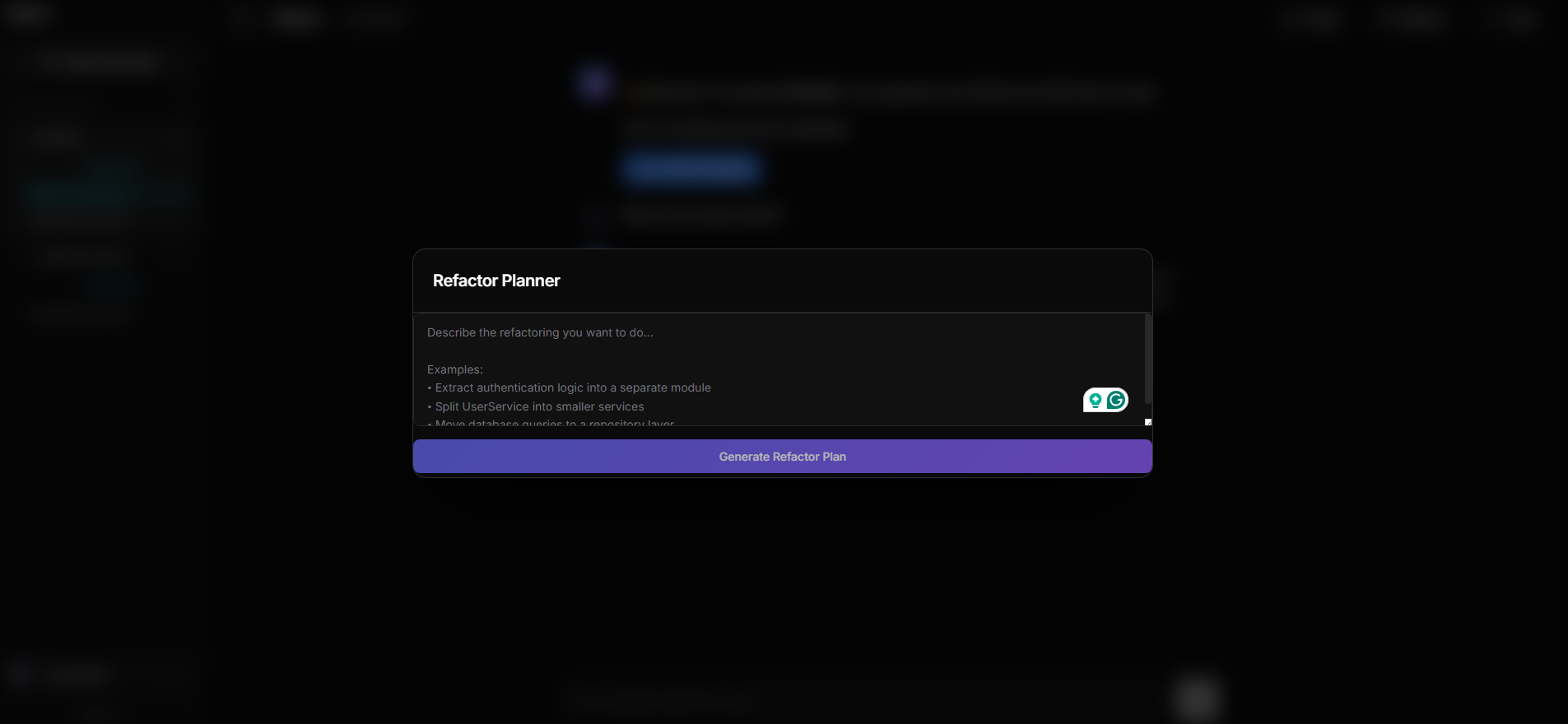
Refactor Button
-
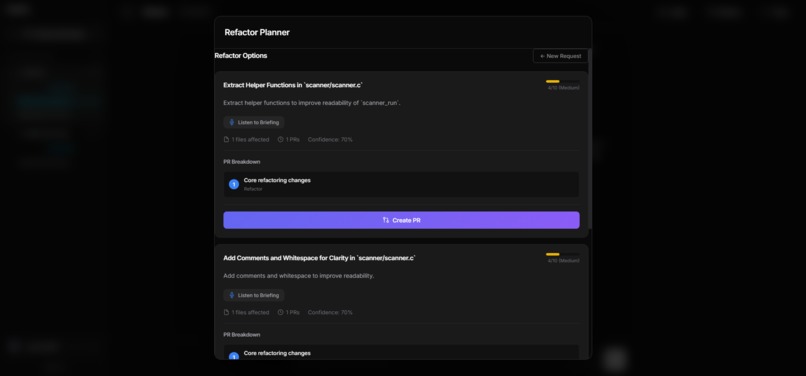
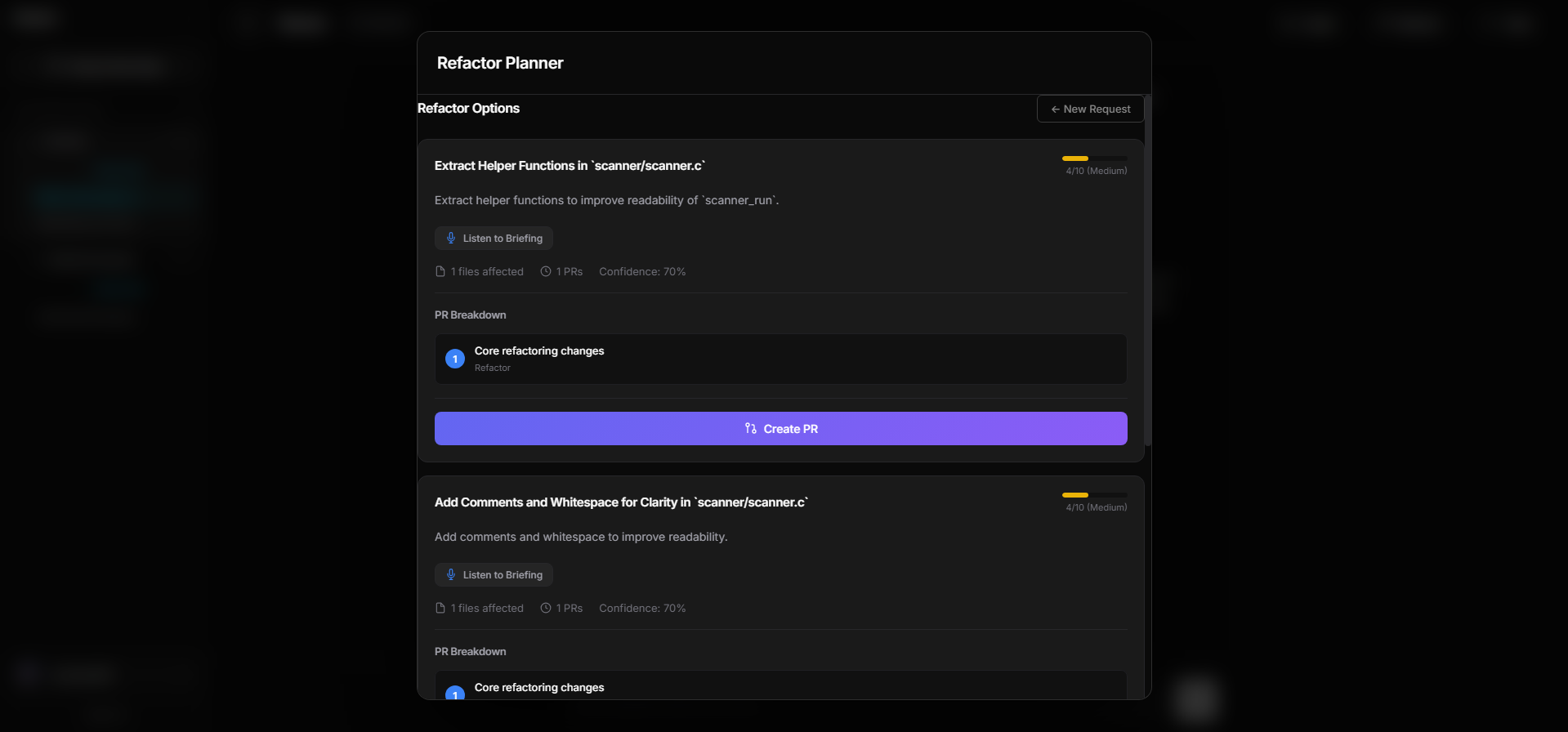
Refactor For Readability Suggestions
-
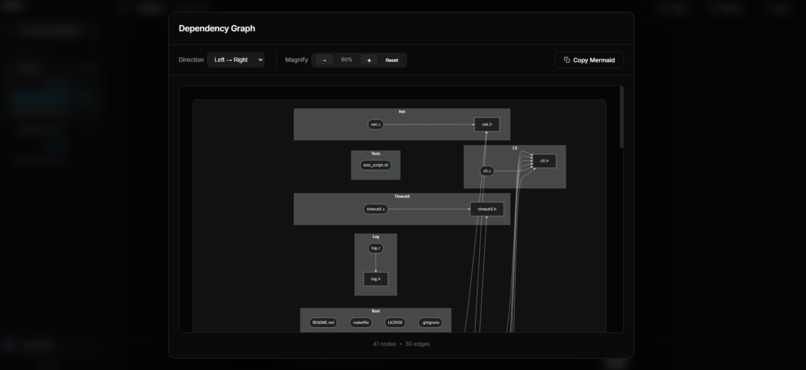
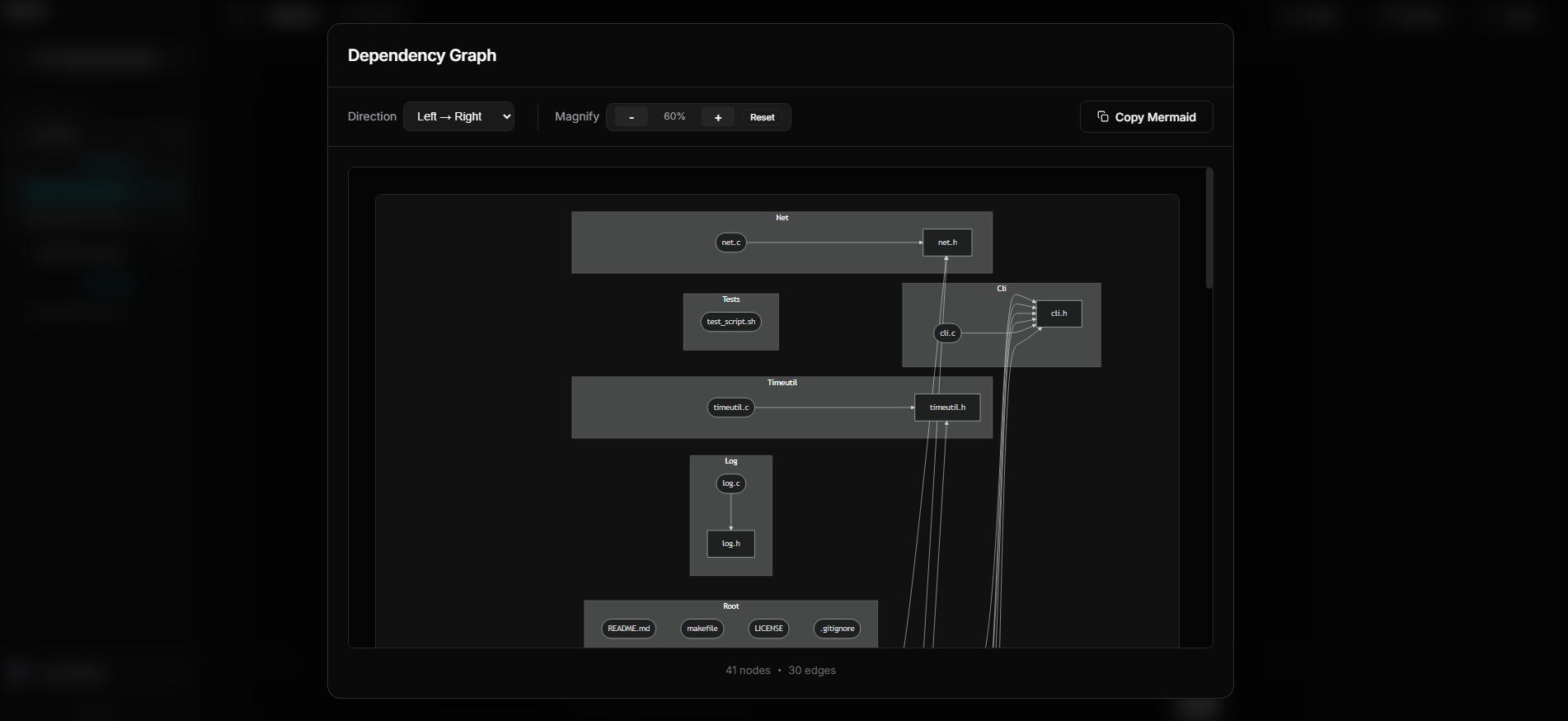
Graph Dependencies of The Project
-
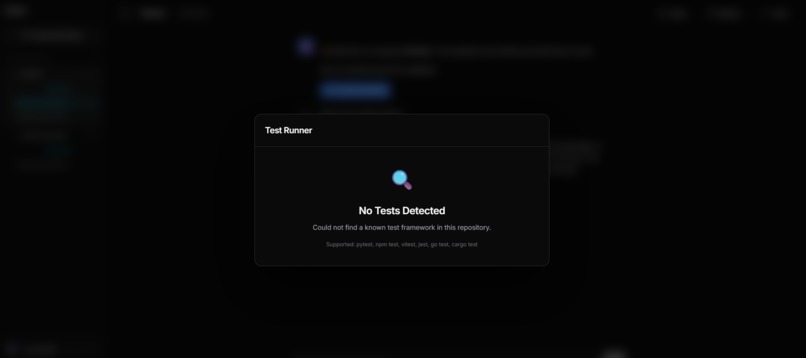
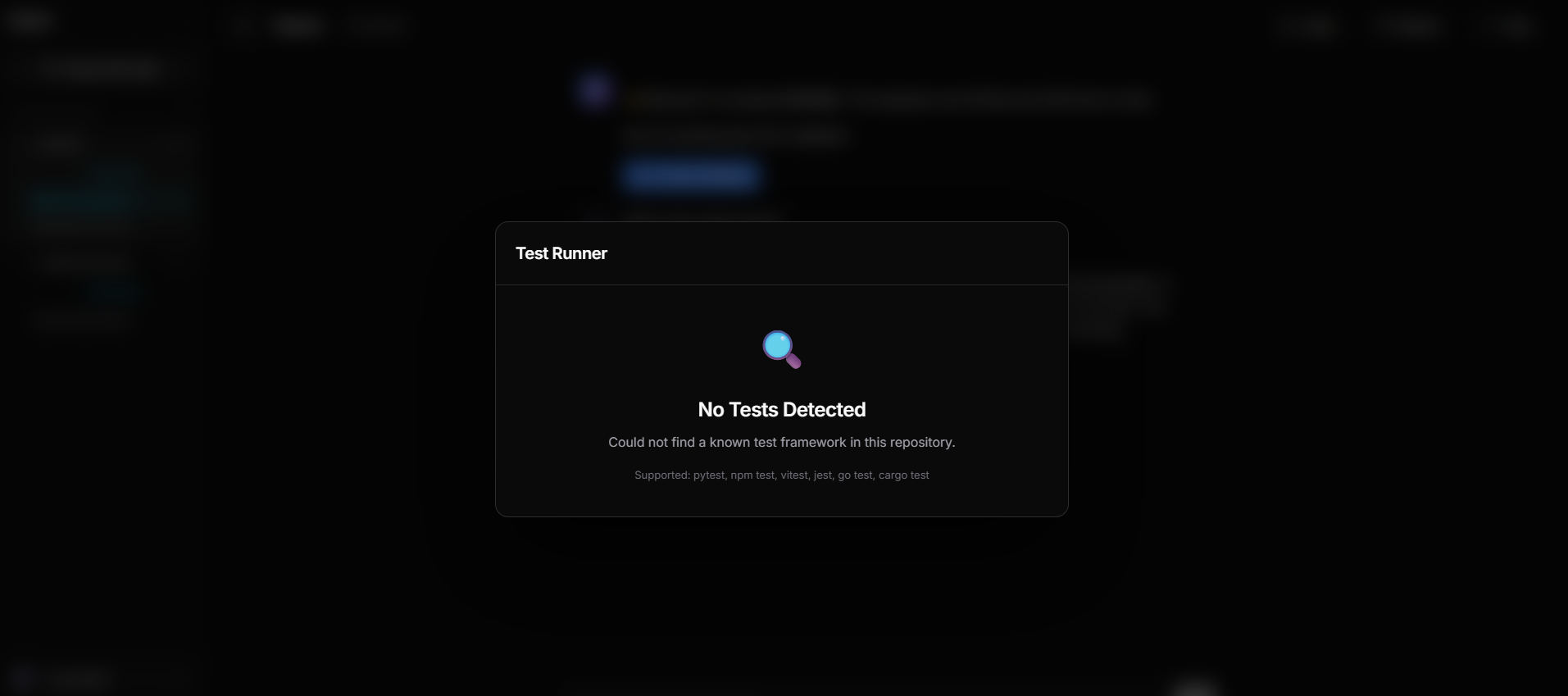
Test Detector Button

Inspiration
As developers, we’ve all experienced opening a new or massive open-source repository and immediately feeling overwhelmed by thousands of lines of unfamiliar code. Understanding how everything connects, identifying critical entry points, and estimating the “blast radius” of even a small refactor can take days of manual exploration.
We built Haven to be the AI Staff Engineer we always wished we had, a tool that doesn’t just chat with your code, but truly understands its architecture, visualizes relationships, and plans complex engineering changes with the caution and foresight of a senior developer.
What it does
Haven is an elite repository intelligence platform that transforms how developers interact with large codebases:
- Deep Repository Analysis: Clone any GitHub repository and instantly generate a comprehensive structural and dependency map.
- Cited Architectural Q&A: Ask complex questions about the codebase and receive answers with file- and line-level citations.
- Interactive Dependency Graphs: Visualize module and file relationships using interactive Mermaid.js diagrams.
- Risk-Aware Refactor Planning: Generate multiple refactor strategies, each broken down into incremental, reviewable pull requests.
- Quantitative Risk Assessment: Every plan includes a safety score based on blast radius, structural complexity, and test coverage gaps.
How we built it
Haven is powered by a high-performance stack optimized for scale and precision:
- Backend: FastAPI (Python 3.12) orchestrates git ingestion, analysis, and reasoning workflows.
- Frontend: A sleek React 18 interface inspired by Vercel’s design aesthetic, featuring custom modals for interactive graph exploration.
- Reasoning Engine: A multi-stage pipeline using OpenAI and Anthropic models, with ChromaDB for vector embeddings.
- Static & Graph Analysis: A custom engine analyzes Python, TypeScript, and C++ repositories to extract import relationships and compute structural metrics like in-degree and out-degree to identify entry points and “God files.”
The overall risk score is calculated using a weighted formula:
$$ S_{total} = \left\lceil \frac{\sum (S_i \cdot W_i)}{\sum W_i} \right\rceil $$
where weights prioritize blast radius and change complexity.
Challenges we ran into
- Multi-Language Import Resolution: Supporting Python, TypeScript, and C++ required handling edge cases like barrel imports,
__init__.pypackages, and global headers. - Context Window Management: Large repositories exceed LLM limits. We built a custom Memory Manager to intelligently prune and prioritize code chunks during RAG.
- Structured LLM Output: Getting consistent, sequential refactor plans required extensive prompt iteration and a robust fallback parsing system.
Accomplishments that we're proud of
- The Risk Score System: Haven doesn’t just suggest changes, it explains why they’re risky by detecting sensitive areas like authentication flows and entry points.
- Interactive Visuals: Combining LLM reasoning with live dependency graphs makes complex codebases feel intuitive and “alive.”
- PR-Sized Planning: Haven understands real-world engineering workflows by breaking large changes into 3–4 safe, reviewable pull requests.
What we learned
- Graphs > Text: Pure RAG isn’t enough for code. Structural graphs are essential for understanding impact.
- Citations Build Trust: File- and line-level citations are critical when using AI for mission-critical engineering decisions.
- Incrementalism is King: Safe engineering happens in small, verifiable steps, and our refactor planner is built around that philosophy.
What's next for Haven
- Auto-Code Generation: Generate branches and push refactors directly to GitHub.
- CI/CD Integration: A Haven bot that comments on PRs with risk assessments and blast-radius diagrams.
- IDE Extension: Bring dependency graphs and cited Q&A directly into VS Code for a seamless developer experience.


Log in or sign up for Devpost to join the conversation.