-
-
Review
-
All Moods
-
Inspiration
Smart home stuff usually goes wrong in one of two ways. Either you end up building a bunch of automations that stop making sense the second your routine changes, or you hand over a private space to some cloud camera system you can’t really inspect or correct. There’s also the cost of it. The average American wastes around $200 to $400 per year on electrical bills. HAVEN came from wanting something better. A system that understands what’s actually happening in a room, turns things down when nobody’s there, adjusts comfort when someone is, and does all of that locally.
What it does
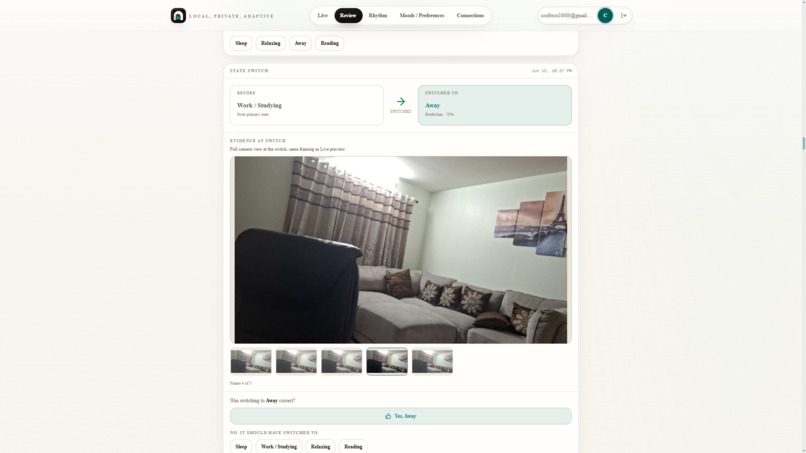
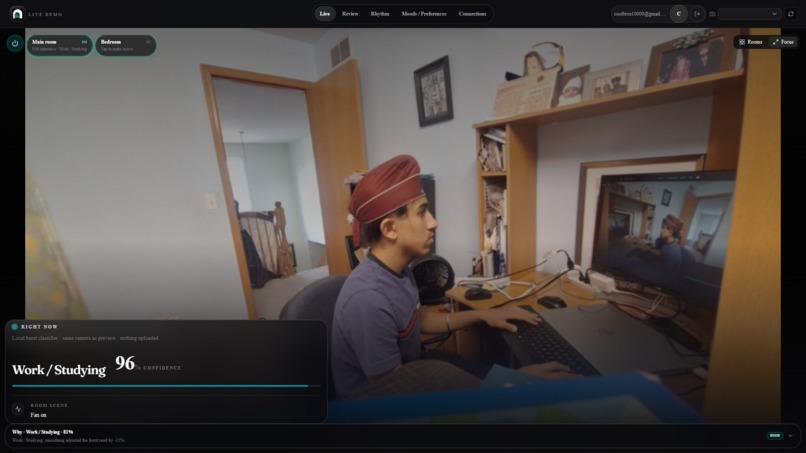
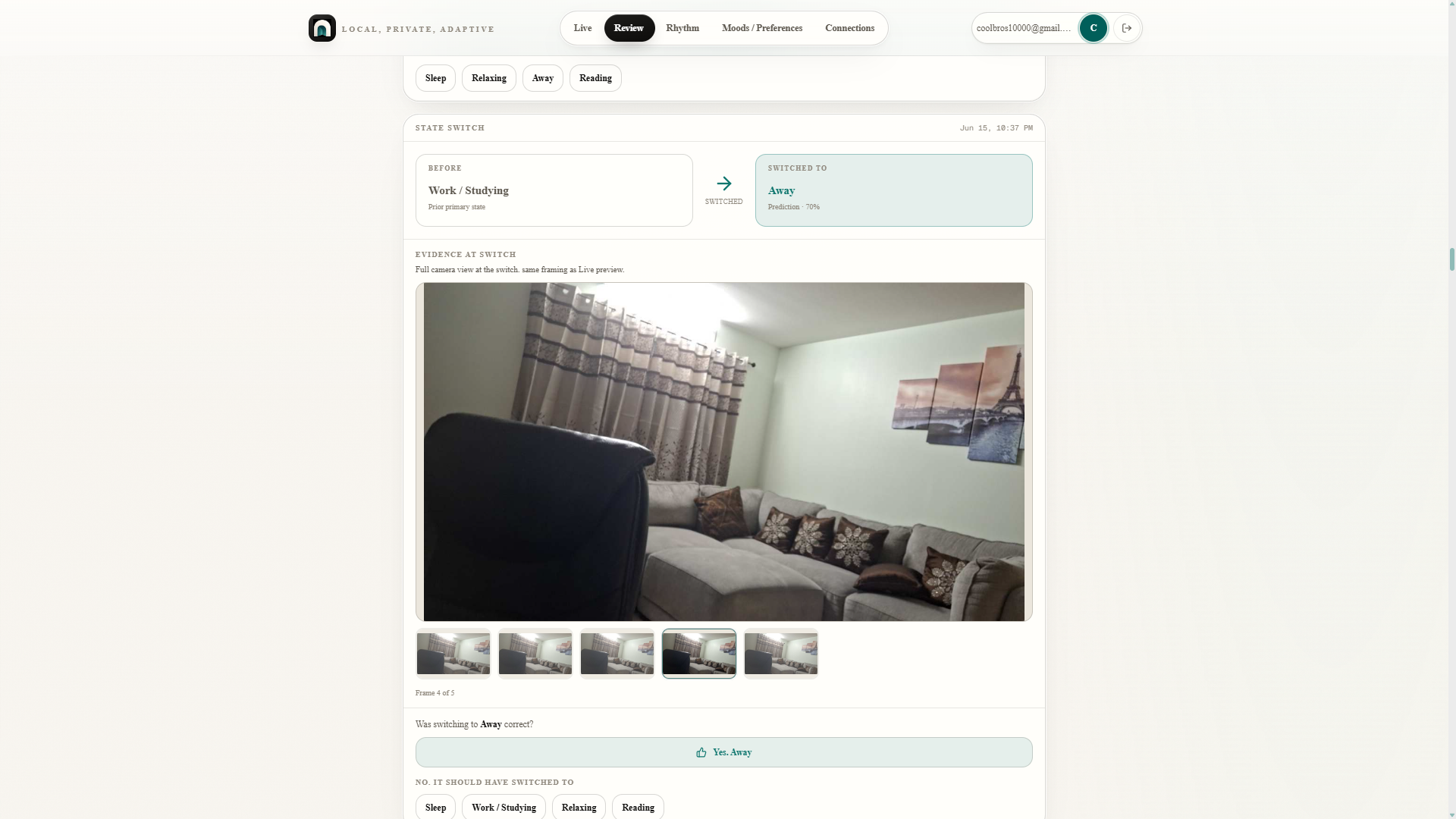
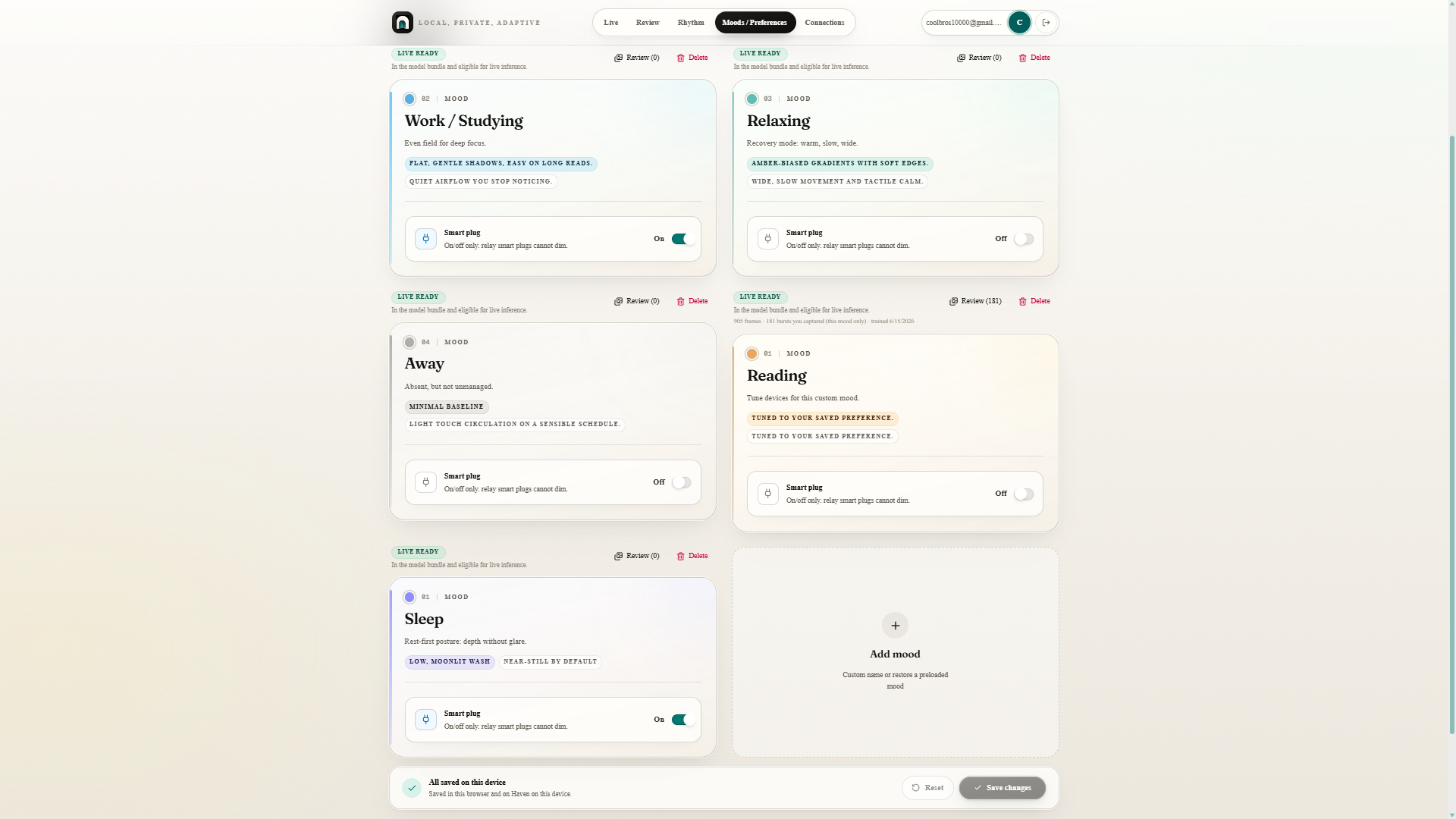
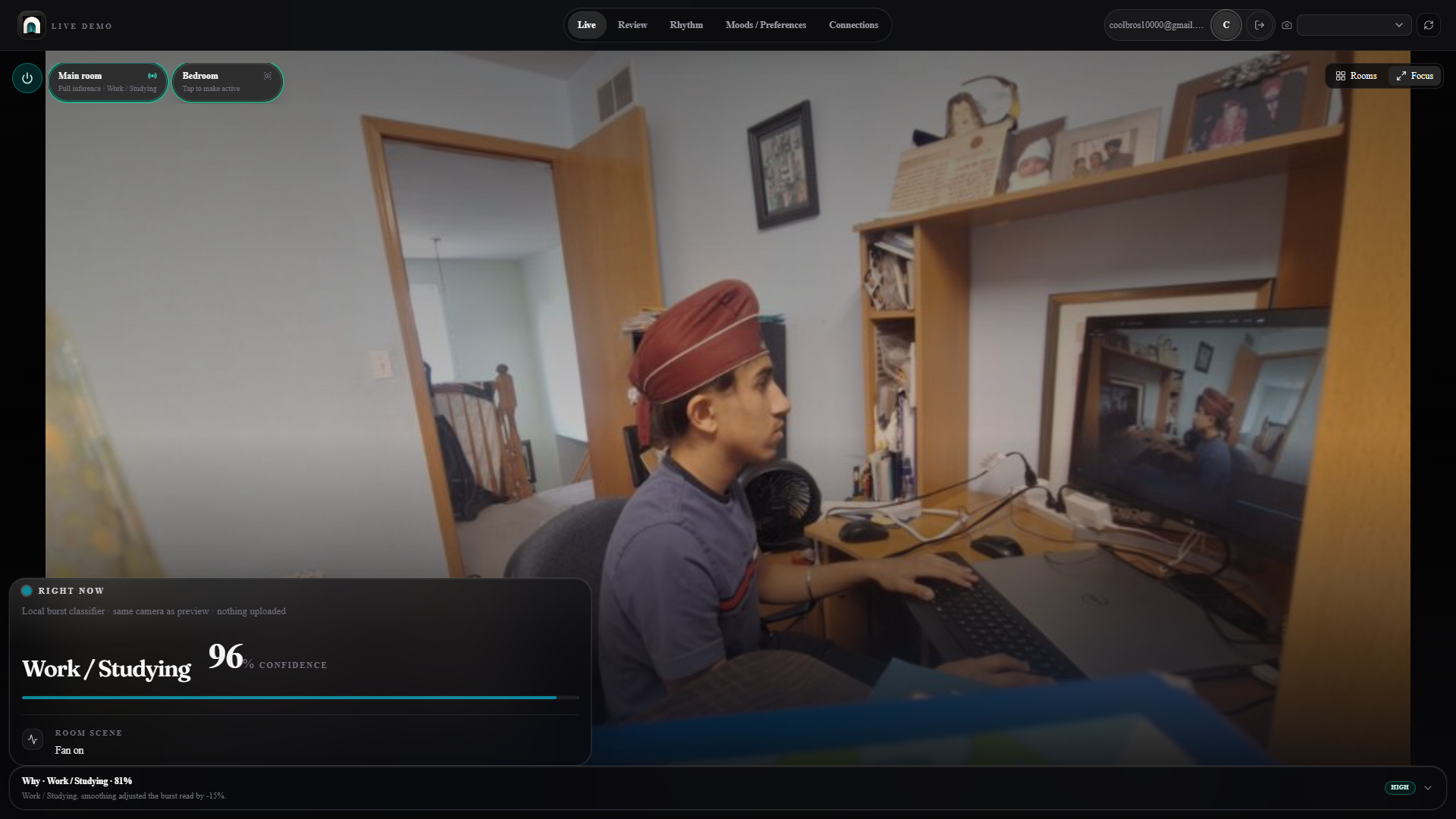
HAVEN is a local-first room intelligence system. It looks at a room in short camera bursts, figures out what’s probably happening there, and uses that to adjust the environment. So if you’re working, relaxing, sleeping, or away, it can shift airflow, lighting, and comfort settings to match. It also shows its confidence and reasoning in the live view, and if it gets a moment wrong, you can correct it once and that feedback helps with similar situations later.
How we built it
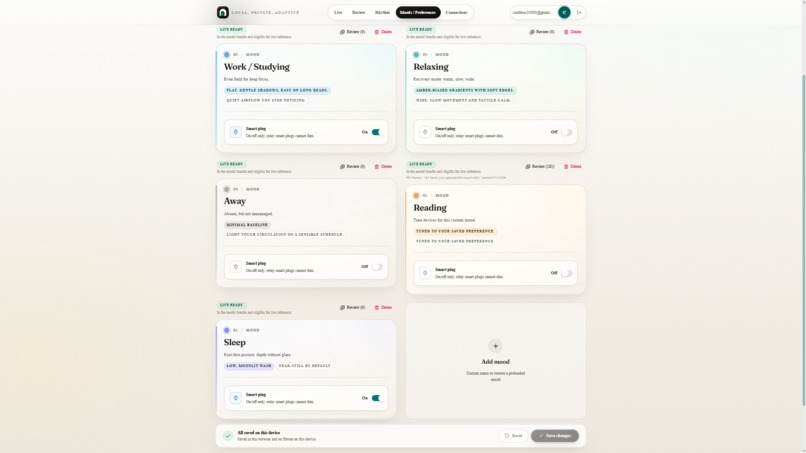
I built HAVEN with a Next.js frontend and a FastAPI backend. The backend grabs short bursts of frames from room cameras, pulls out scene and motion features, and runs them through a lightweight model to predict the current room state. The frontend shows that state live along with confidence, reasoning, the applied scene, and the correction flow. I also added multi-room support, presets for different moods, a replay mode for demos, and a scene system that controls the room as a whole instead of treating every device like its own little automation setup.
Challenges we ran into
The hardest part was making it feel stable. Real rooms are messy, and the same person can look focused one second and half-asleep the next depending on movement, lighting, posture, or camera angle. Raw predictions jumped around too much, so I had to add smoothing, thresholds, and confirmation windows to make the state changes feel believable. Hardware was also another hard part. I had to research individual companies and how to connect to each smart device.
Accomplishments that we're proud of
I am proud that HAVEN feels like an actual product, not just a demo thrown together for a hackathon. The core loop works: it reads the room, applies a scene, shows why it made that call, and lets the user correct it. It runs locally, keeps room video on-device, and handles transitions between rooms instead of acting like a one-room automation toy. And there’s real structure under it, not just a polished UI.
What we learned
The biggest lesson was that being smart isn’t enough. If people can’t tell what a system is doing or fix it when it’s wrong, they stop trusting it fast. I also learned that UX matters just as much as the model here. A system that feels steady, visible, and easy to correct is better than one that’s technically fancier but feels random. And building locally forced better decisions, both on performance and on privacy.
What's next for Haven
Right now HAVEN mostly assumes one person in the home and one set of preferences behind the room behavior. The next step is making it work for homes with multiple people, which means handling shared spaces better, separating preferences between housemates, and resolving conflicts when two people want different conditions in the same room. After that, I want to improve room-specific training, support more devices, and make the system adapt over time without turning unpredictable.
Built With
- auth)
- eslint
- fastapi
- framer-motion
- home-assistant-webhooks
- http-webhooks
- lifx
- next.js
- numpy
- openai-api-(optional)
- openclip
- opencv
- pandas
- philips-hue
- pytest
- python
- pytorch
- radix-ui
- react
- recharts
- scikit-learn
- shadcn/ui
- shelly
- supabase-(postgresql
- tailwind-css
- tanstack-query
- telegram-bot-api-(optional)
- tp-link-kasa/tapo
- tuya
- typescript
- uvicorn
- websockets
- wiz
- xgboost
- yeelight
- zod


Log in or sign up for Devpost to join the conversation.