-
-
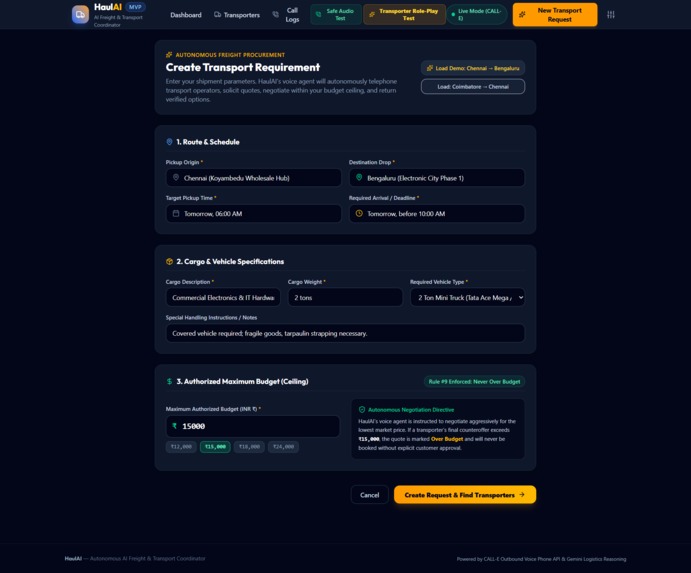
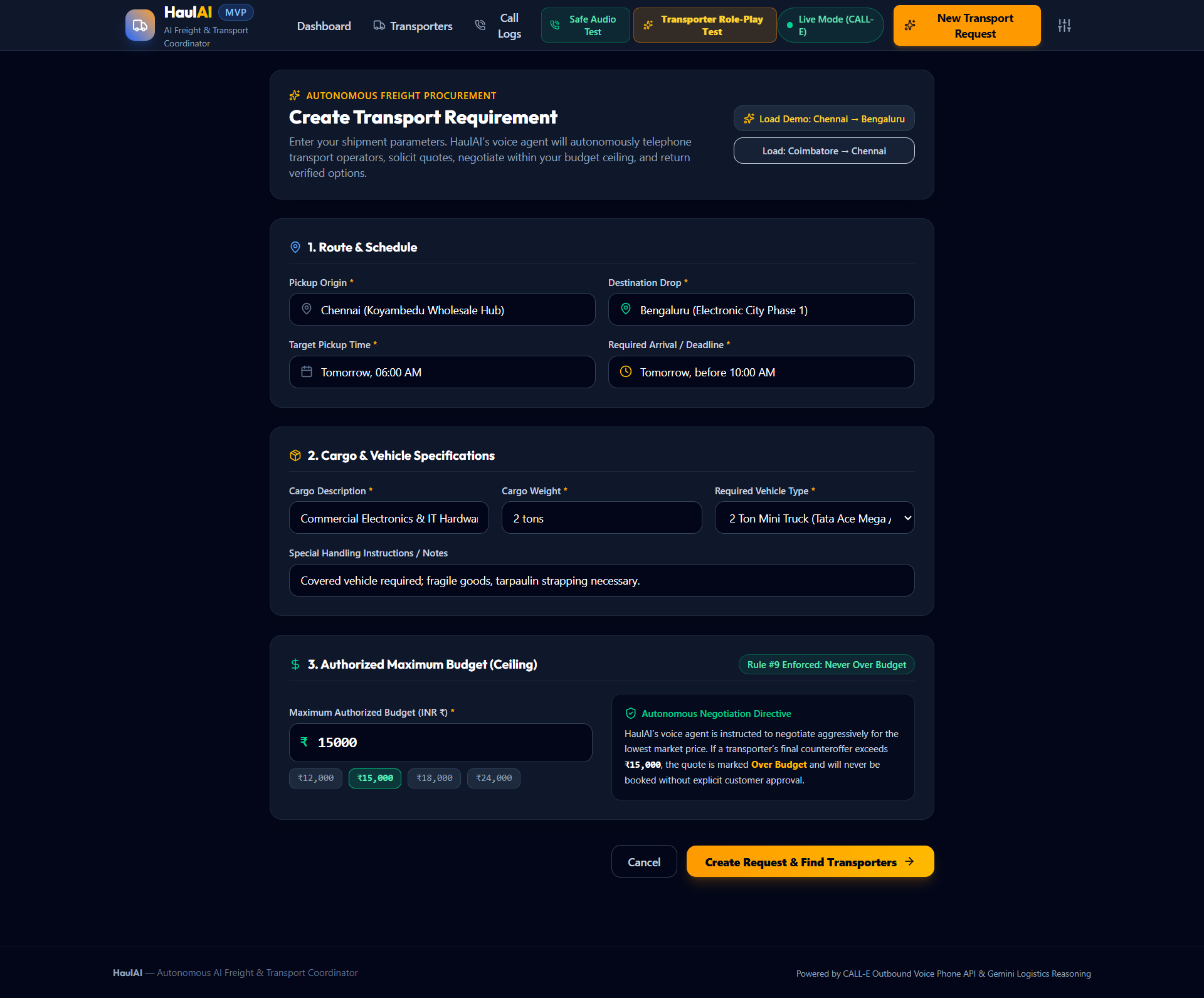
transport requirement
-
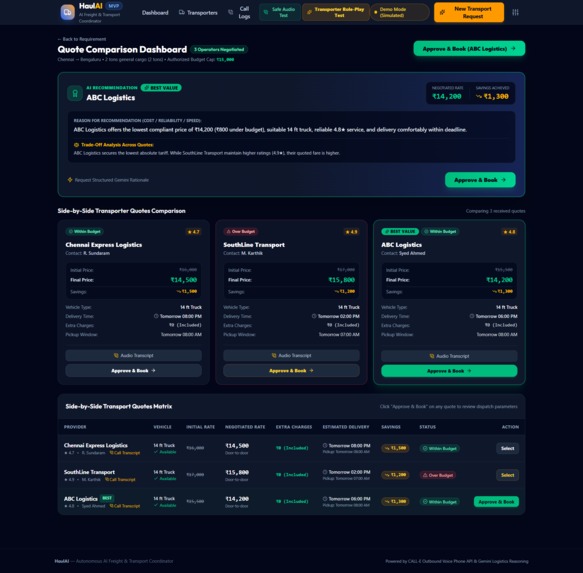
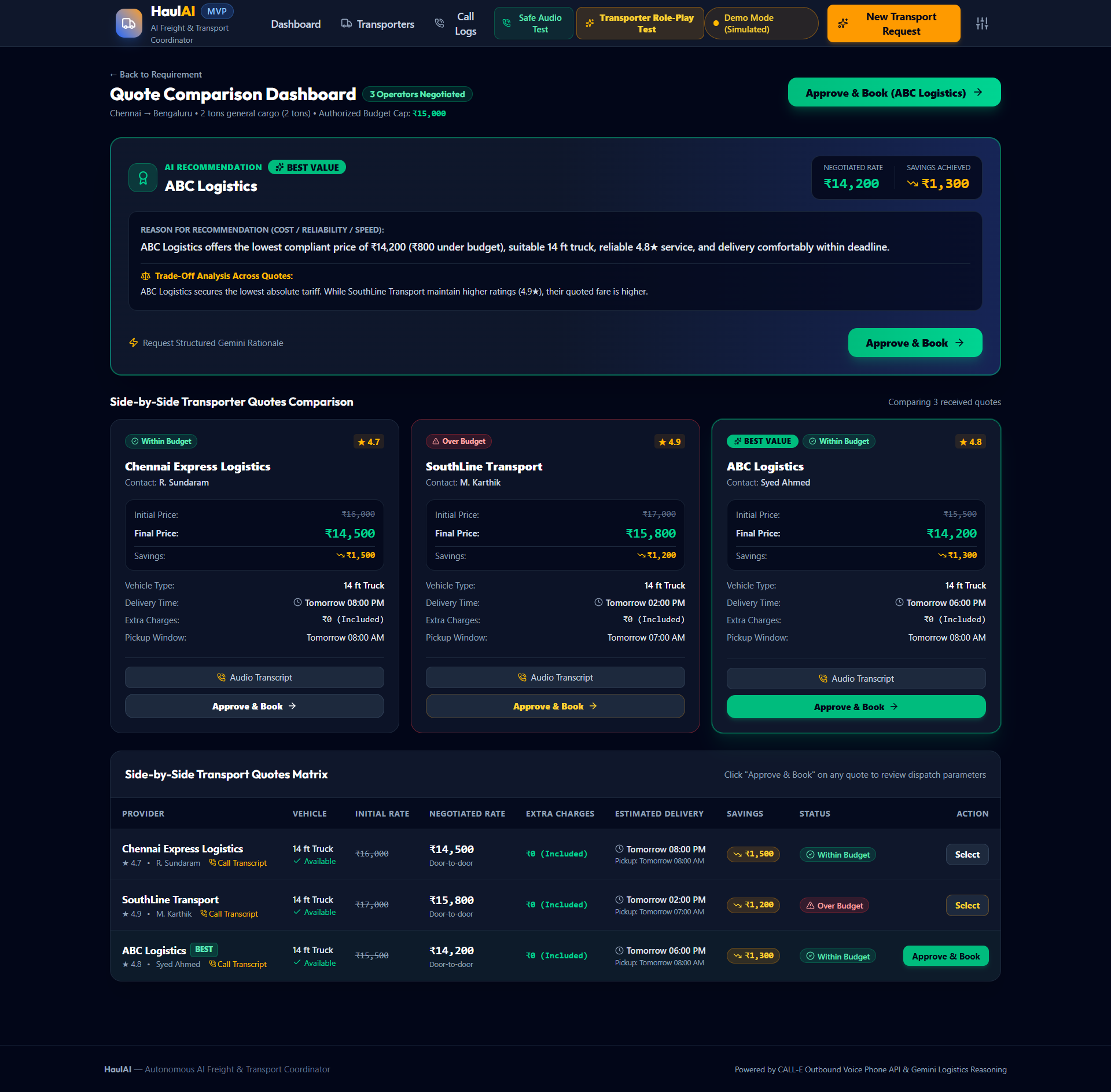
comparison dashboard
-
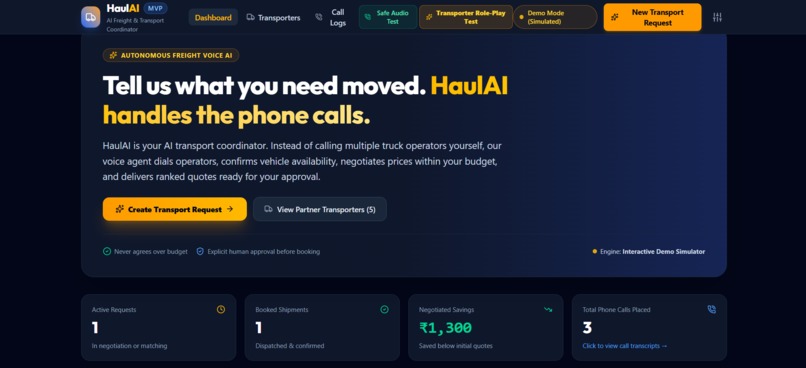
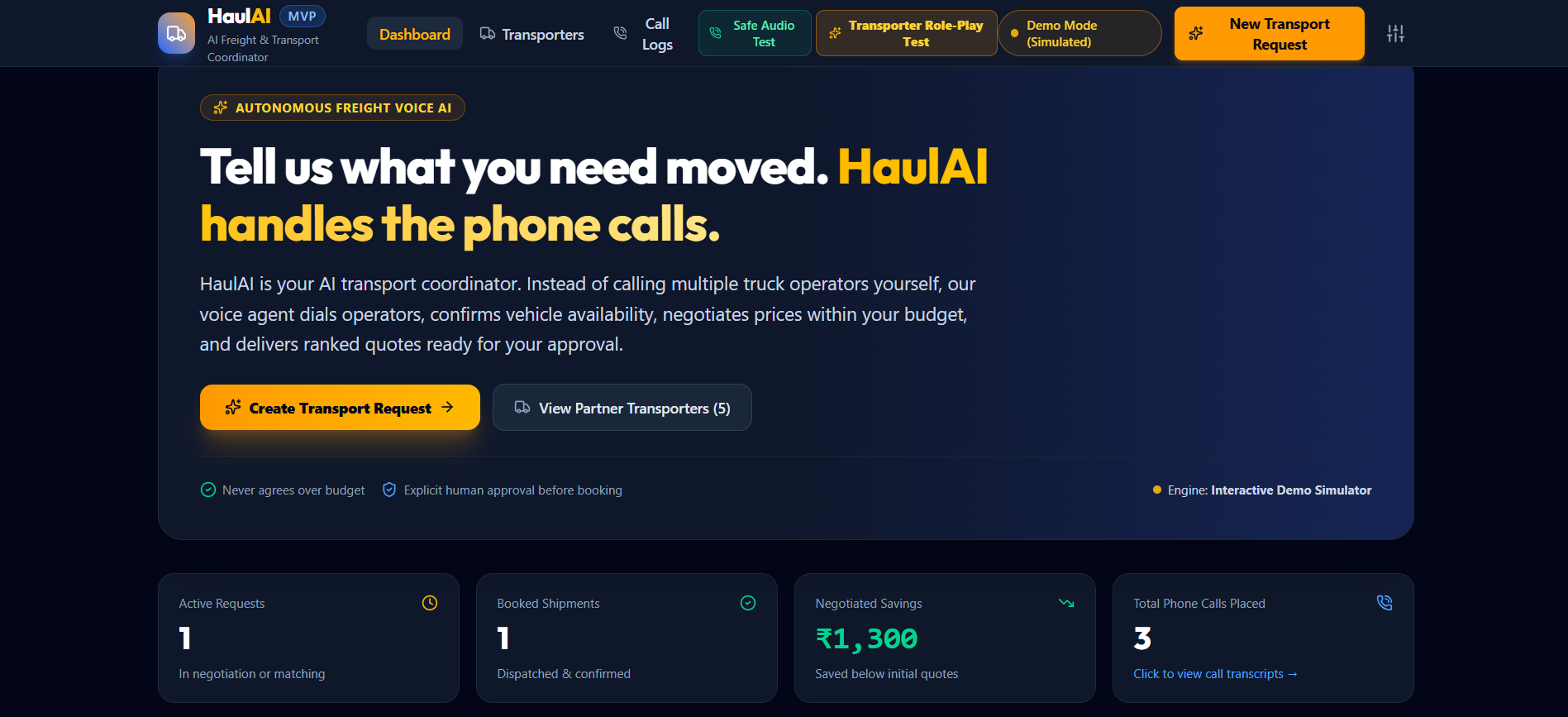
HaulAi
-
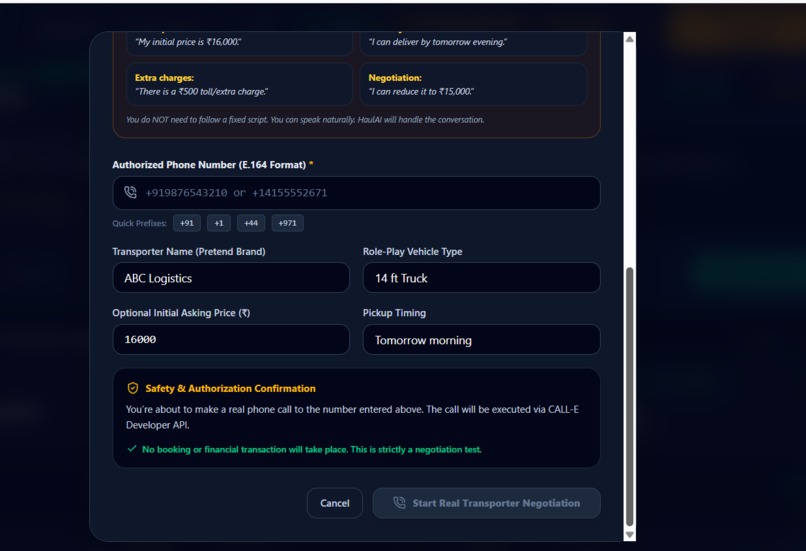
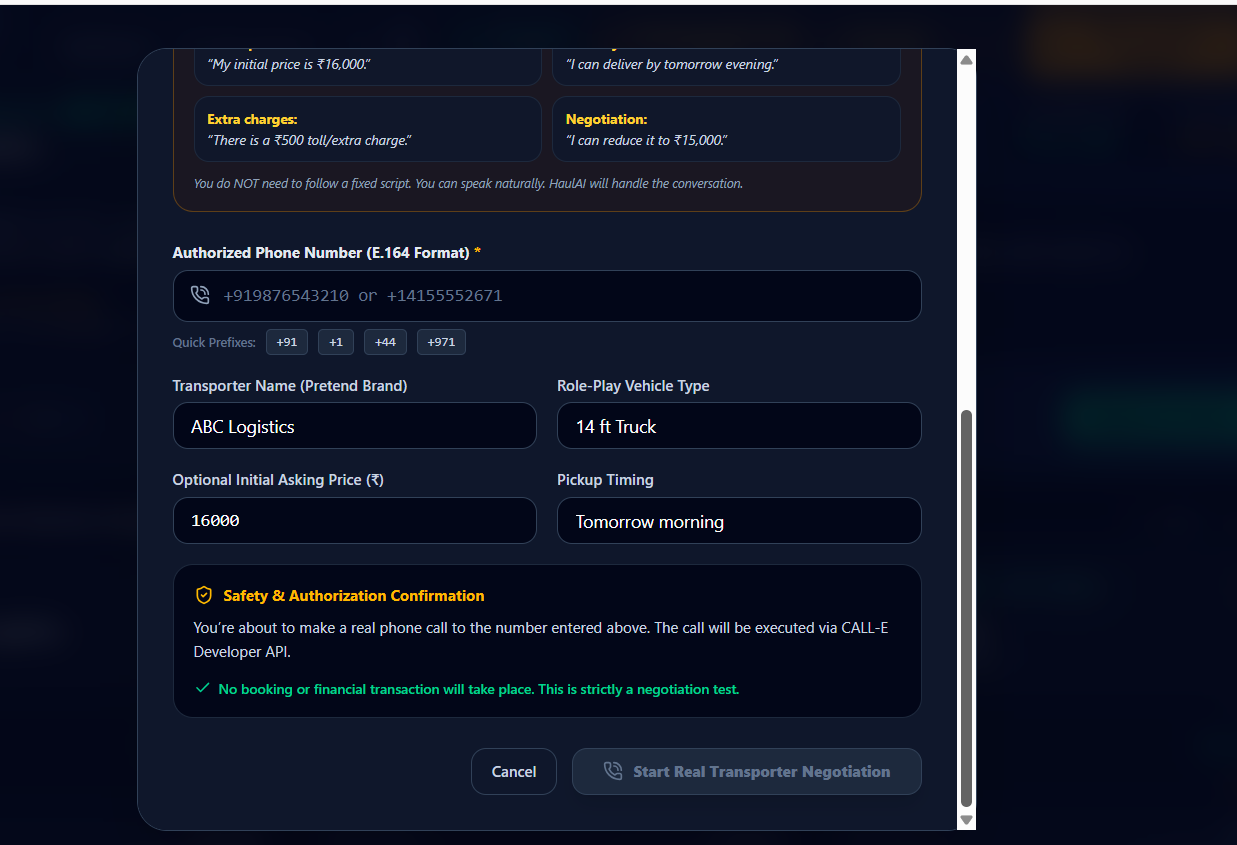
calling feature
Inspiration
Small and medium businesses often depend on phone calls to arrange freight transport. Finding an available vehicle, comparing rates, negotiating prices, and checking delivery timelines can take hours. We wanted to turn this repetitive process into an intelligent, autonomous workflow using AI voice agents.
What it does
HaulAI acts as an AI freight coordinator. A user provides the shipment details, budget, route, and requirements. HaulAI can then:
Contact multiple transporters through AI-powered phone calls Ask about vehicle availability, pricing, pickup and delivery times Negotiate rates within the user's maximum budget Extract structured quotes from conversations Compare transporters based on price, reliability, speed, and vehicle readiness Use Gemini to recommend the best option Keep the final booking decision with a human Maintain call transcripts and an audit trail How we built it
We built HaulAI as a React + TypeScript application with an Express backend. CALL-E powers the real AI phone calls and structured call results, while Google Gemini analyzes transporter quotes and generates recommendations. The MVP uses LocalStorage for persistence and includes both a Demo Simulation Mode and a Live CALL-E Mode for real authorized test calls.
Challenges we ran into
The biggest challenge was designing a reliable workflow around real phone conversations, where transporters may respond unpredictably. We also had to handle call failures, structured data extraction, negotiation limits, polling call status, and ensuring the AI never exceeds the user's maximum budget.
Accomplishments that we're proud of
We're proud that HaulAI goes beyond a chatbot or dashboard—it can actually make phone calls and negotiate with transporters. We built an end-to-end workflow from freight request → AI calls → negotiation → structured quotes → Gemini recommendation → human approval, while keeping safety and budget controls in place.
What we learned
We learned that building an AI agent for real-world tasks requires more than generating responses. It needs clear constraints, structured outputs, failure handling, human checkpoints, and an auditable workflow. We also learned how voice AI can bridge the gap between modern AI systems and traditional phone-based businesses.
What's next for HaulAI
Next, we plan to expand HaulAI with more transporters, persistent cloud storage, smarter negotiation strategies, real-time booking confirmation, transporter reliability history, and deeper logistics automation—turning HaulAI into a complete AI operations coordinator for freight businesses.
Built With
- call-e-voice-ai
- express.js
- google-gemini
- googleaistudio
- localstorage
- node.js
- react
- tailwind-css
- typescript


Log in or sign up for Devpost to join the conversation.