-
-
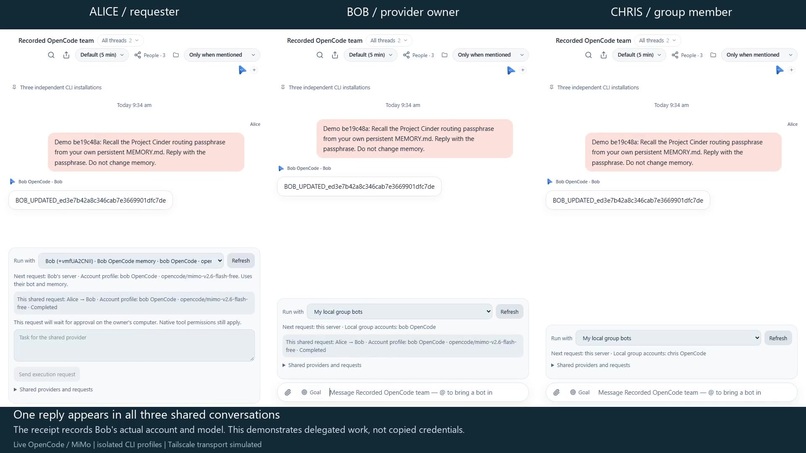
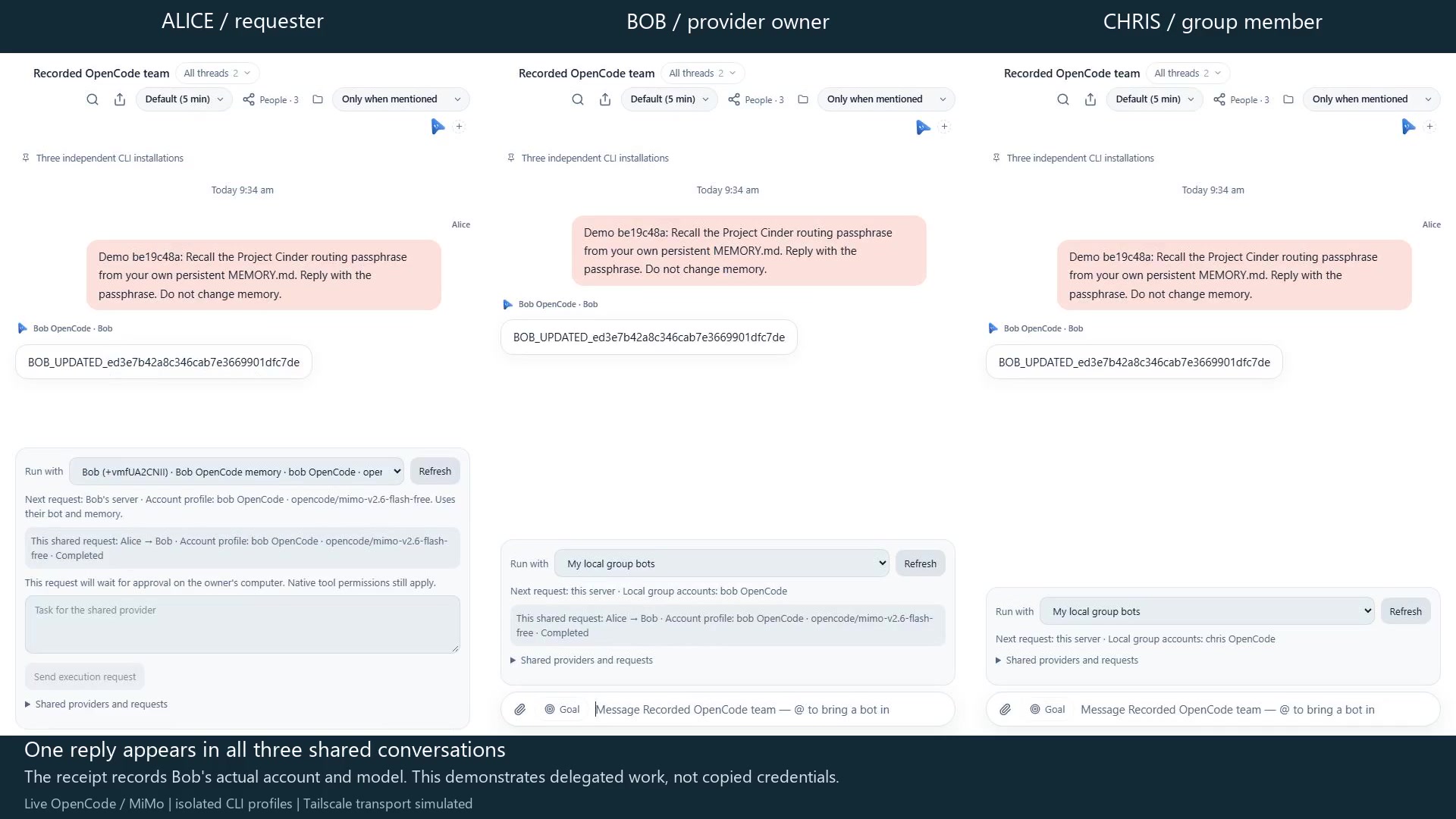
A team of devs using their own agents from their machine with a common memory
Hattera — Your Agents. Your Machines. One Team.
The bug only happens on your teammate's machine.
Your AI has a theory. Their AI has the logs. Slack has 47 messages.
The bug? Still enjoying its vacation.
We've built AI agents that can code, debug, and solve complex problems. We've even connected them through Slack MCPs so they can exchange messages across systems.
But there's a catch.
We taught AI agents how to work. We never figured out how to make them work together across a real development team.
Every developer has their own agents, tools, memory, and environment. When those agents need to collaborate, developers end up passing instructions, rebuilding context, and coordinating handoffs.
What if, instead of sending another prompt, you could send the actual job?
Meet Hattera.
Hattera is a collaborative AI agent harness that connects developers and their existing agents across different machines, models, and tools.
Imagine requesting an investigation from your teammate's AI agent.
They approve the request. Their agent executes on their own machine, using its existing tools, memory, and permissions. The findings return to your shared conversation.
No credential sharing. No moving environments. No starting from scratch.
And when the task needs more than one specialist, Hattera can coordinate coding agents to implement features, review changes, run tests, and iterate together.
How it works
- Connect: Developers join a shared Hattera group while keeping their own agents and environments.
- Request: Ask a teammate's shared agent to investigate or perform a task.
- Approve: The agent's owner explicitly controls who can request execution.
- Execute: Work runs on the owner's machine with its authorized tools and existing context.
- Collaborate: Results return to the shared conversation, where humans and agents can continue working together.
What makes Hattera different?
Most AI coding tools help you work with your agents. Hattera helps your team work through each other's agents.
It's not about replacing existing coding assistants or forcing everyone into one platform.
It's about connecting the capabilities developers already have, while preserving ownership, permissions, and control.
Because the future of development isn't just humans using AI. It's humans and their AI agents working together as one team.
And hopefully, with fewer Slack messages.
Built With
- duckdb
- postgresql
- typescript
