-
-

Hatchway Logo
-
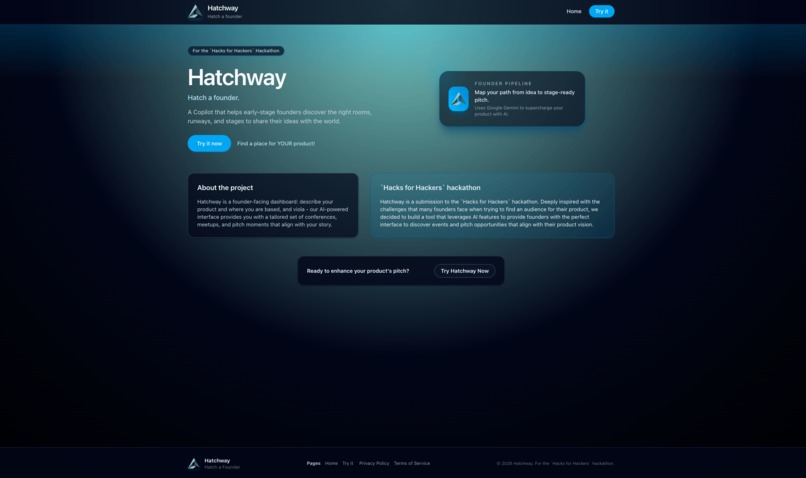
Hatchway Home Page
-
-
-
-

-



Inspiration
Hatchway started from a simple but persistent observation: founders rarely fail because their ideas are bad—they fail because they pitch the right product to the wrong room. I saw talented builders wasting time on low-signal events, cold outreach, and generic founder platforms that optimize for volume instead of relevance. I wanted to build something that helps founders consistently show up where it actually matters.
What it does
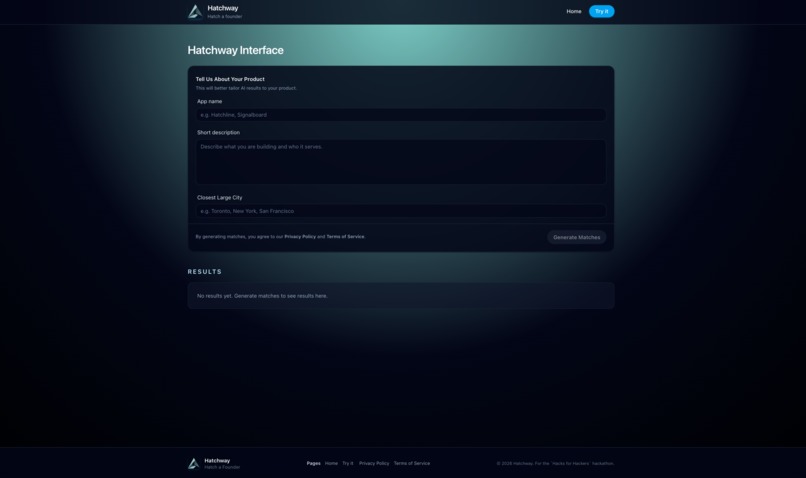
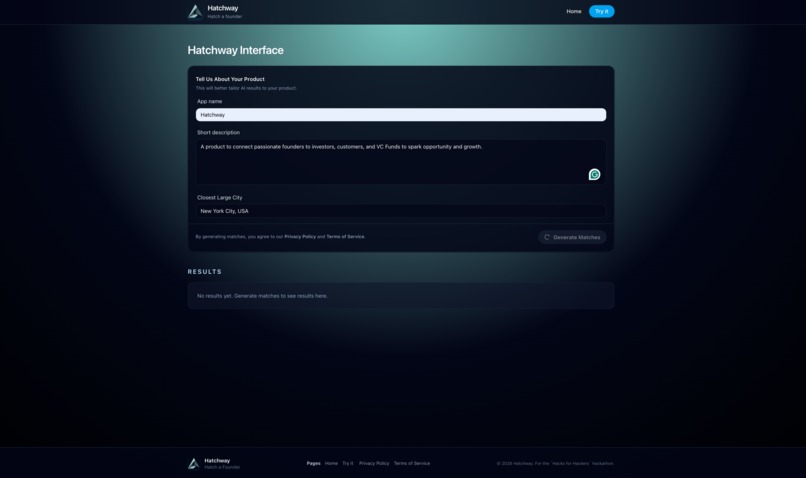
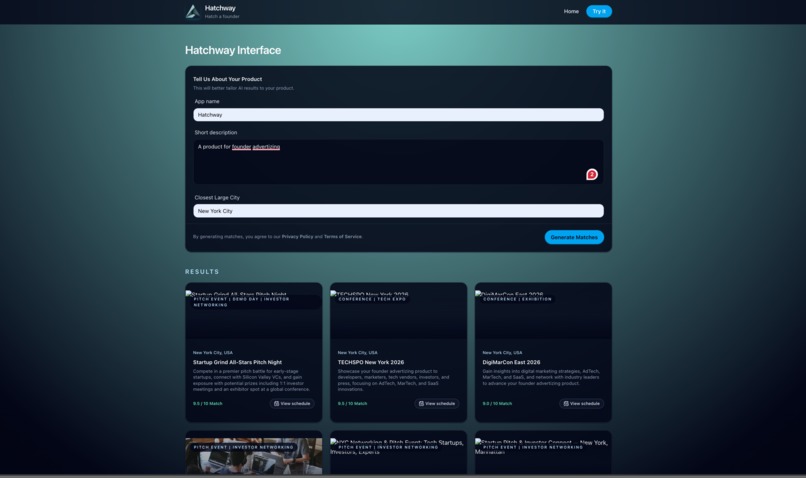
Hatchway helps founders discover the right people, places, and pitches to grow their product. By analyzing a product’s description, stage, and location, Hatchway surfaces high-impact events, communities, and opportunities that are actually aligned with the founder’s goals—cutting through noise and reducing search friction.
How we built it
Hatchway is built with a modern, edge-first stack:
- Frontend: React + TypeScript (Vite)
- Backend: Deno Deploy (serverless, low-latency)
- AI Layer: Gemini models for structured discovery and synthesis
- Infra: Stateless APIs, JSON contracts, and prompt-constrained outputs
The system turns structured founder input into curated, actionable recommendations using retrieval and ranking logic rather than generic generation.
Challenges we ran into
The biggest challenges weren’t UI—they were reliability and correctness:
- Handling CORS across local, preview, and production environments
- Preventing AI hallucinations while keeping outputs useful
- Designing prompts that stay grounded in real-world data
- Balancing flexibility with strong input validation
Each issue forced tighter architecture decisions and clearer system boundaries.
Accomplishments that we're proud of
- Shipping a fully edge-deployed AI product with sub-second responses
- Building a system that prioritizes signal over scale
- Creating a clean, founder-first UX that reduces cognitive load
- Turning vague founder goals into structured, actionable insights
What we learned
We learned that discovery is a harder problem than generation. AI is most powerful when it narrows options, not when it expands them. We also learned the importance of strong contracts—between frontend and backend, between prompts and models, and between user intent and system output.
What's next for Hatchway
Next, Hatchway will expand beyond events into investor matching, community discovery, and personalized pitch optimization. The long-term goal is to become an intelligence layer for founders—helping them consistently find leverage, not just information.
Built With
- deno
- github
- javascript
- node.js
- react
- shadcn
- typescript
- vite
