## Inspiration
As a Cyber Security and Digital Forensics student, I was fascinated by how investigators verify whether a digital file has been altered. During my studies, I learned about cryptographic hashing and its importance in preserving the integrity of digital evidence. This inspired me to build HashSentinel, a tool that helps users verify file authenticity and detect unauthorized modifications. I wanted to create a project that was both practical and closely aligned with real-world forensic investigation processes.
What it does
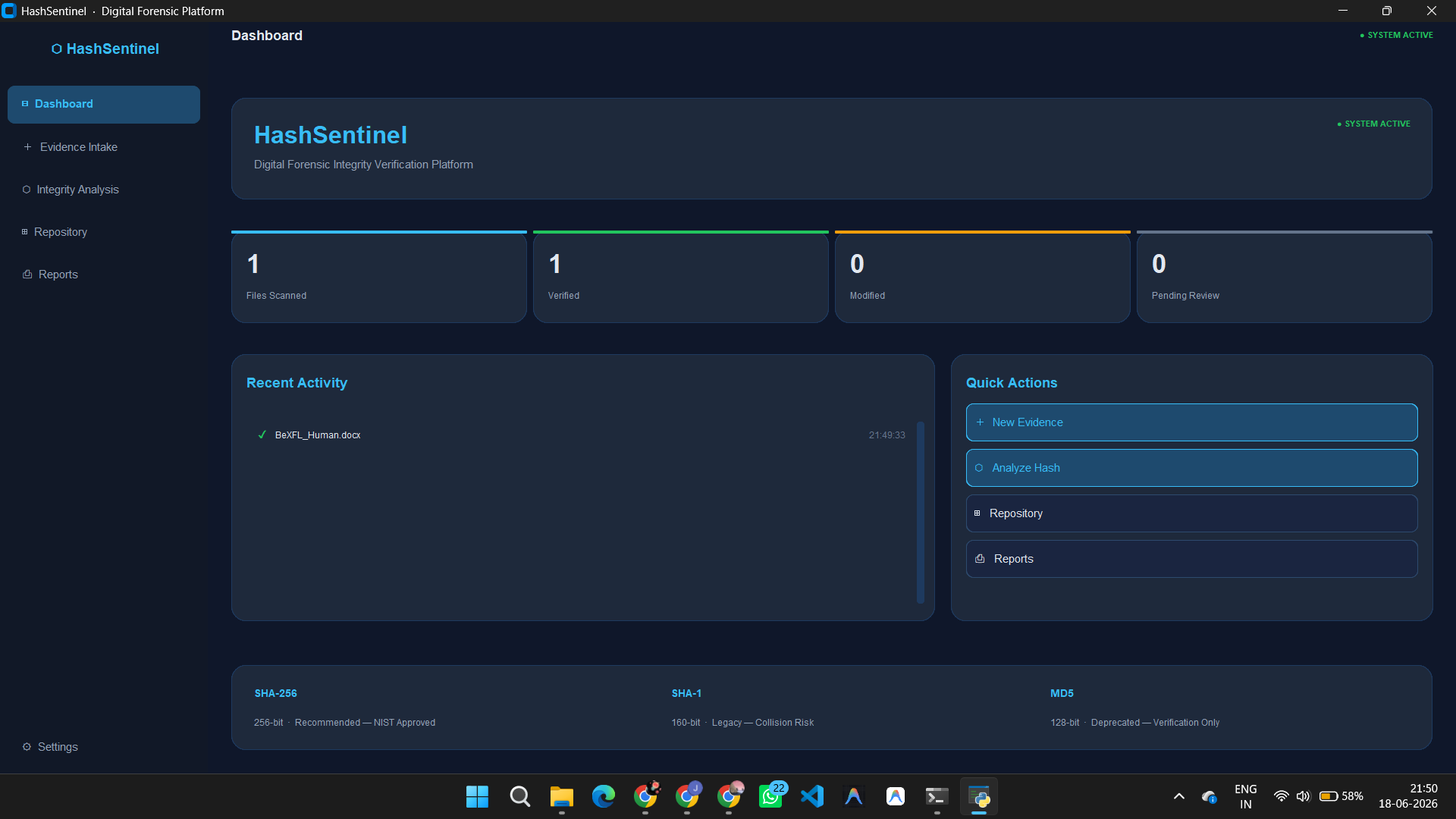
HashSentinel is a file integrity verification and forensic analysis platform. It allows users to:
- Upload files and generate cryptographic hashes (SHA-256, SHA-1, and MD5)
- Store baseline hash values for future reference
- Compare current and stored hashes to detect file modifications
- View file metadata and verification history
- Maintain a repository of scanned files
- Generate professional forensic reports in PDF and TXT formats
The platform helps users determine whether a file has remained unchanged since its original scan.
How we built it
HashSentinel was developed using Python with a modular architecture.
Technologies used:
- Python
- CustomTkinter for the user interface
- SQLite for data storage
- hashlib for cryptographic hashing
- ReportLab for PDF report generation
- Threading for improved performance
The application works by generating a cryptographic hash for a file and storing it as a baseline value. When the file is scanned again, a new hash is generated and compared with the original hash. If both values match, the file integrity is verified; otherwise, the file is flagged as modified.
Challenges we ran into
One of the biggest challenges was designing a user interface that looked professional and modern while remaining easy to use. We wanted HashSentinel to feel like a real cybersecurity product rather than a typical academic project.
Another challenge was organizing the project into separate modules for hashing, database management, reporting, and user interface components. This required careful planning to keep the code clean and maintainable.
Handling large files efficiently and generating structured forensic reports were also areas that required additional research and implementation effort.
Accomplishments that we're proud of
- Successfully built a complete file integrity verification system
- Implemented support for multiple hashing algorithms
- Created a professional Arctic Glass-themed user interface
- Developed a digital evidence repository with scan history tracking
- Generated forensic investigation reports in a professional format
- Applied cybersecurity and digital forensics concepts to solve a real-world problem
- Built a portfolio-ready project with practical relevance
What we learned
Through this project, we gained hands-on experience in:
- Cryptographic hashing and file integrity verification
- Digital forensics principles
- Database design and management
- Python GUI development
- Software architecture and modular programming
- Report generation and data management
- Designing user-friendly cybersecurity applications
Most importantly, we learned how theoretical cybersecurity concepts can be transformed into practical tools that solve real problems.
What's next for HashSentinel
Future enhancements planned for HashSentinel include:
- Real-time file monitoring and integrity alerts
- Cloud synchronization for evidence storage
- Multi-user investigator accounts
- Advanced forensic reporting features
- AI-assisted anomaly detection
- Support for additional file analysis techniques
- Integration with digital forensic investigation tools
Our long-term vision is to evolve HashSentinel into a more comprehensive digital forensics platform that can assist investigators in preserving and verifying digital evidence with greater efficiency and reliability.

Log in or sign up for Devpost to join the conversation.