-
-
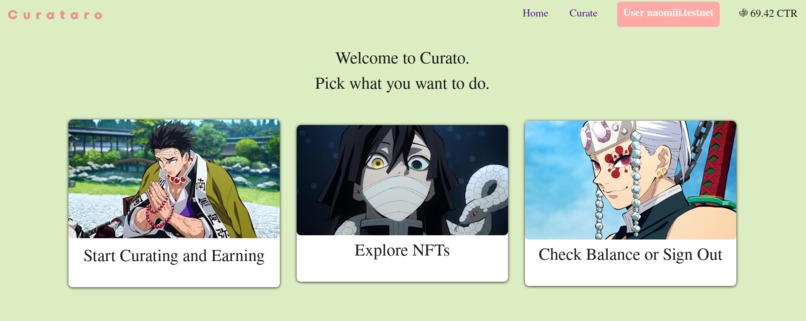
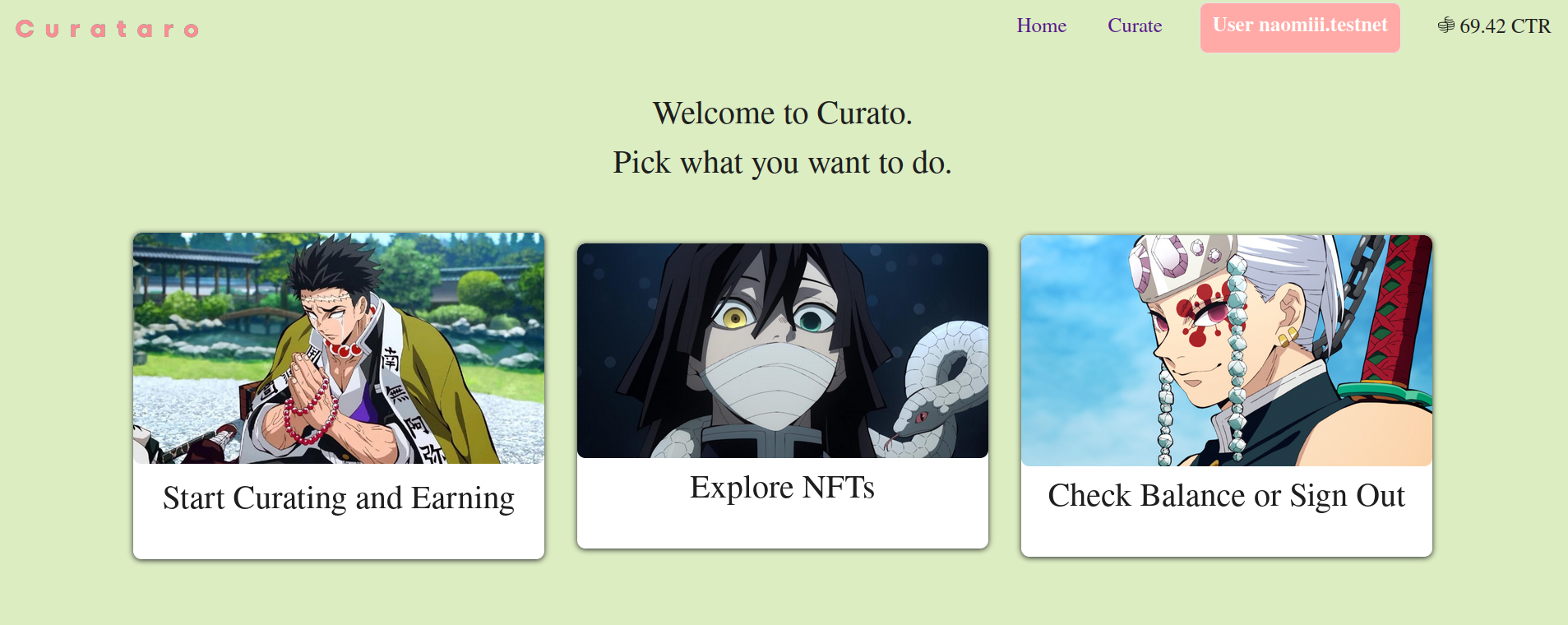
App Home Screen
Inspiration
Our inspiration was born out of a failed attempt at building a piece of infrastructure that would enable anyone to sell NFTs directly on their website. When researching all we needed, we realized that the categorization of NFTs was patchy at best. And for more detailed categories that would enable website owners to show items similar to how Amazon shows "users also liked," it was impossible.
With that at the back of our minds, we had talks with the team from the Graph on how NFT data could be enriched and better validated. It turned out that many NFT marketplaces also struggled with that issue. Beyond that, there was another big challenge: curation and moderation. It's a nightmare, yet if we want to bring masses into web3 without centralized entities bearing the brunt of it, a more community-based approach is required.
We do not believe in censorship, yet we think that for web3 to succeed on a web where anyone can upload anything, we at least should honor users' power to decide what content they want to see. That's where curation comes in.
Curation is valuable for users and especially for dapps and marketplaces wanting to set themselves apart.
This is why we went with a "to-earn" model. The reasoning behind this is that we're building this for a hackathon and certainly do not have the budget to put up hundreds of NEAR to incentivize. If this turned into a thing, we believe that we could create a business model around it and potentially even get rid of the native token entirely - in return for providing marketplaces and dApps with access to create their own curation campaigns.
Imagine a Few and Far wanted to create a new category called Anime Art. In that case, they could set aside a set amount of NEAR (or whatever token) and use Community Curation as a Service to get a set of their indexed NFTs listed.
So, what exactly does our app do?
In simple terms, it provides a way for users to curate NFTs based on a set of pings. They are rewarded for their contributions with a token.
We accumulate users' inputs and then make them available for marketplaces and dApps to use to enhance their user experience and make NFT discovery a lot better.
How we built it
React, Mintbase API to pull NFT data; however, reverted to hardcoded data files for demonstration purposes, JS, HTML/CSS
Challenges we ran into
One of the first challenges was a human one. As the person with the idea, I initially teamed up with a junior full-stack, who left the project a few weeks in.
Fortunately, the NEAR ecosystem is full of talented devs, and that challenge was eventually addressed. :)
Beyond that, the biggest challenge was making it work with the time left while adjusting to being in different time zones and having busy lives outside of that.
While initially trying to create the app with a Rust contract, that generated a lot of logs that were creating a buffer issue whenever trying to push the code. Had we caught it earlier, we could have added such things to the .ignore; still unsure about how exactly to address this. One for us to figure out in the future.
Accomplishments that we're proud of
Managed to put something together even with having to scramble in the end.
Coming up with an idea that has been validated by various people across the ecosystem as something necessary.
What we learned
We learned that if we really wanted to build this out into a bigger project, Curataro could very well be an appchain on the Octopus network.
From a development perspective, could have spent more time thinking things through before starting to code. The thought was first to get it done and then implement it better, which ultimately led to being short on time. We should have set up React context provider from the beginning.
For the CSS, we should have set up default colors and font from the start, which would have avoided having to catch up now. It's just more work doing it afterward.
What's next for Curataro by Team Hashira
There is a grand vision behind it that would ultimately be "Community-curation-as-a-Service".
This would mean bootstrapping an active community of curators on our platform to then provide dApps and marketplaces with access to it. We have a variety of things in mind:
- enhanced gamification with streaks and badges
- adding more complex curation questions or checking the correctness of existing tags
- decentralize our database
- create a community curation section where users can curate their own galleries, potentially voting on favorite galleries of the month
- enable marketplaces and dApps access through an API to verified data
- multi-chain -> we believe that verified metadata could greatly contribute to facilitating the bridging of NFTs
- Curation campaigns: give companies access to set up their own curation campaigns.
- Tokenomics: this might require further deep thought, but one consideration is to phase out the token (if we actually created this as a real project) and go with a platform fee or a CaaS model instead of relying on a constantly inflating token to maintain any value.
Regardless of the outcome of the hackathon, this team will continue collaborating and working on things in the NEAR ecosystem, each in their capacity.


Log in or sign up for Devpost to join the conversation.