-
-
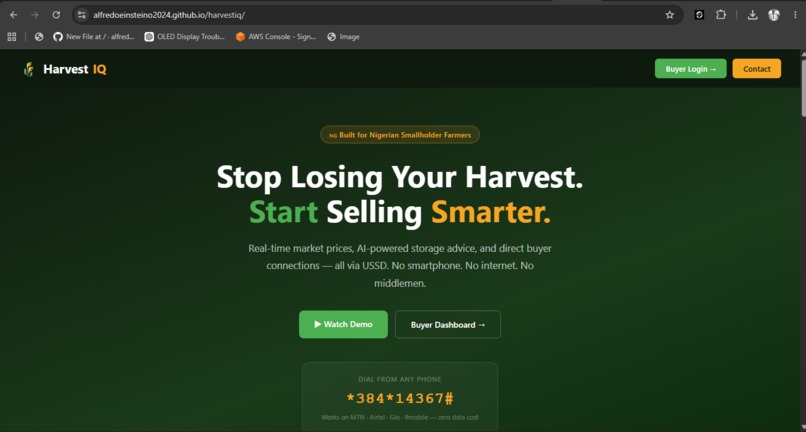
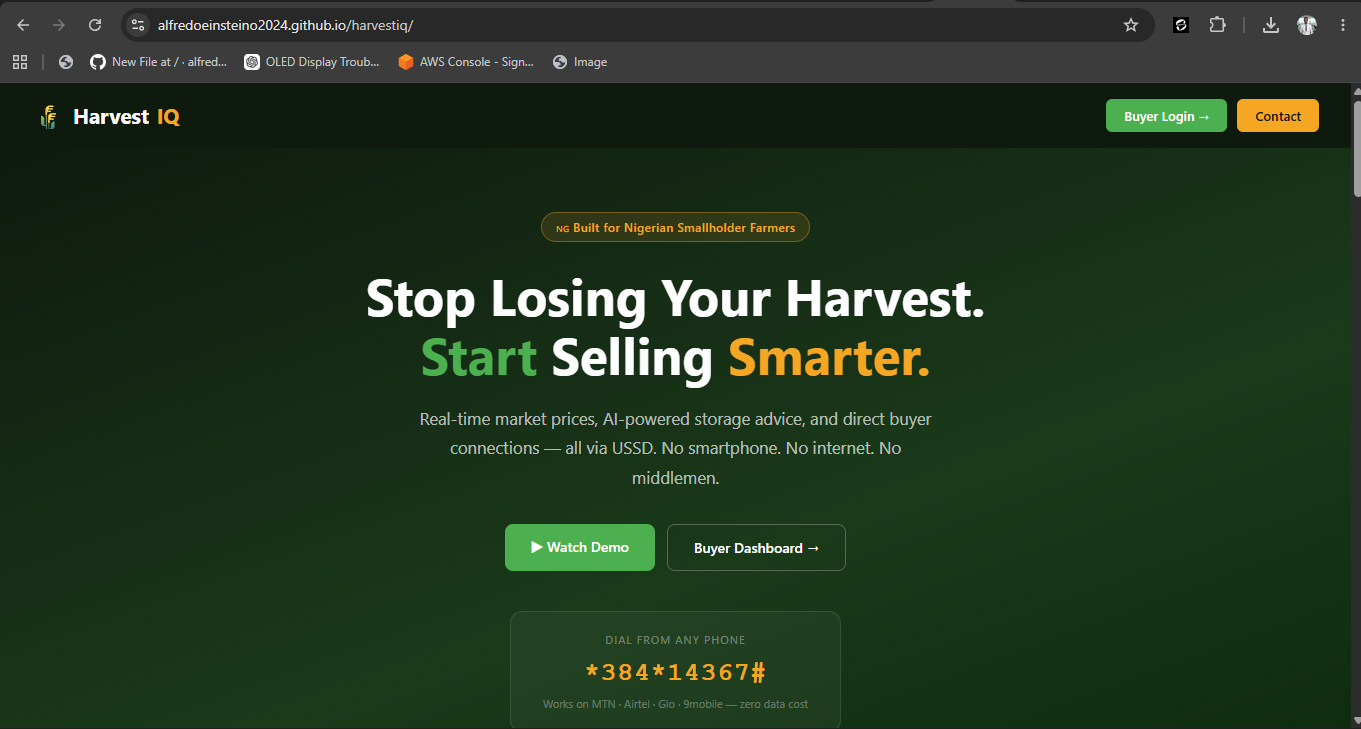
HarvestIQ landing page showcasing our offline-first postharvest intelligence platform for smallholder farmers.
-
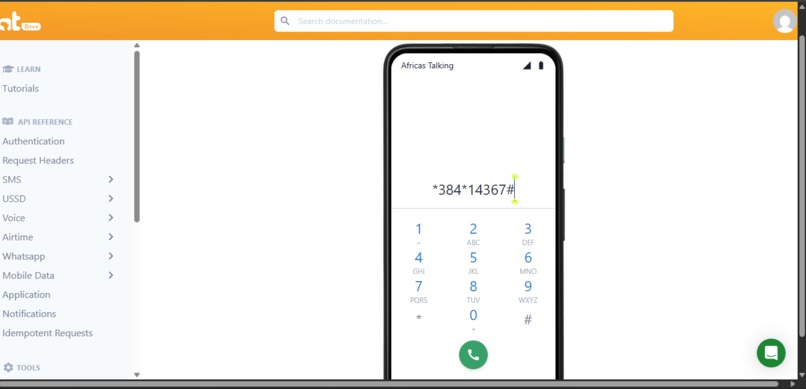
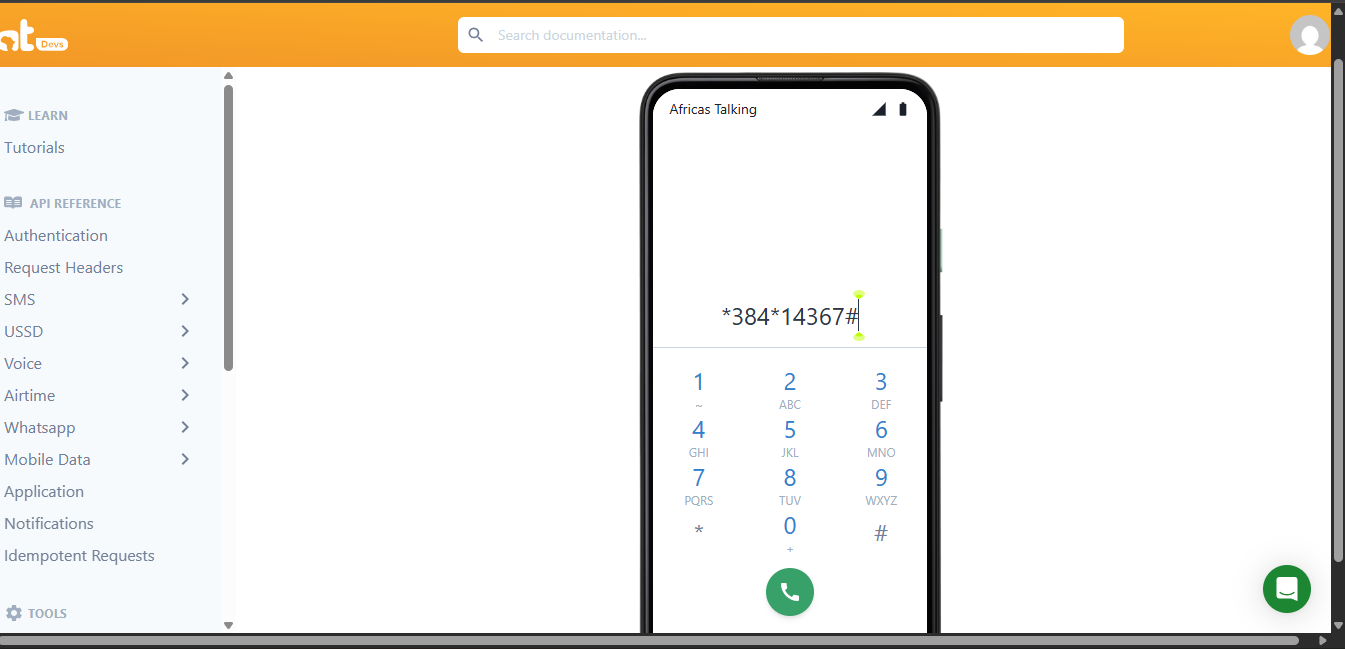
Africa's Talking USSD dashboard showing the configured HarvestIQ USSD service used to deliver offline access for farmers.
-
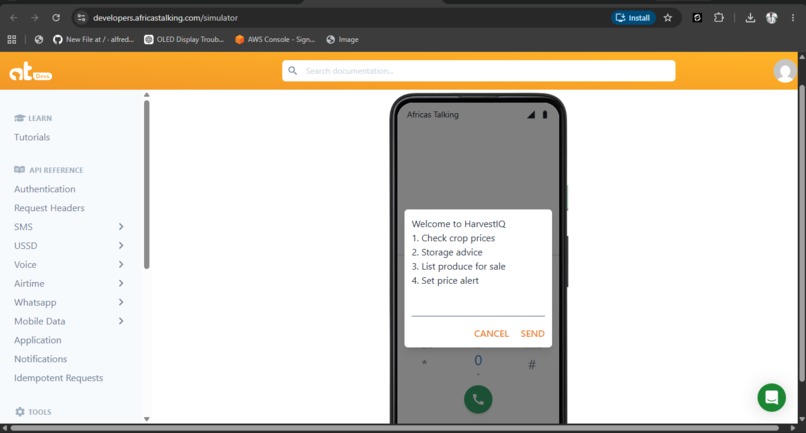
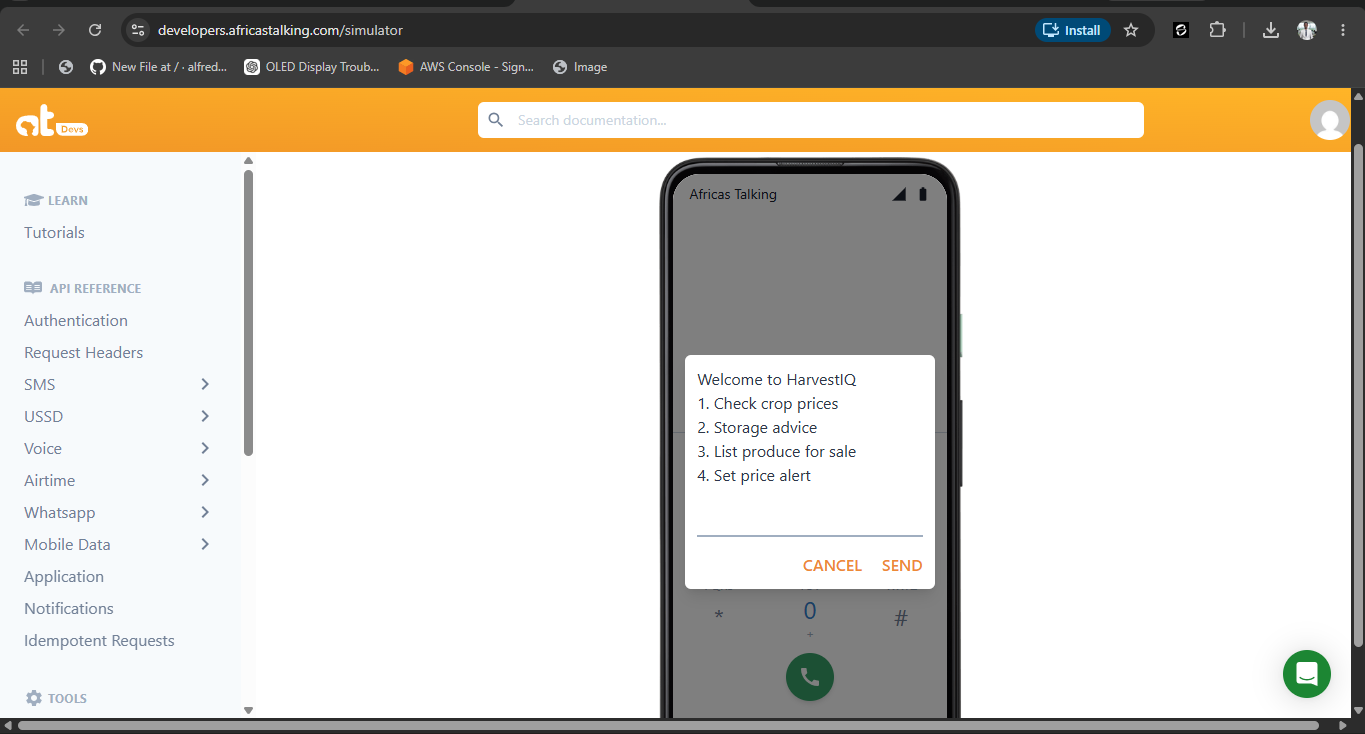
USSD interface enabling farmers to access HarvestIQ without a smartphone or internet.
-
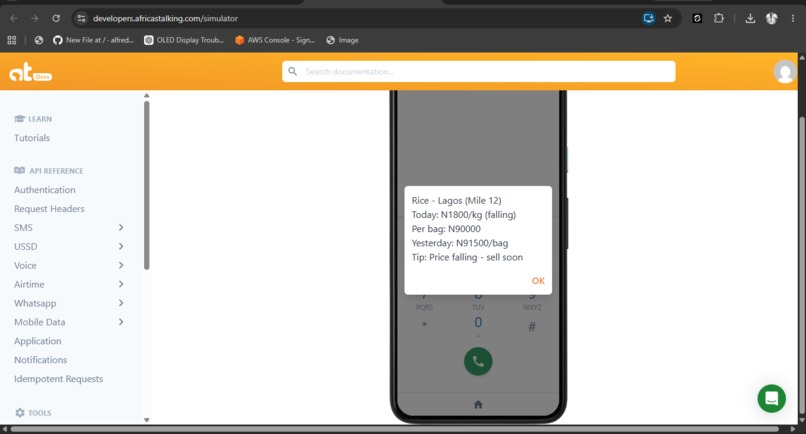
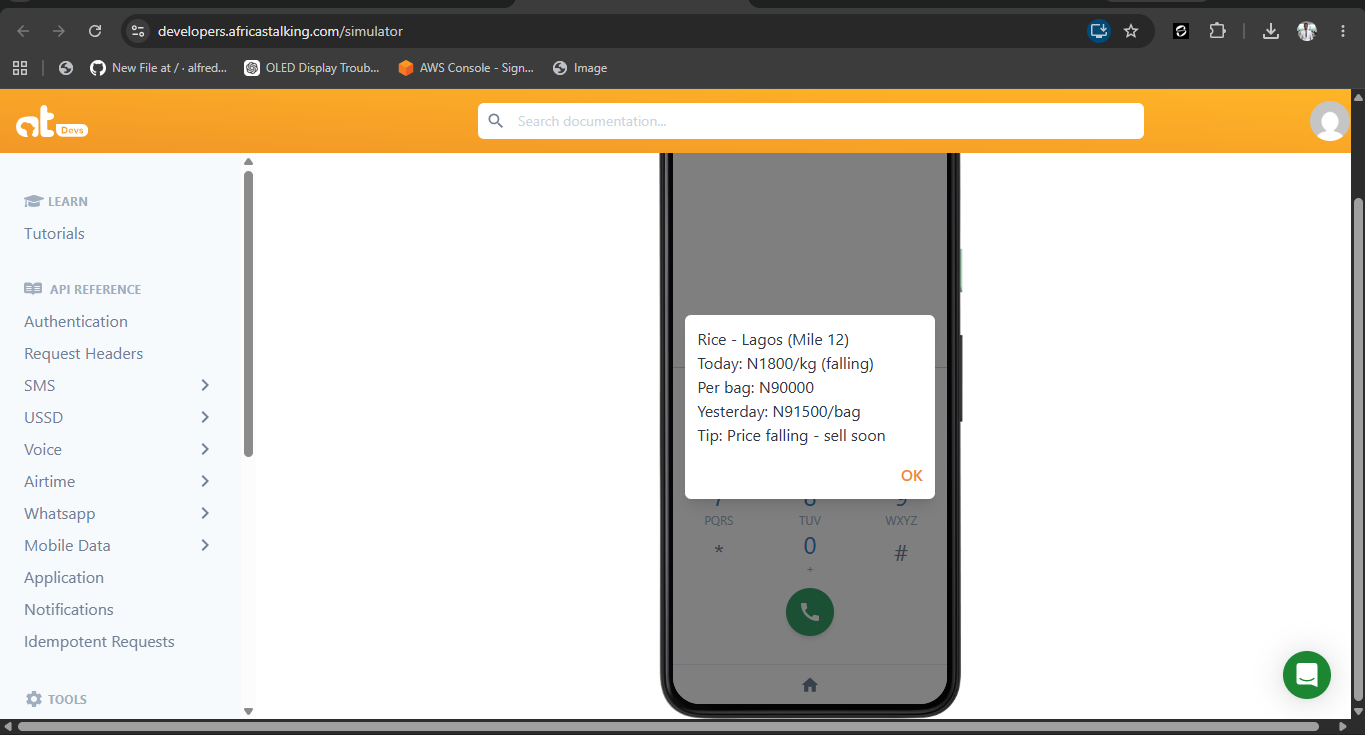
Real-time market intelligence showing current rice prices across major markets, helping farmers maximize their earnings.
-
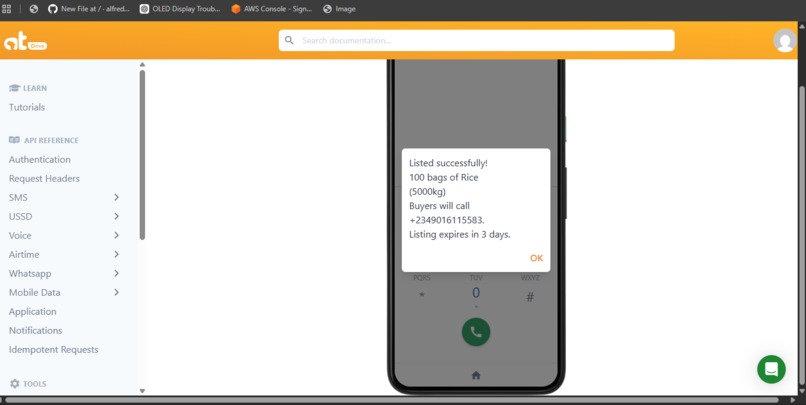
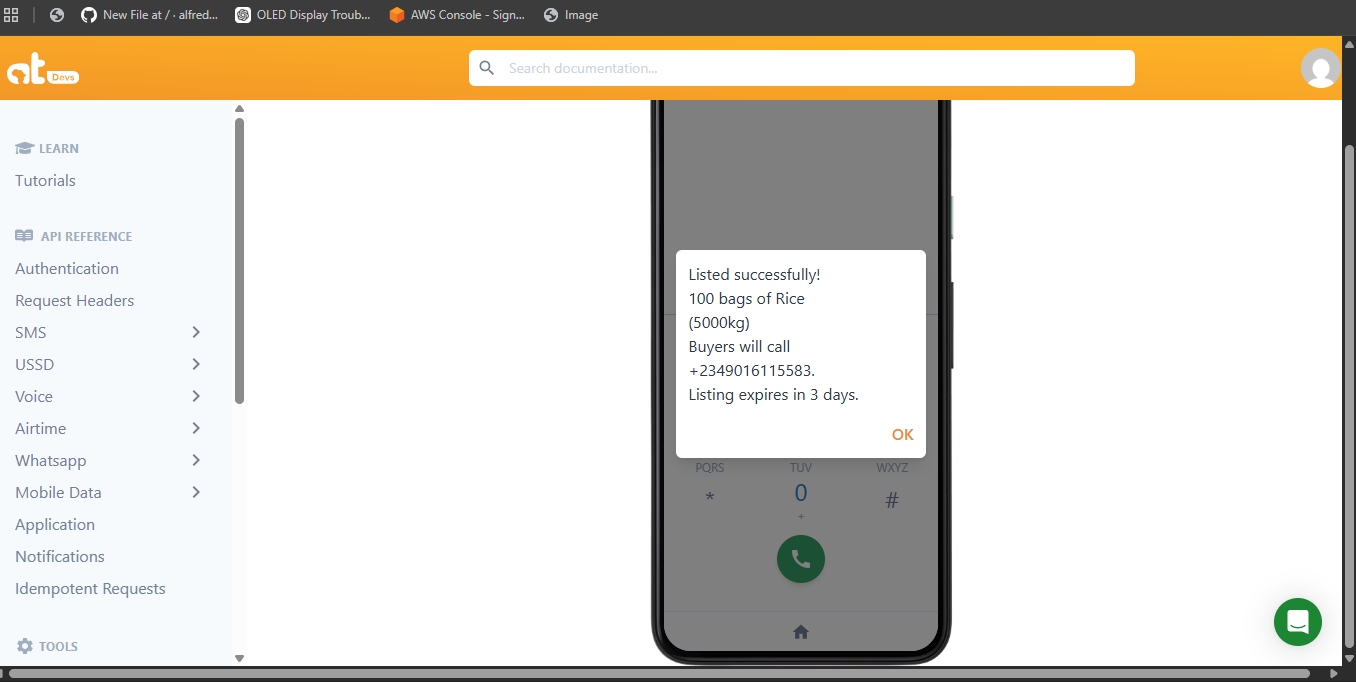
Farmers list produce through USSD, making it instantly available to buyers.
-
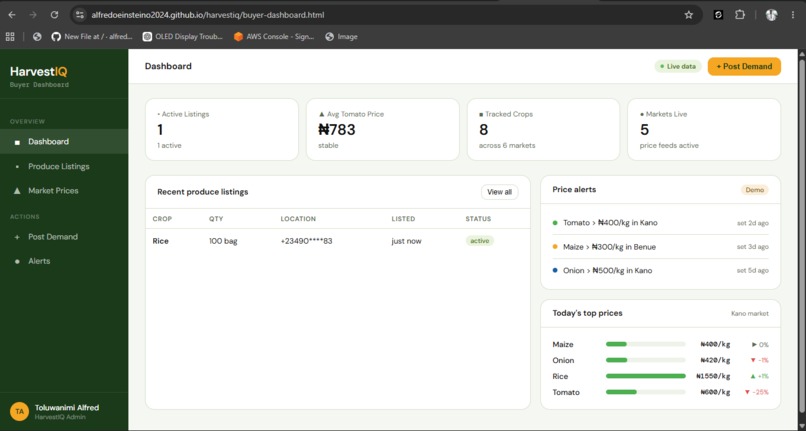
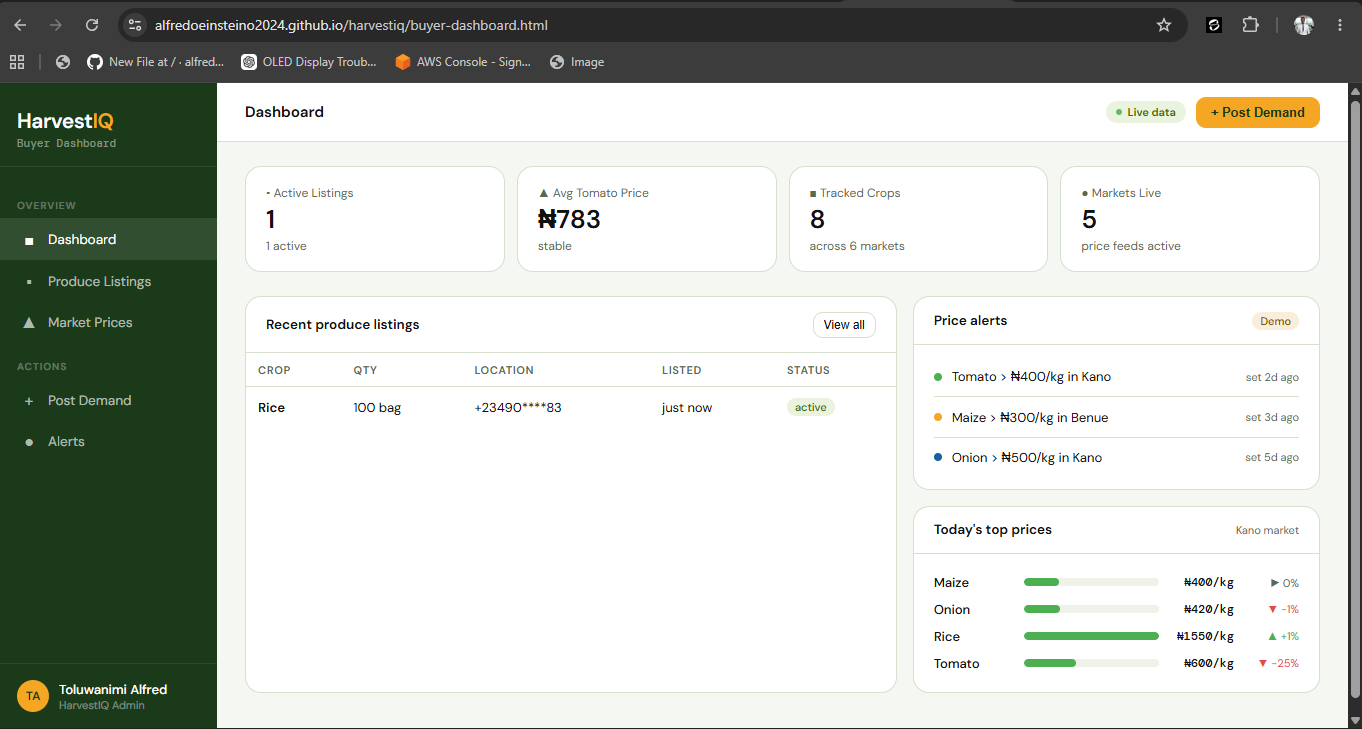
Marketplace of produce submitted by farmers, ready for buyers to browse and purchase.
-
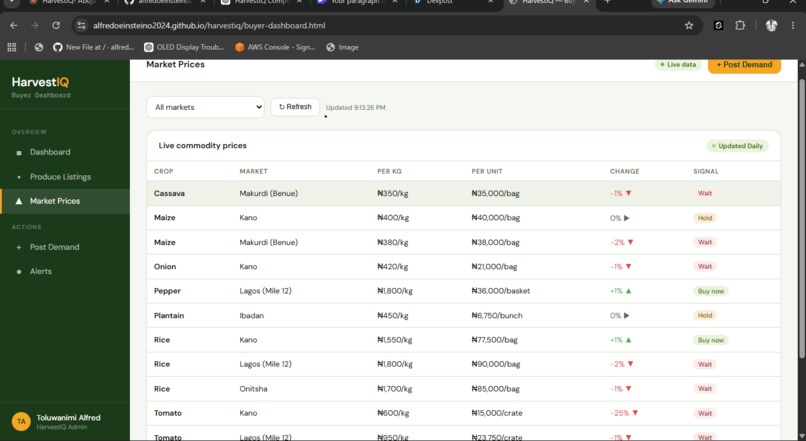
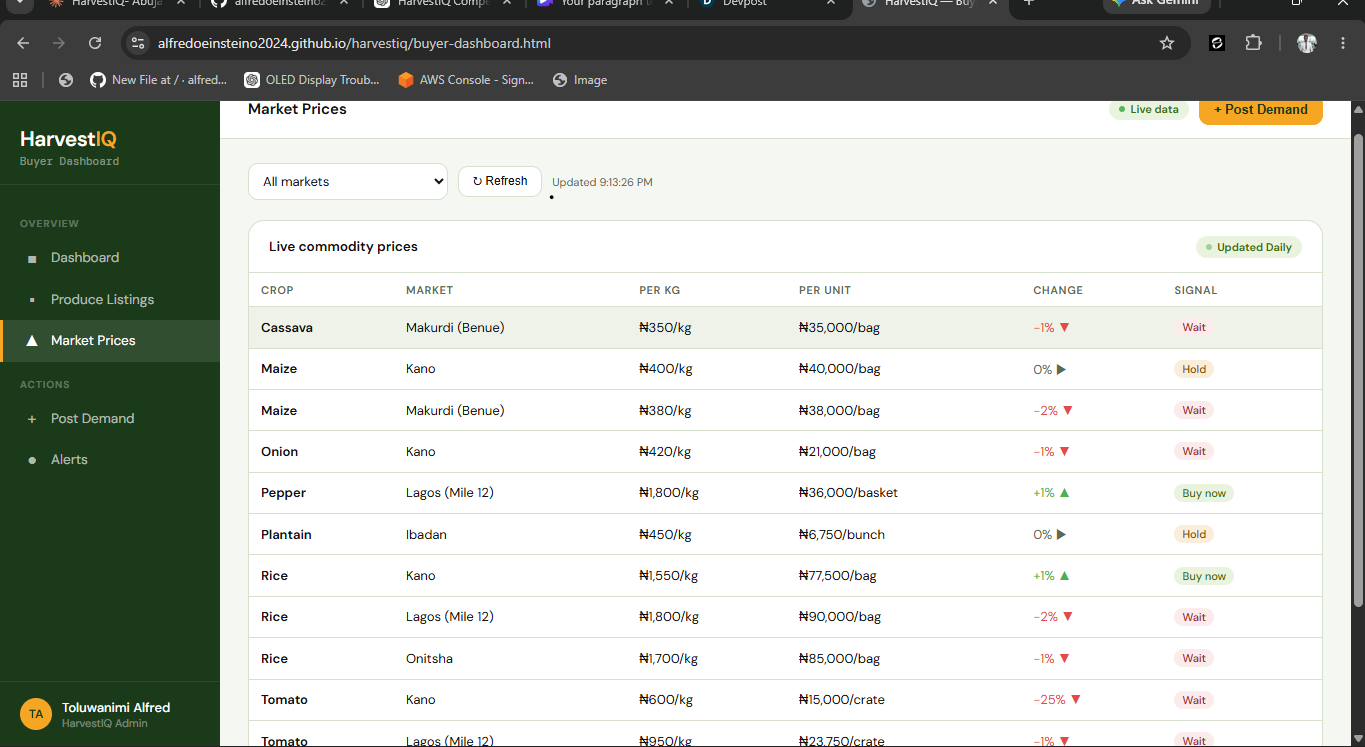
Live commodity prices across major markets, helping farmers make informed selling decisions.
-
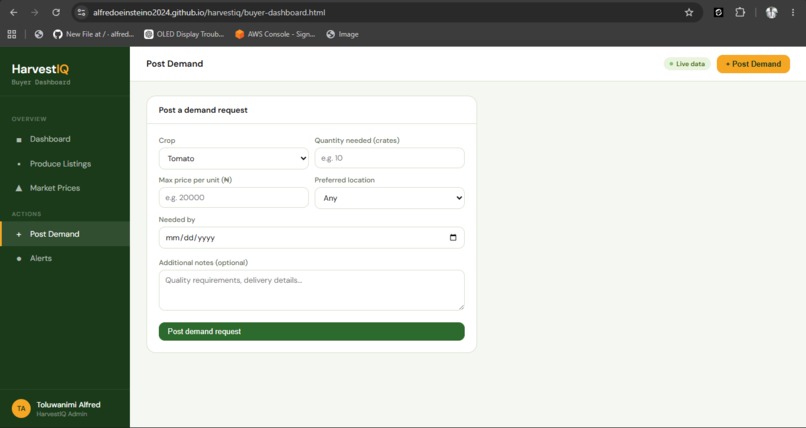
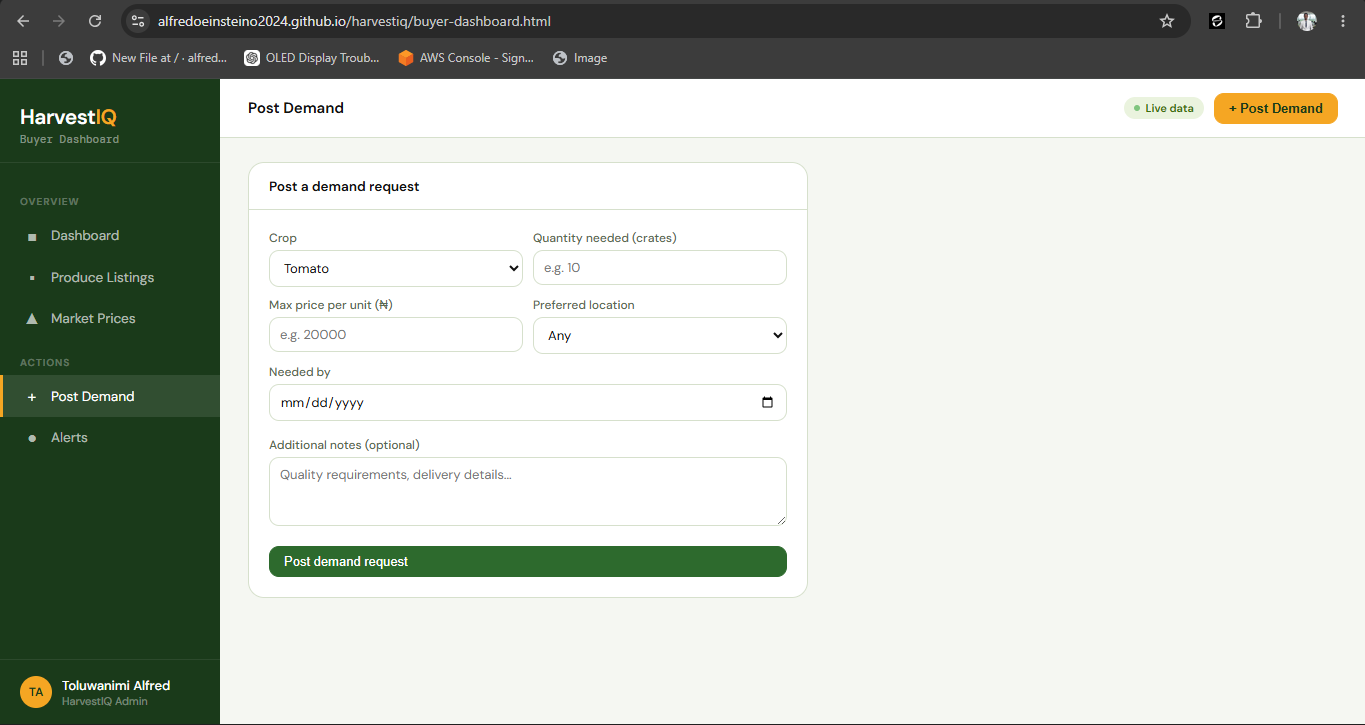
Buyers post crop demands and required quantities, helping farmers make informed harvesting and selling decisions.
Inspiration
Nigeria loses an estimated 40% of its harvest every year — roughly ₦5 trillion — not because farmers are bad at farming, but because they're invisible to the market. A smallholder farmer in Kano or Benue has no way to know what tomatoes are selling for in Lagos that morning, so they sell to the first middleman who shows up, often at 30–40% below real value. Meanwhile, produce spoils in the 72-hour window after harvest simply because nobody told the farmer how to store it properly.
That gap isn't just a rural problem. It's an urban one. Every naira lost at the farm gate, every truckload of tomatoes that spoils before it reaches Mile 12 market, tightens food supply and pushes up prices for the millions of people living in Nigerian cities. I wanted to build something that treats the farmer and the city as one connected system — because they already are.
What it does
HarvestIQ is a USSD-based intelligence platform (dial *384*14367#) that works on any basic mobile phone — no smartphone, no internet, no data plan required. It gives farmers:
- Real-time price intelligence across six major Nigerian markets, with today's price, yesterday's price, and a sell/hold recommendation
- AI-powered storage advisory, generated per crop and quantity via AWS Bedrock (Claude Haiku), compressed into plain USSD text
- Direct buyer listings, so farmers can list produce and traders can find it without a middleman in between
- Automated price alerts, texting farmers the moment their crop hits their target price
On the other side, a Cognito-authenticated web dashboard lets urban buyers and aggregators browse live listings and contact farmers directly — closing the loop between rural supply and urban demand.
The long-term vision goes further: a mobile app for tech-enabled farmers and buyers (Phase 2), an international marketplace for rare/specialty Nigerian produce (Phase 3), and physical aggregation hubs — commissioned drop-off points where farmers deliver produce and buyers collect nearby, cutting redundant transport trips into cities (Phase 4).
How we built it
HarvestIQ runs entirely on AWS serverless infrastructure to keep operating costs near zero at MVP stage:
- USSD/SMS Gateway: Africa's Talking
- Backend: AWS Lambda (Node.js 20)
- Database: AWS DynamoDB, seeded with real price data across 11 crops and 5 markets
- AI Advisory: AWS Bedrock (Claude Haiku), generating crop-specific storage guidance
- Notifications & Scheduling: AWS SNS + EventBridge
- Buyer Dashboard: vanilla HTML/CSS/JS on GitHub Pages, with AWS Cognito handling authentication — no SDK, built from scratch
I built and tested all five core Lambda functions, wrote 15 automated unit tests (all passing), and validated all four USSD user flows — price checking, storage advisory, produce listing, and price alerts on the Africa's Talking sandbox simulator.
Challenges we ran into
- Designing AI for a phone with no screen. Most "AI-powered agriculture" tools assume a smartphone and a chat interface. Getting Claude's storage advisory to be genuinely useful and fit inside a USSD text response meant a lot of prompt iteration to compress guidance without losing what actually matters to the farmer.
- Building without a live production USSD line. Everything had to be validated against Africa's Talking's sandbox environment, which meant carefully simulating real farmer sessions before ever touching a live telecom network.
- Balancing scope. It was tempting to build the mobile app and marketplace features immediately, but I made the deliberate call to get the zero-infrastructure USSD layer fully working and tested first — the segment of farmers it serves has no other option, so it had to work first.
Accomplishments that we're proud of
- A fully working, tested MVP — not a concept deck. All core Lambda functions are deployed, all four USSD flows work end-to-end, and 15/15 automated tests pass.
- An AI advisory feature that's genuinely personalized (per crop, per quantity) rather than generic text.
- A clear, technically grounded path from an information system to real physical infrastructure that could meaningfully reduce urban food waste and transport inefficiency.
What we learned
Building for the lowest-common-denominator device (a basic feature phone) is a harder design constraint than building for a smartphone — but it's also where the real impact lives, because that's the device most of Nigeria's 40 million smallholder farmers actually own. I also learned a lot about structuring AI prompts for extremely constrained output formats, and about designing AWS serverless systems that stay cheap enough to run at real scale without needing outside funding just to keep the lights on.
What's next for HarvestIQ
- Move from Africa's Talking sandbox to a live production USSD line
- Onboard real farmers in Kano, Benue, and Niger States, alongside paying buyer subscribers
- Build the Phase 2 mobile app and begin piloting Phase 4 physical aggregation hubs
- Introduce voice IVR in Hausa, Yoruba, and Igbo to serve non-literate farmers
Built With
- africa's-talking-api
- aws-api-gateway
- aws-bedrock
- aws-cognito
- aws-dynamodb
- aws-eventbridge
- aws-lambda
- aws-sns
- claude-ai
- css
- github
- html
- javascript
- node.js
- ussd


Log in or sign up for Devpost to join the conversation.