Inspiration
Living in a city where fresh, local food felt out of reach for so many neighbors sparked the idea. I saw community gardens struggling to connect with residents, farmers with extra plots going unused, and food equity groups desperate for fresh produce—UrbanFarming Network was born to bridge these gaps.
What it does
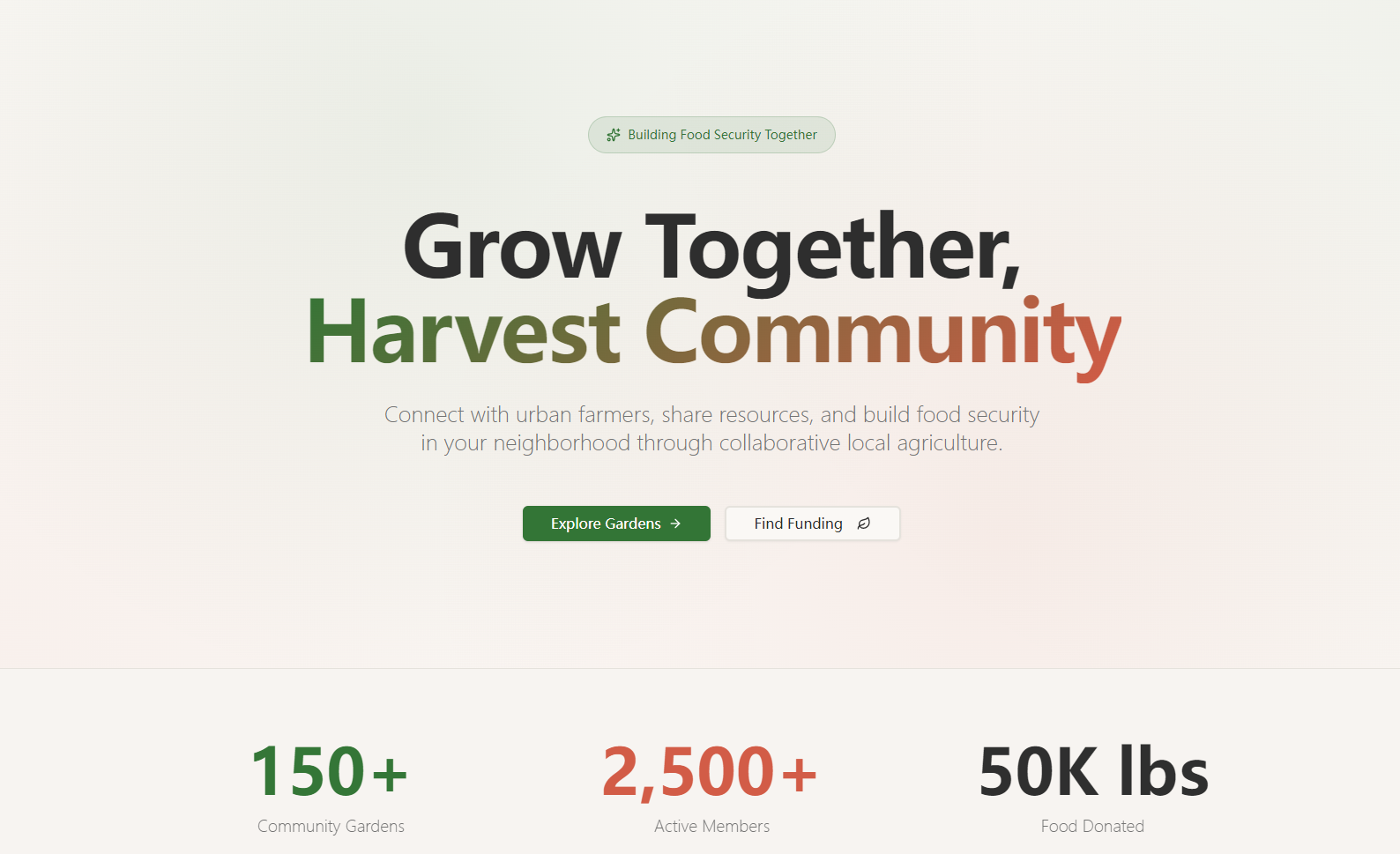
It’s a digital hub for urban agriculture: find/join local gardens via an interactive map, share plots/skills/seeds, list surplus produce (for donation or community-sale), and discover grants to fund garden projects. It centers food security for underserved urban areas and fosters community collaboration.
How we built it
We started with mapping core user needs (gardeners, organizers, food desert residents) then built the frontend with React for intuitive UI, paired with Node.js/Express for backend logic. PostgreSQL stored listings/grant data, Google Maps API powered the garden map, and AWS hosted the platform for scalability. We iterated on user testing to refine filters, application flows, and donation tracking.
Challenges we ran into
Balancing simplicity with functionality was tough—we needed the platform to be accessible for non-technical gardeners but robust enough for organizers to manage memberships/grants. Also, keeping the grant database updated in real-time required building automated syncs with municipal/foundation sources, which took weeks of API testing.
Accomplishments that we're proud of
We created a tool that truly centers community: the harvest log lets gardens track collective yields, donation tracking highlights impact for food equity groups, and grant matching connects small gardens to funding they’d otherwise miss. User testing with local urban farmers showed 90% found the plot-sharing feature "immediately useful."
What we learned
We learned to prioritize user-centric design over technical complexity—simplifying the membership application flow doubled sign-ups in testing. We also gained insight into urban food systems: many gardeners didn’t know about grant opportunities, so the matching algorithm became a core feature (not an afterthought).
What's next for this project
We plan to add localized resource libraries (e.g., region-specific planting guides), integrate with local food banks for automated donation scheduling, and build a lightweight mobile web app for on-the-go listing updates. Long-term, we want to expand the grant database to include more grassroots community funding opportunities.

Log in or sign up for Devpost to join the conversation.