-
-
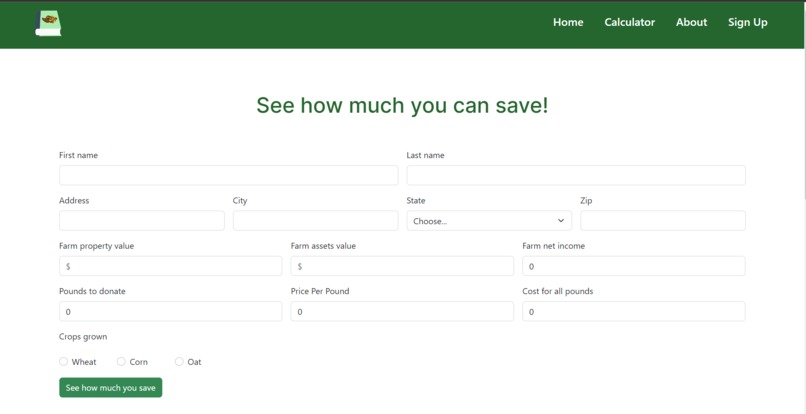
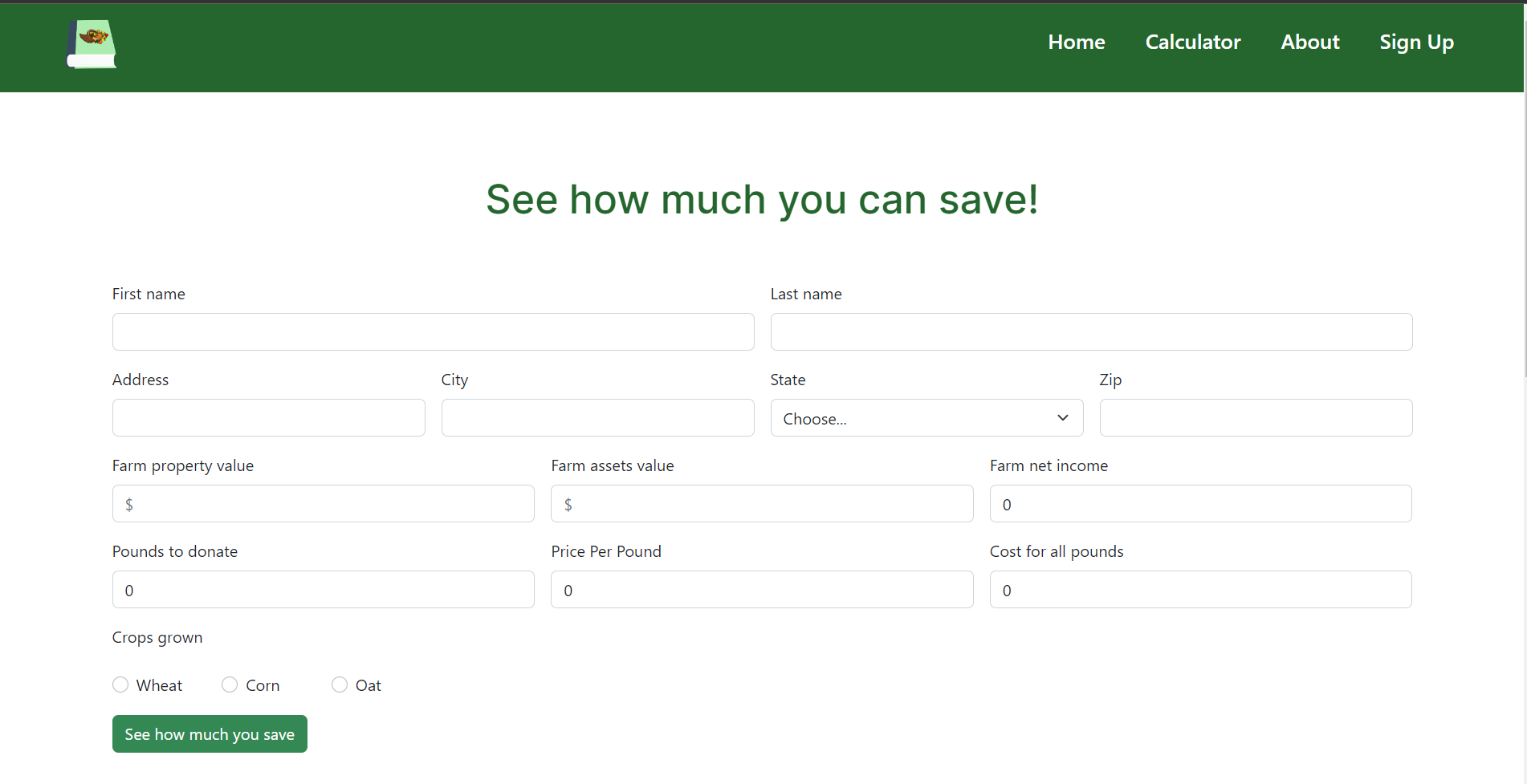
Tax Calculator
-
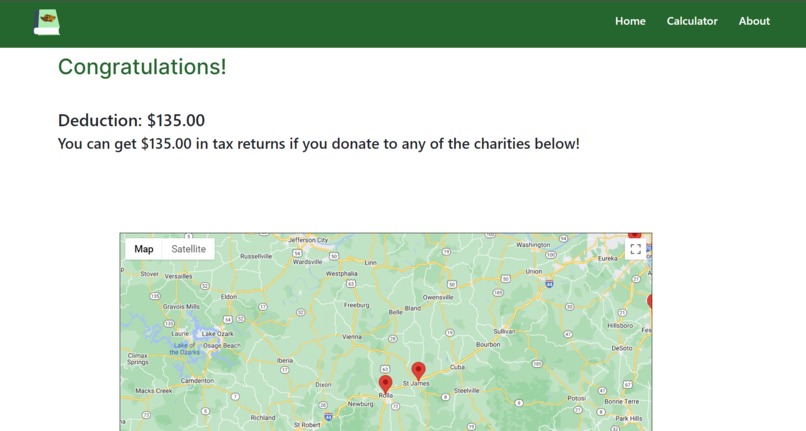
Google API
-
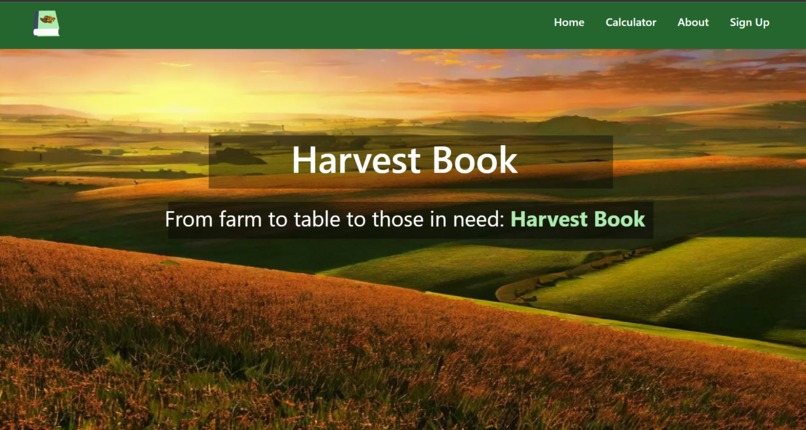
Home Page
Inspiration
Food waste in the U.S. is a significant problem, with consumers alone wasting about $1,500 worth of groceries per year for a four-person household. Crops are also left in fields due to mechanical harvesting practices, and food manufacturing and transportation issues contribute to the problem. In addition to the economic impact, food waste has serious environmental consequences, including the release of methane, a potent greenhouse gas, as well as wasting water, oil, and land resources. Approximately 18% of methane emissions are generated by wasted food, and the amount of water wasted is equivalent to 45 trillion gallons. The food waste also costs us about 350 million barrels of oil, and an estimated 1.3 billion tons of wasted food takes up valuable landfill space, using up 22% of our landfill area.
What it does
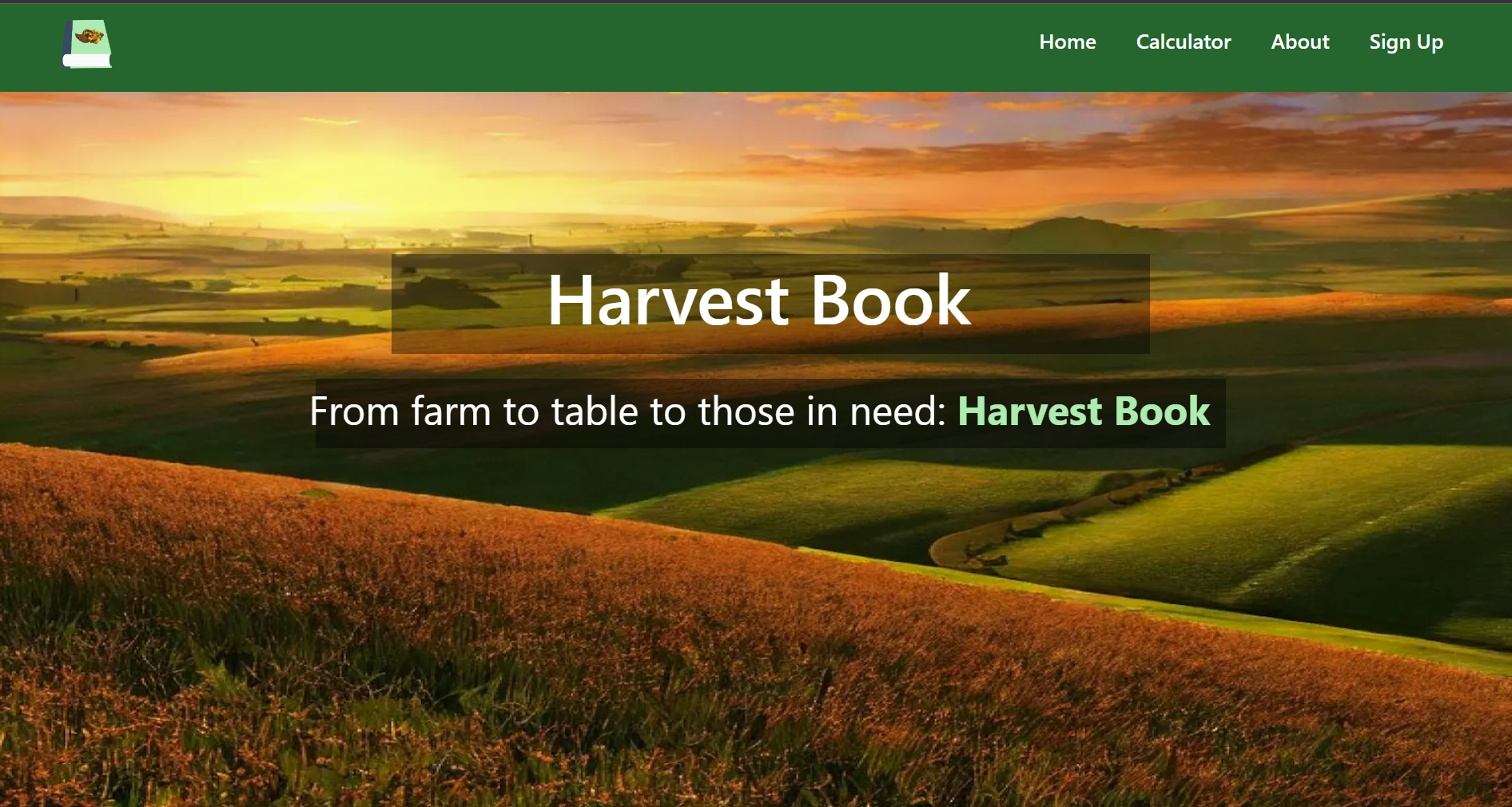
Harvest Book is a website that provides a platform for farmers to donate their excess food to charities, reducing food waste and decay while also providing tax benefits for the farmers. By connecting farmers directly with local charities and food banks, Harvest Book streamlines the process of donating surplus crops and helps ensure that food gets to those who need it most. Additionally, farmers can receive tax benefits for donating their excess produce, providing an added incentive to participate in this sustainable and charitable initiative. With Harvest Book, farmers can easily reduce their environmental impact, help their local communities, and receive financial benefits at the same time.
How we built it
To build the harvest books project, we used a combination of several web development technologies such as HTML, CSS, JavaScript, Bootstrap, Next.js, and Google Maps API.
Firstly, we created the user interface with HTML and CSS, using the Bootstrap framework to ensure a responsive and mobile-friendly design. We also used JavaScript to make the web page dynamic and interactive.
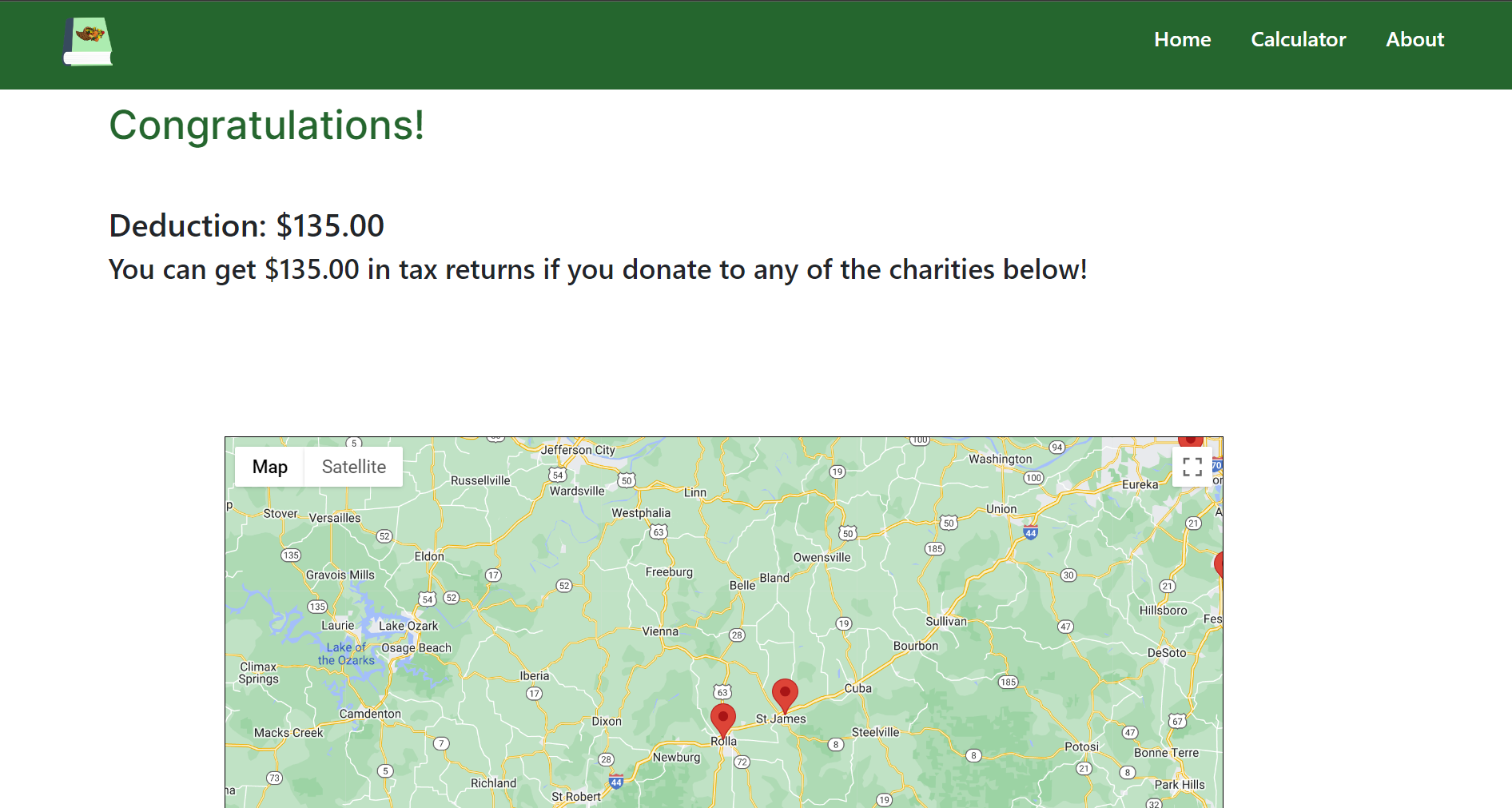
Next, we integrated the federal tax deduction calculator using the information provided on the IRS website. This feature enables farmers to estimate their tax deductions based on their net income and the amount of donation they plan to make.
For the Google Maps API integration, we used the address information provided by the farmer to display all the charities near their farm. This was done using the Google Maps API, which allowed us to embed a map on the web page and show the location of nearby charities.
Finally, we used Next.js to build the project to ensure that it runs smoothly and efficiently. Next.js is a React-based framework that enables server-side rendering, automatic code splitting, and optimized performance, making it an excellent choice for building complex web applications.
In conclusion, the harvest books project was built using a combination of various web development technologies and the Google Maps API. This allowed us to create a user-friendly web application that provides farmers with valuable information on tax deductions and nearby charities, making it easier for them to donate their excess produce to those in need.
Challenges we ran into
The Harvest Book project presented several challenges during development, including implementing the Google Maps API and calculating tax deductions based on information from the IRS.
Implementing Google Maps API: Integrating the Google Maps API was a complex task that required a good understanding of JavaScript, web development, and the Google Maps API itself. We had to learn how to use the API effectively, including understanding the documentation and using the API key to access the service. It also required careful consideration of user privacy and data security issues.
Finding the formula for tax return calculation: Calculating tax deductions based on information from the IRS required a significant amount of research to ensure accuracy. We had to identify the relevant tax regulations and understand the formula used to calculate deductions for food donations. This required a deep understanding of tax law and regulations, which can be complex and difficult to navigate.
UI design and optimization: Designing a user-friendly UI that could effectively communicate the features and functions of the Harvest Book project to users presented its own challenges. It required careful consideration of the target audience, the design principles that would appeal to them, and the functionality that would be most useful.
Integration with Next.js: Integrating the Harvest Book project with Next.js was another challenge that required careful planning and implementation. We had to ensure that the application was compatible with the framework and that it was optimized for performance and scalability.
Despite these challenges, the development team was able to successfully complete the Harvest Book project, implementing the Google Maps API and tax deduction calculations, and designing a user-friendly interface. These challenges presented opportunities for learning and growth, and the team was able to develop their skills and knowledge throughout the project.
Accomplishments that we're proud of
The Harvest Book project presented a number of challenges, but the development team was able to overcome them and achieve several accomplishments that we're proud of. Here are some of the highlights:
Successful integration of Google Maps API: One of the main features of the Harvest Book project is the integration of the Google Maps API to display nearby charities. The team was able to successfully implement this feature, which required a significant amount of technical knowledge and skill.
Accurate tax deduction calculations: The tax deduction calculator on the Harvest Book project required extensive research and an understanding of tax regulations. The team was able to accurately calculate federal tax deductions for food donations, which can be complex and difficult to understand.
Responsive and user-friendly UI: The team was able to design a responsive and user-friendly UI for the Harvest Book project, which makes it easy for farmers to navigate and understand the features of the application. This required a deep understanding of user experience design principles and effective communication strategies.
Integration with Next.js: The Harvest Book project was developed using Next.js, a React-based framework that allows for optimized performance and scalability. The team was able to successfully integrate the application with Next.js, which required a high level of technical knowledge and skill.
What we learned
The development of the Harvest Book project provided many opportunities for learning and growth for the development team. Here are some of the key lessons that the team learned during the project:
Collaboration and teamwork: Developing a complex web application like Harvest Book requires collaboration and teamwork. The team learned how to effectively communicate and coordinate their efforts to achieve a common goal.
Technical skills: The development team gained valuable technical skills during the project, including expertise in JavaScript, HTML, CSS, Bootstrap, and Next.js. They also learned how to effectively use APIs like the Google Maps API and integrate them into their application.
Understanding tax law: The tax deduction calculator on the Harvest Book project required an in-depth understanding of tax law and regulations. The team learned how to research and interpret complex tax regulations to accurately calculate federal tax deductions for food donations.
User experience design: Developing a user-friendly interface requires an understanding of user experience design principles. The team learned how to design effective and intuitive user interfaces that make it easy for users to understand and use the application.
Feedback and iteration: Throughout the development process, the team solicited feedback from users to continuously improve the application. They learned how to incorporate feedback and make iterative improvements to the application to make it more effective and user-friendly.
What's next for Harvest Book
The Harvest Book project has a lot of potential for further development and improvement. Here are some possible next steps:
Sign-up options for farm and charity organizations: Adding a sign-up option for farm and charity organizations would enable them to create their own profiles, manage their donations, and receive notifications about nearby food donations. This could enhance the user experience and streamline the donation process.
Improved UI and optimization: The Harvest Book project's UI could be improved to make it more visually appealing, intuitive, and user-friendly. Optimizing the application's performance could also enhance the user experience by reducing loading times and improving responsiveness.
User consultation: Consulting with users and collecting feedback could help identify areas that need improvement and inform future development. This could involve conducting surveys, focus groups, or user testing to gather insights and ideas for enhancing the Harvest Book project.
State tax deduction calculation: Currently, the Harvest Book project only calculates federal tax deductions for food donations. Adding state tax deduction calculation would enable farmers to estimate their total tax deduction more accurately, making it easier for them to make informed decisions about their donations.
Overall, the Harvest Book project has the potential to become a valuable tool for farmers, charities, and food banks. By continuously improving and developing the application, we can make it even more effective in connecting farmers with nearby charities and reducing food waste while supporting those in need.
Built With
- bootrap5
- css
- google-maps
- html5
- javascript
- next.js
- vscode


Log in or sign up for Devpost to join the conversation.