Inspiration
Every professional knows the gap: you know exactly what you mean, but in a high-stakes moment like a client call, a salary negotiation, an escalation email which it comes out hedged, apologetic, or flat. For India's millions of client-facing professionals working in their second or third language, that gap costs deals, promotions, and confidence. I wanted to build something that closes it and that doesn't just rewrite your words, but actually teaches you to not need it.
What it does
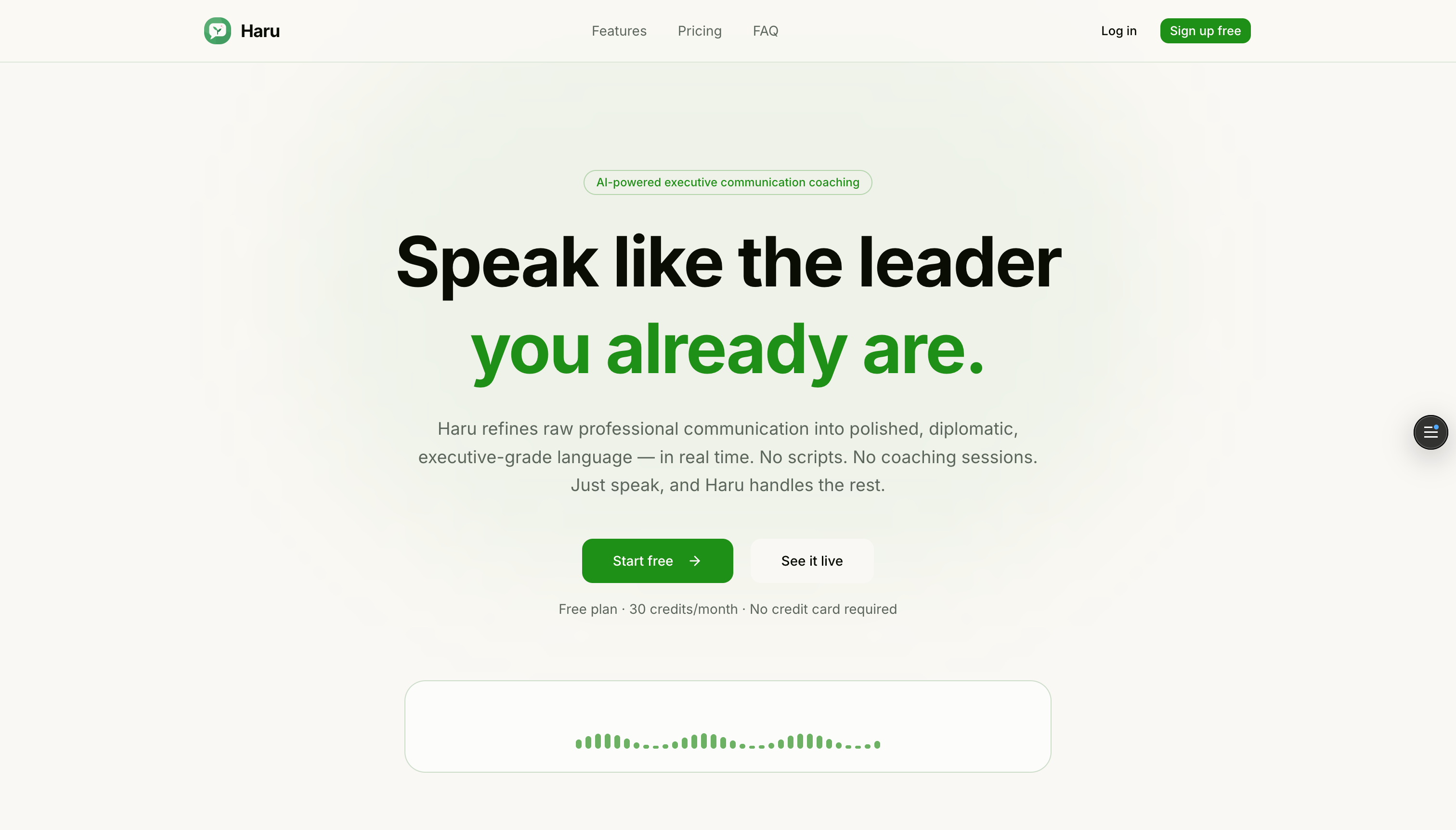
Haru is an AI-powered executive communication coach with two modes:
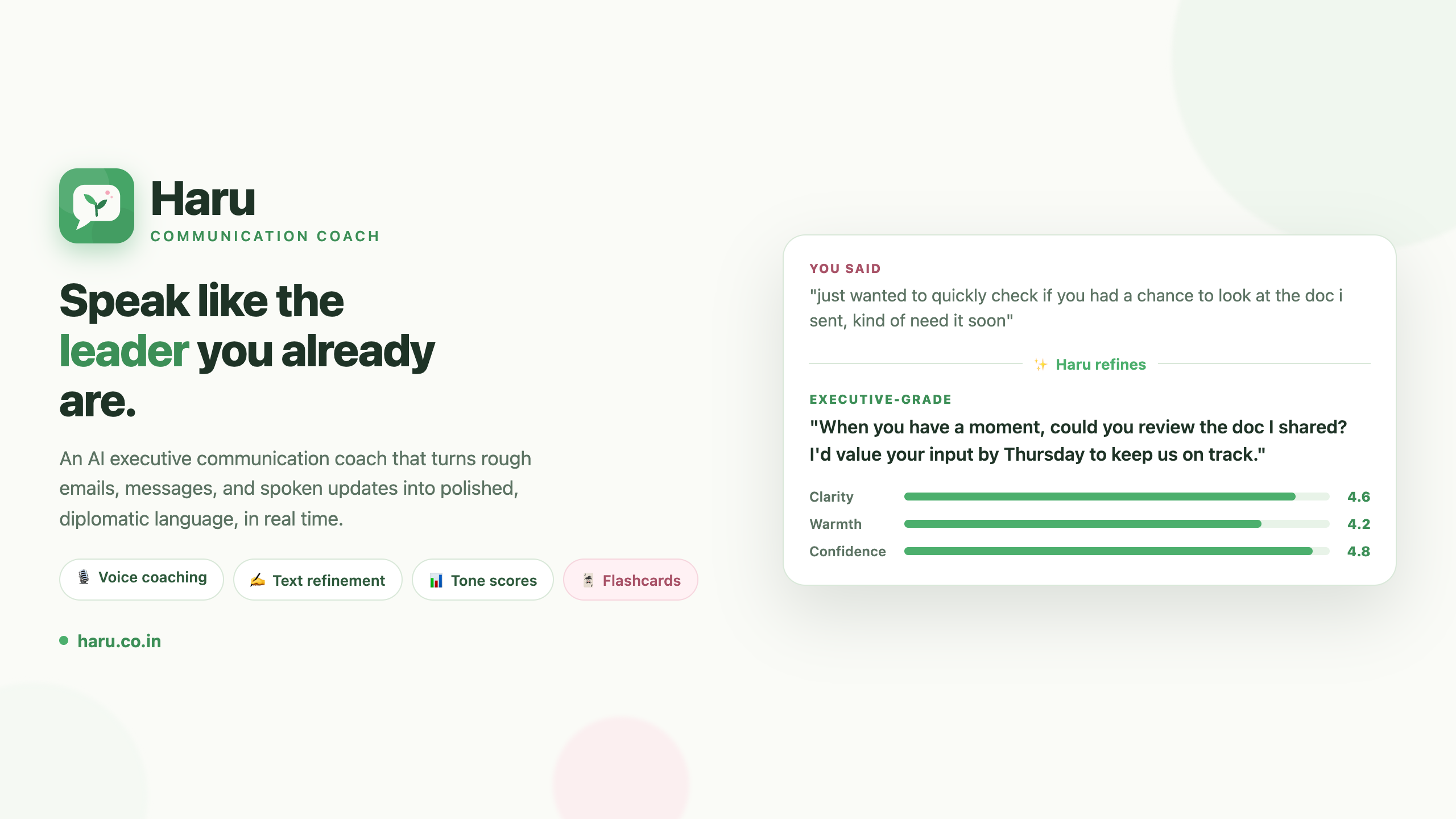
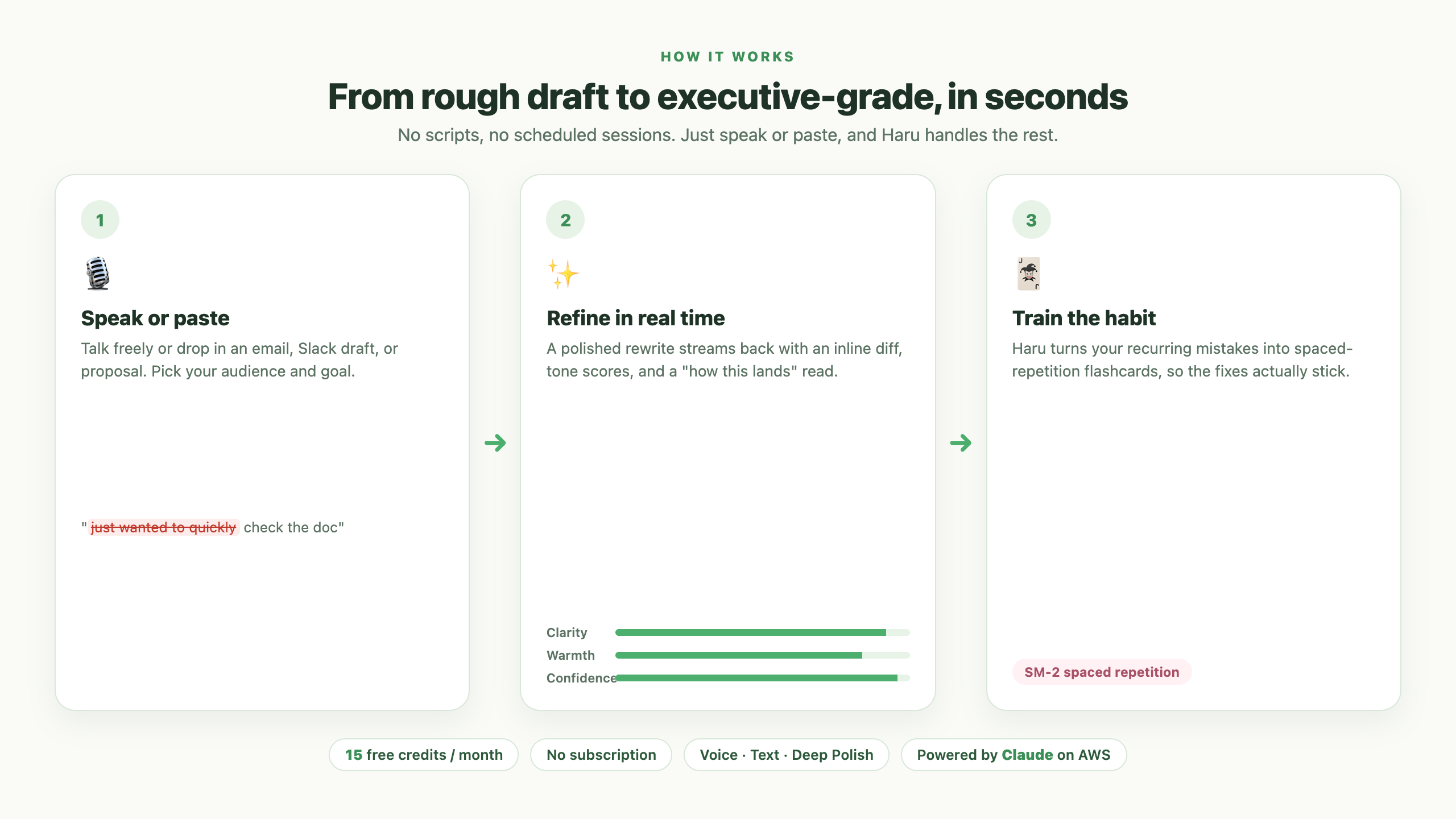
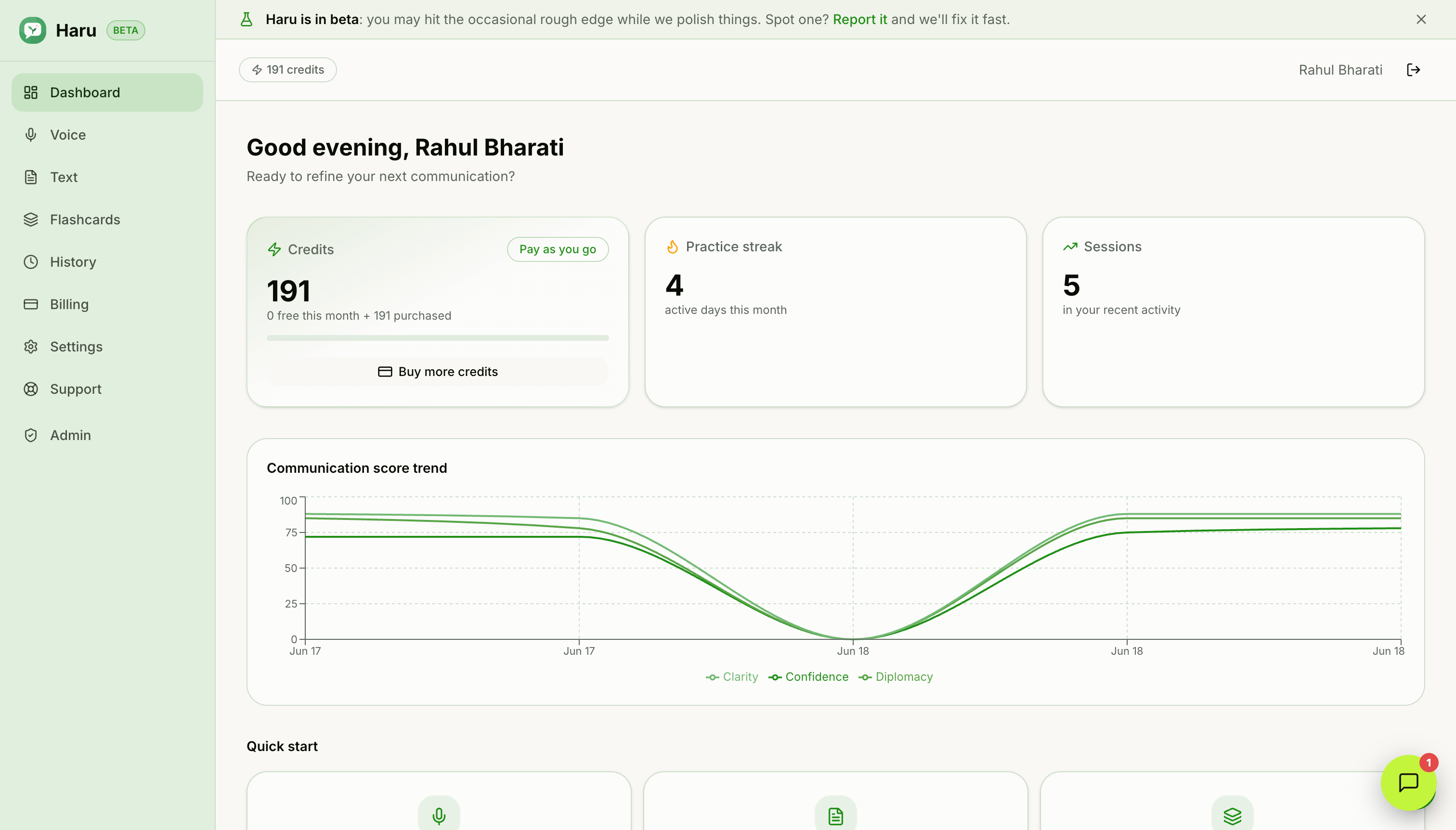
- Voice Mode — speak your unfiltered thoughts plus context ("tell the client we missed the deadline, keep it professional"). Haru transcribes, strips filler, and returns a polished script with tone analysis (confidence, clarity, diplomacy scored 0–100), alternative framings, and a side-by-side diff.
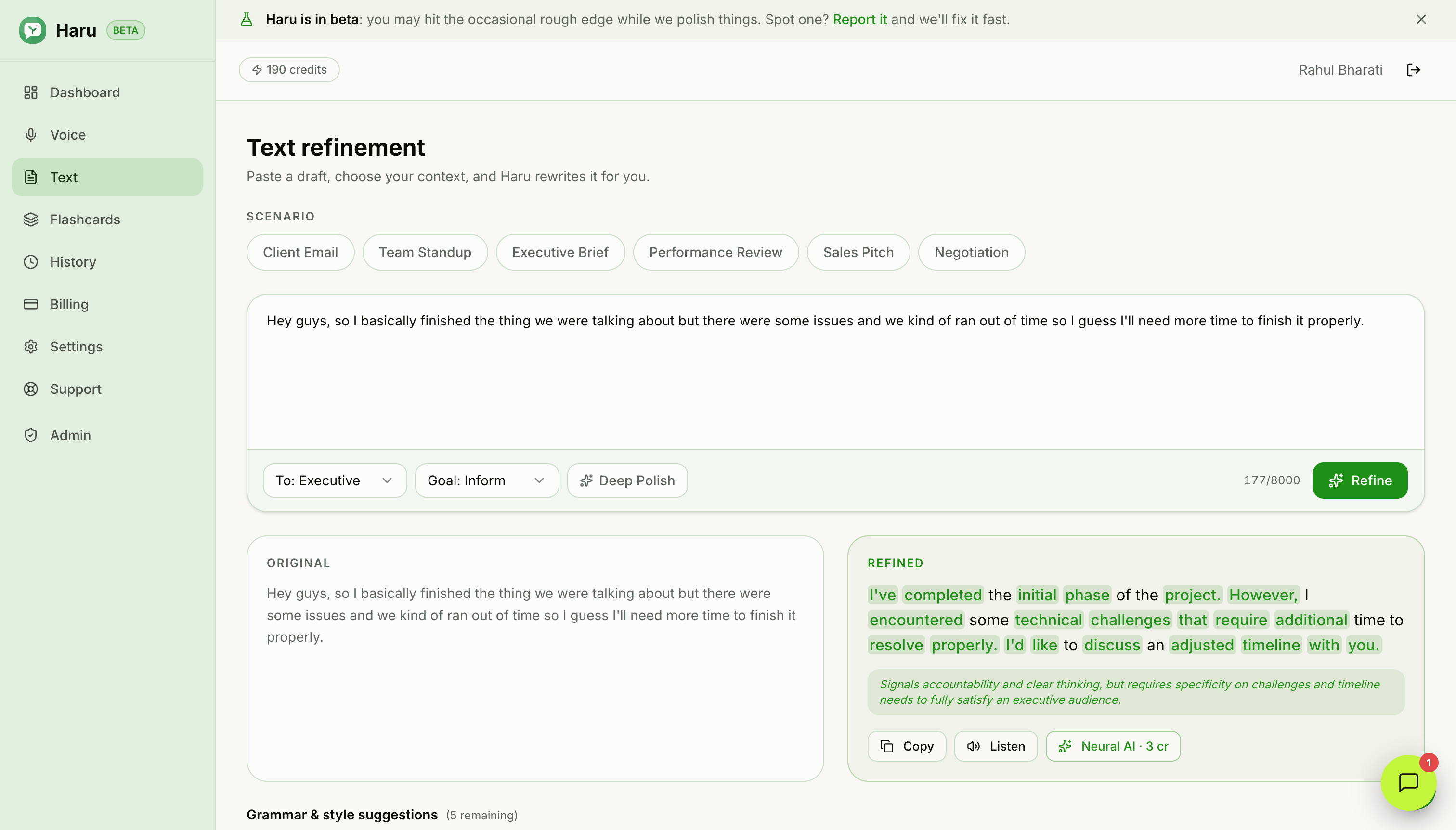
- Text Mode — paste a draft, pick your audience and goal, and get a rewrite with inline grammar fixes and a one-line "how this will land" prediction.
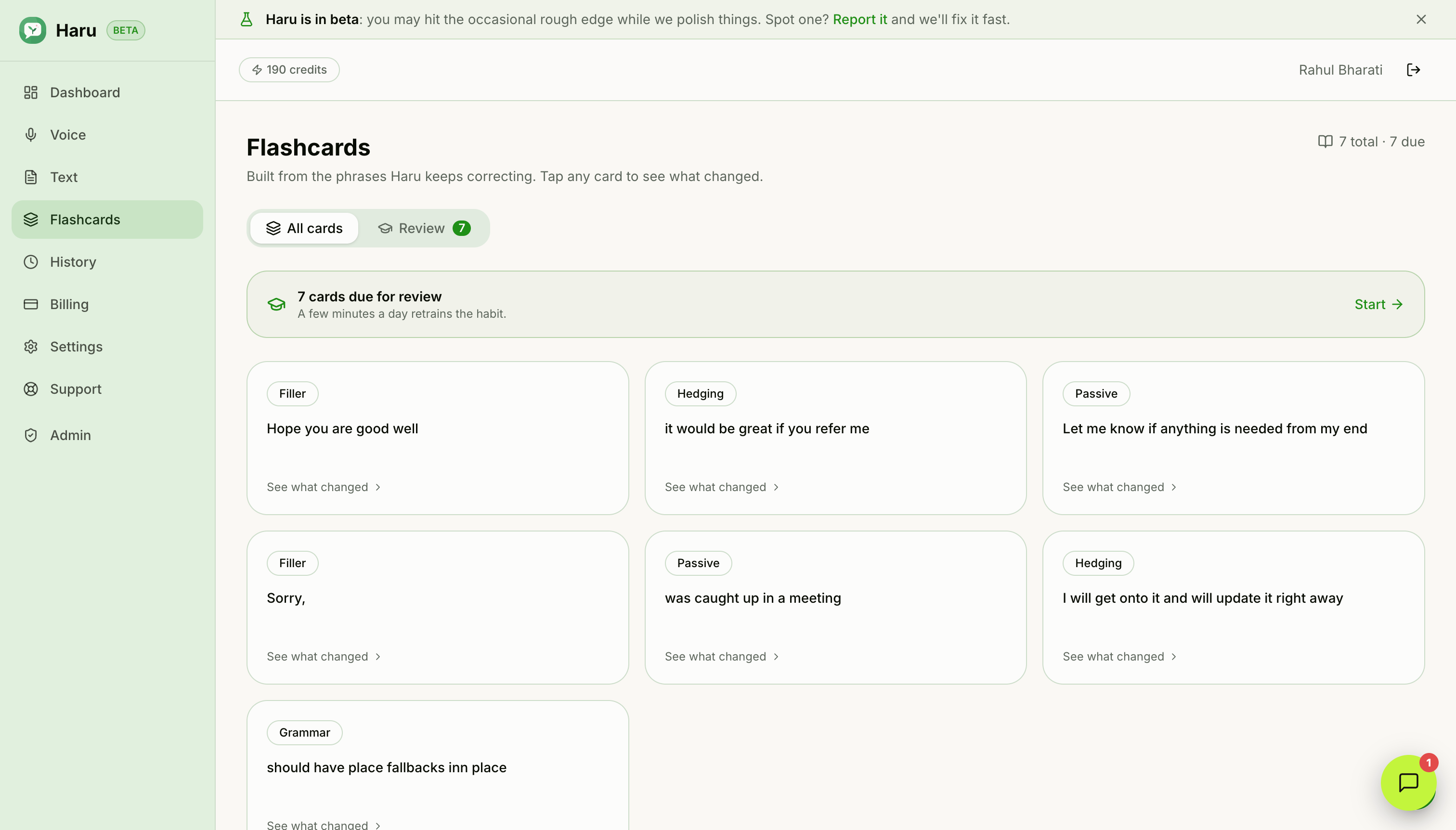
- The Learning Engine — every refinement logs your recurring weak spots and auto-generates personalized spaced-repetition flashcards (SM-2). You close your own communication gaps over time instead of memorizing generic vocab.
How I built it
- Frontend: Next.js (scaffolded with Vercel v0, then completed in local development), deployed on Vercel at haru.co.in.
- Database: Amazon Aurora PostgreSQL (Serverless v2), connected to Vercel in one click — users, sessions, mistake patterns, flashcards, and subscriptions in one relational schema, which the spaced-repetition engine depends on.
- AI inference: Amazon Bedrock for the refinement, tone scoring, and framing.
- Auth & email: started on Cognito + SES, later moved to Better Auth + Brevo (more on that below).
- Payments: Razorpay with UPI Autopay — the right fit for the Indian market.
Challenges I ran into
- SES production access never came. I requested it five days before the deadline and heard nothing. Cognito's email verification depends on SES and caps at 50 sandbox signups that land in spam — unshippable. After four days of waiting, I made the call to rip it out and move auth to Better Auth and email to Brevo (300 free emails/day, instant setup). Two hours, and the app was unblocked.
- v0 credits burned fast. My workflow — build a feature, test thoroughly, fix bugs, repeat — used up the full v0 budget in two days. I pulled the code to GitHub, finished it locally with AI assistance, and kept deploying to the same Vercel project.
- Razorpay onboarding. My existing account was registered for freelance work, so the SaaS site was rejected. I created a SaaS-categorized account and got approved in ten minutes.
What I learned
The biggest lesson was knowing when not to use a service. Aurora and Bedrock were the right calls and stayed. Cognito and SES were good services gated by an approval process slower than a hackathon window — so the pragmatic move was to swap them for tools that ship at startup velocity. v0 is excellent for scaffolding; local development with AI assistance is better for the connected, debug-heavy work. Use each where it's strongest.
What's next for Haru
On-device voice transcription (via in-browser Whisper) for privacy and cross-browser consistency, a Chrome/Gmail/Slack extension to refine text where people actually write, and a mobile app with on-device transcription and synced learning progress.
Built With
- amazon-bedrock
- amazon-rds-relational-database-service
- amazon-ses
- amazon-web-services
- nextjs
- postgresql


Log in or sign up for Devpost to join the conversation.