-
-
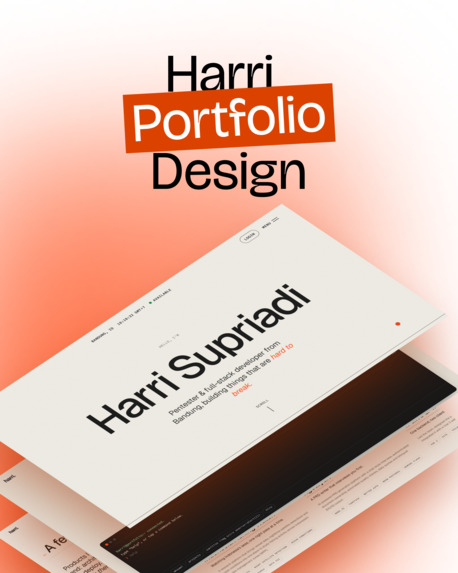
Cover
-
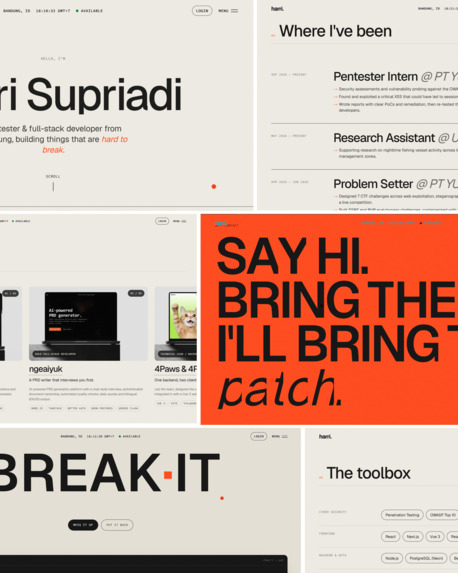
Pages
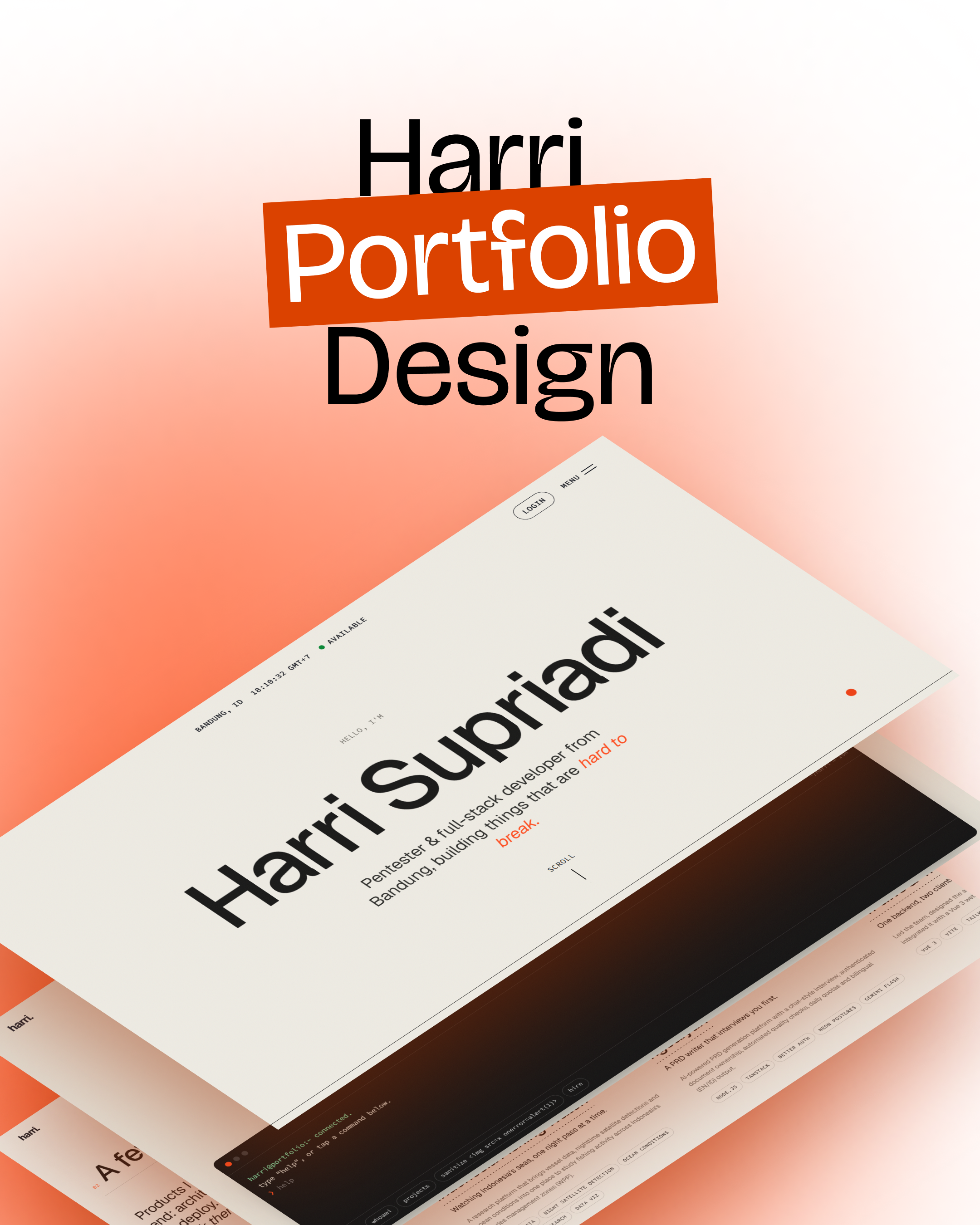
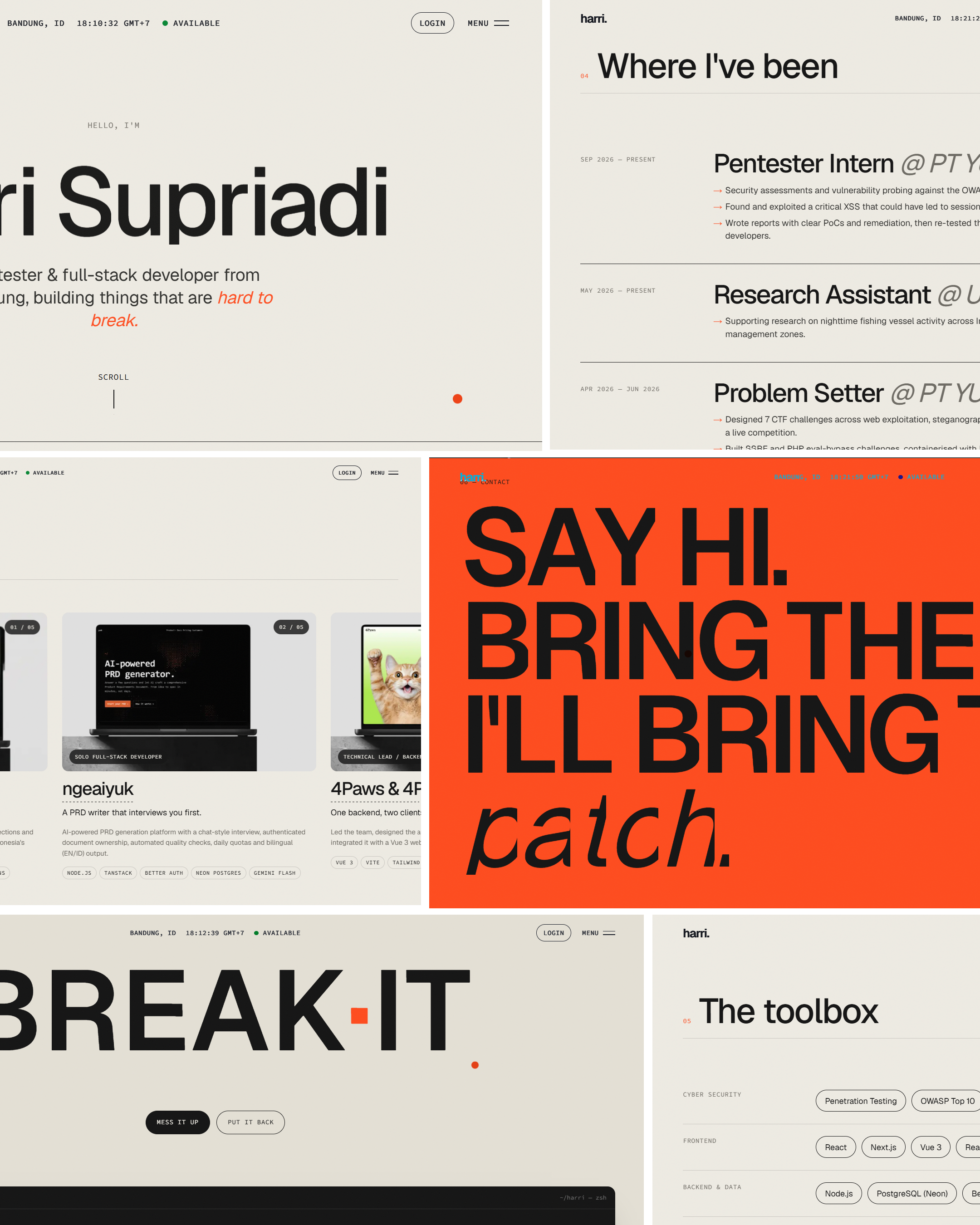
Inspiration
Most portfolios are a polite list of links. I'm a pentester and full-stack developer, and my work starts with a question: "what happens if I send this?" I wanted my portfolio to ask visitors the same thing: poke around, break things, and want to keep scrolling.
The project began as an "endurance test" task: build a one-page site that introduces who you are, uses GSAP for scroll-triggered animation, is genuinely interactive, is deployed publicly, and, for bonus points, uses a login API. I treated it as a chance to build something that feels alive instead of just tidy.
What it does
harri. is a single-page portfolio that presents my work in security and full-stack development.
- Preloader and hero reveal: a counter leads into a staggered entrance, with a reticle that follows the mouse (parallax) and spins as you scroll.
- Velocity-reactive marquees: the text bands speed up or reverse depending on how fast you scroll.
- Scroll-scrubbed statement: a short manifesto lights up word by word as you move down the page.
- Pinned horizontal project gallery: parallax and 3D tilt on desktop, stacking vertically on mobile.
- Playground: draggable letters with inertia ("Mess it up" / "Put it back") and an interactive terminal with commands like
help,sanitize <payload>andhire. - Details: drawing timeline rules, magnetic skill chips, a custom cursor, a live Bandung clock, and a login modal connected to the task's authentication API with session persistence.
How I built it
- Next.js 16 + React 19 + TypeScript for the app structure.
- GSAP 3 (ScrollTrigger, SplitText, Draggable, Inertia) for all animation, wired through
@gsap/reactso animations are scoped and cleaned up properly. - Lenis for smooth scrolling, synchronized with ScrollTrigger.
- Login flow: an auth context calls the DummyJSON login API from the task brief and stores the session in
localStorageorsessionStoragedepending on a "remember me" toggle. - Content in one file: all copy (profile, projects, experience, stack) lives in
lib/data.ts, so the site can be updated without touching components. - Deployed on Vercel.
Challenges I ran into
- Making smooth scroll and scroll-triggered animation cooperate. Lenis and ScrollTrigger each want to own the scroll position, so they had to be synchronized. Modals also needed to pause Lenis while open and resume it on close.
- Pinned horizontal scrolling on small screens. The gallery feels great on desktop but breaks on touch devices, so I rebuilt it as a vertical stack on mobile instead of shrinking it.
- Cleaning up animations. With React and Next.js, animations have to be created and reverted per component, or they leak and stack up across renders.
- Keeping it fun without hurting usability. A custom cursor, a preloader and lots of motion can easily get in the way, so I had to keep tuning timing and easing until it felt responsive.
Accomplishments that I'm proud of
- A portfolio with real personality, where the terminal and draggable letters invite people to stay and play.
- A clean separation between content and components.
- Shipping it as a working, deployed site with authentication on top of the required animation work.
What I learned
- How GSAP's plugins fit together, and how to tie animation to scroll velocity as well as position.
- How to manage animation lifecycle in React with
useGSAP. - That good interaction design is mostly about restraint: every effect needs to earn its place.
What's next for harri.
- Case-study pages for each project instead of gallery cards only.
- More commands and hidden easter eggs in the terminal, including security-themed mini challenges drawn from my CTF work.
- Accessibility pass: reduced-motion support and full keyboard navigation for the playground.
Built With
- css?
- gsap?
- html5?
- lenis?
- next.js?
- node.js?
- react?
- scrolltrigger?
- typescript?
- vercel?
