-
-
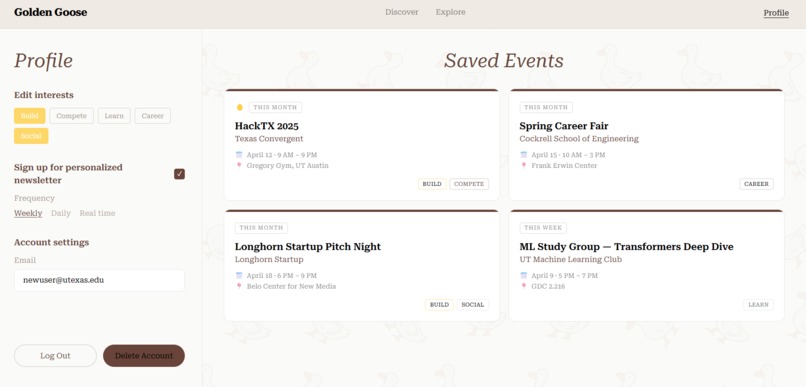
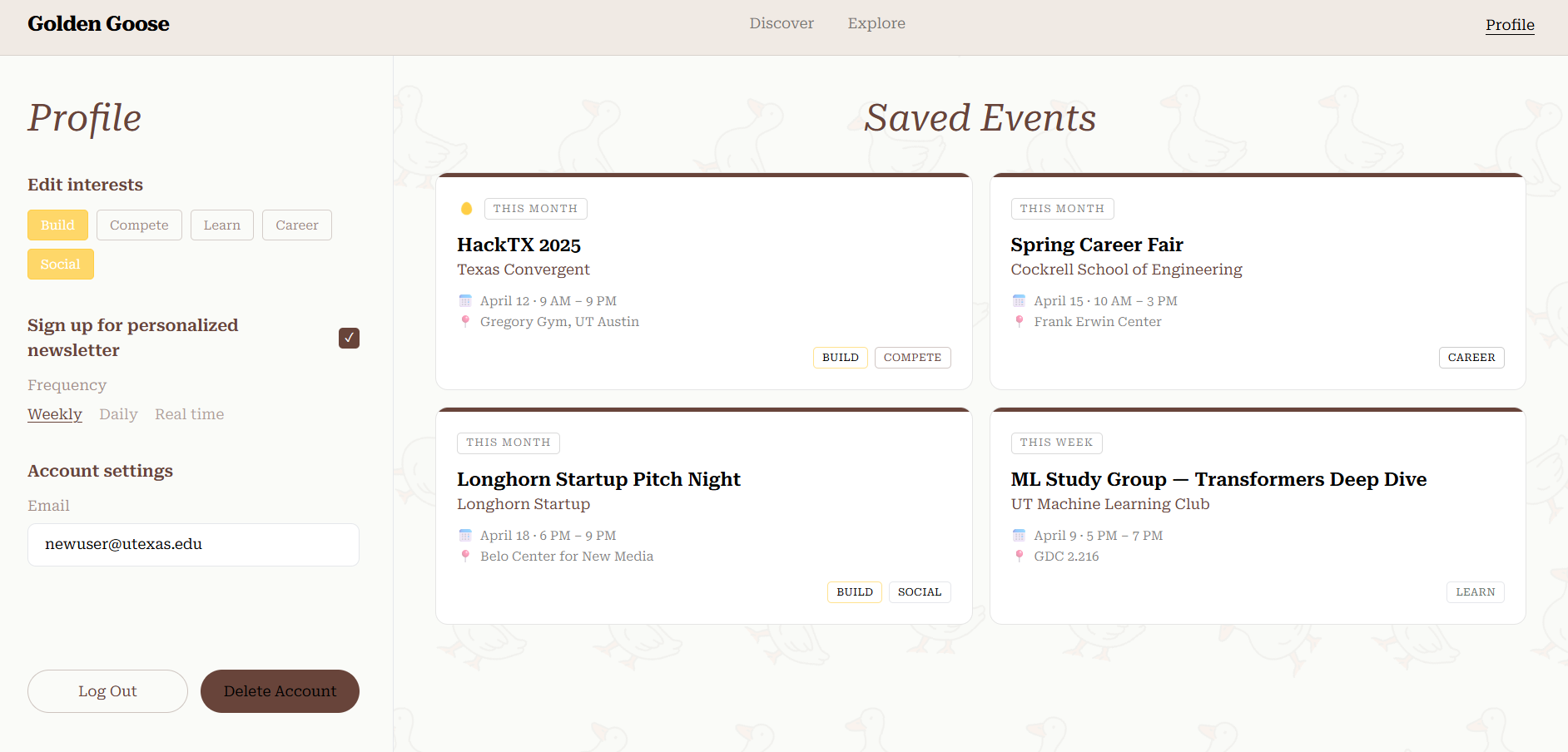
Your profile page with your preferences and saved events
-
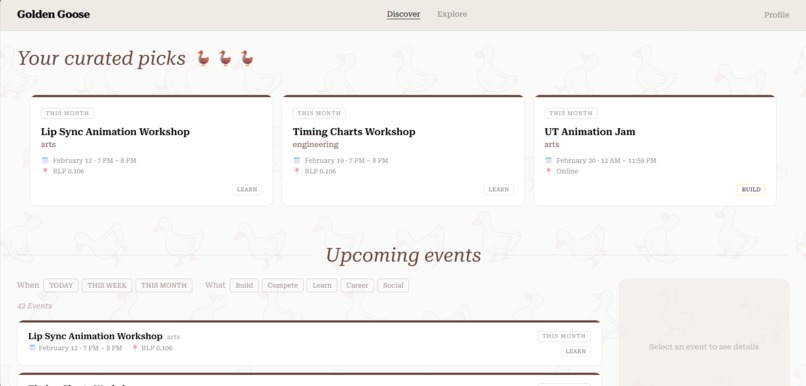
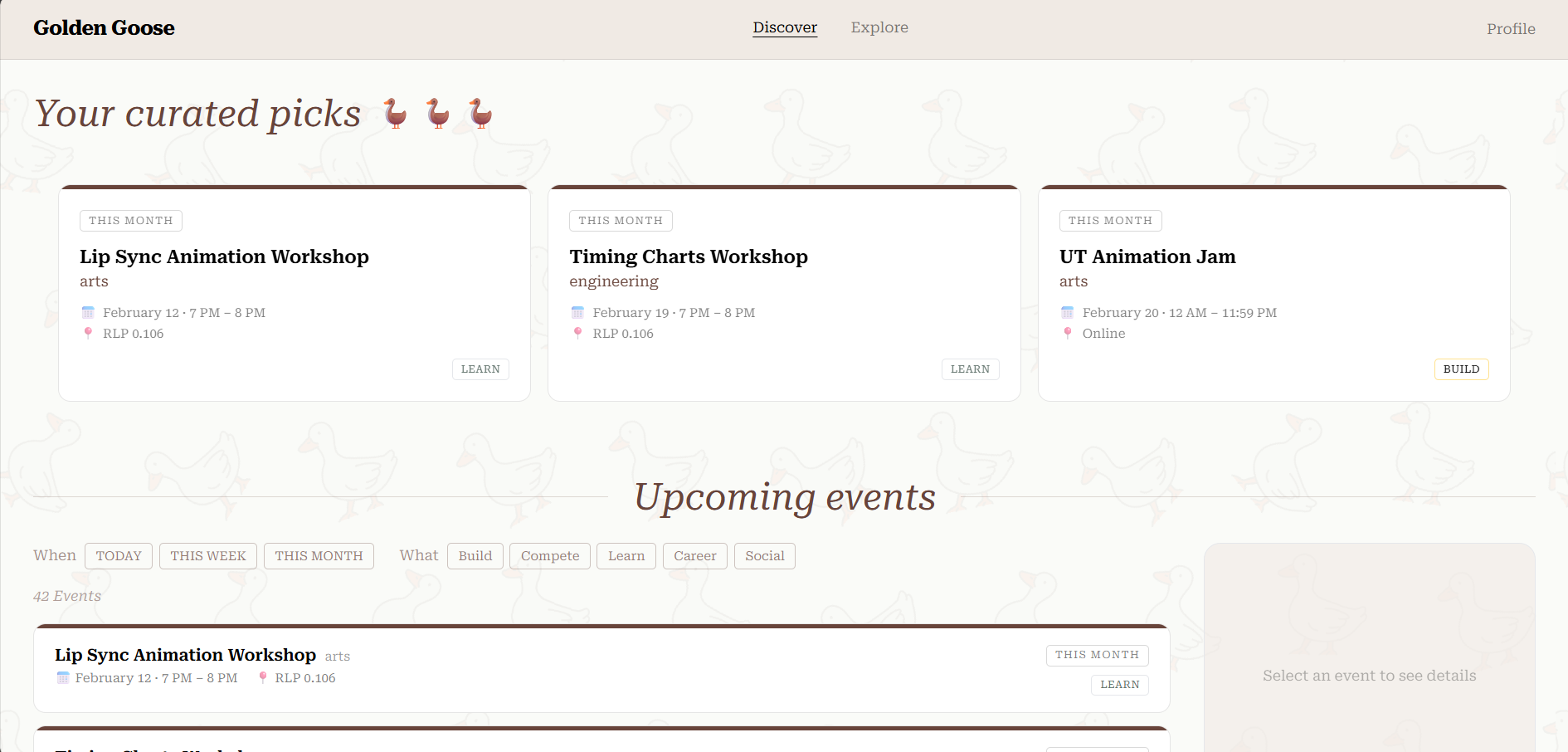
Personalized event picks based on your preferences when you log in
-
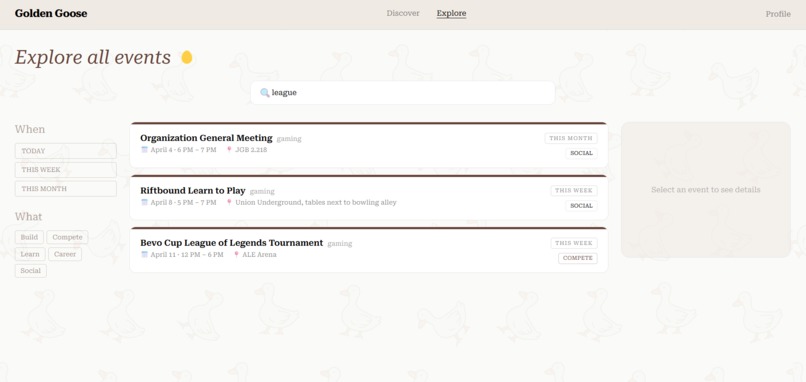
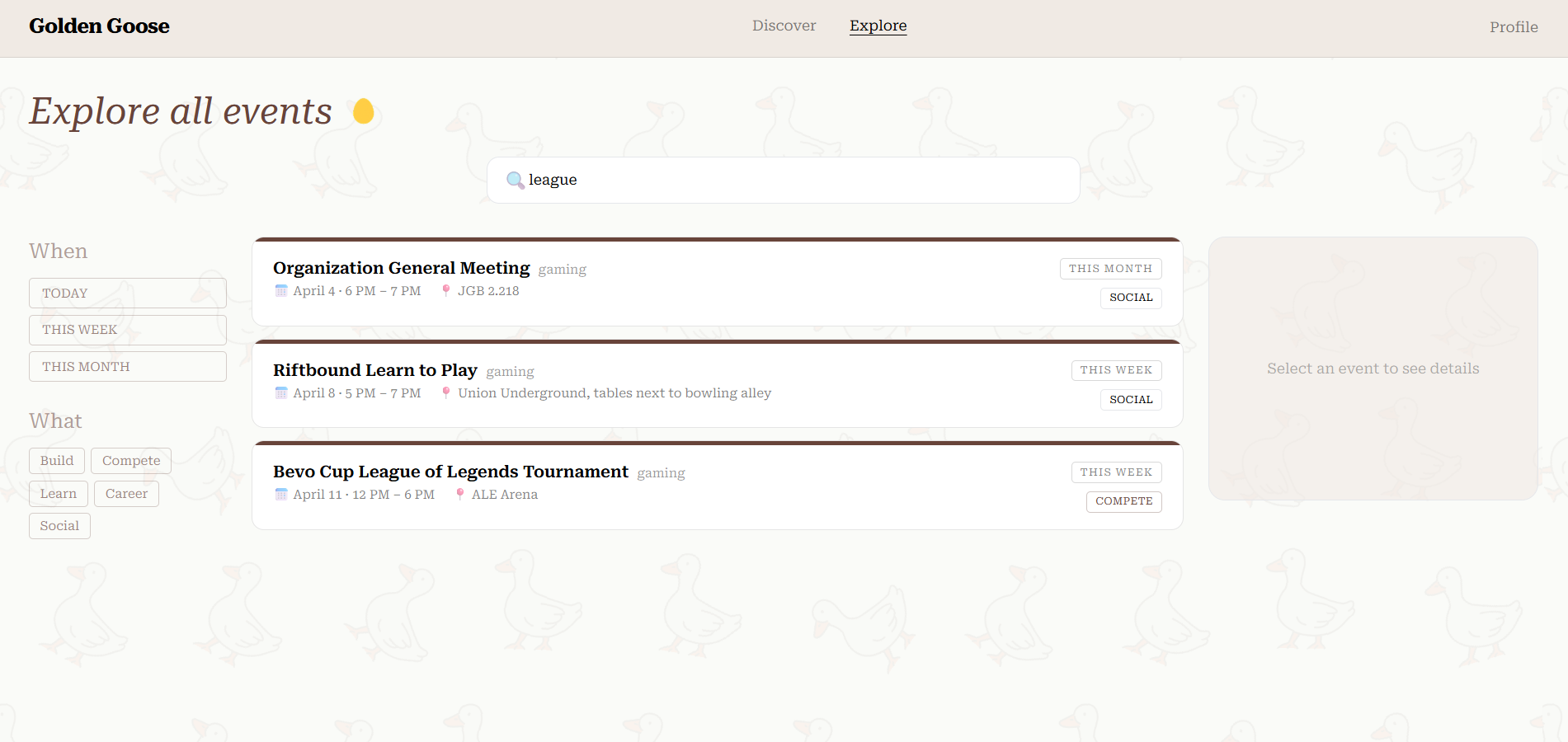
List of all events on the platform, searchable and categorized
-
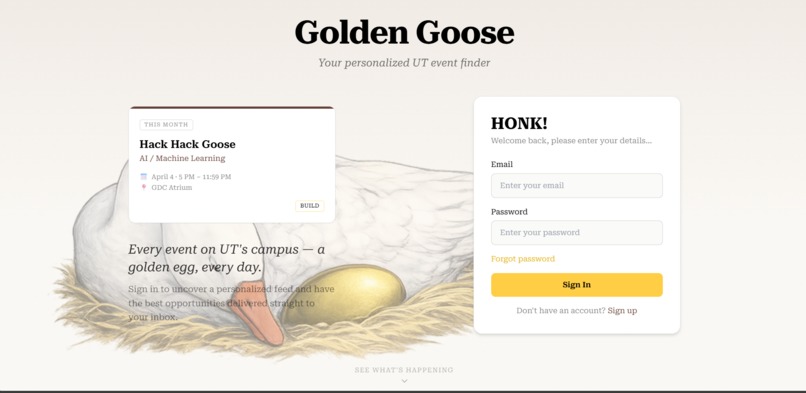
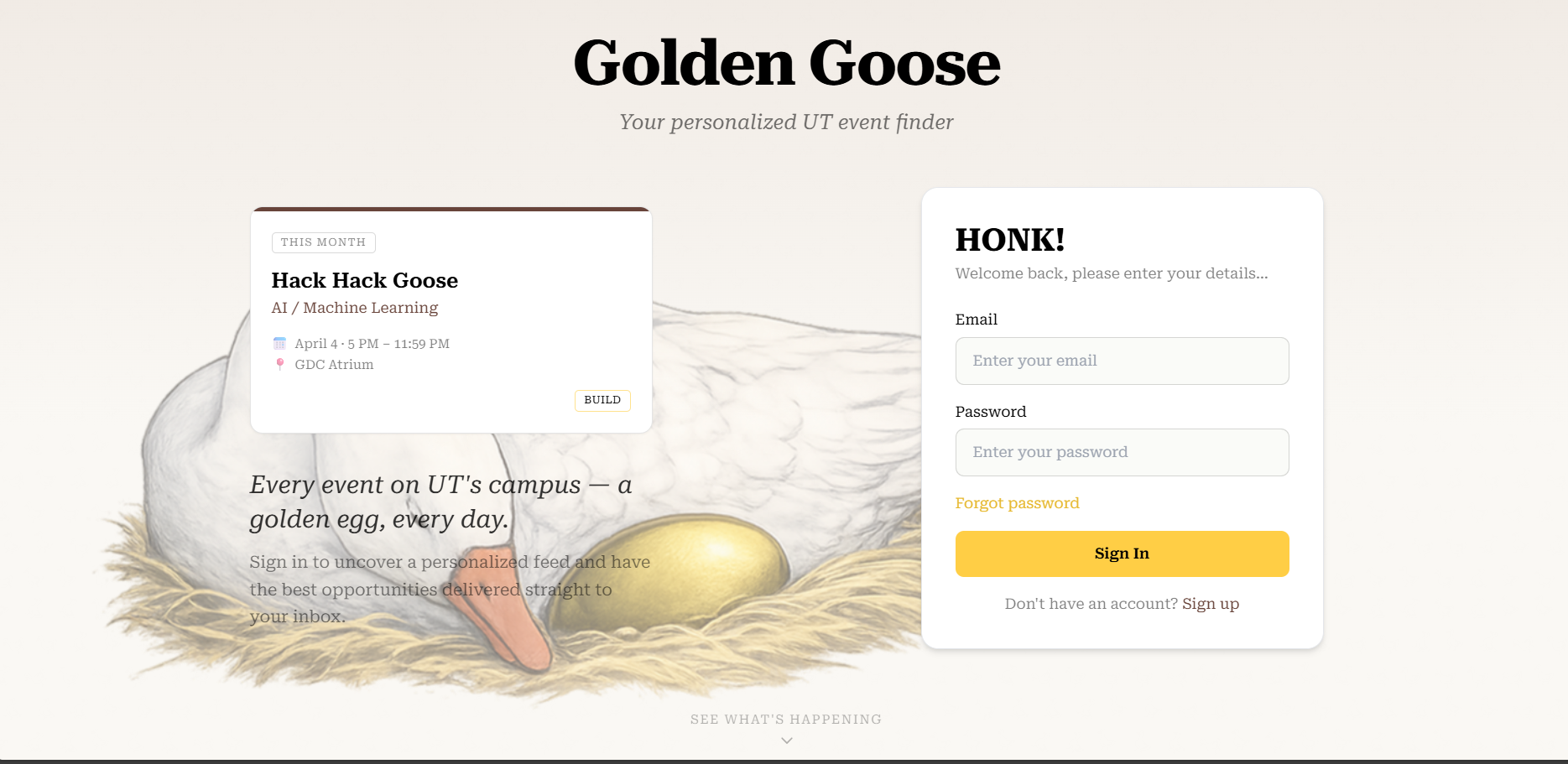
Landing page with list of event if you scroll down
Harnold's Best Finds
💡 Inspiration
We often miss out on events at UT that either slip our mind or we never heard about. It's not a unique experience to find out from a friend that you missed a cool event that — if only you'd heard about it — you would've gone and had a great time.
The problem is that there are so many different organizations at UT (some big, most small) that it's hard to keep up with everything happening around us. It doesn't help that every organization has their own way of communicating their events, whether that's their individual Instagram page or their individual Discord server. So if you decide to delete Instagram or Discord to get off your phone, you're out of luck for finding new events.
The other problem is that for newcomers especially, organizations are really hard to find naturally. The usual way of finding an organization is getting lucky while browsing Instagram or getting lucky while walking down Speedway.
The good thing is that there's already a solution out there: HornsLink. The bad thing is that student orgs generally ignore the website, most students don't know about it, and the filtering options leave a lot to be desired.
🛠 What It Does
What we built is a centralized platform for all student organizations to be able to display their events. Someone who is interested in finding new events can simply visit the website and search through events to find any they're interested in, with useful and specific categories.
For more functionality, the user can log in and:
- Save events they want to come back to later
- Sign up for a newsletter that notifies them about recommended upcoming events and saved events they haven't attended yet
For getting the events into the website, the idea is that for right now we scrape different organizations' Instagrams and find and categorize upcoming events they've posted. This way we can get up to date information without the organizations needing post their events manually. Later, the plan is to reach out to student organizations and integrate our ingestion with their Instagram posts with an Instagram App. We do this so that there is less overhead for the organizations to start and so that they're workflow isn't disrupted.
⚙️ How We Built It
| Layer | Tool |
|---|---|
| Frontend | Next.js + React |
| Backend | Supabase |
| Deployment | Vercel |
| Design | Figma |
| Implementation | Claude Code |
✨ Formatting with Gemini
Our AI pipeline uses Gemini to ingest, format, and classify posts from club Instagrams at UT. We transform fragmented and unstructured data from captions and images into a normalized schema. We also use Gemini to classify events into topics and remove duplicate events across different posts and sources.
🚧 Challenges We Ran Into
At first, we thought we could fully vibe code the platform — but that proved to be the wrong decision. The UI the AI produced wasn't unique or something that could be branded.
That's when we decided to work a little more traditionally: design the frontend first, implement it with code later. That shift made a real difference in the quality of the final product.
🔭 What's Next
We plan to bring this platform outside of the hackathon and continue its development for the betterment of student organizations across the UT campus — and other campuses facing the same problem.

Log in or sign up for Devpost to join the conversation.