-
-
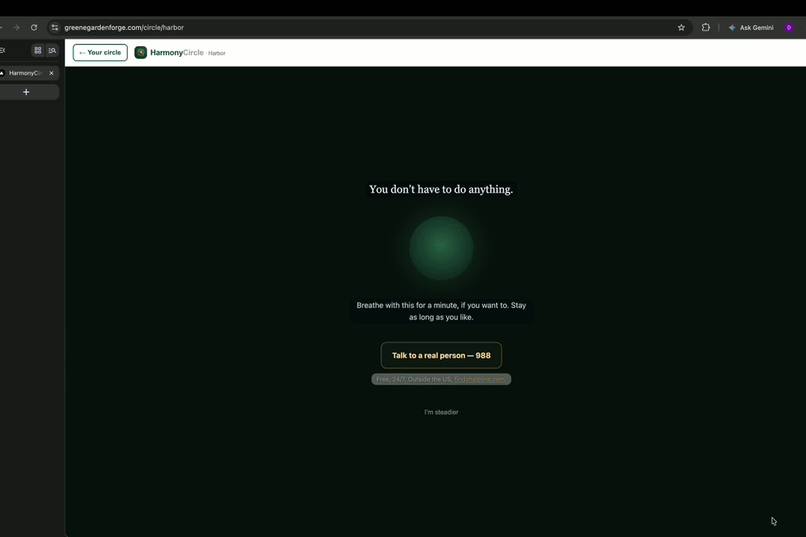
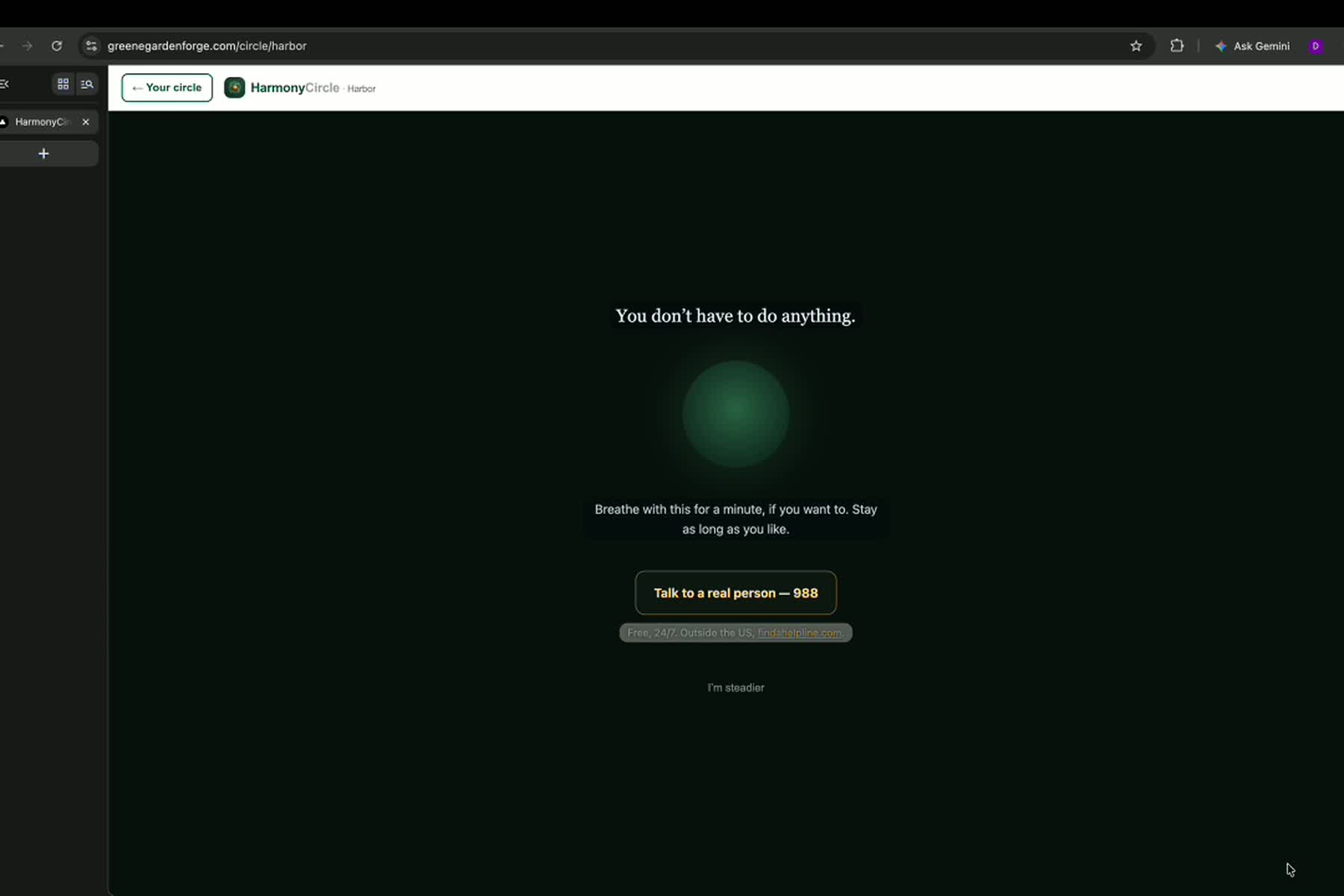
when a night is too much, the room breathes with you and offers 988 help a click away
-
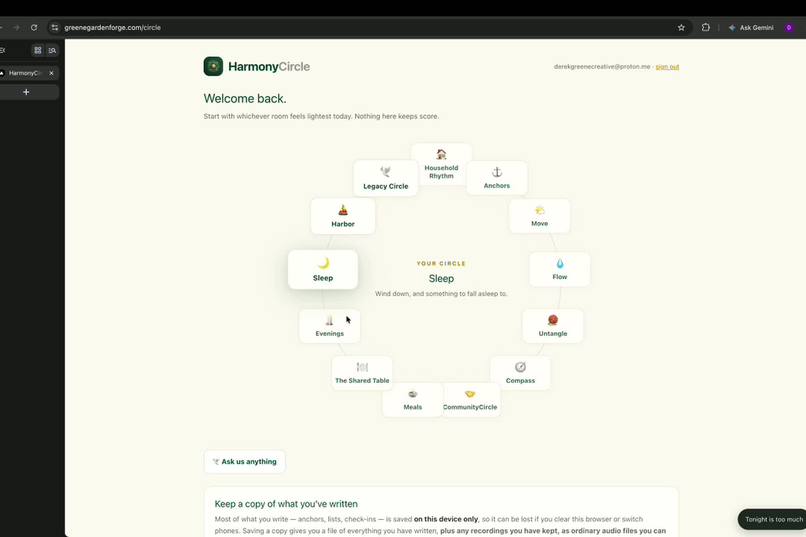
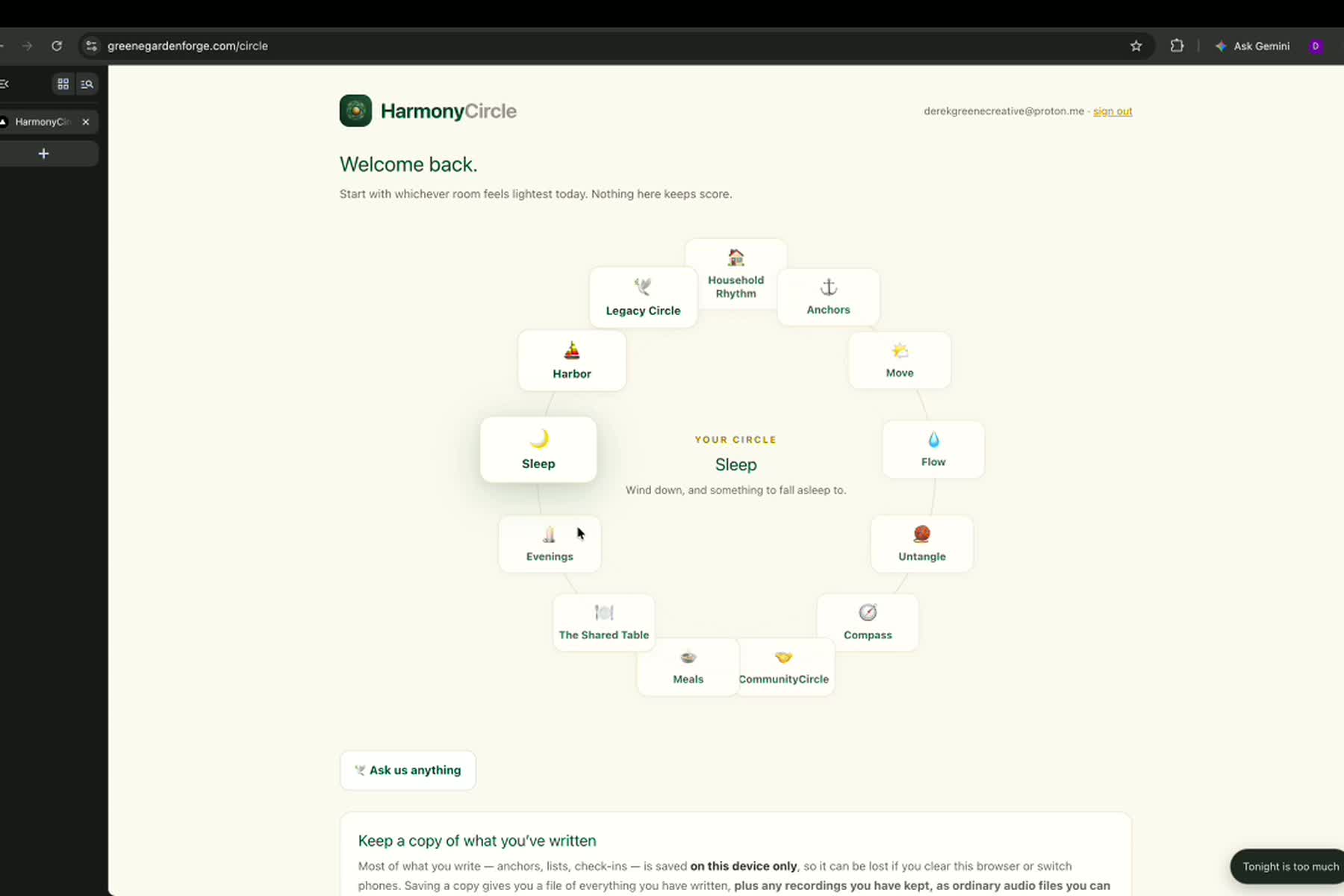
HarmonyCircle's 13 rooms
-

Gemini image of a recipe Gemini created by reading photos of my kitchen
-
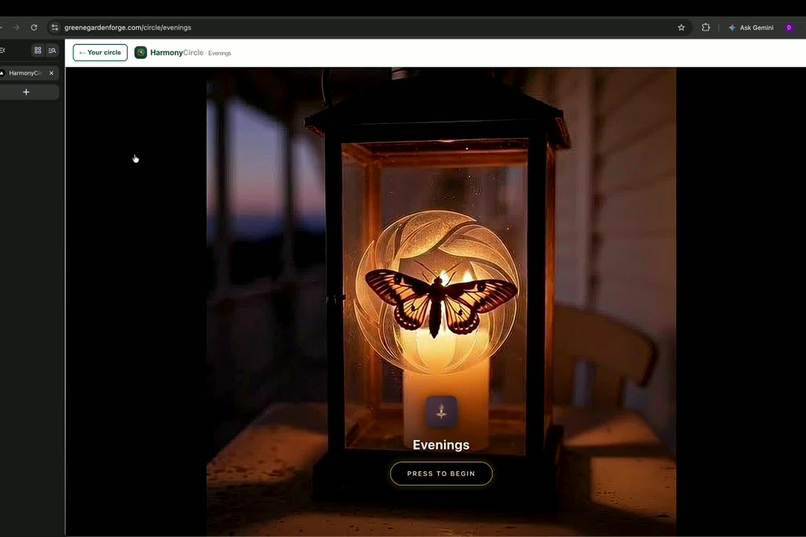
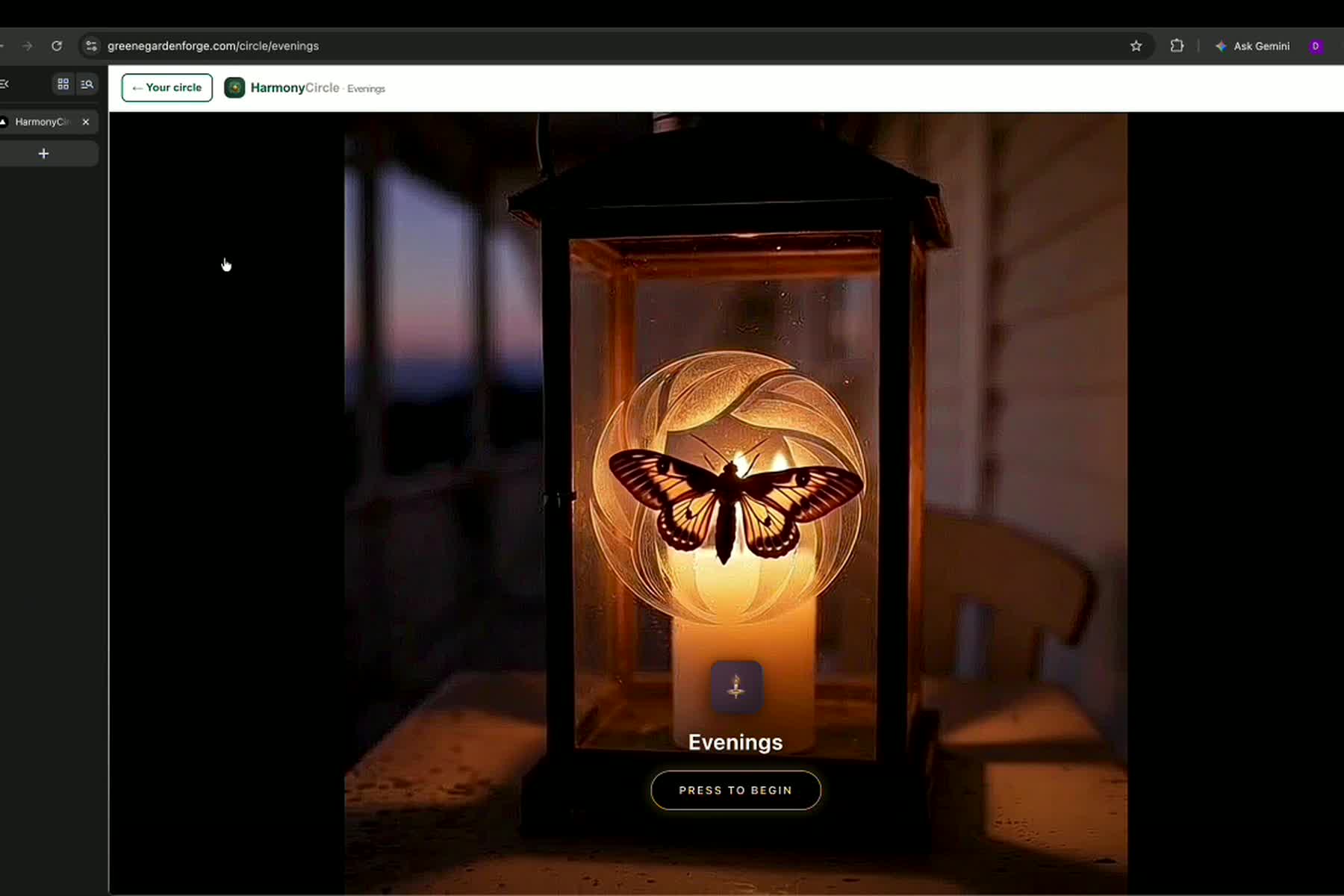
Evenings living wallpaper built by Gemini
-
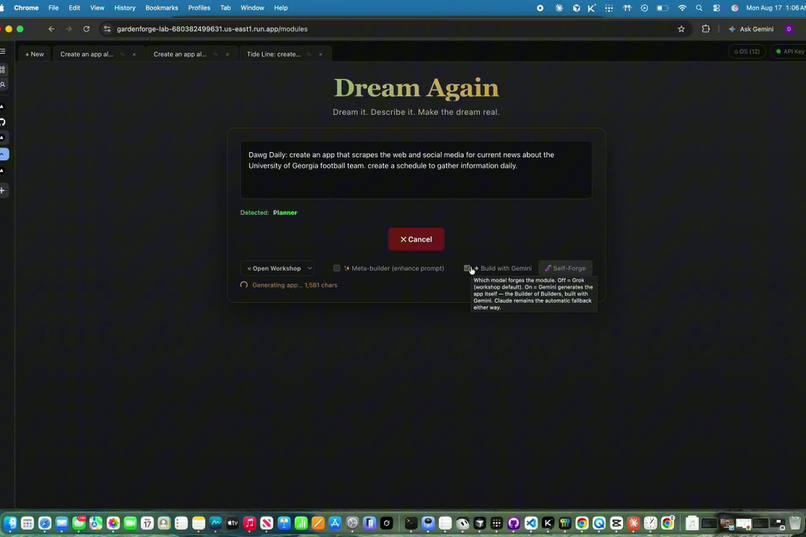
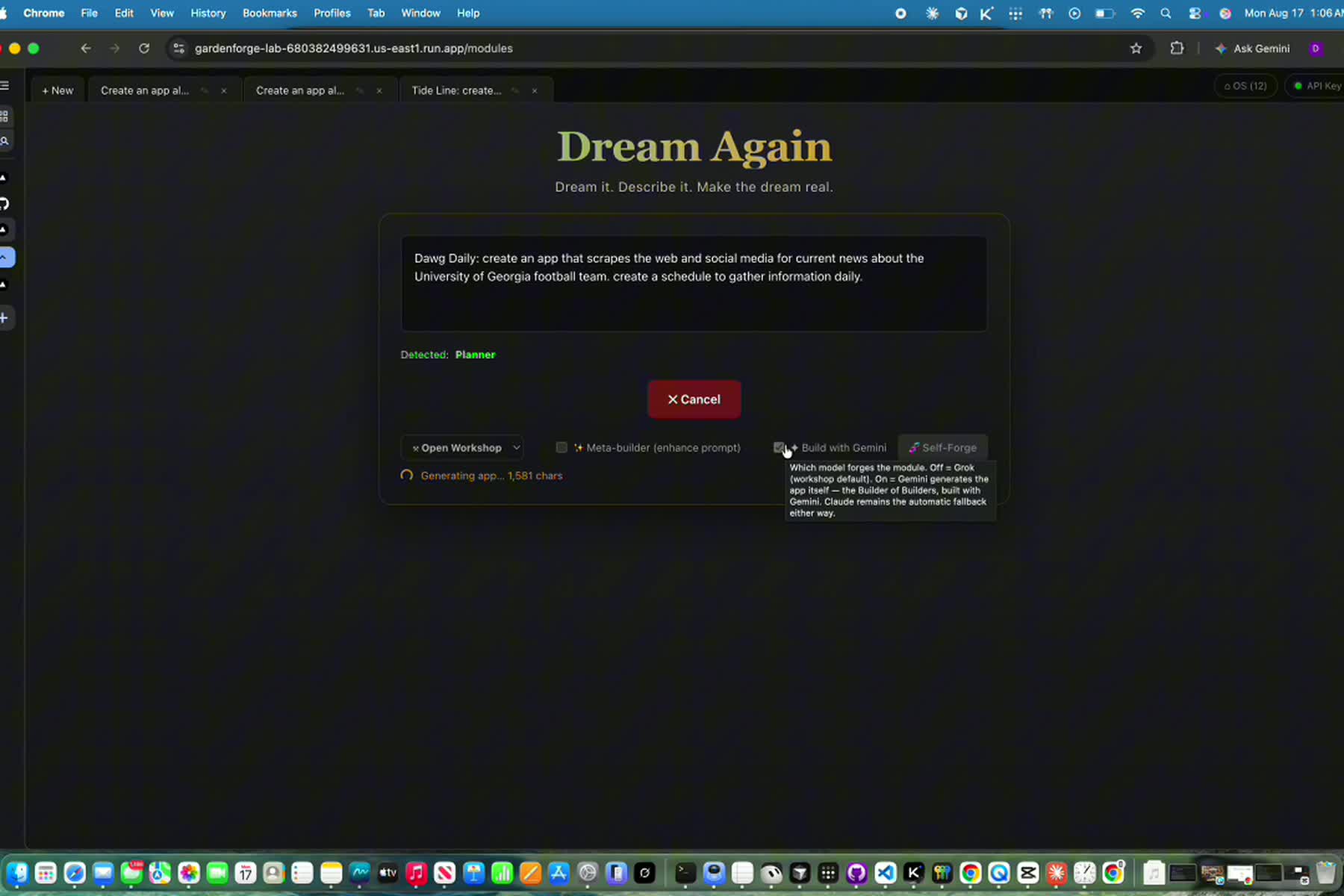
The GardenForge
-
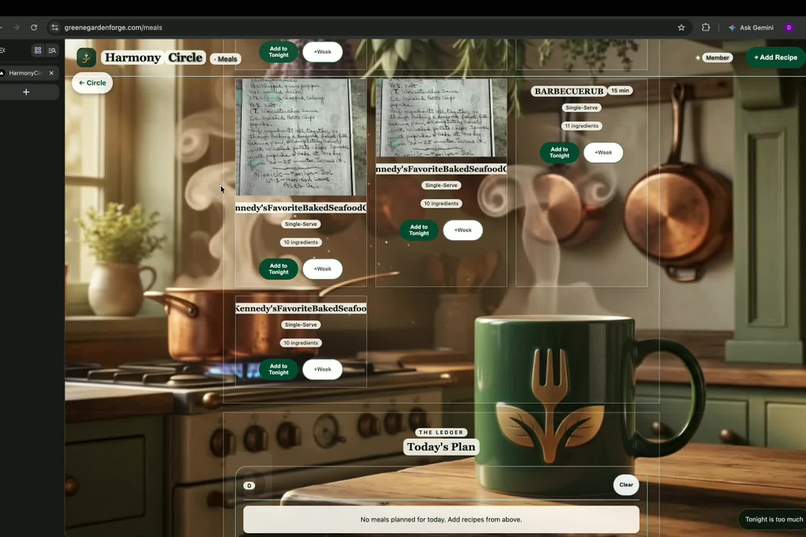
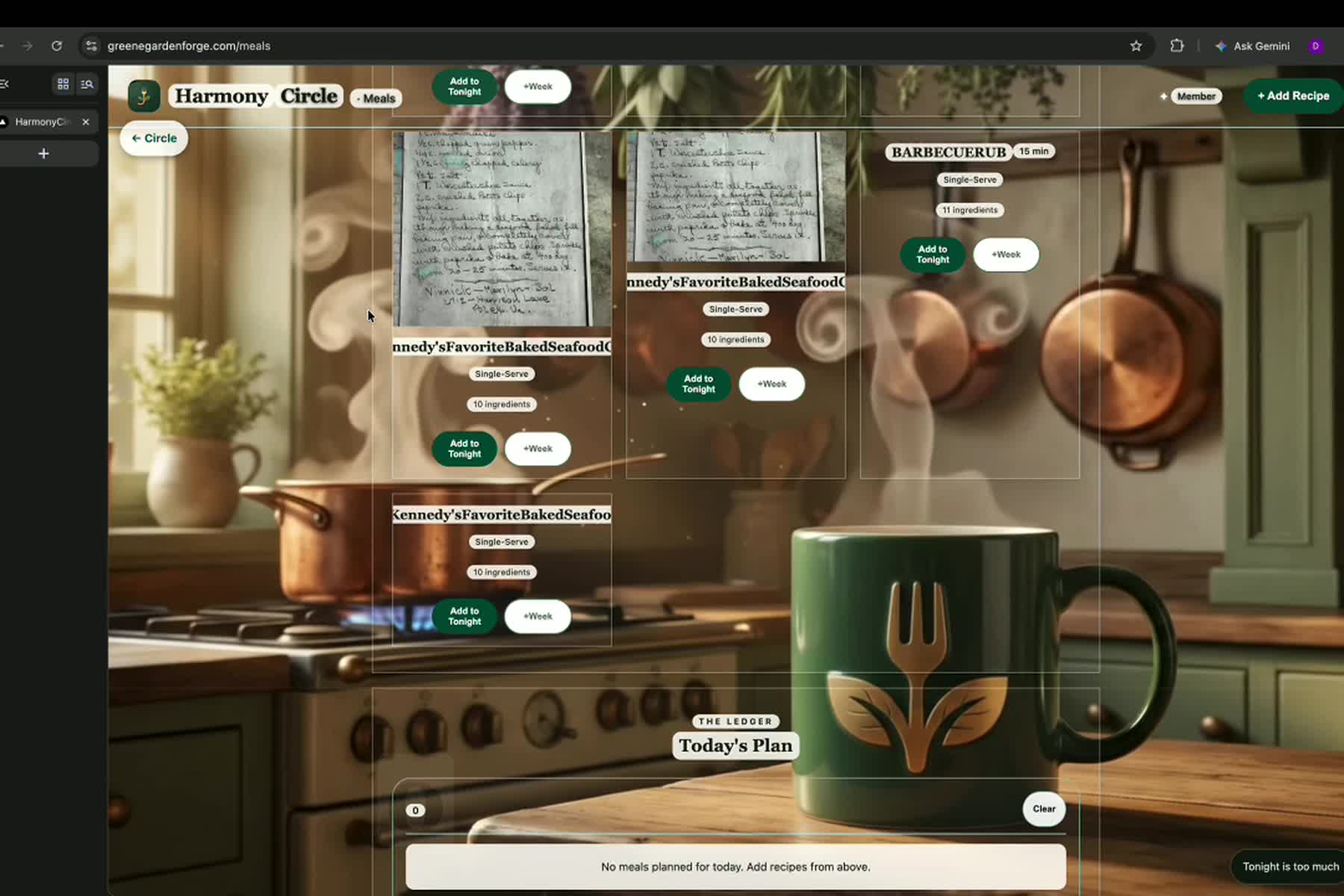
The funnel is the Meals/Kitchen; living wallpaper made by Gemini
-
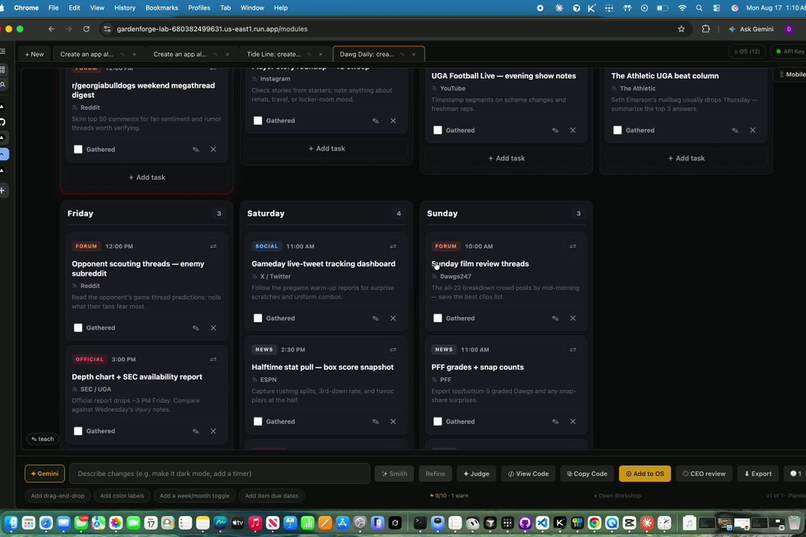
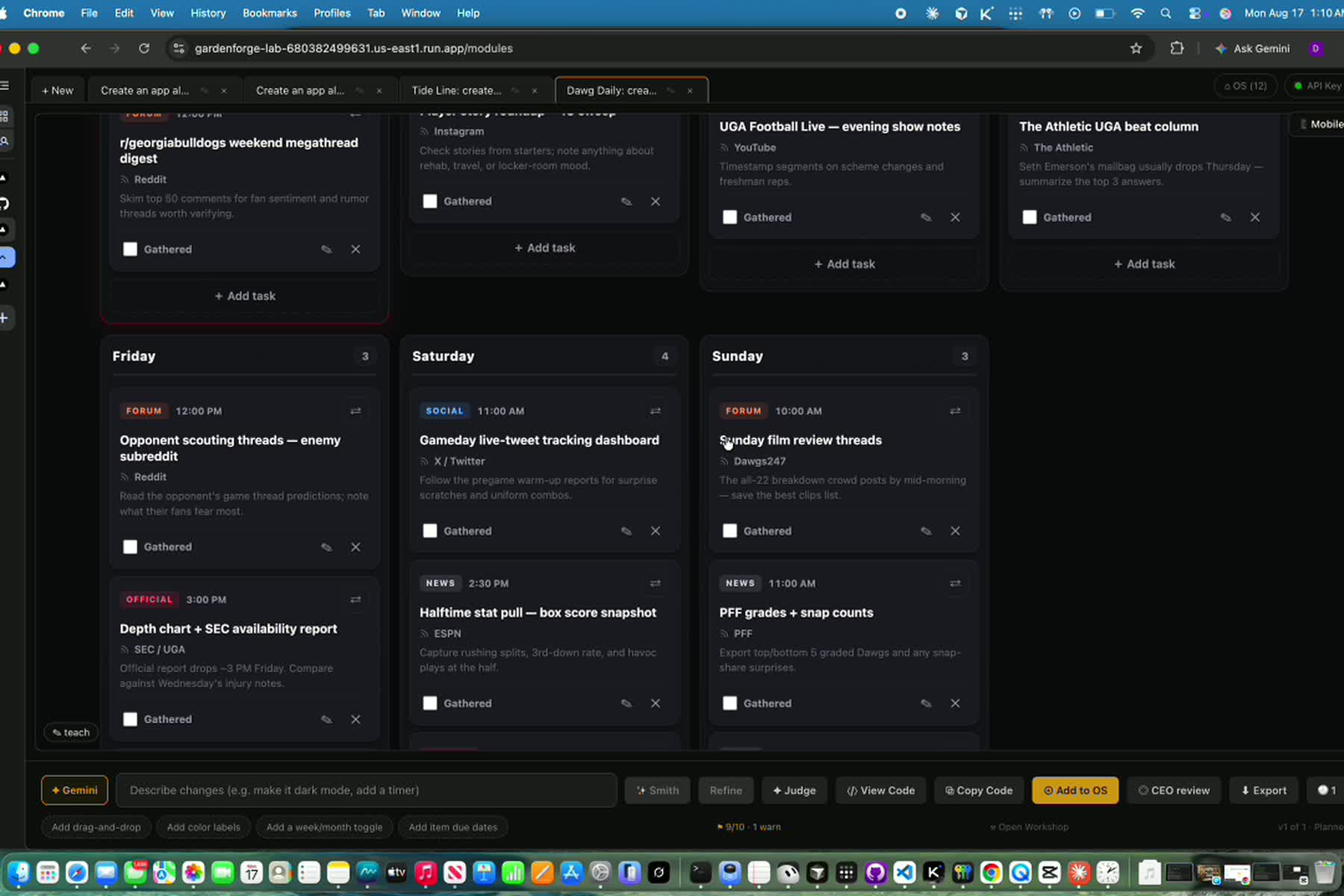
App created by Gemini using my GardenForge
-

handwritten recipe read by Gemini and entered as a new recipe


Inspiration
After losing Maureen, I found it very difficult to cook for one, and I wasted so much food. I recognized that many others face the same challenge. I set out to build an ecosystem that would not only solve that problem, but help me and other people rebuild our lives after loss.
As of 2023 there are 15.3 million widowed people in the United States. 11.9 million of them are women. There are more every day.
Almost everything built for us is either a grief support group or a to-do list. Nothing sat in the actual gap, which is smaller and more ordinary than either: it is six o'clock, the house is quiet, and you still have to feed yourself.
I started with dinner because cooking for one was the hardest ordinary thing I had to learn — and because most of that 11.9 million were the ones who did the cooking. They know how to run a kitchen. They just don't know how to cook for one anymore.
What HarmonyCircle is
Not an app. Thirteen rooms: Meals, The Shared Table, Anchors, Sleep, Move, Flow, Harbor, Evenings, Untangle, Compass, Household Rhythm, Legacy Circle and CommunityCircle.
One for the hard days. One for the practical-legal checklist nobody hands you. One for preserving the stories that matter. The circle is time-aware — at night it opens the doors made for the small hours. Nothing keeps score.
Every room has a button in the corner that says Tonight is too much. Press it and the app stops asking anything of you, offers to sit and breathe with you for a minute, and puts 988 one tap away.
Meals is the front door:
- Kitchen Vision — photograph what is actually in your kitchen. Gemini names what it finds, proposes one realistic single serving built mostly from your list, and plates it. This is also where the food waste stops.
- Real scaling — one on a Tuesday, eight at a table, never a third of an egg.
- Read it from a photo — photograph a handwritten recipe card and it becomes something you can cook tonight. The form asks "Who taught you this?", because recipes come from people, and sometimes the person is gone.
- The Shared Table — plan a meal, send an invitation, and eat together from two kitchens.
How I built it
I am 53 years old and I had no programming or coding knowledge when I started.
So I didn't build the thirteen rooms. I built the thing that builds them.
GardenForge is a module generator running on Google Cloud Run. A sentence or two goes in — "create an app that scrapes the web and social media for current news about the University of Georgia football team; create a schedule to gather information daily" — and a finished, gated module comes out. It classifies the request, forges the module with Gemini, scores its own output, repairs what fails, and proposes improvements I either ratify or refuse, before anything is added to the OS.
The run in the demo video is one unbroken take: 5 minutes 20 seconds from prompt to working module, returned with a self-score of 9/10 and one warning. I left the real clock in the film rather than speeding it up.
That is how one person with no coding background built thirteen rooms in forty-five days. I was not writing the rooms. I was reviewing them.
Gemini is the builder. Grok is the workshop default and Claude is the automatic fallback, so no single provider is a single point of failure. Every room, every living wallpaper and every piece of artwork in HarmonyCircle was generated through this pipeline.
The stack is a Next.js / Bubble monorepo. Both the product and the forge run on Google Cloud Run in us-east1. Firebase provides authentication, Firestore and storage. Stripe handles payments. A second domain catches the common misspelling and redirects.
Gemini in production
Gemini is not a feature bolted onto the side. It is the production path for:
- reading a kitchen photograph into an ingredient list
- choosing and describing one realistic single serving
- rendering the finished plate
- reading handwriting off a recipe card
- voice, image and narrative work in Legacy Circle
- generating the modules themselves — the Builder of Builders
Business
Payments are live, and priced for a widow on a fixed income rather than for a software buyer:
- Meals — $6.99 / month
- Foundations — $11.99 / month
- Family — $22.99 / month, or $199 / year
- Founding Member — $149 / year, price locked for as long as you stay
Thirty-day refund by email, answered by a person. Cancel anytime.
I learned about this competition on day 45 of its 90 days. Everything here was built in the 45 days since.
Where the numbers actually stand, plainly:
- Revenue to date: $0
- Paying subscribers: none
- Costs to date: $1,650, nearly all of it legal — an attorney reviewing the terms and the privacy notice before a single grieving person was asked to trust them
- Advertising spend: $0. Campaigns ran and served impressions, but my bank rejected the authorization and Meta cancelled them before anything was charged.
- Free access: Founding Friend codes have been issued but none redeemed by an outside user. The only accounts in Stripe are my own test subscriptions.
Every market I advertised in was chosen to be far from my own life — the nearest was Cleveland. Nothing on my personal social media, no friends, no family. I wanted every dollar this thing ever earns to be at arm's length and defensible.
XPRIZE reviewers: enter code XPRIZE2026 at checkout on any plan for full access to all thirteen rooms at no charge. Or walk into four of them right now with no signup at all: greenegardenforge.com/look
What I learned
The hard part was never the code. It was deciding what not to build. Every time I let the system propose improvements, it proposed more — and a grieving person does not need more. Most of my real work was refusing things.
I also learned to make the builder show its work — the self-score, the warning count, the review step — because a builder you cannot audit is a builder you cannot trust with something this personal.
And I watched these models advance rapidly while I was working. Things that were awkward when I started were straightforward by the time I finished.
Challenges
Getting an AI to be quiet. The default register of every model is helpful, upbeat and eager, and that is exactly wrong at two in the morning for someone who has just remembered they are alone. Tuning the tone was harder than tuning the output.
And building it alone, in the year I lost her.
What's next
Even with unbounded determination, I could not have accomplished this without AI. I look forward to refining these rooms and adding even more value. Marketing plans are in place.
Fifteen million people are standing alone in a kitchen tonight. Most of them are women who cooked for a lifetime. Others, like me, lost the one who beautifully ran the kitchen.
This is for us.
Thank you for your support. Please have a look — nothing here asks you to sign up: greenegardenforge.com/look
Built With
- bubble
- claude
- cloud-run
- gemini
- google-cloud
- grok
- next.js
- stripe
- vercel


Log in or sign up for Devpost to join the conversation.