-
-
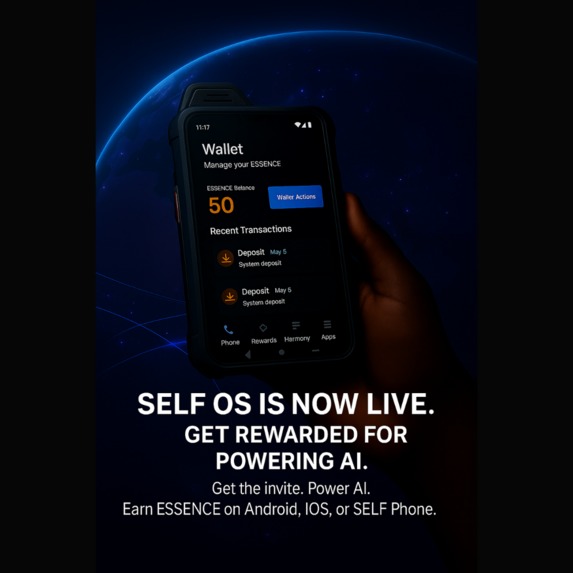
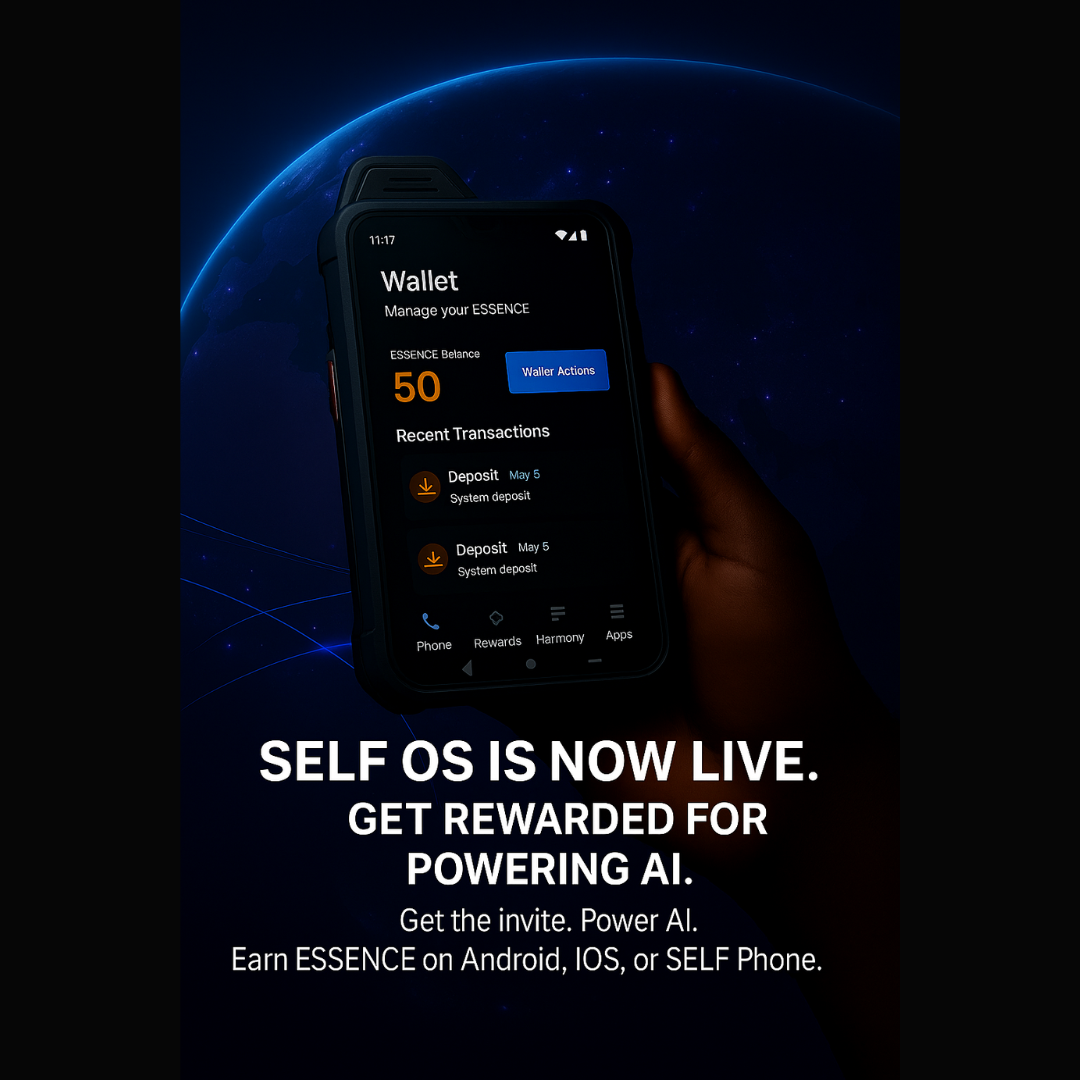
SELF OS AD
-
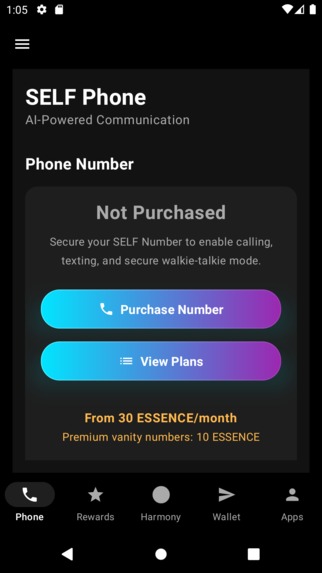
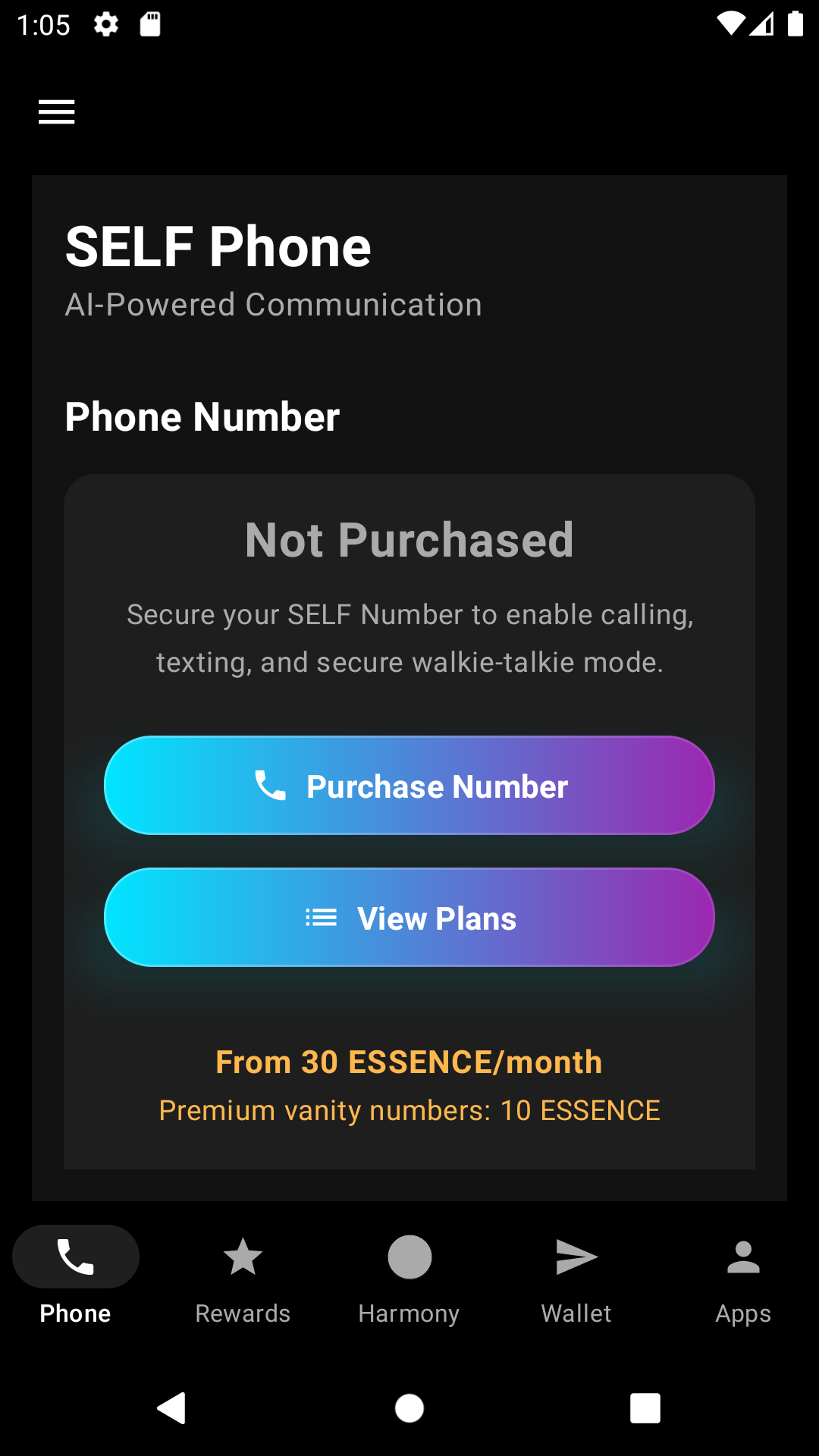
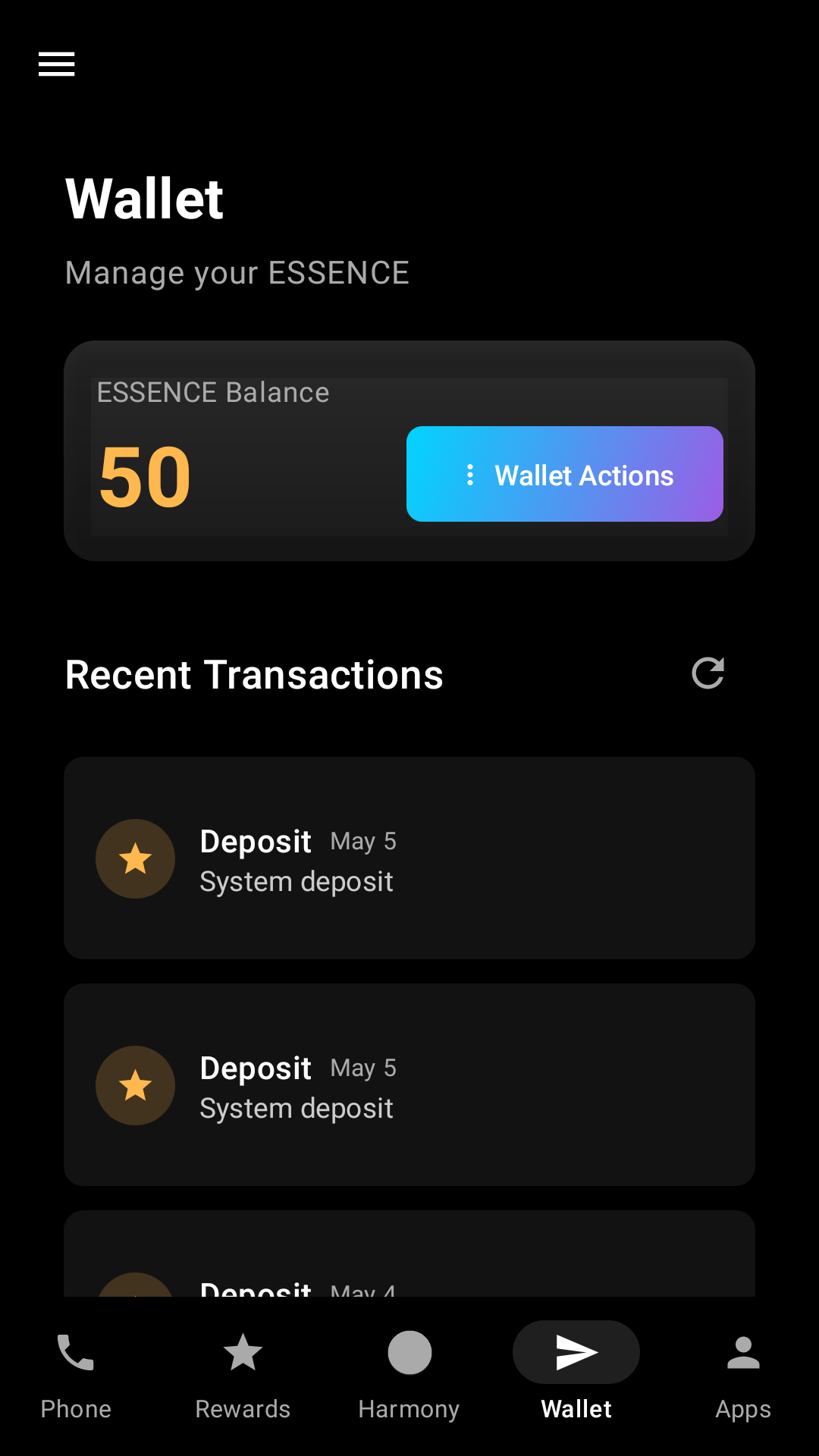
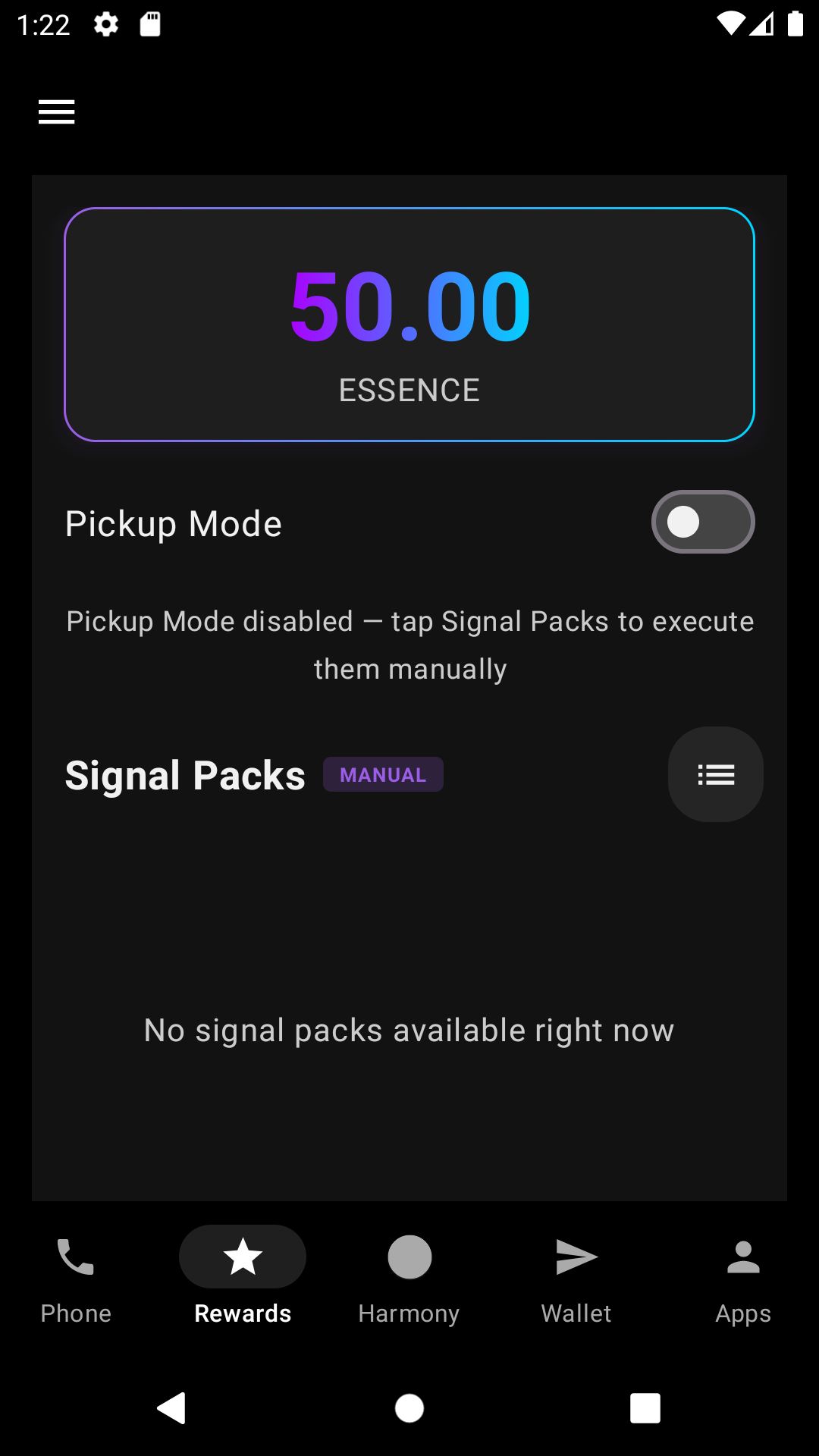
SELF OS APP
-
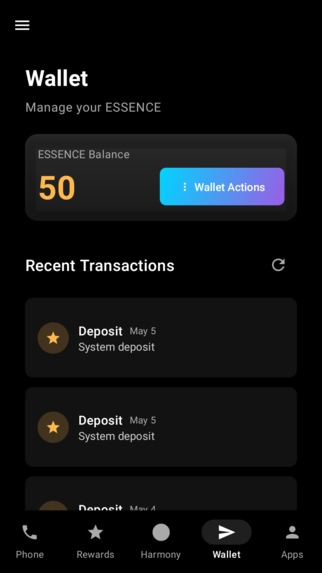
-
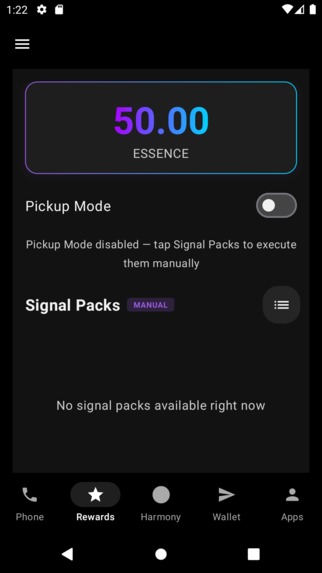
Essence
Inspiration
We saw a future where devices do more than serve us—they serve with us. Harmony & SELF OS was born from the desire to decentralize AI, empower users, and turn everyday smartphones into earning, autonomous nodes in a global compute mesh. It’s not just tech—it’s a movement for sovereignty, intelligence, and signal-based communication.
What it does
Harmony is a multi-modal AI command center, and SELF OS is the operating system that runs it on-device. Together, they allow users to:
- Chat with powerful AI (like ChatGPT, Claude, LLaMA 3, etc.)
- Build apps via Dev Mode
- Create and deploy autonomous AI agents
- Run voice-cloned calls, generate media, and more
- Earn ESSENCE tokens by executing tasks sent through the Harmony Mesh
Phones running SELF OS form a decentralized mesh network that processes AI tasks and earns real rewards while users sleep, work, or create.
How we built it
We started by forking AOSP and building SELF OS from the kernel up. Then we integrated:
- Android Keystore encryption (AES-256-GCM)
- JWT authentication
- Real-time task state management via StateFlow
- Task lifecycle & proof-of-execution pipeline
- Tiered node reputation system
- A native AI app store (Role Model AI)
- Direct token reward distribution for job execution
Harmony is built in Next.js and React, with a full backend for dispatching jobs, managing node health, and processing ESSENCE rewards.
Challenges we ran into
- Building secure task execution that works offline and online
- Handling token encryption/decryption across devices
- Managing task lifecycles in a decentralized environment
- Maintaining UX simplicity while managing complex workflows
- Avoiding surveillance while providing transparency
Accomplishments that we're proud of
- Harmony now supports 7 major AI capabilities in one interface.
- SELF OS fully runs on Android hardware and supports on-device inference.
- We deployed a real-time, encrypted compute mesh with built-in reward logic.
- We launched the ESSENCE reward system and are preparing for full marketplace integration.
- Our platform already supports real-world use cases in voice automation, web dev, data brokering, and personal AI agency.
What we learned
- Decentralization isn't just a backend architecture—it's a mindset.
- Signal-based computing can be powerful when matched with reward systems.
- Users will value sovereignty if given clear tools, clean UX, and real ownership.
- Running a hybrid mesh network requires balancing trust, proof, and efficiency.
What's next for Harmony & SELF OS
- Launching the Harmony App Store with third-party AI tools
- Releasing SELF Phone preloaded with SELF OS and Role Model AI
- Deploying a node expansion program to reward early adopters
- Opening the Signal Marketplace where users can monetize their data
- Rolling out signal-based execution using bio-resonance and frequency scanning
This is more than a project. It’s the start of a sovereign intelligence era—one where your signal is your signature, and your device is your domain.
Built With
- android-jetpack
- anthropic
- aosp
- billing
- cloudflare
- firebase
- firebase-functions
- firestore
- jetpack-compose-next.js
- jwt
- kotlin
- meta-(llama)
- mistral
- node.js-aes-256-gcm-encryption
- oracle-cloud-infrastructure-(oci)-llm-apis:-openai
- perplexity-framer-motion
- play
- purecipher-omniseal-docker
- react
- stateflow
- tailwind-css
- telnyx-api
- typescript


Log in or sign up for Devpost to join the conversation.