-
-
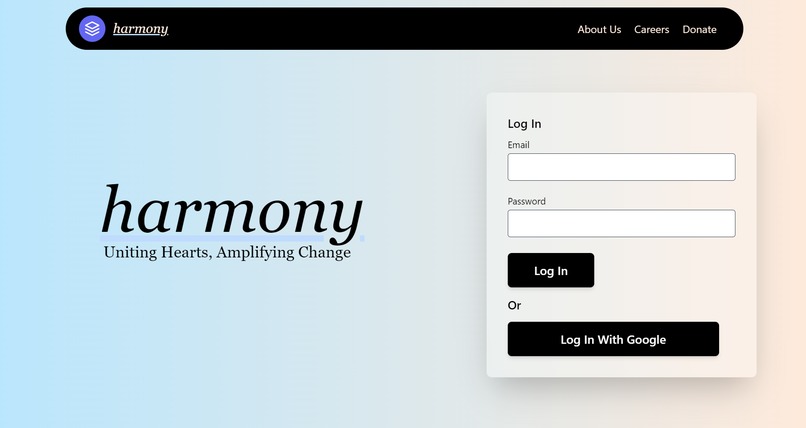
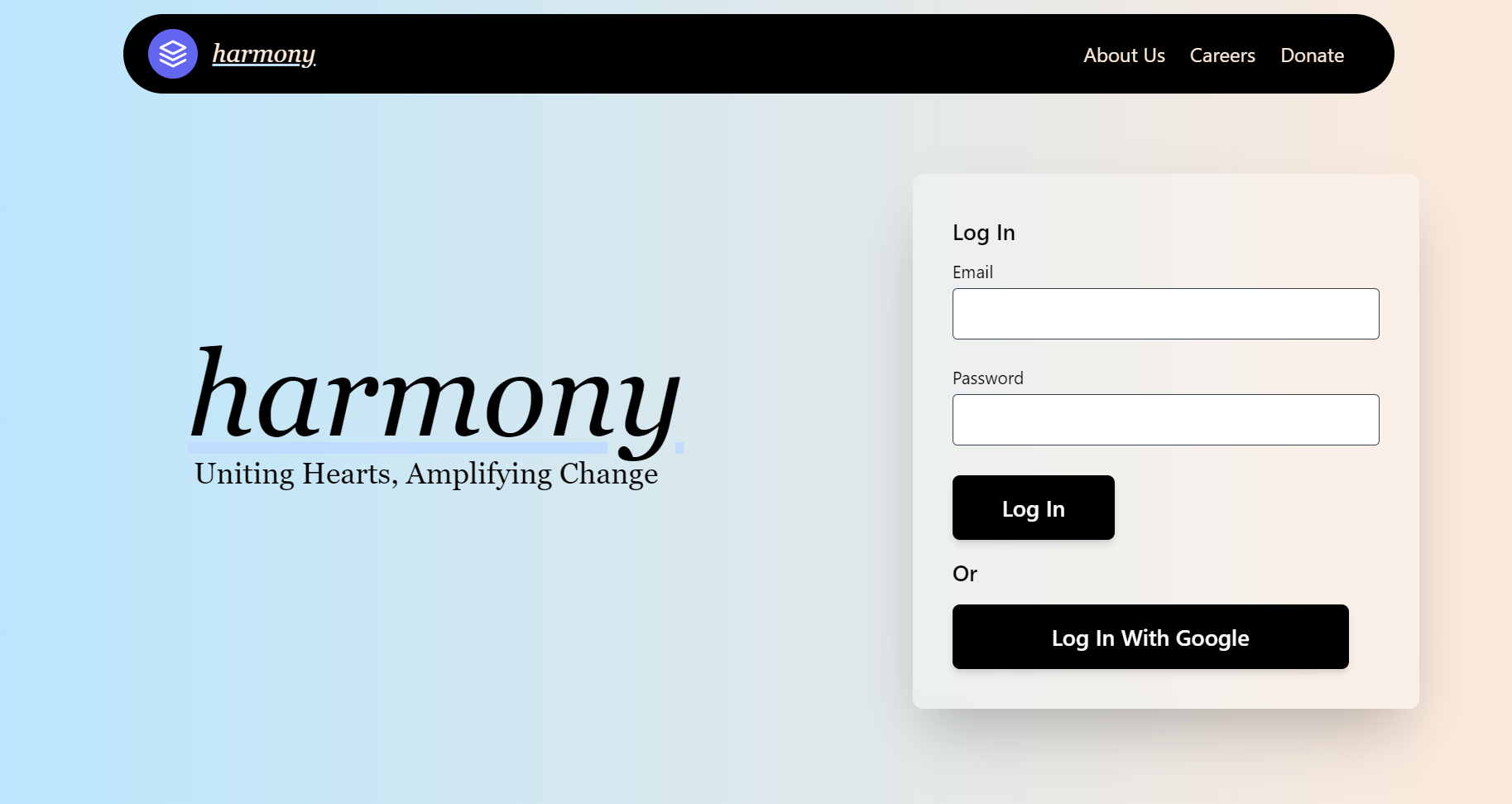
Our landing page/log in
-
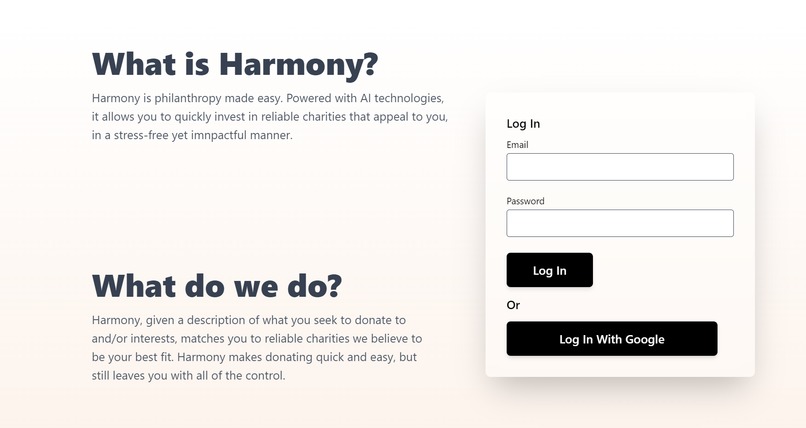
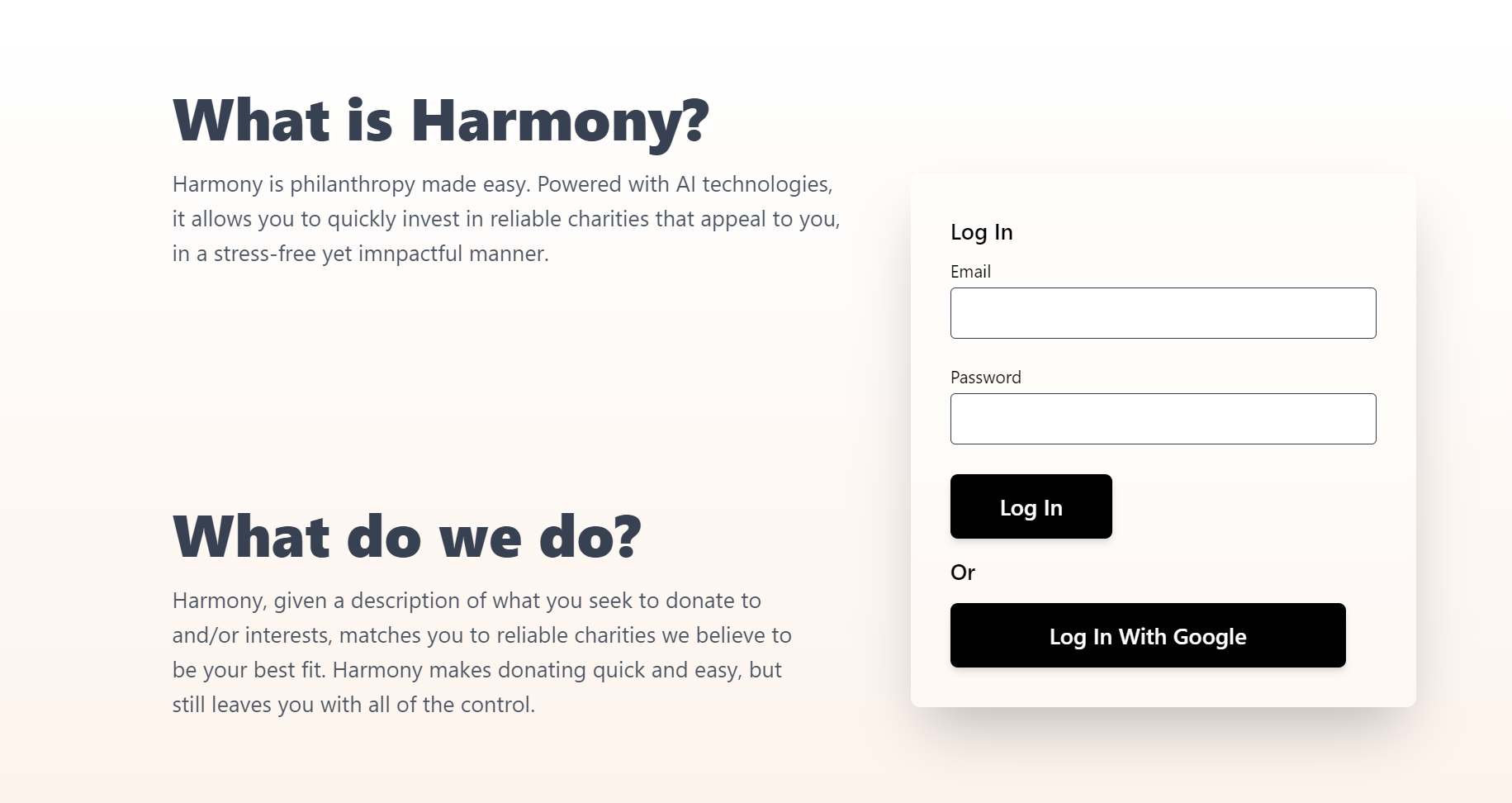
More information about our website on the landing page
-
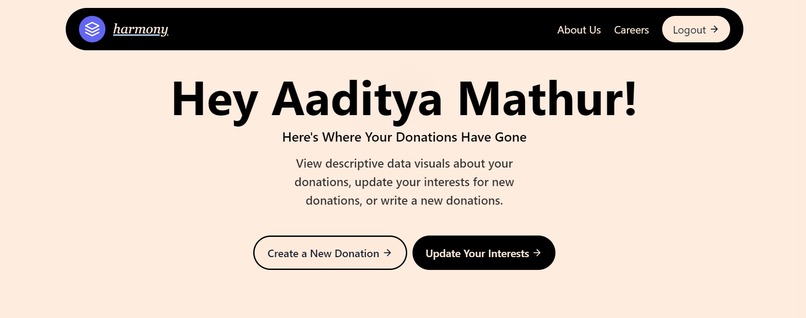
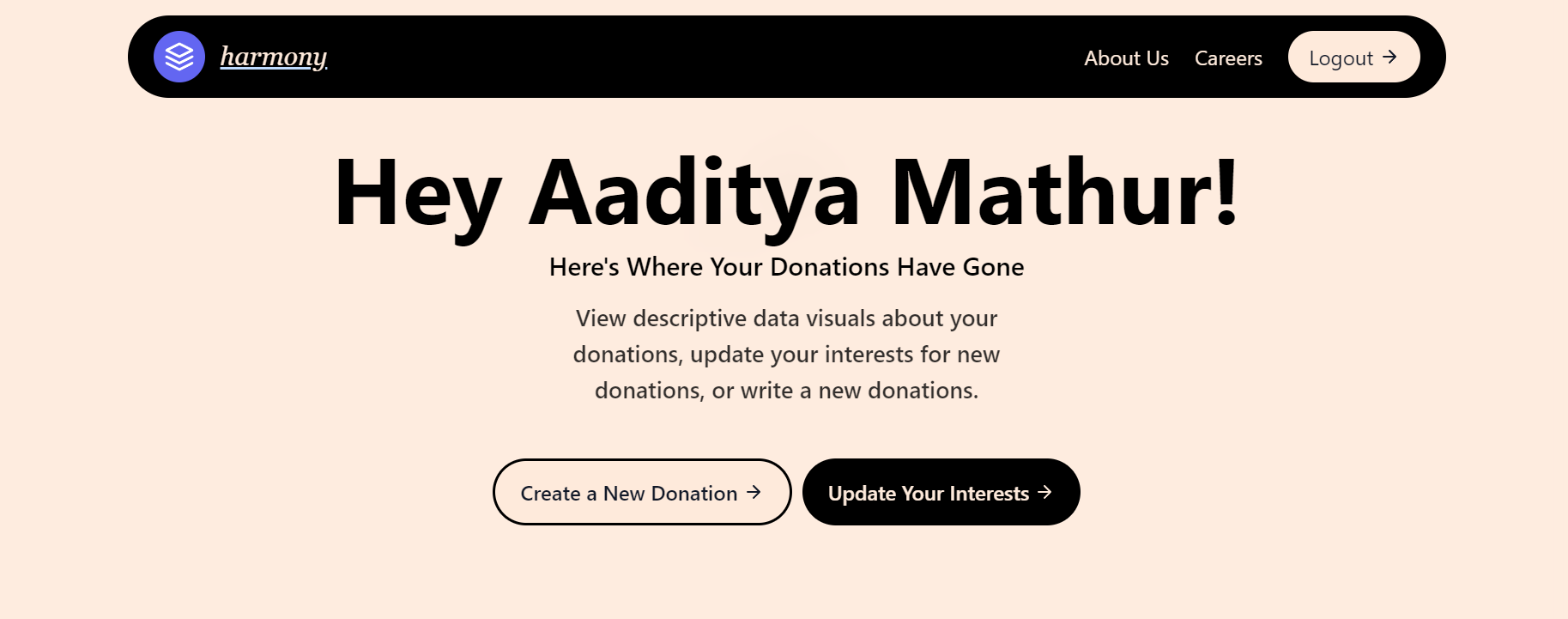
The dashboard found after logging in
-
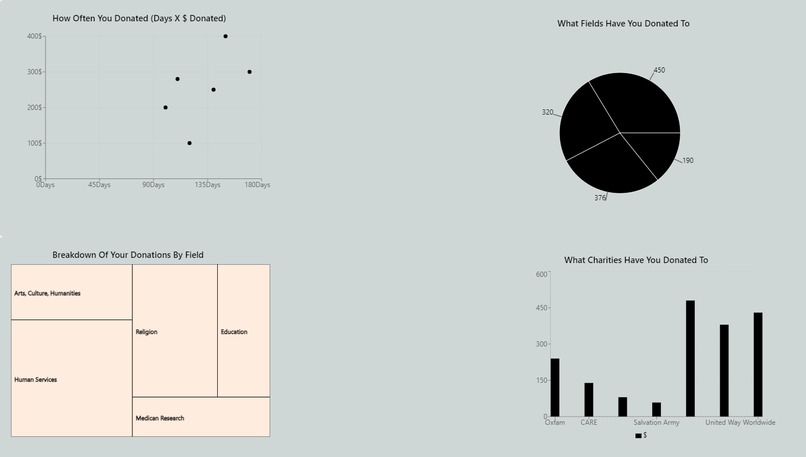
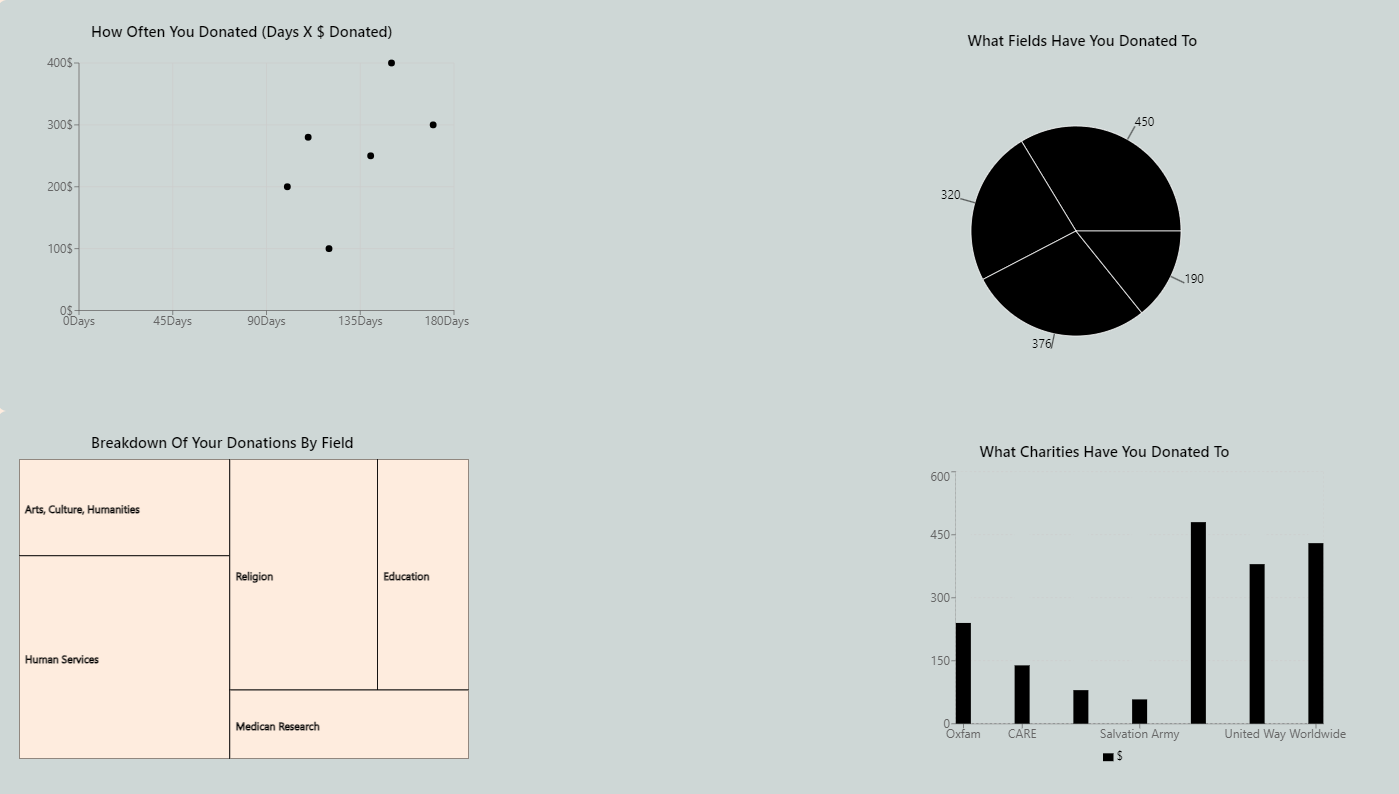
Custom graphs based on recent charities users have donated to.
-
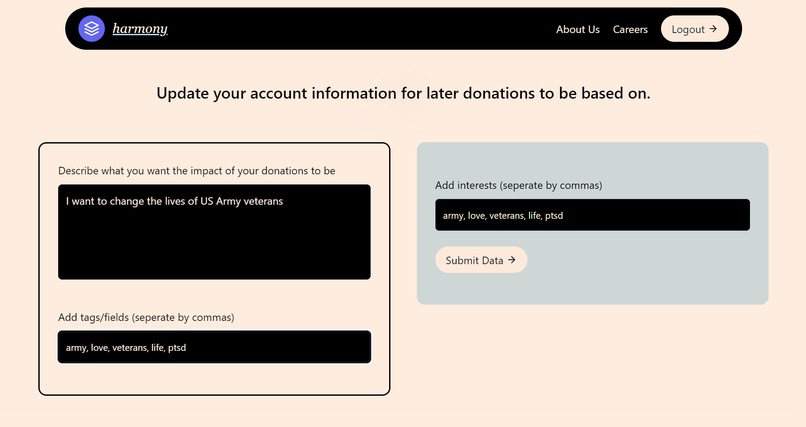
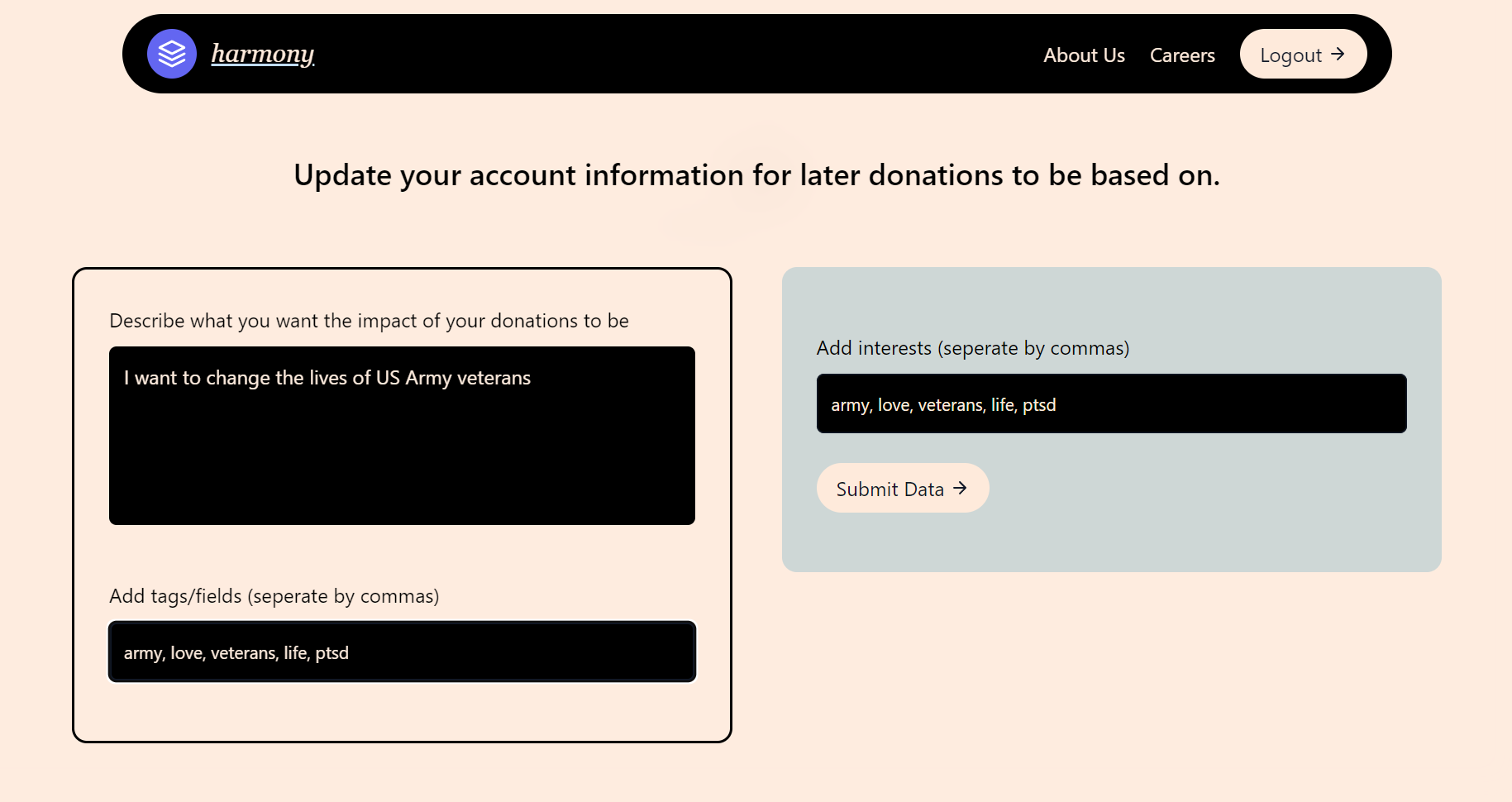
Uploading things the user is interested in
-
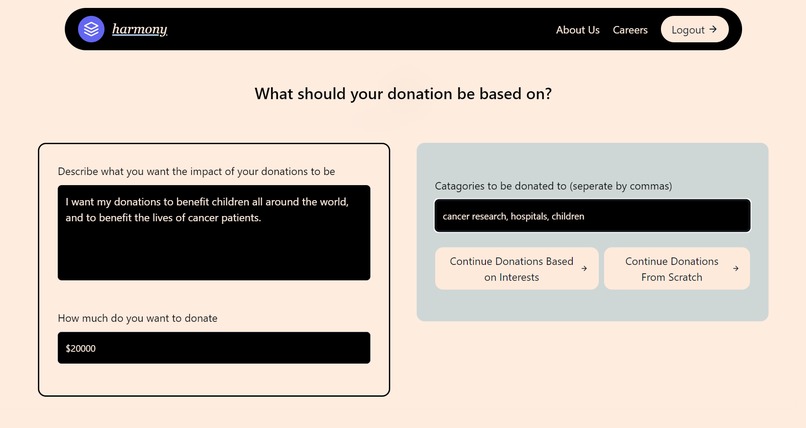
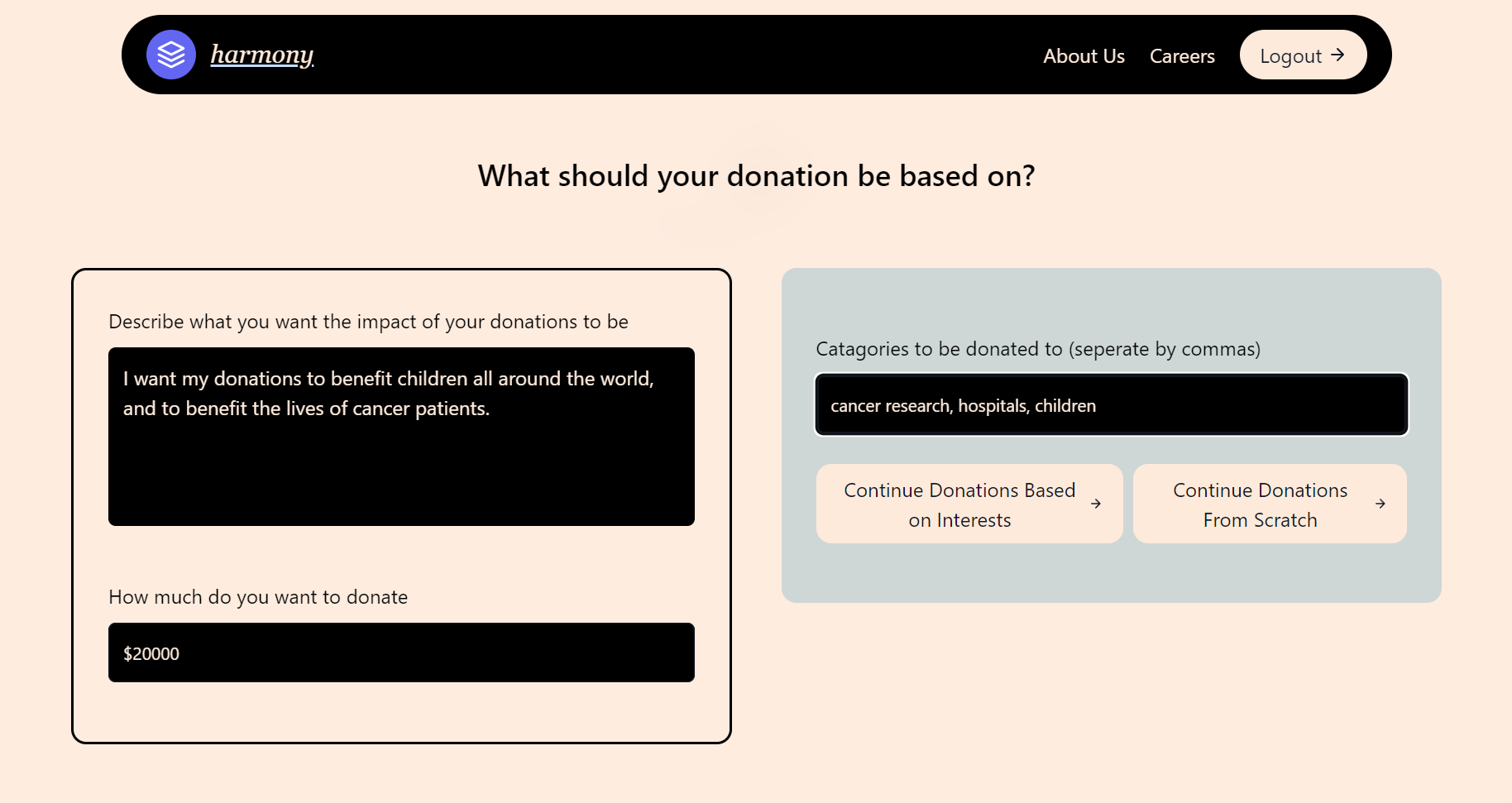
Starting a donation...
-
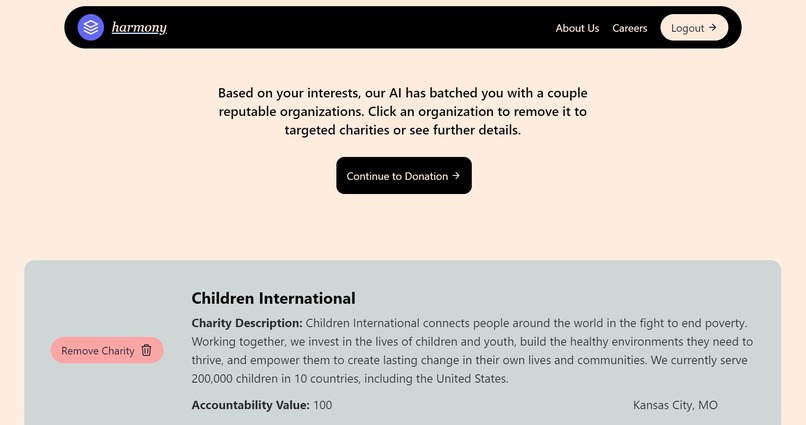
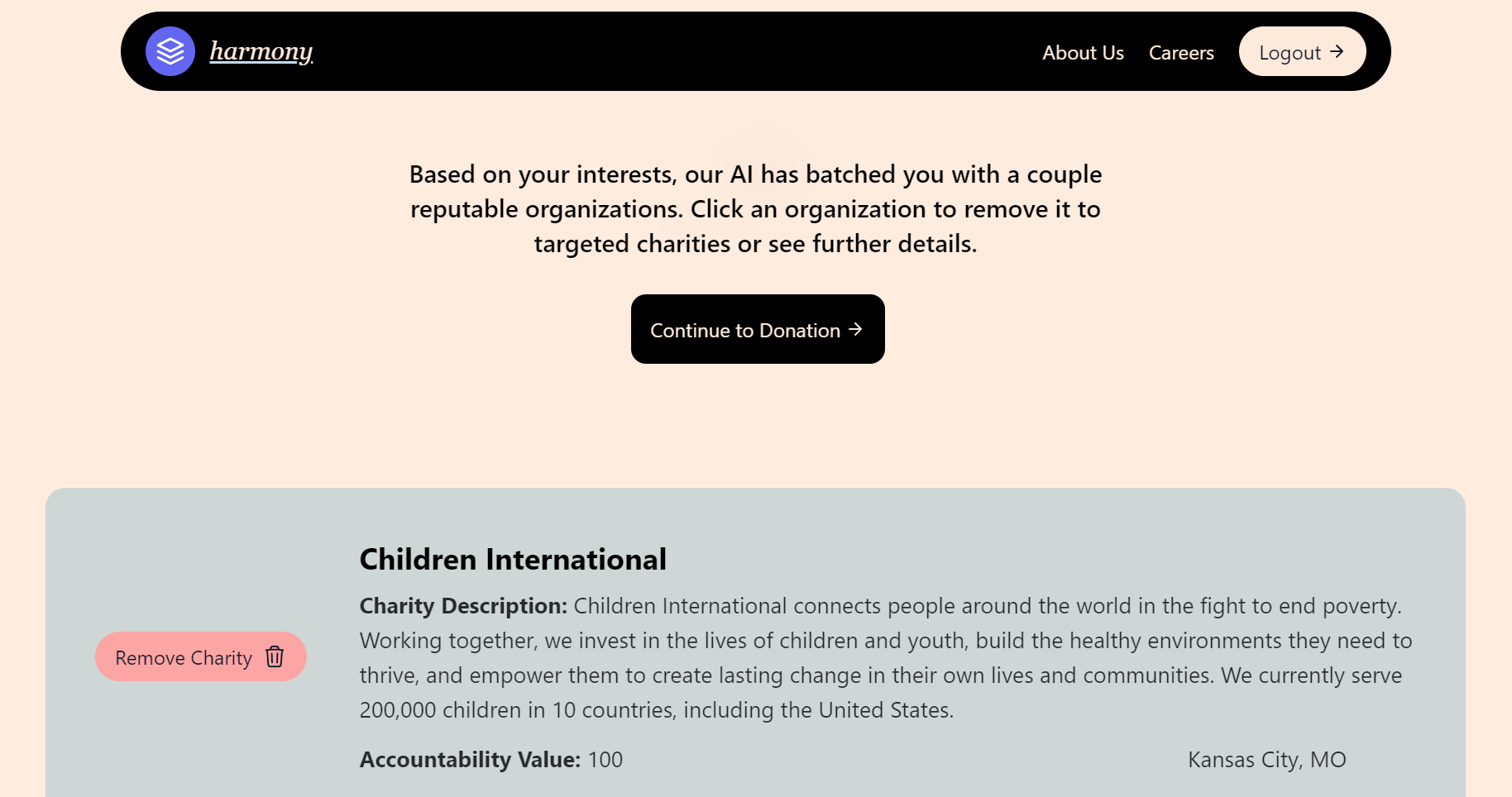
Our AI will pair the user with charities that fit with his interests
-
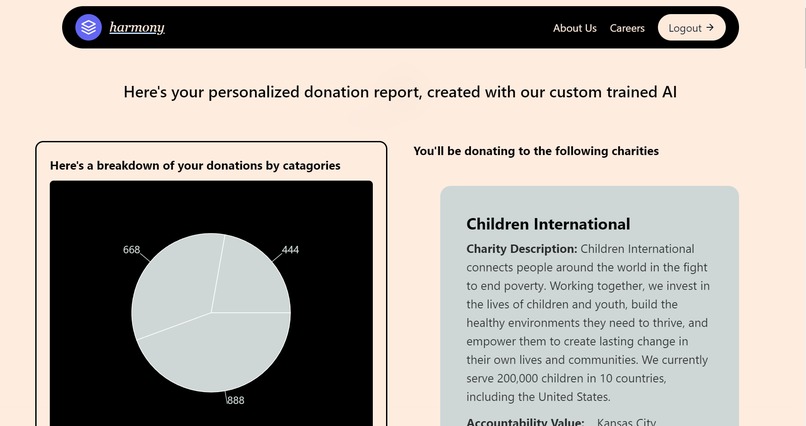
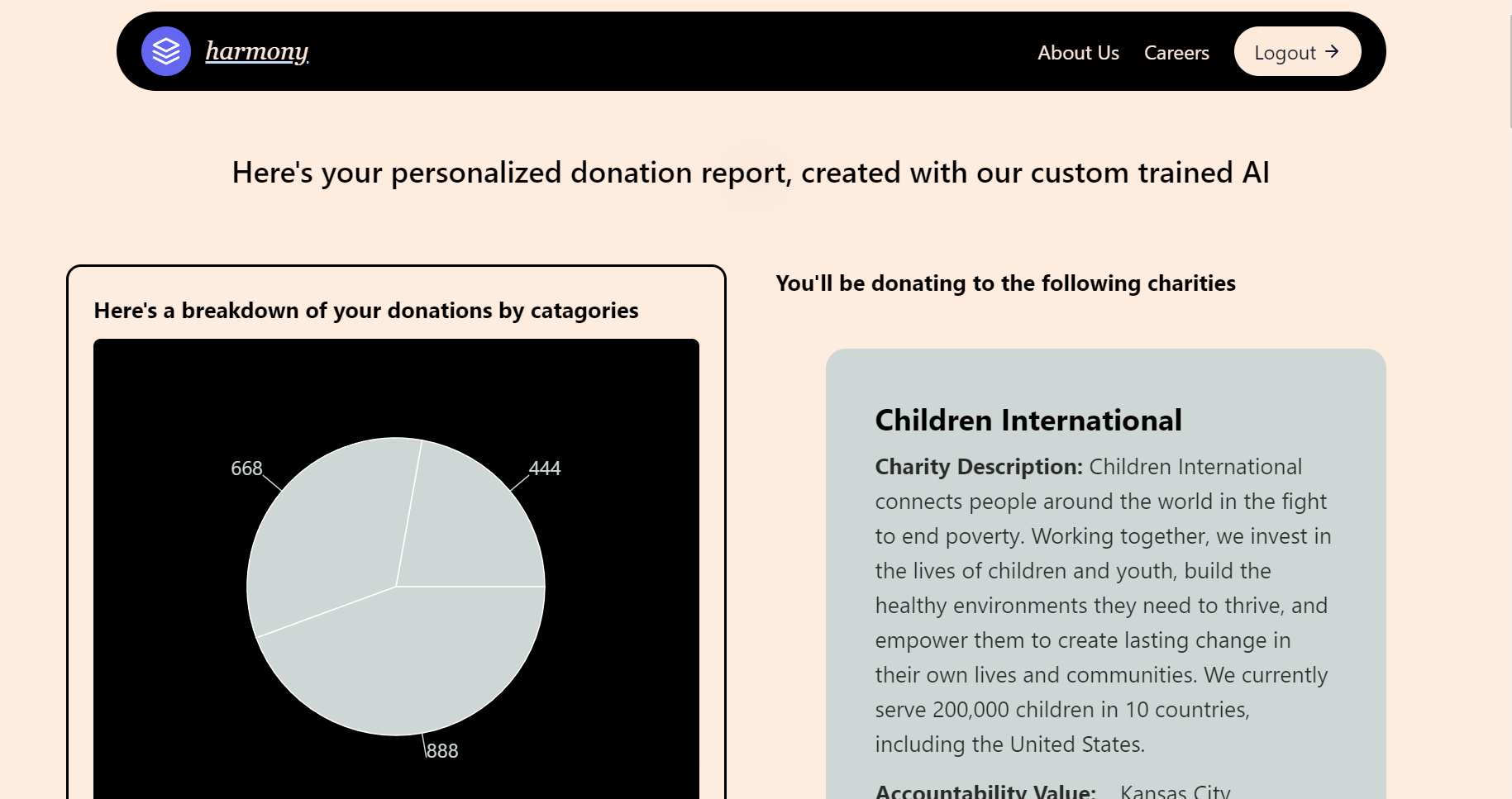
The report created by our AI that displays which charities the users will be donating too and how much percentage is going to each one.
Inspiration
Just recently, an incredibly popular charity for environmental benefit, called Established Titles, turned out to be a scam. This, unfortunately, wasn't a one-time event with several different scams posing as charities and hoping to scam unknowing good samaritans. This project's aim was two-fold: to give people a way to a verifiable and reliable method of donating, thus encouraging people who might've been scared away from donating by charity scams while also making it as easy as possible to donate to charity. While donating to charity may seem straightforward, there always comes a lot of anxiety in doing something new, especially when it's related to somebody's hard-earned money, and this project aims to quell some of that anxiety.
What it does
We built a website where users can connect to reliable charities and donate in an impactful yet stress-free manner. After potential donors sign up, they are sent to a dashboard where they can insert some interests that will be used for automatic matching to charities. Then, the user can either match with some charities based on their previously set donation interests or change them if they want to make a one-time donation. They will then be matched with some charities that relate to their interests using our own, custom-built AI. The user will be presented with the charities' reliability scores and a hypothetical distribution of their donation between charities. Finally, they can finalize where they want to contribute out of the list we provided and donate! Charities can also visit the website and claim their page, but they must provide proof. Claiming the page allows them to edit their listed info like mission and impact, but they cannot change their reliability score.
How we built it
Our project consists of two parts, the front end and the back end. The front end was coded mainly in javascript, using libraries such as Next.js, Tailwind CSS, and Framer Motion for dynamic animations. Our back end
Challenges we ran into
We ran into many challenges during this hackathon but we have highlighted three of the most difficult to overcome here.The Charity API that we used was in beta mode, and as a result, had close to no documentation, with a decent amount of it being misleading and some just being false(likely because it's outdated). Moreover, to access this API, we had to learn how to use Apollo and GraphIQL during this hackathon, while also combining it with javascript, a language that the members tasked with dealing with the API also had very minimal experience in. As a result, getting the base code and debugging was incredibly difficult and time-consuming, which was only added to by the amount of data processing required on our end to make the data usable for our purposes. Another challenge we faced was with our UI layout. One of our main goals in making this project is to make donating to charity as accessible as possible. This meant that our UI would need to be as intuitive and straightforward as possible. Outlining and implementing this UI required plenty of brainstorming, discussion, and testing. One more challenge we faced was with GitHub Desktop. Because we had a ton of changes on one computer, due to downloading packages, we went through a lot of trouble trying to figure out how to push our changes. Luckily, after figuring it out once, we were prepared for it every following time
Accomplishments that we're proud of
We are extremely proud of making a complete website that looks great, generates actual graphs, and presents real data about real charities. This last point was especially difficult because connecting our API with all the data with the frontend of our app was troublesome. Even though our project is not 100% perfect, we've still developed an incredibly useful website that could have great value if expanded to a larger audience.
What we learned
Participating in this hackathon has had immense value for all of us. We gained many technical skills, such as new coding languages like JavaScript and proficiency using git, as well as experience that will help us when we join the workforce or pursue college. Some of these experiences include working under a time crunch and being functional at late hours.
What's next for Harmony
As we mentioned earlier, harmony already has its applications. In the future, we hope to expand on these, implementing encrypted and safe payments, creating a mobile app, adding a search feature, and improving our match-making AI. With this, we hope we're able to bring Harmony to a wider audience, helping more people help others.
Built With
- apollo
- css
- firebase
- graphiql
- javascript
- next.js
- react
- tailwind


Log in or sign up for Devpost to join the conversation.