-
-
Results
-
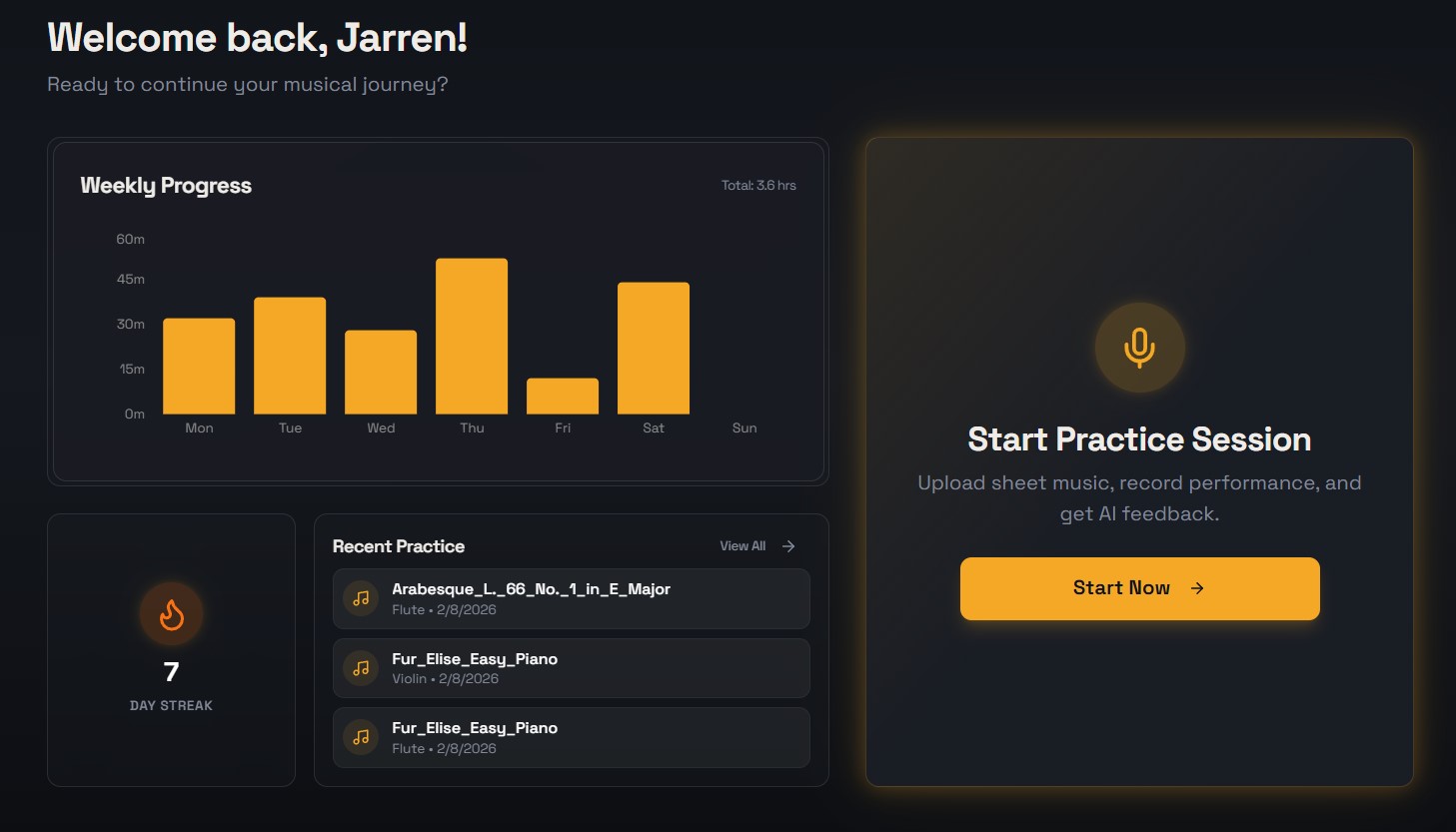
Homepage
-
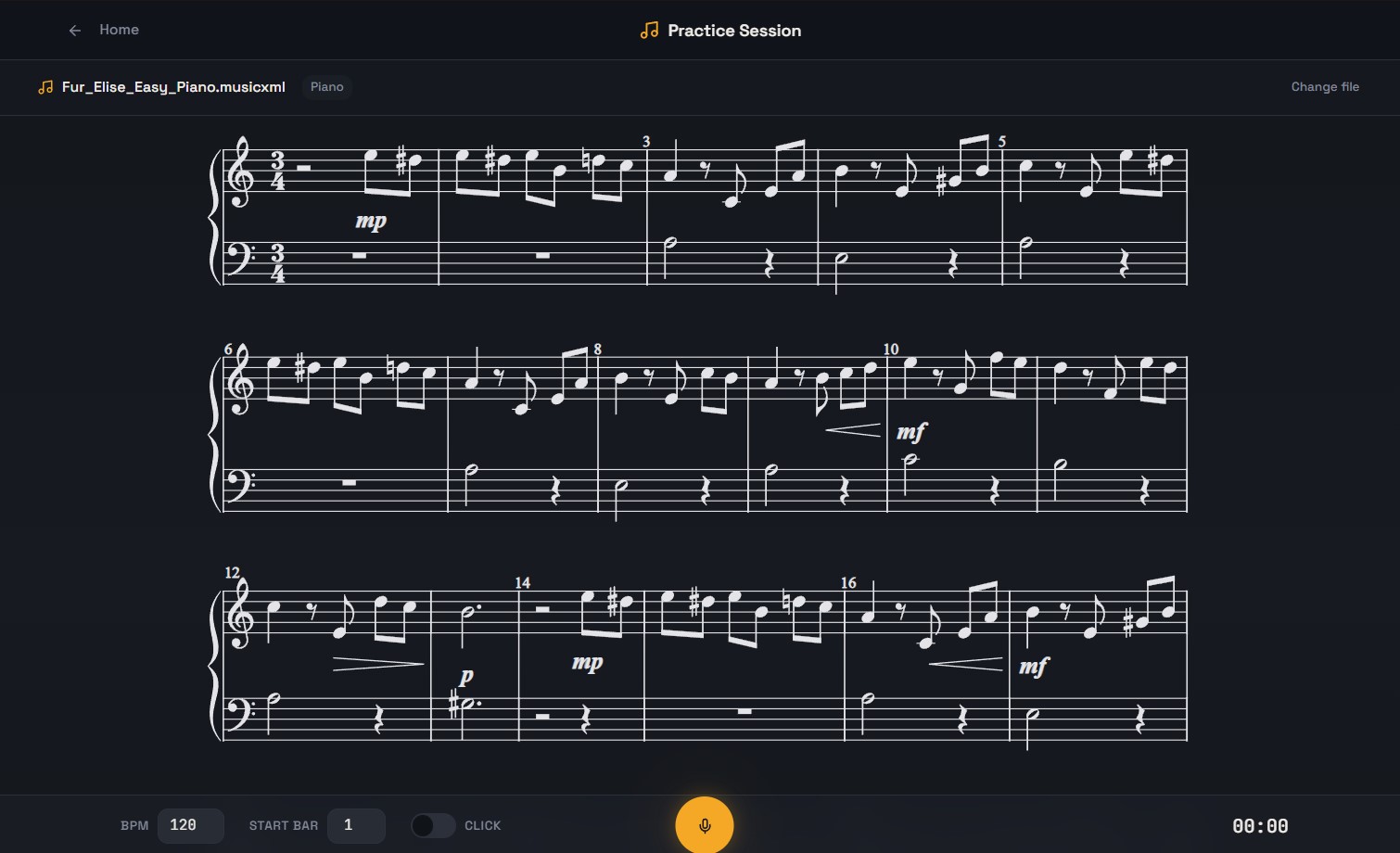
Sessionpage
Harmony Helper: Your Personal AI Music Coach
Inspiration
Harmony Helper was inspired by the challenges modern musicians face when practicing alone: the lack of immediate, technical feedback between weekly lessons. We saw an opportunity to democratize high-level music coaching by building an intelligent platform that doesn't just record you, but actually listens and provides actionable, measure-specific advice. Our goal was to bridge the gap between repetitive "rote" practice and intentional, data-driven improvement through real-time AI analysis.
What it does
Harmony Helper is an AI-powered practice companion that transforms how musicians master their instruments. It features:
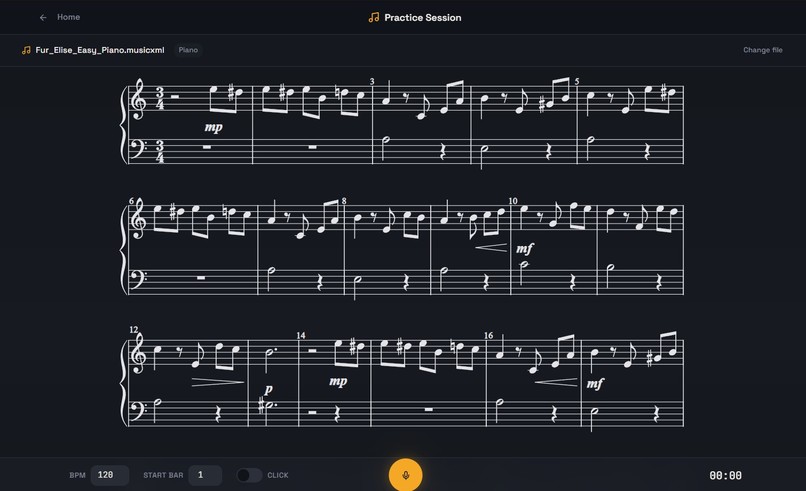
- Interactive Sheet Music — Load MusicXML files and see your performance errors highlighted directly on the score using OpenSheetMusicDisplay (OSMD).
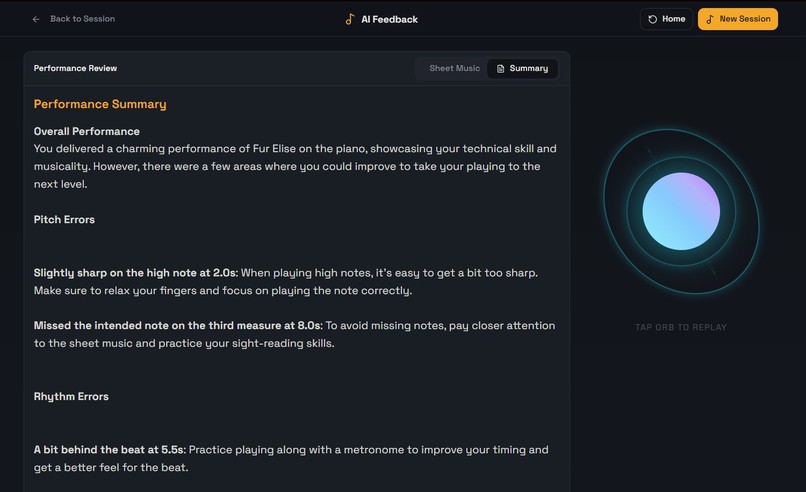
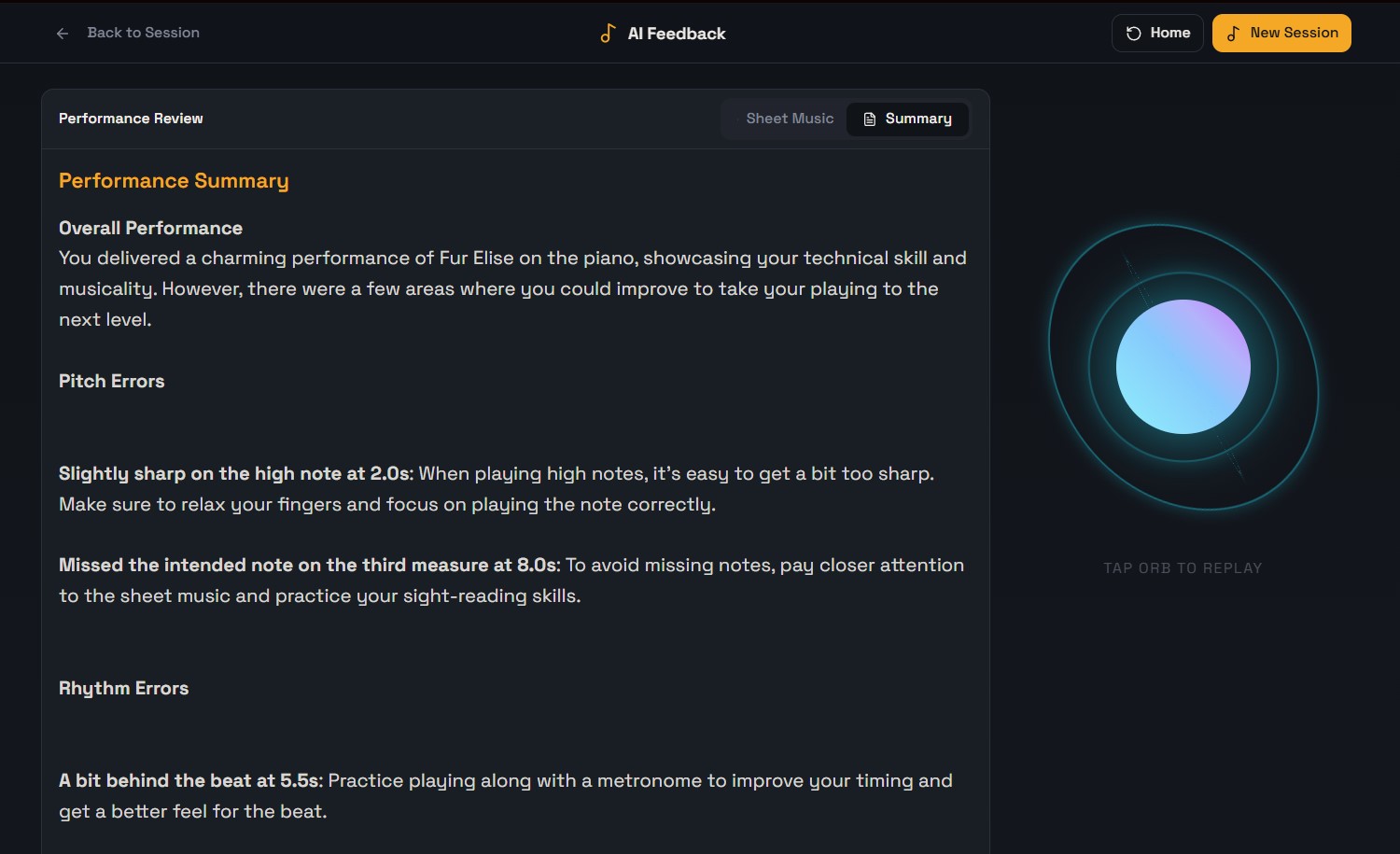
- AI Coach Avatar — Receive verbal and visual feedback from an AI Avatar that uses ElevenLabs TTS and synchronized text-chunking to explain technical nuances.
- Performance Spectrograms — Compare your actual audio frequency data against a target reference model generated directly from your sheet music.
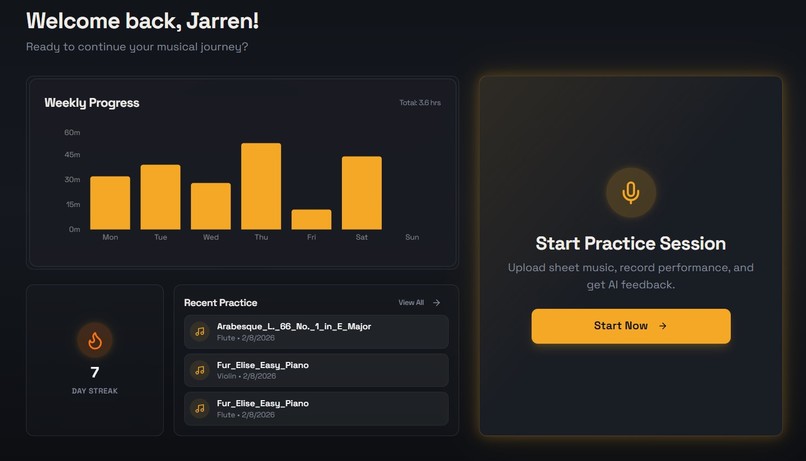
- Practice Dashboard — Track your growth with a weekly progress bar chart, total practice minutes, and a 7-day consistency streak powered by Supabase.
How we built it
We built Harmony Helper as a modern web application using Vite, React, TypeScript, and Tailwind CSS.
- Backend: A FastAPI (Python) server handles the heavy lifting, including audio conversion (WebM to WAV) and MusicXML synthesis (Music21 to MIDI).
- Spectrogram Analysis: We extract features from the audio for quantitative analysis.
- AI Pipeline: We integrated OpenAI (via OpenRouter) for qualitative performance analysis and ElevenLabs for the coach's natural voice.
- Data & Auth: Supabase handles our practice history and audio storage, while Auth0 provides secure user authentication.
- Visualization: We used OSMD for sheet music rendering and Recharts for the practice statistics.
Challenges we ran into
One of our biggest challenges was the "Audio-to-Score" synchronization. Aligning real-time browser recordings with specific measures in a MusicXML file required complex timestamping and precise character-mapping for the AI Avatar's subtitles. Additionally, setting up a robust pipeline to convert sheet music into a "perfect" reference audio file using FluidSynth and SoundFonts while keeping the backend lightweight was a major technical hurdle.
Accomplishments that we're proud of
We're proud to have delivered a platform that feels like a premium "studio" experience. Despite the technical complexity of the audio pipeline, we successfully created:
- A fully functional AI Avatar system with custom karaoke-style text synchronization.
- An end-to-end Audio-to-Markdown analysis engine that delivers professional-grade coaching notes.
- A scalable Practice History system that tracks user engagement and streaks across all devices.
- A high-performance Sheet Music Renderer that dynamically highlights errors based on AI detection.
Our team communicated effectively to integrate a complex stack of frontend, backend, and AI services into a tool that genuinely supports a musician's journey toward mastery.
Built With
- auth0
- elevenlabs
- python
- react
- typescript


Log in or sign up for Devpost to join the conversation.