

Inspiration
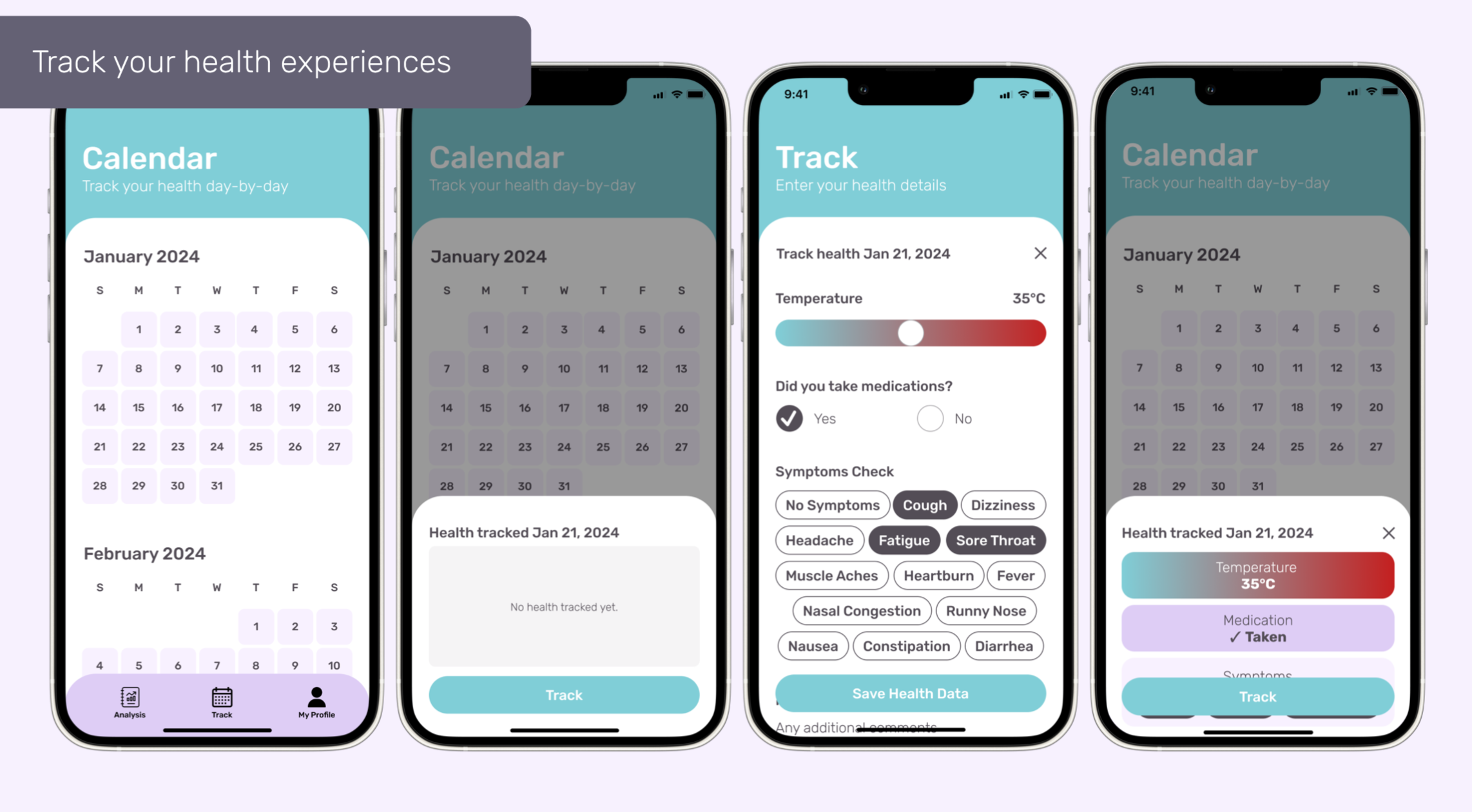
An important aspect of health is being able to efficiently interact with healthcare professionals in order to get much needed help. Our group aimed to create an all-in-one health tracking app that would fulfill three main use cases. Firstly, it is common for people to misremember the details of symptoms they may have been experiencing when talking to their doctor. If somebody has fallen ill and wishes to track their symptom progression over time, when they go to the doctor, they can have easy access to real-time health stats describing their symptoms. This would ensure efficient and accurate interactions with somebody's doctor.
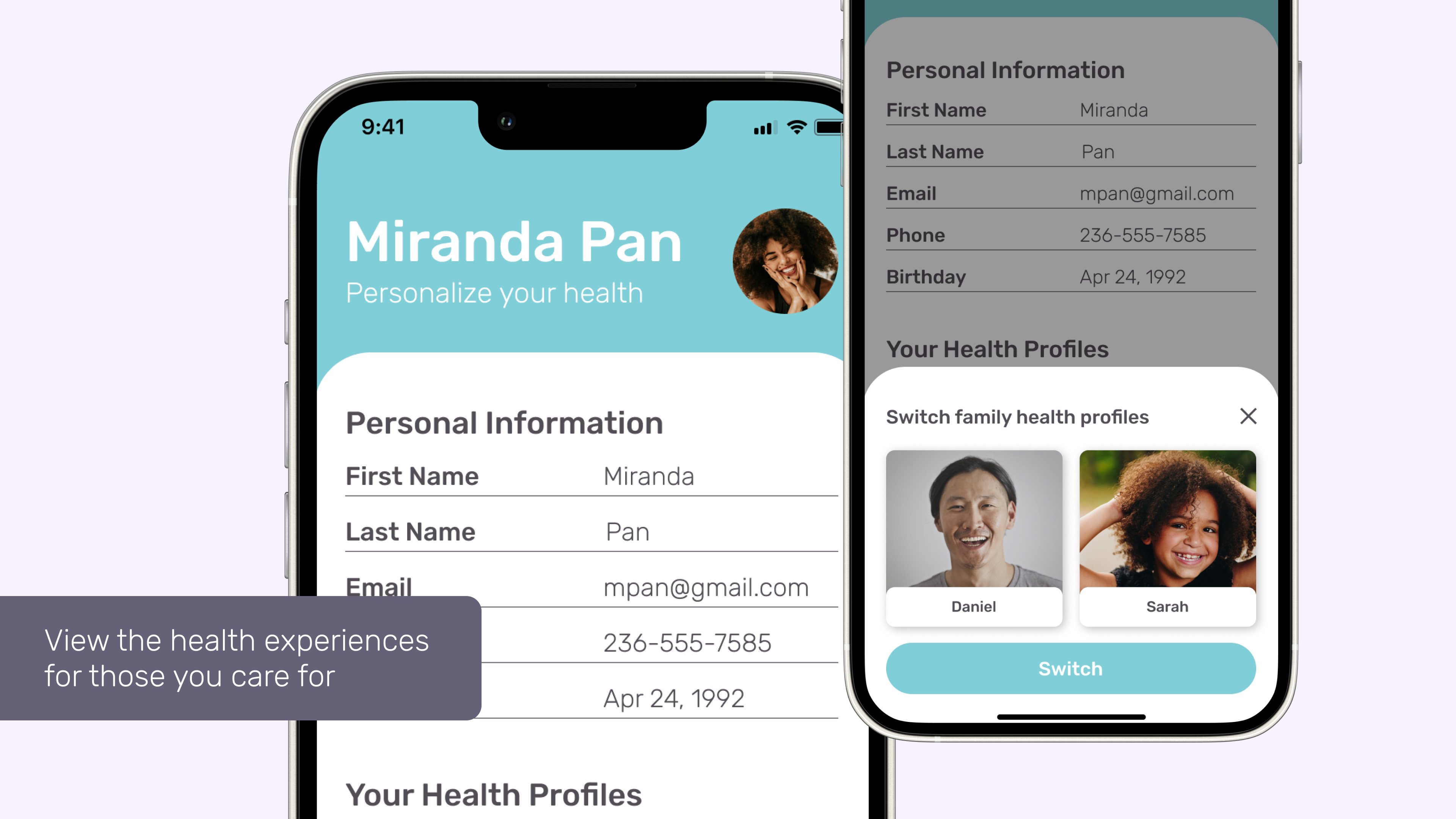
A second use case we wanted to satisfy was the case that the user who owns the account is a caregiver for someone else (ex. a child, an elderly person). If someone's child is sick, it would be helpful to track their symptoms so that when they go to the doctor, they can accurately describe the progression of their child's symptoms. We wanted to enable this functionality through the use of multiple health "Profiles" that are connected to one account.
A third use case we wanted to satisfy was the case that the user would like to simply track their health over time.
What it does
The figma satisfies all of our use cases. Our implementation satisfies the third use case.
How we built it
One of our group-mates made the Figma. The Figma is very exhaustive and includes essentially all of the functionality we intended on implementing. Another one of our group-mates worked on building out as much of the Figma design as possible using React and Tailwind. Two of our group-mates worked on building out the back-end using Node.js with an Express server.
Challenges we ran into
- we ran into a lot of issues with our back-end dev and dependency issues, this reduced the functionality
Accomplishments that we're proud of
We are proud of how nice our front-end and figma look, it gives a really good insight into how we wanted all of the functionality to look! Even though we weren't able to satisfy all of the functionality we wanted to, we are also proud of the fact that we were able to connect the front-end to a back-end express server.
What we learned
- On the back-end, we learned a lot about different database storage techniques and also how to set up endpoints on the server-side of the code base.
- We also learned how to prototype on figma using components.
- We also learned how to handle event clickers
What's next for Harmony Health
Built With
- express.js
- figma
- node.js
- react
- tailwind


Log in or sign up for Devpost to join the conversation.