-
-

-
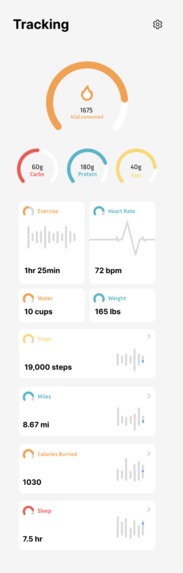
All data
-
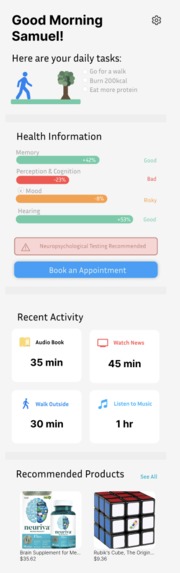
Home Page

Inspiration:
We got our inspiration from looking at some of our grandparents. Many of our grandparents live alone across the other side of the world and elderly people who feel lonely and bored have a high probability of experiencing health problems such as depression, Alzheimer's, and others. It's also difficult for dependent children to continue to care for the elderly. There are lots of senior healthcare systems with IoT systems these days. However, the ones with sensors and cameras can make users (seniors) feel like they're being watched, which can be a turn-off.
What it does:
Our app aids doctors in diagnosing and monitoring patients' progress with a disease over time.
Evi will prompt the patient with a questionnaire tailored to their specific health issue. We record the patient's responses as well as their emotional state throughout the interaction.
We then send this information to a doctor for analysis.
The detailed insights provided along with the doctor's analysis will be crucial in tailoring personalized treatment plans, ensuring both the physical and emotional well-being of the patient, and adapting strategies as needed to optimize their overall health outcomes over time.
We will demo a dementia questionnaire, measuring Patients, long-term memory, short-term memory, mood, and behavioral changes. Evi will be in charge of monitoring their emotional state throughout the interaction.
How we built it:
We built our application using Hume.AI API, along with Python for the application to be used on.
Challenges we ran into:
Integrating Hume.AI's API presented significant challenges, particularly because the documentation was outdated, requiring us to collaborate closely with Hume.AI's team to understand how to effectively integrate the API into our application. Additionally, we had to carefully design the user interface to be elderly-friendly, ensuring it was intuitive and accessible for our target audience. Another major task was developing a recommendation system that could accurately and safely suggest supplements and over-the-counter medications suitable for elderly users, considering their specific health needs and conditions. These challenges demanded meticulous planning, testing, and collaboration to ensure the app was both functional and user-friendly.
Accomplishments that we're proud of:
We're really proud of what we've achieved with this project. Integrating Hume.AI's API was a tough nut to crack, especially with the outdated documentation. But by teaming up with the folks at Hume.AI, we figured it out and got it running smoothly. Designing the app to be user-friendly for the elderly was another big win. We made sure the interface is simple and intuitive, so it's easy for them to use. Plus, we built a smart recommendation system that carefully picks out supplements and over-the-counter meds tailored for our users' needs.
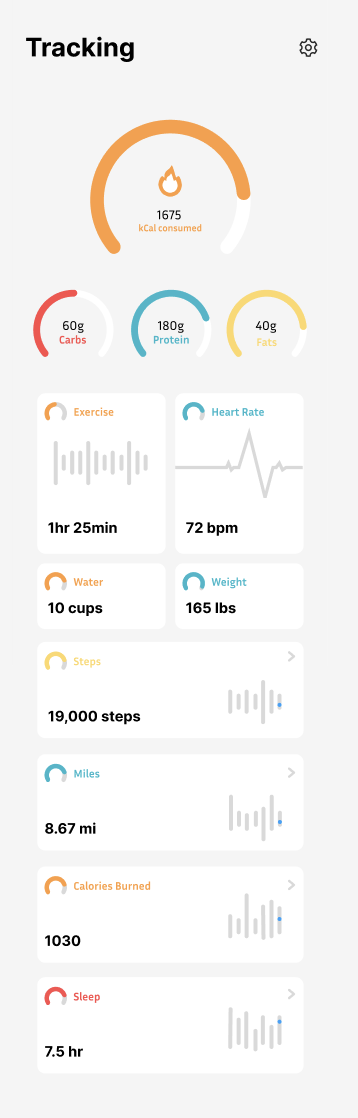
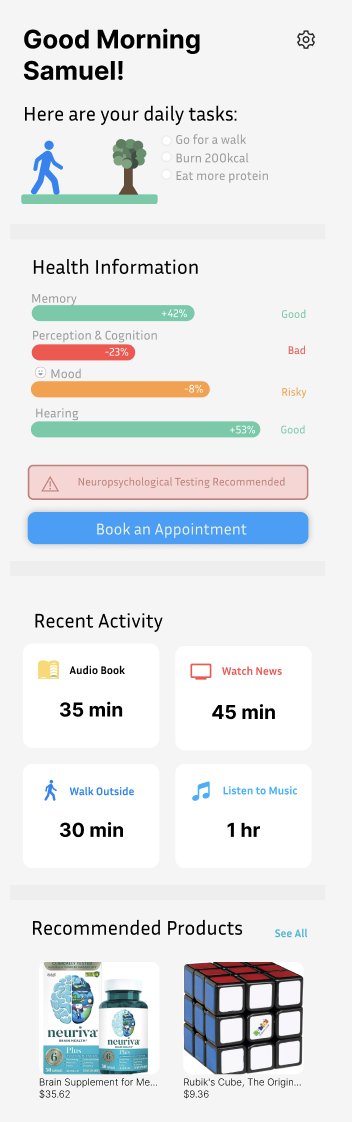
Another highlight is our ability to track user data like steps, sleep hours, and exercise routines, which gets reported back to their caretakers. This real-time health monitoring feature is essential for proactive care. The app also makes it super easy to book appointments with doctors or nurses and send messages to caretakers, streamlining communication and care coordination. We put a lot of effort into ensuring these functionalities work seamlessly together, creating a comprehensive healthcare tool. These accomplishments show not just our technical skills but also our dedication to making a meaningful impact with our app.
What we learned:
Here's what we learned from this project. We got hands-on experience implementing the Hume.AI API within a mobile application, which was a great learning curve, especially working with real-time emotion detection and data analysis. We also became proficient in using Figma to design a user-friendly UI, ensuring our elderly patients could navigate the app with ease. Additionally, we utilized Flask to create a robust server that securely transmits crucial patient data to their caretakers and doctors. This not only strengthened our technical skills but also deepened our understanding of creating practical, user-centered healthcare solutions.
What's next for Harmony Health:
As we prepare to bring our hackathon project to market, our next steps involve targeting hospitals for implementation. We will focus on refining our app to meet the stringent requirements of the healthcare industry and ensure it complies with all relevant regulations and standards. Collaborating with healthcare professionals, we will conduct pilot programs in selected hospitals to gather feedback and demonstrate the app's effectiveness in real-world settings. Additionally, we will develop comprehensive training materials and support resources for medical staff to facilitate smooth integration into their existing workflows. By building strong relationships with hospital administrators and showcasing the benefits of our app, we will aim to establish a solid foundation for widespread adoption and improve patient care on a large scale.
Built With
- ai
- hume
- hume.ai
- humeai
- learning
- machine
- ml
- python


Log in or sign up for Devpost to join the conversation.