-
-
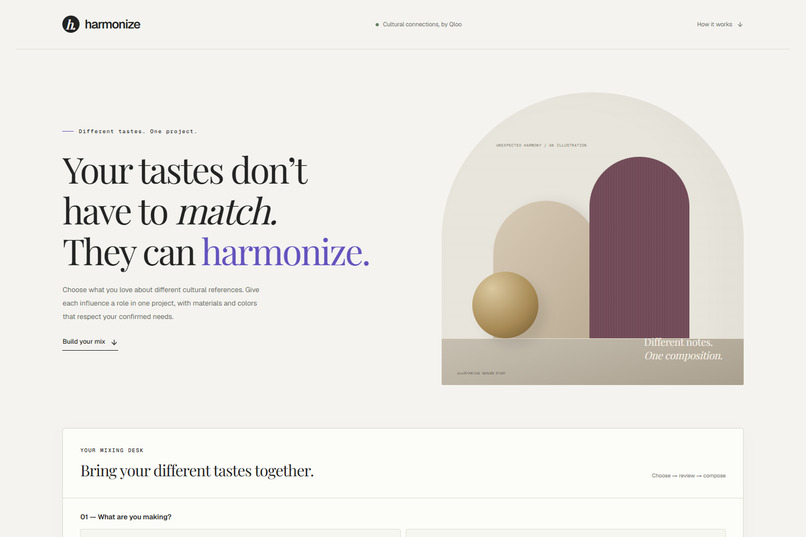
Start with what you love. Bring different cultural influences into one creative project.
-
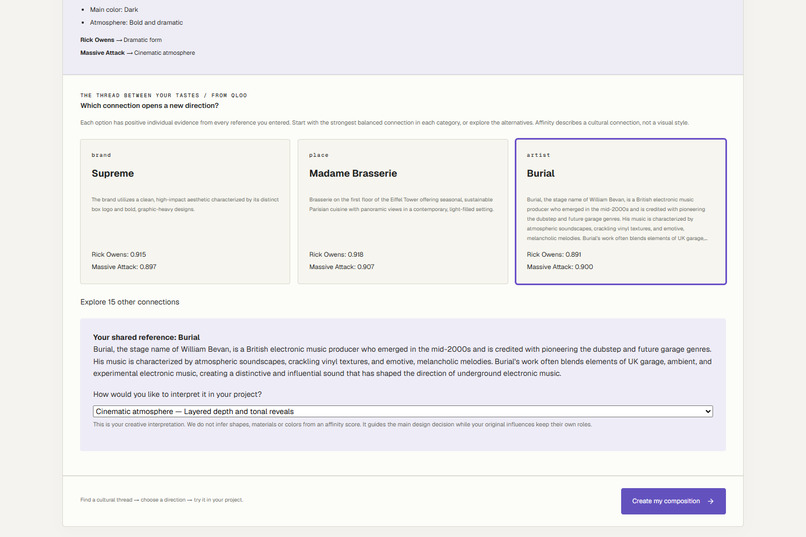
Discover shared cultural connections with Qloo, then choose how to interpret them.
-
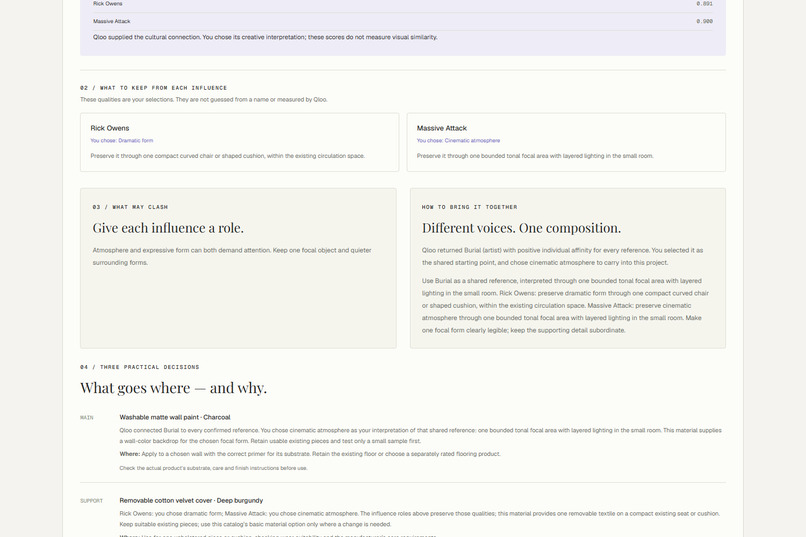
Give each influence a role, resolve the tension, and turn your mix into three practical decisions.
-
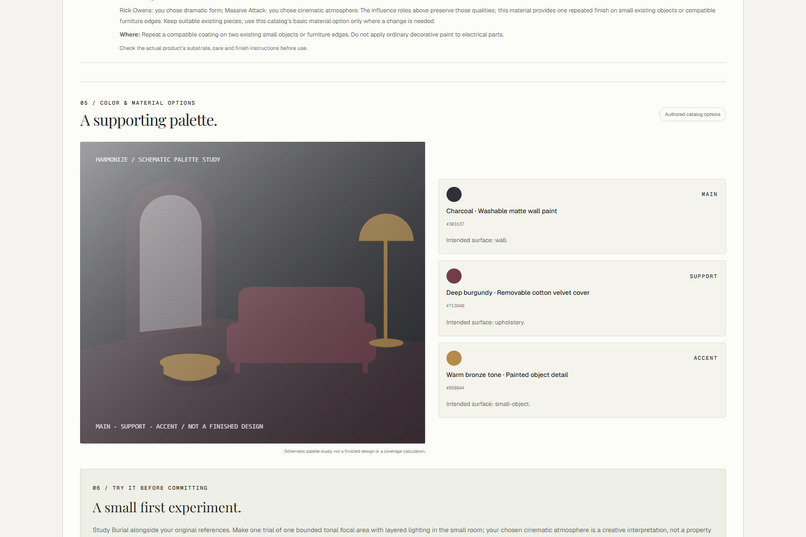
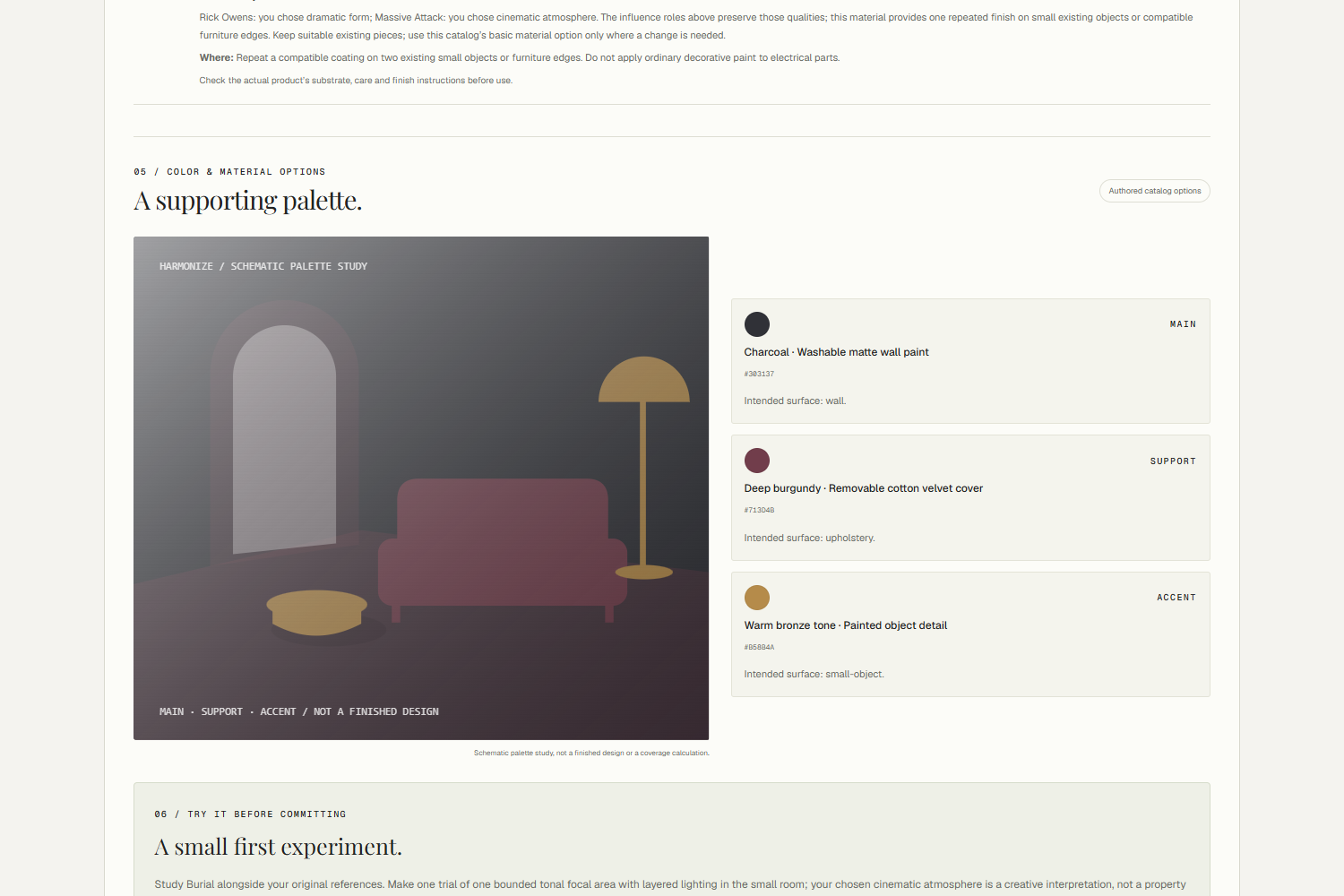
Explore coordinated colors and materials that respect your project's scale, budget, use, and atmosphere.
Inspiration
My taste has never fit into one aesthetic. I might love the sculptural shapes of a fashion designer, the atmosphere of a musician, and the visual language of a film. Bringing those influences into one project is the difficult part.
Harmonize started with a question: How can the different things I love work together in the same creative project?
What it does
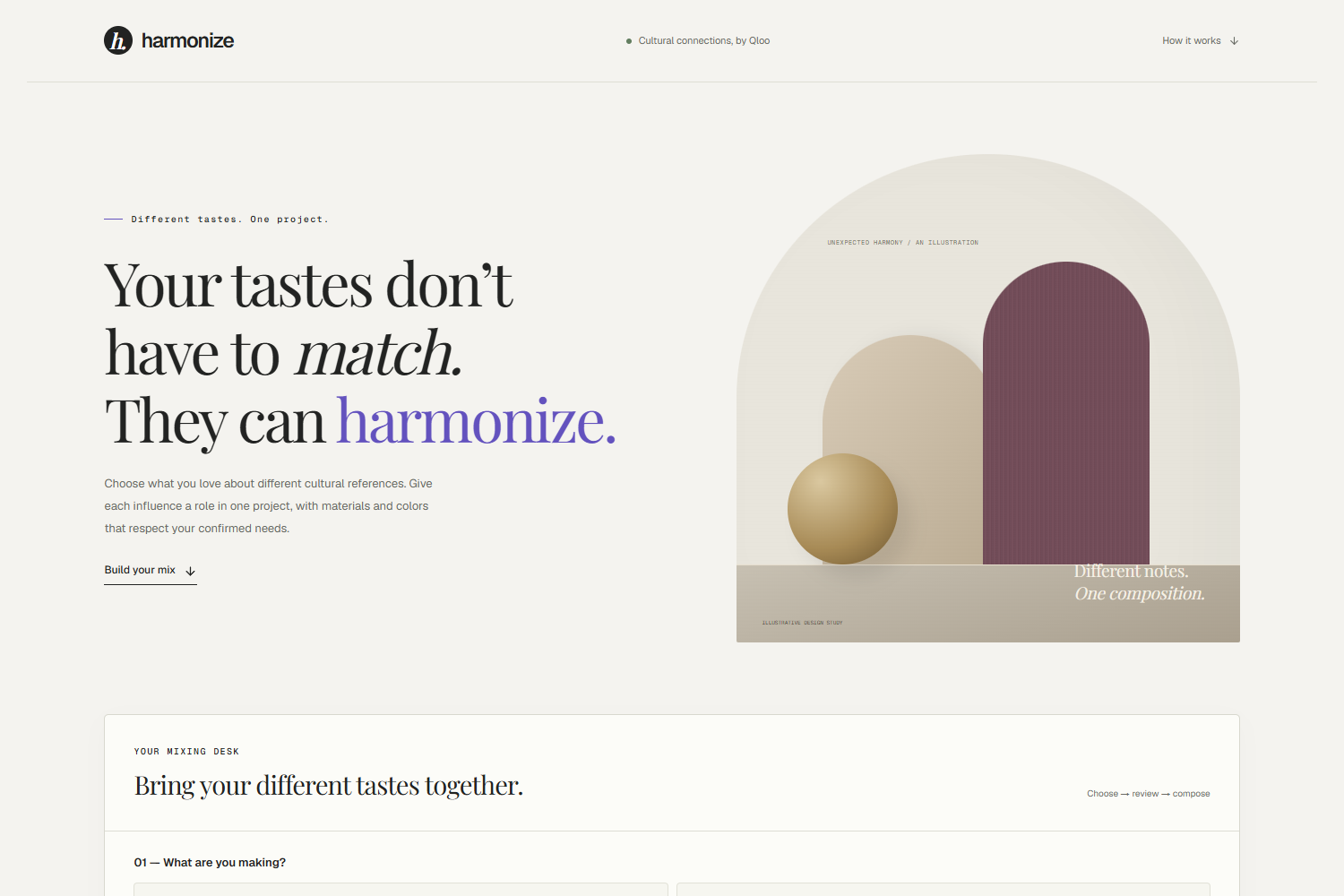
Harmonize helps you combine two to four cultural references into a practical creative direction for a living space, a fashion capsule, an object, or visual art.
You choose what you want to preserve from each reference, then set practical needs such as scale, budget approach, everyday use, color direction, and atmosphere.
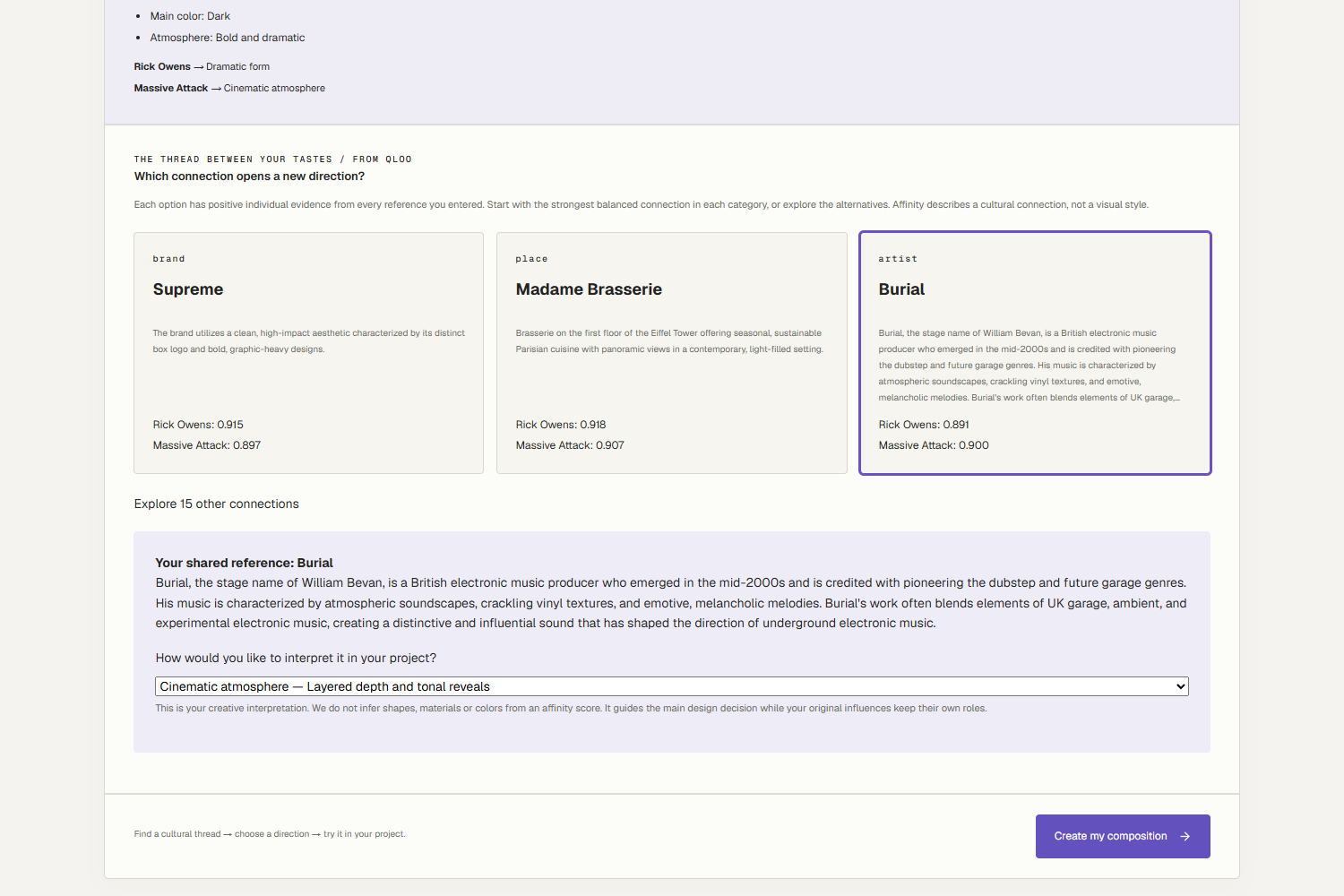
Qloo resolves the references and discovers cultural connections. Harmonize checks shared candidates against every original input, keeping missing evidence visible. You then choose a shared reference and decide how to interpret it.
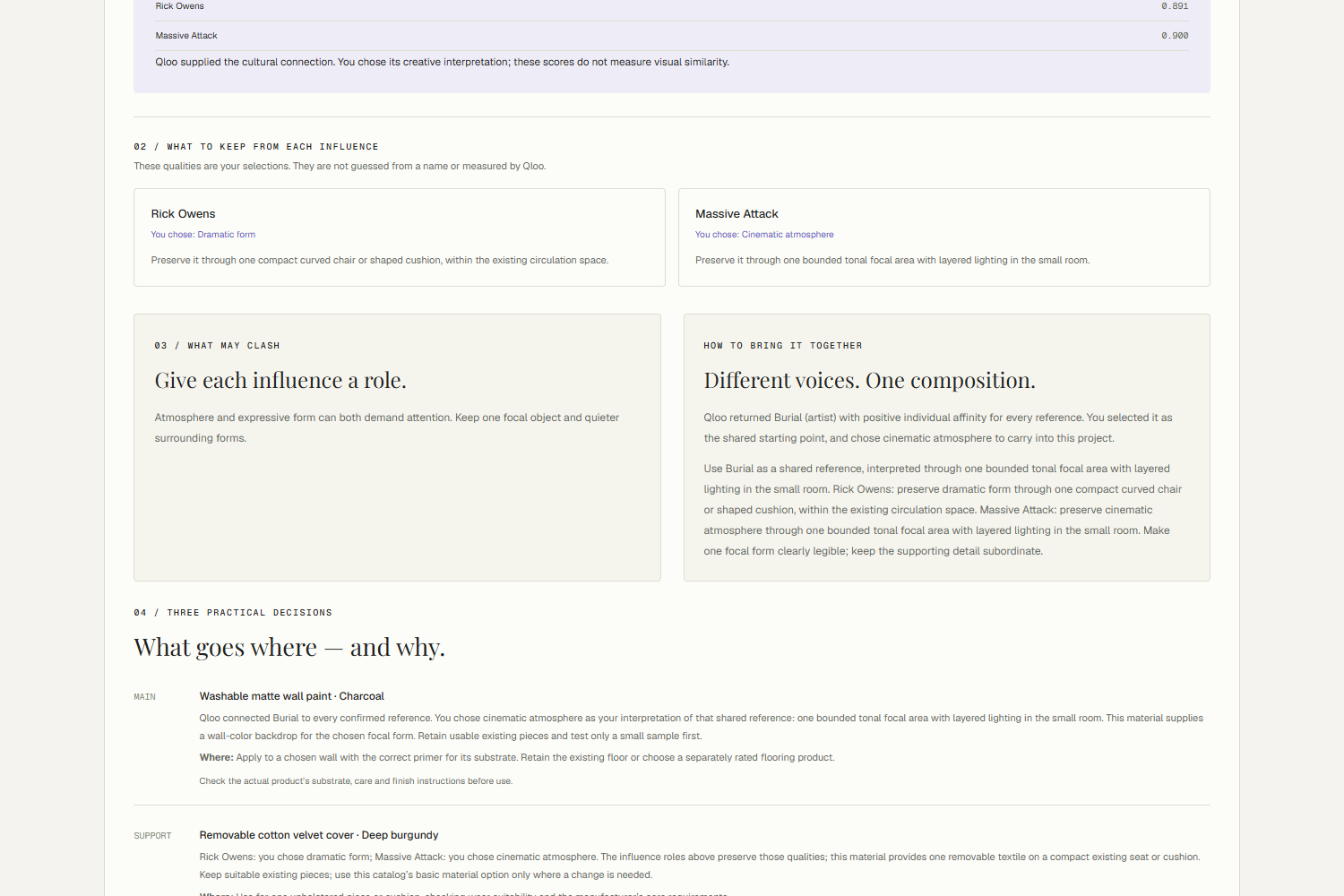
The result explains what each influence contributes, where they might clash, and how to bring them together through three practical decisions, coordinated colors and materials, and a small first experiment. A downloadable brief and an image prompt carry the same project decisions forward.
How I built it
I built Harmonize with Next.js, React, TypeScript, and Tailwind CSS, using server-side routes to connect to Qloo and Vercel for deployment.
Qloo supplies cultural relationships. Explicit user choices and a structured material catalog guide the creative interpretation. A shared composition model keeps the result screen, downloaded brief, and image prompt consistent.
Cultural affinity is not treated as proof of visual similarity. Users choose which qualities they value and how those qualities should translate into their project.
Challenges I ran into
The biggest challenge was making cultural connections useful without inventing design facts about an artist, brand, or film.
Another challenge was consistency: choosing a dark palette should not silently become a light one, a compact project should avoid oversized suggestions, and a material should only be recommended for a suitable surface.
I addressed these problems with structured inputs, explicit interpretation, a material catalog, and compatibility checks.
Accomplishments that I'm proud of
Harmonize connects a working Qloo discovery flow to a complete creative planning experience across four project categories.
The final implementation passed 38 automated tests and five production browser scenarios, including mobile use and brief downloads. The demo shows a real workflow combining Rick Owens and Massive Attack into a compact, economical living-space direction.
What I learned
A successful API response does not automatically make a useful product. The important work is connecting evidence to a decision the user understands.
I also learned that a clear boundary between cultural data and personal interpretation makes the experience more honest and easier to use.
What's next for Harmonize
I would expand the material catalog, improve category-specific guidance, and let users compare alternative compositions before choosing a direction.
Built With
- css
- next.js
- node.js
- qloo
- react
- tailwind
- typescript
- vercel

Log in or sign up for Devpost to join the conversation.